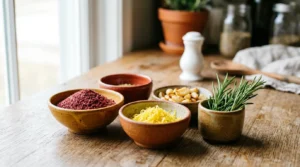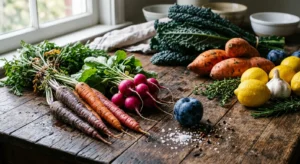
Transforming your daily health starts on your plate, where vibrant plant pigments deliver essential micronutrients that fuel energy, protect cellular health, and support smooth digestion. When your daily menu relies heavily on ultra-processed snacks, refined grains, or pale staple foods, your body quickly exhibits subtle signals of micronutrient depletion. Recent reports from the Centers for Disease Control and Prevention show that only 10.0% of U.S. adults meet daily vegetable intake recommendations, while just 12.3% meet daily fruit targets. Expanding your plate with diverse pigments ensures a broader spectrum of protective plant compounds, neutralizing cellular stress while maintaining steady energy and strong immunity throughout your week.

The Science Behind Color Diversity in Your Meals
The vivid hues adorning fresh produce represent bioactive plant compounds called phytonutrients. Plants naturally synthesize pigments—such as carotenoids, anthocyanins, polyphenols, betalains, and chlorophyll—to protect themselves from environmental stress and ultraviolet radiation. Consuming these plants delivers powerful antioxidant and anti-inflammatory protections to your human tissue. Scientific research documented by the National Institutes of Health demonstrates that distinct color groups correlate with specific health benefits. Blue and purple pigments support cardiovascular resilience and cognitive processing, while bright red foods protect cellular membranes against oxidative damage.
Despite these physiological benefits, standard modern eating patterns lack visual diversity. Data from the USDA Dietary Guidelines for Americans reveals that approximately 90% of the U.S. population fails to meet daily vegetable targets, while 80% falls short of fruit intake guidelines. Federal guidelines recommend consuming 1.5 to 2 cup-equivalents of fruit and 2 to 3 cup-equivalents of vegetables daily for a standard 2,000-calorie diet. Crucially, guidelines emphasize distributing this intake across five distinct subgroups: dark green; red and orange; beans, peas, and lentils; starchy; and other vegetables. Relying on a single subgroup creates quiet nutrient gaps that compromise your long-term vitality.
8 Signs Your Meals Lack Color Diversity
Recognizing the subtle signs your diet lacks color diversity allows you to correct micronutrient deficiencies before they manifest as persistent health challenges. Your body routinely communicates its internal nutritional needs through distinct physical signals when it lacks a broad matrix of plant compounds.
1. Your Plate Is Consistently Monochromatic
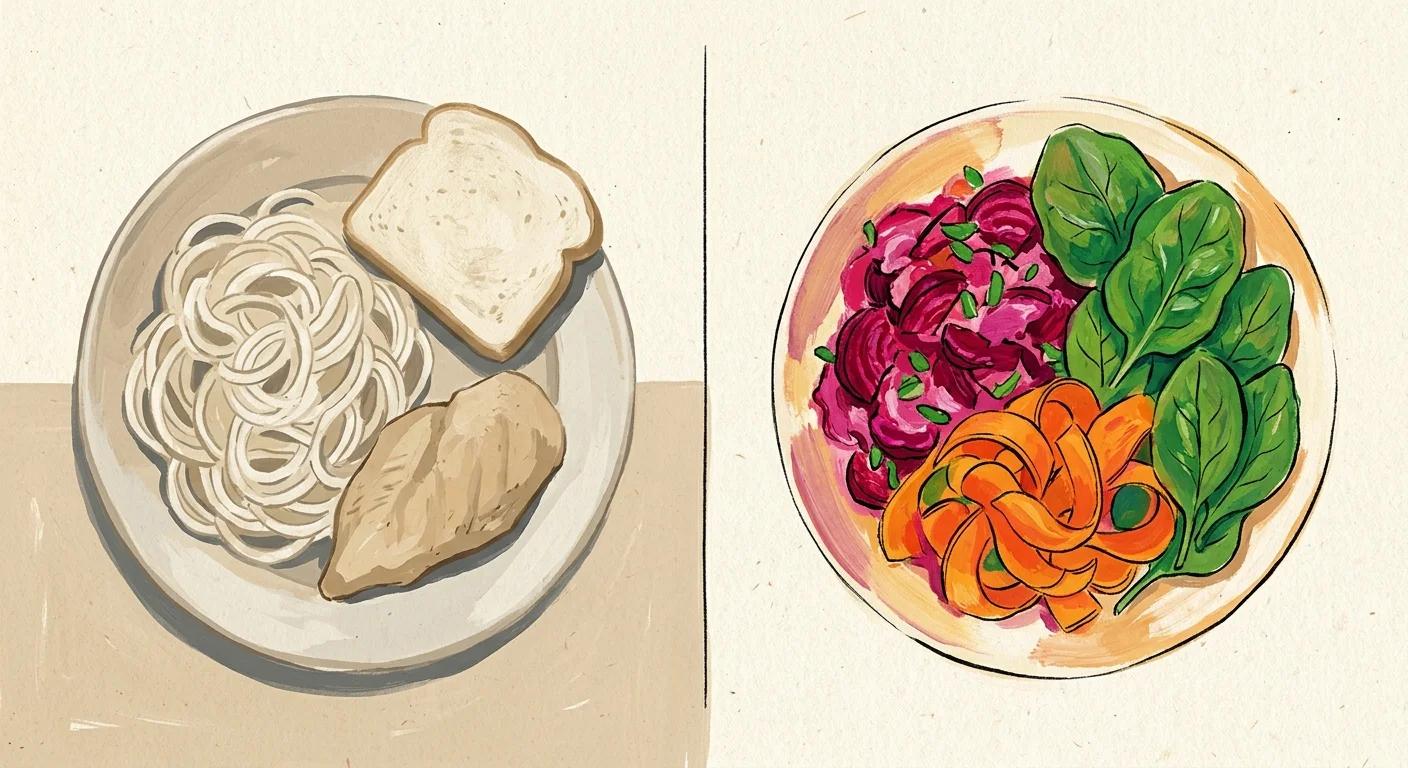
If your daily meals consist primarily of beige, white, and brown items—such as poultry, rice, pasta, cheese, and bread—you are missing vital plant pigments. Although white vegetables like garlic, onions, and cauliflower provide sulfur-rich allicin and prebiotic fibers, relying strictly on neutral foods deprives your body of protective carotenoids and polyphenols. Visual monotony represents the most direct indicator of a color-deficient diet.
2. You Experience Mid-Afternoon Energy Crashes
Experiencing severe energy slumps around mid-afternoon often signals that your meals lack antioxidant protection and complex fiber structure. Brightly colored produce rich in polyphenols supports endothelial function and metabolic flexibility, aiding your mitochondria in converting nutrients into steady metabolic energy. Without vibrant pigments to buffer cellular stress, rapid blood sugar swings leave you feeling chronically fatigued after eating.
3. Your Digestion Feels Slow, Irregular, or Bloated
A resilient gut microbiome requires structural diversity in dietary fiber. Eating a variety of colored foods delivers distinct fermentable fibers and prebiotic polyphenols that nourish diverse colonies of beneficial gut bacteria. When you restrict color variety, beneficial microbial populations decline, reducing short-chain fatty acid synthesis. This microbial imbalance frequently triggers sluggish transit times, persistent abdominal bloating, and bowel irregularity.
4. Your Skin Appears Dull and Loses Its Radiance
Dermatological health mirrors your internal nutritional status and dietary antioxidant intake. Carotenoids—the vivid red, orange, and yellow pigments concentrated in carrots, sweet potatoes, and red peppers—accumulate in skin tissue, enhancing natural skin undertones and defending collagen against sun-induced oxidative damage. Consistently skipping these vibrant foods often leaves your complexion looking dull, dry, and prematurely aged.
5. You Catch Frequent Colds and Seasonal Viruses
An immune system operating without adequate colorful produce lacks essential free-radical scavengers and biological defense tools. Red bell peppers, dark citrus fruits, and leafy greens deliver concentrated vitamin C, provitamin A, and bioflavonoids that reinforce your mucous membranes and optimize white blood cell activity. Catching frequent seasonal viruses highlights subtle signs of nutrient gaps in diet, indicating that your immune defenses need reinforcement.
6. You Experience Lingering Brain Fog and Poor Focus
Optimal cognitive processing requires continuous blood circulation and protection against central nervous system inflammation. Deep blue, purple, and dark red fruits—such as blueberries, blackberries, dark cherries, and red cabbage—supply specialized flavonoids that cross the blood-brain barrier. These compounds enhance microvascular circulation, improve memory retention, and protect brain cells. Omitting deep shades can lead to persistent brain fog and mental fatigue.
7. Your Muscles Take Longer to Recover After Workouts
Prolonged muscle soreness and joint discomfort after routine exercise signal elevated cellular oxidative stress and delayed tissue repair. Dark leafy greens, red beets, and dark berries contain natural nitrates, potassium, and specialized anti-inflammatory enzymes. These nutrients accelerate oxygen delivery to muscle tissue and neutralize localized free radicals. Missing out on bright pigments deprives your body of natural recovery compounds.
8. You Feel Hungry Shortly After Finishing Meals
Meals dominated by refined carbohydrates and processed fats digest rapidly, causing sharp spikes and rapid crashes in blood glucose. Conversely, colorful whole vegetables and fruits add physical volume, water content, and complex fiber matrixes that delay gastric emptying and trigger satiety hormones like peptide YY. If you constantly seek snacks within an hour of eating, your meals likely lack the nutritional density and visual diversity needed for full satiety.
Three Strategy Pillars to Restore Color and Balance
Pillar 1: Strategic Meal Planning and Visual Rotations
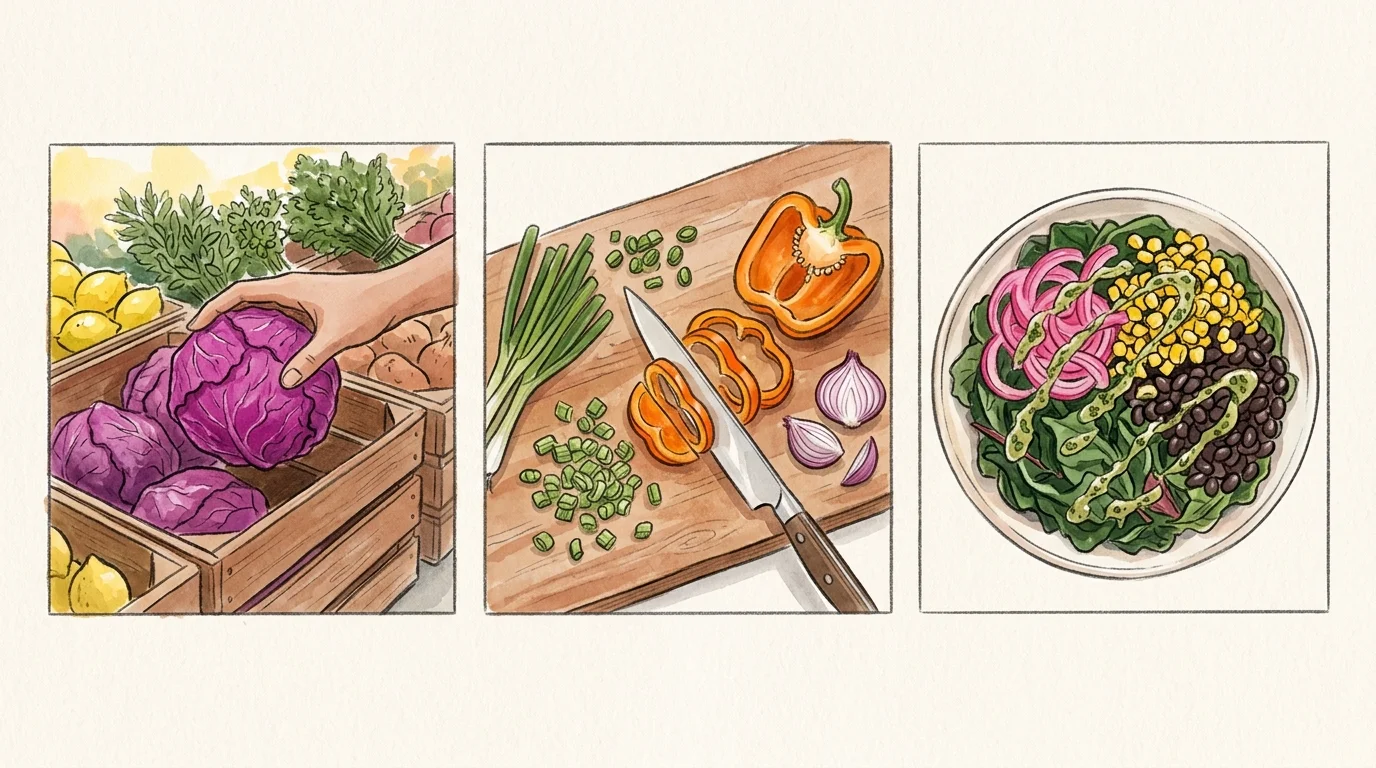
Establishing colorful eating habits relies on simple visual organization rather than complex calorie tracking. Strive to include at least three distinct natural color groups in every main meal and at least one in every snack. For breakfast, fold dark blueberries and flaxseed into warm oatmeal; for lunch, assemble dark leafy greens with bright orange bell pepper slices; for dinner, pair roasted purple cabbage with wild-caught salmon and brown rice. Utilizing frozen produce, low-sodium canned legumes, and seasonal vegetables keeps color diversity affordable and practical year-round.
Pillar 2: Targeted Nutrient Focus Across Color Families
Understanding why colorful food matters nutritionally helps you select produce with intention at the grocery store. Red foods supply lycopene to support arterial health; orange and yellow foods provide beta-carotene and lutein for vision and skin integrity; dark green options deliver folate, chlorophyll, and vitamin K for bone health; blue and purple foods deliver anthocyanins for brain protection; and white or tan plant foods yield allicin to support immune defense. Rotating systematically across all five color families ensures comprehensive micronutrient coverage.
Pillar 3: Sustainable Micro-Habits for Long-Term Shifts
Sustaining long-term dietary improvement relies on incremental, frictionless micro-habits rather than drastic restrictions. Practice the rule of addition by incorporating one new colorful item into a dish you already prepare regularly. Throw a handful of dark green spinach into your morning smoothie, grate fresh yellow squash into marinara sauce, or mix diced red onions into tuna salad. These minor additions build self-efficacy, expand your palate, and unlock the practical nutritional benefits of colorful meals over time.

Expert Insights, Safety, and Clinical Considerations
Leading health authorities, including the Academy of Nutrition and Dietetics, stress that whole colorful foods offer synergistic health benefits that isolated dietary supplements cannot match. Registered dietitians frequently observe that clients who expand plant variety experience improved energy levels, smoother digestion, and enhanced overall vitality within weeks. However, expanding your intake of high-fiber produce too rapidly can occasionally trigger temporary digestive gas or bloating. To ensure a smooth transition, increase your fluid intake alongside dietary fiber and introduce new produce varieties gradually over two to three weeks.
Certain clinical conditions require tailored adjustments when modifying your plant intake. Individuals managing irritable bowel syndrome (IBS) may benefit from selecting low-FODMAP colorful produce, such as carrots, zucchini, and red bell peppers, while limiting high-FODMAP choices like garlic or apples. Furthermore, individuals taking blood-thinning medications like warfarin must maintain steady, consistent daily intakes of vitamin K-rich dark leafy greens rather than making sudden spikes. If you have chronic kidney disease requiring potassium management or active gastrointestinal disorders, consult your primary healthcare provider or a registered dietitian before making significant dietary modifications.
Frequently Asked Questions
Do frozen and canned fruits and vegetables offer the same nutritional value as fresh produce?
Yes, commercially frozen and canned produce retain excellent nutritional value and pigment integrity. Fruits and vegetables intended for freezing are harvested at peak ripeness and flash-frozen within hours, preserving delicate vitamins and bioactive antioxidants. Canned produce also retains minerals and fibers, provided you select options packed in water or low-sodium liquids without added sugars. Using frozen and canned options provides a convenient, cost-effective method to maintain dietary color variety year-round.
Can a daily multivitamin replace the need for colorful whole foods?
A multivitamin supplement cannot replace the comprehensive benefits of colorful whole plant foods. Synthetic supplements lack the intricate biological matrix, prebiotic fibers, and thousands of interactive phytonutrients found naturally in fruits and vegetables. While supplements offer targeted support for specific clinical deficiencies, consuming whole colorful plants remains the most effective strategy for promoting overall cellular longevity and metabolic health.
How much does it cost to add more colorful produce to my daily diet?
Adding colorful produce to your daily routine is surprisingly affordable. An economic price analysis published by the USDA Economic Research Service shows that meeting daily recommended targets for both fruits and vegetables costs an average of under $3.00 per day. Purchasing seasonal produce, buying bulk frozen vegetables, utilizing canned beans, and planning meals ahead keep colorful eating well within standard household budgets.
How many distinct color groups should I aim to consume each day?
While incorporating all five primary color groups—red, orange/yellow, dark green, blue/purple, and white/tan—every day is an ideal benchmark, aiming for at least three distinct colors daily provides excellent nutritional support. Focusing on covering all five color families over the course of a full week ensures you receive a balanced spectrum of protective phytonutrients, trace minerals, and beneficial gut-supporting fibers.
Your 24-Hour Action Step
Improving your daily nutrition does not require an all-or-nothing commitment or complicated meal prep. Open your pantry or refrigerator right now, identify one color group that has been absent from your recent meals, and add a single serving of that color to your next lunch or dinner. Whether adding frozen blueberries to your yogurt, slicing a red bell pepper for a sandwich, or roasting broccoli for dinner, taking this single concrete action today sets your journey toward lasting health and vibrant energy into motion.