
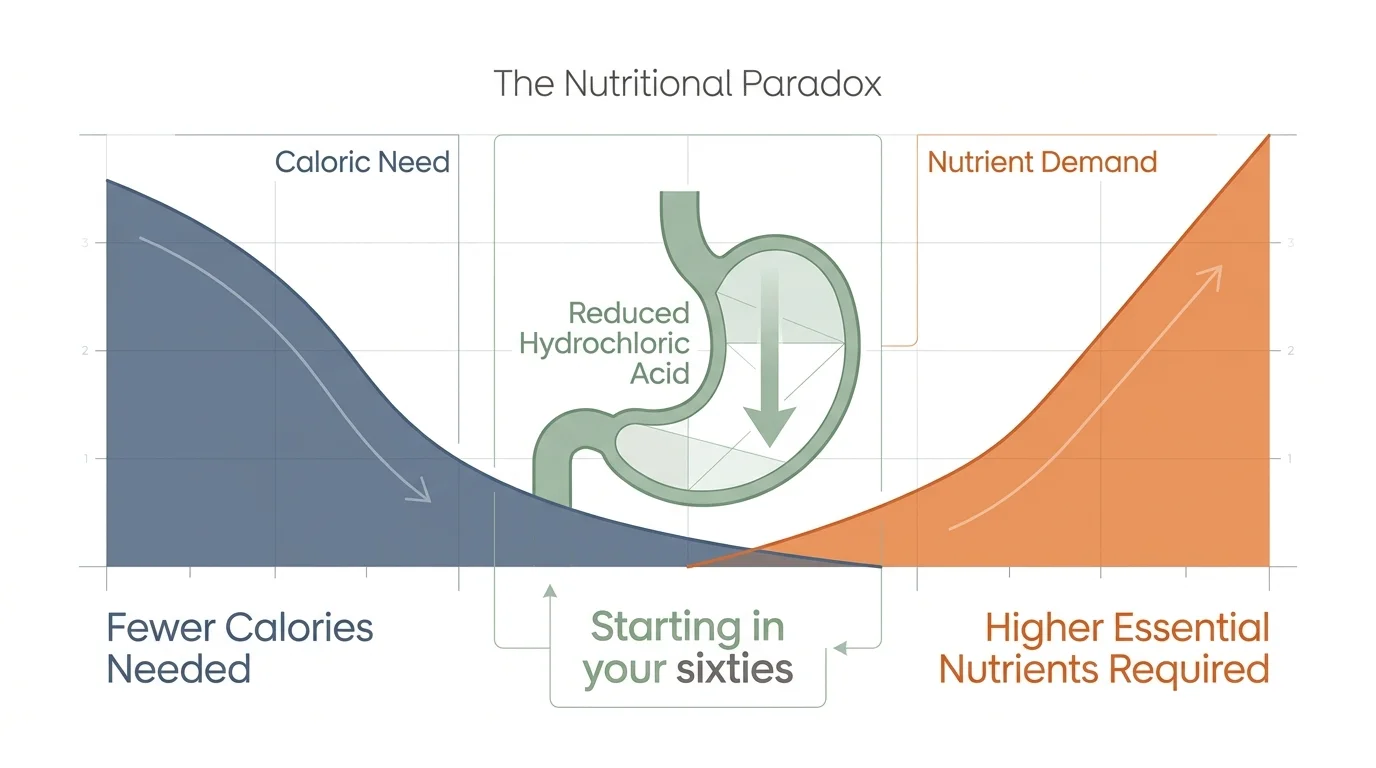
As you age, your body requires fewer calories but paradoxically demands higher levels of essential nutrients to maintain bone density, cognitive function, and immune resilience.
Natural changes in your stomach acid production and cellular metabolism significantly reduce how effectively you absorb vital compounds from the foods you consume every day. By understanding these physiological shifts, you can strategically adjust your dietary choices to prevent the stealthy onset of malnutrition.
Targeting the eight specific vitamins and minerals most commonly deficient in older adults empowers you to protect your long-term independence and preserve your overall vitality throughout your later years.
Understanding the Aging Body and Nutrient Absorption
The human digestive tract undergoes profound physiological transformations as you grow older. Starting in your sixties, your stomach naturally produces less hydrochloric acid.
This minor shift creates a cascading effect throughout your gastrointestinal system, severely impeding your ability to break down complex food matrices and extract locked-in vitamins.
Furthermore, your slowing metabolic rate means you naturally require fewer calories to maintain your weight. This creates a challenging nutritional paradox: you must ingest higher concentrations of essential vitamins while consuming less food overall.
Chronic inflammation further complicates this dynamic by altering how your cells transport nutrients. According to the World Health Organization, inadequate dietary intake accelerates muscle wasting and immune dysfunction.
Your intestines also experience a decrease in surface area, meaning a smaller percentage of vital compounds actually makes it into your bloodstream.
Acknowledging these biological hurdles represents the critical first step in taking proactive control of your dietary habits.