You can protect your physical independence and keep your body strong after age 60 by changing how you schedule your daily protein. Most older adults eat a small toast breakfast, a light salad lunch, and a heavy protein dinner, missing out on crucial opportunities for muscle repair. Skewing your intake this way fails to trigger muscle protein synthesis during the first half of your day. By fixing this common timing mistake and reaching a target threshold of protein at breakfast and lunch, you give your body the exact tools it needs to prevent age-related strength loss.
The Biology of Age-Related Muscle Loss and Anabolic Resistance
Muscle mass naturally decreases as you age, but understanding the underlying physiological mechanisms empowers you to protect your strength. Starting around age 50, adults lose between 1% and 2% of their muscle mass every year, while muscle strength drops even faster at a rate of 1.5% to 4% annually. The Centers for Disease Control and Prevention formally recognized age-related muscle loss as an independent medical condition in October 2016 by assigning sarcopenia its own ICD-10 diagnosis code, M62.84. Research shows sarcopenia affects 5% to 13% of adults aged 60 to 70 and up to 50% of those aged 80 and older, while survey data indicates that 18% of U.S. adults aged 60 and over suffer from weak muscle strength.
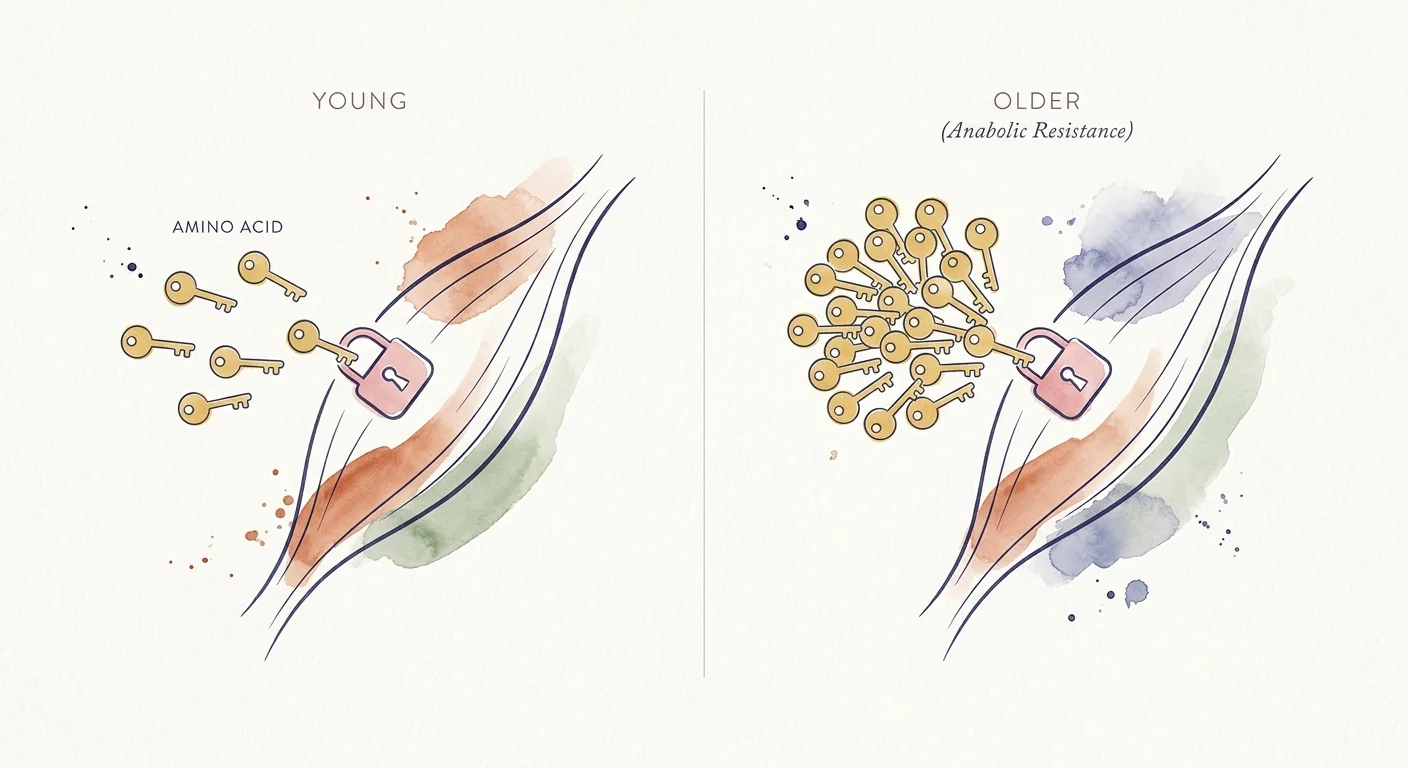
The primary driver behind accelerated muscle loss is a biological phenomenon known as anabolic resistance. As your body ages, your muscle tissue becomes far less sensitive to dietary amino acids. Younger bodies can initiate muscle building with as little as 15 grams of protein, but older muscles require a substantially higher nutrient signal to activate tissue repair. According to research published through the National Institutes of Health, older adults must reach a higher cellular threshold during each meal to stimulate muscle protein synthesis. Without this distinct stimulus, your body breaks down more muscle tissue than it builds, leading to progressive weakness over time.
The Standard Protein Intake Flaw: RDA vs. Real Needs
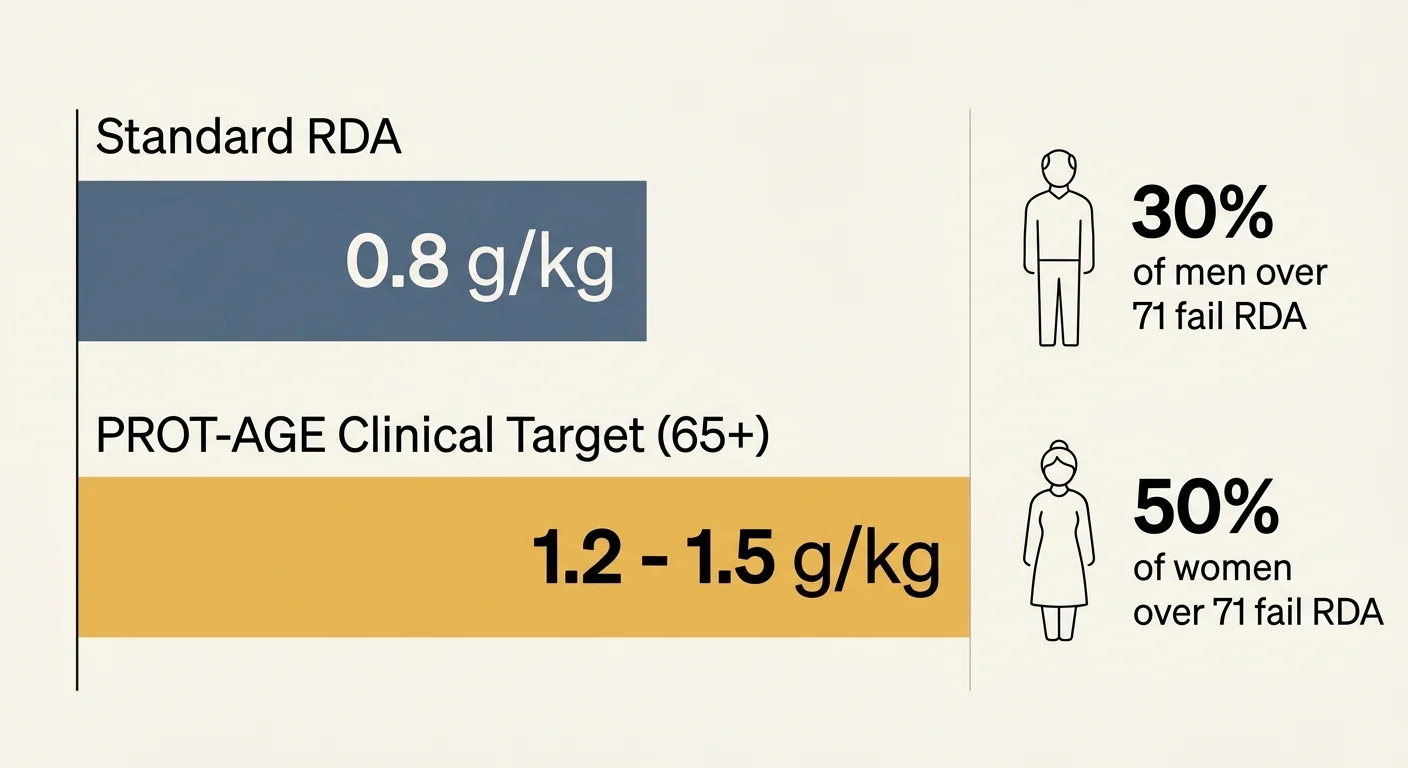
A major obstacle to maintaining strength after 60 is reliance on outdated dietary guidelines. The baseline U.S. Recommended Dietary Allowance (RDA) for adult protein intake is set at 0.8 grams per kilogram of body weight per day, or roughly 0.36 grams per pound. Established decades ago to prevent simple deficiency in young adults, this baseline does not satisfy the elevated metabolic needs required to counteract age-related muscle wasting. Following the standard RDA leaves older individuals in a chronic protein deficit that accelerates functional decline.
International clinical groups—such as the PROT-AGE Study Group and the European Society for Clinical Nutrition and Metabolism—recommend higher daily protein targets for older adults. According to guidelines from the European Society for Clinical Nutrition and Metabolism, healthy adults aged 65 and older should consume 1.0 to 1.2 grams per kilogram daily, while those with acute or chronic health conditions require 1.2 to 1.5 grams per kilogram. Despite these clinical recommendations, dietary studies show that approximately 30% of men and 50% of women in the U.S. over age 71 fail to consume even the basic 0.8 g/kg RDA.
The Per-Meal Protein Threshold: Why Timing Matters
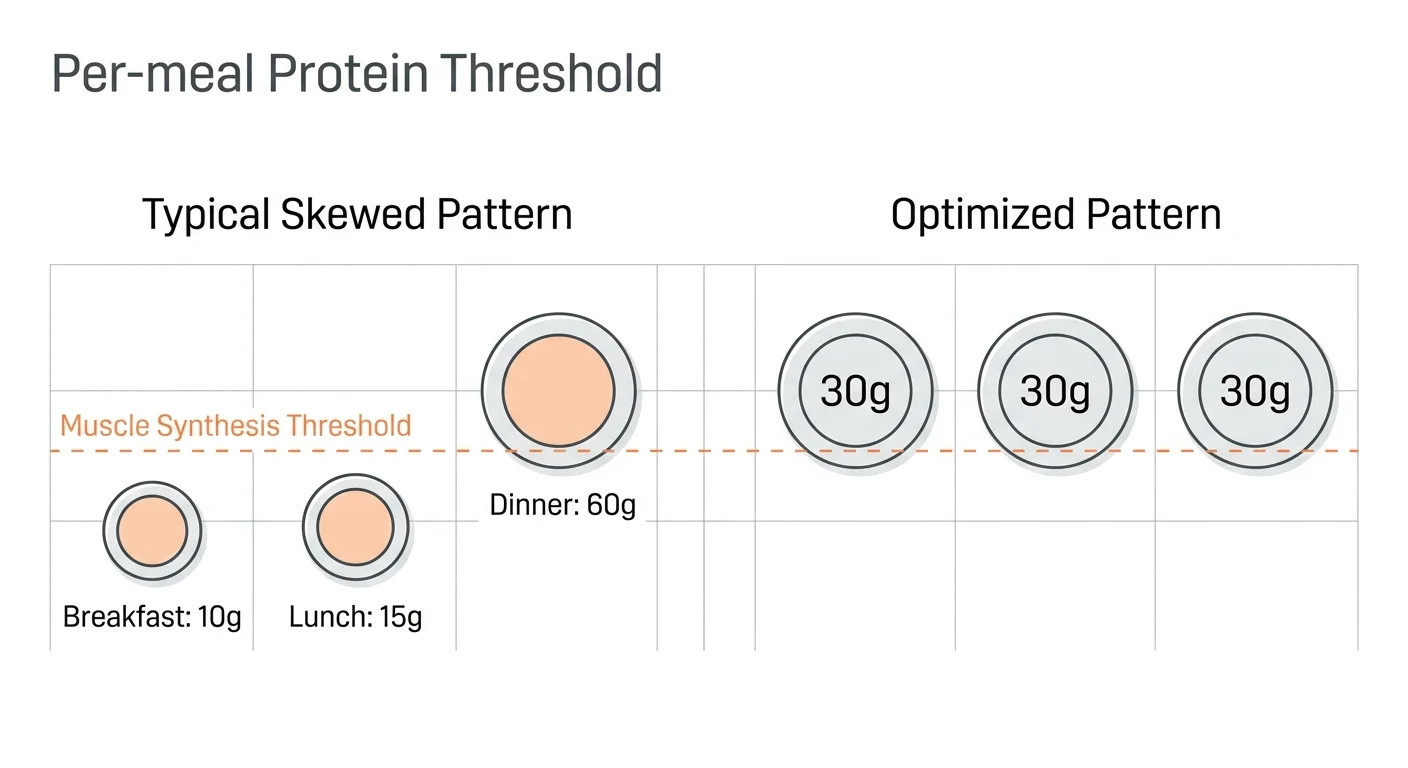
Even if you meet your total daily protein goal, you might still make the critical mistake of skewing your distribution across the day. The typical Western eating routine consists of a light breakfast, a light lunch, and a massive protein dinner. Under this schedule, consuming 10 grams of protein at breakfast, 15 grams at lunch, and 60 grams at dinner yields 85 total grams, yet leaves your muscles in a breakdown state for most of your waking hours.
Your muscles need a specific threshold—known as the per-meal anabolic resistance threshold—to kickstart repair. For adults over 60, this critical threshold requires 25 to 30 grams of high-quality protein per meal, or roughly 0.4 grams per kilogram of body weight per sitting. Consuming 10 grams at breakfast fails to cross this trigger, keeping muscle building turned off. Meanwhile, eating 60 grams at dinner exceeds what your body can utilize for synthesis at once, oxidizing the excess for energy; spreading 30 grams evenly across breakfast, lunch, and dinner activates muscle repair three times a day.
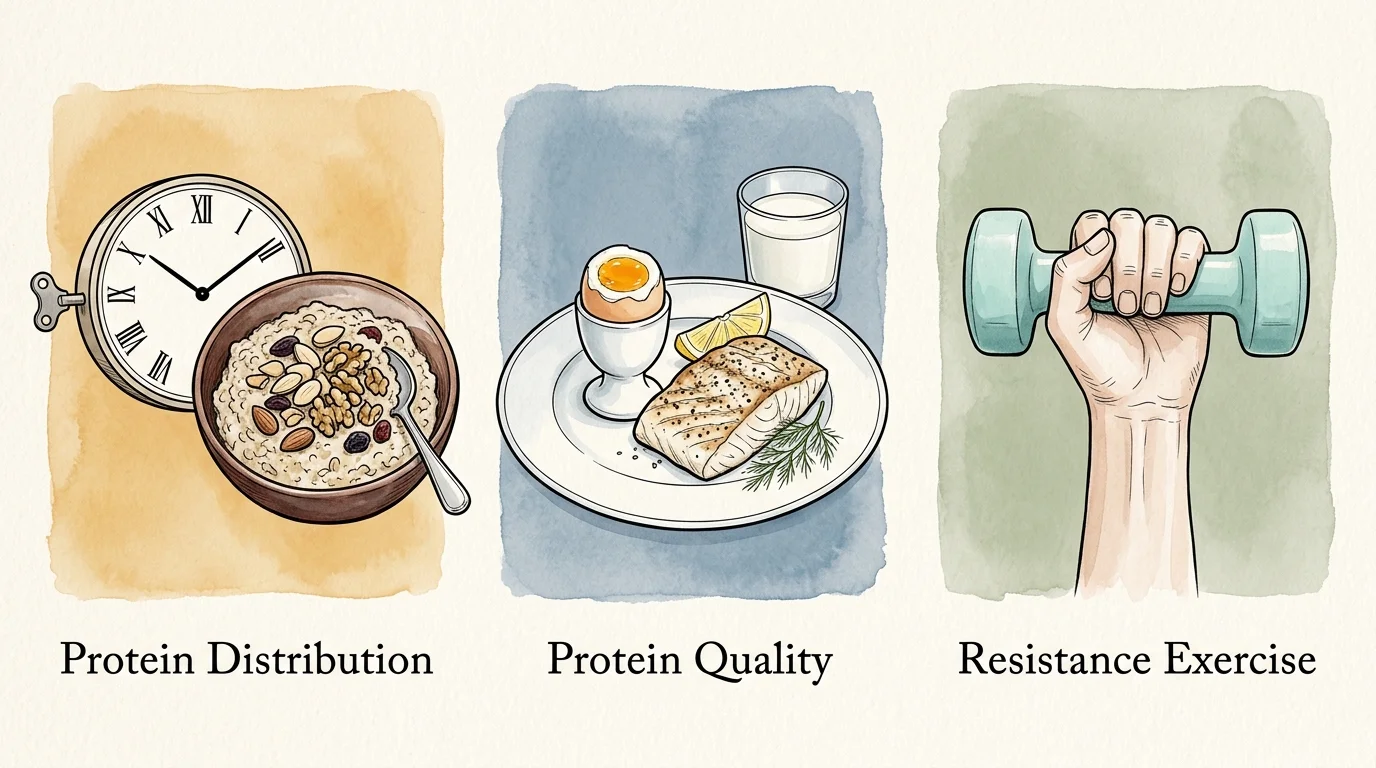
5. and
6. a
7. dumbbell
8. represent
9. the
10. three
11. pillars
12. of
13. muscle
14. health
15. afte
Three Core Pillars to Optimize Protein Intake After 60
Pillar 1: Restructuring Breakfast and Lunch for Maximum Absorption
Transforming your intake starts with upgrading your morning and midday meals so that both hit your required threshold. Replace low-protein breakfasts like toast or plain cereal with protein-rich foods. Scramble three eggs with added egg whites, or enjoy a cup of plain Greek yogurt, which naturally provides roughly 20 grams of protein. You can also mix unflavored whey or soy protein powder into your warm oatmeal, turning a simple carbohydrate breakfast into a 30-gram anabolic meal.
For lunch, upgrade basic green salads and soups by adding generous protein sources. Top your greens with five ounces of grilled chicken, a canned tuna packet, or a cup of cottage cheese. For plant-based meals, combine edamame with cooked quinoa and pumpkin seeds, or prepare a hearty lentil and tofu bowl. Ensuring that both breakfast and lunch deliver 25 to 30 grams of protein keeps amino acids circulating throughout the day.
Pillar 2: Emphasizing High-Leucine, Quality Protein Sources
Quality matters as much as quantity when building muscle after 60. To trigger muscle protein synthesis, your meals must contain adequate amounts of essential amino acids, particularly leucine. Leucine acts as the primary signal that switches on tissue repair. Animal sources—such as eggs, poultry, fish, dairy, and lean meat—boast high leucine concentrations. Eating three ounces of chicken or a cup of cottage cheese yields 2.5 to 3 grams of leucine, meeting the optimal threshold for aging muscle.
You can also hit your leucine target on a plant-based diet by choosing dense plant proteins and adjusting your portion sizes. Plant foods contain slightly lower leucine concentrations, so aim for 35 grams of total plant protein per meal. Soy products like tempeh, tofu, and edamame offer complete amino acid profiles. Consulting nutrition guidance from the Centers for Disease Control and Prevention can help you combine legumes, seeds, and grains to support your overall muscle health effectively.
Pillar 3: Habit Stacking and Strategic Protein Snacking
Adapting to larger protein meals can feel challenging if your appetite has diminished over time. Habit stacking offers a reliable way to build consistent habits without feeling uncomfortably full. Pair your new protein goals with daily routines you already perform automatically. For example, drink a protein shake immediately after your morning walk, or eat a high-protein snack while preparing dinner. Linking new dietary actions to set habits reduces effort and builds long-term consistency.
Adding targeted high-protein snacks between meals provides extra support if 30-gram meals feel too large. Consuming a mid-afternoon snack with 15 to 20 grams of protein—such as hard-boiled eggs with almonds, a high-protein smoothie, or cottage cheese with fruit—helps close daily intake gaps. This approach ensures steady amino acid delivery without overwhelming your digestion during main meals.

Expert Insights and Real-World Applications
Registered dietitians frequently observe dramatic improvements when clients correct their protein timing. Clinical experts note that shifting 20 grams of protein from dinner to breakfast often increases daily energy, improves balance, and accelerates recovery within weeks. Rather than feeling sluggish from uneven meals, clients report steady stamina and reduced afternoon hunger, which supports both muscle retention and weight management.
Consider the experience of 67-year-old Margaret, who walked daily but noticed her strength fading. Her routine included toast for breakfast, light soup for lunch, and chicken at dinner. Despite eating healthy foods, her morning meals provided under 10 grams of protein, leaving her body in breakdown mode for hours. After adding Greek yogurt to breakfast and tuna to lunch, she reached 30 grams across all three meals. Within eight weeks, Margaret experienced greater walking stamina and measurable gains in functional leg strength.
Safety, Kidney Health, and Personalization
Increasing your protein intake is effective for most adults, but personalization remains crucial. If you have pre-existing kidney disease or stage 3 or higher chronic kidney disease, consult your nephrologist or registered dietitian before increasing dietary protein. Damaged kidneys struggle to process protein breakdown products, making tailored clinical guidance essential for your health and safety.
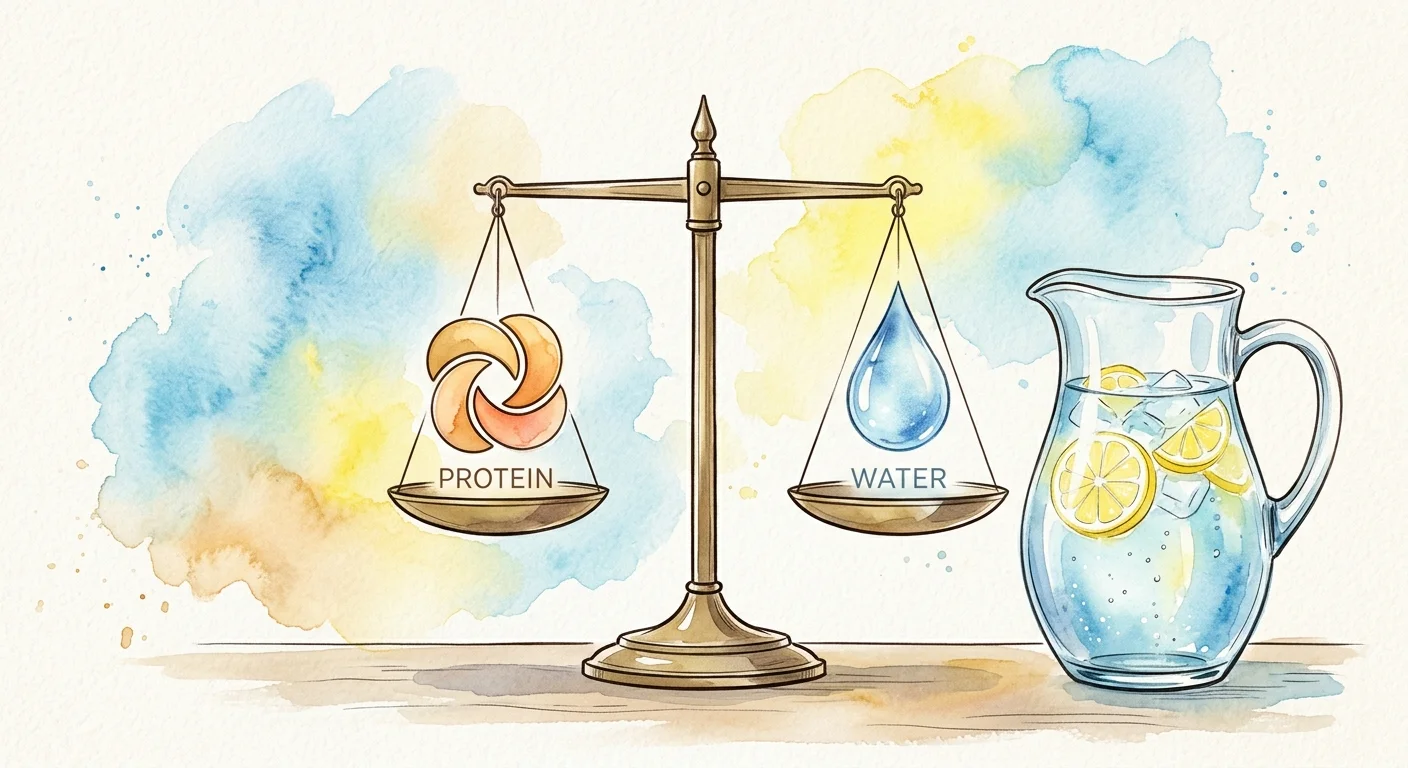
For adults with healthy kidney function, higher protein diets are safe and highly beneficial. Support your increased protein intake by staying well-hydrated and consuming sufficient dietary fiber. Eating leafy greens, berries, seeds, and whole grains prevents digestive sluggishness while nourishing your gut microbiome. Always discuss significant diet adjustments with your doctor or consult expert resources from the Academy of Nutrition and Dietetics for personalized dietary advice.
Frequently Asked Questions
Is protein powder safe and effective for adults over 60?
Protein powders are safe, convenient, and effective for adults over 60 who struggle to meet targets through solid food alone. Whey protein isolate dissolves easily and contains rich concentrations of leucine to stimulate muscle synthesis. For plant-based options, blended pea and rice powders deliver complete amino acid profiles. Choose products tested by third-party organizations to ensure ingredient purity and safety.
Can you eat too much protein in a single meal?
Muscle protein synthesis caps at roughly 35 to 40 grams of protein per meal for older adults. Consuming excess protein in one sitting does not yield additional muscle-building benefits; your body burns the surplus for energy instead. Spreading your protein evenly across three main meals optimizes muscle repair far more effectively than eating one large protein dinner.
What are the best plant-based protein options for hitting 30 grams?
Excellent plant-based options for reaching 30 grams per meal include tempeh, extra-firm tofu, edamame, lentils, and grain bowls. You can combine one cup of cooked lentils with half a cup of edamame, or enjoy six ounces of grilled tempeh over quinoa. Adding pumpkin seeds, hemp seeds, or pea protein powder easily elevates your total meal protein.
Does eating more protein replace the need for exercise?
Protein supplies the raw materials for tissue repair, but resistance training delivers the mechanical signal that prompts your body to build muscle. While eating adequate protein reduces muscle loss on its own, pairing optimal protein timing with regular strength exercise yields the best physical outcome. Practice resistance exercises—like squats, wall push-ups, or weight lifting—two to three times per week.
Take Your First Step Toward Stronger Muscles Today
Maintaining strength and independence after age 60 starts with simple, deliberate changes to your next meal. Audit your current routine and address the common timing mistake of eating low-protein breakfasts and lunches. Upgrade your morning meal tomorrow by aiming for 25 to 30 grams of high-quality protein through eggs, Greek yogurt, or a nutrient-dense shake. Taking action within the next 24 hours gives your body the nourishment it needs for lifelong mobility and strength.