Tossing a rock-hard protein directly into a sizzling pan seems like an effortless weeknight shortcut. Unfortunately, cooking certain dense foods without prior thawing invites harmful bacterial pathogens and ruins the natural texture of your dinner.
You can safeguard your family and elevate your daily meals by mastering proper defrosting techniques. Understanding which frozen staples demand patient preparation guarantees your food remains tender, richly flavorful, and completely safe to eat.
Let us examine the thermal physics of home food preparation and explore five specific ingredients you should always thaw first.
The Science of Heat Transfer and the Danger Zone
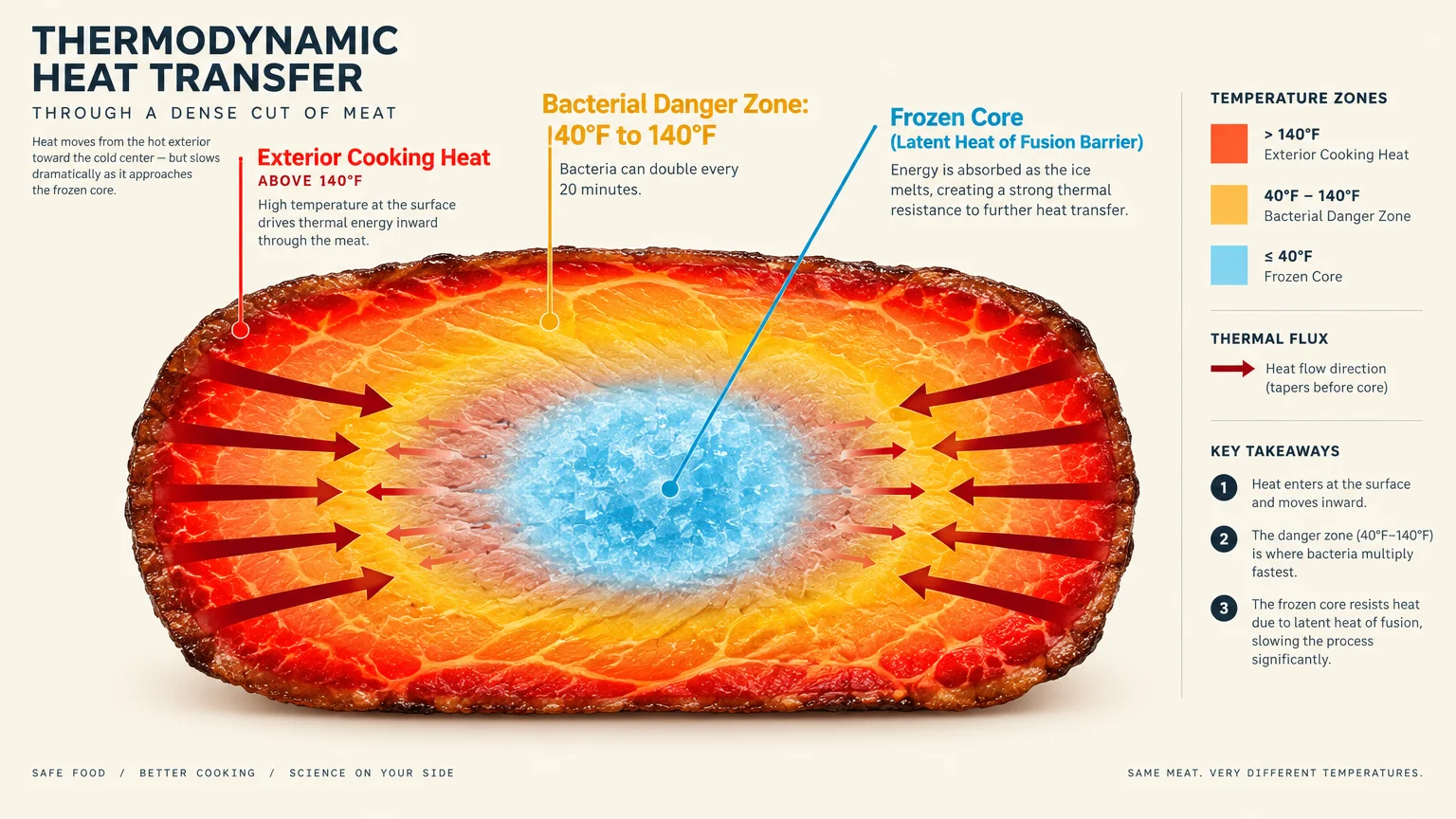
Food safety hinges on the thermodynamics of heat transfer through dense organic tissue. Ice absorbs substantial energy before transitioning into liquid water, which significantly delays internal temperature rise.
Water requires significant thermal energy—known as the latent heat of fusion—to transition from solid ice to liquid water. This physical phenomenon explains why frozen foods absorb heat without an immediate rise in temperature.
The USDA Food Safety and Inspection Service defines the temperature danger zone between 40°F and 140°F. Within this range, common pathogenic bacteria can double their active population every twenty minutes.
When you subject dense frozen food to cooking heat, the surface warms long before the interior thaws. This extreme temperature discrepancy traps the outer layers in the rapid bacterial growth zone for extended periods.
Harmful bacterial microbes such as Salmonella enterica and Staphylococcus aureus thrive under these conditions. The Centers for Disease Control and Prevention warns that bacterial enterotoxins often survive high cooking temperatures.
In addition to biological hazards, severe heat gradients destroy delicate culinary textures. The outside muscle fibers dry out and turn unpleasantly tough while the core remains frozen solid.
5 Foods You Should Never Cook Straight From the Freezer
1. Whole Chickens and Turkeys
Roasting a whole frozen bird produces hazardous microbiological outcomes and dry, uneven meat. The frozen interior cavity insulates cold air, which halts uniform thermal circulation throughout the bird.
Your oven will scorch and dry the exterior skin before interior breast meat reaches safe temperatures. This delay leaves the deep meat bordering the ribcage raw and contaminated with live bacteria.
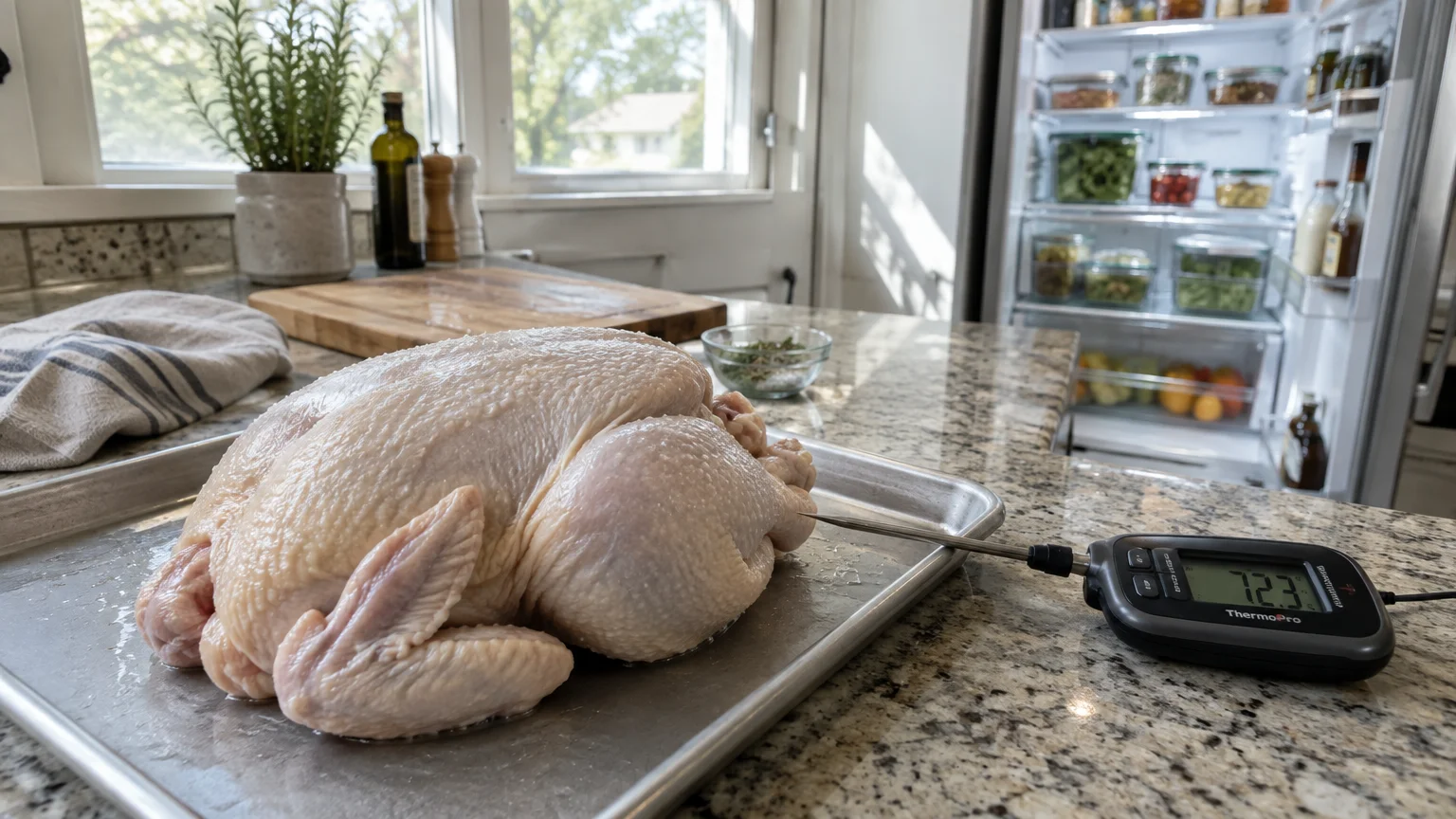
Poultry requires reaching a verified minimum internal temperature of 165°F throughout every section. When you roast directly from frozen, exterior moisture evaporates while the interior core struggles to heat.
Using a food thermometer remains essential whenever you prepare poultry dishes. Insert the metal probe into the thickest part of the inner thigh and breast to verify safety.
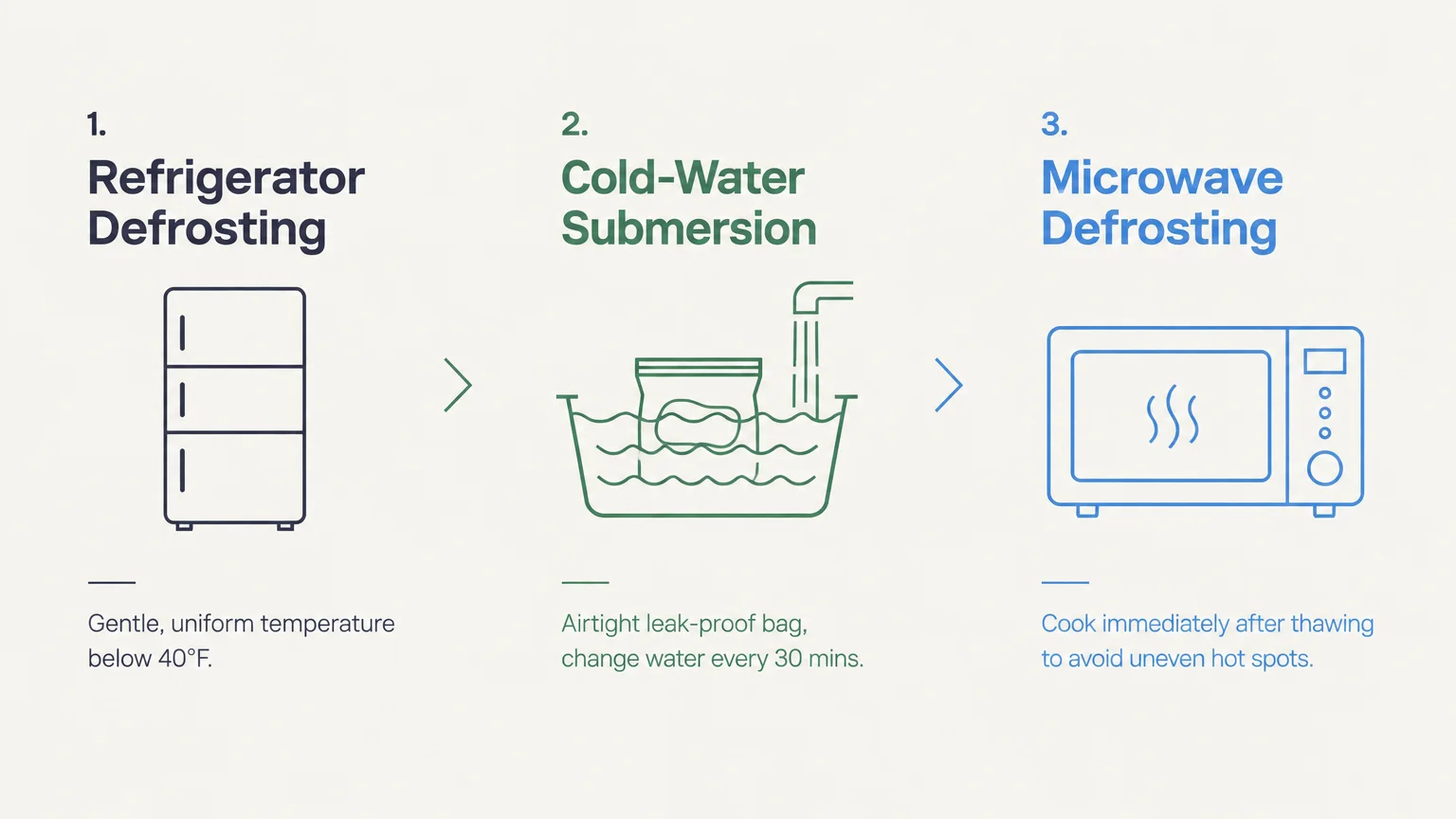
Thaw whole poultry inside your refrigerator on a rimmed baking sheet. Plan for twenty-four hours of gentle thawing for every four to five pounds of bird weight.
2. Slow-Cooker Beef Roasts and Pork Shoulders
Slow cookers function by generating gradual, gentle heat over many continuous hours. Placing a dense frozen chuck roast or pork shoulder directly into a crockpot creates a severe food safety threat.
The appliance takes several hours to overcome the frozen thermal mass of a large roast. Consequently, raw meat lingers in the bacterial danger zone far longer than safety guidelines permit.
Peer-reviewed research documented by the National Institutes of Health reveals that Clostridium perfringens thrives in warm, low-oxygen cooking environments. These spores produce toxins that trigger intense stomach distress.
Always defrost large roasts completely in your refrigerator before placing them into a slow cooker. This guarantees that your appliance rapidly brings meat up to safe cooking temperatures.
3. Thick Bone-In Steaks and Chops
Searing functions beautifully for thin frozen burger patties, but it fails on thick bone-in steaks. Dense bone conducts heat unevenly, which creates erratic thermal barriers throughout adjacent muscle fibers.
Searing a two-inch frozen ribeye yields a blackened exterior before the inner meat even begins to warm. You end up with a charred crust alongside an icy, unrendered core.
Furthermore, throwing icy steaks into hot oil produces aggressive spattering. Water droplets rapidly vaporize into steam, violently ejecting hot grease that can burn skin or spark stovetop fires.
Thaw your bone-in steaks overnight on a refrigerator shelf to preserve natural intracellular moisture. This deliberate preparation allows you to achieve a tender interior and a crisp, even sear.
4. Commercially Breaded Raw Stuffed Chicken
Frozen breaded entrees like chicken Kiev or cordon bleu appear pre-cooked because of their crispy exterior. However, most commercial frozen varieties contain raw, unprocessed chicken beneath the crumb crust.
Baking or microwaving these items straight from frozen frequently creates cold internal pockets. The breading browns quickly, which fools home cooks into believing the entire dish has cooked through.
Public health agencies frequently track multi-state salmonellosis outbreaks linked directly to these convenient frozen entrees. Consumers often skip digital thermometer verification because the pre-browned exterior appears finished.
Examine product packaging carefully to determine whether your entree contains raw poultry. If instructed to bake from thawed, follow guidelines precisely and confirm an internal temperature of 165°F.
5. In-Shell Shellfish and Large Blocks of Ground Meat
Live clams and mussels require delicate, even steam to relax their adductor muscles and open naturally. Steaming frozen in-shell shellfish shocks the meat, leaving shells stubborn and texture unpleasantly rubbery.
Thawing shellfish gently in your refrigerator allows you to inspect each shell beforehand. You can safely discard cracked, dead, or unreactive bivalves before they contaminate your cooking broth.
Similarly, cooking a solid two-pound brick of frozen ground beef creates culinary failure. The exterior boils in melted purge while the center stays raw, preventing proper browning reactions.
Because the grinding process distributes surface microbes throughout the entire meat blend, ground meat carries elevated contamination risks. Thaw ground meat fully so you can break it apart for rapid cooking.
Three Strategic Pillars for Effortless Kitchen Safety
Pillar 1: Proactive Meal Planning
Hectic evening schedules often prompt risky cooking shortcuts when hunger strikes. Establishing a structured weekly meal plan removes the pressure that leads to cooking dangerous frozen items.
Portion large purchases of meat into smaller, meal-sized freezer bags before you freeze them. Flatter packages thaw hours faster in the refrigerator than bulky family-style blocks.
Spend ten minutes reviewing your weekly recipes every Sunday afternoon. Simply schedule your defrosting times and transfer tomorrow night’s proteins from the freezer directly into the refrigerator.
When managing large roasts or whole birds, mark your calendar several days ahead. This proactive habit eliminates frantic dinner guesswork and preserves peak culinary quality.
Pillar 2: Nutrient Retention and Texture Optimization
Gentle thawing safeguards both culinary texture and vital micronutrient content. Rapid heating ruptures delicate cellular structures, allowing valuable intracellular fluids to escape onto your cutting board.
That lost red liquid contains water-soluble B vitamins, minerals, and savory myoglobin proteins. Forcing frozen proteins to cook quickly strips them of natural juiciness and essential nourishment.
The Academy of Nutrition and Dietetics emphasizes that slow refrigerated thawing keeps cell walls intact. This simple method guarantees tender textures and maximizes the nutrient profile of your family dinners.
Pillar 3: Safe Kitchen Habits and Workflow
Organizing your refrigerator space prevents dangerous cross-contamination during the thawing process. Always place defrosting raw meat inside a leak-proof rimmed dish on your lowest refrigerator shelf.
Placing thawing proteins on higher shelves invites raw juices to drip onto fresh salad greens below. Simple shelf hierarchy creates an effective physical barrier against dangerous foodborne bacteria.
Attach freezer tape and waterproof marker labels to every packaged item before freezing. Dating your inventory enables you to track storage times and rotate older items forward efficiently.
Expert Insights and Clinical Perspectives
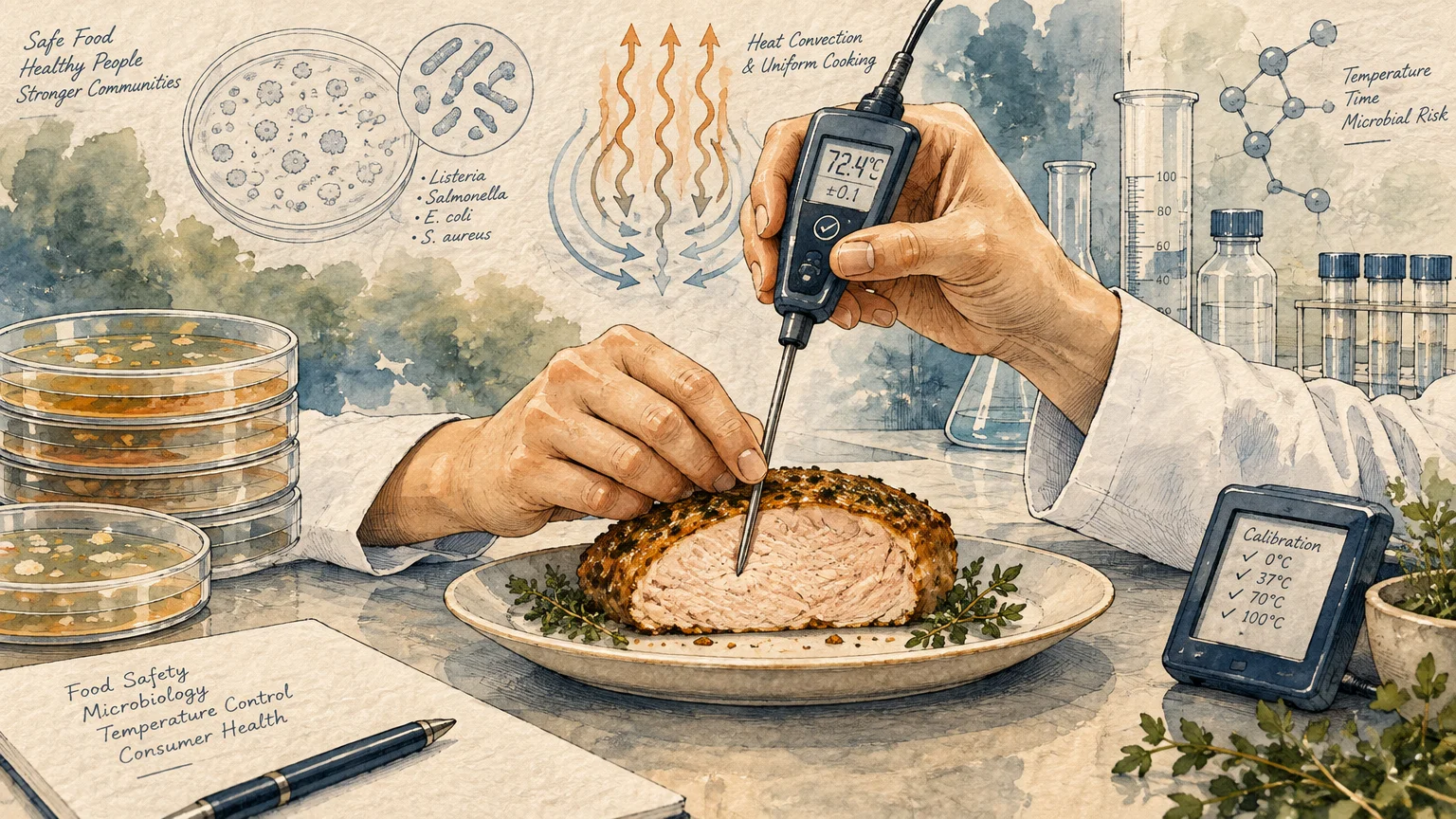
Registered dietitians emphasize that home kitchen safety forms the bedrock of preventive gastrointestinal wellness. Avoiding microbial shortcuts prevents debilitating digestive distress that disrupts daily productivity.
Food microbiologists highlight that thermal dynamics in frozen solids follow unforgiving physical laws. Heat moves through liquid moisture significantly faster than it travels across dense, icy muscle tissue.
Culinary educator Marcus Rivera notes that properly thawed ingredients absorb seasonings far more effectively. Salt and marinades cannot penetrate frozen flesh, leaving unthawed meats bland and watery.
Home cooks who commit to advance thawing report greater kitchen confidence and lower grocery waste. A small shift in planning transforms chaotic weeknight cooking into a peaceful, rewarding ritual.
Safety Precautions for Vulnerable Populations
Food safety precision becomes critically important when cooking for higher-risk individuals. Pregnant women, young children, older adults, and immunocompromised patients face severe outcomes from foodborne infections.
Pathogenic bacteria like Listeria monocytogenes survive refrigeration and cause dangerous complications in vulnerable bodies. High-risk households must ensure thorough thawing followed immediately by complete cooking to safe internal temperatures.
The Food and Drug Administration recommends monitoring seafood closely during thawing to prevent rapid bacterial proliferation. Always keep thawing fish at cold temperatures under 40°F.
Seafood requires meticulous temperature vigilance because improper handling can trigger dangerous scombroid histamine poisoning. Histamine compounds withstand cooking heat entirely once formed, causing severe allergic reactions upon ingestion.
Consult a physician or clinical dietitian if you manage complex chronic medical conditions. Tailoring safe food handling protocols to your personal health status protects your overall well-being.
Frequently Asked Questions
Can you safely defrost meat in a microwave?
Yes, you may use your microwave defrost setting if you cook the food immediately afterward. Microwave thawing creates uneven warm spots where ambient bacteria multiply rapidly if left unattended.
Move the defrosted meat directly into your preheated skillet, oven, or grill without delay. Immediate heat application destroys residual bacteria before they can establish thriving colonies.
Which foods are safe to cook straight from frozen?
Thin cuts with small surface areas cook safely and evenly without prior defrosting. Pre-portioned burger patties, bacon strips, and frozen dumplings cook through rapidly before surface burning occurs.
Commercial frozen vegetables also cook exceptionally well straight from the freezer bag. Their compact size allows steam or sauté heat to penetrate instantly, preserving bright pigments and crispness.
How can you safely thaw meat when you are short on time?
Place your vacuum-sealed protein into a clean bowl filled with cold tap water. Refresh the cold water every thirty minutes to ensure continuous, efficient heat transfer.
Never submerge frozen meat in warm or hot water, which creates an immediate bacterial breeding ground. A one-pound package of meat thaws thoroughly in under an hour using cold water.
Can you safely refreeze meat that has thawed completely?
You can safely refreeze raw meat if it thawed entirely inside a refrigerator kept below 40°F. However, repeated freezing cycles break cell walls and produce dry, compromised texture.
If you thawed the protein on a kitchen counter or in warm water, do not refreeze it raw. You must cook the food thoroughly before freezing the prepared meal for future dining.
Take Action in Your Kitchen Today
Adopting safe food handling habits does not demand complicated culinary techniques or pricey equipment. It simply requires establishing a proactive kitchen routine that honors biological safety and culinary excellence.
Take thirty seconds right now to visit your freezer and select tomorrow night’s dinner protein. Place that item on a rimmed plate and set it onto your bottom refrigerator shelf immediately.
This effortless daily action protects your loved ones from foodborne pathogens and guarantees a tender, delectable dinner. Make proactive thawing your new kitchen standard starting this evening.