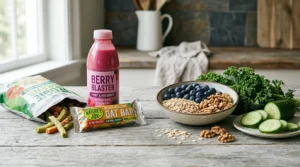
Clever food packaging tricks you into buying products that quietly undermine your wellness goals. Learning to spot disguised sugars and refined fillers transforms your grocery cart into a genuine powerhouse of vitality.
Front-of-package buzzwords like “natural,” “gluten-free,” and “plant-powered” often mask ultra-processed ingredients, excess sodium, and alarming amounts of sweeteners. Marketing teams craft these claims to sell a perception of health rather than real nutritional quality.
You deserve clear, actionable nutrition facts instead of deceptive food labels. Here are the 12 most misleading health foods and the simple whole-food swaps you can make today.

The Science of Front-of-Package Health Halos
Food manufacturers exploit consumer psychology through the “health halo” effect, where a single positive claim makes an entire product seem wholesome. A package boasting “organic cane sugar” or “non-GMO” distracts you from high caloric density and poor nutrient quality.
To protect consumers, the U.S. Food and Drug Administration published an updated rule for voluntary “healthy” packaging claims. Under these regulations, foods must provide meaningful amounts of recommended food groups while adhering to strict nutrient limits.
The American Heart Association advises capping daily added sugar at 25 grams for women and 36 grams for men. Yet the average American consumes roughly 71 grams daily—nearly triple the recommended maximum for women.
Furthermore, the Dietary Guidelines for Americans recommends capping sodium intake below 2,300 milligrams daily. Many packaged convenience items marketed as wholesome deliver half of that daily allowance in one sitting.
12 Misleading Foods to Re-Evaluate
1. Commercial Bottled Smoothies and Juices
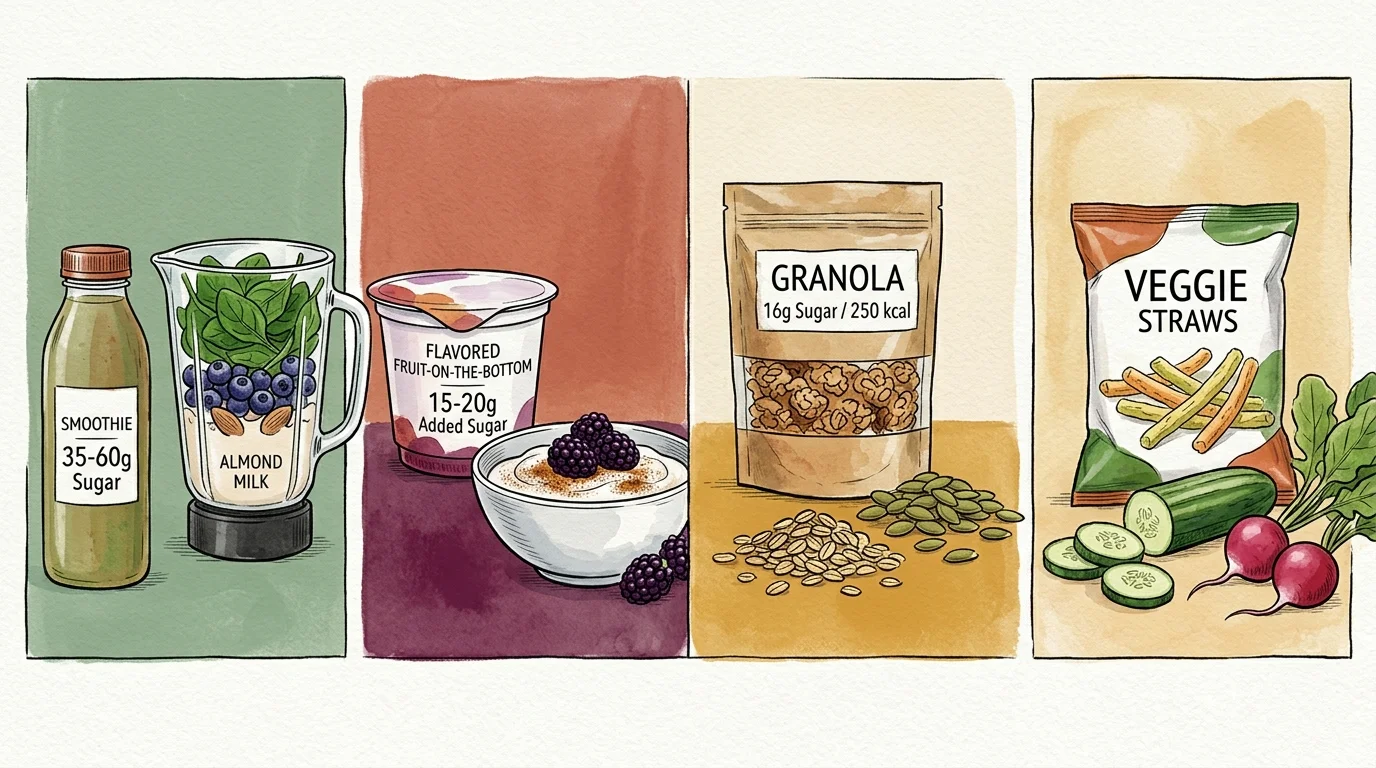
Commercial smoothies look like liquid produce, but a standard 16-ounce bottle frequently packs 35 to 60 grams of sugar. Industrial juicing strips away beneficial insoluble fiber, causing rapid blood glucose spikes and subsequent energy crashes.
Blend your own smoothie at home using whole berries, unsweetened almond milk, leafy spinach, and unsweetened protein powder instead.
2. Flavored and Fruit-on-the-Bottom Yogurts
Yogurt provides high-quality protein and gut-friendly probiotics, but flavored varieties are often glorified desserts. A single six-ounce cup can harbor 15 to 20 grams of added sugar, consuming most of your daily sugar allowance.
Choose plain Greek yogurt or skyr to maximize protein and eliminate added sugar. Sweeten your bowl naturally with fresh blueberries and a light sprinkle of Ceylon cinnamon.
3. Store-Bought Granola and Granola Clusters
Granola promotes an image of outdoor vitality, yet a half-cup serving averages 250 calories and up to 16 grams of added sugar. Many commercial brands bind rolled oats with saturated oils and multiple concentrated syrups.
Swap packaged granola for plain rolled oats lightly toasted with raw walnuts, chia seeds, and pumpkin seeds.
4. Veggie Chips and Vegetable Straws
Brightly colored veggie straws suggest a garden bounty, but their primary ingredients are usually refined potato starch, corn flour, and vegetable oils. Vegetable powders appear in minuscule amounts merely for visual coloring.
These snacks match regular potato chips in sodium and refined starch, offering practically zero beneficial fiber. Snack on sliced cucumbers, crisp radishes, or homemade kale chips baked with olive oil instead.
5. Fat-Free Salad Dressings
When manufacturers strip dietary fat from dressings, they compensate by adding modified food starches, thickeners, high-fructose corn syrup, and excessive sodium. A single two-tablespoon serving can deliver 8 grams of sugar.
Removing fat also prevents your digestive tract from absorbing fat-soluble vitamins A, D, E, and K from leafy greens. Whisk extra-virgin olive oil with fresh lemon juice and Dijon mustard for a nutrient-rich alternative.
6. Processed Gluten-Free Snacks and Breads
Gluten-free labels convey an automatic aura of digestive wellness, but packaged gluten-free baked goods typically rely on refined tapioca, potato, or white rice starches. These starches lack dietary fiber and essential B vitamins.
Unless you manage celiac disease or gluten sensitivity, processed gluten-free items offer no inherent metabolic advantage. Choose naturally gluten-free whole carbohydrates like quinoa, sweet potatoes, and brown rice.
7. Commercial Protein and Energy Bars
Many popular protein bars masquerade as fitness fuel while maintaining the nutritional profile of candy bars. They often pack 20 grams of sugar alongside cheap soy protein isolates and palm kernel oils.
Bars formulated with sugar alcohols can trigger digestive discomfort, bloating, and cramping. Fuel your workouts with whole-food options like a hard-boiled egg paired with a fresh apple.
8. Agave Nectar and “Natural” Syrups
Agave syrup gained popularity as a low-glycemic natural alternative to table sugar, but it contains up to 85 percent concentrated fructose. Excessive fructose travels directly to your liver, potentially promoting hepatic fat accumulation over time.
Your metabolism processes agave nectar similarly to high-fructose corn syrup. Train your taste buds to appreciate lower sweetness thresholds, or sweeten dishes sparingly with mashed whole fruit.
9. Ultra-Processed Plant-Based Meats
Plant-based burgers appeal to eco-conscious eaters, but many commercial patties undergo heavy industrial processing. They frequently contain high amounts of refined coconut oil, methylcellulose, and upwards of 500 milligrams of sodium.
High sodium intake elevates cardiovascular strain, as documented by the Centers for Disease Control and Prevention. Build wholesome plant-powered meals using seasoned black beans, lentils, tempeh, or organic extra-firm tofu.
10. Sweetened Instant Oatmeal Packets
Whole oats offer exceptional soluble fiber for cardiovascular health, but pre-flavored instant packets undergo intense rolling and processing. This high-glycemic processing causes faster starch digestion and rapid blood sugar elevation.
Individual flavored packets frequently contain three to four teaspoons of added brown sugar or artificial flavorings. Prepare steel-cut or rolled oats in batches and stir in raw hemp seeds and fresh sliced strawberries.
11. Commercial Acai and Smoothie Bowls
Pure acai berries deliver powerful antioxidants, but commercial smoothie bowls served at quick-service cafes rarely resemble whole fruit. Base purees are typically blended with sugary apple juice and sweetened condensed milks.
Topped with sweetened granola, coconut flakes, and honey drizzles, a single bowl can surpass 75 grams of sugar. Order an unsweetened base with sliced almonds and fresh fruit, or prepare your own bowl at home.
12. Vitamin-Enhanced Waters
Bottled waters boasting added vitamins and electrolytes often seem like effortless hydration upgrades. However, a single 20-ounce bottle can contain over 30 grams of crystalline fructose.
The National Institutes of Health emphasizes that healthy individuals should obtain essential micronutrients from balanced whole foods rather than fortified sugary beverages. Hydrate with pure filtered water infused with fresh mint leaves or cucumber slices.

Three Strategic Pillars for Smarter Grocery Shopping
Adopting sustainable dietary habits requires structured strategies that bypass deceptive supermarket packaging. Implementing these three foundational pillars will help you make clear, nourishing choices every time you shop.
Pillar 1: Meal Planning Around Whole Ingredients
Design your weekly grocery list around perimeter supermarket aisles where fresh produce, refrigerated proteins, and unprocessed staples reside. Planning dinners around whole vegetables and unprocessed proteins prevents impulse buys of deceptively marketed convenience foods.
Batch-cook staple carbohydrates like quinoa, roasted squash, or steel-cut oats over the weekend. Having nourishing basics ready in your refrigerator eliminates the need for packaged, sugar-laden substitutes when your schedule gets hectic.
Pillar 2: Mastering the Nutrition Facts Panel
Ignore front-of-package marketing slogans and turn the container directly to the Nutrition Facts panel. Check the “Includes Added Sugars” line first, aiming for snacks with less than four grams per serving.
Scan the ingredient list for sneaky sugar aliases like maltodextrin, cane juice crystals, dextrose, and rice syrup. Prioritize products where recognizable whole foods occupy the top three positions in the ingredient list.
Pillar 3: Habit Formation and Simple Upgrades
Sustainable dietary change relies on incremental upgrades rather than restrictive all-or-nothing mindsets. Focus on upgrading one misleading pantry item each week to build enduring nutritional confidence.
If you regularly consume flavored yogurt, transition to a half-plain, half-flavored mixture for two weeks before switching to 100 percent plain. Gradual shifts allow your palate to reset and embrace authentic, natural flavors without feeling deprived.
Expert Perspectives and Real-World Insights
Clinical dietitians consistently emphasize that whole-food simplicity beats clever packaging every time. When patients shift away from ultra-processed health foods, their metabolic markers and energy levels improve dramatically within weeks.
Dr. Elena Rostova, a preventive medicine specialist, explains that chronic exposure to hidden sugars accelerates systemic inflammation. Replacing processed health snacks with whole nuts and fruits provides immediate cellular benefits.
Marcus Vance, a community wellness coordinator, notes that families often cut their grocery bills by replacing specialty dietary snacks with whole beans, oats, and frozen produce. Real nourishment remains accessible across diverse cultural backgrounds and household budgets.

Safety, Special Diets, and When to Consult a Clinician
Nutritional needs vary substantially based on personal medical history, kidney function, metabolic health, and physical activity levels. Individuals managing type 2 diabetes must pay close attention to carbohydrate quality, total glycemic load, and fiber ratios.
Athletes requiring rapid carbohydrate replenishment during endurance events may occasionally benefit from concentrated energy products. However, sedentary individuals consuming these same products will likely experience unwanted weight gain and glycemic instability.
If you suspect food allergies, gastrointestinal disorders, or celiac disease, consult a registered dietitian or gastroenterologist before eliminating major food groups. Tailored medical nutrition therapy ensures you achieve optimal wellness safely and effectively.
Frequently Asked Questions
How can I identify hidden added sugars on food labels?
Look at the indented line labeled “Includes Added Sugars” beneath Total Carbohydrates on the Nutrition Facts panel. In the ingredient list, watch for syrup, nectar, fruit juice concentrate, and words ending in “-ose.”
Keep in mind that naturally occurring sugars in plain milk and fresh fruit do not count toward added sugar totals.
Are all processed foods bad for my health?
No, food processing exists on a broad spectrum from minimally processed to ultra-processed. Minimally processed items like canned black beans, frozen vegetables, and plain rolled oats provide convenient, highly nutritious meal foundations.
Focus on minimizing ultra-processed items that combine industrial fats, refined starches, artificial flavorings, and high levels of added sodium.
Is fruit sugar in whole fruit as harmful as added sugar?
No, whole fruits contain cellular structure, water, and intact dietary fiber that slow fructose absorption into your bloodstream. Fiber promotes satiety and prevents the rapid insulin spikes associated with liquid sugars and refined foods.
Whole fruit also delivers essential vitamins, antioxidants, and minerals that protect metabolic and cardiovascular health.
What is the easiest way to sweeten foods without refined sugar?
Use whole mashed bananas, unsweetened applesauce, or a light dusting of warm spices like cinnamon, nutmeg, and vanilla bean powder. These additions impart satisfying sweetness alongside essential micronutrients and dietary fiber.
Over time, reducing added sweeteners resets your taste buds so natural whole foods taste significantly sweeter and more satisfying.
Take Action in the Next 24 Hours
You do not need to overhaul your entire kitchen overnight to experience real health improvements. Sustainable vitality blossoms through small, intentional choices repeated consistently over time.
Open your pantry right now and inspect the labels on three packaged foods you consider healthy. Swap just one high-sugar or ultra-processed item for a vibrant whole-food alternative during your next meal.
Taking control of your nutrition begins with one single, mindful step toward whole-food nourishment today.