
Your morning breakfast routine holds unexpected power over how sharply your brain ages. Recent research highlights that regularly eating whole eggs helps preserve vital memory and verbal fluency in women over time.
With roughly two out of three Americans experiencing cognitive impairment by age 70, simple dietary adjustments matter more than ever. Women face a distinct lifetime cognitive impairment risk of approximately 71 percent according to research in SSM – Population Health.
Understanding the nutritional mechanisms behind this humble breakfast staple empowers you to defend your mental clarity and protect your long-term independence.

Unpacking the UC San Diego Cognitive Study
In August 2024, researchers at the Herbert Wertheim School of Public Health at the University of California San Diego published compelling findings in the journal Nutrients. The longitudinal investigation evaluated 890 community-dwelling adults aged 55 and older who participated in the landmark Rancho Bernardo Study of Healthy Aging. Among the cohort, which included 533 women with an average age of 71.5 years and 357 men averaging 70.1 years, scientists tracked dietary habits alongside cognitive performance over an average follow-up period of 4.1 years.
At baseline, 16.5 percent of female participants and 14 percent of male participants reported that they never consumed eggs; conversely, 3.8 percent of women and 7 percent of men ate eggs five or more times per week. When researchers evaluated changes across several standardized cognitive tests, a striking pattern emerged specifically among female participants.
Category Fluency and Executive Function
Women who reported higher egg intake demonstrated significantly less decline in category fluency over the four-year observation window. Category fluency serves as a fundamental benchmark of executive function and semantic memory; it reflects your ability to access vocabulary, organize complex thoughts, and retrieve stored concepts under time constraints. The statistical analysis showed an inverse association between egg intake and category fluency decline, indicating that regular egg consumption helped maintain critical mental processing speeds.
Interestingly, researchers did not observe this protective association among male participants, nor did they find any adverse cognitive effects in men. Furthermore, despite the concentration of dietary cholesterol in egg yolks, higher consumption was not linked to cognitive deterioration in either sex after adjusting for lifestyle habits, overall dietary quality, and cardiovascular risk markers.
Corroborating Evidence Across Major Cohorts
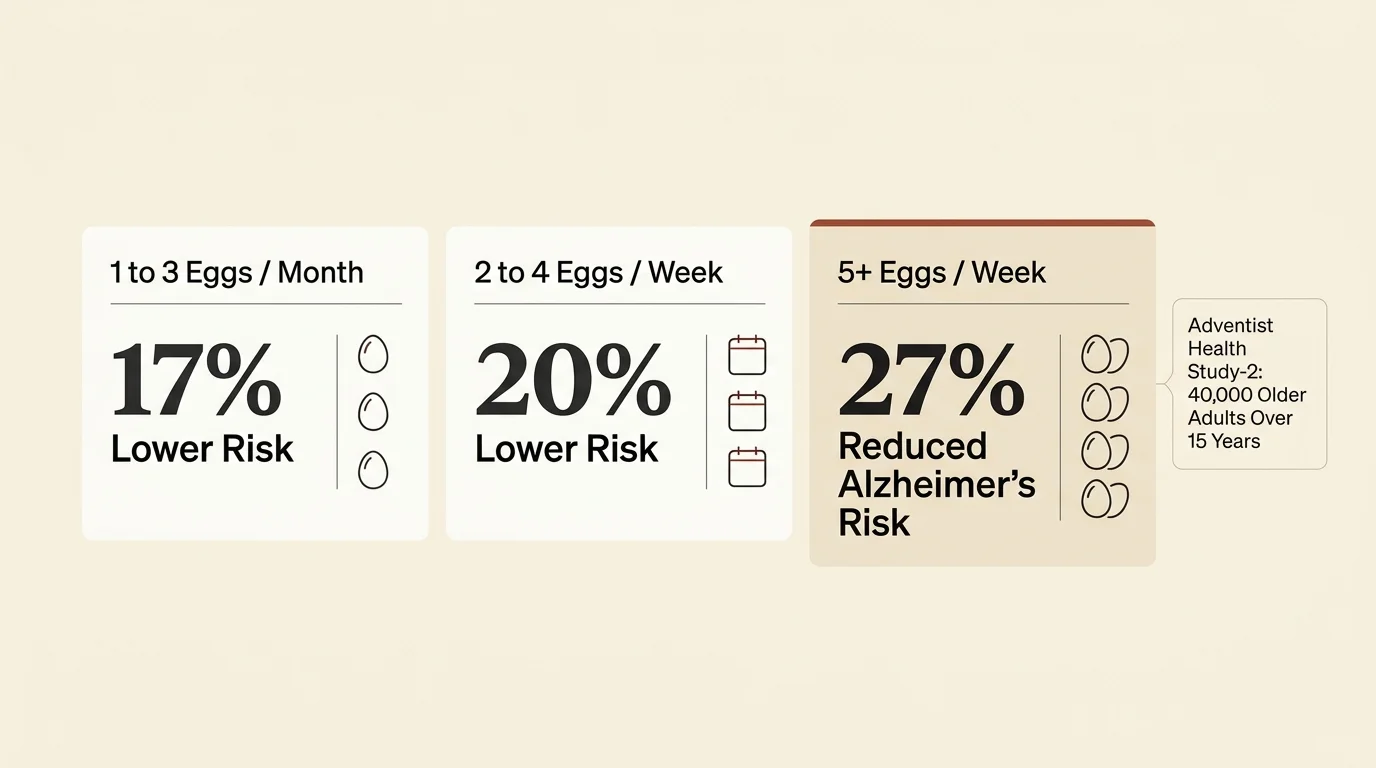
The findings from UC San Diego reinforce a growing body of scientific literature. A major longitudinal study conducted by Loma Linda University and published in The Journal of Nutrition followed roughly 40,000 older adults from the Adventist Health Study-2 cohort across a 15-year timeline. That investigation revealed that individuals consuming five or more eggs per week experienced up to a 27 percent reduced risk of developing Alzheimer’s disease compared to non-consumers. Even moderate intake provided measurable protection, with one to three eggs per month yielding a 17 percent reduction and two to four eggs per week corresponding to a 20 percent risk decrease.
Similarly, investigators analyzing the Rush Memory and Aging Project at Rush University and Tufts University confirmed that consuming more than a single egg per week correlated with significantly slower rates of global cognitive decline and lower odds of Alzheimer’s dementia. According to the Alzheimer’s Association, more than 6.9 million Americans aged 65 and older currently navigate Alzheimer’s disease. As public health initiatives seek accessible preventive strategies, these recurring findings across diverse cohorts underscore the profound impact of nutrient-dense foundational foods on neural longevity.
Key Brain Nutrients Concentrated in the Egg
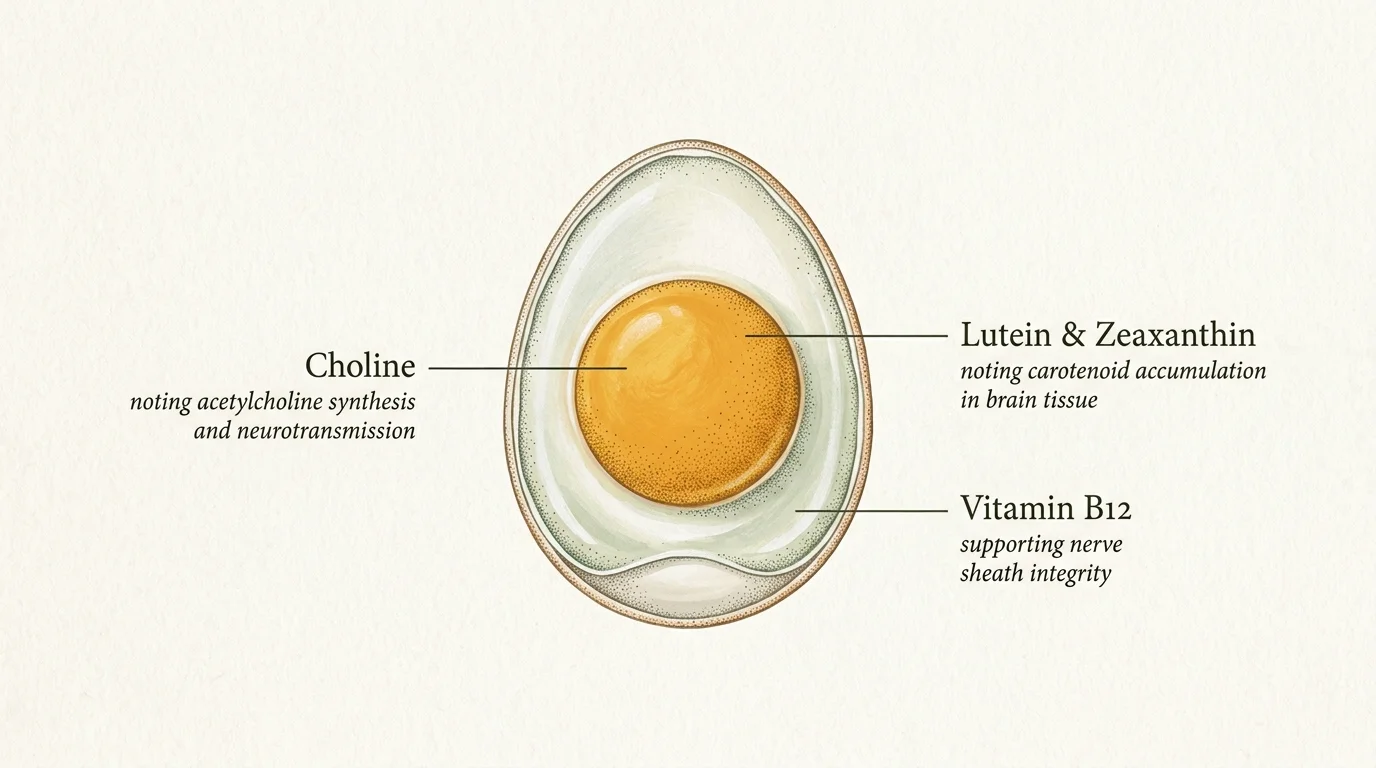
To understand why eggs support brain longevity, you must look closely at their unique biochemical profile. An egg yolk represents one of nature’s most concentrated packages of neuroprotective compounds, delivering bioactive elements that directly nourish neural membranes and facilitate chemical communication between brain cells.
Choline and Neurotransmitter Synthesis
Choline serves as a primary raw material for acetylcholine, an indispensable neurotransmitter that orchestrates memory encoding, sustained attention, and muscle control. The National Institutes of Health indicates that a vast majority of adults fail to achieve the recommended daily choline intake of 425 milligrams for women and 550 milligrams for men. A single large whole egg provides approximately 147 milligrams of choline, instantly fulfilling more than a third of your daily requirement. When you supply your nervous system with adequate dietary choline, you directly sustain the structural integrity of cholinergic neurons, which often suffer the earliest damage during neurodegenerative progression.
Carotenoids, Phospholipids, and Membrane Fluidity
Egg yolks also supply significant amounts of lutein and zeaxanthin. Although widely recognized for safeguarding macular vision, these potent carotenoids actively cross the blood-brain barrier and accumulate preferentially in the frontal cortex, hippocampus, and neural tissues. Inside your brain, lutein and zeaxanthin act as microscopic antioxidant shields, neutralizing reactive oxygen species and tempering chronic neuroinflammation before it damages delicate synaptic connections.
Moreover, eggs deliver these carotenoids alongside rich stores of phospholipids and omega-3 fatty acids. Phospholipids form the essential lipid bilayer of every brain cell membrane, maintaining the cellular fluidity necessary for rapid electrical signaling and nutrient transport. Because carotenoids are fat-soluble, the natural lipid matrix of the yolk dramatically enhances their bioavailability, ensuring your digestive tract absorbs them far more efficiently than it would from dry supplements alone.

Three Practical Strategies to Enhance Cognitive Nutrition
Translating nutritional science into daily life requires practical, repeatable actions. You can optimize the brain-boosting potential of eggs by incorporating them into balanced meals, leveraging nutrient synergy, and establishing friction-free morning habits.
Strategy 1: Elevate Nutrient Density Through Whole-Food Pairings
You should never view breakfast foods in isolation. To maximize cognitive resilience, pair whole eggs with vibrant, antioxidant-rich plant foods that provide dietary fiber and complementary polyphenols. Sauté a generous handful of baby spinach, chopped kale, or sliced bell peppers in a teaspoon of extra virgin olive oil before scrambling two pasture-raised eggs. This combination pairs the bioavailable lutein from the yolk with plant-based vitamin E, folate, and sulforaphane, creating an anti-inflammatory powerhouse on your plate.
If you prefer complex carbohydrates, layer a poached egg over toasted whole-grain sourdough with mashed avocado and a sprinkle of hemp seeds. The soluble fiber from whole grains stabilizes postprandial glucose levels, preventing mid-morning blood sugar spikes and subsequent energy crashes that impair concentration, while avocado provides monounsaturated fatty acids that support cerebral blood flow.
Strategy 2: Target Choline and Micronutrient Synergy Across Meals
While breakfast offers an intuitive time to enjoy eggs, you can easily distribute brain-nourishing nutrients across your entire weekly menu. Hard-boil half a dozen eggs at the start of the week so you have ready-to-eat protein and choline available for midday grain bowls, lentil salads, or light afternoon snacks. Combining eggs with sulfur-rich cruciferous vegetables like roasted broccoli or shredded Brussels sprouts supports glutathione production, the brain’s primary endogenous antioxidant defense mechanism.
Consider cultural preparations that integrate eggs into savory dinners, such as a traditional Mediterranean shakshuka featuring gently poached eggs simmering in a rich tomato, garlic, and bell pepper sauce. The lycopene from cooked tomatoes combines with the healthy fats in egg yolks to enhance antioxidant absorption, protecting vascular pathways that supply oxygen to your cerebral cortex.
Strategy 3: Build Friction-Free Morning Routines
Morning decision fatigue often pushes busy adults toward convenient, ultra-processed breakfast options that promote systemic inflammation. By streamlining your morning preparation, you make brain-healthy choices the easiest path forward. Whisk together whole eggs, diced vegetables, and herbs on Sunday evening, bake them in silicone muffin cups, and store them in your refrigerator for quick reheating throughout the workweek.
Pair this routine with adequate morning hydration. Drinking a tall glass of water alongside your breakfast supports vascular volume, optimizing the delivery of newly digested amino acids and choline straight to your central nervous system.
Navigating Dietary Cholesterol, Safety, and Plant Alternatives
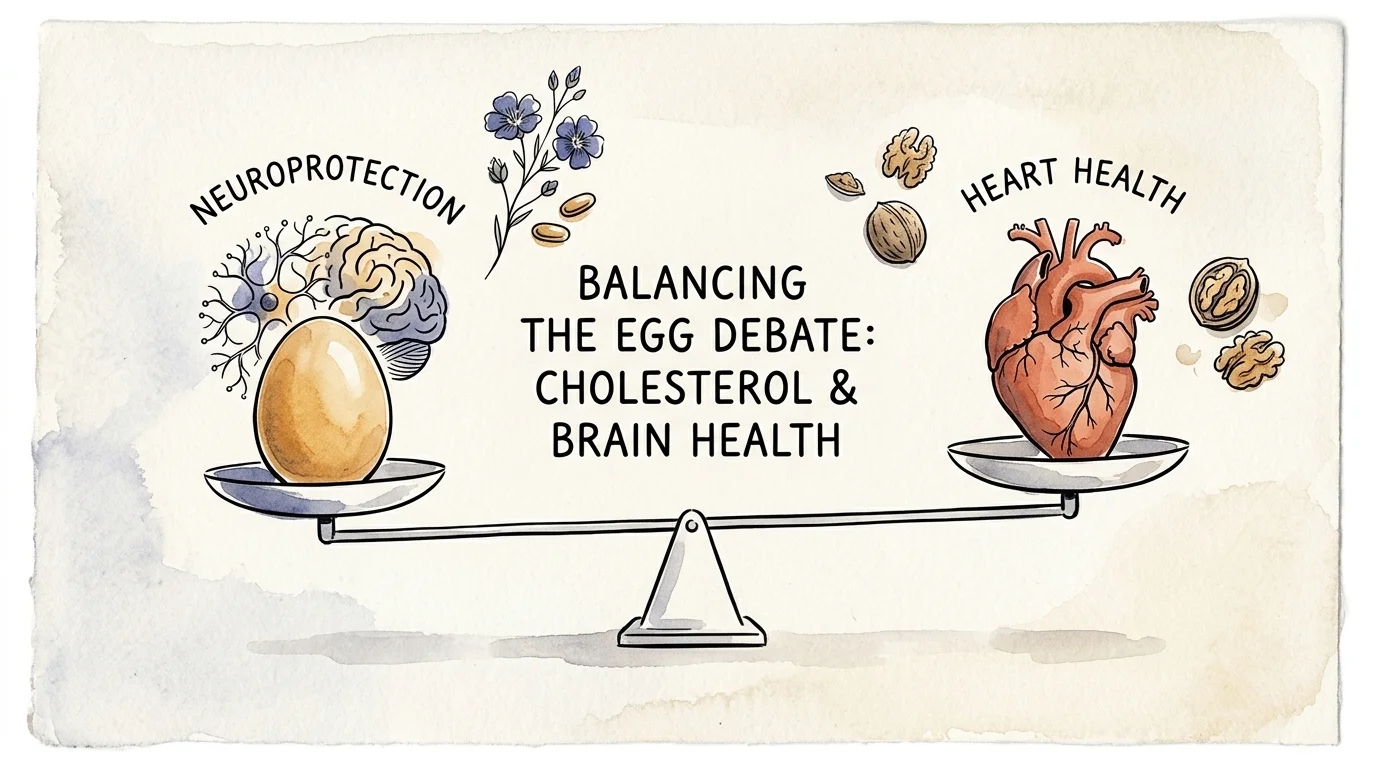
For decades, outdated dietary guidelines cautioned against eating whole eggs due to fears surrounding dietary cholesterol and heart disease. However, contemporary cardiovascular research—as emphasized by the Centers for Disease Control and Prevention—demonstrates that saturated and trans fats exert a substantially stronger influence on blood cholesterol levels than dietary cholesterol itself for most individuals. The UC San Diego study confirmed that higher egg intake did not promote cognitive or cardiovascular decline among older adults.
Nonetheless, individual biochemistry varies. If you carry familial hypercholesterolemia, have specific genetic predispositions such as the ApoE4 allele, or manage active cardiovascular conditions, collaborate with your cardiologist or a registered dietitian to establish your personalized dietary targets. If you manage an egg allergy or follow an exclusively vegan lifestyle, you can still support cognitive health by intentionally consuming plant sources of choline such as organic non-GMO soy products, edamame, quinoa, wheat germ, and navy beans, paired with dark leafy greens and algae-derived omega-3 supplements.

Expert Insights on Longevity and Cognitive Resilience
Clinical practitioners increasingly advocate for proactive, food-first interventions to safeguard neurological function. Registered dietitians emphasize that dietary habits formed in midlife and older adulthood directly shape how effectively the brain resists neurodegenerative pathology. Prioritizing nutrient-dense whole foods over refined carbohydrates provides the sustained energy and cellular raw materials your neurons require to maintain synaptic plasticity.
When you sit down with a healthcare provider, discuss your comprehensive lifestyle picture alongside your dietary intake. Nutrition represents a powerful pillar of cognitive preservation, but it functions best alongside restorative sleep, regular physical activity, intellectual engagement, and meaningful social connections.
Frequently Asked Questions
How many eggs per week should you eat for cognitive benefits?
Research from UC San Diego and Loma Linda University suggests that consuming between two and five whole eggs per week is associated with notable cognitive preservation and reduced risk of neurodegenerative decline. Eating one whole egg most days of the week comfortably supplies meaningful quantities of choline and carotenoids without exceeding balanced dietary guidelines.
Are egg whites just as effective for brain health as whole eggs?
No; while egg whites provide high-quality, lean protein, almost all of the egg’s neuroprotective compounds—including choline, lutein, zeaxanthin, phospholipids, and essential fatty acids—are concentrated entirely within the yolk. To achieve the cognitive health benefits highlighted in clinical research, you must consume the whole egg.
Does cooking method affect the cognitive benefits of eggs?
Gentle cooking methods such as poaching, soft-boiling, or light scrambling preserve delicate carotenoids and prevent the oxidation of healthy fats. Avoid cooking eggs at excessively high heat or charring them, as extreme temperatures can degrade heat-sensitive micronutrients and oxidize cholesterol.
Can men also benefit from eating eggs regularly?
Yes. Although the UC San Diego study found a statistically significant preservation of category fluency exclusively in women, whole eggs supply essential amino acids, choline, and micronutrients that support cellular repair, muscle mass maintenance, and metabolic health across all genders.
Take Your First Brain-Healthy Step Today
Protecting your memory and executive function does not require complicated regimens or expensive supplements. Small, evidence-based adjustments to your daily routine can yield substantial neurological dividends over the coming years. Within the next 24 hours, take one concrete action: replace a refined morning carb with two gently cooked whole eggs paired with sautéed leafy greens or avocado. Your future brain will thank you for making cognitive longevity an everyday priority.