
Eating an avocado every day lowers harmful cholesterol particles, stabilizes your hunger, and upgrades your diet quality without expanding your waistline. When you swap refined carbohydrates or saturated fats for this fruit, you supply your body with heart-protective monounsaturated fats and prebiotic fiber.
Despite these proven avocado health benefits, clinical data shows that only 2% of American adults eat avocados regularly. Closing that gap takes just one simple daily swap that supports your heart, gut, and brain.
Below, you will explore what clinical trials reveal about daily avocado effects on your blood lipids and digestion. You will also learn how to customize your portion size and pair healthy fats for better nutrient absorption.
The Science Snapshot: How Daily Avocado Consumption Reshapes Your Health
For decades, outdated nutrition advice lumped all high-fat foods into the same cautionary bucket. Under a 1994 federal regulation, fresh avocados could not even carry a healthy label on grocery store packaging because of strict limits on total fat content.
Modern nutritional science has completely overturned that fat-phobic framework. On December 19, 2024—and published formally on December 27, 2024—the U.S. Food and Drug Administration issued a final rule updating the definition of the healthy nutrient content claim for the first time since 1994.
This landmark regulation went into effect on April 28, 2025, with a mandatory compliance deadline set for February 25, 2028. Under these updated federal food labeling regulations (21 CFR 101.65(d)(3)(i)), whole fruits and vegetables with no added ingredients—including avocados—automatically qualify for the healthy claim.
Federal guidance now prioritizes fat quality over total fat quantity, distinguishing between beneficial unsaturated fatty acids and artery-clogging saturated fats. When you eat an avocado every day, you align your plate with this modern evidence base and trigger measurable physiological upgrades.
Cardiovascular Protection and LDL Particle Reduction
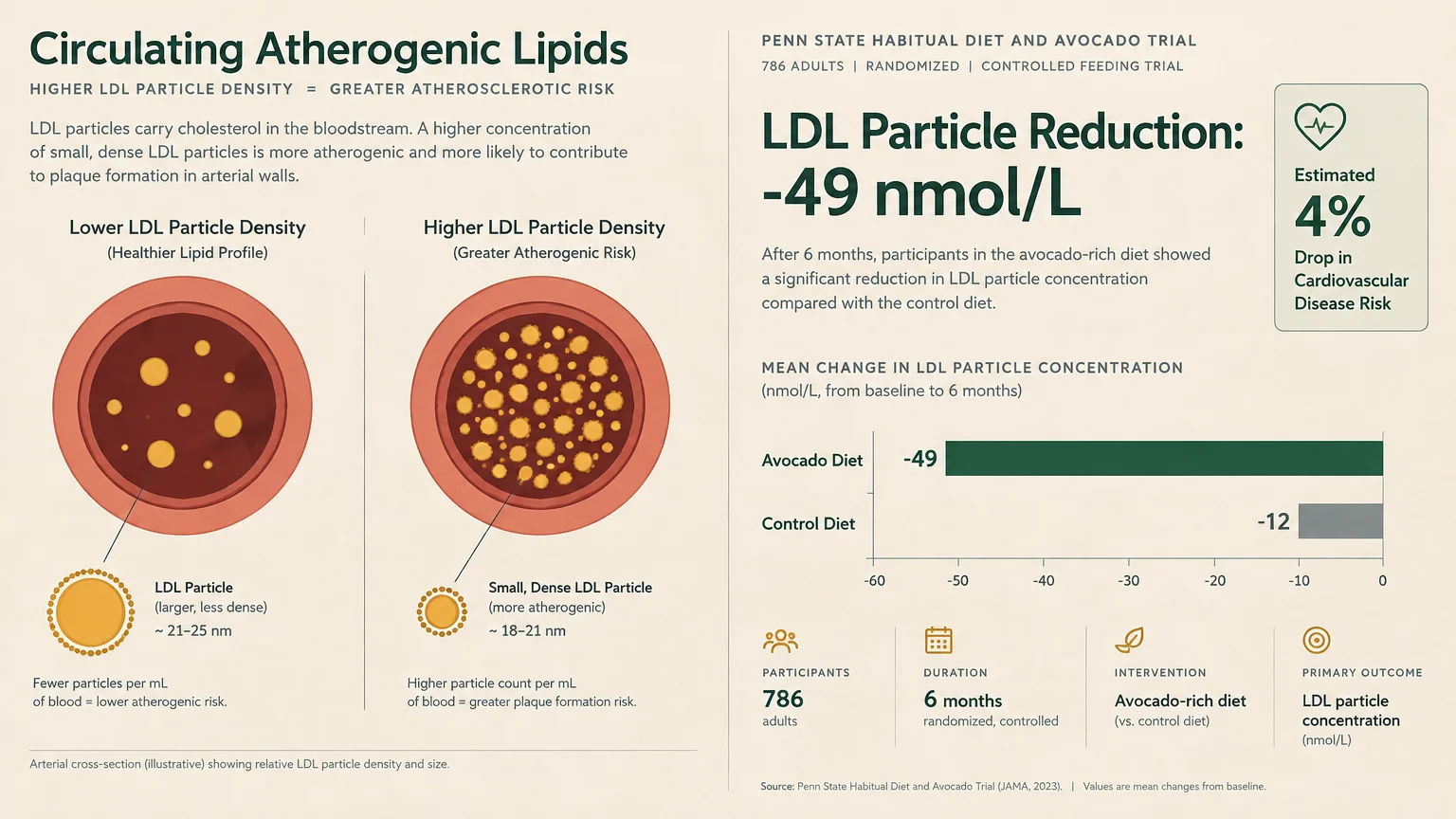
Your cardiovascular system responds rapidly when you replace refined starches and animal fats with plant-based monounsaturated fats. Standard blood tests only measure total cholesterol weight, but advanced lipid panels track the actual number of low-density lipoprotein (LDL) particles circulating in your bloodstream.
Small, dense LDL particles penetrate arterial walls easily, driving plaque formation and vascular inflammation. Lowering your total particle concentration is one of the most reliable ways to protect your coronary arteries over time.
A Pennsylvania State University study published in the Journal of Clinical Lipidology in July/August 2026 analyzed 786 adults with abdominal obesity over six months from the Habitual Diet and Avocado Trial. Researchers found that eating one avocado per day reduced circulating LDL particle concentrations by 49 nanomoles per liter.
The investigative team estimated that this specific drop in atherogenic particles corresponds to an approximate 4% reduction in cardiovascular disease risk. You gain this arterial protection simply by incorporating a whole food into your routine rather than relying solely on restrictive dieting.
Longer observational studies reinforce these clinical trial findings with striking consistency. A landmark 30-year Harvard T.H. Chan School of Public Health study tracked thousands of adults to evaluate how habitual fruit fats influence heart outcomes.
Published in the Journal of the American Heart Association in 2022, this long-term cardiovascular cohort research found that consuming at least two servings of avocado per week—equivalent to one whole avocado weekly—was associated with a 16% lower risk of cardiovascular disease. Participants who hit this modest intake threshold also experienced a 21% lower risk of coronary heart disease.
The cardioprotective power peaks when you use avocado to displace butter, cheese, or processed meats. Instead of merely adding extra calories to your plate, you actively improve the ratio of unsaturated to saturated fats circulating in your blood.
Weight Stability and Visceral Fat Dynamics
Many health-conscious eaters hesitate to try eating avocado every day because they fear the calorie count will lead to unwanted weight gain. Because a whole medium fruit carries 322 calories, it is completely natural to wonder where that energy goes inside your body.
In the July/August 2026 Pennsylvania State University trial of 786 adults with abdominal obesity, daily consumption of one whole avocado caused zero weight gain. Participants also showed no increases in waist circumference over the six-month intervention period.
How can you add a calorie-dense fruit to your daily routine without expanding your waistline? The answer lies in the physical structure of the avocado matrix and its effect on your gut hormones.
When you chew whole avocado flesh, its combination of viscous dietary fiber and oleic acid slows down gastric emptying. Food stays in your stomach longer, which blunts post-meal blood sugar spikes and prevents the rapid insulin surges that trigger rebound hunger.
As oleic acid reaches your small intestine, your mucosal cells synthesize oleoylethanolamide, a lipid messenger that signals satiety directly to your brain. You naturally eat less at subsequent meals or skip mindless afternoon snacking without feeling deprived.
Furthermore, plant cell walls mixed with fiber trap a small fraction of lipid droplets during digestion, carrying them straight into the colon rather than absorbing every calorie. Your body processes whole avocado nutrition very differently than it processes liquid oils or refined snacks.
Diet Quality and the Substitution Effect
Adding a single nutrient-rich staple to your kitchen often triggers a domino effect that upgrades your entire eating pattern. In nutrition science, we call this the displacement or substitution effect.
A 26-week randomized controlled trial of 1,008 adults led by Penn State researchers and published in Current Developments in Nutrition in early 2024 examined this exact behavioral shift. Participants who ate one avocado daily significantly improved their adherence to the federal nutrition guidelines, as measured by the Healthy Eating Index.
Why did a single fruit raise overall diet quality scores across more than a thousand adults? The data revealed that participants naturally used avocados to replace foods high in refined grains and sodium.
When you spread mashed avocado onto whole-grain toast or fold diced cubes into a grain bowl, you stop reaching for salty deli meats, processed cheese spreads, and refined white crackers. One intentional addition crowds out ultra-processed condiments that quietly sabotage your metabolic health.
Brain Health, Lutein, and Cognitive Aging
Your brain is the most lipid-rich organ in your body, and its delicate neuronal membranes rely on steady vascular blood flow and antioxidant protection. Avocados contain lutein, a dietary carotenoid that crosses the blood-brain barrier and accumulates directly in neural tissue and the macula of your eyes.
Because lutein is fat-soluble, the monounsaturated fats inside an avocado make its lutein vastly more bioavailable than the lutein found in fat-free green vegetables. Once inside your brain, lutein helps neutralize oxidative stress and supports neural communication pathways.
Researchers have actively tested how daily intake influences real-world brain performance across the adult lifespan. A six-month randomized controlled trial led by Loma Linda University and published in The Journal of Nutrition, Health, and Aging in June 2026 evaluated 251 overweight adults aged 25 to 84.
That clinical trial specifically examined the effects of eating one avocado per day on memory, processing speed, and executive function compared to a low-avocado control diet. While cognitive resilience depends on your entire lifestyle—including sleep, exercise, and glycemic control—supplying your vascular system and brain tissue with daily monounsaturated fats and carotenoids builds a strong nutritional foundation.
Inside the Fruit: A Granular Breakdown of Avocado Nutrition
Unlike sweet tree fruits that consist mostly of simple sugars and water, the avocado is a botanical berry packed with emulsified plant oils and structural fiber. Understanding the exact numbers for a whole fruit, a half fruit, and an official serving helps you tailor your daily intake with confidence.
According to the Department of Agriculture nutrient database, one whole raw commercial avocado weighing 201g provides 322 calories, 29.5g of total fat (38% Daily Value), and 4.3g of saturated fat (21% DV). That same whole fruit delivers 17.1g of total carbohydrates, 13.5g of dietary fiber (48% DV), and 4g of protein.
On the micronutrient front, a whole 201g avocado supplies 975mg of potassium (21% DV), 20.1mg of vitamin C (22% DV), and just 14.1mg of sodium (1% DV). You get nearly half of your daily fiber requirement and over a fifth of your daily potassium in a single whole piece of produce.
If a whole fruit feels too filling for one sitting, looking at the 100g benchmark—roughly half of a medium avocado—offers a practical middle ground. Per 100g of raw flesh, USDA data lists 160 calories, 14.7g of fat, 8.5g of carbohydrates, 6.7g of dietary fiber, and only 0.7g of sugar.
For precise portion control, the standard USDA and FDA serving size for fresh avocado is one-third of a medium avocado, weighing 50g. That official 50g serving contains 80 calories, 6g of unsaturated fat, 3g of dietary fiber (11% DV), 1g of protein, and 0g of cholesterol, sodium, or added sugars.
Monounsaturated Fats and Nutrient Bioavailability
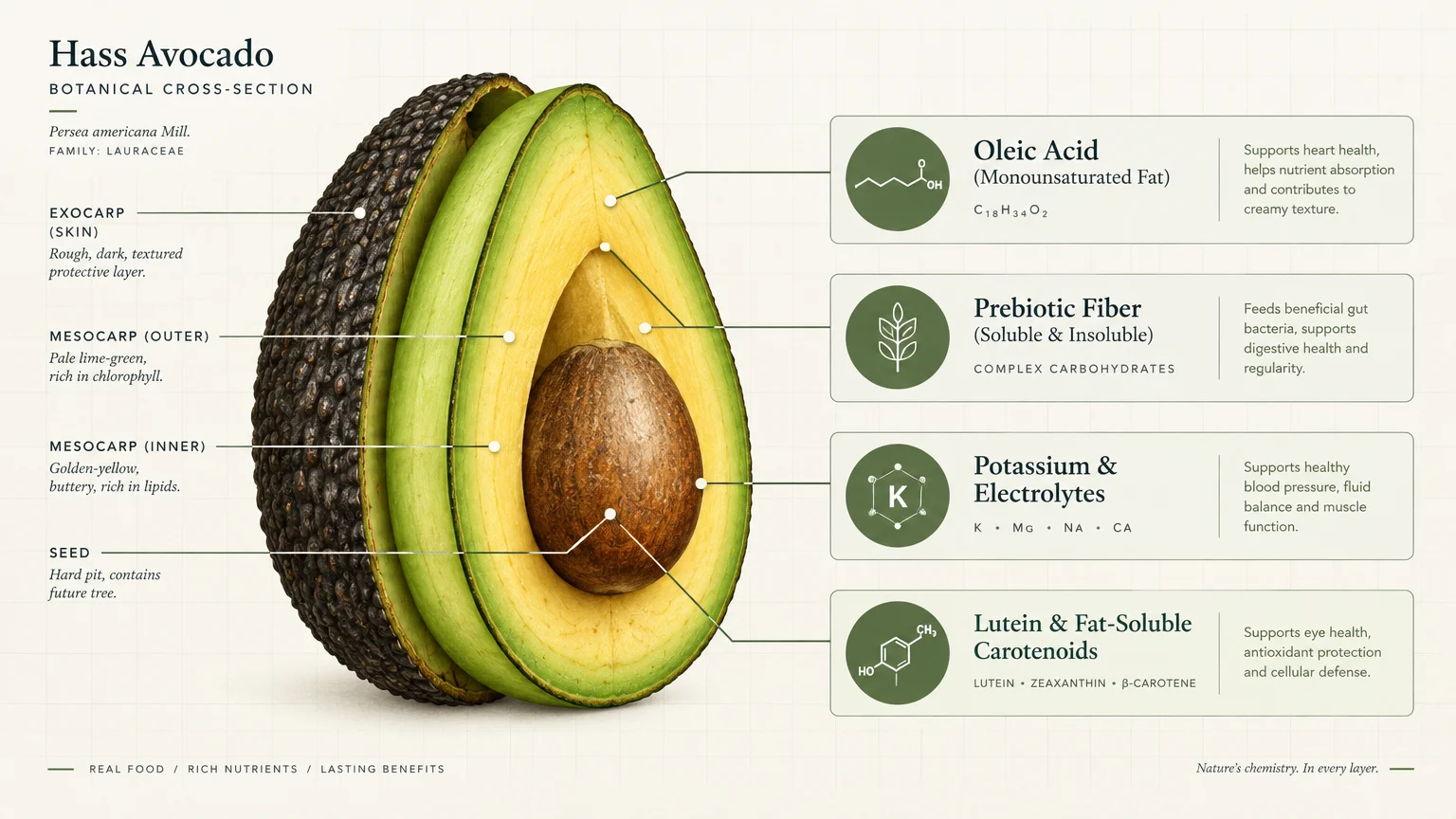
Roughly two-thirds of the 29.5g of total fat in a whole avocado consists of oleic acid, the exact same monounsaturated fatty acid that gives extra-virgin olive oil its anti-inflammatory reputation. Oleic acid helps keep cell membranes fluid, enabling insulin receptors to respond more efficiently to circulating blood glucose.
Beyond its direct cellular effects, avocado fat acts as a biological transport vehicle during digestion. Fat-soluble vitamins—specifically vitamins A, D, E, and K—along with carotenoids like lycopene, beta-carotene, and lutein cannot pass through your intestinal wall without dietary lipids.
When you eat a fat-free garden salad, you flush the vast majority of its protective phytonutrients right through your digestive tract unabsorbed. Adding just 50g to 100g of fresh avocado provides the lipid micelles necessary to shuttle those fat-soluble antioxidants across your intestinal lining and into your bloodstream.
Dietary Fiber and Gut Microbiome Diversity
Getting 13.5g of dietary fiber from a whole avocado—or 6.7g from a half—gives your digestive tract a rare combination of both insoluble and soluble fiber. Insoluble fiber adds physical bulk to your stool, accelerating transit time and preventing sluggish digestion.
Soluble and fermentable fibers serve as primary fuel for beneficial bacteria living in your large intestine. When you eat an avocado every day, your colonic microbes ferment those fibers into short-chain fatty acids like butyrate, propionate, and acetate.
Butyrate serves as the primary energy source for the cells lining your colon, strengthening tight junctions and reducing intestinal permeability. A well-fed microbiome also produces neurotransmitters and anti-inflammatory compounds that regulate immunity and metabolic signaling throughout your body.
Potassium, Micronutrients, and Blood Pressure Regulation
Most adults consume far too much sodium from packaged foods and far too little potassium from fresh produce. That electrolyte imbalance forces your kidneys to retain water, increasing blood volume and placing mechanical strain on delicate blood vessel walls.
With 975mg of potassium and only 14.1mg of sodium in a whole 201g fruit, avocados offer an exceptional electrolyte ratio for blood pressure support. Potassium stimulates your kidneys to excrete excess sodium through urine while relaxing smooth muscle cells inside your arterial walls.
Alongside potassium, the 20.1mg of vitamin C in a whole avocado supports endothelial function and collagen synthesis inside blood vessels. You also absorb B vitamins like folate and pantothenic acid, which drive cellular energy production and homocysteine metabolism.
Strategy Pillar One: Nutrient Focus and Portion Calibration
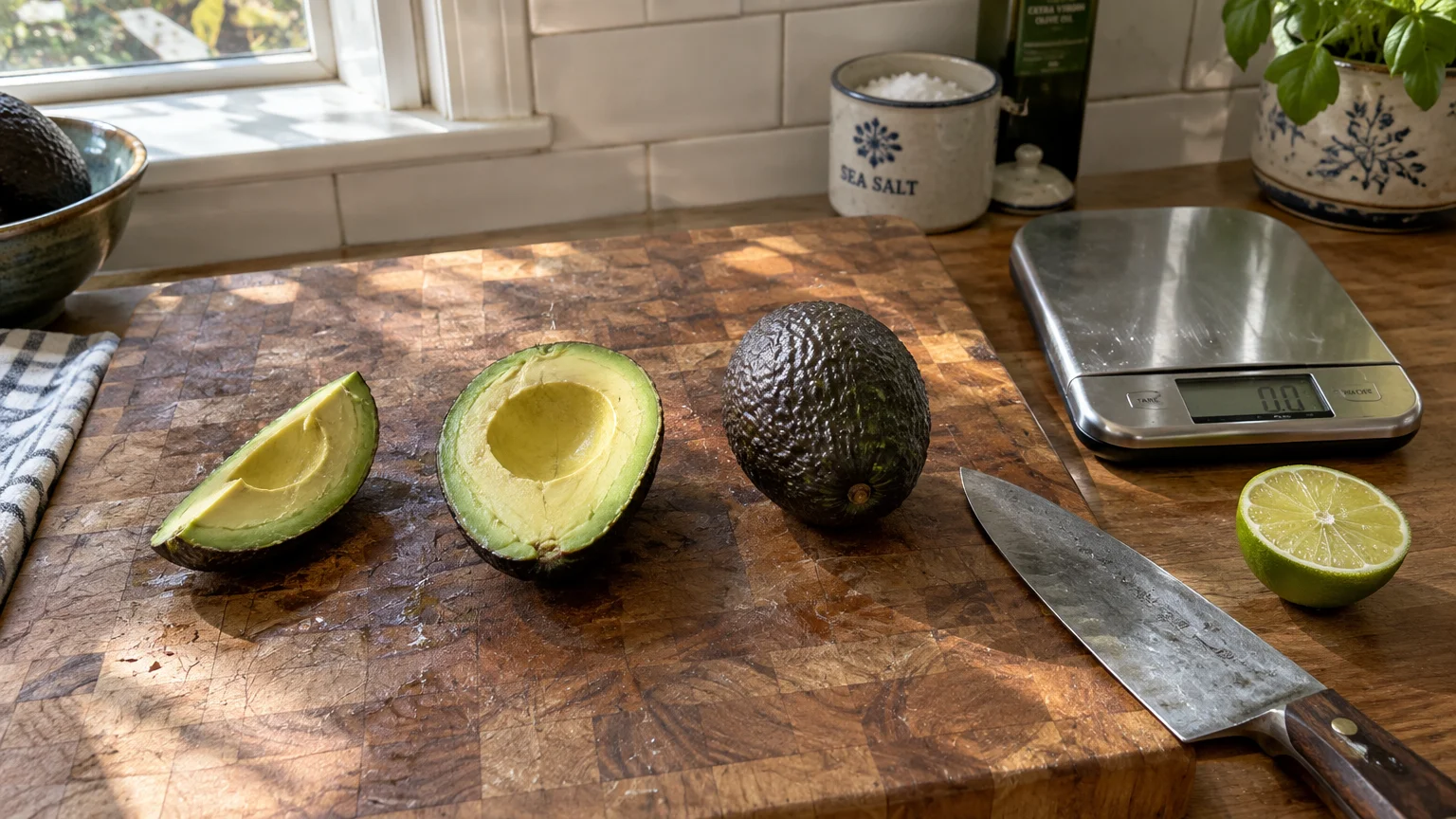
Translating clinical research into your daily kitchen routine starts with choosing the right portion size for your body and health goals. You do not have to eat an entire 201g avocado in a single sitting to capture its cardiometabolic advantages.
Matching Your Portion to Your Caloric and Lipid Goals
If your primary goal is lowering LDL particles and improving overall diet quality without counting calories, eating one whole medium avocado (201g, 322 calories) per day mirrors the exact protocol used in the Penn State trials. Just be sure to use that whole fruit in place of other calorie-dense ingredients rather than piling it on top of heavy meals.
If you have smaller energy requirements or prefer spreading your healthy fats across multiple food sources like nuts, seeds, and olive oil, target the half-avocado benchmark (100g, 160 calories). Half an avocado still delivers 6.7g of fiber and 14.7g of fat, which is plenty to keep you full for hours.
If you are actively tracking macronutrients for a calorie deficit or easing your digestive system into higher fiber intake, start with the official USDA serving size of one-third of a medium avocado (50g, 80 calories). At 80 calories and 3g of dietary fiber, this compact portion slips effortlessly into any structured meal plan.
Pairing Avocados to Maximize Antioxidant Absorption
To get the highest nutritional return on your grocery investment, always pair your daily avocado with colorful, carotenoid-rich produce. Think of your avocado slice as a functional booster that unlocks the hidden medicine inside the rest of your vegetables.
Pair diced avocado with cooked or raw tomatoes in fresh pico de gallo to dramatically increase your absorption of heart-protective lycopene. Toss cubed avocado into dark leafy greens like spinach, kale, or swiss chard to capture more lutein and fat-soluble vitamin K.
Try blending avocado with roasted carrots, sweet potatoes, or red bell peppers to maximize how much beta-carotene your body converts into active vitamin A. Even a simple 50g wedge alongside a vegetable omelet or lunch salad transforms a low-absorption meal into a nutrient-dense powerhouse.
Replacing Saturated Fats and Refined Carbohydrates
The biggest mistake people make when starting a daily avocado habit is treating the fruit as a carefree garnish alongside bacon, cheddar cheese, and buttered white toast. Remember that the cardiovascular benefits documented in peer-reviewed clinical lipidology data rely on substituting unsaturated fats for less healthy options.
Use mashed avocado seasoned with lemon juice and black pepper as a one-to-one replacement for mayonnaise on turkey sandwiches and wraps. Swap out heavy cream or sour cream in taco bowls, baked potatoes, and puréed vegetable soups for blended avocado.
In baking and breakfast prep, you can even substitute puréed avocado for half of the butter in chocolate brownies, banana muffins, or breakfast smoothies. You slash saturated fat content while adding creamy moisture and prebiotic fiber.
Strategy Pillar Two: Inclusive Meal Planning Across Cultures and Budgets
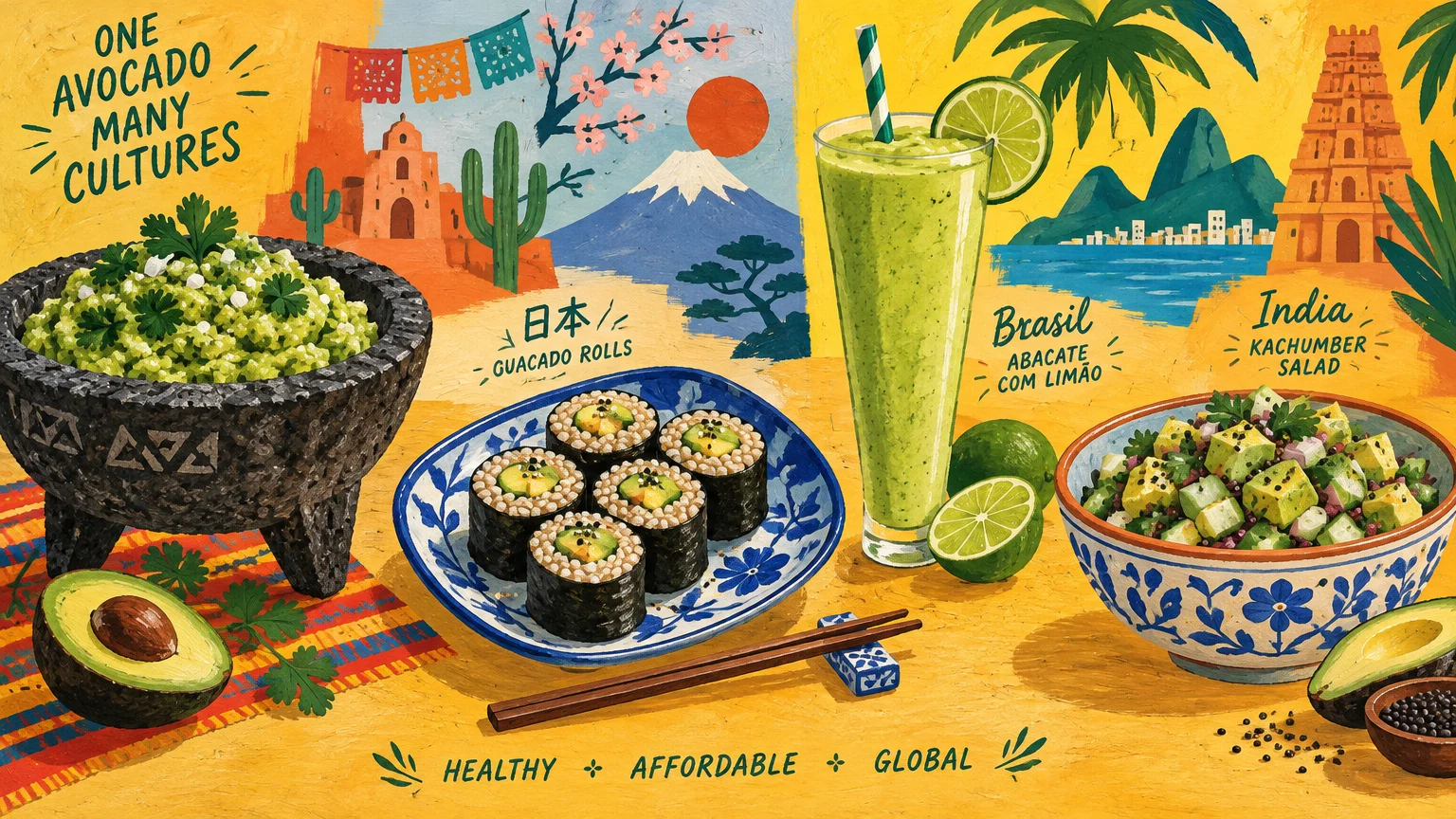
You never have to get bored eating the same breakfast toast every morning when you explore how global culinary traditions use this versatile fruit. At the same time, smart shopping tactics keep a daily avocado habit affordable on a realistic family grocery budget.
Cultural Culinary Applications Beyond Basic Toast
Across Latin American and Caribbean cuisines, avocado is an everyday table staple served simply alongside black beans, plantains, stewed meats, and corn tortillas. Slicing half an avocado over warm pinto beans and brown rice creates a complete plant-based meal rich in complementary amino acids and soluble fiber.
In East and Southeast Asian culinary traditions, avocado pairs beautifully with umami-rich ingredients like toasted sesame oil, low-sodium tamari, pickled ginger, and nori seaweed. Try folding chilled avocado cubes into edamame and cucumber rice bowls, or blending ripe avocado with lime and cilantro as a cooling garnish for spicy coconut curries.
In Brazilian, Filipino, and Vietnamese food cultures, avocados are traditionally celebrated in sweet applications rather than savory dishes. You can blend half a ripe avocado (100g, containing just 0.7g of natural sugar) with unsweetened cocoa powder, a splash of plant milk, and a touch of cinnamon for a thick, blood-sugar-friendly chocolate mousse.
For Mediterranean and Middle Eastern flavor profiles, mash your daily portion into chickpea hummus or baba ganoush with roasted garlic, cumin, and lemon zest. The silky texture cuts down on the amount of refined oil needed while boosting the fiber content of your dip.
Smart Ripening, Storage, and Budget Management
Buying individual gourmet avocados at peak ripeness every couple of days gets expensive fast and often leads to bruised, wasted produce. Instead, buy bagged mini or medium unripe avocados in bulk at warehouse clubs or discount grocers, where the per-fruit cost drops significantly.
Unripe avocados are rock-hard and bright green because their starches and cell walls have not yet softened under the influence of ethylene gas. When you bring a bag of firm avocados home, leave two on the kitchen counter and place the remaining hard fruits straight into the refrigerator crisper drawer.
Cold temperatures slow down enzymatic ripening without damaging the fruit when it is still firm. Every evening, pull one cold avocado out of the fridge and place it on the counter so your ripening pipeline stays continuous.
If an avocado needs to ripen faster for tomorrow’s meal, seal it inside a brown paper bag with a ripe banana or apple. The trapped ethylene gas from the banana accelerates softening within a single day.
What if several avocados ripen all at once before you can eat them? Peel, pit, and cube the ripe flesh, freeze the pieces flat on a parchment-lined baking sheet, and transfer them into a freezer bag for daily smoothies and dressings.
Morning, Midday, and Evening Integration Blueprints
Fitting your daily avocado into your schedule is effortless when you have ready-to-use templates for any meal of the day. If you love savory mornings, mash 50g to 100g of avocado onto sprouted grain toast and top it with hemp seeds, radishes, and a poached egg.
If you prefer grab-and-go breakfasts, toss half a frozen or fresh avocado into a blender with spinach, berries, unsweetened Greek yogurt or pea protein powder, and water. The healthy fats give the smoothie a milkshake-like texture that keeps hunger away until lunchtime.
At midday, whisk one-third of a very ripe avocado with apple cider vinegar, Dijon mustard, garlic powder, and water to create an instant creamy salad dressing. Pour it over canned chickpeas, cherry tomatoes, and chopped romaine for a high-fiber desk lunch that needs zero reheating.
For dinner, pulse half an avocado with fresh basil, lemon juice, nutritional yeast, and warm pasta cooking water to create a dairy-free pesto sauce. Toss this velvety green sauce with whole-wheat pasta or roasted zucchini noodles and grilled fish for a heart-healthy evening meal.
Strategy Pillar Three: Habit Formation and Kitchen Workflow
Knowing the science of avocado nutrition will not improve your lipid panel unless you turn daily intake into an effortless kitchen habit. Behavioral nutrition shows that reducing friction in your food environment is far more reliable than relying on willpower alone.
The Countertop Ripening Pipeline
The biggest obstacle to eating avocado every day is slicing into a fruit only to find it rubbery and underripe or brown and stringy. Set up a dedicated ripening bowl on your counter organized from left to right by firmness.
Place rock-hard fruits on the far left, slightly yielding fruits in the middle, and ready-to-eat fruits on the far right. Check the gentle give at the stem end each morning while your coffee brews; if it yields slightly to gentle thumb pressure, move it into the refrigerator until mealtime.
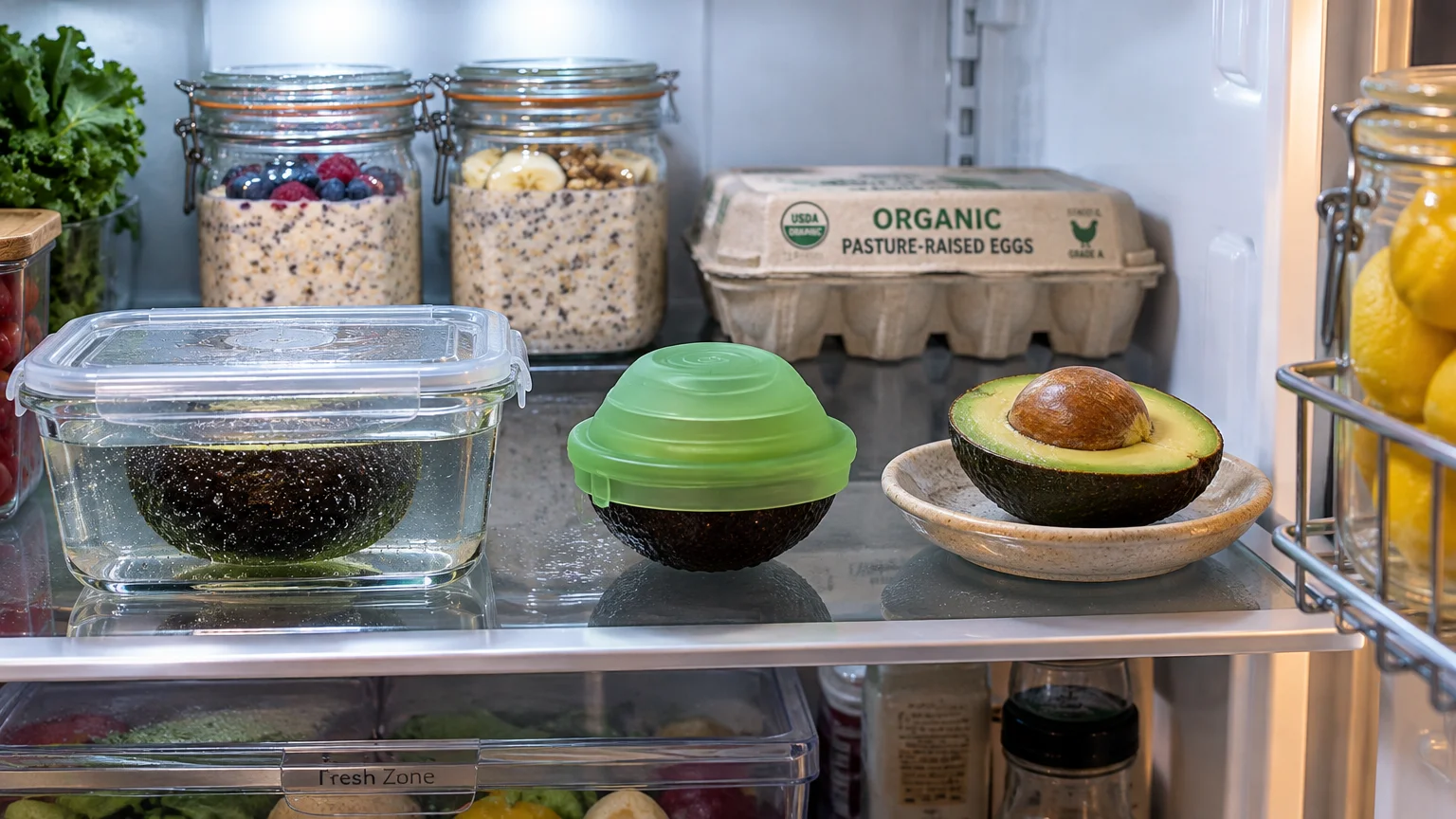
Preventing Oxidation and Preserving Leftover Halves
If you eat 100g (half) or 50g (one-third) per day, keeping the remaining portion fresh and vibrant green is essential. When you cut into an avocado, you expose an enzyme called polyphenol oxidase to oxygen in the air, turning phenolic compounds into brown pigments.
Skip the viral social media trick of submerging cut avocado halves in bowls of standing water inside the fridge. Food safety specialists warn that soaking cut produce in water allows surface pathogens like Listeria or Salmonella on the skin to multiply in the liquid and penetrate the edible flesh.
Instead, leave the pit inside the unused portion, brush the exposed green flesh lightly with fresh lemon juice, lime juice, or olive oil, and press reusable wax wrap or plastic wrap tightly against the surface. Pressing the wrap directly onto the flesh blocks oxygen contact and keeps your leftover half fresh for the next day.
Habit Stacking with Existing Meal Routines
To join the small fraction of adults who consistently enjoy daily avocado effects, anchor your avocado prep to a habit you already perform every day without thinking. This behavioral technique is known as habit stacking.
If you pack your lunch every night after clearing the dinner dishes, make slicing half an avocado into your storage container the final step before closing the refrigerator door. If you brew tea or coffee every morning, keep your avocado slicer right next to your mug rack as an immediate visual cue.

Expert and Lived Voices: Clinical Observations and Real-World Results
In clinical dietetics practice, recommending a daily food addition is almost always more successful than handing a patient a long list of forbidden foods. Patients feel empowered when they focus on abundance and nourishment rather than dietary restriction.
When clients with borderline-high LDL particle numbers and stubborn afternoon sugar cravings start replacing their midday bag of chips or cheese slices with half an avocado, their feedback is remarkably consistent. Within the first two weeks, most report that their mid-afternoon energy crashes vanish because their lunch now provides 6.7g of steady fiber and slow-burning monounsaturated fats.
Cardiometabolic dietitians also point out how helpful the 2024 Penn State diet quality findings are during nutrition counseling. When patients add an avocado to their daily grocery template, they naturally buy more fresh vegetables, salsas, and whole grains to pair with it, elevating their entire household’s nutrition without feeling like they are on a rigid diet.
Community members who manage busy family kitchens frequently highlight the culinary flexibility of the fruit. Parents note that blending ripe avocado into fruit smoothies, bean dips, or pasta sauces allows picky eaters and older relatives to enjoy creamy textures and concentrated potassium without added sodium or saturated dairy fats.
Safety, Personalization, and Clinical Contraindications
While eating an avocado every day is safe and deeply beneficial for the vast majority of adults, evidence-based nutrition is never one-size-fits-all. Certain medical conditions, digestive sensitivities, and medications require you to personalize your portion size or consult your healthcare provider first.
Chronic Kidney Disease and Potassium Restrictions
For healthy adults, the 975mg of potassium inside a whole 201g avocado is a tremendous asset for blood pressure control. However, if you have advanced chronic kidney disease or impaired renal function, your kidneys may struggle to filter excess potassium out of your bloodstream.
Elevated blood potassium, known clinically as hyperkalemia, can interfere with heart rhythm signaling. If your nephrologist or renal dietitian has placed you on a potassium-restricted diet—or if you take potassium-sparing diuretics or certain blood pressure medications—ask your clinician whether a 50g one-third serving fits safely within your daily potassium budget.
Irritable Bowel Syndrome and Polyol Sensitivity
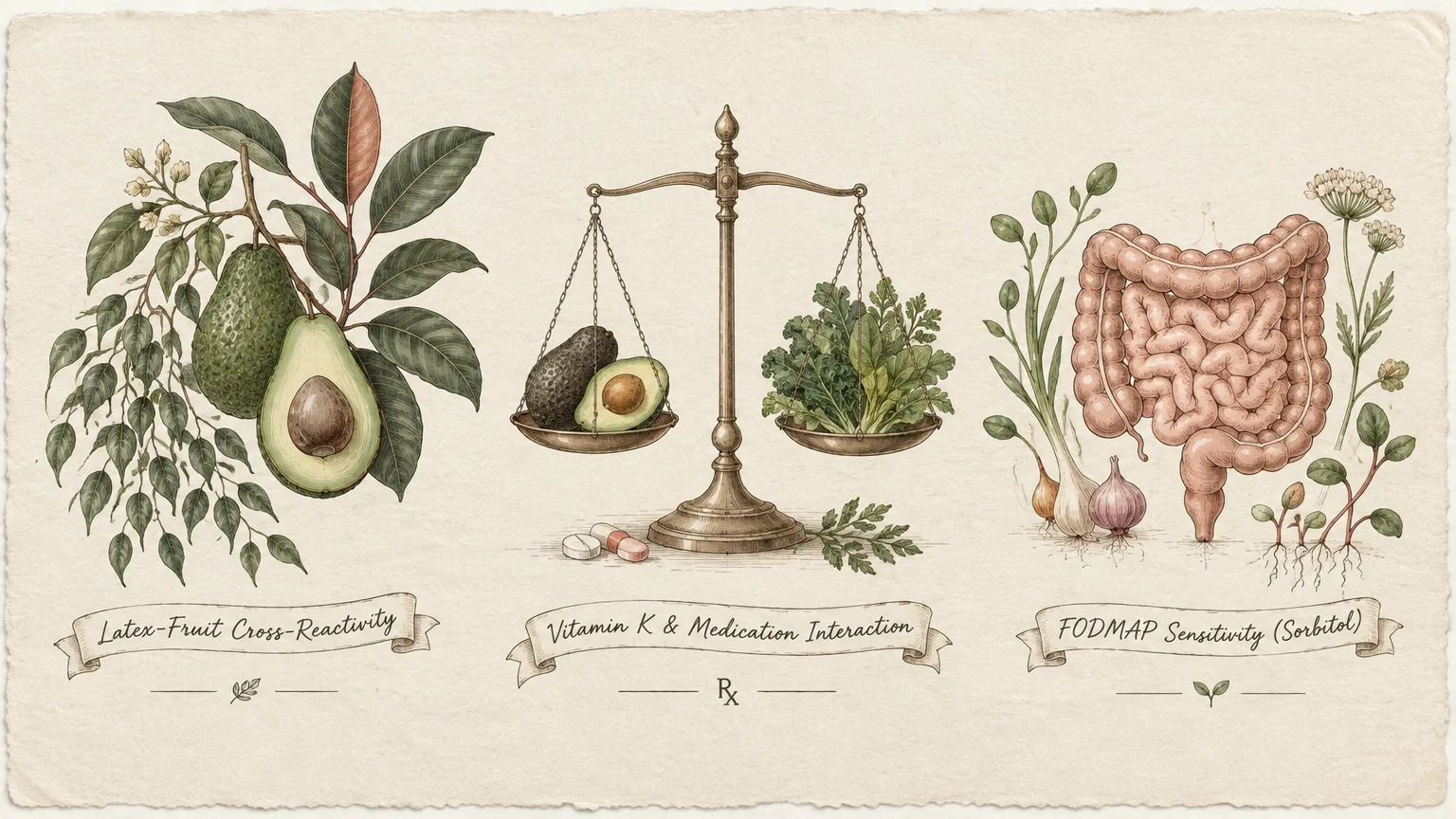
If you live with Irritable Bowel Syndrome (IBS), eating a whole avocado every day might unexpectedly trigger bloating, gas, or abdominal cramping. Avocados contain specific fermentable sugar alcohols—specifically an eight-carbon polyol called perseitol—categorized under the FODMAP framework.
Sensitivity to avocado polyols is strictly dose-dependent. While a whole 201g avocado or even a 100g half contains enough polyols to draw water into the bowel and ferment rapidly in sensitive guts, a smaller 30g to 50g portion is frequently well-tolerated by people managing IBS.
Latex-Fruit Syndrome, Allergies, and Medication Interactions
If you have a diagnosed allergy to natural rubber latex, pay close attention to how your mouth and throat feel after eating raw avocado. Because avocados contain structural proteins similar to those found in latex sap, up to half of individuals with latex allergies experience cross-reactivity known as latex-fruit syndrome, alongside sensitivities to bananas, kiwis, and chestnuts.
Additionally, avocados contain modest amounts of vitamin K, which plays a direct role in blood clotting cascades. If you take prescription anticoagulants such as warfarin, you do not necessarily have to avoid avocados, but you must keep your daily intake consistent so your physician can calibrate your medication dose accurately.
Finally, overly ripe or browning avocados accumulate higher levels of tyramine, a naturally occurring amino acid compound. If you suffer from chronic migraines or take monoamine oxidase inhibitors (MAOIs), stick to freshly ripened green flesh and avoid overripe, darkened fruit.
Frequently Asked Questions About Eating Avocado Every Day
Will eating a whole avocado every day make me gain belly fat?
No, clinical evidence shows that eating one whole avocado daily does not cause weight gain or increased waist circumference when incorporated into a balanced diet. In the six-month Pennsylvania State University study of 786 adults with abdominal obesity, consuming one avocado per day lowered LDL particles without changing body weight or belly fat.
To ensure weight stability, use your daily avocado to replace other calorie sources like mayonnaise, butter, cheese, or refined snack foods. Its 13.5g of dietary fiber and 29.5g of healthy fats naturally boost fullness and curb overeating later in the day.
Is it better to eat a whole avocado, a half, or one-third every day?
The best portion depends on your total daily energy needs, digestive tolerance, and how many other fat sources you eat. Clinical trials demonstrating LDL particle reductions and diet quality improvements used one whole medium avocado (201g, 322 calories) per day.
However, Harvard cohort data shows that eating just two servings per week—equivalent to one whole avocado weekly—is already linked to a 16% lower risk of cardiovascular disease. Eating one-third of a medium avocado (50g, 80 calories) or half an avocado (100g, 160 calories) daily is an excellent, sustainable target for most adults.
Does cooking or heating avocado destroy its health benefits?
Gentle heating or baking does not destroy the monounsaturated fats, dietary fiber, or potassium inside an avocado, though prolonged high heat can degrade some heat-sensitive vitamin C and turn bitter compounds unpleasant. Because avocados contain delicate phytochemicals and water, they perform best when added raw at the end of cooking or gently warmed into sauces and baked goods.
Can I eat the dark green flesh right underneath the avocado peel?
Yes, and you should make a habit of scooping out that dark green outer layer rather than tossing it in the trash with the skin. The richest concentration of carotenoid antioxidants, including lutein, sits directly beneath the peel, so peel your avocado carefully by hand after slicing to capture every bit of nutrition.
Your 24-Hour Action Plan for Better Nutrition
Upgrading your cardiovascular, digestive, and cognitive health does not require a complicated overhaul of your entire pantry. Within the next 24 hours, pick up two avocados at the market—one slightly soft for today and one firm for later in the week—and swap out one refined spread or salty side dish at your very next meal for 50g to 100g of fresh, creamy avocado.