Cold winter weather drives everyone indoors, creating favorable conditions for seasonal respiratory viruses to circulate quickly. You can fortify your cellular defenses and safeguard your energy simply by filling your grocery cart with targeted, nutrient-dense foods.
While no single food offers an impenetrable shield, consistent nutrition delivers the essential biochemical building blocks that your white blood cells need. Equipping your immune system daily dramatically improves how efficiently your tissues respond to microbial challenges.
Explore these nine science-supported foods to nourish your body, reduce systemic inflammation, and stay resilient throughout the coldest months of the year.

The Science of Seasonal Immune Defense
Your immune system operates as a sophisticated biological network that requires continuous micronutrient replenishment to maintain peak performance. When cold weather arrives, indoor heating systems lower humidity levels, rapidly drying the protective mucosal lining of your respiratory passages.
These parched mucus membranes lose their natural ability to trap airborne pathogens before they enter delicate lung tissue. Consequently, your body must rely far more heavily on circulating white blood cells and antibody defenses to neutralize foreign invaders.
Research documented by the National Institutes of Health illustrates how specific vitamins and minerals directly influence immune cell proliferation. Deficiencies in key cofactors hinder your body from mounting an efficient, timely response to seasonal viruses.
Strategic Nutrition Pillars for Cold Season
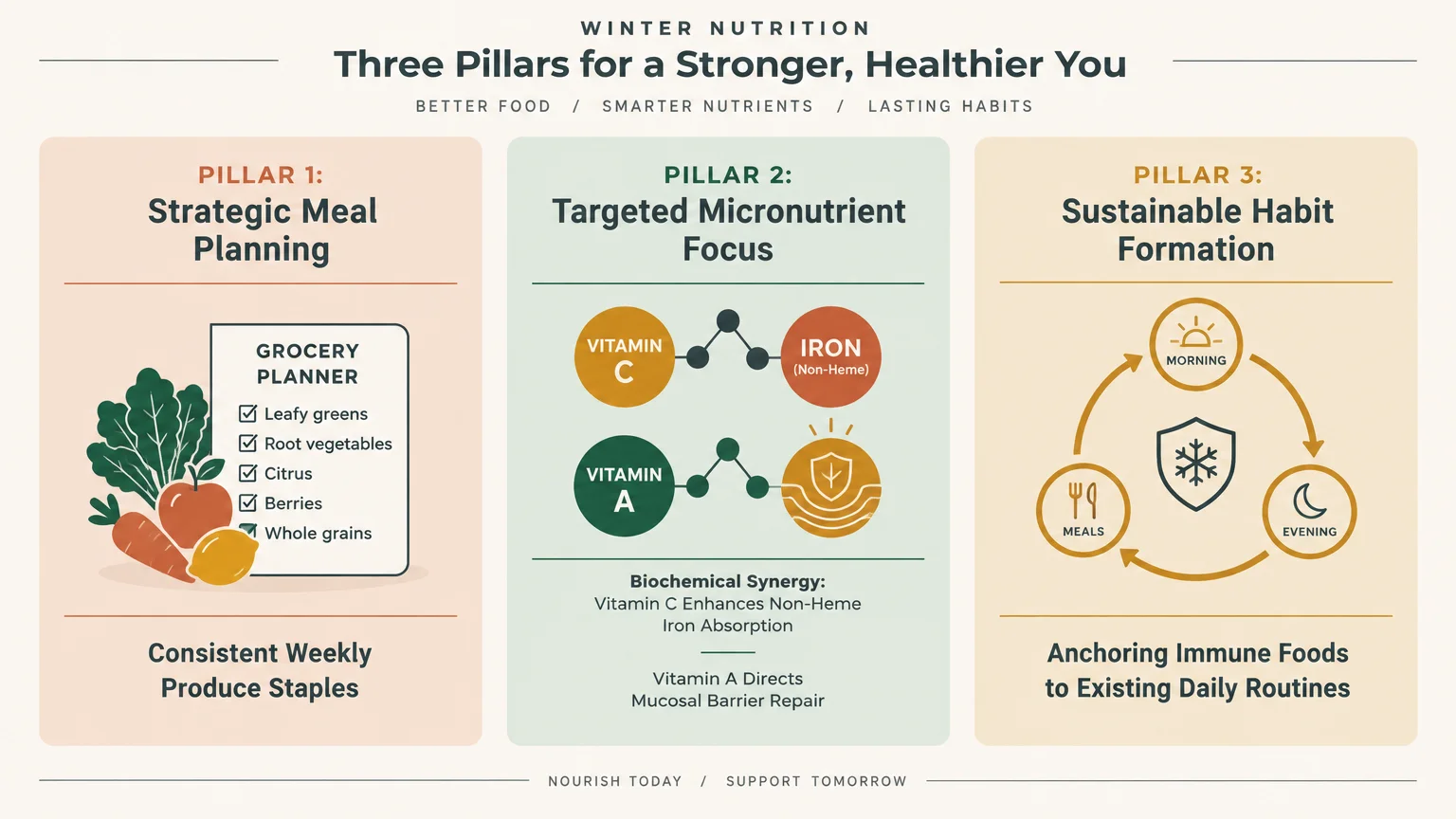
Pillar One: Strategic Meal Planning
Developing robust cold-season resilience requires steady consistency rather than reactionary habits formed only after you feel under the weather. You should organize your weekly grocery trips around vibrant produce and wholesome pantry staples that integrate easily into daily meals.
Pillar Two: Targeted Micronutrient Focus
Vitamins and minerals rarely function as solitary agents within human physiology; instead, they operate as interconnected biochemical teams. For instance, dietary vitamin C significantly enhances non-heme iron absorption, while vitamin A directs tissue-level cellular repair across mucosal barriers.
Pillar Three: Sustainable Habit Formation
Overhauling your entire dietary lifestyle during darker winter months often breeds unnecessary frustration and inconsistent execution. You achieve far greater success by anchoring new, immune-supportive food choices directly to existing daily routines that you already practice without thinking.

9 Nutrient-Dense Foods to Support Winter Immunity
1. Citrus Fruits
Citrus fruits—including sweet oranges, tart grapefruits, tangy lemons, and juicy clementines—provide abundant vitamin C to stimulate your body’s leukocyte production. The Academy of Nutrition and Dietetics notes that dietary ascorbic acid functions as a potent antioxidant that shields immune cells from oxidative tissue damage.
Peel and enjoy fresh clementines as an energizing afternoon snack, or squeeze fresh lemon juice over warm lentil bowls. Adding fresh citrus zest to marinades and grain dishes adds vibrant flavor alongside concentrated protective bioflavonoids.
2. Red Bell Peppers
Red bell peppers provide nearly triple the vitamin C content found in a standard medium orange ounce for ounce. They also boast exceptional concentrations of beta-carotene, which your liver readily converts into active vitamin A to preserve mucosal barrier integrity.
Slice raw red peppers into crisp matchsticks for dipping into homemade hummus, or toss them into hot stir-fries. Keep cooking times brief to preserve the pepper’s heat-sensitive vitamin content while enhancing the bioavailability of its carotenoids.
3. Fermented Yogurt and Kefir
Roughly seventy percent of your body’s active immune cells reside directly within the complex lymphoid tissue lining your gastrointestinal tract. A scientific review published by the Harvard T.H. Chan School of Public Health emphasizes that diverse gut microbiomes regulate balanced, non-destructive inflammatory responses.
Select plain, unflavored varieties to avoid added sugars that can impair white blood cell function and cause blood sugar spikes. Swirl your yogurt with cinnamon, crushed walnuts, and fresh berries for a comforting, probiotic-packed morning breakfast.
4. Fresh Garlic
Crushing or slicing fresh garlic cloves triggers an enzymatic reaction that synthesizes allicin, a biologically active organosulfur compound. Peer-reviewed evidence in Frontiers in Immunology indicates that garlic compounds stimulate macrophages and natural killer cells while moderating pro-inflammatory cytokine production.
Allow crushed garlic to rest on your cutting board for ten minutes before cooking to maximize enzymatic allicin development. Stir freshly minced garlic into warm broths, salad dressings, or roasted vegetables toward the end of culinary preparation.
5. Pumpkin Seeds
Pumpkin seeds, widely known as pepitas, serve as an outstanding plant-based source of zinc, an indispensable mineral for immune competence. Zinc functions as an obligate enzymatic cofactor required for the normal development and activation of circulating T-lymphocytes.
Roast raw pumpkin seeds with sea salt, ground turmeric, and cracked black pepper for a savory, nutrient-dense winter snack. You can also sprinkle them over grain bowls, roasted sweet potatoes, or hearty vegetable soups for satisfying textural contrast.
6. Fresh Ginger Root
Fresh ginger root contains pungent bioactive compounds known as gingerols and shogaols, which exert powerful antioxidant and anti-inflammatory effects. These soothing compounds ease seasonal throat irritation while helping clear persistent congestion from upper respiratory airways.
Steep peeled, thinly sliced ginger root in boiling water with a squeeze of fresh lemon and a teaspoon of honey. You can also grate raw ginger directly into vegetable stir-fries, warm marinades, and spiced lentil stews.
7. Dark Leafy Greens
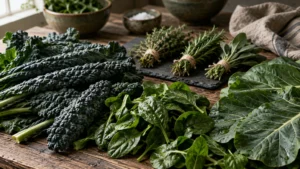
Dark leafy greens such as curly kale, baby spinach, and Swiss chard provide a powerhouse combination of essential immune-supportive nutrients. They offer exceptional amounts of vitamin C, provitamin A carotenoids, and folate required for rapid immune cell replication.
Wilt several handfuls of tender baby spinach into hot bean soups or whole-grain pasta dishes just before serving dinner. Lightly cooking greens softens tough plant fibers and enhances your digestive system’s absorption of fat-soluble vitamins.
8. Green Tea
Green tea serves as an extraordinary source of epigallocatechin gallate (EGCG), a catechin polyphenol recognized for its superior antioxidant capacity. The Centers for Disease Control and Prevention highlights unsweetened green tea as an exceptional fluid choice for maintaining vital respiratory mucosal hydration.
Brew loose-leaf green tea with water heated just below boiling to prevent burning the delicate, health-promoting tea polyphenols. Sipping two to three warm cups throughout the day provides gentle, sustained focus while systematically fortifying your cellular defenses.
9. Lean Poultry and Bone Broth
Lean poultry such as chicken and turkey provides high-biological-value dietary protein necessary for manufacturing antibodies and repairing respiratory tissues. Poultry also supplies generous quantities of vitamin B6, a vital micronutrient essential for synthesizing new red and white blood cells.
Prepare a soothing soup featuring shredded chicken breast, simmered bone broth, sliced carrots, celery, diced onions, and crushed garlic. Warm poultry broth naturally delivers cysteine, an amino acid that helps thin out stubborn mucus during seasonal respiratory challenges.

Inclusive Eating Patterns and Clinical Wisdom
Cultivating a strong, resilient immune system does not require expensive luxury powders or inaccessible specialty health food items. Cultural culinary traditions worldwide offer an inspiring array of economical, nutrient-dense staples that support physical vitality throughout the coldest months.
Traditional fermented condiments like Korean kimchi, Japanese miso, and Latin American curtido deliver identical gut-reinforcing probiotic cultures as dairy kefir. Plant-based eaters can also secure ample zinc and protein by enjoying lentils, edamame, and pumpkin seeds.
As registered dietitians, we observe that clients often rely on isolated mega-dose supplements instead of balanced, colorful meals. However, whole foods package micronutrients alongside natural bioflavonoids and dietary fibers that dramatically improve biological absorption without causing digestive distress.

Safety Considerations and Dietary Personalization
Although these nine foods provide remarkable health benefits for the general public, individual medical profiles require thoughtful, personalized adjustments. What serves as a healing superfood for one person may trigger adverse physiological reactions or drug interactions in another.
For example, individuals prescribed anticoagulant medications such as warfarin must maintain consistent daily intakes of dark leafy greens. Abruptly surging your consumption of vitamin-K-rich kale or spinach can diminish the therapeutic efficacy of these life-saving blood thinners.
Similarly, consuming large medicinal amounts of raw garlic or concentrated ginger extracts may prolong bleeding times if you take blood-thinning therapies. Always consult your personal physician or a registered dietitian before making drastic modifications to your established therapeutic eating plan.
Frequently Asked Questions
Can high-dose vitamin C supplements replace whole dietary food sources?
Whole food sources deliver a complex spectrum of bioflavonoids, trace minerals, and dietary fibers that significantly enhance ascorbic acid absorption. Furthermore, high-dose synthetic supplements often trigger severe stomach cramps and diarrhea, whereas whole foods nourish your body without digestive distress.
Does consuming fresh garlic actually prevent you from catching a cold?
Garlic contains bioactive allicin, which exerts remarkable antimicrobial and antiviral actions against seasonal pathogens in controlled clinical settings. However, eating garlic cannot create an impenetrable shield; instead, regular dietary intake bolsters white blood cells to reduce symptom severity and duration.
How much citrus fruit should you eat to support your immunity?
Consuming just one medium naval orange or two small clementines easily fulfills your total daily recommended allowance of dietary vitamin C. Because your body cannot store water-soluble vitamins, modest daily portions provide far greater protection than sporadic, excessive intake.
Is frozen produce just as nutritious as fresh produce in winter?
Agricultural processors flash-freeze produce immediately after harvest, locking in peak micronutrient concentrations and delicate antioxidants. In fact, frozen spinach, bell peppers, and berries often retain higher vitamin levels than fresh produce that spent weeks in transport and storage.
Your 24-Hour Action Plan
Building a resilient immune system does not require an overwhelming lifestyle overhaul; it begins with one deliberate choice made today. Committing to small, sustainable upgrades allows you to establish lasting dietary habits that protect your physical vitality all winter long.
Choose just one food from this evidence-based guide to add to your grocery cart or prepare within the next twenty-four hours. You might brew a soothing mug of ginger tea tonight, or sprinkle pumpkin seeds over tomorrow’s lunch salad.
By consistently nourishing your cells with these wholesome, nutrient-dense ingredients, you provide your immune system with the biological tools it needs. Take that single, empowering step today and enjoy the renewed energy, confidence, and resilience that whole-food nutrition delivers.