
Stepping into a chilly kitchen makes iced smoothies and dry toast feel completely uninviting. You can immediately ignite your metabolic rate and stabilize your blood sugar with hot, nutrient-rich meals.
Warm breakfasts soothe your digestive tract while kick-starting natural thermogenesis during freezing winter mornings. Choosing balanced hot food sustains your mental focus and prevents energy dips before your afternoon lunch.
These eleven science-backed breakfast recipes provide sustained cellular energy, healthy fats, dietary fiber, and quality protein. Each nourishing dish transforms your chilly morning into a productive, comfortable start.
The Science of Warm Morning Nutrition
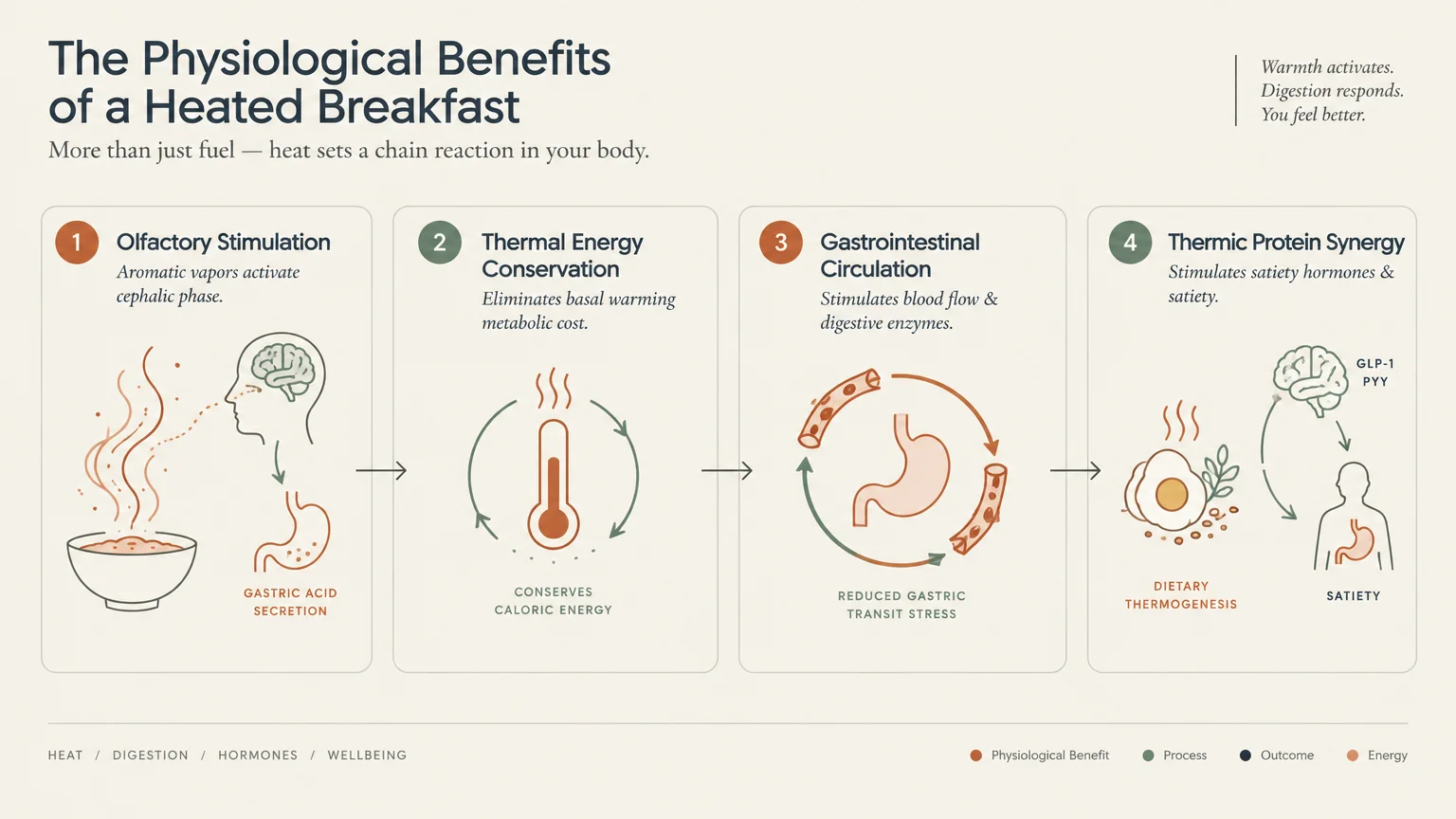
Eating heated meals during colder months offers distinct physiological advantages beyond simple physical comfort. Hot foods help conserve internal energy that your body would otherwise spend warming ingested cold items to basal body temperature.
Warm meals also promote gastrointestinal blood flow and stimulate digestive enzyme activity. This gentle thermal effect helps your stomach break down complex carbohydrates and dense proteins with minimal bloating.
According to the National Institutes of Health research on dietary protein, eating adequate morning protein enhances dietary thermogenesis and satiety hormones. Pairing that protein with thermal heat creates a robust defense against mid-morning sluggishness.
Warm foods also release aromatic vapors that stimulate your olfactory receptors before your first bite. This sensory activation signals your pancreas and stomach to prepare digestive juices, which optimizes nutrient absorption.
Cold weather naturally increases cravings for comforting carbohydrate sources. By choosing unrefined complex grains and tubers, you satisfy these instincts while maintaining stable postprandial glucose levels.
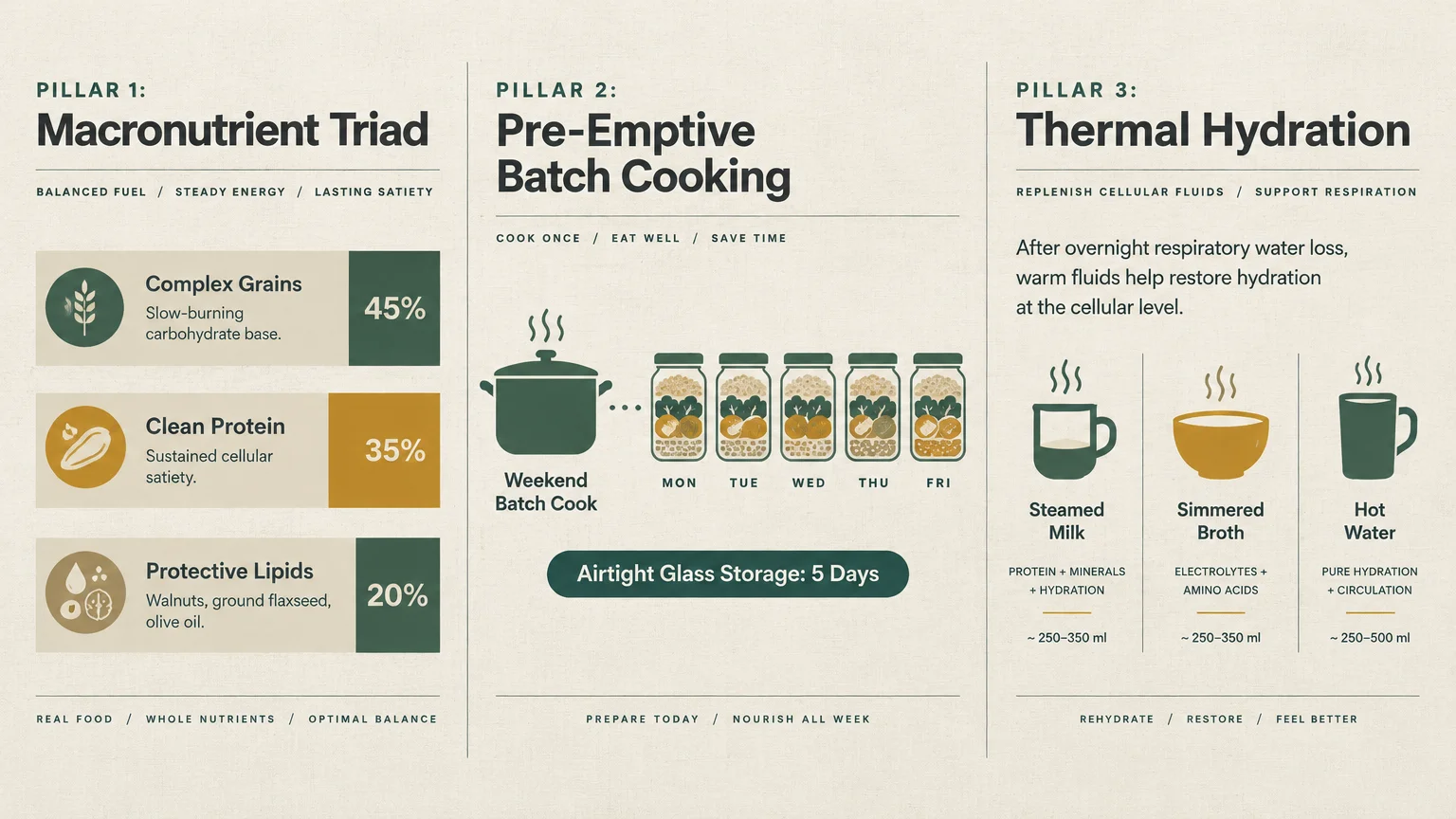
Starting with a warm meal also supports winter hydration. Many hot breakfasts incorporate broths, water, or steamed milk, which replenish fluids lost overnight through respiratory condensation.
Three Core Pillars for Winter Breakfast Planning
Consistent morning nourishment requires structured preparation rather than spontaneous culinary efforts in a cold kitchen. You can streamline your winter breakfast routine by adopting three evidence-based strategies.
Pillar 1: Balanced Macronutrient Architecture
Never rely on isolated refined carbohydrates to fuel your chilly morning. A bowl of sweetened instant cereal triggers a rapid insulin spike, followed by a sudden mid-morning energy drop.
Combine slow-digesting complex carbohydrates with clean protein sources and protective dietary fats. This tripartite combination slows gastric emptying and ensures a steady release of glucose into your bloodstream.
Review the Harvard T.H. Chan School of Public Health whole grains guidance for optimizing your carbohydrate quality. Selecting minimally processed grains preserves the bran and germ layers where vital B vitamins and fiber reside.
Add healthy lipids like crushed walnuts, ground flaxseeds, extra-virgin olive oil, or sliced avocado. Dietary lipids facilitate the assimilation of fat-soluble vitamins and support cellular membrane fluidity in cold environments.
Pillar 2: Pre-Emptive Batch Cooking
Waking up early to simmer whole grains on a dark, freezing morning feels discouraging. Batch cooking solves this barrier by shifting active cooking time to leisurely weekend afternoons.
Prepare large pots of intact grains like steel-cut oats, quinoa, farro, or brown rice. Store these cooked staples in airtight glass containers inside your refrigerator for up to five days.
In the morning, scoop out a single serving and reheat it with a splash of milk or broth. This simple reheating step reduces your active cooking window to less than four minutes.
You can also pre-roast sheet pans of diced root vegetables and winter squashes. These roasted gems reheat quickly in a skillet alongside eggs, tofu, or legumes.
Pillar 3: Warm Habit Layering
Forming new winter habits works best when you anchor them to existing behavioral routines. Link your breakfast prep directly to your early morning coffee brewing or tea steeping ritual.
While your kettle boils water, set your breakfast skillet on the burner or microwave your pre-cooked grains. This seamless parallel tasking eliminates friction and prevents decision fatigue when you feel tired.
Keep your kitchen environment comfortable so you do not rush through meal consumption. Use pre-warmed ceramic bowls to keep your hot breakfast steaming until your final bite.
11 Nutrient-Dense Warm Breakfast Recipes
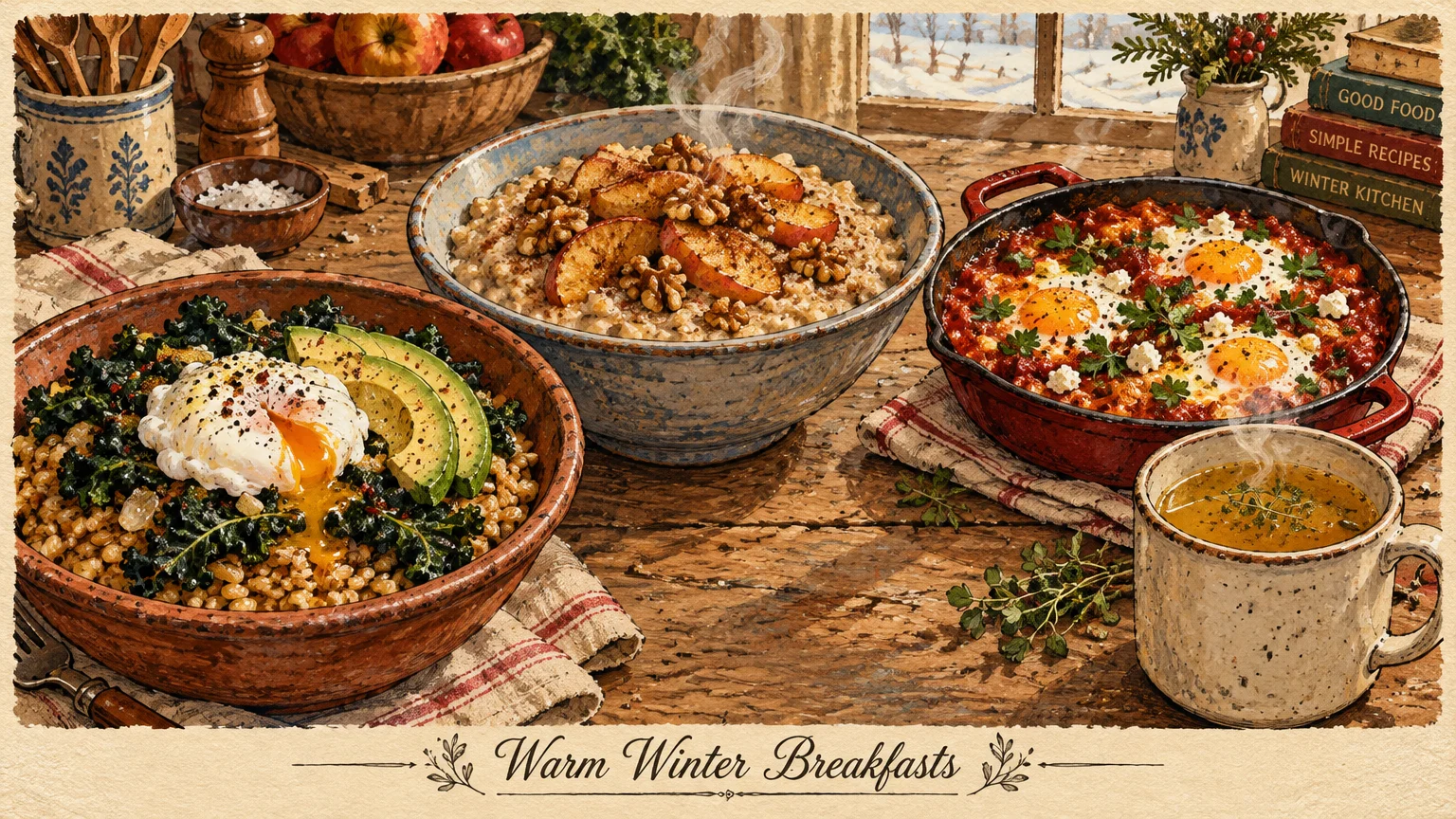
These eleven recipes emphasize nutrient density, culinary versatility, and ease of preparation. Each option delivers exceptional flavor alongside evidence-based fuel for chilly winter mornings.
1. Steel-Cut Oatmeal with Spiced Apples and Walnuts
Steel-cut oats undergo minimal processing, retaining their rich beta-glucan soluble fiber content. This specific soluble fiber forms a viscous gel in your digestive tract, which supports healthy cholesterol levels.
Combine one cup of cooked steel-cut oats with half a cup of diced apples sautéed in ground cinnamon. The naturally occurring pectin in gently cooked apples feeds beneficial gut bacteria in your large intestine.
Top your steaming oatmeal with two tablespoons of chopped raw walnuts and a light sprinkle of ground nutmeg. Walnuts contribute plant-based alpha-linolenic acid, an essential omega-3 fatty acid that curbs systemic inflammation.
Stir in a splash of warm unsweetened soy milk or almond milk to achieve a creamy, luxurious consistency. For an extra protein boost, fold in two tablespoons of hemp hearts before serving.
2. Savory Turmeric Quinoa Porridge with a Soft-Poached Egg
Quinoa provides an exceptional amino acid profile containing all nine essential amino acids. Simmering this pseudocereal in low-sodium vegetable broth with ground turmeric creates an anti-inflammatory savory base.
Add a pinch of freshly cracked black pepper directly to the simmering quinoa grains. The piperine in black pepper enhances your body’s absorption of turmeric’s active curcumin compounds.
Crown your warm golden quinoa with a gently poached pasture-raised egg and sliced scallions. Piercing the soft yolk releases rich lecithin and carotenoids, creating a velvety natural sauce over the grains.
According to the USDA FoodData Central database, whole eggs supply choline, which plays a pivotal role in neurological signaling. Squeeze fresh lemon juice over the bowl to brighten the rich earthy flavors.
3. Skillet Shakshuka with Wilted Spinach and Crumbled Feta
Shakshuka combines poached whole eggs in a gently spiced, simmering sauce of crushed tomatoes, garlic, and bell peppers. Cooking tomatoes releases high concentrations of bioavailable lycopene, a potent lipid-soluble antioxidant.
Fold two cups of fresh baby spinach into the simmering tomato sauce until the delicate leaves wilt completely. Dark leafy greens deliver vital non-heme iron, magnesium, and folate to fuel your cellular energy pathways.
Make small indentations in the simmering tomato mixture and gently crack two fresh eggs into the sauce. Cover your skillet with a tight-fitting lid for five minutes until the egg whites set firmly.
Sprinkle two tablespoons of authentic sheep’s milk feta and chopped fresh cilantro across the surface. Serve this vibrant skillet directly with a toasted slice of sourdough bread for dipping.
4. Warm Chia Pudding with Steamed Berry Compote
Chia pudding does not have to be an icy refrigerator staple reserved exclusively for humid summer mornings. You can prepare a luxurious warm version by hydrating chia seeds directly in steaming oat milk.
Whisk three tablespoons of black chia seeds into one cup of heated vanilla plant milk until well incorporated. Allow the warm mixture to rest for ten minutes while the seeds expand into a thick pudding.
Simmer a cup of frozen wild blueberries and raspberries in a small saucepan with a splash of water. The thermal heat breaks down berry skins, releasing intense anthocyanin pigments without requiring added refined sugars.
Spoon the warm berry compote over the chia base and dust with raw cacao nibs for crunch. This comforting bowl supplies abundant dietary fiber and polyphenols that promote microvascular endothelial health.
5. Sweet Potato and Black Bean Breakfast Skillet Hash
Root vegetable hashes offer exceptional grounding energy and complex carbohydrates during bitter sub-zero temperatures. Diced orange sweet potatoes provide beta-carotene, which your liver converts into mucosal-supporting vitamin A.
Sauté diced sweet potatoes in a cast-iron skillet with cold-pressed olive oil, ground cumin, and smoked paprika. Cook the potato cubes over medium heat until they develop a crisp exterior and tender interior.
Stir in a cup of rinsed black beans and half a diced red bell pepper during the final cooking minutes. Black beans add plant-based lysine, dietary fiber, and resistant starch that stabilize digestive transit times.
Garnish your finished skillet hash with sliced ripe avocado and a dash of probiotic hot sauce. This savory Southwest breakfast provides long-lasting satiety and helps sustain steady physical stamina throughout cold days.
6. Toasted Buckwheat Groat Porridge with Cinnamon and Roasted Pears
Buckwheat is naturally gluten-free and contains rutin, a bioflavonoid that reinforces blood vessel elasticity. Toasting raw buckwheat groats in a dry skillet before simmering unlocks an irresistible nutty, roasted aroma.
Simmer the toasted groats in two parts water and one part unsweetened almond milk until tender. The porridge develops a rich, hearty texture that keeps you remarkably warm and satisfied for hours.
Roast sliced bosc pears in your oven with ground Ceylon cinnamon until they turn tender and caramelized. Cinnamon aids glycemic management by enhancing cellular insulin sensitivity after carbohydrate ingestion.
Layer the roasted pears atop your steaming buckwheat porridge and finish with a drizzle of tahini. Tahini contributes essential dietary calcium, copper, and plant lignans without introducing excess sweetness.
7. Baked Avocado and Egg Boats with Crushed Red Pepper
Baking avocados softens their dense flesh into a decadent, warm custard consistency that feels wonderfully luxurious. This warm preparation provides a dense source of heart-healthy monounsaturated oleic acid on brisk winter mornings.
Slice a large, ripe avocado in half lengthwise and carefully remove the circular central pit. Scoop out a small spoonful of avocado flesh from each center to create adequate room for an egg.
Crack a small fresh egg into each hollowed half and set them on a rimmed baking sheet. Bake at 400 degrees Fahrenheit for approximately twelve to fifteen minutes until the whites coagulate fully.
Season the warm avocado boats with mineral sea salt, cracked black pepper, and crushed red chili flakes. The capsaicin from chili flakes gently stimulates peripheral circulation, warming chilly fingers and toes.
8. Golden Tofu Scramble with Sautéed Greens and Nutritional Yeast
Tofu provides an outstanding plant-based protein foundation that mimics the tender texture of scrambled chicken eggs. Firm organic tofu crumbles easily and absorbs complex aromatics, herbs, and spices with exceptional efficiency.
Crumble eight ounces of firm tofu directly into a heated skillet coated with extra-virgin olive oil. Season the tofu with ground turmeric, garlic powder, onion powder, and two tablespoons of nutritional yeast flakes.
Nutritional yeast imparts a deep savory flavor while delivering a concentrated dose of essential B-complex vitamins. Add two packed cups of chopped kale leaves, tossing gently until the greens soften and turn bright emerald.
Check the Academy of Nutrition and Dietetics breakfast guidelines for building balanced vegan morning meals. Pair this savory scramble with a slice of sprouted grain toast to form a complete dietary protein profile.
9. Baked Cinnamon Cottage Cheese and Rolled Oat Soufflé Bowl
Cottage cheese represents an undervalued culinary secret for crafting protein-dense, warm breakfast bakes without industrial protein powders. Its natural casein protein digests slowly, delivering an extended release of muscle-preserving amino acids.
Blend half a cup of low-fat cottage cheese with one whole egg, rolled oats, and vanilla extract until smooth. Pour the thick batter into a greased oven-safe ramekin and sprinkle ground cinnamon across the surface.
Bake the ramekin for twenty minutes until the center rises gently and edges turn golden brown. The resulting dish mimics a light, warm soufflé with a tender cake crumb and deeply comforting aroma.
Top your warm bake with fresh raspberries or a spoonful of unsweetened apple butter before eating. This decadent, hot breakfast delivers twenty grams of whole-food protein to keep mid-morning hunger completely absent.
10. Creamy Millet and Pumpkin Breakfast Congee
Congee, a traditional slow-simmered Asian grain porridge, offers supreme digestive comfort on sub-freezing mornings. Using hulled millet grain creates a delicate, golden congee that feels light yet thoroughly sustaining.
Simmer one cup of millet in five cups of water or bone broth with fresh ginger slices for forty minutes. The high liquid ratio breaks down the grain starches into a soothing, easily assimilated healing porridge.
Whisk in half a cup of pure canned pumpkin puree and a pinch of ground nutmeg toward the end. Pumpkin provides vibrant carotenoids, potassium, and soluble fiber without altering the comforting creamy mouthfeel.
Serve this warm congee drizzled with toasted sesame oil and a small handful of raw pumpkin seeds. The ginger slices stimulate gastric blood flow and ease early morning nausea or stomach stiffness.
11. Warm Herbed Lentils with Garlic Sautéed Mushrooms
Savory breakfasts containing legumes supply incredible metabolic stamina and help avoid early morning sugar crashes entirely. French green lentils hold their physical shape exceptionally well when boiled, avoiding the mushy breakdown of red varieties.
Simmer green lentils in vegetable stock with fresh thyme sprigs and a dried bay leaf until tender. These earthy legumes deliver plant-based iron, copper, folate, and sustained prebiotic fiber to your intestinal flora.
Sauté sliced cremini mushrooms in a pan with minced garlic cloves and cold-pressed olive oil until deeply browned. Mushrooms provide rich natural glutamate for umami flavor, along with immunomodulatory beta-glucans for winter health support.
Fold the warm herbed lentils together with the sautéed garlic mushrooms in a pre-heated ceramic bowl. Top with a spoonful of plain Greek yogurt to introduce gut-friendly probiotics alongside rich organic acids.

Expert Insights on Winter Morning Fueling
Clinical dietitians emphasize that winter nutrition requires adapting to shifting circadian rhythms and lower ambient outdoor temperatures. Your body naturally expends additional calories maintaining thermal equilibrium when exposed to frigid morning commutes.
Prioritizing warm food aids internal thermodynamic efficiency, allowing metabolic energy to focus on cognitive processing and physical movement. Integrating adequate dietary hydration alongside hot meals counters the drying effects of indoor central heating.
Outdoor winter athletes frequently report that savory, warm breakfasts reduce the stomach cramping often provoked by ice-cold morning smoothies. Starting your day with heated complex carbohydrates and electrolytes optimizes cellular hydration before physical exertion.
Community members managing busy households find that warm batch-prepped grains reduce early morning chaos. Children and adults alike gravitate toward warm, comforting bowls when stepping out into bitter morning air.
Safety, Allergies, and Individual Personalization
Personalizing your winter morning nutrition ensures that you meet your body’s distinct metabolic and digestive requirements safely. Keep these critical clinical considerations in mind as you select your daily recipes.
If you manage type 2 diabetes or insulin resistance, monitor your portion sizes of warm whole-grain porridges. Always pair oats, millet, or quinoa with healthy fats and protein to blunt rapid postprandial glucose surges.
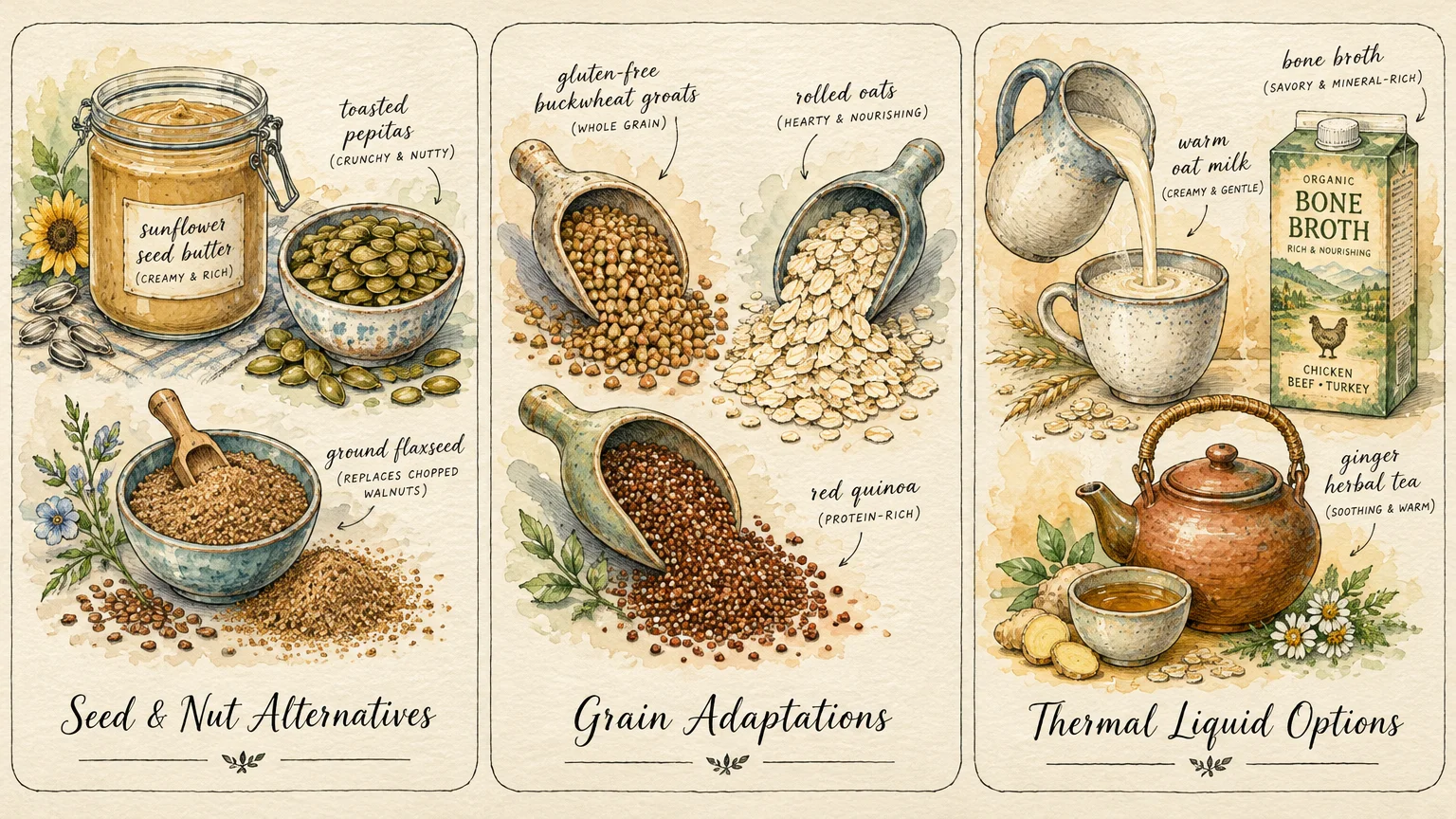
Individuals with tree nut allergies must omit walnuts and almonds from warm porridge recipes. Substitute roasted sunflower seeds, hemp hearts, or pumpkin seeds to capture identical healthy fats and pleasant crunch safely.
If you experience celiac disease or non-celiac gluten sensitivity, purchase certified gluten-free steel-cut oats and grains. While oats are inherently gluten-free, agricultural cross-contamination with wheat and rye remains widespread during commercial processing.
Those monitoring cardiovascular health should pay close attention to the sodium levels in savory breakfast hashes and broths. Choose low-sodium vegetable stocks and season your skillet meals with fresh herbs, garlic, and citrus instead of table salt.
Consult your physician or a registered dietitian if you experience persistent gastrointestinal distress after consuming high-fiber warm breakfasts. Sudden increases in dietary fiber intake require gradual titration and adequate daily water consumption to prevent intestinal cramping.
According to the CDC nutrition guidelines, adopting sustainable dietary changes requires tailoring meals to individual cultural preferences and medical histories. Never hesitate to modify ingredients to accommodate your unique physiological tolerances.
Frequently Asked Questions
Can I make warm breakfasts ahead of time without losing texture?
Yes, robust grains like steel-cut oats, buckwheat, and farro maintain excellent structure when refrigerated and reheated. Simply add two tablespoons of water or milk per cup of cooked grains to restore their original creamy texture.
Avoid reheating egg dishes multiple times, as prolonged thermal exposure oxidizes delicate yolk lipids and creates a rubbery texture. Instead, cook eggs fresh in five minutes to top your pre-warmed whole grains.
Are warm breakfasts better for digestion than cold smoothies in winter?
Warm meals are significantly gentler on your digestive system during colder months. Cold foods can induce temporary vasoconstriction in gastric capillaries, which may slow gastric emptying and enzymatic breakdown in sensitive individuals.
Hot breakfasts stimulate peristalsis and gastrointestinal circulation naturally. If you prefer smoothies, consume them at room temperature or follow them with a steaming cup of herbal tea.
How can I add enough protein to sweet breakfast porridges?
You can easily enrich sweet grain porridges by whisking in pasteurized egg whites during the final two minutes of simmering. The whites cook invisibly into the grains, yielding an exceptionally fluffy texture and complete amino acids.
Alternatively, stir in half a cup of whole milk cottage cheese, Greek yogurt, or hemp seeds immediately after removing from heat. These whole-food additions provide substantial protein without requiring synthetic powders or artificial sweeteners.
What are the best gluten-free grains for hot breakfast bowls?
Certified gluten-free steel-cut oats, whole quinoa, hulled millet, and raw buckwheat groats represent the finest gluten-free choices. Each grain supplies distinct micronutrients, robust dietary fiber, and unique culinary textures when simmered.
Rotate among these different grains throughout the week to maximize your intestinal microbial diversity. Experimenting with different grain bases keeps your chilly morning meals exciting, deeply nourishing, and biologically balanced.
Your 24-Hour Action Plan
Do not let another freezing morning catch you unprepared with uninspiring cold food or rushed processed snacks. Take control of your morning vitality by picking just one recipe from this collection right now.
Check your pantry tonight to ensure you have the necessary grains, spices, and protein staples readily accessible. Set your favorite ceramic bowl, skillet, and cooking utensils on the kitchen counter before you go to sleep.
Tomorrow morning, step into your kitchen and cook yourself a steaming, nutrient-dense breakfast that honors your body’s physiological needs. Experience how starting your day with deliberate warmth transforms your sustained physical energy, mental clarity, and winter resilience.