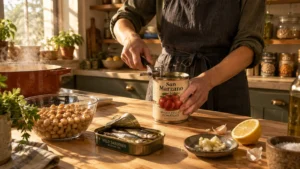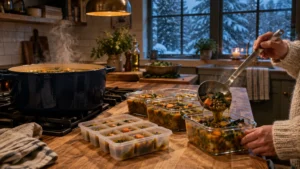
Batch cooking hearty soups transforms cold-weather eating by locking in wholesome nutrients while saving you hours in the kitchen. When temperatures drop, having a freezer stocked with comforting meals prevents impulsive takeout orders.
Soups allow you to pack dozens of fiber-rich legumes, antioxidant-packed vegetables, and lean proteins into a single simmering pot. You get maximum satisfaction alongside superior metabolic nourishment.
These ten dietitian-designed recipes scale effortlessly and retain their rich textures after freezing. Fill your freezer now with comforting dishes that keep you energized through the darkest winter days.
The Science of Simmering: Why Soup Works for Winter Health
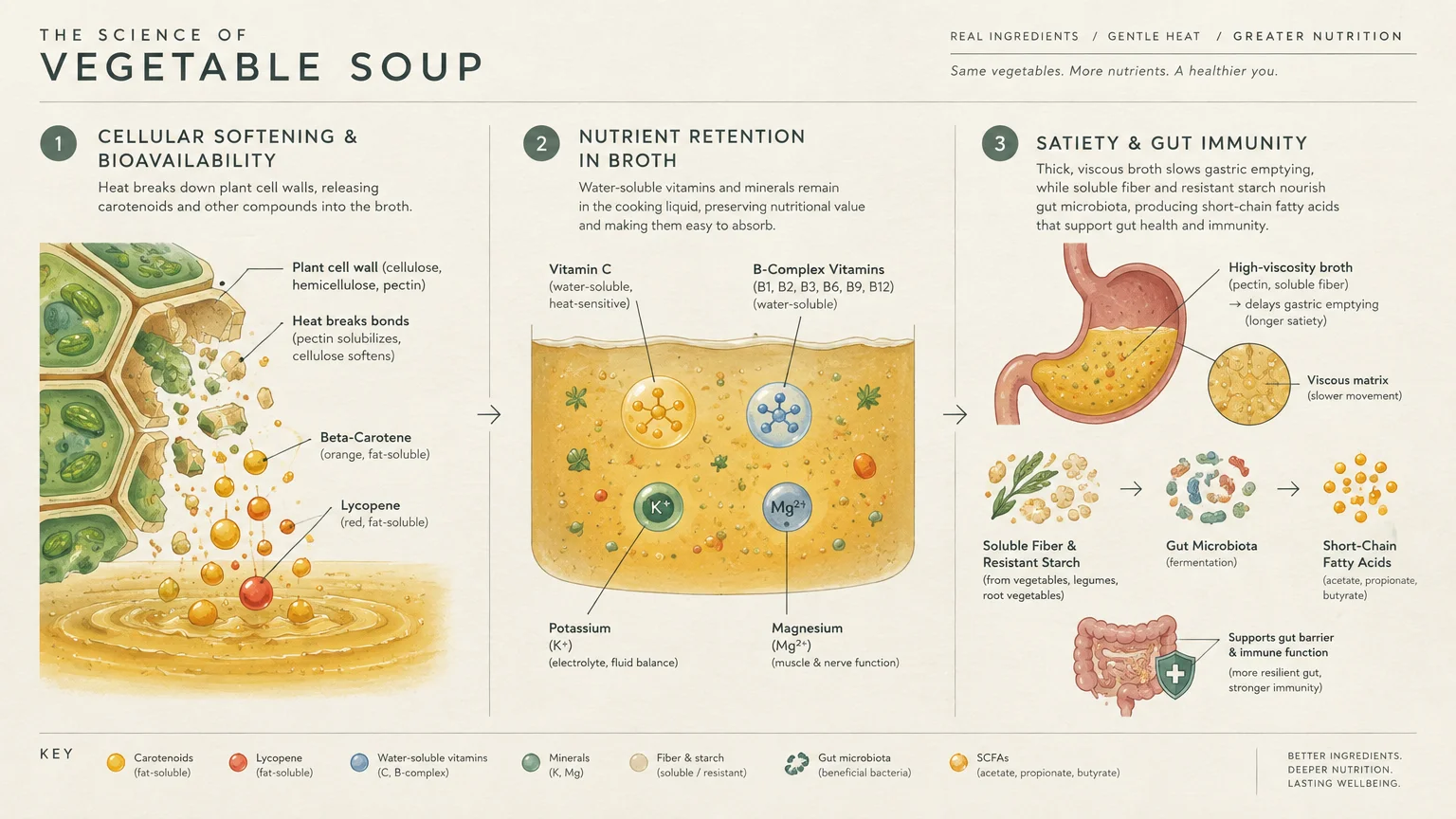
Winter weather often challenges your hydration status because cold air blunts natural thirst cues. Consuming broths and vegetable-rich soups delivers essential fluids alongside bioavailable electrolytes like potassium and magnesium.
Simmering also softens rigid plant cell walls, which enhances the bioavailability of fat-soluble carotenoids like beta-carotene and lycopene. You absorb these protective compounds more efficiently from cooked dishes than from raw winter vegetables.
Water-soluble vitamins, including vitamin C and B-complex vitamins, frequently leach into cooking water during traditional boiling methods. When you make soup, you consume that cooking broth directly, capturing every single dissolved micronutrient.
Research published by the National Institutes of Health demonstrates that high-viscosity foods like soups delay gastric emptying. This mechanism sustains metabolic satiety and prevents blood sugar spikes long after your meal ends.
Legume-based soups provide rich doses of soluble fiber and resistant starch. These fibers feed your lower bowel microbiome, generating short-chain fatty acids that actively strengthen your immune defenses during peak cold and flu season.
The Three Pillars of Successful Batch Soup Prep
Pillar 1: Strategic Meal Planning and Modular Prep
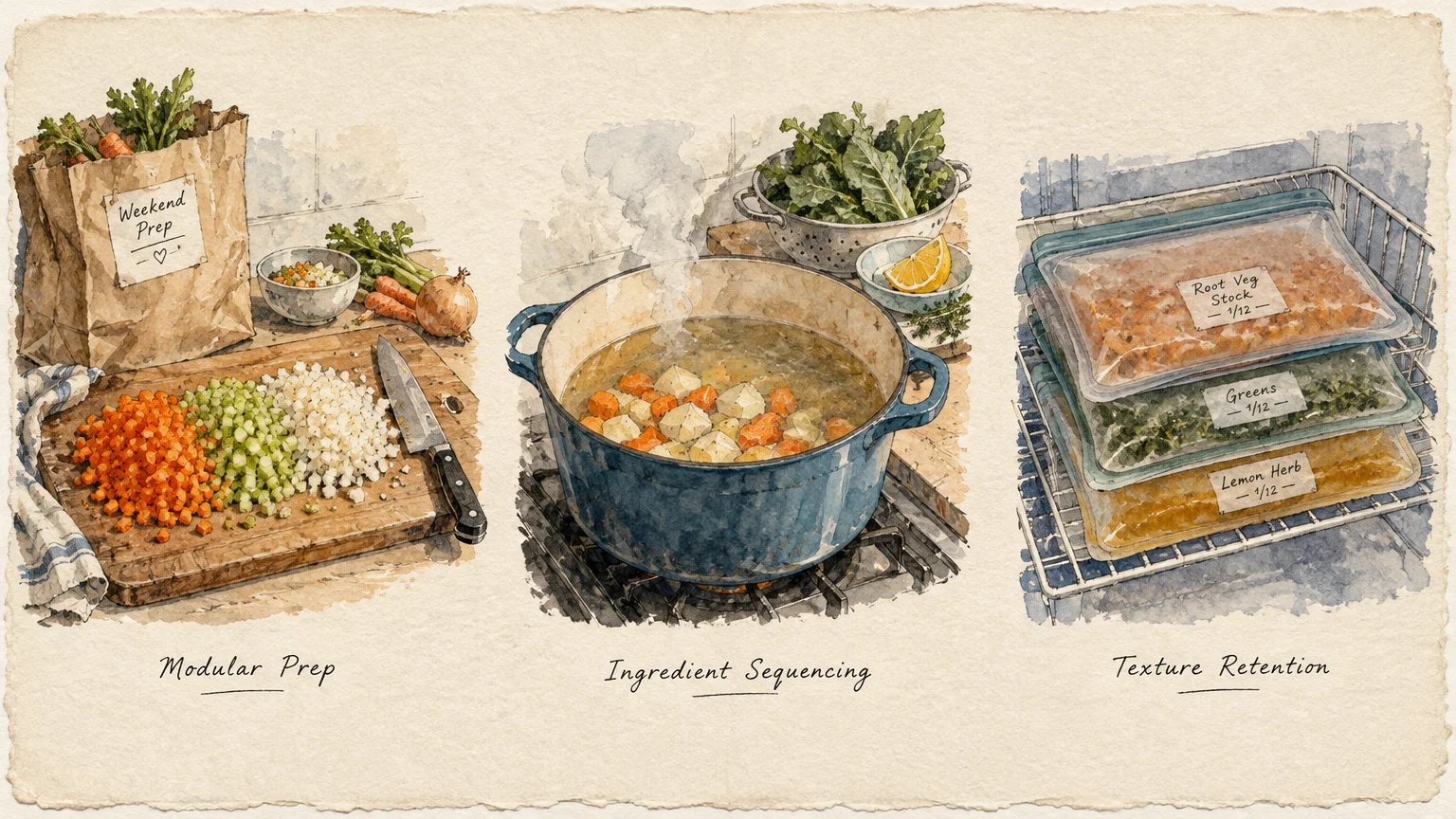
Start your batch cooking routine by assessing freezer space before buying ingredients. Standard baking sheets and flat freezer bags help you store massive quantities of food using minimal square footage.
Dedicate a specific two-hour window over the weekend to chop aromatic bases like onions, carrots, and celery in bulk. Storing these pre-cut vegetables together accelerates your actual cook time on busy weeknights.
Select recipes that share core ingredients so you can minimize grocery waste and lower your overall food bill. A single ten-pound bag of carrots can easily supply three completely different soup profiles throughout the week.
Pillar 2: Nutrient Density and Ingredient Sequencing
Build your soups around lean proteins, unrefined carbohydrates, and fibrous plants to create nutritionally complete one-bowl meals. This balanced macronutrient framework stabilizes energy levels and curbs late-night sugar cravings.
Sequence your ingredients deliberately to avoid overcooking delicate produce into an unappealing mush. Add root vegetables early so they soften thoroughly, but stir in tender greens during the final five minutes of simmering.
Incorporate whole herbs and citrus peels early to infuse rich essential oils into the cooking liquid. Finish with a squeeze of fresh lemon juice right before serving to awaken deep flavors without dumping in excess table salt.
Pillar 3: The Science of Freezing and Texture Retention
Certain culinary ingredients do not hold up well against the freezing and thawing cycle. Potatoes become mealy and waterlogged, while dairy milk and heavy cream often separate into grainy solids.
Avoid adding pasta, noodles, or white rice directly into your large freezer batches. Starchy grains swell endlessly in broth, absorbing your liquid and dissolving into unpleasant sludge upon reheating.
Cook your grains separately and ladle freshly thawed, simmering soup over warm portions when you are ready to eat. This simple technical adjustment preserves ideal bite and restaurant-quality mouthfeel every single time.
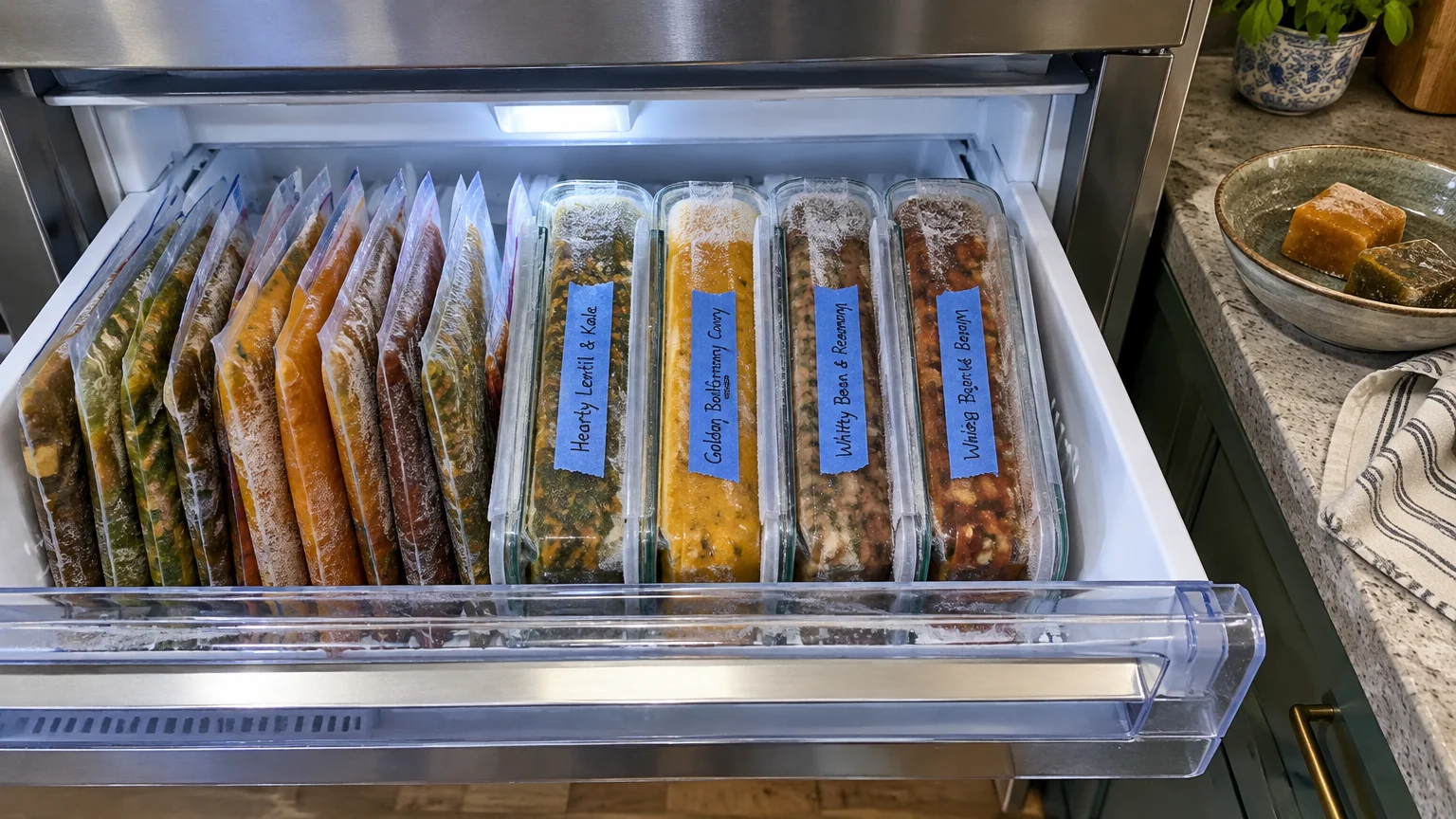
10 Nutrient-Dense Soups Built for the Freezer
1. Tuscan White Bean and Lacinato Kale Soup
This classic Mediterranean recipe pairs velvety cannellini beans with iron-rich Tuscan kale and sweet Italian herbs. Cannellini beans release natural starches as they simmer, yielding a creamy body without requiring heavy dairy.
Sweat diced yellow onions, carrots, and celery in extra virgin olive oil until fragrant and translucent. Add minced garlic, dried oregano, red pepper flakes, and two quarts of low-sodium vegetable stock.
Stir in four cans of rinsed white beans and let the pot simmer gently for thirty minutes. Fold in sliced lacinato kale ribbons right before cooling the soup for storage.
The Academy of Nutrition and Dietetics emphasizes that combining plant iron from greens with tomatoes enhances mineral absorption. The diced canned tomatoes in this broth provide the exact vitamin C needed for that metabolic process.
Freeze this soup in flat silicone bags or quart-sized containers for up to three months. Reheat over medium heat on your stovetop, garnishing each bowl with freshly cracked black pepper and toasted pumpkin seeds.
2. Spiced Red Lentil, Sweet Potato, and Turmeric Soup
Red split lentils cook faster than brown varieties and dissolve easily into a silky, golden porridge. This soup combines them with sweet potatoes, ground ginger, and anti-inflammatory turmeric for cold-weather comfort.
Sauté diced sweet potatoes with ginger, ground cumin, coriander, and yellow curry powder. Pour in dried red lentils along with vegetable broth and full-fat canned coconut milk for rich, plant-based creaminess.
Simmer the mixture for twenty-five minutes until the lentils break down completely. Use an immersion blender to puree half of the soup, leaving some chunks for an appealing, rustic texture.
Sweet potatoes flood your system with beta-carotene, while dietary fat from coconut milk accelerates fat-soluble vitamin uptake. A generous pinch of black pepper ensures optimal absorption of turmeric’s potent curcumin compounds.
This soup freezes exceptionally well because red lentils do not separate or lose their velvety texture. Add a splash of fresh vegetable stock when reheating to restore its original silky consistency.
3. Classic Chicken and Wild Rice Soup
Traditional chicken noodle soup often breaks down during freezing, but wild rice maintains its firm, nutty chew. This upgraded recipe provides steady protein and minerals like zinc to support cellular tissue repair.
Brown skinless chicken breasts in a heavy stockpot with olive oil, rosemary, and thyme. Remove the chicken, then sauté leeks and celery until soft before deglazing with rich bone broth.
Return the shredded chicken to the pot alongside parcooked wild rice and sliced carrots. Simmer everything together for twenty minutes so the complex herbal flavors penetrate the whole grain thoroughly.
Wild rice delivers more protein and dietary fiber than standard polished white rice. It also offers a low glycemic index, keeping your blood sugar stable throughout cold winter afternoons.
Divide the soup into individual portions before freezing to make quick weekday lunches convenient. Thaw your container in the refrigerator overnight, then microwave for three minutes until piping hot.
4. Smoky Black Bean and Roasted Poblano Chili-Soup
Black beans boast some of the highest concentrations of anthocyanin antioxidants found in the legume family. This Southwestern-style soup features roasted poblano peppers, sweet corn, and smoked paprika for deep, woodsy heat.
Blister fresh poblano peppers under your oven broiler until blackened, then peel and dice them finely. Combine the peppers in your stockpot with minced garlic, cumin, oregano, and four cans of black beans.
Pour in crushed fire-roasted tomatoes and low-sodium broth, letting the soup simmer vigorously for forty-five minutes. Puree two cups of the soup in a blender and stir it back into the pot for thickness.
Black beans supply exceptional amounts of soluble fiber, which actively binds cholesterol in your digestive tract. The plant compounds in roasted poblanos also provide steady metabolic warmth without triggering uncomfortable heartburn.
This sturdy recipe actually tastes better after spending time in the freezer as the spices harmonize. Top reheated portions with diced avocado and fresh cilantro for healthy monounsaturated fats.
5. Roasted Butternut Squash and Ginger Bisque
Butternut squash creates an extraordinarily rich soup base without the need for heavy cream or butter. Roasting the squash beforehand caramelizes its natural sugars, creating profound flavor depth that holds up during freezing.
Toss cubed butternut squash with olive oil and roast at four hundred degrees until deeply golden. Transfer the caramelized squash into a large soup pot with softened shallots, fresh grated ginger, and vegetable stock.
Simmer for fifteen minutes, then blend the ingredients with a high-speed immersion blender until completely smooth. Stir in a touch of unsweetened almond milk or light coconut milk to achieve a luxurious finish.
Butternut squash contains exceptional levels of potassium, which helps your body counter excess dietary sodium. Fresh ginger adds pleasant pungency while gently soothing gastrointestinal discomfort and promoting digestive motility.
Pour the cooled bisque into wide-mouth glass freezer jars, leaving one inch of headspace for liquid expansion. Reheat slowly in a saucepan, topping each bowl with toasted sunflower seeds for crunch.
6. Hearty Beef, Mushroom, and Hulled Barley Stew-Soup
If you crave profound savory richness on freezing nights, this lean beef and mushroom soup satisfies completely. Hulled barley offers unmatched chewy texture that withstands months in the freezer without turning mushy.
Sear lean beef chuck cubes in your pot until a rich brown crust develops across every surface. Remove the meat, then brown cremini and shiitake mushrooms to extract their natural glutamates and umami flavors.
Add diced root vegetables, garlic, beef bone broth, tomato paste, and hulled barley back into the pot. Simmer on low heat for an hour and a half until the beef and grains turn perfectly tender.
Mushrooms provide ergothioneine, a resilient antioxidant that protects cellular membranes against chronic oxidative damage. The hulled barley delivers beta-glucan fiber, a compound proven to support healthy blood lipid levels.
Freeze this hearty meal in double-serving containers for convenient, low-effort winter dinners. The rich mushroom-infused broth retains its full-bodied mouthfeel without separating during the thawing process.
7. Moroccan Spiced Chickpea and Vegetable Tagine Soup
Inspired by North African tagines, this fragrant soup relies on warming spices to create incredible winter depth. Chickpeas supply complete satisfaction, while cinnamon and coriander produce an intoxicating aroma throughout your home.
Warm ground cinnamon, cumin, turmeric, and smoked paprika in olive oil to bloom their aromatic oils. Add chopped red onions, zucchini, diced butternut squash, and two cans of drained chickpeas.
Pour in diced plum tomatoes and vegetable stock, simmering gently until the squash is fork-tender. Stir in fresh baby spinach right at the end, letting the residual heat wilt the leaves perfectly.
Chickpeas deliver impressive quantities of plant protein, folate, and slowly digesting complex carbohydrates. Research highlighted by Harvard T.H. Chan School of Public Health affirms that replacing animal fats with legumes supports long-term cardiovascular longevity.
This soup freezes remarkably well because chickpeas maintain their firm structure under freezing conditions. Reheat on the stove and finish with chopped fresh mint and toasted slivered almonds.
8. French Green Lentil and Caramelized Leek Soup
Unlike brown or red lentils, French green lentils hold their distinct shape and earthy bite during prolonged cooking. Paired with sweet caramelized leeks, this French bistro classic feels elegant yet costs very little to prepare.
Slice leeks thinly and cook them slowly in olive oil over medium-low heat until golden and sweet. Add minced garlic, fresh thyme sprigs, and dried French green lentils along with vegetable broth.
Simmer the pot gently for forty minutes until the lentils are tender but still retain a pleasant toothsome bite. Discard the woody thyme stems and stir in a spoonful of Dijon mustard for gentle acidity.
Green lentils provide an abundance of non-heme iron, copper, and prebiotic polyphenols that nourish gut microbes. The leeks contribute inulin fiber, which supports the proliferation of beneficial bifidobacteria in your digestive tract.
Cool this soup completely before packing it into freezer-safe containers for up to three months. When reheating, stir in a splash of water to loosen the broth, finishing with a drizzle of walnut oil.
9. Roasted Cauliflower, Garlic, and White Bean Puree
Cauliflower transforms into an astonishingly creamy culinary canvas when roasted alongside whole heads of garlic. Adding white navy beans into the blender builds velvety thickness without using butter or flour roux.
Roast cauliflower florets and peeled garlic cloves on a sheet pan until edges are browned and blistered. Transfer the vegetables to your stockpot with rinsed navy beans and low-sodium vegetable or chicken broth.
Bring the pot to a brief simmer, then puree everything thoroughly with a high-speed blender until silky. Season with sea salt, white pepper, and a pinch of ground nutmeg for subtle warmth.
Cauliflower belongs to the cruciferous vegetable family, supplying sulforaphane to aid your body’s phase two detoxification pathways. Navy beans add discreet plant protein and potassium, making this comforting white soup highly satiating.
Freeze this puree in individual mason jars or silicone freezing trays for simple single-serving access. Warm it gently in a small pot, topping each serving with fresh chives and hemp hearts.
10. Fire-Roasted Tomato and Herb Soup with White Beans
Classic tomato soup often relies on heavy cream and refined sugar to mask harsh canned acidity. This nourishing upgrade utilizes naturally sweet fire-roasted tomatoes and pureed white beans to create balanced, velvet richness.
Sauté yellow onions and carrots until soft to build an earthy, naturally sweet flavor foundation. Pour in whole canned fire-roasted tomatoes, vegetable broth, Italian herb seasoning, and two cans of cannellini beans.
Simmer for thirty minutes, then blend the entire mixture until you achieve a completely homogenous, creamy texture. Stir in chopped fresh basil leaves during the final minute to preserve their delicate, peppery fragrance.
Cooking tomatoes dramatically concentrates their lycopene content, a potent carotenoid that shields cells from oxidative stress. Pureeing beans directly into the soup provides lasting satiety that traditional watery tomato broths lack.
This soup maintains its uniform consistency through repeated freezing and thawing cycles without breaking. Serve alongside a sprouted whole-grain grilled sandwich with goat cheese for a wholesome winter meal.
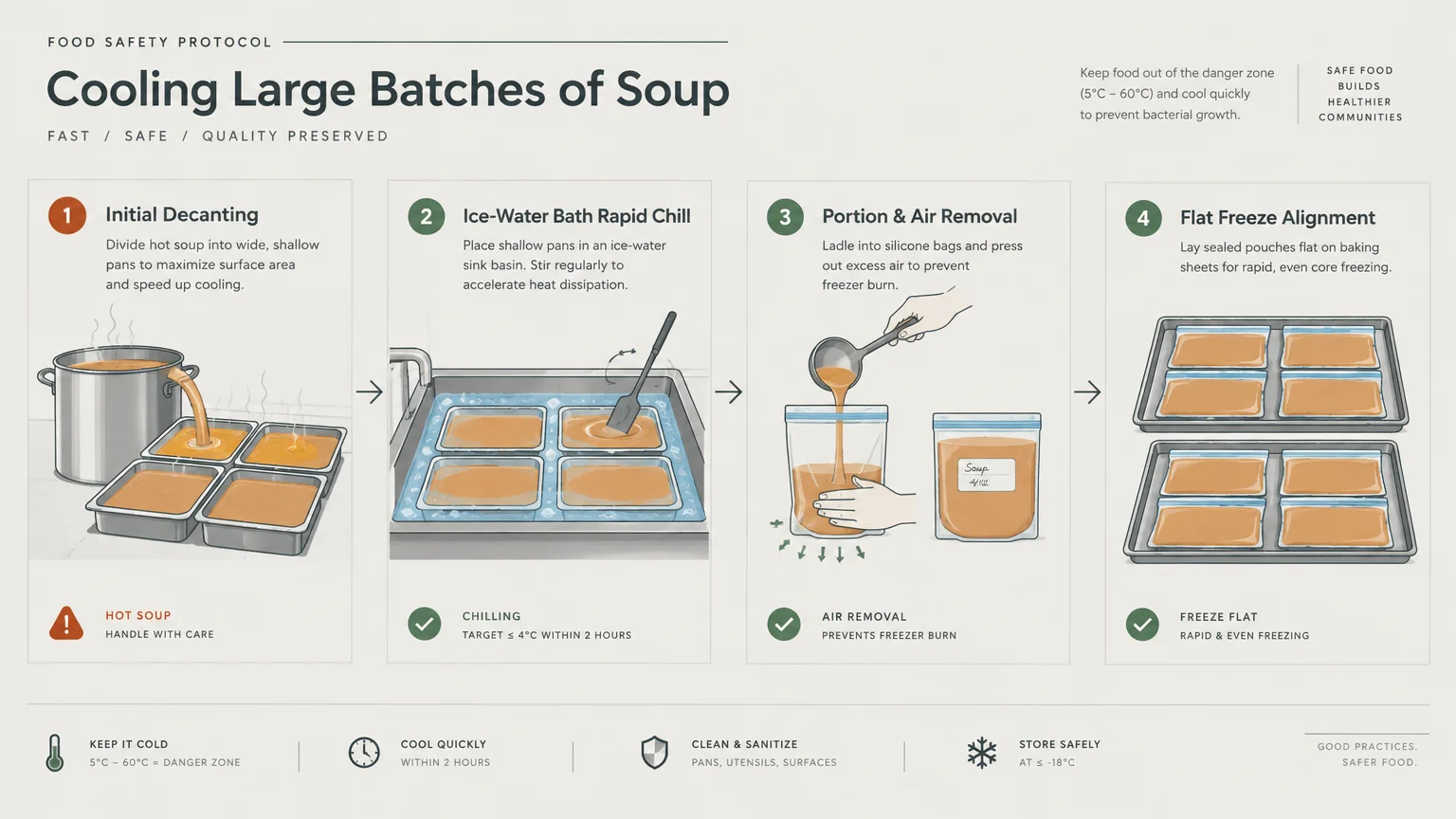
Safe Cooling and Freezing Protocols
Improper cooling techniques represent the single greatest safety hazard when preparing large batches of hot soup. Placing an enormous pot of boiling liquid straight into your refrigerator traps ambient heat inside the appliance.
This trapped heat raises the internal temperature of your refrigerator, jeopardizing other perishable items stored nearby. The large thermal mass of the soup pot also prevents the center from cooling rapidly enough.
Food safety specialists at the USDA Food Safety and Inspection Service advise chilling cooked foods quickly below forty degrees. You must move hot soup out of the danger zone within two hours to prevent microbial multiplication.
Accelerate cooling by transferring hot soup into shallow, wide metal pans rather than keeping it in deep pots. Alternatively, place your covered metal stockpot into a sink filled with cold water and ice cubes.
Stir the soup every ten minutes while resting in the ice bath to release core heat efficiently. Once chilled below room temperature, transfer your soup into designated airtight containers and store immediately.
Follow standard USDA guidelines by consuming refrigerated soups within three to four days of initial preparation. For optimal flavor and nutrient quality, keep your batch-cooked soups frozen for two to three months.
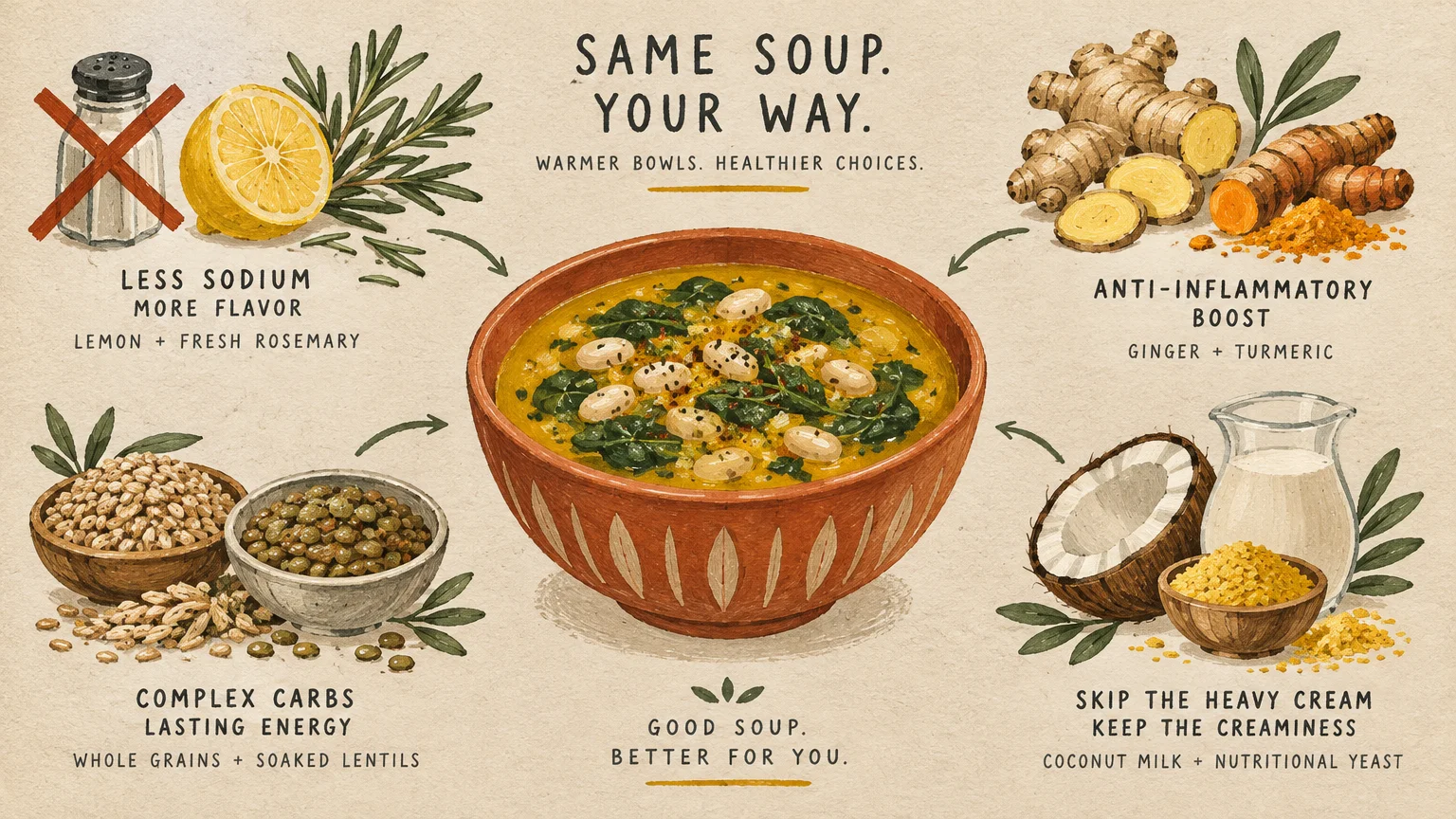
Clinical Considerations and Recipe Personalization
Commercial stocks and canned broths often contain staggering levels of hidden sodium that strain arterial walls. The Centers for Disease Control and Prevention recommends keeping daily sodium intake below 2,300 milligrams.
Choose low-sodium or unsalted stocks when building batch soups so you control the exact mineral concentration. Rinsing canned legumes under cold tap water in a colander removes up to forty percent of processing sodium.
Individuals managing chronic kidney disease must pay careful attention to the high potassium content of winter produce. Squash, tomatoes, potatoes, and beans concentrate significant potassium levels that damaged kidneys cannot clear effectively.
If you need a renal-friendly soup, swap out butternut squash for lower-potassium cauliflower or sweet carrots. Consult your clinical dietitian to calculate individual fluid and potassium targets tailored to your renal stage.
If you suffer from irritable bowel syndrome, high-FODMAP ingredients like onions, garlic, and beans can trigger painful bloating. Substitute garlic-infused olive oil for whole cloves and rely on green leek tops for onion flavor.
Lentils are generally easier to digest than larger kidney beans, especially when soaked thoroughly and rinsed prior to cooking. You can also add a pinch of ground asafoetida or cumin to mitigate lower digestive distress.
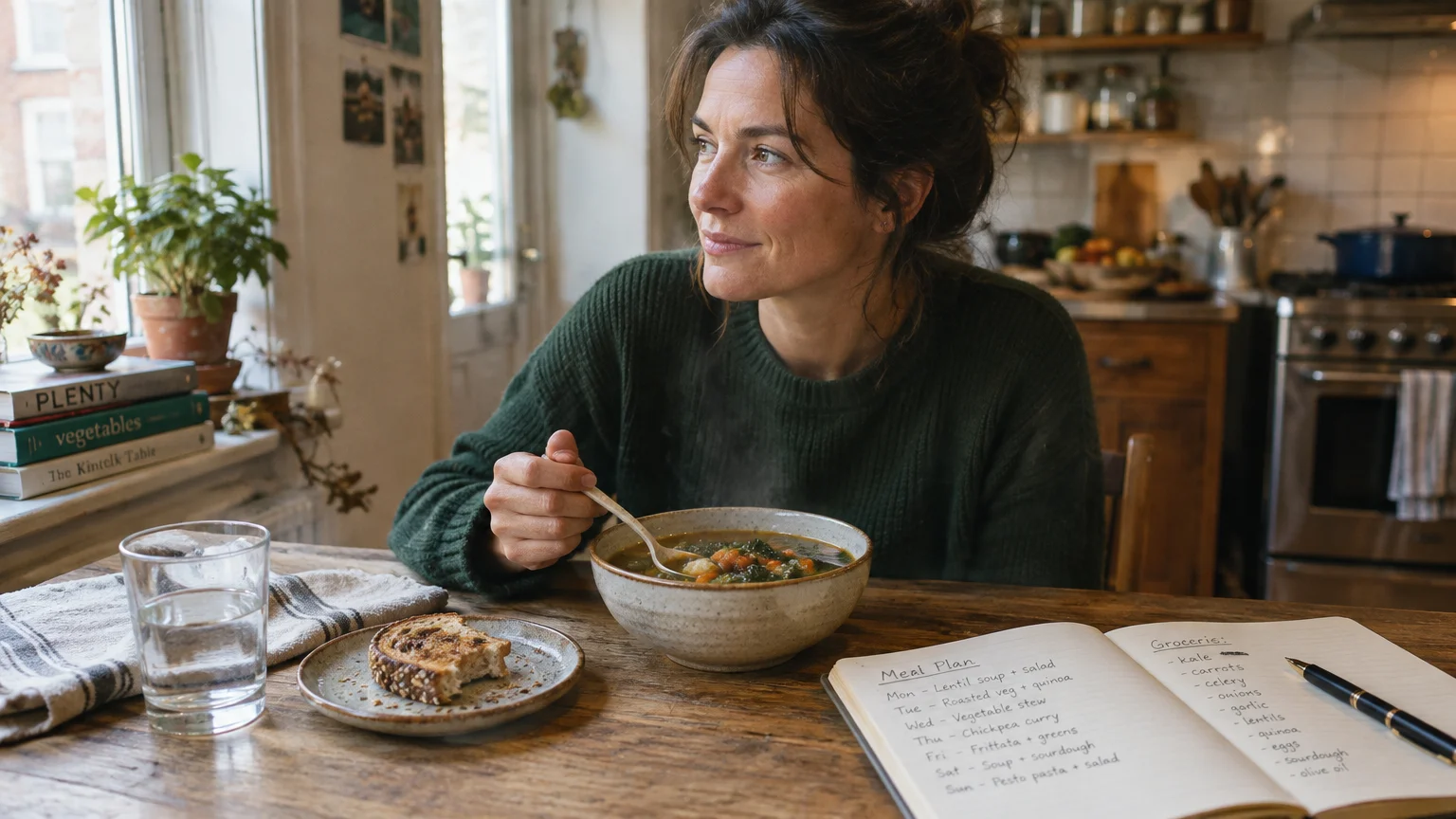
Expert Perspectives and Everyday Meal Habits
Professional kitchen efficiency translates seamlessly into a calmer, more organized home cooking environment. Registered dietitians consistently emphasize that successful healthy eating depends entirely on deliberate environmental design rather than willpower.
Stocking pre-portioned soups eliminates the exhausting mental fatigue of deciding what to cook every evening. When an evidence-based meal is already sitting in your freezer, making a nutritious choice becomes effortless.
Clinical nutritionists also note that batch cooking protects household budgets against escalating fresh grocery inflation. Buying pantry staples like dried lentils, root vegetables, and canned tomatoes in bulk saves substantial money over time.
Community meal prep groups often double recipes and swap freezer portions with neighbors or family members. This collaborative habit diversifies your winter freezer stash without demanding that you cook ten separate times yourself.
Frequently Asked Questions
Can you freeze soups made with dairy milk or yogurt?
Traditional dairy products like whole milk, sour cream, and yogurt break down and curdle upon thawing. The freezing process disrupts dairy emulsions, leaving an unappealing watery liquid layered above grainy milk solids.
If you desire dairy richness, leave it out of your main batch before ladling portions into freezer containers. Simply stir your splash of heavy cream, Greek yogurt, or grated cheese into individual servings after reheating.
Alternatively, rely on plant-based alternatives like full-fat canned coconut milk, cashew cream, or pureed white beans. These ingredients withstand sub-zero temperatures effortlessly without separating or developing grainy mouthfeels.
What are the best containers for freezing batch soups?
Wide-mouth glass mason jars work well, provided you select freezer-safe jars without curved shoulders that crack under pressure. Always leave at least one full inch of open space at the top to accommodate liquid expansion.
Heavy-duty silicone freezing cubes offer exceptional convenience by dividing large batches into exact one-cup or two-cup portions. Once completely frozen, pop the soup blocks out and store them inside labeled zip-top freezer bags.
Standard plastic freezer bags also work well if you freeze them completely flat on a metal sheet pan. Once frozen solid, these compact soup bricks stack neatly like books on your freezer shelves.
How do you revive dull flavors in thawed and reheated soup?
Prolonged freezing blunts delicate volatile aromatics, often leaving reheated soups tasting surprisingly flat and muted. Do not instinctively reach for the salt shaker when an otherwise balanced soup lacks flavor excitement.
Instead, introduce a small splash of acid like fresh lemon juice, raw apple cider vinegar, or sherry vinegar. Acid instantly brightens dull undertones and reactivates palate receptors without increasing sodium content.
You can also finish reheated bowls with fresh herbs, a drizzle of grassy extra virgin olive oil, or toasted spices. These fresh finishing touches restore the vibrant nuance of a freshly simmered restaurant pot.
How long can you safely keep cooked soup in the freezer?
Soups kept continuously below zero degrees Fahrenheit remain microbially safe indefinitely because bacterial activity halts completely. However, long-term exposure to sub-zero temperatures gradually degrades delicate flavors, natural colors, and structural textures.
For the best balance of sensory enjoyment and nutrient retention, consume frozen soups within two to three months. Label every container clearly with the recipe name and date of preparation so you rotate older batches first.
Discard any soup portions that develop pervasive white, dry patches known as freezer burn. While freezer burn is not toxic, it imparts an unpleasantly stale flavor and dry mouthfeel that seasoning cannot fix.
Your Next Step for a Healthier Winter
Preparing large batches of nutrient-dense soup is one of the simplest self-care investments you can make this season. You nurture your physical body with unrefined whole foods while simultaneously liberating valuable mental bandwidth.
Do not feel pressured to cook all ten recipes at once or spend an entire weekend standing over the stove. Sustainable habit formation starts with a single manageable action integrated into your existing weekly routine.
Take twenty minutes tonight to scan your pantry, select one recipe from this guide, and write down the missing ingredients. Simmer your chosen soup over the next twenty-four hours and pack away your first frozen containers of nourishing winter comfort.