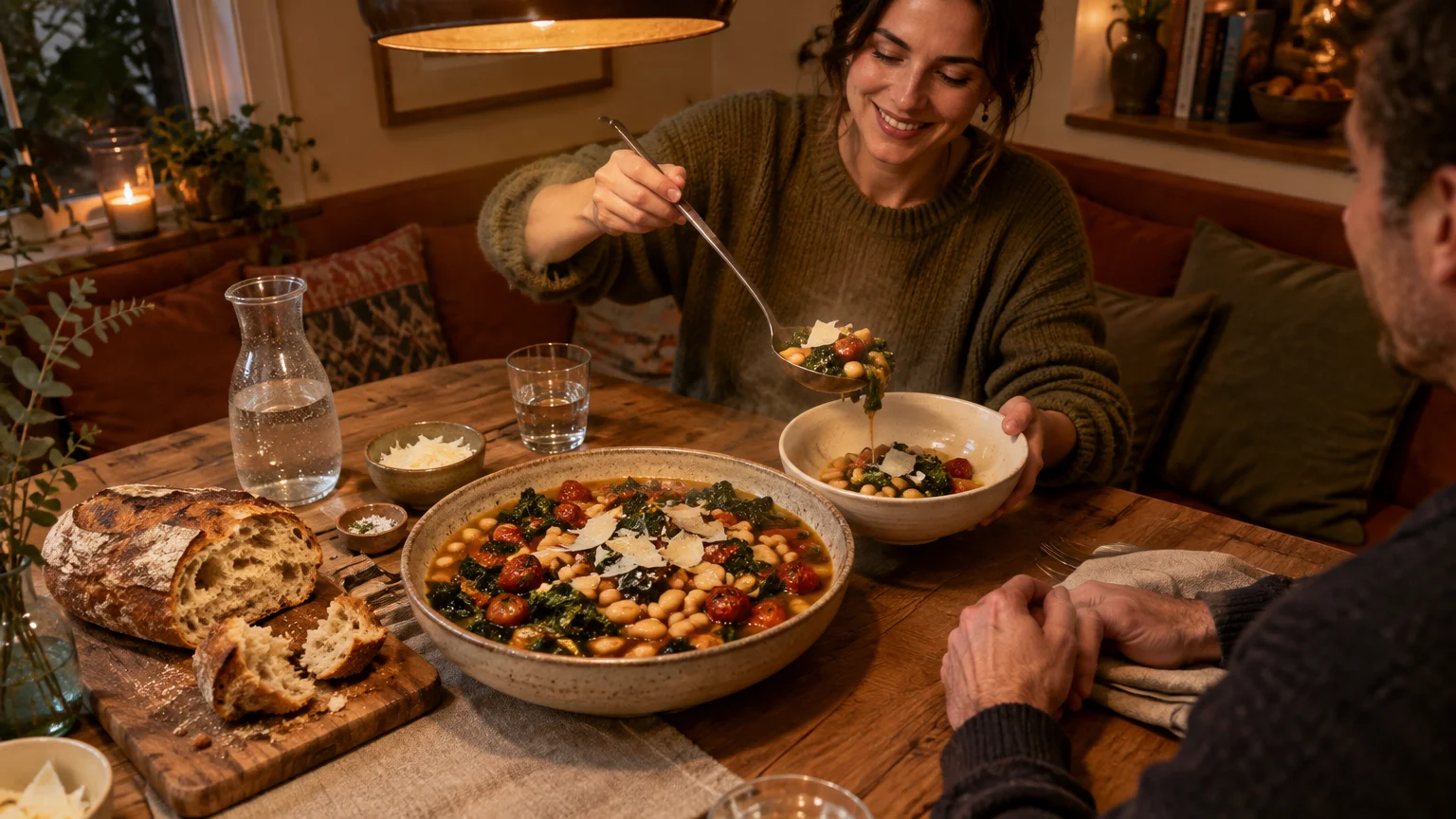
You can build rich, nourishing dinners without spending hours over a hot stove or draining your grocery budget. A single can of beans provides an instant foundation of plant protein, complex carbohydrates, and essential minerals.
Opening your pantry unlocks extraordinary culinary versatility, whether you crave crisp tacos, velvety pasta dishes, or fragrant curries. You gain dependable weeknight convenience without sacrificing deep culinary flavor or nutritional quality.
These twelve satisfying recipes show you how humble canned legumes transform into vibrant meals that sustain your energy. You will master fast culinary techniques that stretch modest pantry staples into reliable family favorites.
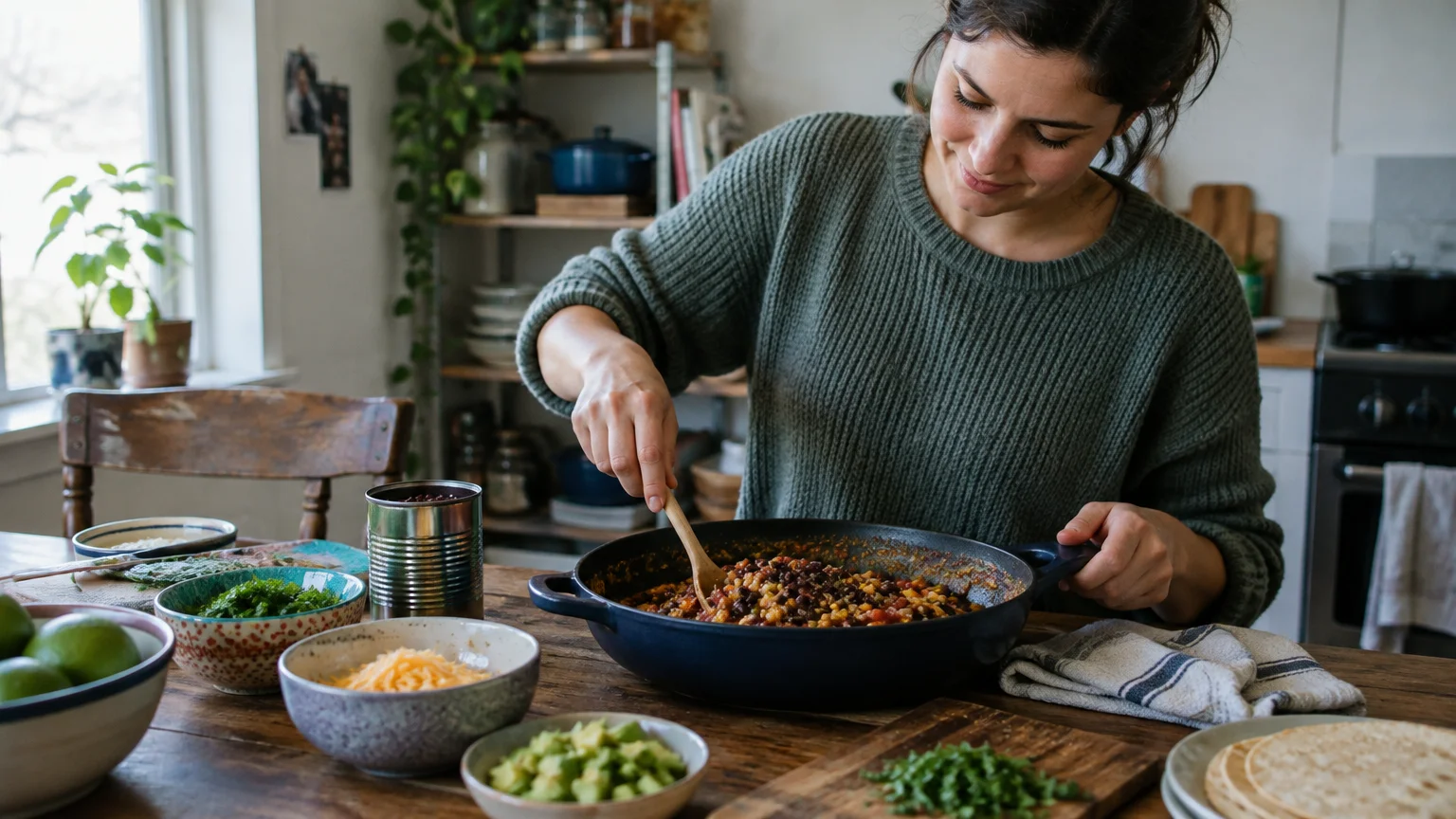
The Science of Bean-Based Nutrition
Canned beans represent one of the most cost-effective nutrient deliveries available in modern supermarkets. They pack significant dietary fiber into every portion, which directly fuels your gut microbiome and encourages healthy digestion.
When gut bacteria ferment this fiber, they produce short-chain fatty acids that support metabolic and intestinal health. The Harvard T.H. Chan School of Public Health emphasizes that legumes consistently support long-term cardiovascular resilience.
Legumes also deliver a valuable balance of complex carbohydrates and plant-derived protein. This specific macronutrient composition slows stomach emptying and stabilizes your post-meal blood sugar levels.
Research curated by the National Institutes of Health indicates that regular legume intake helps reduce low-density lipoprotein cholesterol. Soluble fiber binds to cholesterol precursors in your digestive tract and gently carries them out of your system.
Beyond macronutrients, canned beans supply critical minerals like non-heme iron, magnesium, and potassium. Magnesium assists muscle function and cellular energy production; potassium works continuously to blunt the vascular impacts of dietary sodium.
Many shoppers assume canned versions lack the nutritive value of dried beans cooked from scratch. In reality, commercial canning preserves core vitamins and minerals while making preparation exceptionally manageable on busy evenings.
Three Pillars for Mastering Bean Dinners
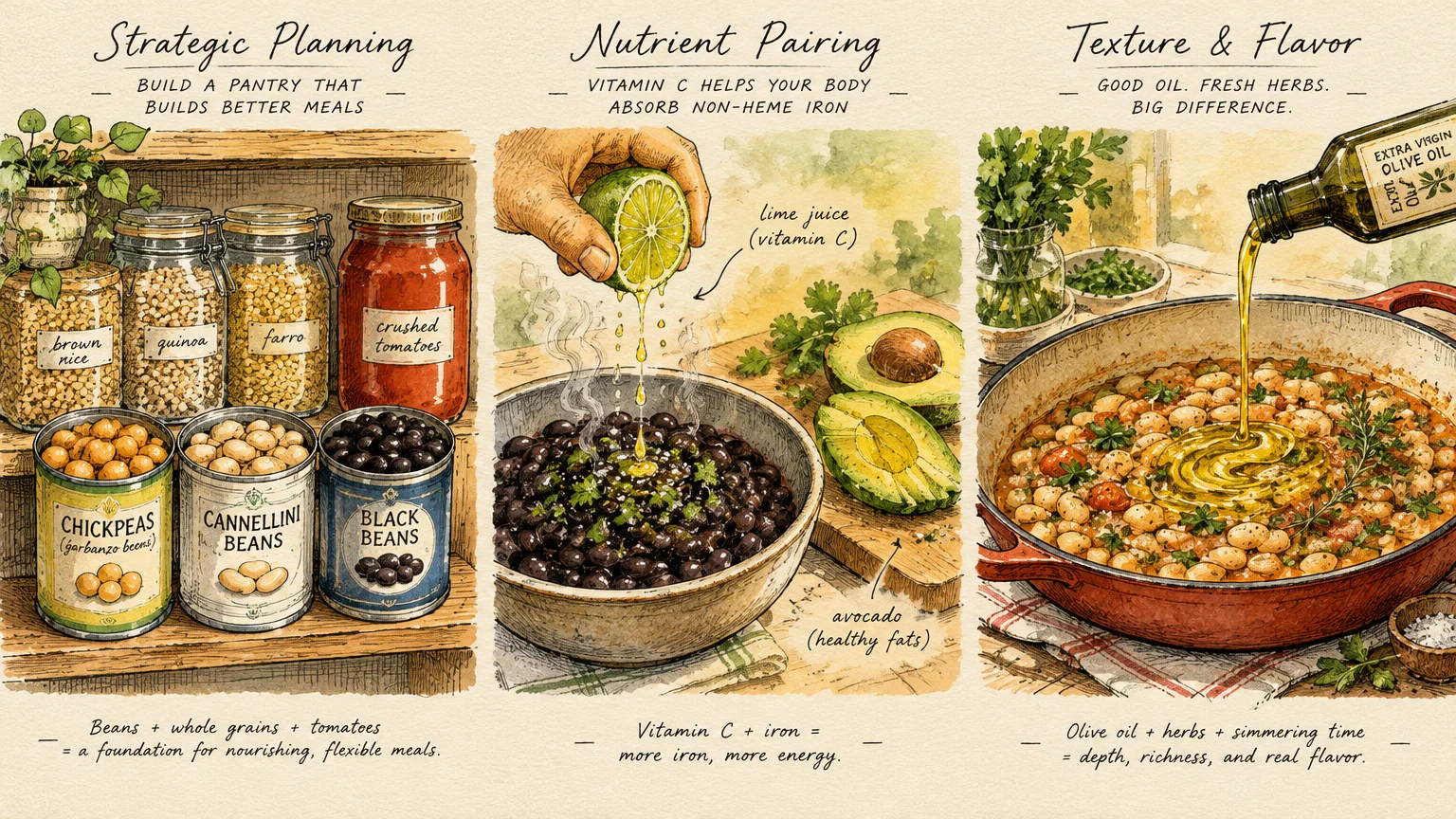
Cooking successful bean dinners requires intentional planning, smart nutrient pairing, and consistent pantry stocking. Once you understand these core strategies, you can assemble satisfying dinners without relying on rigid recipe instructions.
Pillar One: Strategic Meal Planning
Canned beans eliminate the prolonged soaking and simmering steps that dried varieties require. You can build a complete dinner in under twenty minutes by treating beans as your primary cooked protein.
Keep diverse varieties on hand so you can change textures across consecutive evenings. Tender cannellini beans suit Italian sauces, firm chickpeas handle high-heat roasting, and earthy black beans anchor Latin-inspired sautés.
Store complementary quick-cooking items beside your cans, such as whole grains, frozen greens, and crushed tomatoes. This pantry organization guarantees that you always possess the foundation for a wholesome dinner.
Pillar Two: Intentional Nutrient Absorption
Plant foods contain non-heme iron, which your body absorbs less readily than animal-derived heme iron. You can dramatically improve iron uptake by pairing beans with ingredients high in vitamin C.
Squeeze fresh lime juice over black bean tacos, or simmer white beans in crushed tomatoes. The acidic environment converts non-heme iron into a more bioavailable form during digestion.
Always incorporate a source of dietary fat, such as extra virgin olive oil or avocado. Healthy fats enhance the absorption of fat-soluble micronutrients and elevate the overall satiety of plant-centered plates.
Pillar Three: Low-Friction Habit Formation
Lasting dietary shifts rely on convenience rather than sheer willpower after demanding workdays. Placing canned legumes at eye level in your pantry ensures you reach for them instead of processed convenience foods.
Establish a weekly bean routine, such as preparing quick bean tacos every Tuesday or a rustic bean stew every Thursday. Predictable rhythms lower decision fatigue and normalize plant-forward dinners across your household.
Track your grocery savings over time to reinforce the practical value of your new culinary habit. Watching your food expenditures decline provides tangible motivation to explore creative bean-based recipes.
12 Weeknight Dinners Built Around Canned Beans
These twelve meals demonstrate how canned beans can star in diverse global dishes. Each concept utilizes accessible produce and shelf-stable ingredients to maximize both convenience and flavor.
1. Garlic and White Bean Greens Skillet
Sauté minced garlic and crushed red pepper flakes in two tablespoons of olive oil until fragrant. Add one drained can of cannellini beans along with four cups of roughly chopped lacinato kale.
Pour in a splash of vegetable broth and cover your pan for three minutes until the greens wilt. Uncover the skillet, crush a portion of the beans with a fork to build a sauce, and finish with lemon zest.
Serve this warm mixture over toasted sourdough bread rubbed with raw garlic. The velvety starch of the beans balances the bitter edge of the dark greens effortlessly.
2. Black Bean and Roasted Sweet Potato Tacos
Dice one medium sweet potato into small cubes and roast them with cumin, chili powder, and olive oil. Warm a rinsed can of black beans in a small saucepan with a dash of smoked paprika.
Warm corn tortillas in a dry skillet until pliable and slightly charred at the edges. Layer the seasoned black beans and roasted sweet potato cubes into each shell.
Top your tacos with diced red onion, fresh cilantro, and generous wedges of lime. The bright citrus juice enhances non-heme iron absorption while cutting through the potato’s natural sweetness.
3. Quick Chickpea and Coconut Spinach Curry
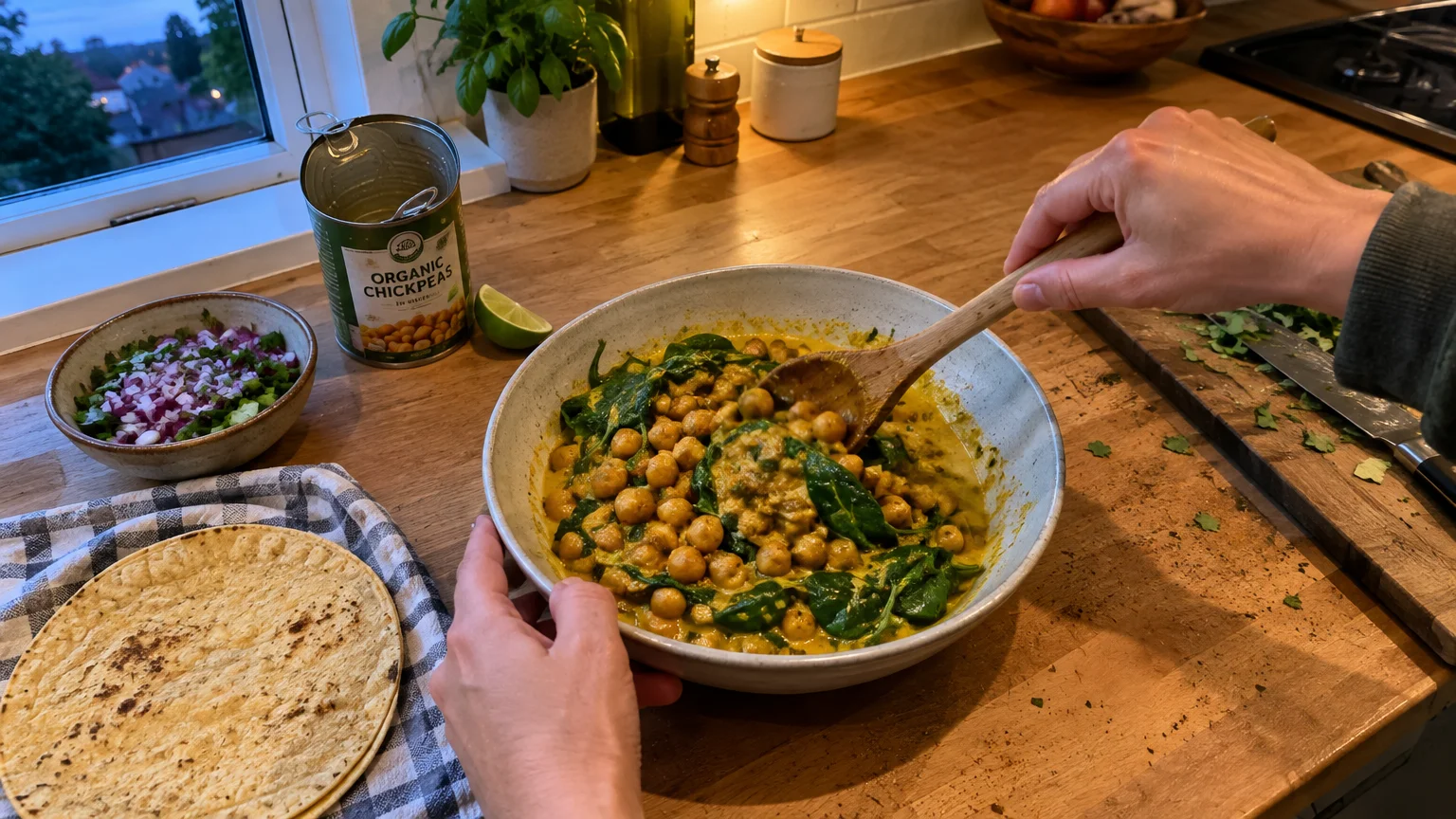
Warm one tablespoon of coconut oil in a deep skillet and cook diced yellow onion until translucent. Stir in grated fresh ginger, minced garlic, and two tablespoons of fragrant yellow curry powder.
Add one drained can of chickpeas, one can of light coconut milk, and a handful of cherry tomatoes. Simmer gently for ten minutes so the chickpeas absorb the aromatic spices.
Fold in fresh baby spinach right before serving until the vibrant leaves wilt into the sauce. Spoon the warm curry over brown basmati rice for a fiber-dense evening meal.
4. Rustic Pasta e Fagioli with Red Kidney Beans
Cook finely diced celery, carrots, and onions in olive oil until soft and sweet. Pour in four cups of low-sodium vegetable stock, one can of crushed tomatoes, and dried oregano.
Bring the liquid to a rolling boil and stir in one cup of small ditalini pasta. Once the pasta turns al dente, stir in one rinsed can of red kidney beans.
Simmer the soup for two minutes to warm the beans thoroughly without compromising the pasta’s texture. Finish each bowl with fresh cracked black pepper and a drizzle of robust olive oil.
5. Crispy Pinto Bean and Poblano Quesadillas
Char one poblano pepper under your broiler, peel away the blistered skin, and slice the flesh into ribbons. Lightly mash one can of pinto beans with ground cumin and sea salt.
Spread the mashed beans across whole-wheat tortillas and scatter the poblano strips and shredded pepper jack cheese over top. Fold each tortilla in half and toast in a dry skillet over medium heat.
Cook both sides until crisp, golden brown, and delightfully gooey inside. Serve these hearty wedges alongside fresh tomato salsa for an appealing contrast in temperature and crunch.
6. Mediterranean Crispy Chickpea Grain Bowl
Toss one thoroughly dried can of chickpeas with olive oil, smoked paprika, garlic powder, and oregano. Roast them on a baking sheet at four hundred degrees Fahrenheit until remarkably crunchy.
Divide cooked quinoa or farro into wide serving bowls as your nutrient-dense foundation. Arrange chopped English cucumbers, halved cherry tomatoes, and kalamata olives neatly over the grains.
Scatter the warm, crispy chickpeas across the top and drizzle everything with tangy tahini dressing. The varied textures keep every bite engaging while delivering exceptional plant protein.
7. Smoky Black Bean Shakshuka
Sauté diced yellow onion and red bell pepper in olive oil until tender and lightly browned. Add minced garlic, cumin, smoked paprika, and a pinch of cayenne pepper for gentle warmth.
Pour in one can of crushed fire-roasted tomatoes along with one rinsed can of hearty black beans. Simmer the thick sauce for eight minutes until rich, bubbling, and intensely aromatic.
Create small wells in the mixture, crack four eggs directly inside, cover, and cook until egg whites set. Garnish with crumbled feta cheese and serve with warm pita bread for dipping.
8. Cannellini Bean and Basil Pesto Flatbread
Mash one can of drained cannellini beans with a tablespoon of lemon juice, salt, and black pepper. Spread this creamy white bean purée generously over whole-grain flatbreads or baked naan.
Dollop prepared basil pesto over the white bean base and scatter thinly sliced zucchini on top. Bake in a hot oven until the edges crisp and the zucchini turns tender.
Finish the baked flatbread with baby arugula tossed in light lemon vinaigrette. This dish provides an elegant, pizza-style dinner that assembles in less than fifteen minutes.
9. Spiced Lentil and Chickpea Tomato Stew
Sauté diced red onion, minced garlic, and ground coriander in olive oil until aromatic. Stir in one can of diced tomatoes, one can of rinsed chickpeas, and one cup of brown lentils.
Add three cups of vegetable stock, bring everything to a simmer, and cover your pot. Cook until the lentils become tender and absorb the savory tomato broth completely.
Stir in chopped flat-leaf parsley and a generous splash of red wine vinegar before plating. Serve with crusty whole-grain bread to capture every drop of the spiced cooking broth.
10. Smashed White Bean and Soft Egg Toast
Warm one can of Great Northern beans in a small saucepan with olive oil, minced rosemary, and sea salt. Mash the beans coarsely with the back of a wooden spoon, leaving some texture intact.
Toast thick slices of rustic whole-grain bread until deeply browned and sturdy. Spread the warm, rosemary-scented bean mash across each slice in an even, thick layer.
Top each toast with a poached egg or soft-boiled egg and a dusting of smoked paprika. When sliced, the runny yolk combines with the beans to create an unctuous, rich pan sauce.
11. Zesty Pinto Bean and Brown Rice Skillet
Heat olive oil in a large skillet and sauté diced yellow onion, corn kernels, and bell peppers. Stir in one can of drained pinto beans, two cups of cooked brown rice, and mild taco seasoning.
Pour in a half cup of vegetable broth to prevent sticking and let the ingredients meld together. Cook over medium heat until the liquid evaporates and the rice picks up savory skillet flavor.
Stir in fresh chopped cilantro and diced avocado right before taking the skillet off the burner. This single-pan wonder saves cleanup time while supplying dependable complex carbohydrates and fiber.
12. Classic Great Northern Bean Minestrone
Cook chopped carrots, celery, and onions in olive oil until aromatic and translucent. Add minced garlic, dried Italian herbs, one can of diced tomatoes, and four cups of vegetable broth.
Bring the broth to a simmer and stir in one cup of chopped green beans and zucchini. Add one rinsed can of Great Northern beans during the final five minutes of cooking.
Finish your minestrone with a handful of fresh baby spinach and a squeeze of lemon juice. The resulting soup tastes like an authentic Italian classic that simmered for hours.
Professional Perspectives on Plant-Forward Eating
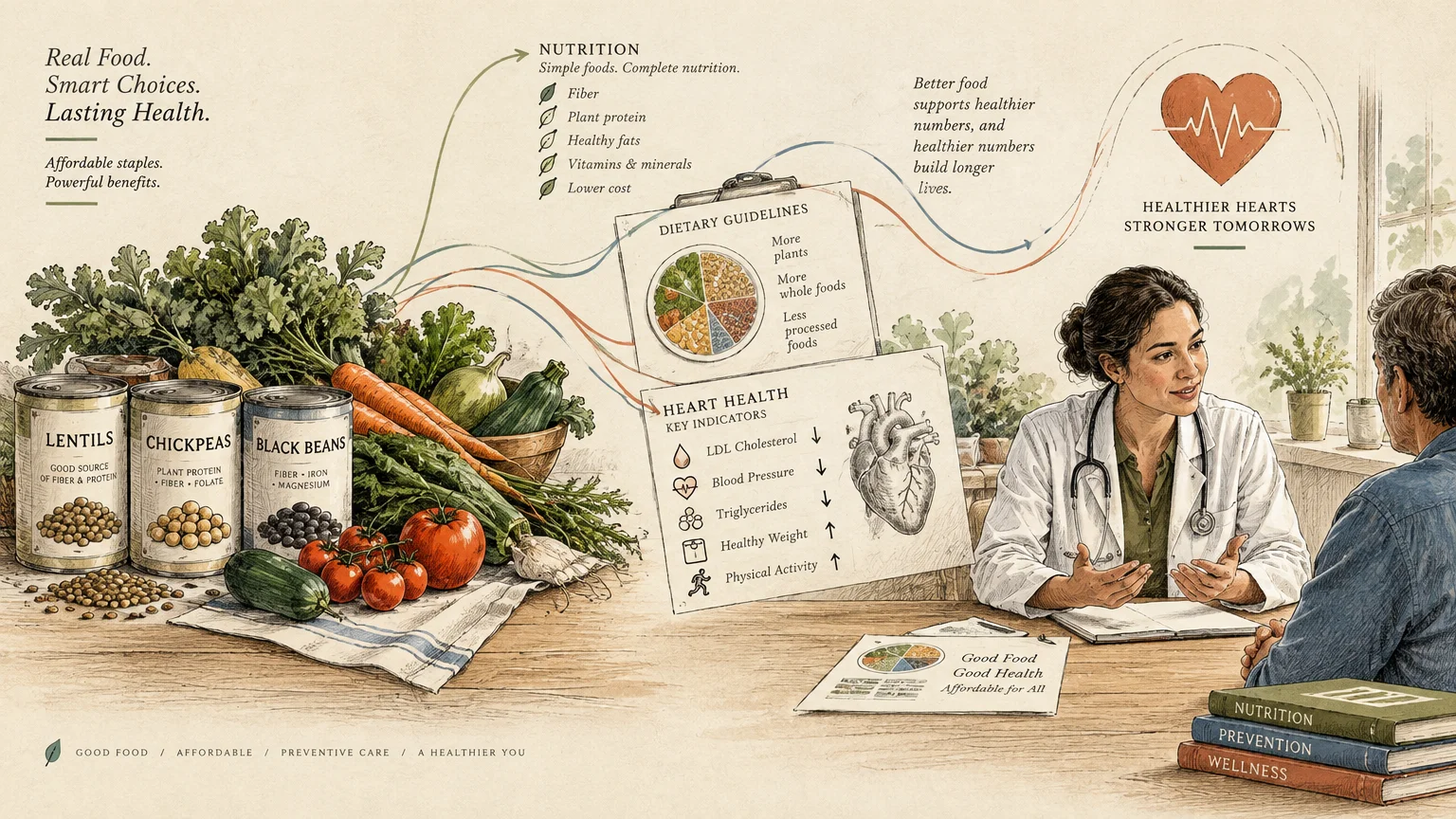
Registered dietitians continually champion canned legumes as an accessible entry point for plant-forward eating patterns. They eliminate the preparation barriers that often discourage busy individuals from hitting dietary fiber goals.
Clinical nutritionists note that families embracing bean-centric meals frequently report greater mealtime satisfaction and reduced grocery strain. The high fiber content promotes steady fullness that curbs late-night snacking impulses.
According to the Dietary Guidelines for Americans, most adults consume less than half of their recommended daily dietary fiber. Incorporating a single can of beans into dinner closes this nutritional gap rapidly and affordably.
Culinary professionals also praise canned beans for their unique ability to absorb bold regional seasonings and acids. They act like culinary sponges, adopting herbs, spices, and cooking fats to produce sophisticated flavor profiles.
Home cooks who transition toward plant-forward plates often worry about culinary boredom or repetitive textures. By varying your cooking techniques—mashing, roasting, simmering, or blending—you transform the exact same legume into entirely distinct meals.
Adopting these strategies helps dismantle the misconception that healthy eating requires costly specialty ingredients or restrictive regimens. Everyday canned legumes prove that nourishing your body remains entirely compatible with modest household budgets.
Digestive Comfort and Practical Safety
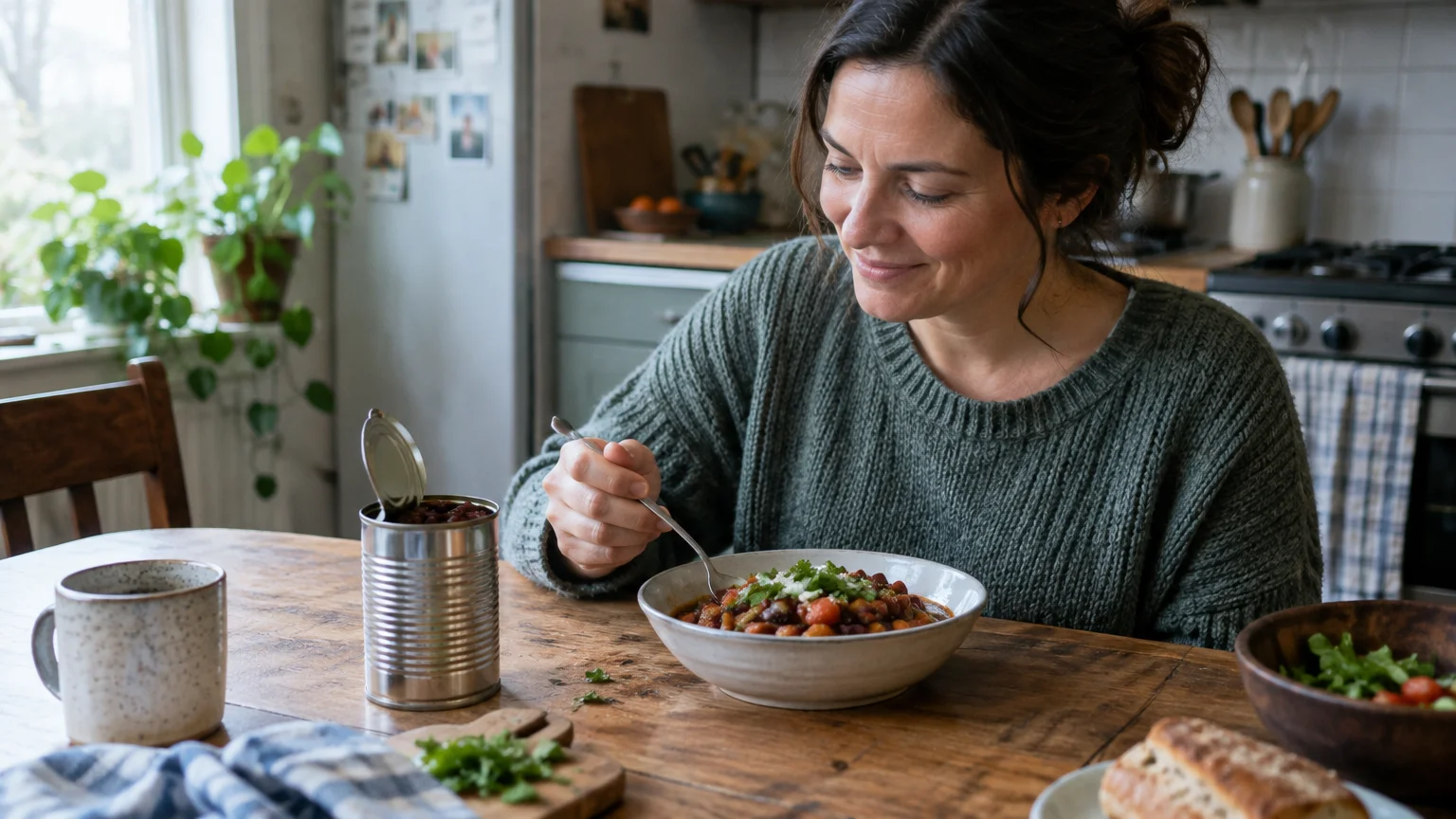
While canned beans offer immense health benefits, increasing dietary fiber too quickly can cause temporary abdominal discomfort. Your intestinal microbiome needs reasonable time to expand the bacterial colonies responsible for fermenting complex starches.
To prevent bloating, increase your legume intake gradually across several weeks rather than overnight. Pair each increase with generous water intake throughout the day to help move fiber smoothly through your digestive tract.
Rinsing canned beans thoroughly in a colander under cool running water yields substantial digestive benefits. This simple mechanical wash removes complex oligosaccharides that leach into the canning liquid during storage.
The Academy of Nutrition and Dietetics notes that rinsing also eliminates a significant portion of added packing sodium. Look for cans explicitly labeled low-sodium or no-salt-added whenever available to maintain total control over your seasonings.
Individuals diagnosed with irritable bowel syndrome may experience sensitivity to specific carbohydrates found in beans, known as galacto-oligosaccharides. If you follow a low-FODMAP protocol, consult your clinical dietitian before significantly increasing your legume intake.
Similarly, individuals with advanced chronic kidney disease may need to monitor dietary potassium and phosphorus levels carefully. Your healthcare team can offer personalized guidance on incorporating legumes safely into your renal meal plan.
Frequently Asked Questions
Does rinsing canned beans wash away important vitamins and minerals?
Rinsing removes the thick canning liquid containing excess sodium and leached gas-producing oligosaccharides. While a tiny fraction of water-soluble vitamins escapes into the liquid, the dense core minerals and fiber remain inside the beans.
The significant digestive comfort and sodium reduction far outweigh any negligible loss of micronutrients. You can cook with complete confidence knowing your rinsed beans deliver robust nutritional value.
How can you stop canned beans from turning mushy during cooking?
Add your canned beans toward the final stages of cooking for soups, grain bowls, and saucy dishes. Because commercial canning cooks beans completely, they only require gentle heating to reach serving temperature.
Avoid vigorous boiling, which fractures the tender seed coats and degrades their pleasant mouthfeel. When roasting, dry the rinsed beans thoroughly with clean kitchen towels before tossing them with oil.
Can you substitute dried beans in these twelve weeknight recipes?
You can substitute cooked dried beans in equal quantities for any recipe calling for canned varieties. One standard fifteen-ounce can of beans yields approximately one and a half cups of cooked legumes.
Ensure your dried beans are fully cooked, tender, and properly seasoned before adding them to these fast preparations. Batch-cooking dried beans and freezing them in meal-sized portions preserves the rapid convenience of canned goods.
How long do leftover bean dinners remain fresh in your refrigerator?
Store leftover bean meals in airtight glass or food-grade storage containers within two hours of preparation. According to the Centers for Disease Control and Prevention, prompt refrigeration curbs bacterial growth on prepared foods.
Properly refrigerated bean meals stay fresh, flavorful, and safe for three to five days. You can also freeze most bean soups, stews, and taco fillings for up to three months.
Your Next Twenty-Four Hours in the Kitchen
Improving your weeknight dinner habits does not require a complete culinary overhaul or hours of study. Real progress begins with a single actionable choice that feels completely manageable tonight.
Select one recipe from this guide that calls to your palate and check your kitchen cabinets today. You likely already own the canned beans, dried herbs, and cooking oil needed to begin.
Commit to preparing that chosen bean dinner within the next twenty-four hours instead of ordering takeout. Notice how quickly the meal comes together, how satisfying it tastes, and how energizing it feels.
Every nourishing meal you build from simple staples strengthens your confidence and protects your monthly budget. Open a can of beans tonight and enjoy the deep satisfaction of home-cooked simplicity.