Skipping your oven opens up faster, juicier ways to cook holiday poultry while freeing valuable rack space for side dishes. Whether you live in a small apartment or host a crowd, countertop appliances and outdoor gear deliver golden, tender meat.
You can smoke, air-fry, pressure-cook, braise, or grill turkey cuts with restaurant-level moisture and far less kitchen stress. As a culinary dietitian, I will walk you through fifteen reliable methods built around food safety and balanced flavor.
Follow these step-by-step temperatures, thawing schedules, and smart swaps to serve nutritious turkey any night of the year.
Why Non-Oven Turkey Works Better Than You Think
Conventional roasting often dries out lean white meat before dark meat finishes cooking. Moving your turkey into a slow cooker, smoker, air fryer, or skillet gives you direct control over moisture, browning, and timing.
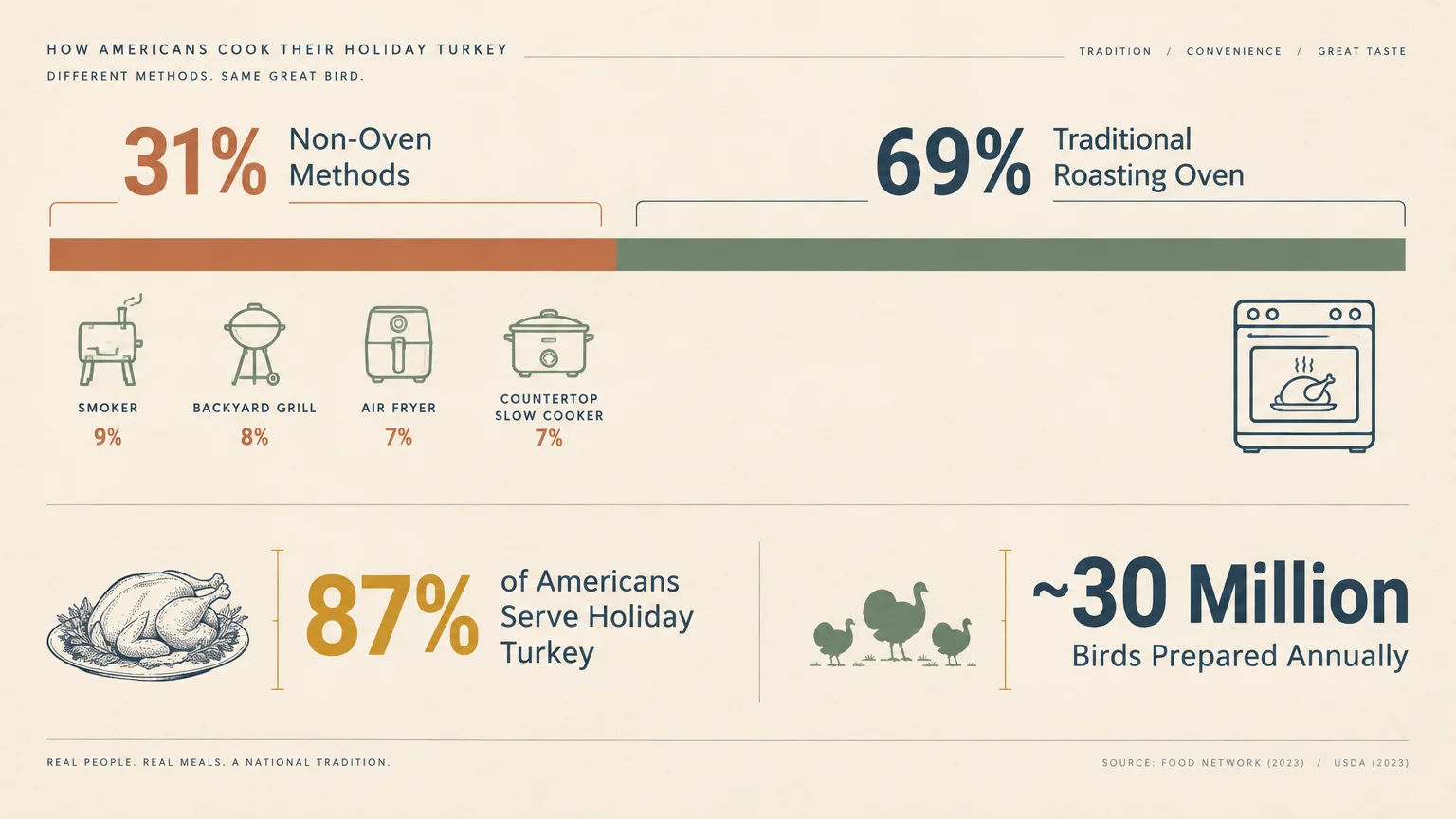
Home cooks across the country already embrace these tools for Thanksgiving, which falls on November 26, 2026. According to National Turkey Federation consumer polling, 31 percent of Americans skip the oven to smoke, fry, grill, or air-fry their holiday birds.
Around 87 percent of Americans serve turkey most years, accounting for nearly 30 million birds each Thanksgiving. Non-oven techniques let you match the cooking vessel to your guest list, budget, and flavor preferences without sacrificing tender texture.
Smart Sourcing, Thawing, and Ingredient Prep
Choosing the Right Cut and 2026 Price Tips
Start by budgeting roughly 1 pound of whole turkey per person, adding a little extra if you love leftovers. For smaller gatherings or households seeking lighter portions—including the roughly 1 in 8 U.S. adults using GLP-1 medications—bone-in breasts or tenderloins reduce waste.
Although wholesale turkey prices climbed 30 percent in 2026 following avian influenza losses, grocery stores still offer strong seasonal bargains. National retail averages in mid-November 2026 sit near $1.18 to $1.19 per pound for conventional frozen whole birds, with holiday promotions dipping below $1.00.
Fresh boneless, skinless turkey breasts cost closer to $2.93 per pound at wholesale, yet they require zero carving waste. Choose unbasted, minimally processed poultry whenever possible so you control the sodium and seasoning.
Safe Thawing Before You Start
Never smoke, grill, deep-fat fry, or microwave a frozen turkey, and always thaw cuts completely before slow cooking. Leaving frozen poultry on your kitchen counter for more than two hours pushes the exterior into the 40°F to 140°F bacterial danger zone.
Refrigerator thawing at 40°F or below remains the safest choice, requiring 24 hours for every 4 to 5 pounds of bird. Expect a 12-to-16-pound turkey to thaw over three to four days, then cook it within two days.
Need faster prep? Submerge the wrapped bird in cold tap water changed every 30 minutes, budgeting 30 minutes per pound, or follow microwave defrost instructions and cook the turkey immediately afterward.
Pantry Seasonings and Allergy Swaps
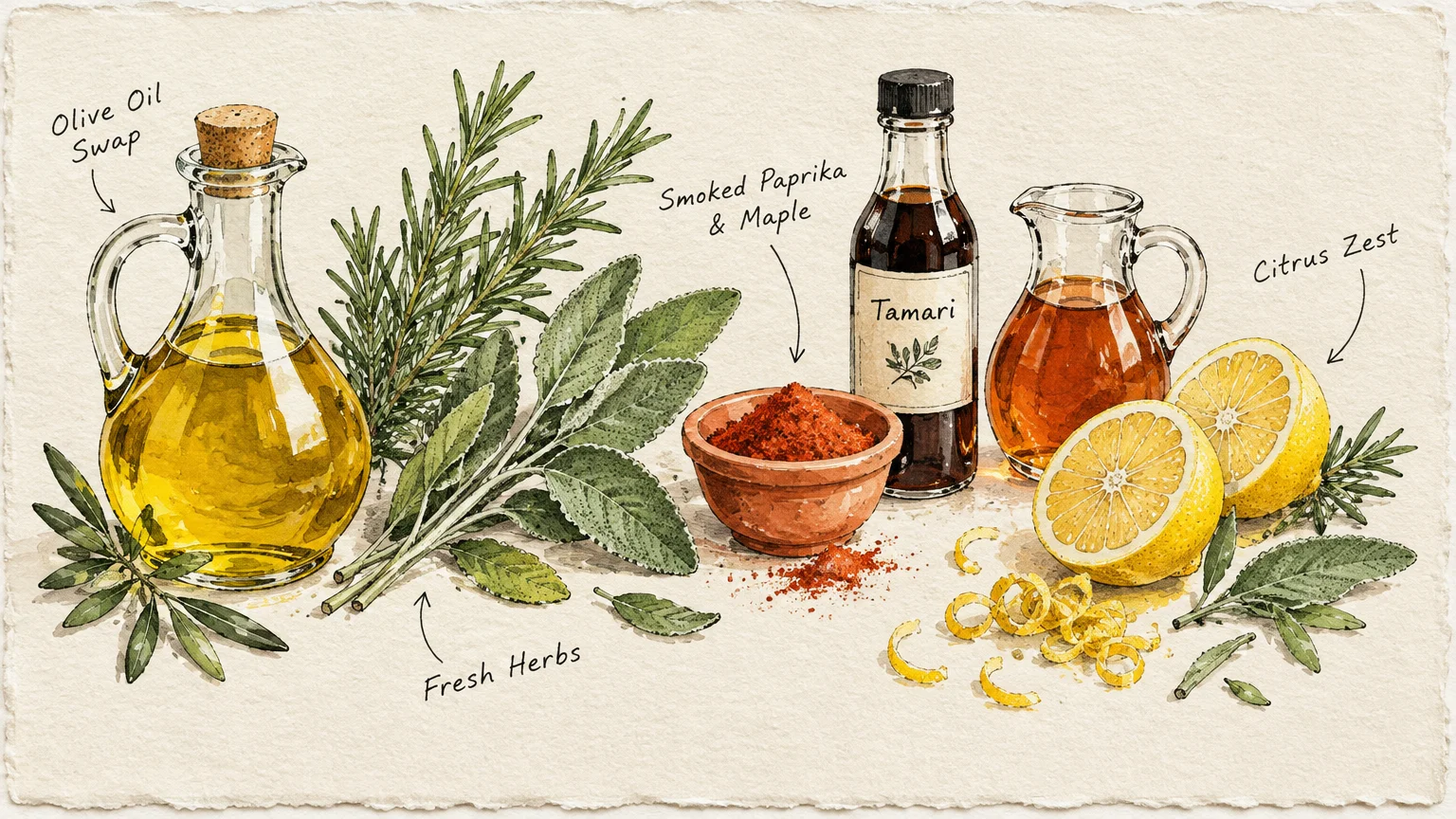
Build deep aroma with fresh rosemary, thyme, sage, garlic, citrus zest, and coarse black pepper rather than heavy salt blends. Swap butter for heart-healthy extra-virgin olive oil or avocado oil to keep recipes dairy-free and rich in monounsaturated fats.
Use low-sodium chicken or vegetable broth for braising liquids, and thicken pan juices with cornstarch or arrowroot instead of wheat flour for gluten-free gravy. Tamari, smoked paprika, and maple syrup offer effortless cultural and allergy-friendly twists.
15 Ways to Make Turkey Without an Oven
1. Slow Cooker Herb-Garlic Turkey Breast
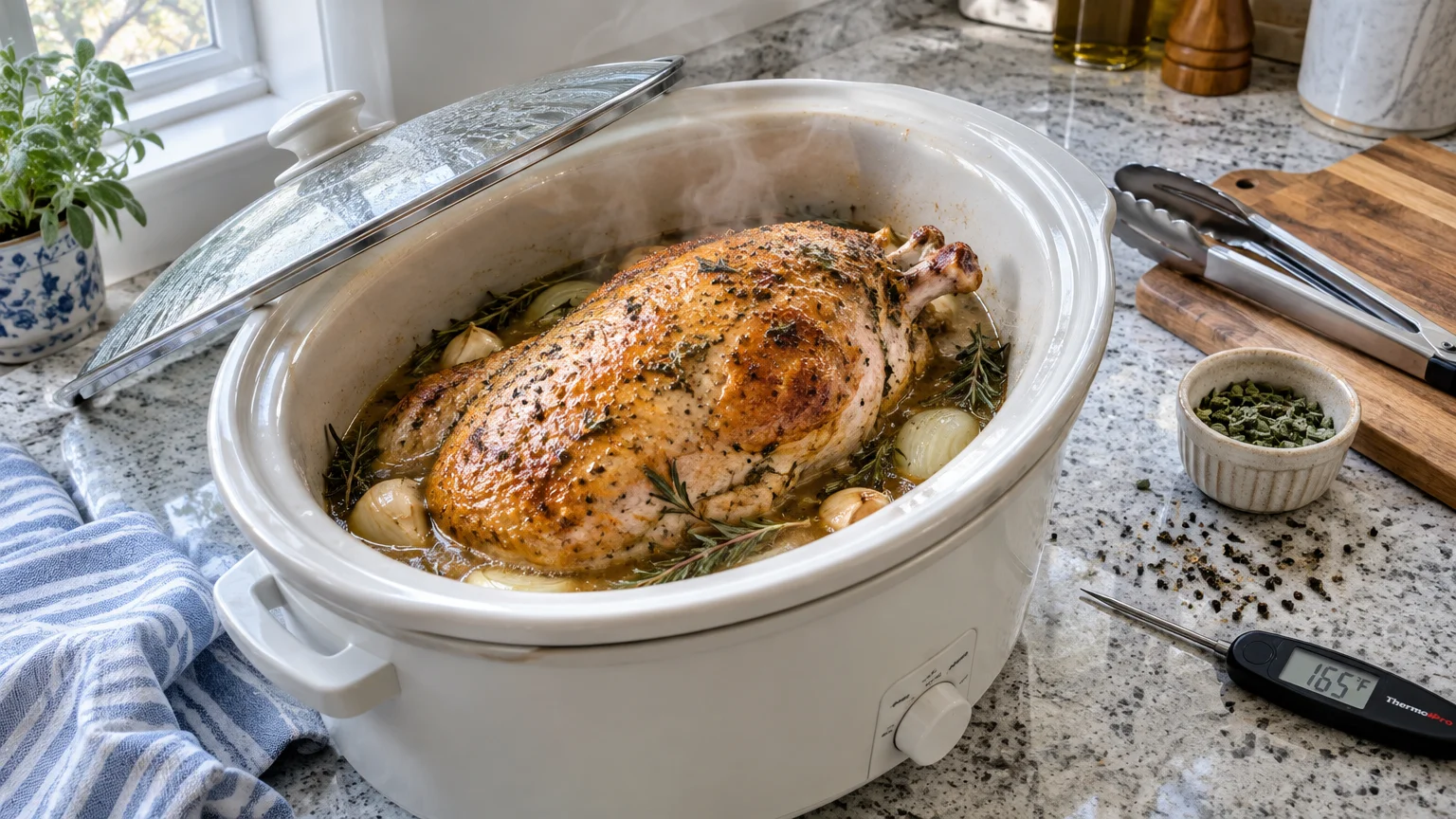
Slow cooking transforms lean poultry into fork-tender slices infused with aromatic herbs. Because whole turkeys rarely fit safely inside standard crocks, use a thawed 3-to-5-pound bone-in breast or cut a bird into pieces.
Rub the skin with 2 tablespoons of olive oil, minced garlic, chopped rosemary, thyme, and black pepper. Place sliced onions and 1 cup of low-sodium broth in the bottom of the pot, then set the turkey breast skin-side up.
Follow USDA Food Safety and Inspection Service turkey cooking guidelines by starting on High for at least 1 hour before switching to Low for 3 to 4 hours. Keep the lid closed, since every peek drops heat and adds 20 to 25 minutes.
2. Air Fryer Crispy-Skin Turkey Breast
An air fryer delivers shatteringly crisp skin and juicy meat in under an hour without added frying oil. About 7 percent of holiday cooks now rely on air fryers for smaller, effortless feasts.
Pat a thawed 3-pound boneless or bone-in turkey breast completely dry with paper towels, then coat it with avocado oil, smoked paprika, garlic powder, sage, and a pinch of kosher salt. Preheat your basket to 350°F for three minutes.
Air-fry the breast skin-side down for 20 minutes, flip carefully, and cook another 20 to 25 minutes until the thickest center hits 165°F. Rest the roast for 10 minutes on a cutting board before slicing against the grain.
3. Hardwood-Smoked Whole Turkey
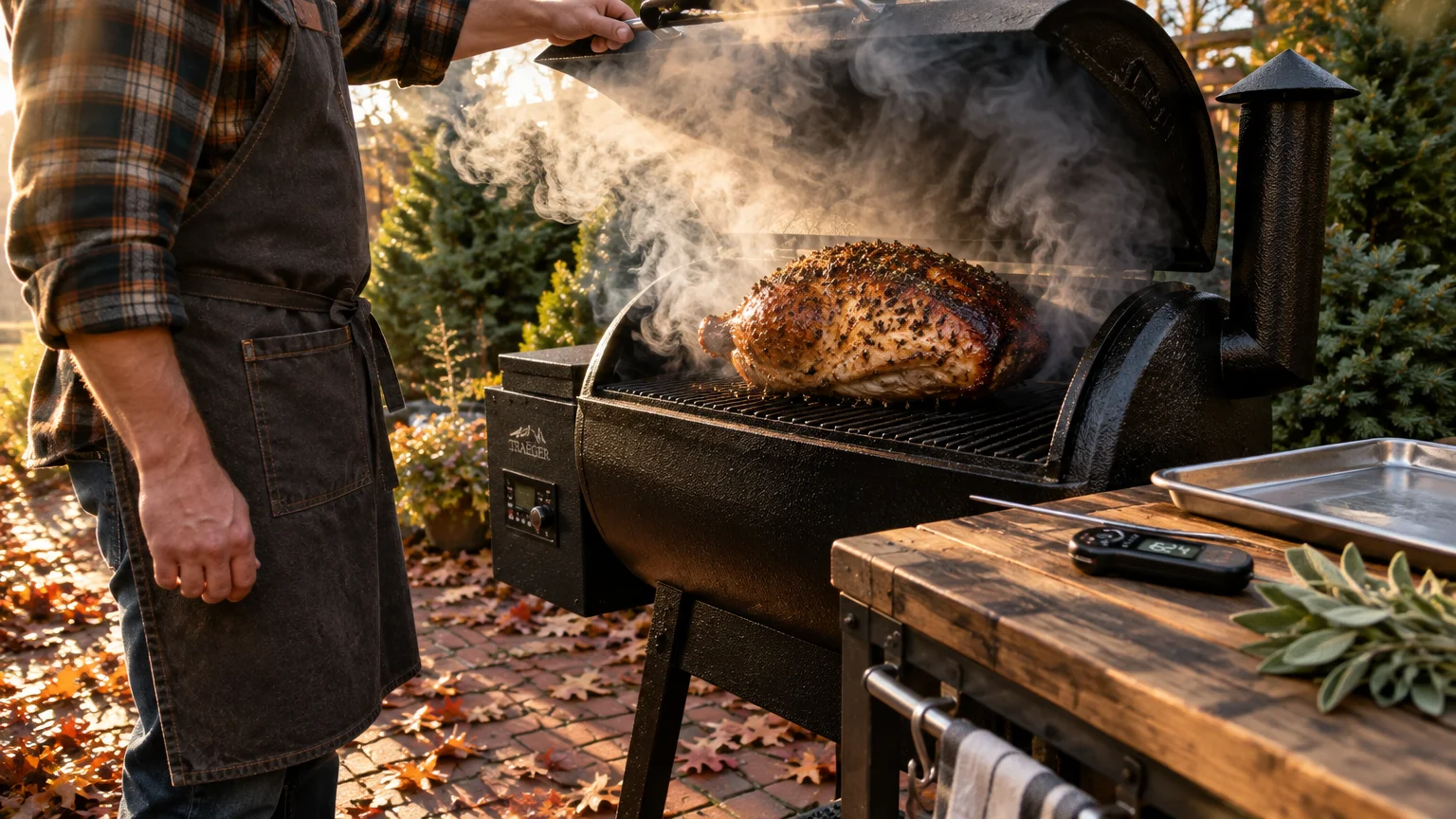
Smoking infuses poultry with mahogany color and wood-fired depth while keeping your kitchen completely cool. Roughly 10 percent of American households now smoke their Thanksgiving turkey outdoors.
Season a completely thawed, unstuffed 12-pound whole turkey with a salt-free brown sugar, chili, and sage rub; never smoke a stuffed bird because stuffing heats too slowly. Stabilize your smoker between 225°F and 300°F using fruitwood, oak, or hickory.
Avoid softwoods like pine, fir, cedar, or spruce, and replenish charcoal roughly every 1 to 2 hours at about 15 briquettes hourly. Plan on 20 to 30 minutes per pound until thigh, wing, and breast all reach 165°F.
4. Indirect-Heat Covered Grill Turkey
Grilling over indirect heat mimics a convection oven while adding subtle charcoal or gas-seared flavor. Keep the lid closed as much as possible so temperatures remain steady around 325°F to 350°F.
Set up a two-zone fire on a charcoal or gas grill, placing a foil drip pan filled with water beneath the cooking grate. Brush a thawed, unstuffed whole turkey with olive oil, lemon zest, and cracked pepper.
Grill over the unlit zone for 15 to 18 minutes per pound, shielding wing tips with foil if they brown early. If you partially precook turkey indoors first, transfer it straight onto the preheated grill immediately.
5. Pressure Cooker Turkey Tenderloin with Pan Gravy
Electric pressure cookers turn lean turkey tenderloins into a weeknight dinner or compact holiday centerpiece in roughly 30 minutes. Add 1 cup of low-sodium broth, smashed garlic, and bay leaves to the inner pot.
Rub two thawed 1-pound turkey tenderloins with Italian herbs, sear them briefly using the saute function in 1 tablespoon of olive oil, and place them on the trivet. Lock the lid and pressure-cook on High for 12 minutes, followed by a 10-minute natural release.
Verify the internal temperature reaches 165°F, then whisk 1 tablespoon of cornstarch with cold water into the simmering pot juices for instant gluten-free gravy. Note that high-altitude kitchens using single-weighted-gauge cookers require slightly longer cooking times.
6. Electric Roaster Oven Classic Whole Bird
An electric countertop roaster oven handles a full 16-pound holiday bird effortlessly while leaving your main kitchen oven open for pies and casseroles. Preheat the unit to at least 325°F with the rack inside.
Season your thawed, unstuffed turkey with herb-infused olive oil and tuck citrus halves inside the cavity for brightness. Elevate the bird on the metal rack so it stays out of pooling juices, and never enclose poultry in grocery store brown paper bags.
Keep the lid firmly seated throughout roasting to prevent heat loss, checking the thickest breast and innermost thigh around 3 hours. Carve after a 20-minute rest so juices redistribute evenly throughout every slice.
7. Sous Vide Butter-Poached Turkey Breast
Water-bath cooking guarantees edge-to-edge juiciness with zero guesswork or dry outer edges. Place a thawed, skinless turkey breast into a heavy-duty food-safe bag with thyme sprigs, garlic, and 1 tablespoon of olive oil or butter.
Submerge the sealed bag completely in a circulating water bath set to 165°F for 2.5 to 3 hours, keeping bags unstacked so water flows freely around every surface. While commercial standards allow lower sustained temperatures, 165°F delivers immediate pathogen destruction for home cooks.
Remove the breast, pat it thoroughly dry, and sear it in a screaming-hot skillet for 90 seconds per side for golden color. Slice thinly over mashed cauliflower or whole-grain farro.
8. Oil-Less Infrared Fryer Crisp Whole Turkey
An oil-less infrared fryer gives you deep-fried crunch and juicy meat without a single drop of boiling oil. Safety experts strongly recommend this appliance over traditional propane oil fryers.
Rub an unstuffed, completely thawed 12-to-14-pound bird with canola oil and your favorite Cajun or herb seasoning blend. Lower the turkey into the wire basket, breast-side up, and ignite the outdoor infrared burner according to manufacturer directions.
Cook for roughly 10 minutes per pound until the breast and thigh register 165°F on an instant-read thermometer. Let the bird rest inside the covered basket for 15 minutes before lifting and carving.
9. Outdoor Deep-Fat Fried Turkey With Strict Safety Limits
Although roughly 7 percent of cooks fry turkey, the National Fire Protection Association Thanksgiving fryer safety guidance strongly discourages outdoor oil-filled fryers, and Underwriters Laboratories refuses to certify them.
Oil fryers average 5 deaths, 60 injuries, and over $15 million in property damage annually, while Thanksgiving sees three times more home cooking fires than typical days.
If you still choose traditional frying, use an unstuffed, 100-percent thawed turkey weighing 12 pounds or less, dried inside and out to prevent explosive boil-overs. Position the burner outdoors more than 10 feet from buildings, never on decks or inside garages.
Heat peanut oil carefully below 375°F—its ignition threshold—turn off the flame before lowering the bird, and cook 3 to 4 minutes per pound until 165°F. Never throw water on a grease fire; keep a grease-rated extinguisher nearby.
10. Stovetop Dutch Oven Braised Turkey Thighs
Braising bone-in turkey thighs or drumsticks in a heavy Dutch oven yields deeply savory, budget-friendly dark meat rich in iron and zinc. Pat 4 pounds of thawed thighs dry and season with fennel seed, black pepper, and rosemary.
Sear the skin side in 1 tablespoon of olive oil over medium-high heat for 6 minutes until deeply browned. Remove the meat, saute sliced shallots, carrots, and celery, then deglaze with dry white wine or apple cider and low-sodium broth.
Return the thighs skin-side above the liquid, cover tightly, and simmer gently on your stovetop burner for 60 to 75 minutes until tender at 165°F. Spoon the vegetable-studded braising broth directly over mashed sweet potatoes.
11. Cast-Iron Skillet Lemon-Caper Turkey Cutlets
Thin turkey cutlets cook in under 10 minutes on a cast-iron skillet, making them ideal for busy weeknights or two-person holidays. Pound 1.5 pounds of breast cutlets to an even half-inch thickness and dust lightly with almond flour or gluten-free flour.
Heat 2 tablespoons of olive oil over medium-high heat until shimmering, then sear cutlets 3 minutes per side until golden and 165°F inside. Transfer the meat to a warm platter so it stays tender.
Add minced garlic, lemon juice, drained capers, and half a cup of low-sodium broth to the hot skillet, simmering for two minutes. Pour the bright pan sauce over the cutlets and garnish with chopped parsley.
12. Rotisserie Grill Spit-Roasted Turkey
Spit-roasting rotates your turkey continuously over indirect grill heat so natural juices self-baste the skin into a crisp mahogany shell. Choose a compact, completely thawed, unstuffed 10-to-12-pound bird that balances cleanly on your grill’s rotisserie forks.
Tie the legs and wings snugly against the torso with butcher’s twine so nothing catches on the grates during rotation. Brush with olive oil, oregano, smoked paprika, and garlic paste, then place a drip tray underneath.
Roast at 325°F to 350°F for 15 to 18 minutes per pound until the breast, thigh, and wing all hit 165°F. Unthread carefully using heat-proof gloves and let the roast rest 15 minutes.
13. Stovetop Poached Turkey Breast for Meal Prep
Gentle poaching keeps boneless turkey breast remarkably moist while keeping sodium and added fat near zero. Bring a large stockpot of water or low-sodium broth to a bare simmer with halved lemons, peppercorns, celery tops, and thyme.
Lower a thawed 2.5-pound boneless turkey breast into the fragrant liquid, ensuring it stays submerged by an inch. Maintain a gentle 180°F simmer—never a rolling boil—for 35 to 45 minutes until the center reads 165°F.
Cool the breast briefly in the broth to lock in moisture, then slice thinly for grain bowls, salads, and whole-grain sandwiches. Fresh poached turkey gives you cleaner protein than packaged cold cuts.
14. Electric Skillet Spatchcocked Turkey Parts
A deep electric skillet with a vented lid acts like a portable stovetop roaster when kitchen burners are full. Ask your butcher for split turkey halves or use thawed bone-in breasts and drumsticks.
Set the electric skillet to 350°F, sear the skin side in 1 tablespoon of avocado oil for 7 minutes until crisp, then flip the cuts. Pour half a cup of apple cider and fresh thyme around the meat.
Reduce the dial to 300°F, cover tightly with the lid, and cook for 45 to 55 minutes until the thermometer hits 165°F. Crisp the skin uncovered at 375°F for three minutes right before serving.
15. Wok-Seared Ginger-Sesame Turkey Strips
A blazing-hot wok turns sliced turkey breast into a colorful, veggie-packed meal in fifteen minutes flat. Slice 1.5 pounds of raw turkey breast into thin strips and toss with grated ginger, minced garlic, cornstarch, and low-sodium tamari.
Heat 1 tablespoon of sesame or peanut oil in your wok over high heat until wispy smoke appears. Sear the turkey in a single layer for three minutes before tossing with broccoli florets, bell peppers, and snap peas.
Stir-fry another three minutes until the vegetables turn crisp-tender and every piece of turkey hits 165°F. Finish with toasted sesame seeds and sliced scallions over steamed brown rice or cauliflower rice.
Nutrition Notes, Portions, and Food Safety
Data from USDA FoodData Central shows roasted skinless turkey breast delivers 125 calories, 25.6 grams of protein, and 0 grams of carbohydrates per 3-ounce serving. Keeping the skin adds crispy texture and raises a 3-ounce portion to 150 calories.
Skinless whole roasted turkey meat provides 135 calories, 24.7 grams of protein, 3.3 grams of fat, and just 85.9 milligrams of sodium per 3 ounces. Skinless dark meat offers 147 calories per 3 ounces alongside extra iron and zinc.
Smoked skinless turkey provides 162 calories, 29.3 grams of protein, and 5 grams of fat per 100-gram serving. Cooking fresh turkey at home slashes sodium dramatically—86 to 89 milligrams per 3 to 4 ounces versus 400 to 500 milligrams in 2 ounces of deli turkey.
Protect your household from pathogens like Salmonella and Campylobacter, which contribute to the Centers for Disease Control and Prevention foodborne illness estimates of 48 million sick Americans—roughly 1 in 6—each year. Check every bird with a calibrated digital food thermometer before serving.
Always verify 165°F in three spots on whole birds: the thickest breast, innermost thigh, and innermost wing. Refrigerate leftovers within 2 hours—or 1 hour if room air tops 90°F—eat within 2 to 4 days, and reheat to 165°F.
Flavor Variations, Cultural Swaps, and Balanced Pairings
Take your non-oven turkey in bold culinary directions by tailoring rubs and sauces to your heritage or pantry. Mix achiote paste, cumin, oregano, and sour orange juice for bright Caribbean-inspired grilled or slow-cooked turkey thighs.
For a smoky autumn profile, blend maple syrup, apple cider vinegar, Dijon mustard, and smoked paprika onto air-fried or infrared-cooked breasts. Keep meals naturally gluten-free and dairy-free by brushing cuts with olive oil and thickening pan drippings with cornstarch.
Balance lean poultry protein with fiber-rich, potassium-packed sides such as roasted Brussels sprouts, wild rice pilaf with toasted pecans, and tart cranberry-ginger relish. Pair dinner with sparkling apple cider, hibiscus iced tea, or unsweetened cinnamon herbal tea.
Frequently Asked Questions
Can you cook a frozen turkey without an oven?
No; FoodSafety.gov poultry handling standards and USDA rules warn against smoking, grilling, frying, slow-cooking, or microwaving frozen turkey. Frozen centers stay too cold while exteriors linger in the bacterial danger zone, so thaw completely first.
How long do cooked turkey leftovers stay safe?
Slice leftover meat off the bone and store it in shallow airtight containers within two hours of cooking. Enjoy refrigerated turkey within 2 to 4 days, or freeze portions for longer storage, always reheating to 165°F.
Which non-oven equipment works best for small households?
An air fryer, electric pressure cooker, or cast-iron skillet shines for two to four diners because each heats up quickly without wasting energy. Buying a 2-to-3-pound turkey breast or tenderloin minimizes leftovers while trimming food costs.
How can you lower sodium and saturated fat in holiday turkey?
Skip pre-basted or brined birds and season fresh turkey with citrus zest, garlic, rosemary, and smoked paprika instead of salt-heavy packets. Swap butter for olive oil and remove skin before eating to trim calories and saturated fat.
Bring Your Holiday Table Together
Pick one of these fifteen non-oven methods today and mark your refrigerator thawing date on the calendar so prep feels calm and joyful. Invite family or friends to compare crisp air-fried skin against smoky grill cuts, and share your favorite pairing around the table.