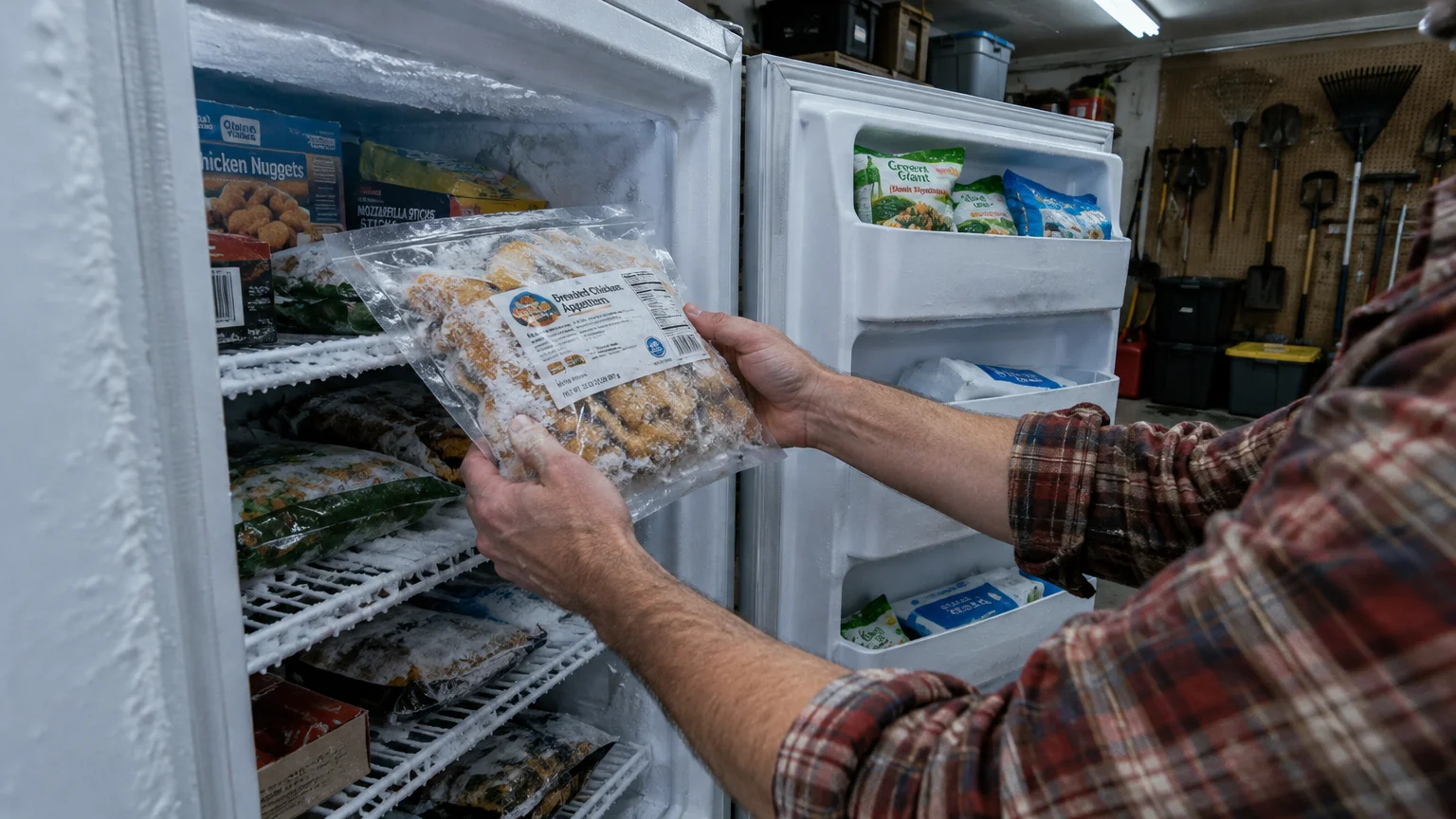
A routine sweep through your home freezer could save you from serious dinner-table trouble this week. Federal inspectors have issued alerts on multiple frozen meat products sitting in consumer kitchens across the country.
These warnings involve undeclared allergens that trigger severe reactions, uninspected processing facilities, and massive temperature failures in commercial storage coolers. Checking your packages right now takes just two minutes and keeps your family safe.
You do not need a receipt or original grocery bag to verify what is lurking beneath the frost. Grab a package from your freezer shelf and examine the official inspection code printed on the wrapper.
Which Betterballen Frozen Appetizers Are Sitting Under a Federal Warning?
The U.S. Department of Agriculture issued a nationwide consumer alert concerning specialty frozen meats. On November 6, 2026, the Food Safety and Inspection Service flagged several products produced by Betterballen Foods LLC.
Federal inspectors classified these items as frozen, not ready-to-eat meat and poultry products. Because they require thorough cooking before consumption, shoppers often store them away for months without suspecting any manufacturing flaws.
The agency did not request a formal recall because the affected items are no longer available on store shelves. However, federal officials caution that many packages remain stored inside residential freezers.
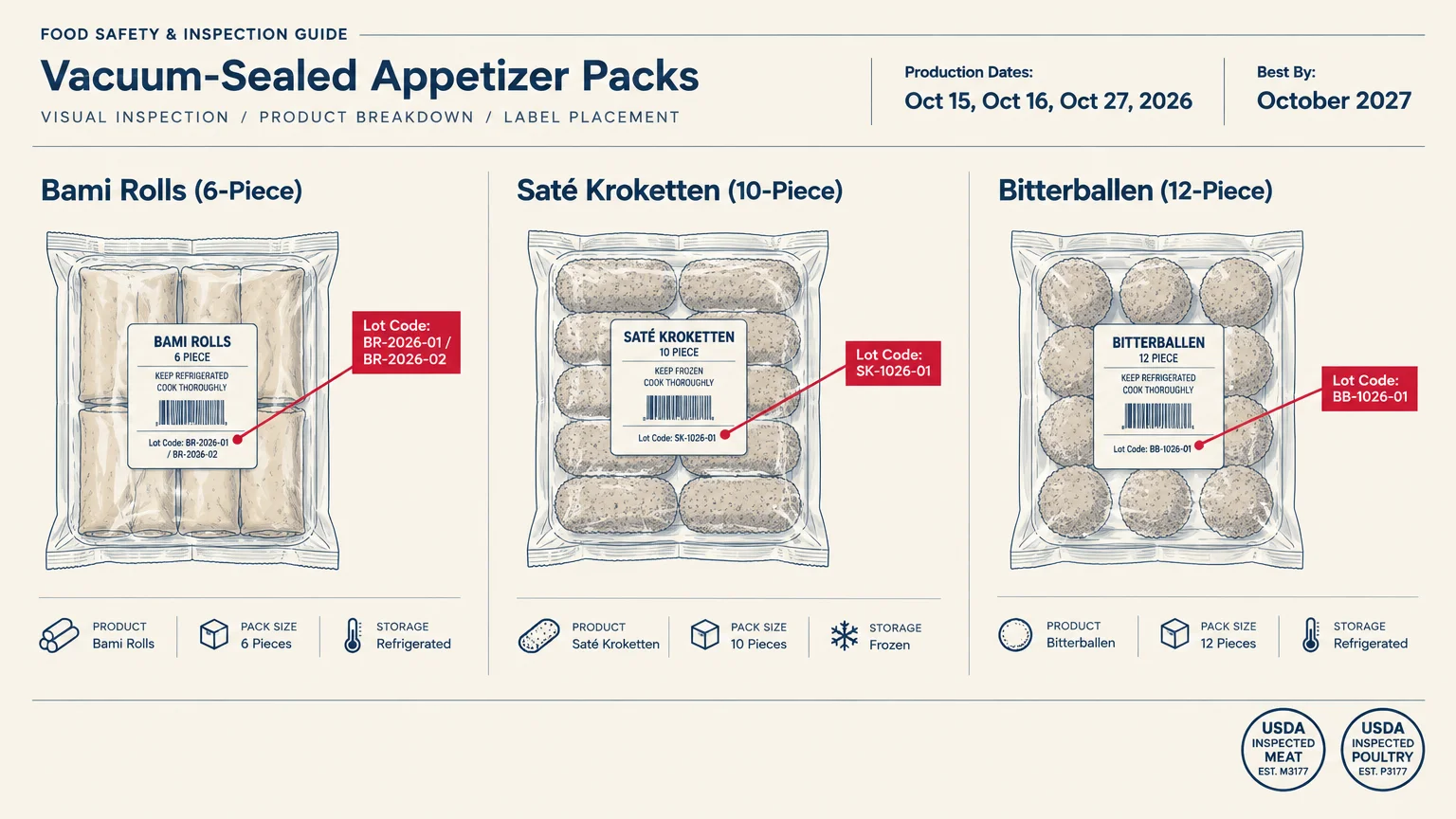
You should immediately look for clear vacuum-packed packages bearing specific lot codes. The first flagged item is the six-piece box of Bami Rolls, carrying lot code BR-2026-01 or BR-2026-02.
The second affected item is the ten-piece package of Saté Kroketten. Check your wrapper for lot code SK-1026-01 to see if your package matches the federal advisory.
The third product on the warning list is the twelve-piece package of Bitterballen. These beef bites display lot code BB-1026-01 across the packaging.
All of these items were manufactured across three separate dates in the fall. Check your labels for production dates of October 15, October 16, or October 27, 2026.
Every package involved in this alert also carries a uniform expiration label. Look for a Best By date marked October 2027 printed directly on the exterior film.
You will also find specific federal establishment marks inside the USDA seal. The meat packages carry EST.
M3177, while the poultry packages show EST. P3177.
Betterballen Foods distributed these frozen appetizers nationwide through online sales via Lowlands House. Online shoppers across any state could easily have received these products by mail.
Local shoppers also faced direct exposure at community events in South Carolina. Officials confirmed distribution at a local festival and a farmers market located in Greer, South Carolina.
If you discover any of these items in your freezer, do not prepare or consume them. The agency urges you to throw them away immediately or return them to the seller.
Why Did Undeclared Sesame and Anchovy Trigger This Meat Alert?
Food labeling laws exist to prevent severe, life-threatening allergic emergencies at your table. Federal inspectors discovered these Betterballen violations during a routine label review at the production plant.
The review proved that all three frozen appetizers contained undeclared sesame. Sesame represents a major health hazard because it can provoke sudden anaphylactic reactions in sensitive individuals.
The federal government officially designated sesame as the nation’s ninth major food allergen. The U.S. Food and Drug Administration requires clear sesame disclosures on every packaged food item.
The beef-based Bitterballen product contained an additional hidden hazard for allergic shoppers. Investigators discovered Worcestershire sauce made with anchovy, a known fish allergen that was left completely off the ingredient panel.
Fish allergies frequently develop in adulthood and can trigger rapid respiratory distress. When a label fails to list anchovy, shoppers managing fish sensitivities face unnecessary and severe medical risks.
You might wonder why a label omission matters if you do not have diagnosed food allergies. Hidden ingredients frequently signal broader gaps in manufacturing oversight and quality control standards.
Furthermore, unexpected cross-contact during processing can introduce unlisted oils and proteins. If you host friends or family members, serving misbranded frozen appetizers puts your guests in harm’s way.
Fortunately, the agency has received zero confirmed reports of adverse medical reactions from these products. Even so, public health officials strongly discourage taking any chances with misbranded meats.
Accurate ingredient lists represent your primary defense against unexpected health reactions. Taking label accuracy seriously keeps your kitchen safe from unforeseen medical emergencies.
Could the 1.5-Million-Pound Kayem Foods Recall Impact Your Weekly Lunches?
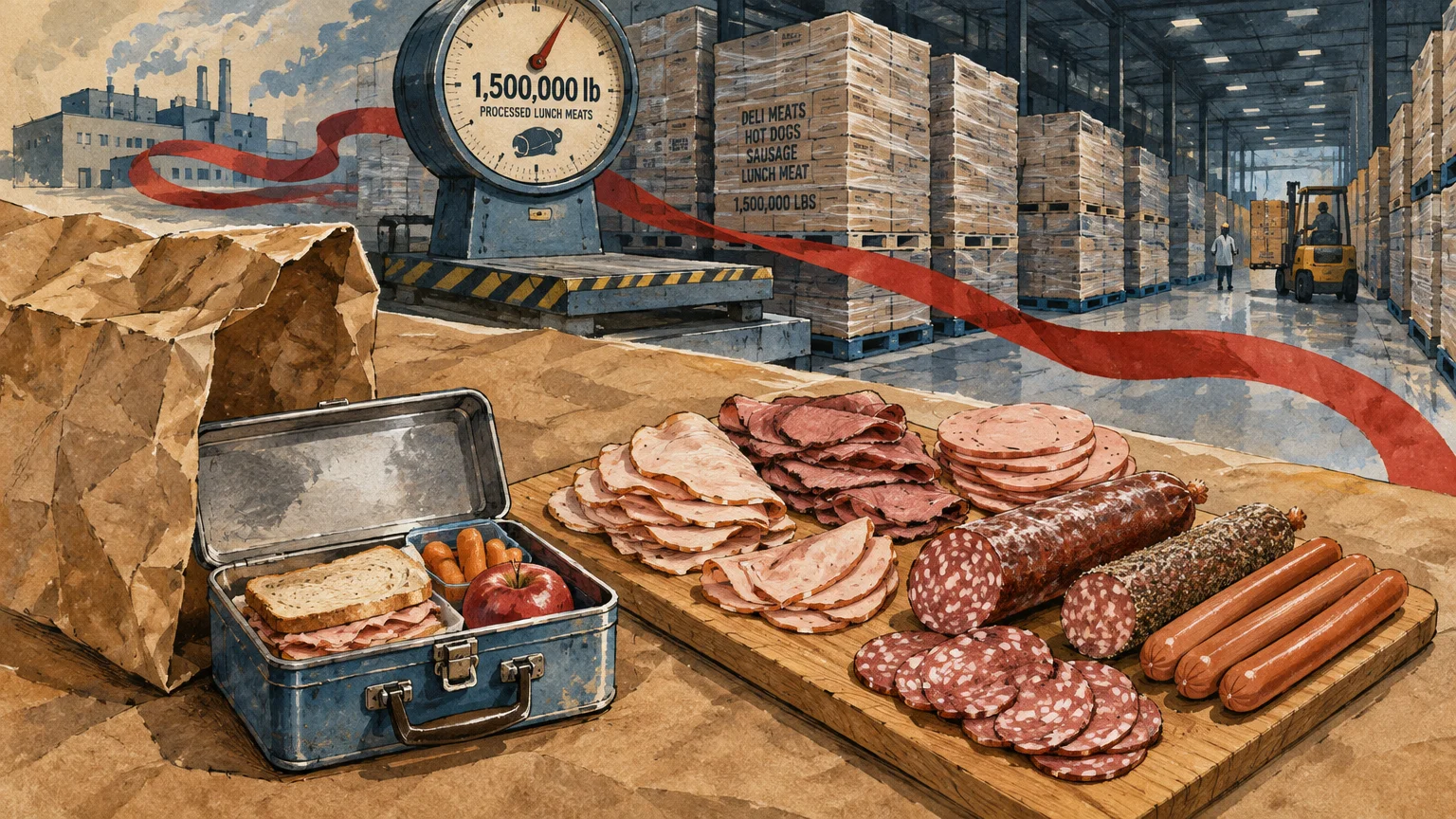
While the Betterballen alert targets specialty appetizers, another recent recall involves everyday sandwich staples. On October 17, 2026, Kayem Foods recalled approximately 1,584,361 pounds of ready-to-eat meat and poultry products.
This massive recall occurred after inspectors discovered potential temperature abuse inside a commercial storage cooler. When cooling equipment fails, perishable meats sit in unsafe temperature zones that encourage microbial growth.
The recalled Kayem items span a broad production window covering seven full months. Inspect your freezer for items manufactured between March 31, 2026, and October 7, 2026.
Because Kayem distributes products to retail groceries nationwide, these packages reached consumers across multiple regions. You may have purchased these items weeks ago and stashed them away for quick lunches.
You can verify your packages by examining the USDA establishment marks on the label. Look for establishment numbers EST.
M/P 7839, EST. P 20935A, or EST.
M 9520.
Ready-to-eat products carry a higher risk profile when temperature control breaks down during storage. Consumers typically eat deli meats and prepared sausages cold without reheating them to boiling temperatures.
Without a high-heat cooking step, bacteria like Listeria monocytogenes or Salmonella can survive directly on the meat. That makes proper factory refrigeration the primary defense against dangerous foodborne infections.
If you find any Kayem packages bearing those establishment numbers, remove them from your freezer today. Do not attempt to reheat or salvage meats that suffered temperature abuse.
Tossing compromised deli meats may feel frustrating, but preventing foodborne illness is always worth the precaution. A single contaminated meal can disrupt your digestive health and derail your daily routine for weeks.
How Do You Spot Illegal Raw Meat from the Star Meat Delivery Action?
Food safety rules also protect your household against uninspected meats entering the commercial supply chain. On September 22, 2026, Star Meat Delivery Inc. recalled approximately 167,639 pounds of raw meat products.
This recall targeted vacuum-packed cuts of raw beef, pork, and goat sold under the A&D Foods brand. Regulators discovered that these raw meats were produced entirely without the benefit of federal inspection.
Even more troubling, the packages displayed a counterfeit mark of inspection to deceive shoppers. The wrappers falsely bore establishment number EST.
1363 inside the USDA inspection circle.
Mandatory USDA inspections guarantee that slaughter facilities follow strict sanitary standards and humane handling rules. When an operation bypasses inspection, you have no way to verify sanitation or disease status.
The Food Safety and Inspection Service considers uninspected meat an unacceptable risk for consumer households. Pathogens, chemical residues, and unapproved processing aids can easily slip into unmonitored raw meats.
Check your deep freezer if you regularly purchase vacuum-sealed cuts of beef, pork, or goat. If you spot an A&D Foods label bearing EST.
1363, discard the package immediately.
Disposing of uninspected meat protects your cutting boards, hands, and kitchen surfaces from virulent bacterial contamination. Never feed uninspected raw meat products to household pets, either.
Uninspected meats can introduce zoonotic pathogens into your home that put everyone at risk. Safe meals start with meat products that comply fully with federal sanitation laws.
Where Should You Look on the Wrapper to Verify USDA Inspection Numbers?
Identifying recalled meat does not require guesswork once you learn to read the federal inspection stamp. Every federally inspected meat package features an oval or circular emblem known as the inspection bug.
This mark contains the words U.S. Inspected and Passed along with an establishment number. That small number identifies the exact commercial facility where the meat was processed and packaged.
You will usually find this emblem on the principal display panel or near the ingredient statement. On clear vacuum-sealed pouches, manufacturers frequently stamp the establishment code along the crimped plastic seam.
Understanding the prefix letters inside the circle will help you decode the product category quickly. The letter M signifies a red meat facility, while the letter P identifies a poultry plant.
When retailers sell private-label store brands, the brand name on the front may differ from the processor. However, the establishment number always points directly to the true manufacturer responsible for production.
If an alert lists EST. M3177, you can match that number regardless of whether you bought store-brand or brand-name meat.
The establishment code remains your most reliable tool for verifying meat safety.
Keep a lighted magnifying glass in your kitchen drawer if small package typography strains your eyes. Taking a clear photo with your smartphone camera and zooming in offers another effortless way to read tiny numbers.
Make reading this seal second nature whenever you unload groceries into your refrigerator or freezer. Spending a few seconds verifying establishment codes gives you total confidence in your food supply.
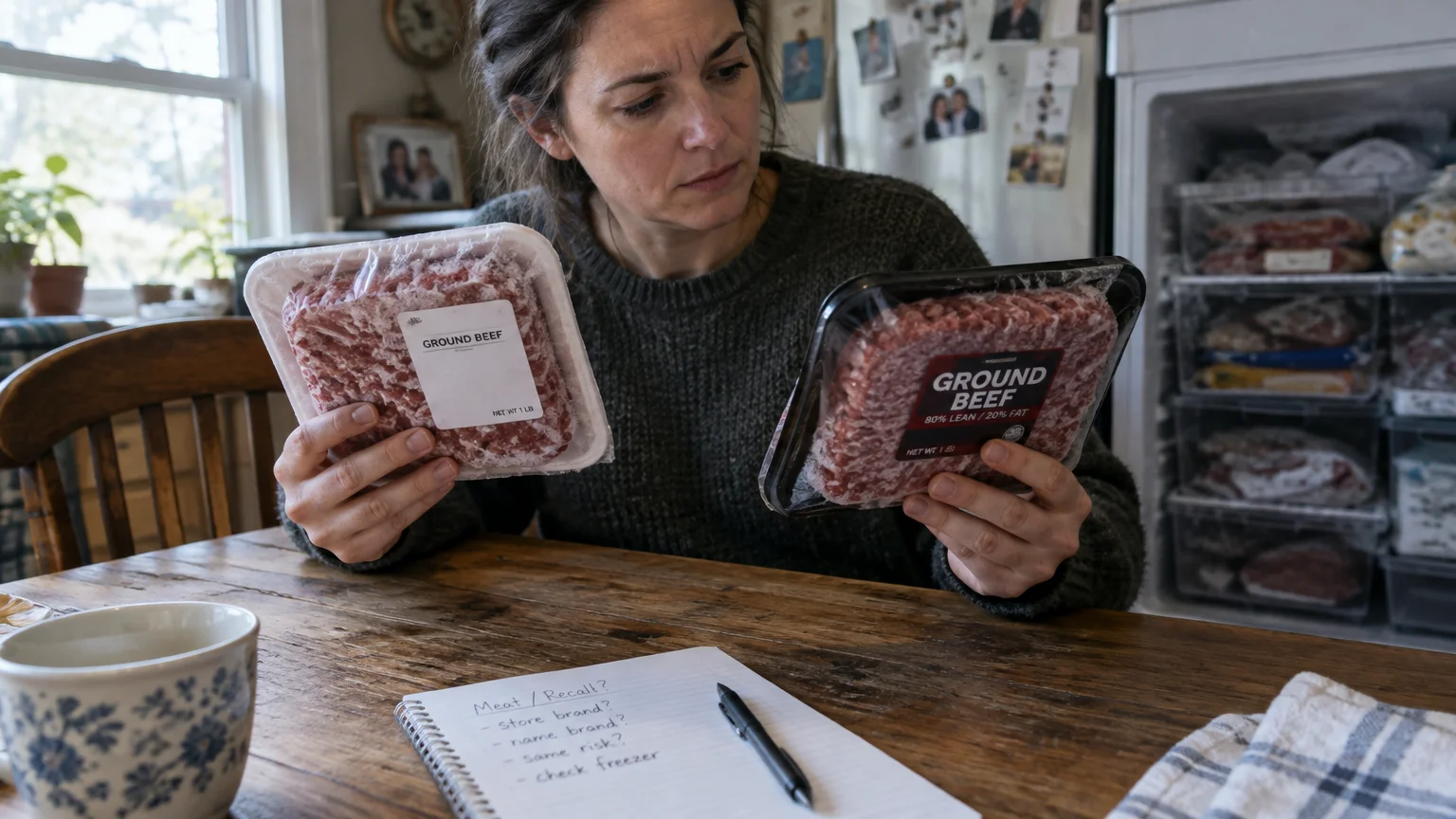
How Do Store Brand Meats Compare to Name Brands During Factory Recalls?
Many savvy shoppers choose store brands like Great Value, Kirkland Signature, or Kroger brand to keep grocery bills low. These generic items often roll off the exact same assembly lines as premium name brands.
Large food processing plants frequently contract with multiple retail chains to package identical meats under different brand labels. This widespread practice is known throughout the grocery industry as co-packing.
When a equipment breakdown or allergen error happens at a co-packing plant, multiple brands share the exact same risk. A single recall notice might list a dozen supermarket brands alongside several high-priced national names.
You can easily determine whether your budget brand shares a facility with an affected name brand. Simply compare the establishment number inside the USDA inspection circle across both packages.
If the establishment numbers match, both products originated from the same production line. If the numbers differ, your store-brand item came from an entirely separate facility and remains unaffected.
Store brands remain one of the smartest ways to save thirty percent or more on protein staples. You simply need to track establishment numbers rather than brand names when safety warnings emerge.
Relying on the inspection bug allows you to enjoy substantial grocery savings without sacrificing safety. It puts you in complete control of your family’s grocery choices.
What Temperature Rules Keep Home Freezers in the Safe Zone?
Preserving meat safely inside your freezer requires maintaining constant, verified cold temperatures. The USDA recommends keeping your home freezer at zero degrees Fahrenheit at all times.
Freezing meat at zero degrees halts bacterial activity completely, putting microbes into a dormant state. While freezing does not destroy bacteria, it stops them from multiplying and spoiling your food.
Relying solely on your refrigerator’s built-in dial can lead to inaccurate temperature assumptions. Installing an inexpensive standalone appliance thermometer on a central wire shelf provides true, continuous temperature readings.
Avoid packing your freezer shelves so tightly that cold air cannot circulate between packages. Restricted airflow creates warm pockets where temperatures can drift upward into unsafe zones.
If a storm causes a temporary power outage, keep your freezer doors firmly closed. A fully packed freezer will hold a safe temperature for approximately forty-eight hours if left unopened.
If meats thaw partially during an outage, check each package for remaining ice crystals. You can safely refreeze meat that still contains ice crystals and feels as cold as a refrigerator.
Never refreeze raw meats that have completely thawed and reached room temperature. Discard those items immediately to prevent bacterial growth from causing severe illness.
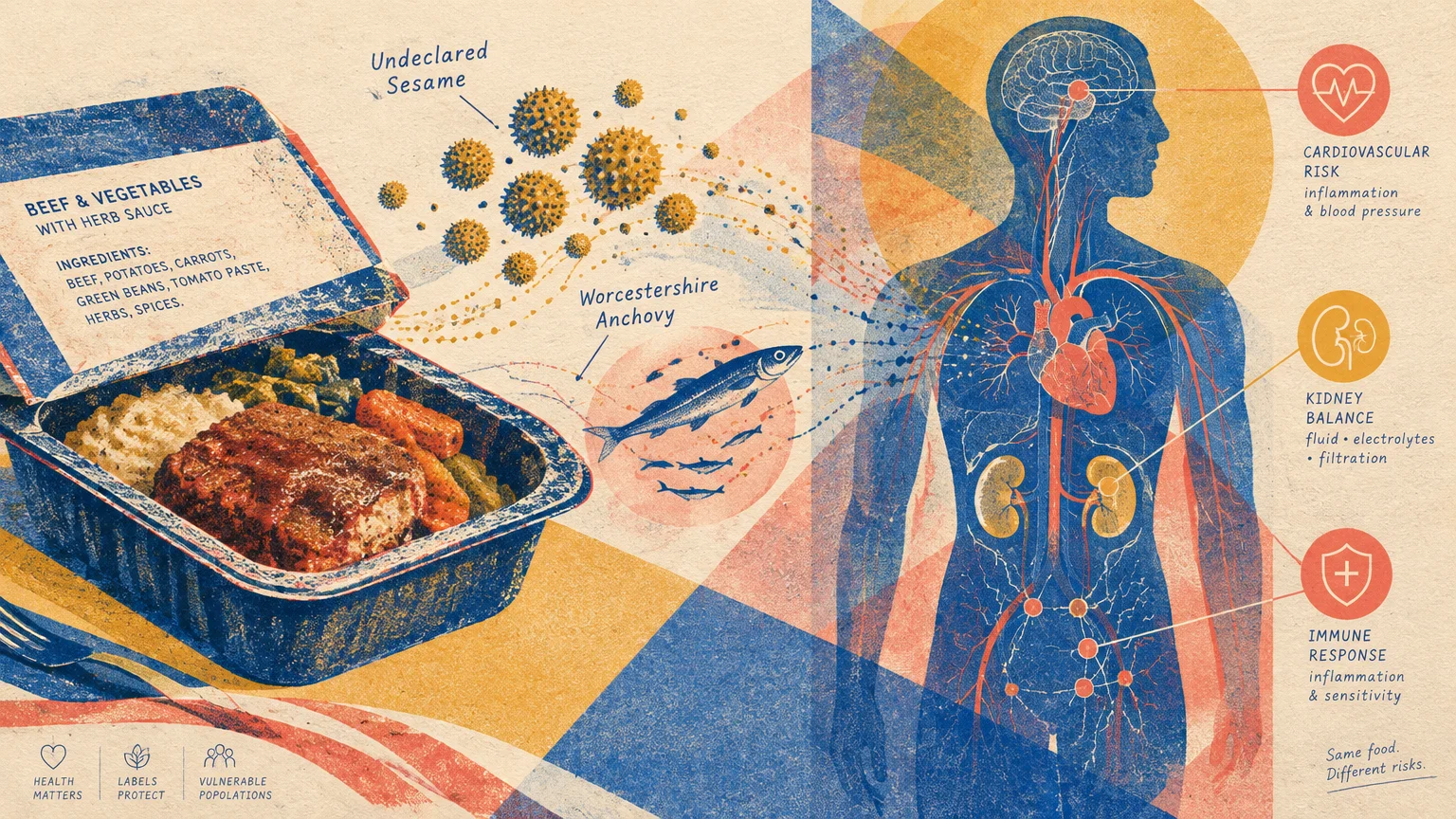
How Do Hidden Food Safety Risks Affect Adults Managing Chronic Conditions?
Maintaining strict kitchen safety becomes increasingly critical as the human immune system matures over time. Natural changes in digestive acid production make it harder for your stomach to destroy ingested bacteria.
A minor bacterial bout that causes mild distress in younger people can trigger hospitalization in older adults. Dehydration from foodborne illness also creates severe, rapid complications for anyone taking daily blood pressure prescriptions.
When fluid levels drop suddenly from vomiting or diarrhea, blood pressure medications can induce dangerous hypotension. Your kidneys face immense strain when fluid loss concentrates prescription compounds in your bloodstream.
Sodium content in frozen, prepared meats represents another silent concern for cardiovascular health. The American Heart Association recommends limiting daily sodium intake to 1,500 milligrams for optimal heart health.
Packaged appetizers like kroketten and bami rolls frequently pack heavy doses of sodium to stabilize shelf life. If you manage hypertension or congestive heart failure, these items require careful portion moderation even when safe.
Nutritional researchers supported by the National Institutes of Health emphasize preserving lean muscle mass through high-quality protein. However, compromising digestive safety to save a questionable package of meat undermines your overall vitality.
Bone density also depends heavily on balanced mineral absorption across your intestinal lining. Severe foodborne gastrointestinal inflammation disrupts calcium and magnesium uptake, setting back your nutritional goals for weeks.
Never try to taste test suspicious meat to evaluate whether it has spoiled or gone bad. Foodborne bacteria that cause severe illness often produce no strange smell, sour taste, or visible mold.
Protecting your health requires trusting verified packaging standards rather than your senses. When in doubt about a meat alert, discarding the item is always the wisest medical decision.
What Steps Ensure You Get a Full Refund for Recalled Frozen Groceries?
Living on a fixed monthly budget means you cannot afford to throw grocery dollars into the trash. Fortunately, you do not have to absorb the financial loss when federal regulators flag contaminated food items.
Supermarket chains enforce generous return policies whenever the government issues a public health alert or recall. Retailers like Kroger, Walmart, and regional grocers routinely process refunds without demanding a paper register receipt.
Before discarding any recalled food, take a clear smartphone photo showing the package front, barcode, and lot number. That digital snapshot provides all the proof customer service desks require to issue your money back.
If you bought Betterballen products online through Lowlands House, contact the manufacturer directly for resolution. You can reach company owner Brian Kops by phone at 312-340-4823 to arrange your credit.
Federal consumer advocates also provide real-time guidance if you encounter any difficulties claiming your refund. Call the USDA Meat and Poultry Hotline toll-free at 888-674-6854 for immediate assistance from food safety specialists.
When returning a flagged item to a local store, place the package inside a sealed plastic grocery bag. This simple courtesy prevents accidental allergen exposure or juices leaking onto customer service counters during your visit.
If you prefer not to make a special return trip, many supermarkets let you show your digital receipt on their app. Customer service managers can credit your loyalty card account without requiring you to carry physical meat back to the store.
Exercising your consumer refund rights keeps your grocery budget intact while removing risks from your kitchen. You never have to sacrifice your financial peace of mind for the sake of food safety.
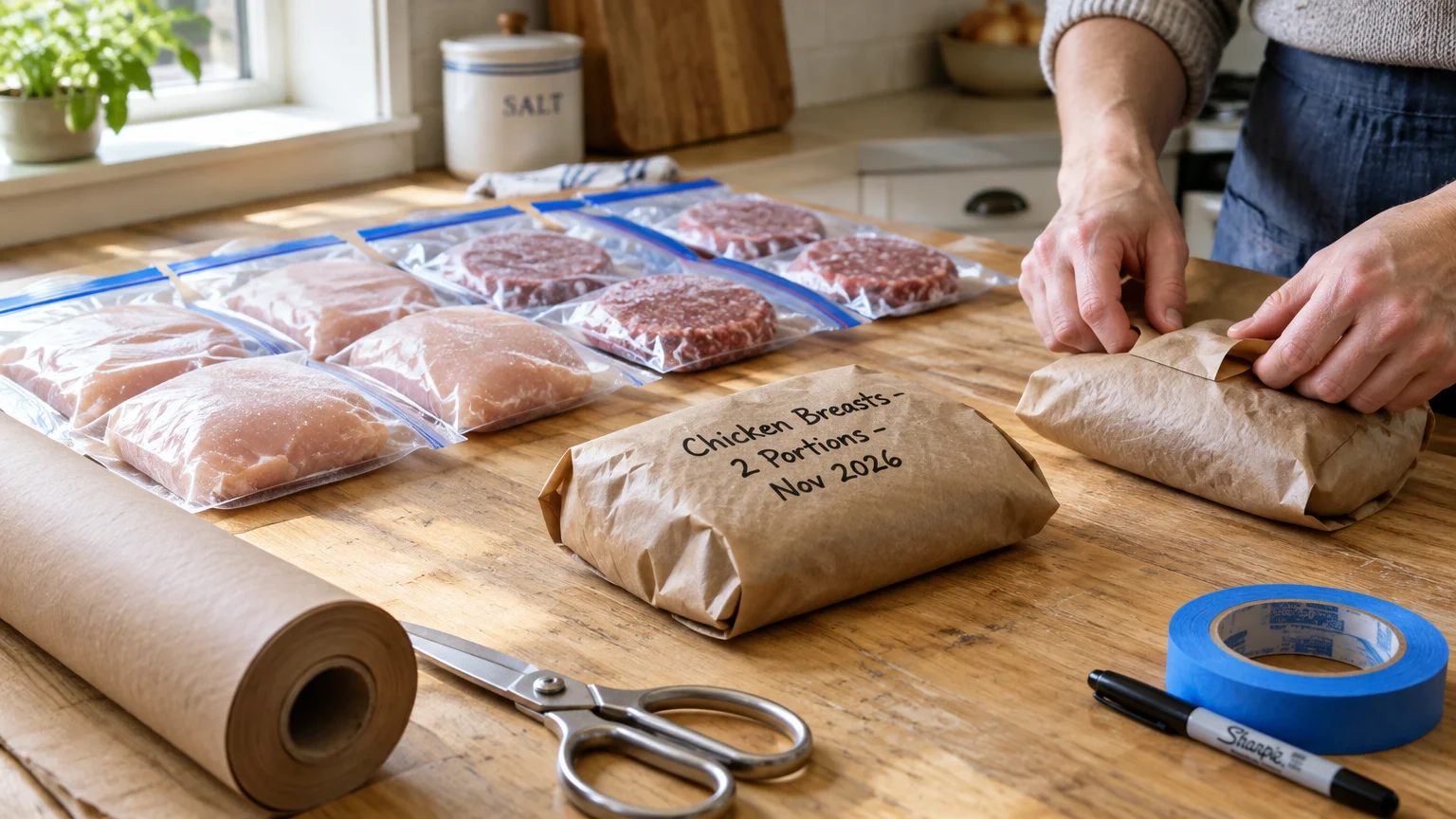
How Can One- or Two-Person Households Freeze Meat Safely on a Budget?
Cooking for a small household often requires buying bulk meat packages to capture lower per-pound prices. However, large family packs turn into wasteful budget drains if poor storage leads to spoilage or freezer burn.
You can protect your food dollars by portioning fresh meat into single-meal servings the day you bring it home. Dividing a three-pound family tray of chicken or ground beef into half-pound parcels prevents unnecessary waste later.
Wrap individual portions tightly in heavy-duty freezer paper or press them into airtight freezer bags. Squeezing out every pocket of air slows moisture loss, preventing the dry, grayish patches known as freezer burn.
Always write the meat cut, date of purchase, and original establishment number on your storage bags with waterproof ink. That way, if a recall occurs months down the road, you can identify your packages in seconds.
Freezer burn degrades texture and flavor, but it does not make meat unsafe to eat. In contrast, improper thawing at room temperature allows surface bacteria to multiply rapidly while the core remains frozen.
Always thaw your frozen meats inside the refrigerator overnight rather than on your kitchen counter. This disciplined practice keeps the surface well below the dangerous 40°F bacterial threshold as it softens.
Store your raw meats on the lowest shelf of your freezer and refrigerator. This strategic placement ensures thawing juices cannot drip down onto ready-to-eat foods, fruits, or dairy containers below.
Adopting these simple freezer management habits saves hundreds of dollars each year on wasted groceries. It keeps your meal prep convenient, nutritious, and completely safe for small-scale cooking.
Frequently Asked Questions About Frozen Meat Recalls
Does cooking flagged meat at high heat destroy allergen risks?
Heat does not destroy food allergens like sesame proteins or anchovy extracts. While boiling or frying kills live bacteria, allergenic proteins remain fully intact through the cooking process.
Never attempt to cook out an undeclared allergen to make food safe for sensitive diners. If an item contains an unlisted allergen, discarding or returning it represents your only safe path forward.
What is the exact difference between a public health alert and a recall?
The USDA issues a formal recall when an active product is currently moving through retail store shelves. Manufacturers coordinate with grocers to pull the offending merchandise out of inventory and off display racks immediately.
In contrast, the agency issues a public health alert when the product has already sold out or left distribution channels. Alerts ensure consumers who stashed items in home freezers learn about the danger before serving them.
Both notices carry equal importance regarding your personal health and food safety. You should treat products named in a public health alert with the exact same caution as recalled goods.
How can you safely dispose of flagged meat without contaminating your kitchen?
Wrap the suspect package securely in double plastic grocery bags before taking it out to your trash bin. Secure the outer bag with a tight knot so curious pets or neighborhood wildlife cannot tear it open.
Wash your hands thoroughly with warm water and soap for at least twenty seconds after handling recalled packaging. Sanitize your freezer shelf with a mild bleach solution if the package showed signs of exterior leakage.
Who should you call if you suspect you already ate a recalled meat product?
Contact your primary care physician immediately if you experience hives, swelling, breathing difficulty, or severe abdominal cramps. Be prepared to tell your doctor the specific brand, lot number, and establishment code from the package.
You can also report adverse food events directly to the USDA Meat and Poultry Hotline at 888-674-6854. Their food safety specialists track emerging illness clusters to keep other consumers safe across the nation.
What Single Habit Should You Adopt on Your Next Grocery Run?
Protecting your health and household budget starts right in the supermarket freezer aisle. Before placing any frozen meat into your cart, perform a deliberate five-second label check.
Locate the circular USDA inspection mark to verify that the establishment number is clearly printed and intact. Make sure the packaging seal remains completely airtight with no loose edges, ice buildup, or torn plastic.
Ice crystals inside a clear bag signal that the package thawed and refroze during transit or stocking. Leaving compromised packages on the store shelf protects your hard-earned dollars and guarantees dinner-table peace of mind.
Taking those few seconds before you reach the checkout counter keeps unsafe food out of your home. You protect both your physical health and your grocery wallet with one simple, consistent habit.