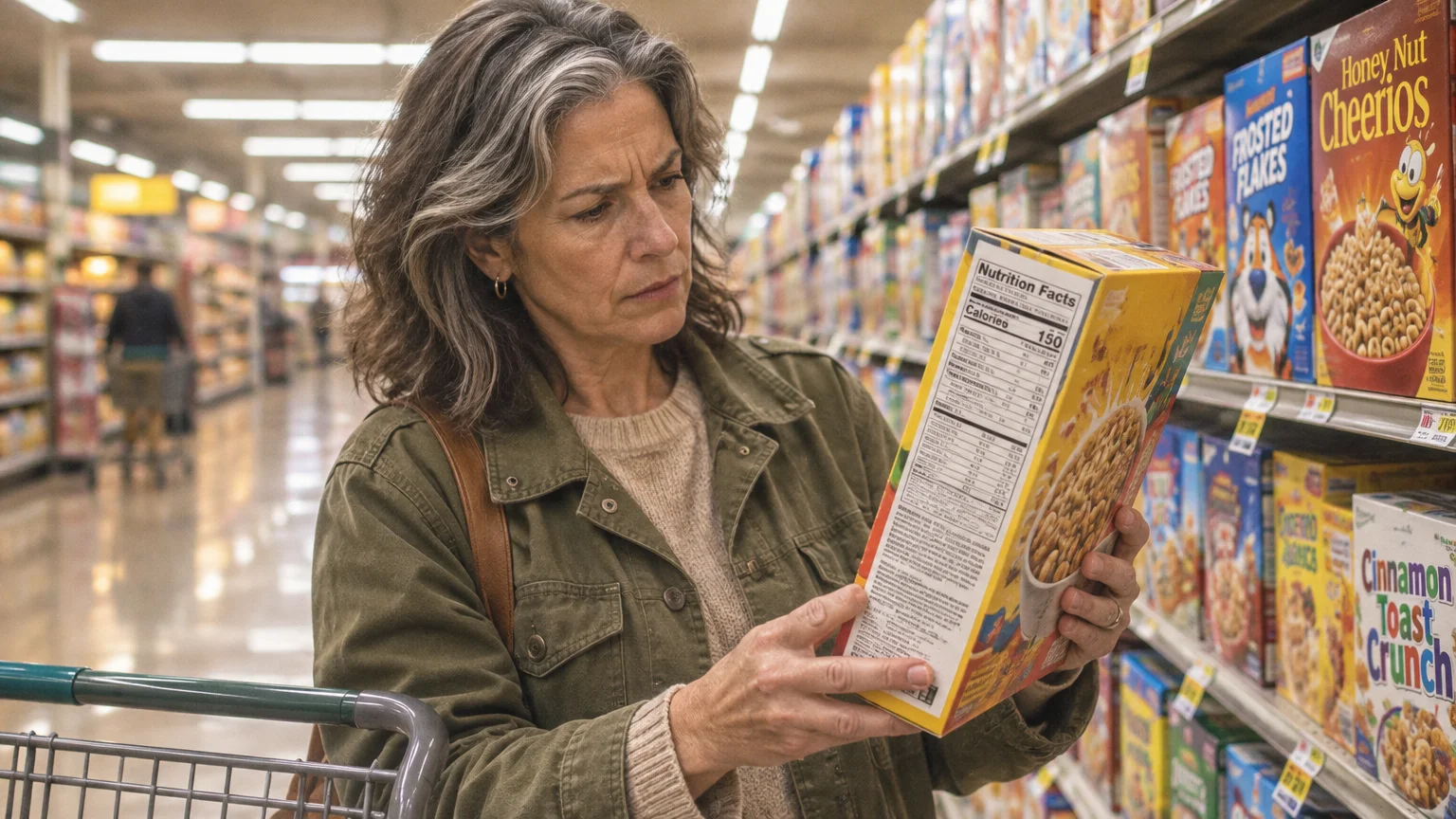
Walk down any grocery cereal aisle and bright boxes at eye level compete for your morning appetite. Many popular cereals pack as much sugar and sodium as a bakery dessert while offering almost zero fiber.
Updated federal guidelines and stricter labeling rules now expose how poorly these processed boxes support steady blood sugar, heart health, and daily energy. Knowing which ingredients to skip protects your health and your grocery budget.
Below are the seven breakfast cereals registered dietitians leave on the shelf, along with simple label checks you can use on your next trip.
Why the Cereal Aisle Requires a Closer Look in 2026
Grocery shelves look calmer today than they did a few years ago, yet nutrition panels tell a troubling story. Many boxed breakfasts have quietly drifted away from basic whole grains toward sweeter, saltier formulas.
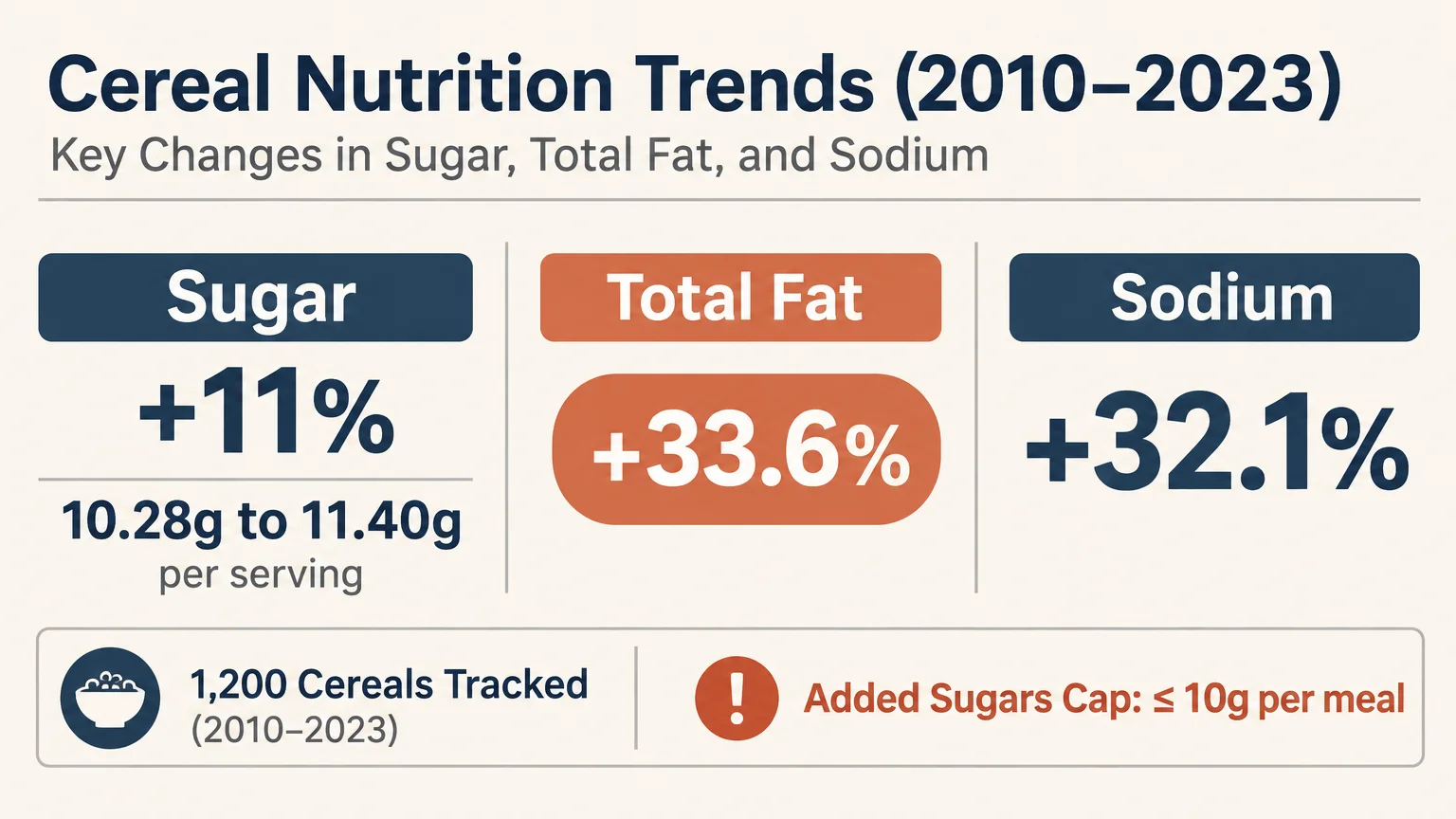
A May 2025 JAMA Network Open study supported by the USDA tracked 1,200 ready-to-eat children’s cereals released or rebranded between 2010 and 2023. Sugar climbed roughly 11%—from 10.28 grams to 11.40 grams per serving—while protein and fiber dropped.
During that same span, total fat jumped 33.6% and sodium surged 32.1% across those cereals. Even though marketers aim those boxes at kids, adults often buy them for convenience or nostalgia.
Federal nutrition advice has grown much sharper in response to those trends. Released on January 7, 2026, the Dietary Guidelines for Americans for 2025–2030 recommend avoiding added sugars and non-nutritive sweeteners as part of a nutritious diet.
For adults, those USDA and HHS guidelines cap added sugars at no more than 10 grams per meal and urge shoppers to cut back on ready-to-eat, refined breakfast products. They also advise eating two to four servings of fiber-rich whole grains daily.
Meanwhile, Americans still average about 17 teaspoons—roughly 71 grams, or 270 calories—of added sugar every day, according to figures from the Harvard T.H. Chan School of Public Health and UCSF SugarScience.
That adds up to about 57 pounds per person each year.
Bright claims on the front of a box rarely reveal that burden. Under the FDA updated definition of the healthy claim, finalized in December 2024 and mandatory by February 25, 2028, many previously qualifying cereals no longer make the cut.
Major brands have also rushed to remove synthetic dyes in 2026 following federal bans and retailer pressure. Stripping out artificial colors makes a bowl look cleaner, but it does nothing to lower added sugar, slash sodium, or restore missing fiber.
The 7 Breakfast Cereals Dietitians Leave on the Shelf
Nutrition figures below come from the 2026 TrackBiteX nutrition database and reflect a standard 1-cup serving unless noted otherwise. Because manufacturers adjust recipes and serving scoops without fanfare, always double-check the panel on the box in your hand.
Whether you are watching blood glucose, managing blood pressure, or stretching a food budget for one or two people, these seven popular boxes fail basic nutrition standards. Leaving them behind frees up cash for foods that actually keep you full.
1. Should You Skip Kellogg’s Honey Smacks?
Put Kellogg’s Honey Smacks straight back on the rack if you see it in the aisle. A July 2025 Chowhound breakdown notes that a single serving packs 18 grams of added sugar—more than four teaspoons.
That single bowl delivers nearly double the 10-gram per-meal added-sugar ceiling in the 2025–2030 federal dietary guidelines. It also consumes most of the American Heart Association added-sugar recommendations of 25 grams daily for most women.
Even for most men, whose daily American Heart Association limit sits at 36 grams, one serving uses up half the day’s allowance before morning errands begin. Pouring a fuller bowl wipes out your entire daily budget at once.
Liquid-fast sugar without substantial fiber or protein hits your bloodstream quickly. If you manage prediabetes, type 2 diabetes, or morning energy crashes, a sugar-glazed puffed wheat cereal works directly against steady glucose control.
Worse, puffed wheat cereals feel airy and light, so they rarely satisfy hunger past mid-morning. You end up spending grocery money twice: once on the box, and again on snacks an hour later.
2. Why Do Dietitians Question Kellogg’s Raisin Bran?
Kellogg’s Raisin Bran wears one of the strongest health halos in the grocery store. Shoppers see bran flakes and dried fruit on the front and assume the bowl belongs in a heart-healthy kitchen.
In the 2026 TrackBiteX snapshot, a 1-cup serving holds 190 calories, 18 grams of total sugar, 7 grams of fiber, 210 milligrams of sodium, and 3 grams of protein. Another breakdown cites 17 grams total sugar with 9 grams added.
Those raisins do not arrive unsweetened; manufacturers coat them in sugar syrup to keep them soft and sweet inside the box. Nine grams of added sugar leaves almost no margin under the 10-gram federal per-meal guideline.
Seven grams of fiber sounds appealing if you are supporting cholesterol or digestion, yet 210 milligrams of sodium erodes part of that benefit. Pair that cup with milk and toast, and your morning sodium climbs rapidly.
You can beat this boxed formula easily and affordably on your own. Buy plain, unsweetened bran flakes or shredded wheat instead, then toss in a small handful of plain raisins or fresh berries at the table.
That simple swap preserves the helpful fiber while cutting out the sticky sugar coating. You also control portion size so a box stays fresh longer in a one- or two-person household.
3. What Is Wrong With Low-Sugar Kellogg’s Rice Krispies?
Many adults managing blood sugar reach for Kellogg’s Rice Krispies because it carries only 4 grams of sugar per 1-cup serving. On the surface, that low sugar count looks like a safe, gentle morning option.
Flip the box sideways, however, and you spot a stealthy problem: 290 milligrams of sodium in just one cup. That is higher sodium than a cup of Frosted Flakes, cutting sharply into the 2,300-milligram daily federal and American Heart Association limit.
Because Americans average roughly 3,440 milligrams of sodium daily, hidden salt in mild cereals matters. Starting the morning at 290 milligrams narrows your daily margin if you take blood pressure medication or watch fluid retention.
Rice Krispies also delivers a negligible 0.4 grams of fiber per cup. Refined white rice digests rapidly, meaning a bowl may still nudge blood glucose upward despite its modest sugar line.
Furthermore, WK Kellogg Co announced on August 6, 2026, that it would remove artificial colors and the synthetic preservative BHT across its portfolio—including Rice Krispies—by year’s end. Even once BHT disappears, the high sodium and missing fiber remain unchanged.
4. Why Is Kellogg’s Frosted Flakes a Double Risk?
Kellogg’s Frosted Flakes pairs high added sugar with surprisingly steep salt in a single 110-calorie cup. Each 1-cup serving delivers 12 grams of sugar and 250 milligrams of sodium alongside just 1 gram of fiber and 1 gram of protein.
That 12-gram sugar load equals three teaspoons of sugar, exceeding the 10-gram per-meal ceiling set by the 2025–2030 federal dietary guidelines. Meanwhile, the 250-milligram sodium count breaches the 10% Daily Value cap required under the FDA’s updated healthy labeling rule.
Frosted Flakes offers virtually no whole-grain staying power because refined corn flakes coated in sugar dissolve fast in milk. One gram of protein does almost nothing to protect muscle mass as you age.
If you enjoy the crunch of corn flakes, choose plain, lower-sodium store-brand corn flakes or whole-grain flakes and sweeten them with sliced banana or cinnamon. You keep the crisp texture while dropping sugar and sodium dramatically.
5. Are Reformulated Boxes Like General Mills Trix Better Now?
General Mills removed certified synthetic colors from its entire U.S. cereal lineup in 2026, including Trix, Lucky Charms, and Cinnamon Toast Crunch. Target also announced in March 2026 that it would stop selling artificially colored cereals by May 2026.
Those moves followed the FDA’s January 2025 ban on Red No. 3—effective by January 15, 2027—and an April 2025 initiative to phase out six synthetic dyes by late 2027. Switching to plant and mineral colorants sounds reassuring.
Yet a 1-cup serving of Trix still packs 110 calories, 13 grams of sugar, 0 grams of fiber, 210 milligrams of sodium, and 1 gram of protein. Dye-free corn puffs coated in sugar remain dessert in a bowl.
Zero grams of fiber means nothing slows down those 13 grams of sugar on their way into your bloodstream. Plus, older boxes produced before 2026 reformulation cutoffs can still linger briefly on discount shelves.
The same caveat applies to WK Kellogg Co’s Froot Loops, which carries 12 grams of sugar, 1 gram of fiber, 150 milligrams of sodium, and 2 grams of protein per cup. Fruit-juice coloring does not turn refined cereal into fruit.
6. Why Does Quaker Cap’n Crunch Stay Off Dietitian Carts?
Quaker Cap’n Crunch delivers 120 calories, 12 grams of sugar, 0 grams of fiber, 210 milligrams of sodium, and 1 gram of protein in a 1-cup serving. That nutritional profile fails almost every benchmark dietitians look for in a morning staple.
Like Trix, Cap’n Crunch offers zero grams of fiber, leaving you without roughage for healthy cholesterol and digestion. Its 12 grams of sugar also overshoot the 10-gram per-meal cap in the 2025–2030 federal dietary guidelines.
For adults watching triglycerides or blood pressure, refined corn and oat flours with 210 milligrams of sodium offer poor nutritional return. Even Lucky Charms, at 10 grams of sugar and 2 grams of fiber per cup, remains too sweet for daily bowls.
Federal guidelines call for two to four servings of fiber-rich whole grains per day on a 2,000-calorie eating plan. Spending morning calories on zero-fiber cereal makes hitting that daily whole-grain goal much harder.
7. Is General Mills Cinnamon Toast Crunch Too Processed for Morning?
General Mills Cinnamon Toast Crunch packs 130 calories, 12 grams of sugar, 3 grams of fat, 1 gram of fiber, 200 milligrams of sodium, and 1 gram of protein per 1-cup serving. Those numbers read closer to a cinnamon pastry than a balanced breakfast.
Notice the 3 grams of fat alongside 12 grams of sugar; added oils and sweeteners coat crisp wheat-and-rice squares to make them hyper-palatable. That combination encourages second servings, turning a 1-cup label estimate into 24 grams of sugar quickly.
With just 1 gram of fiber and 1 gram of protein, Cinnamon Toast Crunch leaves your stomach empty long before lunchtime. You also miss out on the steady energy needed if you take morning medications that work best alongside a substantial meal.
If you crave warm cinnamon flavor, stir ground cinnamon into plain cooked rolled oats or sprinkle it over unsweetened shredded wheat. You keep the comforting aroma while cutting out added sugar, added oils, and 200 milligrams of sodium.
How to Read the Cereal Label for Heart, Sugar, and Bone Health
What Sugar and Fiber Numbers Should You Check First?
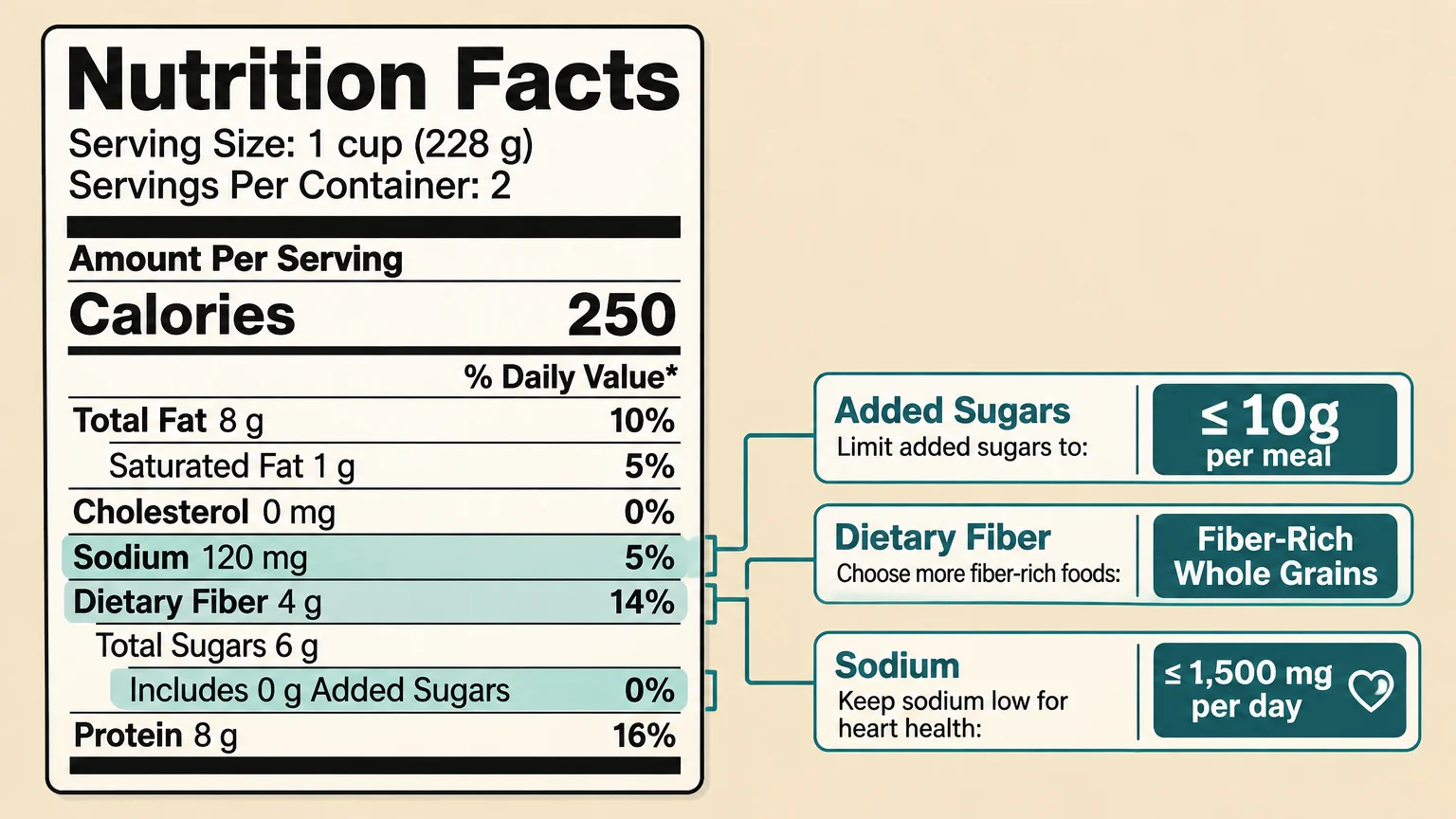
Start at the top of the Nutrition Facts panel by checking the serving size, since dense cereals often use smaller scoops than airy flakes. Compare that printed portion to the actual bowl you pour at home.
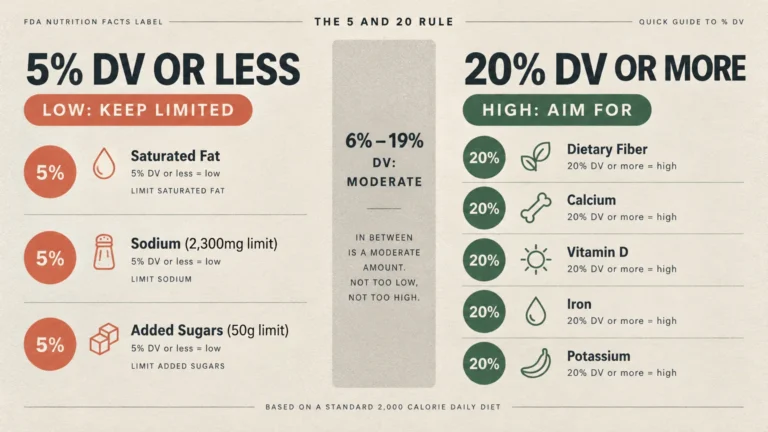
Scan the Added Sugars line rather than Total Sugars, because plain fruit alters the total. Aim for 5 grams of added sugar or less per serving, matching the 10% Daily Value cap under the FDA’s updated healthy rule.
Staying at or below 5 grams protects the American Heart Association daily cap of 25 grams for women or 36 grams for men. It also supports World Health Organization guidance, cited by UCSF SugarScience, favoring roughly 25 grams or less.
Then check Dietary Fiber right above sugars, choosing boxes that deliver meaningful whole-grain fiber rather than 0 or 1 gram. Cereals also need at least three-quarters of an ounce-equivalent of whole grains per serving to qualify under the FDA’s revised healthy standard.
Flip down to the ingredients list to confirm the very first word is whole grain, such as whole wheat or whole-grain oats. Refined cornmeal, milled rice, or sugar listed first signals an overly processed cereal.
How Much Sodium and Protein Belong in Your Bowl?
Salt sneaks into boxed cereals for flavor and shelf life, even in boxes that taste sweet. Under the FDA’s 2024 healthy rule, individual grain products must stay at or below 10% Daily Value for sodium per serving.
Look for cereals that stay well under the FDA’s 10% Daily Value sodium threshold, especially if you manage high blood pressure. Keeping breakfast lightly salted leaves breathing room beneath the 2,300-milligram daily federal limit.
Saturated fat should stay low as well, capped at 5% Daily Value under the FDA’s healthy rule and under 10% of total daily calories overall. Most plain whole-grain cereals meet that fat rule easily unless manufacturers coat them in tropical oils.
Pay close attention to protein and bone-supporting nutrients when cooking for one or two in your fifties, sixties, or beyond. Most sugary boxes contain only 1 to 2 grams of protein, which falls short of what aging muscles need at breakfast.
Pairing a low-sugar whole-grain cereal with dairy milk or fortified soy milk adds protein, calcium, and vitamin D for bone health. You can also check age-specific nutrient targets through the National Institutes of Health Office of Dietary Supplements.
If you take morning prescriptions that bind with calcium or iron, ask your pharmacist whether to space your fortified cereal bowl apart from your pill. Adding a spoonful of chopped walnuts or Greek yogurt also boosts protein and heart-healthy fats naturally.
Do Artificial Dye Bans Mean Cereal Is Automatically Safe?
Many shoppers assume a box touting no artificial colors is an automatic health upgrade. In reality, removing Red No. 40, Yellow No. 5, Yellow No. 6, Blue No. 1, Blue No. 2, and Green No. 3 only addresses synthetic dyes.
Even though General Mills, WK Kellogg Co, and Target moved in 2026 to clear synthetic dyes from U.S. shelves, those brightly tinted cereals still rely on refined flours and syrups. Fruit- and vegetable-juice colorings do not slow a blood sugar spike.
Furthermore, federal deadlines stretch into January 2027 for Red No. 3 and late 2027 for the broader voluntary phase-out. Check the ingredient label if avoiding dyes or BHT matters to you, because older stock can still appear in some stores.

Smart Budget Strategies for Smaller Households
How Do You Compare Unit Prices Without Wasting Food?
Big, brightly discounted family-size boxes look like bargains at first glance, yet they frequently go stale before one or two people finish them. Stale cereal ends up in the trash, wiping out any upfront savings.
Check the unit price on the shelf tag—usually listed per ounce—rather than the box sticker alone. Store brands and plain whole-grain cereals often beat flashy national brands on unit cost, though promotions vary by region and week.
Transferring opened bags into airtight glass jars or resealable freezer bags keeps plain whole-grain cereals crisp for weeks. That simple habit prevents waste and lets you buy standard-size boxes only when your pantry runs low.
Which Dietitian Cereal Picks Save You Money?
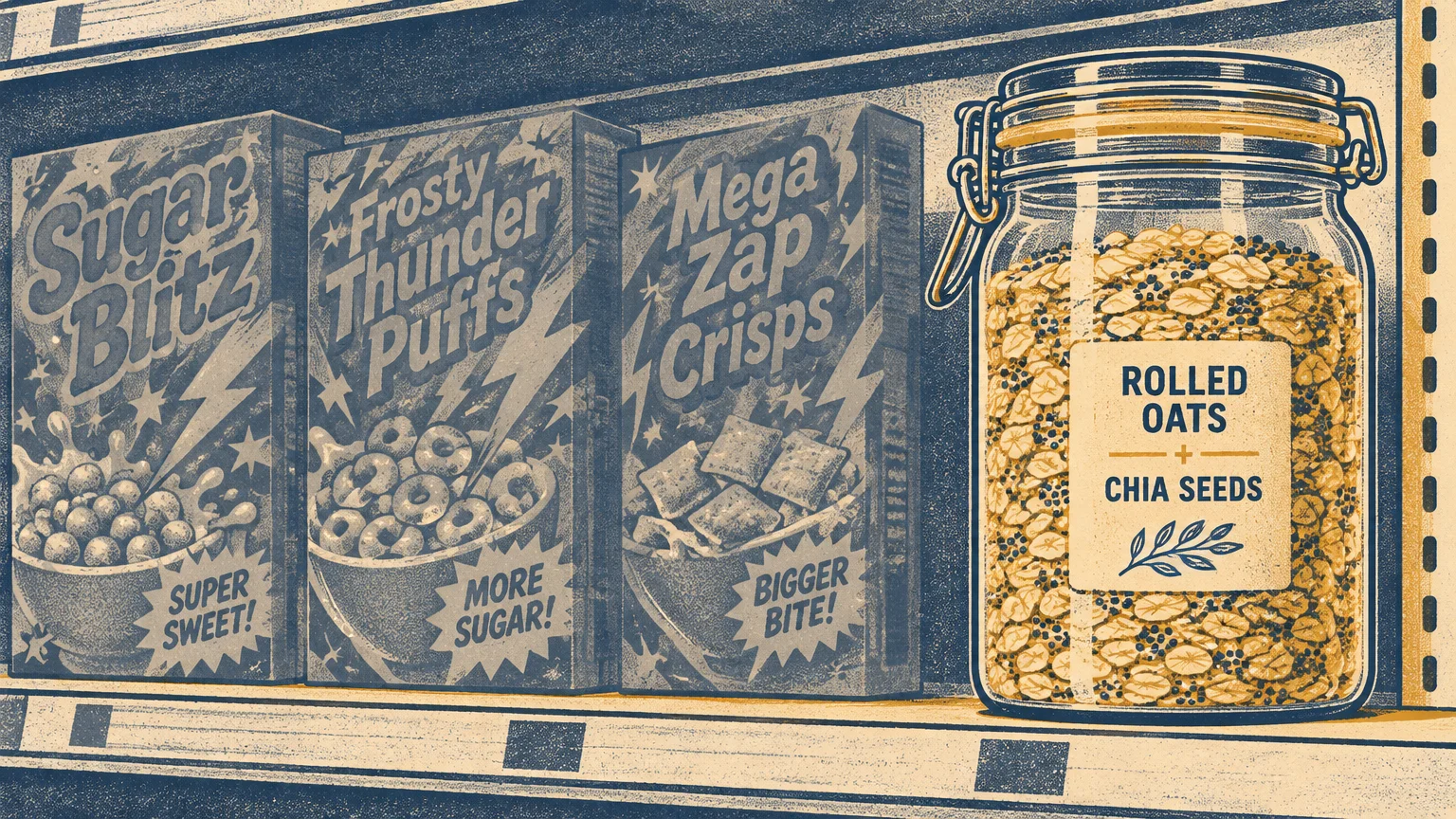
Look at the top and bottom shelves rather than eye level, because grocers place sugary, higher-margin boxes directly in your line of sight. Plain rolled oats, store-brand shredded wheat biscuits, and unsweetened bran flakes usually sit quieter rows away.
Plain rolled oats give you 100% whole grains, zero added sugar, and virtually zero sodium for pennies per serving. You can microwave a single portion quickly with water or milk, eliminating leftovers entirely.
Bite-sized shredded wheat and store-brand unsweetened bran flakes also deliver strong nutrition without added syrup. Check the store brand right beside the national box; Nutrition Facts panels often look nearly identical at a lower unit cost.
Keep frozen berries, sliced bananas, or unsweetened applesauce on hand to sweeten plain bowls naturally. Frozen fruit never spoils on your counter, stretches across dozens of breakfasts, and adds potassium to help balance daily sodium intake.
Frequently Asked Questions About Breakfast Cereals
Is eating sugary cereal occasionally safe if you add milk and fruit?
An occasional bowl will not derail an otherwise balanced week, especially if you pair a small portion with protein-rich milk or plain yogurt and berries. Still, pouring a 12- to 18-gram sugar cereal every morning uses up most of your daily allowance fast.
For a steadier routine, treat sweet cereals like a crunchy garnish rather than the base of the bowl. Dust a light sprinkle on top of plain Greek yogurt or unsweetened shredded wheat to enjoy the crunch with far less sugar.
Why do boxes that used to say healthy no longer carry that claim?
The FDA updated its definition of the healthy claim in December 2024 because 1994 rules allowed sugary, refined cereals fortified with vitamins to wear the label. Mandatory compliance arrives on February 25, 2028, though companies can adopt the stricter standards now.
Under the updated rule, cereals must supply meaningful whole grains while staying at or below 5 grams of added sugar, 10% Daily Value sodium, and 5% Daily Value saturated fat per serving. Boxes like Frosted Flakes and Raisin Bran fail those caps.
Are store-brand plain cereals just as nutritious as national brands?
Yes—store-brand plain oats, shredded wheat, and toasted oat rings typically match national brands closely in whole grains, fiber, and fortification. Always compare the Nutrition Facts lines side by side, since sodium levels can differ slightly between manufacturers.
Store brands also tend to carry lower everyday unit prices, though regional pricing and weekly digital coupons vary by grocer. Checking the unit cost per ounce helps you confirm the real bargain on any given week.
What if you already have boxes of Rice Krispies or Raisin Bran in your pantry?
Do not throw away food you already bought on a tight budget. Instead, cut the sugar or sodium per bowl in half by mixing half a cup of your existing cereal with half a cup of plain shredded wheat or cooked rolled oats.
You can also review practical meal-balancing tips through the Centers for Disease Control and Prevention nutrition resources to keep your total daily sodium and added sugar on target. Blending older boxes with plain whole grains stretches your grocery dollar without sacrificing health goals.
Your One Step for Your Next Grocery Trip
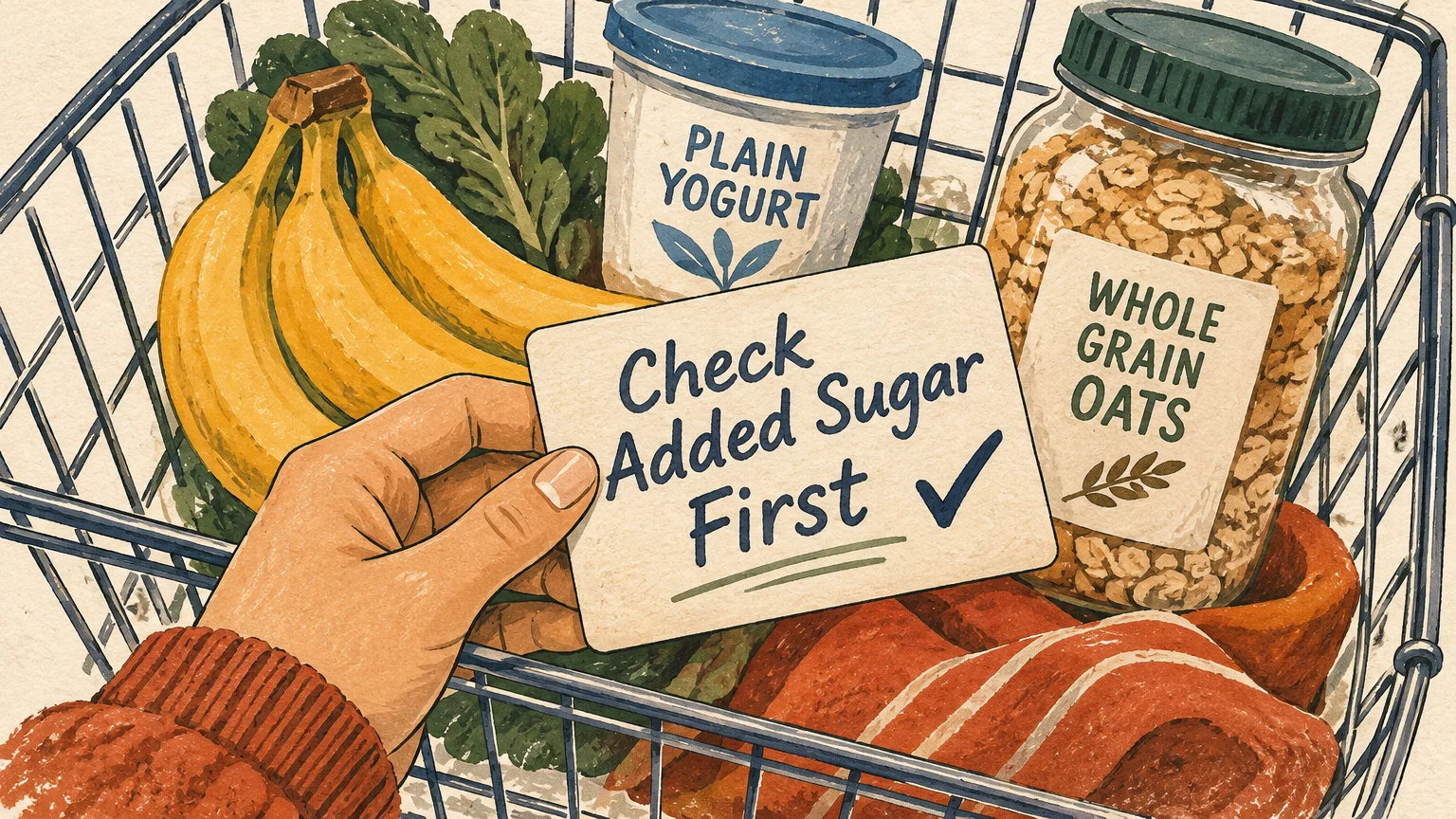
On your next grocery run, skip the eye-level cartoon and frosted boxes and step down to the plain rolled oats, unsweetened bran flakes, or plain shredded wheat. Before placing any box in your cart, flip straight to the Nutrition Facts panel.
Hold every box to three checks: 5 grams or less of added sugar, sodium well below the 10% Daily Value cap, and whole grains listed first. Then compare unit prices per ounce to pick a breakfast that protects your health and wallet.