You can slash your grocery bill without sacrificing nutritional quality by mastering unit costs. Choosing larger packages often cuts your cost per serving by double-digit margins.
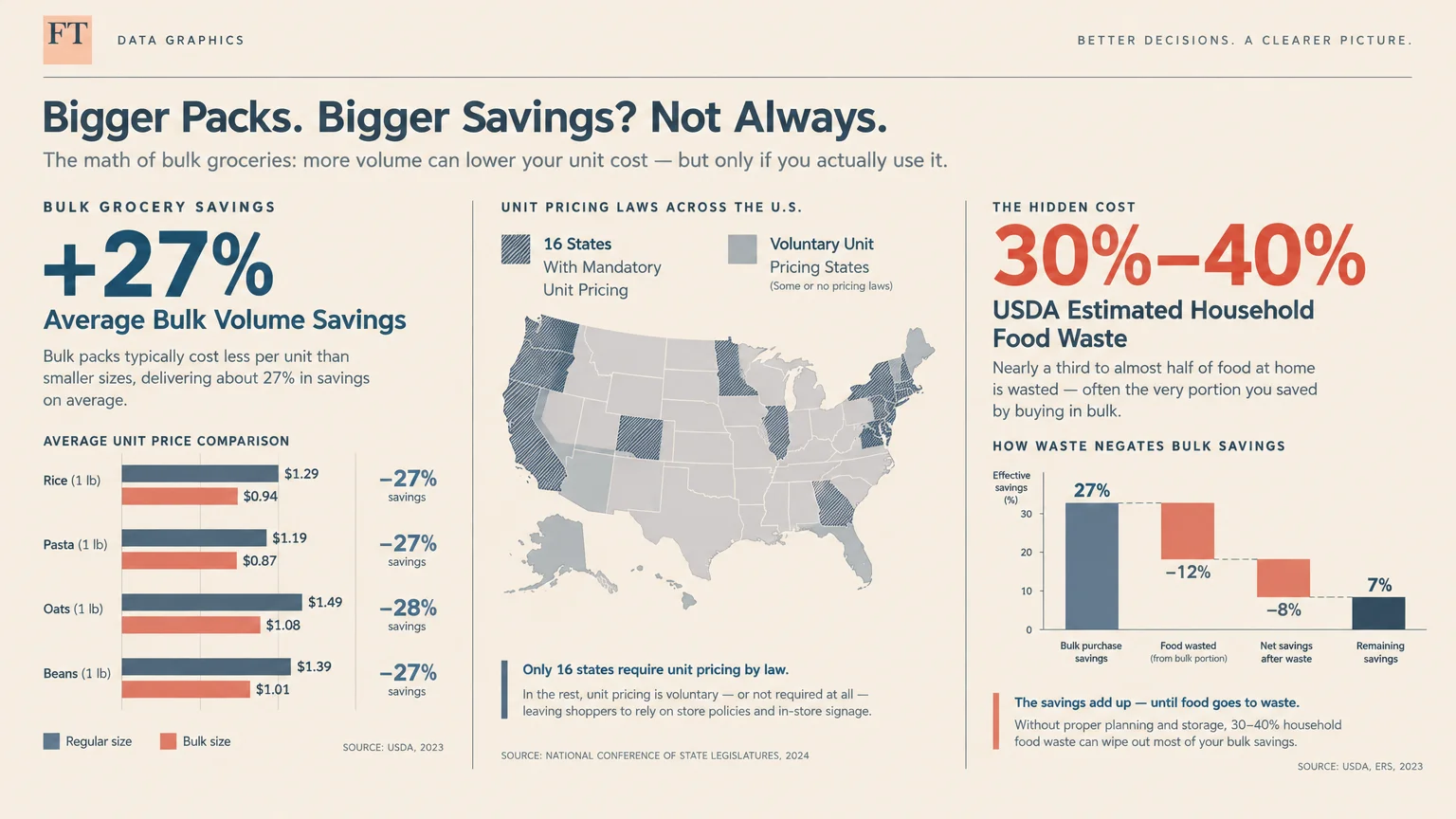
Comprehensive retail price analyses show that shoppers save an average of 27 percent when purchasing larger sizes over single-serve portions. These strategic adjustments keep your pantry stocked while guarding your household finances.
Even so, purchasing high volumes creates actual savings only if you avoid spoilage. Understanding unit prices and proper food storage allows you to maximize your health and your grocery dollars.
The Science of Unit Pricing and Food Economics
Calculating the cost per ounce reveals the authentic value of your groceries. Supermarket shelf tags do not always display this information clearly.
According to the National Institute of Standards and Technology, no federal statute mandates unit pricing in American grocery stores. Only 16 states and three territories legally require retailers to display unit pricing metrics.
Consumer pricing analyses from LendingTree show that shoppers save an average of 27 percent across grocery categories by purchasing larger volumes. In states where unit pricing is voluntary, shoppers must calculate these markups independently.
Data from the United States Department of Agriculture indicates that Americans waste between 30 and 40 percent of their food supply. If uneaten bulk portions spoil, that waste negates any initial unit-price discount completely.
Strategic Foundations: How to Buy in Bulk Without Waste
Successful bulk buying rests on intentional habits rather than impulsive volume purchases. Adopting structured strategies protects both your nutritional goals and your household budget.
Pillar 1: Meal Planning and Inventory Audits
Inspect your pantry and freezer before shopping to prevent duplicate purchases of items you already possess. Planning weekly menus around repeating core ingredients ensures you consume bulk staples before they decline in quality.
Pillar 2: Preserving Nutrient Density
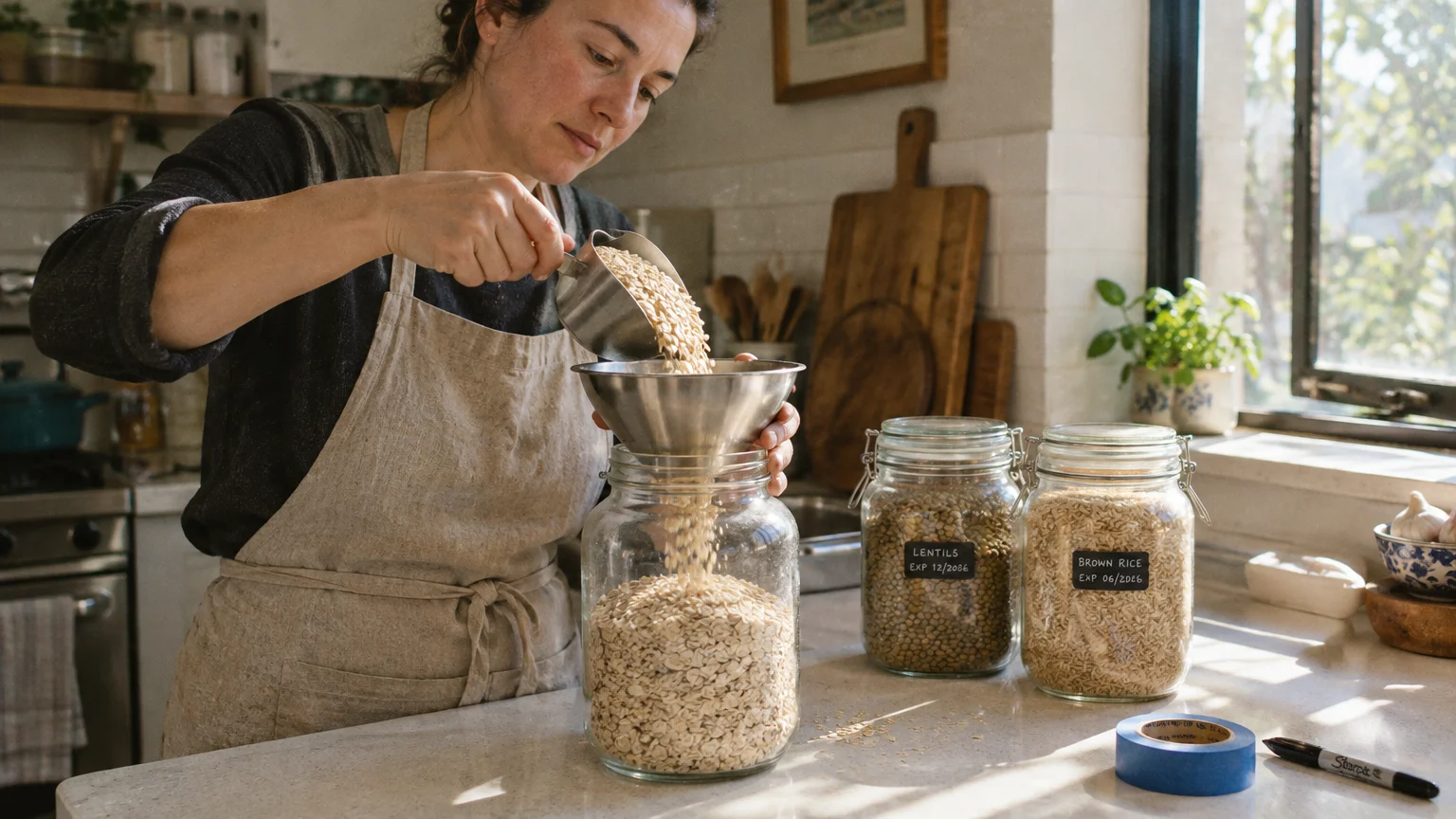
Exposure to oxygen, heat, and humidity degrades essential vitamins and sensitive fatty acids over time. Transfer shelf-stable dry goods into airtight glass or food-grade containers immediately after opening to protect their biochemical integrity.
Pillar 3: Habit Formation and Decanting
Buying large quantities can inadvertently distort portion control if you serve directly from oversized containers. Decanting bulk staples into measured everyday dispensers prevents accidental overconsumption while simplifying weekday meal preparation.
12 Everyday Groceries with Massive Unit-Price Markdowns
Certain kitchen staples consistently exhibit dramatic unit-price drops when you step up to larger sizes. The following 12 items offer exceptional nutritional value and significant financial returns when purchased wisely.
1. Whole Rolled Oats
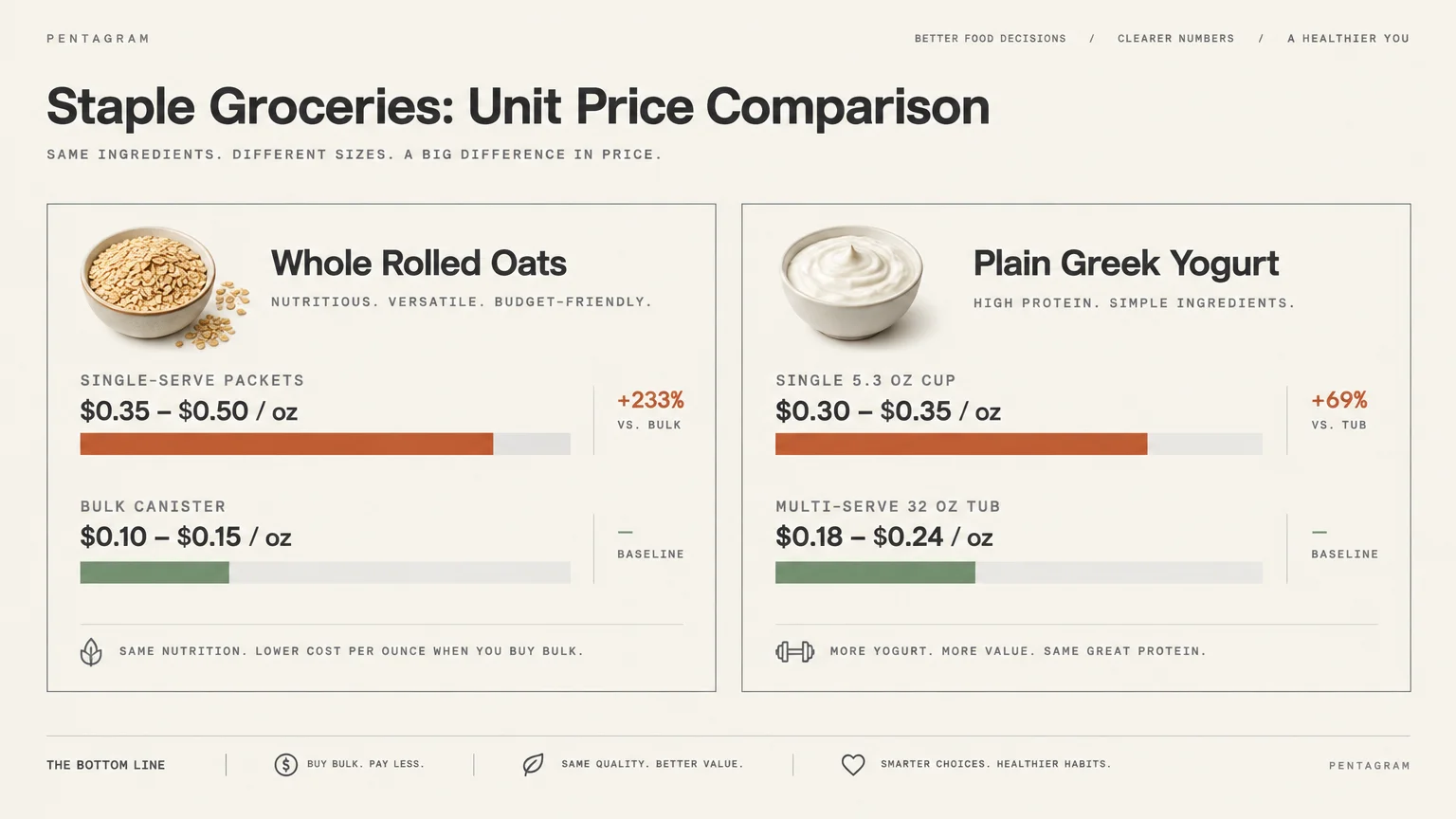
Single-serve instant oatmeal packets routinely cost between $0.35 and $0.50 per ounce in conventional supermarkets. In contrast, multi-pound canisters of whole rolled oats cost merely $0.10 to $0.15 per ounce.
That price difference represents an expensive markup for added sugars and small paper packets. Whole oats provide cholesterol-lowering beta-glucan fiber and remain fresh in your pantry for up to two years.
2. Plain Greek Yogurt
Individual 5.3-ounce Greek yogurt cups usually cost between $0.30 and $0.35 per ounce. Selecting a multi-serve 32-ounce tub drops that unit price down to $0.18 to $0.24 per ounce.
Buying multi-serve tubs saves up to 50 percent while delivering identical gut-supportive probiotics and high-quality protein. You can easily flavor plain yogurt at home using fresh fruit, cinnamon, or raw honey.
3. Dried Legumes and Beans
Canned beans offer undeniable convenience, yet they generally cost between $0.09 and $0.15 per ounce. Purchasing dried beans in multi-pound bags yields cooked portions at just $0.04 to $0.07 per ounce.
Cooking dry beans saves more than 50 percent per cooked ounce while eliminating canning sodium. Stored in airtight containers, dried legumes retain their dietary fiber and essential minerals for several years.
4. Brown Rice and Intact Whole Grains
Pre-cooked microwave grain pouches command exorbitant markups for minimal product weight. Multi-pound bags of brown rice, farro, quinoa, and barley cost a fraction of that price per cooked cup.
Whole grains deliver sustained complex carbohydrates, magnesium, and essential B vitamins for metabolic health. Batch-cook grains over the weekend and freeze measured individual portions for effortless weekday dinners.
5. Raw Nuts and Seeds
Small snack packs of nuts carry steep markups compared to two- or three-pound bulk bags. Buying raw almonds, walnuts, and pumpkin seeds in bulk reduces your cost per pound substantially.
Unsaturated fatty acids in nuts oxidize at room temperature, turning rancid within two to four months in your pantry. Freezing bulk raw nuts in airtight bags extends their nutritional and culinary quality to nearly two years.
6. Frozen Berries and Vegetables
Fresh out-of-season berries often spoil within days, generating expensive household food waste. Buying large three- to four-pound bags of frozen berries delivers peak anthocyanin levels at roughly half the unit cost.
Research shows frozen produce retains comparable vitamin levels to freshly harvested crops because processors flash-freeze them at peak ripeness. Add frozen greens and berries directly to morning smoothies, oatmeal, or warm skillet dishes.
7. Extra Virgin Olive Oil
Petite glass bottles of extra virgin olive oil carry high markups per fluid ounce. Purchasing large tins or three-liter containers offers tremendous per-ounce savings on this heart-healthy monounsaturated fat source.
Olive oil oxidizes once exposed to air, so culinary guidelines recommend using opened containers within 30 to 60 days. Decant a working portion into a dark glass cruet and store the bulk tin in a cool closet.
8. Canned Crushed Tomatoes
Petite eight-ounce tomato cans cost far more per ounce than standard 28-ounce multi-serve cans. Larger cans provide an economical culinary foundation for antioxidant-rich pasta sauces, vegetable chilis, and hearty stews.
Tomatoes deliver abundant lycopene, an antioxidant carotenoid that becomes significantly more bioavailable after cooking. High-acid canned goods retain peak nutritional quality and vibrant flavor in your pantry for 12 to 18 months unopened.
9. Natural Peanut Butter
Small 12-ounce specialty jars of nut butter come with elevated price tags per tablespoon. Upgrading to a 36- or 40-ounce multi-pack cuts your unit cost per ounce by nearly one-third.
Select brands containing only peanuts and salt to avoid inflammatory hydrogenated oils and added sugars. Stir the natural oils thoroughly upon opening, then refrigerate the jar to prevent subsequent oil separation.
10. Whole Chia and Flax Seeds
Buying tiny spice jars of chia seeds or flaxseeds costs significantly more per tablespoon than purchasing one-pound pouches. These nutrient-dense seeds provide plant-based omega-3 alpha-linolenic acid, insoluble fiber, and protective lignans.
Whole flaxseeds pass through your digestive tract unabsorbed, so grind small portions in a coffee grinder as needed. Store ground flax in an airtight container inside your refrigerator to protect its delicate polyunsaturated fats from oxidation.
11. Bulk Unsweetened Plant Milks
Single-serve refrigerated cartons of soy, oat, or almond milk carry substantial packaging markups. Purchasing shelf-stable multi-packs in larger quart or half-gallon cartons reduces your ongoing beverage expenditures significantly.
The Centers for Disease Control and Prevention emphasizes the vital role of nutrient-dense dietary patterns for lifelong health. Unopened shelf-stable plant milks keep for months in your pantry without requiring valuable refrigerator space.
12. Whole Block Cheese
Pre-shredded cheese packages cost noticeably more per ounce than solid blocks of cheddar, mozzarella, or swiss cheese. Commercial bagged shreds also contain added cellulose and potato starch to prevent individual shreds from sticking together.
Grating cheese by hand from a large block melts more smoothly and saves substantial money each month. Wrap opened cheese blocks tightly in parchment paper and store them in the refrigerator crisper for optimal moisture retention.

Voices from the Field: Clinical and Practical Perspectives
Clinical dietitians frequently observe that grocery expenses deter patients from adopting balanced, whole-food dietary patterns. Addressing the per-ounce cost of nutritious staples helps bridge the gap between clinical guidance and household financial realities.
Elena Rostova, a registered dietitian specializing in preventive cardiology, notes that bulk purchasing helps patients stay consistent with their wellness goals. Patients who stock oats and dry beans in large quantities consistently consume more protective dietary fiber each day.
Community health coordinators emphasize that culinary confidence makes bulk buying truly successful for busy families. Learning how to properly freeze and batch-cook foundational ingredients transforms tight grocery budgets into sustainable eating routines.

Safety, Allergen Management, and Personalization
While buying larger quantities offers clear economic advantages, specific health considerations require thoughtful attention. Open bulk dispensary bins in grocery stores present genuine cross-contamination hazards for individuals with severe food allergies.
Shared scoops and adjacent gravity chutes easily transfer traces of tree nuts, peanuts, and wheat between bins. If you manage celiac disease or anaphylactic food allergies, choose factory-sealed bulk bags instead of self-serve dispensary bins.
Improper storage of large dry grain and legume supplies can also foster moisture buildup and toxic mold formation. Inspect your bulk staples periodically for signs of moisture, clumping, off-odors, or pantry pests before cooking.
Individuals managing chronic kidney disease or specific therapeutic diets must monitor their portion sizes of bulk staples carefully. Mineral-dense foods like dried beans and raw nuts contain concentrated levels of potassium and phosphorus that require clinical supervision.
Frequently Asked Questions
How do you calculate unit pricing if a store shelf lacks it?
Divide the total retail price of the package by the total number of ounces listed on the label. That quick calculation gives you the exact cost per ounce, allowing direct comparisons between competing brands and container sizes.
Does freezing bulk foods destroy their nutritional content?
Freezing preserves vitamins, minerals, and fatty acids remarkably well by arresting biochemical enzymatic degradation. Packaging bulk foods in heavy-duty airtight containers prevents freezer burn and locks in nutrients for many months.
How can single-person households buy bulk foods without waste?
Solo shoppers should concentrate primarily on non-perishable staples like rolled oats, dried beans, and canned tomatoes. For perishable bulk items like cheese or meat, divide portions into individual servings and freeze them immediately.
Are bulk dry foods safe to store for several years?
According to the Academy of Nutrition and Dietetics, low-acid staples like dried beans and intact grains remain safe indefinitely if kept dry. However, cooking times increase and vitamin levels gradually decline after two to three years of storage.
Your Next Grocery Run
Building an affordable, nutrient-rich pantry does not require overhauling your entire kitchen or spending hours clipping coupons. Meaningful financial progress starts with making one informed unit price decision on your very next shopping trip.
Choose a single staple from this list during the next 24 hours and calculate its cost per ounce against the smaller container. Replacing just one single-serve item with a larger size immediately puts your hard-earned money back into your pocket.