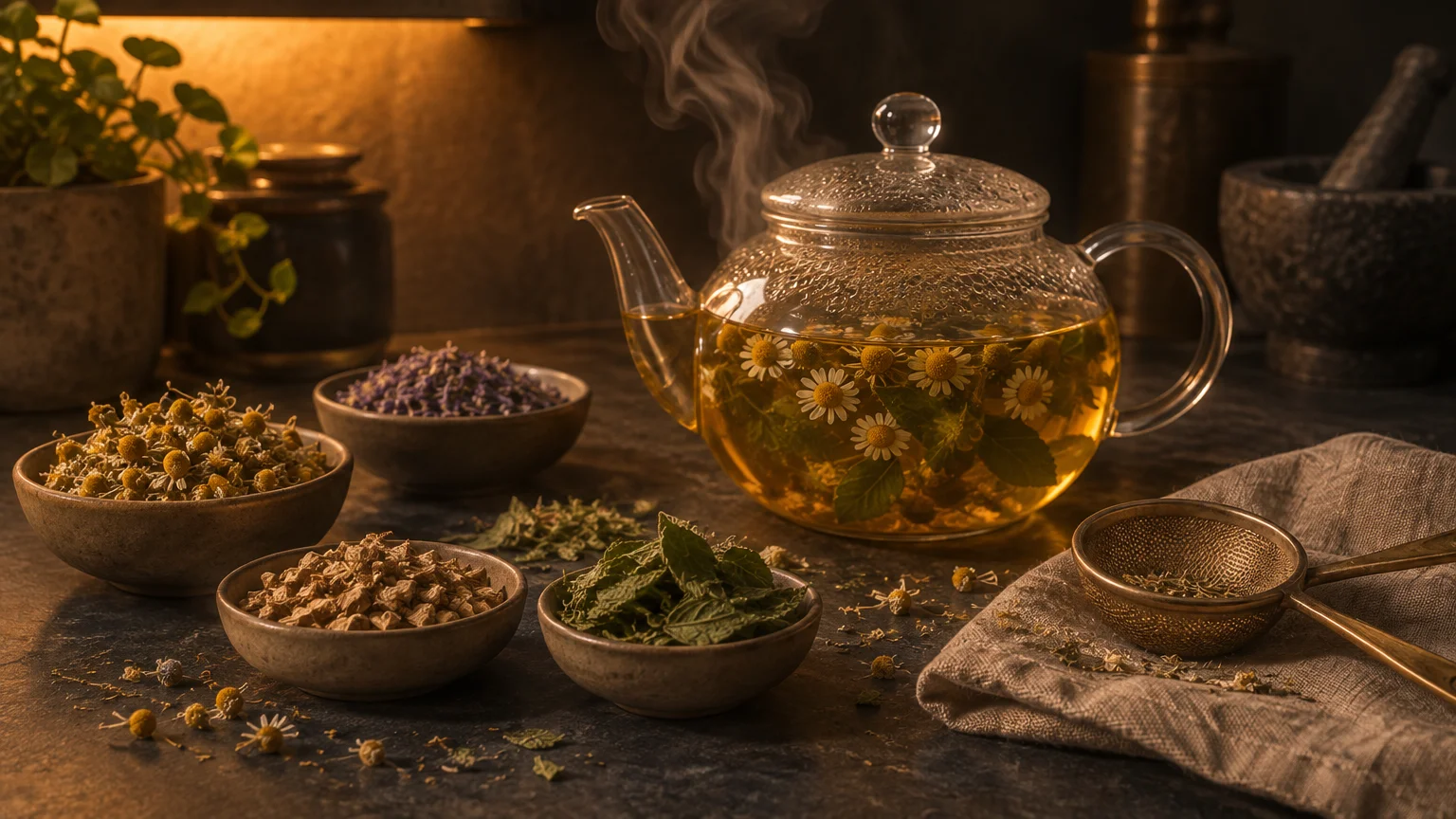
Pouring a steaming mug of herbal tea is one of the simplest ways to signal that your day is winding down. Chosen carefully, a caffeine-free cup can ease evening tension without the next-morning fog of sleeping pills.
Still, a bedtime tea only helps if it fits your sleep schedule, your bladder, and your medicine cabinet. Many popular blends hide herbs that interact with blood thinners, blood pressure pills, or acid reflux.
This guide breaks down six herbal teas—what clinical research actually shows, how to steep each cup, and when to stop sipping for deeper rest.
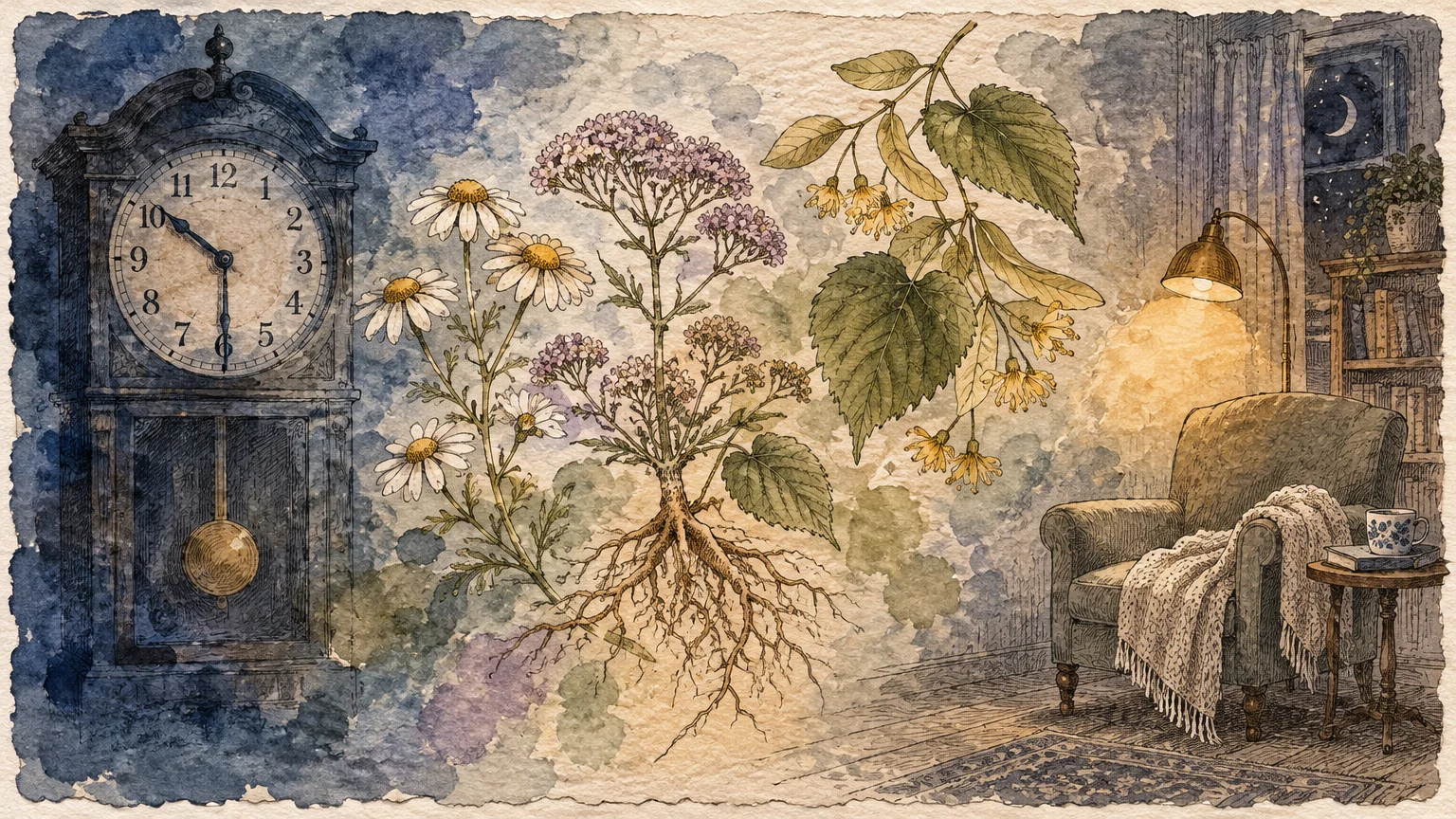
Why Does Sleep Change With Age—and Where Does Herbal Tea Fit?
Your need for solid rest does not vanish after age 50. The Centers for Disease Control and Prevention (CDC) recommends 7 or more hours nightly for ages 18 to 60, 7 to 9 hours for 61 to 64, and 7 to 8 hours at 65 and older.
The National Heart, Lung, and Blood Institute (NHLBI) and the National Institute on Aging (NIA)—updated February 6, 2025—note older adults still need 7 to 9 hours nightly. Yet meeting that target often gets harder in midlife and beyond.
According to the CDC 2024 National Health Interview Survey, 30.5% of U.S. adults averaged less than 7 hours of sleep per 24-hour period. Short sleep affected 34.5% of adults ages 50 to 64 and 27.2% of adults 65 and older.
Interestingly, the same 2024 survey found that trouble falling asleep dropped from 18.3% among ages 18 to 34 to 12.8% among adults 65 and older. Even so, staying asleep and feeling rested remain daily hurdles.
The NIA identifies insomnia—trouble falling or staying asleep at least 3 nights a week, or chronic insomnia lasting over 3 months—as the most common sleep problem in adults age 60 and older. Daily prescriptions often complicate the picture.
A February 22, 2026 National Council on Aging (NCOA) report notes 46% of Medicare enrollees take 5 or more medications, a pattern linked to poor sleep. Meanwhile, 20% to 60% of older adults take daytime naps, which can reduce nighttime sleep drive.
Safety adds another layer when you choose an evening beverage. Because the CDC reports that more than 1 in 4 adults over 65 fall each year, any drink that causes dizziness or extra bathroom trips deserves careful timing.
Both the American Academy of Sleep Medicine (2017) and the American College of Physicians (2016) recommend Cognitive Behavioral Therapy for Insomnia (CBT-I) first for chronic insomnia. Herbal teas cannot replace CBT-I, yet a caffeine-free mug can support a calming evening routine.
What Does Evidence Show for Six Herbal Sleep Teas?
True herbal teas, also called tisanes, come from dried flowers, leaves, roots, or bark rather than the Camellia sinensis tea plant. Because they contain no tea leaves, every herb below is naturally caffeine-free.
Clinical evidence varies widely from one plant to another, and stronger sedation is not always better. Here is what research shows for six popular bedtime options, along with how to brew and use each one safely.
Does Chamomile Tea Help You Fall Asleep?
Chamomile (Matricaria recutita) is the classic bedtime tea, and for good reason. According to Cleveland Clinic guidance from May 15, 2024, chamomile contains apigenin, a flavonoid that binds to benzodiazepine sites on GABA-A receptors in the brain.
That mild calming signal helps explain why many people feel relaxed after a warm cup. Still, human clinical evidence for diagnosed insomnia remains modest rather than dramatic.
The National Center for Complementary and Integrative Health (NCCIH) notes on October 15, 2026 that chamomile is likely safe in tea amounts, though evidence for diagnosed insomnia is limited.
A 2019 meta-analysis of 12 randomized controlled trials by Hieu and colleagues found improved subjective sleep quality overall. However, the lone insomnia trial in that review showed no severity change.
In a 2016 trial in the Journal of Advanced Nursing, Chang and Chen gave 80 postnatal women 1 cup of chamomile tea daily for 2 weeks. Sleep-inefficiency scores improved.
Steep 2 to 3 grams of dried flowers—1 heaping teaspoon to 1 tablespoon, or 2 tea bags—in about 200 milliliters (nearly 7 ounces) of water around 200°F. Cover your mug for 5 to 10 minutes to trap volatile oils.
Chamomile is not right for everyone, especially if you have seasonal allergies. NCCIH and Cleveland Clinic warn anyone allergic to the daisy family—ragweed, daisies, marigolds, or chrysanthemums—to avoid it due to rare anaphylaxis risk.
NCCIH also reports chamomile interactions with warfarin (raising bleeding risk), liver-metabolized drugs, and sedatives. Because it may show weak estrogen-like effects, check with your doctor if you take oral contraceptives or have breast or uterine cancer.
Is Valerian Root Tea Effective or Too Risky?
Valerian root (Valeriana officinalis) appears in many sleep-targeted teas and supplements because its valerenic acid, valepotriates, and sesquiterpenes interact with GABA receptors. Its earthy, pungent aroma is hard to miss once hot water hits the root.
Despite its reputation, clinical results remain weak. In its May 15, 2024 review, the NCCIH states trial findings are inconsistent and insufficient to prove effectiveness for insomnia, and the NIH Office of Dietary Supplements calls the evidence inconclusive.
The 2017 American Academy of Sleep Medicine guideline explicitly advises against valerian for chronic insomnia due to small, uncertain benefits. Sleep Foundation (September 10, 2025) notes trials generally study regular use for 2 or more weeks, up to 28 days.
If your doctor clears you to try valerian tea, steep 1 teaspoon of dried valerian root in hot water for 10 to 15 minutes. Keep the cup covered while steeping and strain well before drinking.
Pay close attention to safety warnings before putting valerian in your mug. NCCIH advises never combining valerian with alcohol or sedatives—including benzodiazepines, barbiturates, prescription sleep medications, opioids, or sedating antihistamines—because additive central nervous system depression can impair alertness and balance.
Both NCCIH and Cleveland Clinic list potential side effects such as headache, stomach upset, mental dullness, unexpected excitability, vivid dreams, and next-morning grogginess. For older adults watching fall risk, morning sluggishness is a serious drawback.
NCCIH also notes very rare liver injury reports—mostly alongside other herbs—and withdrawal-like anxiety or insomnia after stopping long-term use abruptly. Sleep Foundation and Mayo Clinic advise avoiding valerian during pregnancy, breastfeeding, liver disease, and in children under age 3.
Can Passionflower Tea Improve Sleep Quality?
Passionflower (Passiflora incarnata) offers a milder botanical profile with a slightly grassy, pleasant flavor. Its flavonoids, including chrysin, interact with GABA receptors involved in calming nerve activity.
According to NCCIH guidance updated April 15, 2025, limited research suggests oral passionflower may improve total sleep time in adults with insomnia, though results for falling and staying asleep are mixed. Tea studies remain small but encouraging for short-term sleep quality.
In a 2011 double-blind crossover trial published in Phytotherapy Research, Ngan and Conduit gave 41 adults 1 cup of passionflower tea nightly for 7 nights. Participants reported better subjective sleep quality compared with a placebo tea.
To make a standard cup, measure about 2 grams of dried passionflower aerial herb—roughly 1 heaped teaspoon to 1 tablespoon—into 200 to 250 milliliters (about 7 to 8 ounces) of just-boiled water. Cover the mug and steep for 10 minutes before straining.
NCCIH reports that passionflower tea appears safe for up to 7 nights of use, while standardized extracts have been studied up to 8 weeks. Possible side effects include drowsiness, dizziness, and confusion, so test your response on a quiet evening at home.
Never use passionflower during pregnancy, because NCCIH warns it may trigger uterine contractions. You should also tell your healthcare provider if you drink passionflower within 2 weeks of scheduled surgery, since combining it with anesthesia may overly slow your nervous system.
Does Lavender Tea Actually Improve Sleep?
Lavender (Lavandula) brings a familiar floral scent to evening tea blends, and the Food and Drug Administration (FDA) classifies lavender as Generally Recognized as Safe (GRAS) for food use. Many people find the aroma alone soothing after a stressful day.
When it comes to steeped tea, however, direct clinical proof is thin. NCCIH notes that lavender is likely safe in food amounts, yet states it remains unclear whether lavender improves sleep quality.
Cleveland Clinic and NCCIH point out that most sleep research has tested lavender aromatherapy or oral oil supplements rather than brewed tea. Think of lavender tea as a pleasant sensory wind-down rather than a proven sleep aid.
Look for culinary-grade dried lavender buds rather than potpourri or essential oils, which you should never add directly to drinking water. Use a small pinch—or choose a chamomile blend with a touch of lavender—because too many buds taste soapy and bitter.
Even gentle floral herbs carry a few precautions. NCCIH notes that oral lavender may interact with sedative medications, and reports rare cases of breast tissue swelling in children exposed to topical lavender essential oil products.
How Does Lemon Balm Tea Affect Evening Calm?
Lemon balm (Melissa officinalis) belongs to the mint family and brews into a bright, citrus-scented cup without any tartness. Herbal makers frequently pair lemon balm with valerian or chamomile in bedtime blends.
Evidence for lemon balm remains preliminary and modest. A 2026 meta-analysis of 4 randomized trials (2 to 4 weeks) and a small pilot trial of 20 stressed adults point to gentle benefits for anxiety and mild sleep disturbances.
Because lemon balm lacks the heavy sedation of valerian, many adults enjoy it as an afternoon or early-evening bridge away from caffeinated drinks. Its crisp flavor also works well iced earlier in the day or hot after dinner.
Check your medication list before making lemon balm a nightly habit, especially if you manage thyroid health. Lemon balm may interact with sedatives, thyroid medications, and HIV medications.
People with hypothyroidism or anyone taking thyroid therapy should avoid lemon balm or speak with their prescribing doctor first. You should also stop lemon balm at least 2 weeks before surgery and avoid it during pregnancy or breastfeeding due to limited safety data.
When Does Peppermint Tea Help—and When Should You Skip It?
Peppermint (Mentha piperita) does not act on brain sleep receptors the way chamomile or passionflower do. Instead, it earns a place on this list when digestive discomfort keeps you tossing and turning.
Guidance from the Icahn School of Medicine at Mount Sinai notes that peppermint works as an antispasmodic, relaxing gastrointestinal tract muscles to ease gas and bloating before bed. A comfortable stomach often makes falling asleep far easier.
To brew a straightforward cup, pour 8 ounces of boiling water over 1 to 2 teaspoons of dried peppermint leaf. Let it steep for 3 to 5 minutes, then strain and sip slowly.
There is one major reason to skip peppermint at night: acid reflux. Because peppermint can relax the lower esophageal sphincter—the muscular valve separating your stomach and esophagus—stomach acid can back up more easily when you lie down.
If you live with heartburn or gastroesophageal reflux disease (GERD), choose chamomile or lemon balm instead of peppermint after dinner. If you dislike mint and want a woody alternative, magnolia bark tea contains honokiol and magnolol, which interact with GABA-A receptors.
Evidence for magnolia bark remains limited, relying mostly on animal studies and small human trials. Should your pharmacist clear it for you, a typical brew steeps 1 to 2 teaspoons of dried bark for 10 to 15 minutes.
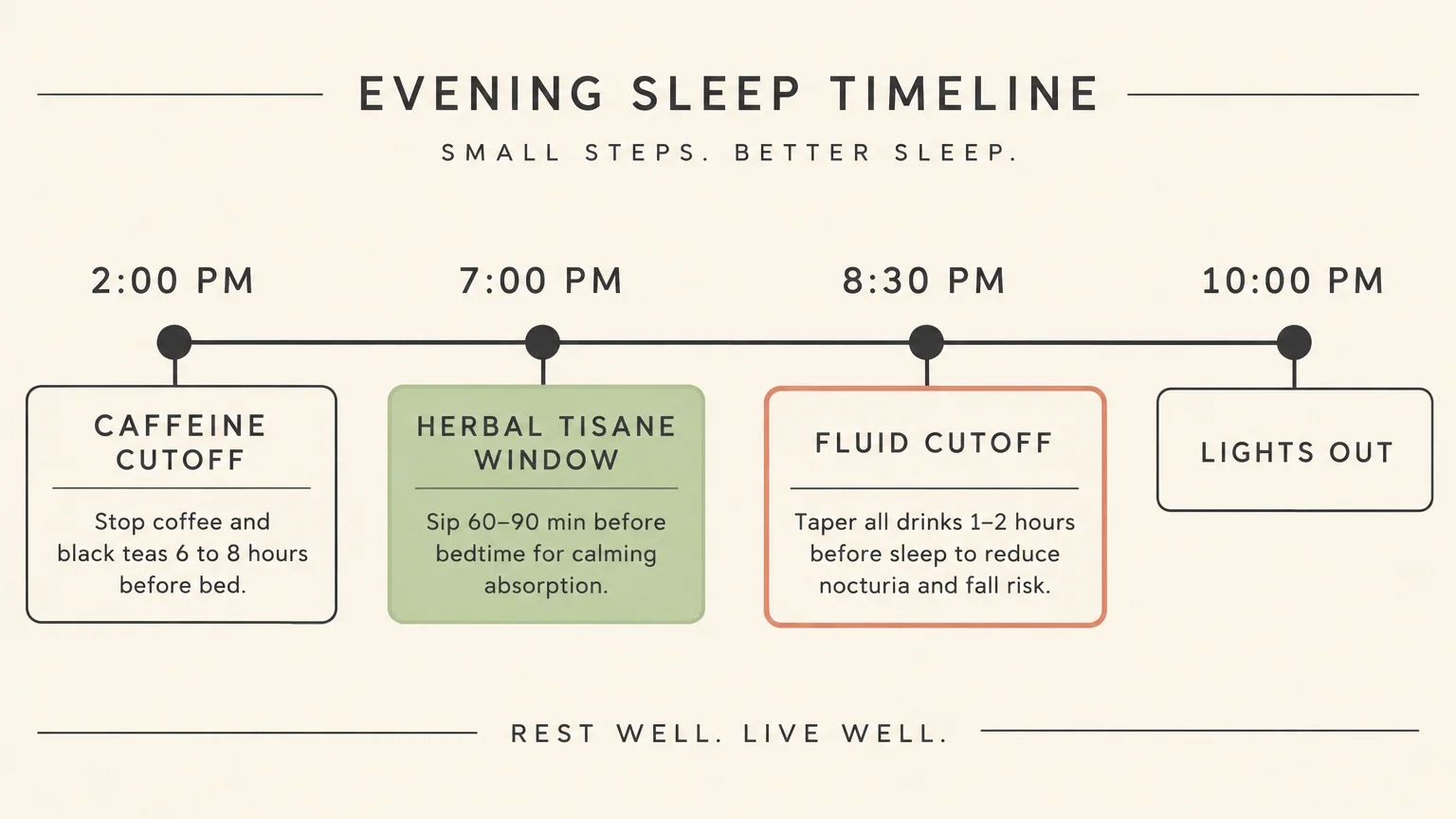
When Should You Drink Herbal Tea and Cut Off Caffeine?
What you put in your mug matters, yet when you lift that mug matters just as much. Poorly timed drinks can fragment your sleep even when the tea itself contains zero caffeine.
How Early Should You Stop Drinking Liquids Before Bed?
Standard tea blogs often suggest sipping herbal tea 30 to 60 minutes before lights out. For many adults in their 50s, 60s, and beyond, that schedule backfires at 2:00 a.m.
Waking more than once at night to urinate—called nocturia—becomes much more common after age 50. Both Cleveland Clinic (July 22, 2026) and NIH StatPearls (February 17, 2024) advise cutting back on or avoiding fluids 2 hours before bedtime to prevent nighttime bathroom trips.
Clinical tea guides echo that adjustment, recommending that older adults sensitive to nocturia drink calming tea 1 to 2 hours before bed rather than right on the nightstand. Pouring a modest 6-ounce cup instead of an oversized 12-ounce mug also limits bladder volume.
Diuretic timing also shapes nighttime bathroom trips. NIH StatPearls advises taking evening doses of twice-daily loop diuretics 6 to 8 hours before bed, while Cleveland Clinic advises taking diuretics in the morning or at least 6 hours before bed with physician guidance.
Pair your fluid cutoff with an earlier dinner schedule. Cleveland Clinic advises finishing your final meal about 3 hours before bedtime so digestion and reflux settle before your head hits the pillow.
When Should You Cut Off Black, Green, and Decaf Teas?
Sometimes the best sleep improvement comes from what you remove earlier in the afternoon. According to the FDA, 400 milligrams of caffeine per day is a safe upper limit for most healthy adults, yet timing often matters more than total milligrams.
A 2013 clinical trial by Drake and colleagues in the Journal of Clinical Sleep Medicine demonstrated that caffeine consumed 6 hours before bed still noticeably disrupts sleep. Sleep Foundation goes further, advising an 8-hour pre-bedtime cutoff for caffeinated black, green, and oolong teas.
Notice that decaf black or green tea still retains trace caffeine, which can nudge sensitive sleepers awake. Swapping your 3:00 p.m. iced green tea or after-dinner decaf cup for lemon balm or chamomile removes lingering caffeine cleanly.
What Should You Look for When Buying and Sweetening Bedtime Tea?
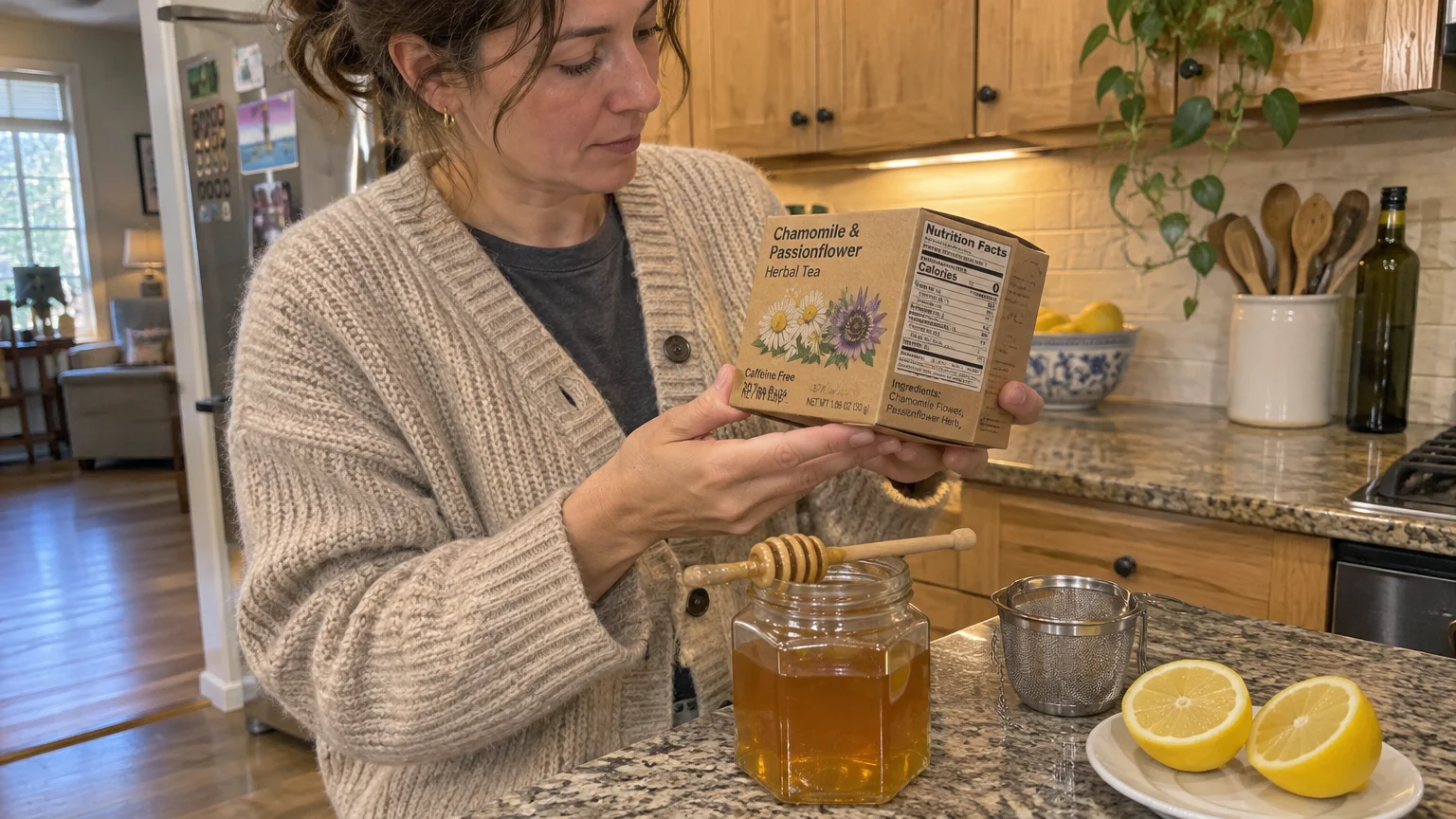
Walking down the tea aisle feels simple until you flip over a colorful box labeled for deep sleep. Knowing how herbal teas are regulated helps you read labels with a sharper eye.
Why Should You Watch for Hidden Herbs in Commercial Sleep Blends?
Under the Dietary Supplement Health and Education Act of 1994, the FDA regulates herbal supplements as foods rather than approved drugs—meaning safety and effectiveness are not verified before sale. Both the FDA and Mayo Clinic highlight this gap.
Ingredients sold before October 15, 1994 were grandfathered in, while newer ingredients require FDA safety notification unless recognized as safe for food use. Structure-and-function claims on boxes carry a mandatory FDA disclaimer, and the Federal Trade Commission oversees advertising claims.
Americans buy these products widely: U.S. herbal supplement sales hit an estimated $12.5 billion in 2023, with roughly 1 in 3 adults using herbal products, per Guardian Pharmacy (July 21, 2025).
Mayo Clinic adds that roughly half of U.S. adults used a supplement within the past 30 days. Many never mention those teas or pills to their clinicians.
Commercial bedtime blends frequently combine multiple herbs—such as valerian, passionflower, lemon balm, chamomile, hops, and licorice root—in proprietary ratios. Hidden licorice root is a particular concern for older adults managing cardiovascular health.
Mayo Clinic warns that licorice can alter warfarin, raise bleeding risk, and lower potassium—increasing serious side-effect risks from digoxin while affecting blood pressure.
Buying single-ingredient teas lets you test one herb at a time. You keep full control over what enters your body.
What About Sugar, Sodium, and Alcohol in Evening Drinks?
Plain brewed herbal tea naturally contains zero added sugar and virtually zero sodium, making it friendly for blood sugar and blood pressure goals. Adding spoonfuls of honey or flavored syrups right before bed adds quick calories and can irritate nighttime reflux.
For sugar-free flavor, steep a slice of fresh ginger or a strip of orange peel alongside your tea. Buying loose flowers or plain single-herb bags also keeps nightly costs far lower than sleep gummies or capsules.
Leave alcohol out of your evening mug entirely. Beyond fragmenting late-night sleep, alcohol combined with valerian or other calming herbs raises the risk of heavy sedation, poor coordination, and nighttime falls.
Which Medications and Conditions Call for Extra Caution?
Because nearly half of Medicare enrollees take 5 or more daily medications, treating herbal tea like an active ingredient—not just flavored water—protects your health. Always check with your doctor or pharmacist before adding a new nightly herb.
Blood thinners such as warfarin warrant special care, since chamomile and hidden licorice root can increase bleeding risk or change drug levels. Heart medications like digoxin and blood pressure prescriptions also clash with licorice-containing tea blends.
Central nervous system depressants—including prescription sleep drugs, benzodiazepines, barbiturates, opioids, and over-the-counter sedating antihistamines—should never be paired with valerian, and require caution alongside passionflower, chamomile, lavender, or lemon balm. Combined drowsiness raises the risk of next-day confusion and falls.
Check condition-specific red flags: skip chamomile for ragweed allergies, skip peppermint for GERD, and avoid valerian with liver disease.
Ask your doctor before pairing lemon balm with thyroid or HIV therapy. Always stop passionflower and lemon balm at least 2 weeks before scheduled surgery.
Both the FDA and NCCIH recommend bringing a complete list of every supplement and herbal tea you drink to medical and pharmacy appointments. A two-minute label check at the pharmacy counter can prevent weeks of unwanted side effects.

What Common Questions Do Readers Ask About Bedtime Teas?
Are Decaf Green and Black Teas Completely Caffeine-Free?
No; decaffeination removes most caffeine from Camellia sinensis leaves, yet Sleep Foundation notes that decaf tea still retains trace amounts. If caffeine disrupts your rest, switch to naturally caffeine-free herbal tisanes at least 8 hours before bedtime.
How Many Nights Does It Take to Notice Results From Herbal Tea?
Warmth and routine can help you unwind on night one, though clinical trials usually track multi-day use. Studies noted subjective sleep shifts after 7 nights with passionflower tea and 2 weeks with chamomile tea in postnatal women.
Valerian trials often run 2 or more weeks. Even so, clinical sleep guidelines advise against valerian for chronic insomnia.
Can You Drink Sleep Blends If You Take Blood Pressure or Heart Drugs?
Read every ingredient panel carefully before brewing any commercial blend, because many sleep teas hide licorice root for sweetness.
Mayo Clinic warns that licorice can lower potassium, affect blood pressure, alter warfarin, and raise digoxin side-effect risks. Ask your pharmacist to review the box first.
Should Herbal Tea Replace Medical Care for Ongoing Insomnia?
No; if you struggle to fall or stay asleep at least 3 nights a week, or over 3 months, call your doctor.
The American Academy of Sleep Medicine recommends Cognitive Behavioral Therapy for Insomnia as the initial treatment for chronic insomnia.
What One Simple Change Can You Try This Week?
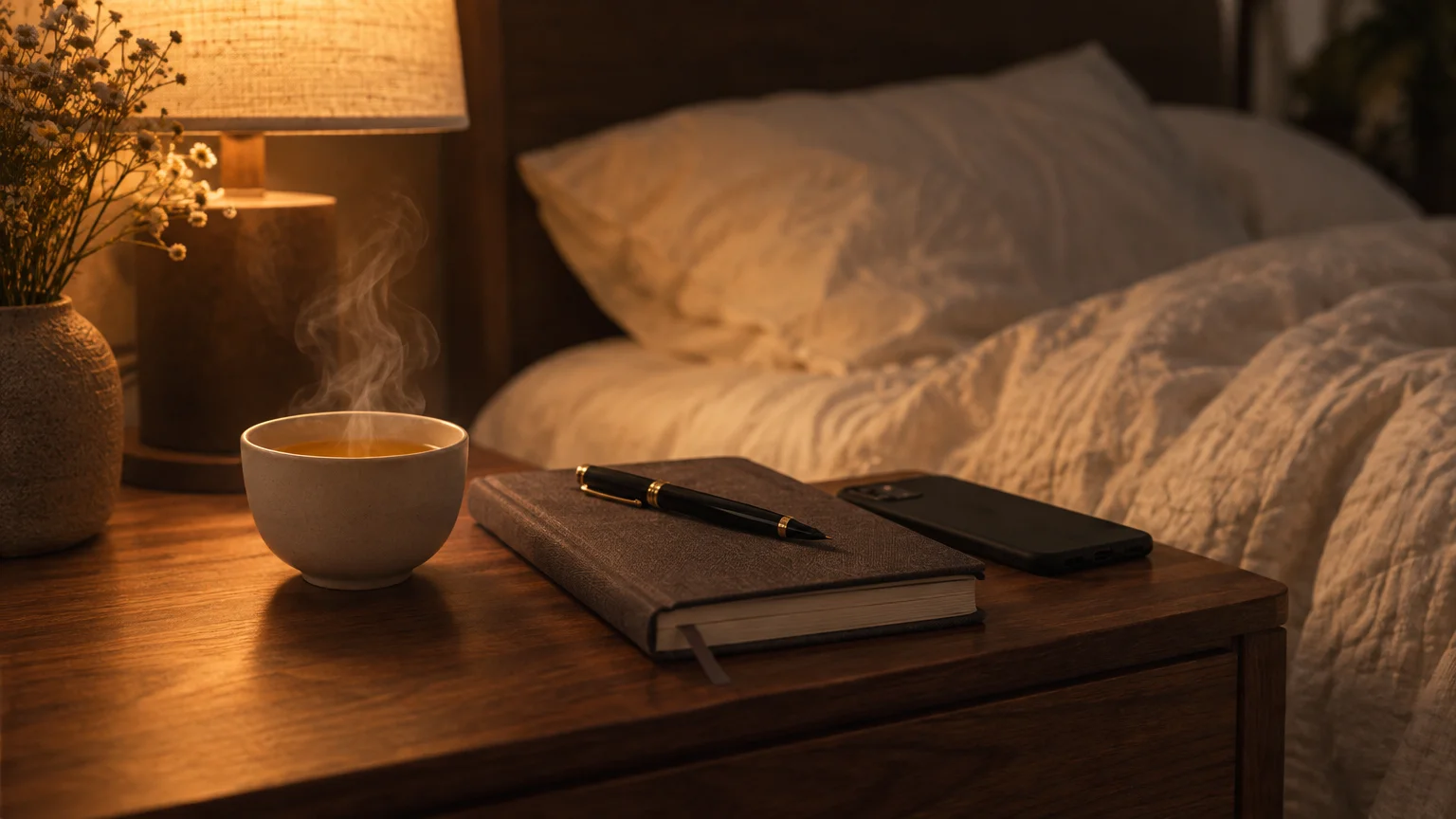
Pick one single-ingredient, caffeine-free tea that fits your health profile—such as plain chamomile without ragweed allergies or blood-thinner conflicts. Steep a modest 6-ounce cup covered for 5 to 10 minutes, and finish it 90 to 120 minutes before bed.
Cut off all black, green, and decaf teas 8 hours before bedtime for seven straight days.
Add your chosen tea to your medication list, verify it with your pharmacist, and track both sleep onset and nighttime awakenings.