Your morning cup of coffee already anchors your routine, and turning it into a source of protein takes less than two minutes. With one simple swap, that familiar mug can help you reach your daily protein needs before breakfast ends.
After age 55, your body uses protein less efficiently, so starting the day with an empty-calorie drink leaves you playing catch-up. Adding dairy, soy, or a scoop of powder transforms plain coffee into steady morning fuel.
You do not need expensive cafe orders or complicated blender recipes to get started. These seven dietitian-approved methods fit right into the coffee you already brew at home.
Why Does Adding Protein to Your Morning Coffee Matter After 55?
Coffee dominates American mornings, which makes your daily mug the easiest place to close a nutritional gap without building a brand-new habit. According to the National Coffee Association Fall 2026 National Coffee Data Trends report, 66% of U.S. adults drank coffee in the past day.
That September 2026 report ranks coffee as the nation’s top daily beverage ahead of tap or bottled water. It also shows 83% of past-day drinkers prepare coffee at home, while 38% buy it away from home.
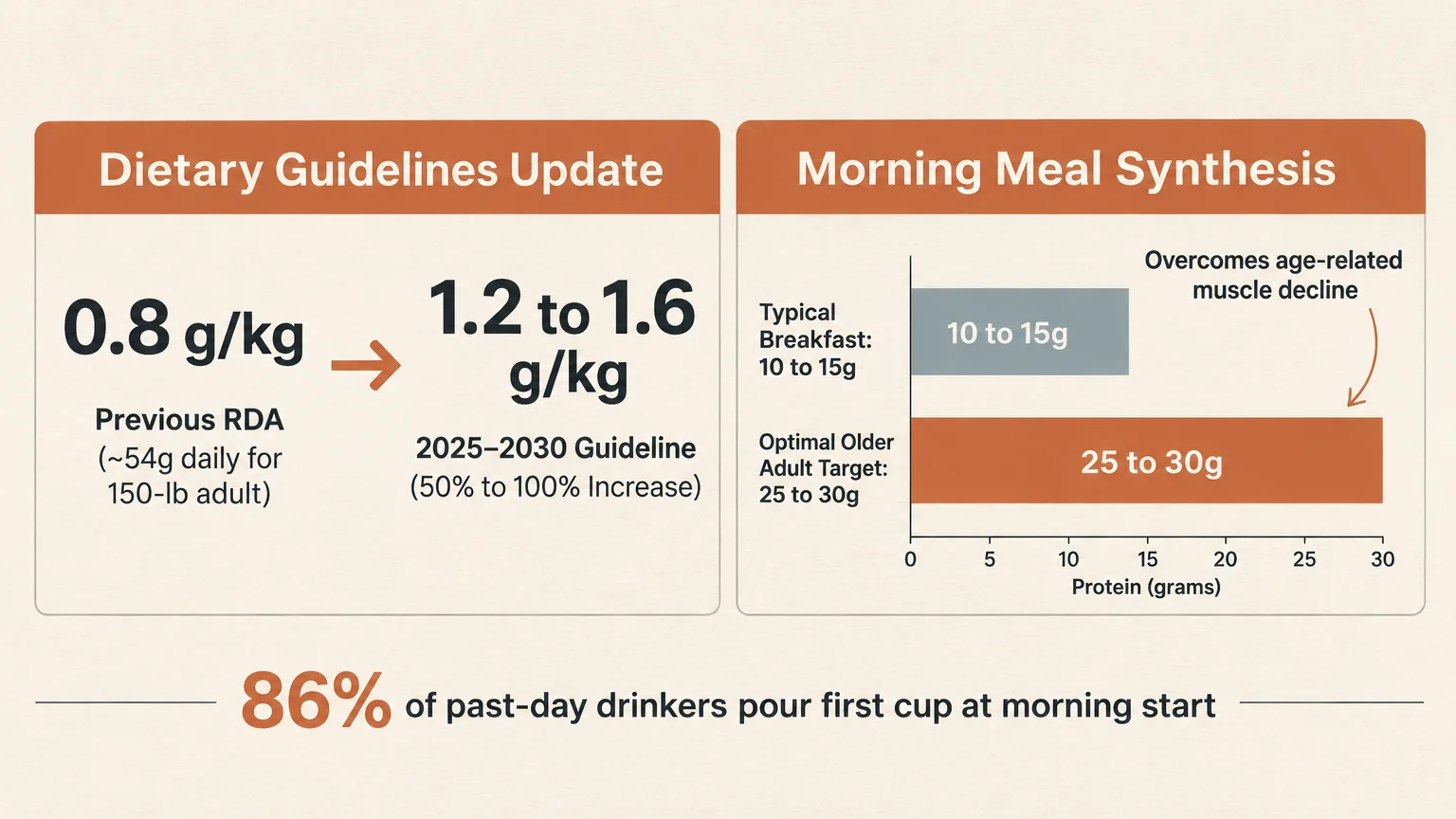
Earlier in April 2026, the National Coffee Association Spring 2026 report noted that nearly 195 million U.S. adults drink coffee weekly. Among past-day coffee drinkers, 86% pour their first cup right at the start of the morning.
At the same time, federal nutrition targets have shifted upward to support healthy aging and muscle maintenance. On January 7, 2026, the USDA and HHS released the 2025–2030 Dietary Guidelines for Americans, raising adult daily protein guidance.
The current guidelines recommend 1.2 to 1.6 grams of protein per kilogram of body weight each day. That marks a 50% to 100% increase over the longstanding 0.8 grams per kilogram Recommended Dietary Allowance, which equals roughly 54 grams daily for a 150-pound adult.
Within those guidelines, the Acceptable Macronutrient Distribution Range stays at 10% to 35% of daily calories from protein. According to the guidelines’ Scientific Foundation report, U.S. adults already average about 1.0 gram per kilogram daily, or roughly 15% of calories.
Even if your total daily intake looks solid by dinner, breakfast often falls short when toast or pastry stands alone.
Clinical nutrition research shows that eating 20 to 30 grams of protein at breakfast boosts fullness and lowers lunch calorie intake compared with 10 to 15 grams from typical cereal.
That morning target matters even more as decades pass because aging muscles become less responsive to small protein doses. While younger adults trigger muscle protein synthesis with around 15 grams per meal, older adults generally need 25 to 30 grams per meal to overcome age-related declines.
Americans clearly recognize the value of getting enough protein throughout the day. Survey findings from the International Food Information Council cited by The Food Institute in September 2025 show 70% of Americans actively try to consume protein and 80% prioritize adding it.
Turning your first mug into a 10- to 30-gram protein contributor takes pressure off the rest of your breakfast plate. You still enjoy the ritual and aroma you love, while protecting strength, steadying morning energy, and supporting appetite control.
How Much Protein Can Coffee Realistically Add to Your Breakfast?
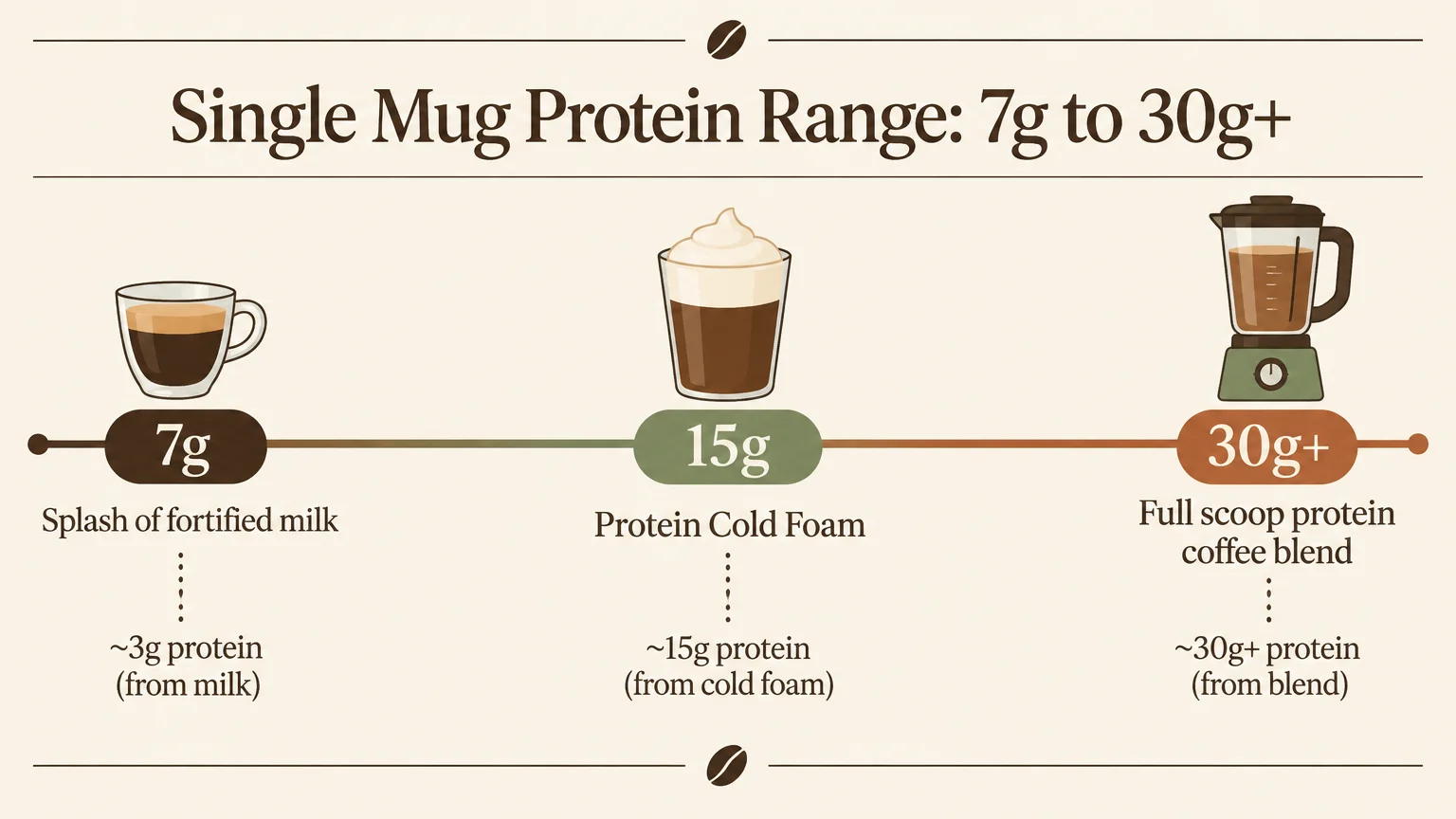
Think of protein coffee—often called proffee—as a flexible helper rather than an all-or-nothing meal replacement. Depending on what you stir or pour in, a single mug can deliver anywhere from 7 grams to more than 30 grams of protein.
Coffee chains and grocery brands noticed this shift and rolled out ready-made options across the country. On September 29, 2025, Starbucks permanently added Protein Cold Foam with 15 grams of protein and no added sugar, plus Protein Lattes packing 15 to 36 grams per 16-ounce grande.
Those menus expanded again in January 2026 with caramel protein drinks, followed in March 2026 by a 3.99-dollar bottled Coffee and Protein beverage with PepsiCo offering 22 grams of protein and 2 grams of sugar. Dunkin’ also launched Protein Milk in January 2026.
Packaged grocery options grew alongside cafe menus. Bulletproof introduced High Protein Iced Coffee with 12 grams of whey in September 2025, and Oats Overnight brought its 10-gram iced protein coffee to Target in November 2026.
Buying a cafe latte or bottled drink every morning adds up quickly on a household budget. Preparing your cup at home lets you control the price, sweetness, sodium, and exact protein dose to match what you eat alongside your coffee.
If breakfast includes eggs, whole-grain toast, or oatmeal, adding 8 to 15 grams to your mug easily pushes your meal past the 25- to 30-gram threshold. On busy mornings when you only grab fruit or toast, a 24- to 32-gram coffee mix bridges the entire gap.
Specialty coffee habits also make home protein drinks feel natural rather than experimental. The Fall 2026 National Coffee Data Trends report found a record 48% of U.S. adults drank specialty coffee in the past day, and 47% had an espresso beverage weekly.
Whether you brew drip coffee, pull espresso shots, or pour cold brew over ice, you can match a protein add-in to your exact taste. The seven approaches below move from effortless fridge pours to rich, frothy blends.

What Are the 7 Easiest Dietitian-Approved Ways to Add Protein to Coffee?
1. How Much Protein Does Ultra-Filtered or Dairy Milk Add?
Swapping plain creamer or black coffee for real dairy milk is the simplest, most budget-friendly upgrade available. One cup, or 8 fluid ounces, of 1% or skim cow’s milk supplies 8 grams of complete protein.
Standard half-and-half or nondairy creamers add richness with virtually no meaningful protein, often alongside extra saturated fat or added sugar. Heating half a cup to a full cup of low-fat milk gives your coffee a classic cafe texture plus natural calcium and vitamin D.
If you want nearly double the protein without changing the flavor of your mug, reach for ultra-filtered dairy milk such as Fairlife. Filtering concentrates the milk proteins while removing part of the natural lactose sugar.
An 8-ounce serving of ultra-filtered milk provides 13 to 15 grams of complete protein with less sugar than regular milk. Manufacturers also add the lactase enzyme, making ultra-filtered milk lactose-free for anyone whose digestion has grown sensitive to dairy over the years.
Pour 4 to 8 ounces into hot brewed coffee or cold brew at breakfast for an instant boost without any chalky aftertaste. If your morning plate already includes yogurt or an egg, half a cup of ultra-filtered milk adds roughly 7 grams effortlessly.
Froth warmed ultra-filtered milk with a simple handheld whisk for 15 seconds to mimic a coffeehouse cappuccino at home. You skip specialty drink prices and keep added sugars at zero.
2. Which Plant-Based Milk Works Best for Protein Coffee?
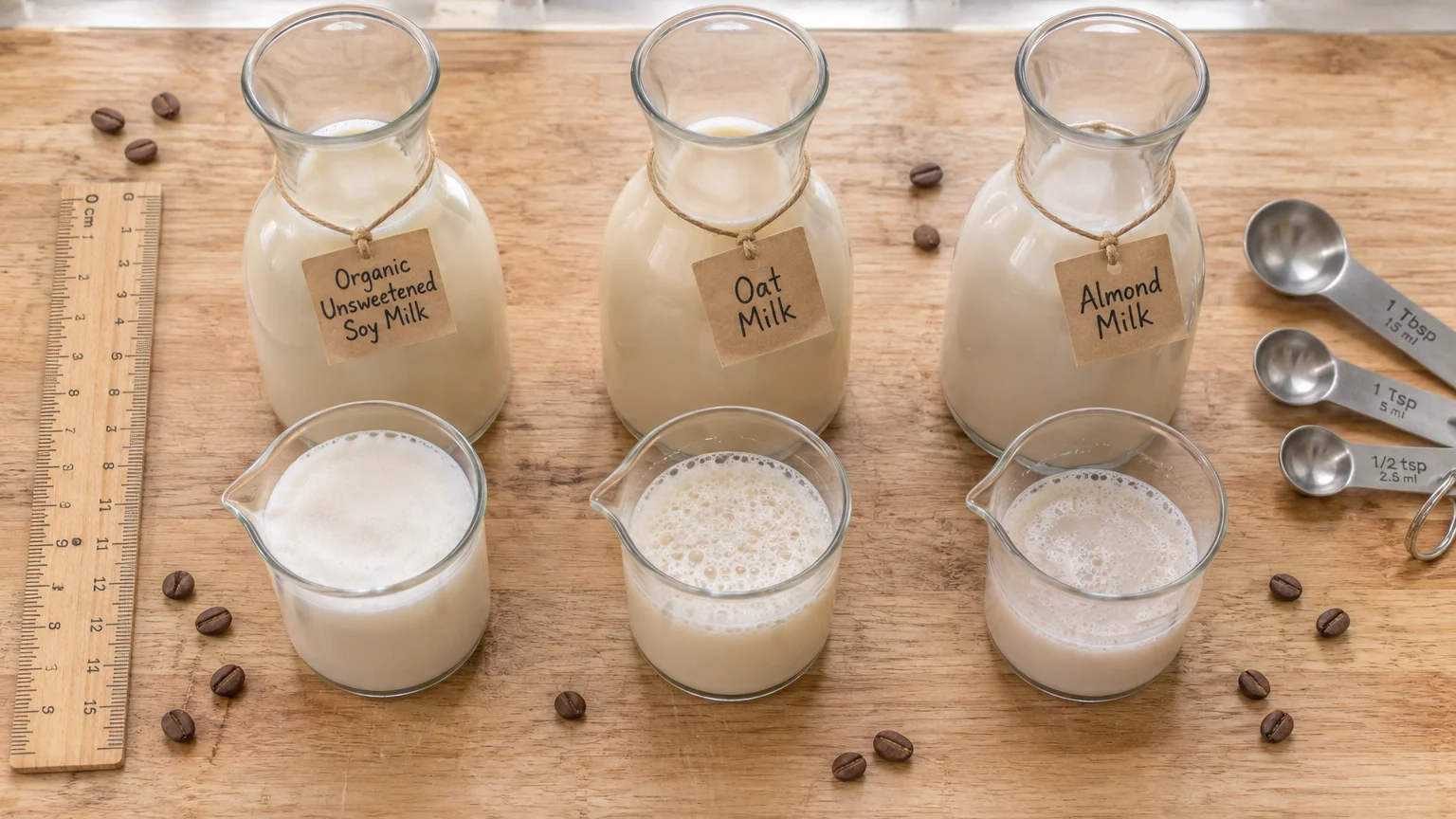
Plant-based milks vary dramatically in protein, so reading the Nutrition Facts panel protects you from empty swaps. Fortified unsweetened soy milk stands out as the closest plant match to cow’s milk, delivering 7 to 9 grams of protein per 1-cup serving.
Almond, oat, coconut, and rice milks pour nicely into coffee, yet most varieties carry very little protein. For example, ready-to-drink chocolate almond milk lists just 1.51 grams of protein per 8 fluid ounces in USDA FoodData Central.
Choosing unsweetened soy milk keeps added sugars off your morning blood glucose curve while supplying all essential amino acids. Many fortified cartons also include calcium and vitamin D at levels comparable to dairy milk, supporting bone maintenance after 55.
Warm soy milk gently before pouring it into hot coffee so it blends smoothly without separating. High acidity in dark roasts can occasionally curdle cold soy milk if you pour it straight from the refrigerator into piping hot coffee.
Warming the soy milk for 30 seconds in the microwave or frothing it first solves separation almost every time. Keep an eye on sodium and added cane sugar on barista-style cartons, because flavored versions often hide multiple teaspoons of sweetener.
3. Can You Pour a Ready-to-Drink Protein Shake Straight Into Coffee?
Using a bottled ready-to-drink protein shake as your creamer and sweetener is the fastest way to turn iced or warm coffee into a full meal anchor. Most single-serving cartons deliver 24 to 32 grams of complete protein with minimal prep.
Popular options vary slightly in calories, protein source, and sweetness, so checking labels helps match your health goals. Premier Protein supplies 30 grams of protein, 160 calories, and zero grams of added sugar per carton.
Fairlife Core Power offers 26 grams of protein and 170 calories in a 14-ounce bottle, while its Elite version reaches 42 grams. Fairlife Nutrition Plan delivers 30 grams, and plant-based OWYN Pro Elite provides 32 grams in 12 fluid ounces.
At roughly 2.50 to 3.25 dollars per carton, using half a bottle in morning coffee costs far less than a drive-thru protein latte. You can refrigerate the remaining half for tomorrow’s mug or afternoon snack.
Iced coffee or cold brew pairs best with chilled shakes because cold liquid prevents any thickness changes from heat. Pour 6 to 8 ounces of iced coffee over ice, then top with half to a full bottle of vanilla or caramel shake.
If you prefer a hot mug, let your coffee cool slightly before stirring in a splash of room-temperature shake, or warm the shake gently first. Always check sodium, potassium, and artificial sweetener ingredients if your digestive tract or blood pressure responds strongly to specific additives.
4. How Do You Mix Whey or Plant Protein Powder Without Clumps?
Protein powder gives you maximum control over flavor, protein dose, and cost per serving, typically supplying 15 to 25 grams per scoop. A standard 30-gram scoop of whey powder, for example, yields roughly 24 grams of high-quality protein.
Many people give up on powder after dropping a scoop straight into steaming coffee and watching rubbery clumps float to the top. Understanding a little kitchen science explains why those lumps form and why they do not ruin the nutrition.
Drip coffee typically brews between 195 and 205 degrees Fahrenheit and sits in your cup at 160 to 185 degrees Fahrenheit. Whey protein begins to denature and clump together between 149 and 160 degrees Fahrenheit.
Research shows whey reaches 46% denaturation at 167 degrees Fahrenheit and complete denaturation at 185 degrees Fahrenheit. Gums and emulsifiers added to flavored powders can make that clumping look even thicker.
Crucially, heat denaturation changes texture without destroying amino acids or reducing how well your body digests and uses the protein. Your muscles still absorb the protein, though nobody wants to chew their morning beverage.
Avoid clumps with two quick tricks that take ten seconds. First, whisk your scoop of whey or plant powder into 2 ounces of cold water or milk to make a smooth slurry before pouring in warm coffee cooled below 145 degrees Fahrenheit.
Second, skip heat altogether by shaking cold brew, ice, milk, and powder in a sealed jar or frothing it with a wand. Plant-based blends like pea or soy powder also blend smoothest when pre-mixed in cool liquid.
5. Should You Stir Collagen Peptides Into Hot Coffee?
Collagen peptides dissolve almost invisibly into hot black coffee without altering texture, making them wildly popular for effortless morning routines. A typical 20-gram serving delivers about 18 grams of protein, while a smaller 10-gram scoop offers 9 grams.
Despite that high gram count on the label, dietitians view collagen differently from dairy, soy, or whey protein when muscle strength is the goal. Under standard protein quality scoring, collagen lacks the essential amino acid tryptophan and contains very little leucine.
Because it is an incomplete protein, collagen does not stimulate muscle protein synthesis the way whey, milk, or soy does. Clinical studies typically use functional doses of 2.5 to 15 grams daily to support skin elasticity or joint comfort instead.
That does not mean collagen lacks value in a balanced day. A 2019 study published in Nutrients calculated that collagen can replace up to 36% of daily protein in a Western diet while still maintaining healthy essential amino acid balance.
To get the best of both worlds, stir one scoop of collagen into hot coffee alongside a breakfast containing eggs, Greek yogurt, or dairy milk. Your meal provides the missing tryptophan and leucine, while your coffee stays silky, clear, and completely clump-free.
6. How Can Greek Yogurt, Cottage Cheese, or Silken Tofu Froth Up Your Cup?
Whole-food dairy and soy staples sitting in your refrigerator can turn an iced coffee or warm latte into a velvety, high-protein drink. According to USDA FoodData Central, a 6-ounce container of Greek yogurt supplies 17.3 grams of protein.
Half a cup of Greek yogurt adds roughly 12 to 15 grams of protein, outperforming regular yogurt at 8 to 10 grams per full cup. Cottage cheese delivers 11.8 grams per 4-ounce serving, or roughly 14 grams per half cup.
For a dairy-free option, soft or silken tofu provides 17.8 grams of protein per cup with an ultra-neutral flavor. Blending any of these whole foods with coffee avoids processed gums, artificial sweeteners, and supplemental powders altogether.
For a creamy iced coffee smoothie, blend 8 ounces of chilled coffee, half a cup of plain Greek yogurt or cottage cheese, ice, and a pinch of cinnamon. Adding a quarter banana or a splash of vanilla extract balances the tang of cultured dairy.
You can also blend half a cup of silken tofu with cold brew and unsweetened cocoa powder for a dairy-free mocha packed with complete plant protein. Because whole dairy and tofu contain natural moisture, keep the cup chilled over ice for the freshest flavor.
Pay attention to sodium when using cottage cheese, since regular tubs can pack significant salt per half cup. Selecting low-sodium cottage cheese or plain nonfat Greek yogurt keeps blood pressure goals firmly on track.
7. Do Pasteurized Egg Whites, Hemp Seeds, or Nut Butters Work in Coffee?
Traditional coffee recipes in several cultures blend eggs or seeds directly into coffee for richness and lasting energy. One large whole egg provides 6.3 grams of protein, according to USDA FoodData Central, while pasteurized liquid egg whites froth into a dense foam.
However, raw egg coffee demands strict food safety precautions to prevent foodborne illness. Both the USDA Food Safety and Inspection Service and the FDA warn against consuming raw or undercooked unpasteurized shell eggs because of Salmonella risk.
Any uncooked egg beverage must use in-shell pasteurized eggs or commercially pasteurized liquid egg whites, which federal rules require for all store-bought liquid egg cartons. Otherwise, egg mixtures must be heated to an internal temperature of 160 degrees Fahrenheit.
Even with pasteurized products, the USDA advises high-risk groups—specifically including older adults, pregnant women, young children, and immunocompromised people—to stick to cooked egg products heated to 160 degrees Fahrenheit. Whipping pasteurized whites into hot coffee does not guarantee that safe temperature throughout the foam.
If you are over 55 or managing immune conditions, scramble or poach your eggs on a plate beside your coffee instead of drinking them raw. Safer plant add-ins give you whole-food protein in the blender with zero Salmonella worry.
Hemp seeds provide 10 grams of complete plant protein per 3 tablespoons and blend smoothly into hot or iced coffee with a nutty taste. Peanut butter offers 8 grams per 2 tablespoons, and chia seeds add 5 grams of protein plus fiber per 2 tablespoons.
Whirring hot coffee with 2 tablespoons of hemp seeds and a teaspoon of peanut butter in a countertop blender creates a frothy, dairy-free latte in 20 seconds. Vent the blender lid slightly when blending hot liquids so steam pressure never pops the cap.
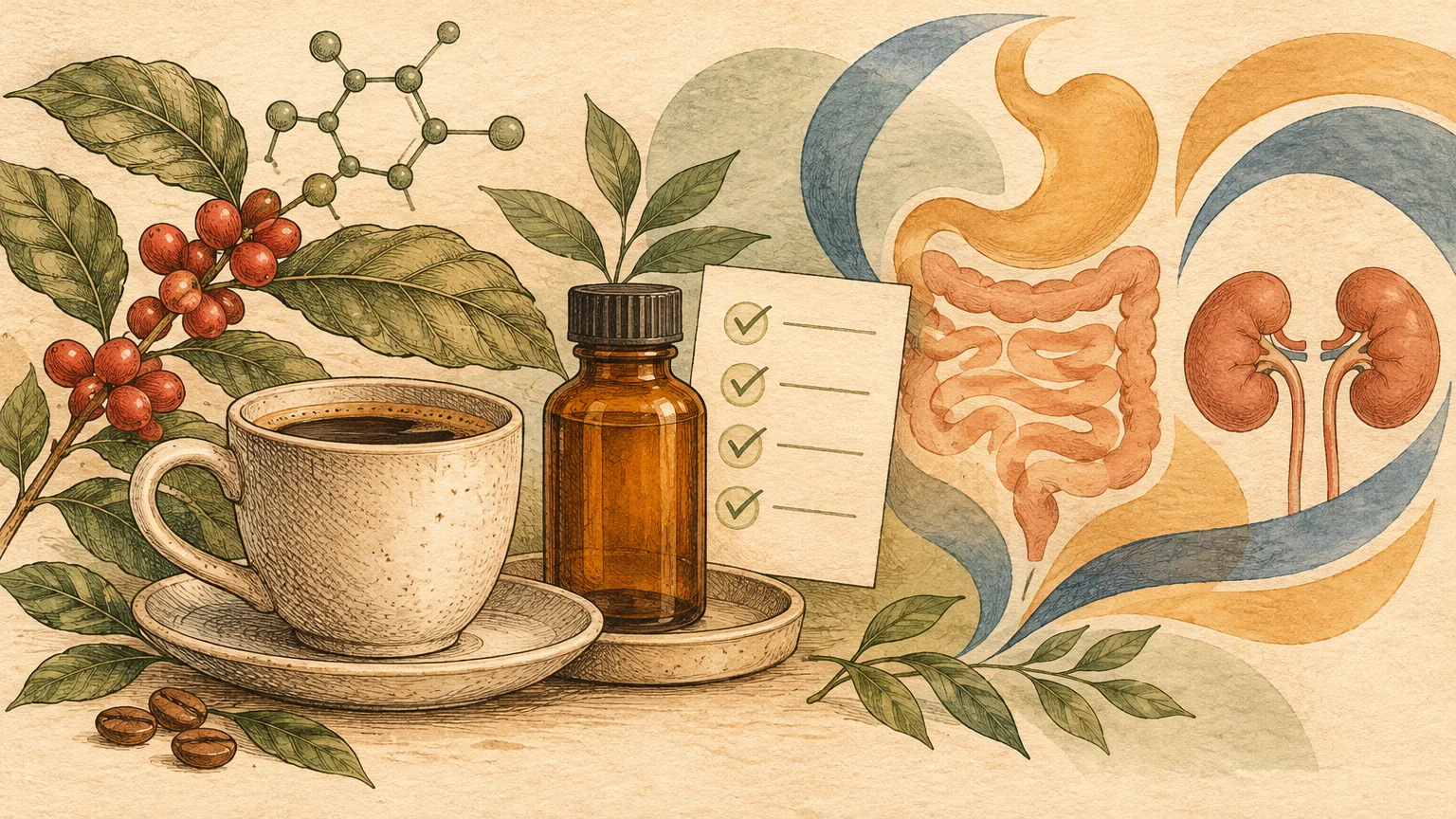
What Safety, Medication, and Health Cautions Should You Check First?
Adding protein changes your morning coffee into a more substantial food, which makes timing around medications and medical conditions worth reviewing. Start by checking your total daily caffeine intake alongside your personal tolerance.
According to FDA caffeine guidance, up to 400 milligrams of caffeine daily—roughly four 8-ounce cups of brewed coffee—is not generally associated with negative effects in healthy adults. Sensitive groups, including pregnant individuals, should consume less.
FDA labeling rules require caffeine to appear in ingredient lists on packaged foods and drinks, though companies do not have to print exact milligram counts.
Keep track of chocolate, tea, and bottled proffee drinks so extra caffeine does not creep past your afternoon cutoff and disrupt sleep.
As tolerance shifts with age, strong coffee late in the morning can raise heart rate, stir up reflux, or fragment deep sleep at night. Switching to half-caff or decaf espresso still lets you enjoy every single protein recipe above without overstimulation.
Underlying chronic conditions also shape how much protein belongs in your cup. Clinicians note that people managing kidney disease, diabetes, or cardiovascular disease may need specific daily protein targets or limits and should check with their healthcare provider before raising intake.
Morning medications require careful spacing away from both caffeine and protein-rich liquids like milk or calcium-fortified soy. Thyroid hormone pills, certain osteoporosis drugs, blood pressure medications, and iron supplements can absorb poorly when taken with coffee, dairy calcium, or heavy protein.
Take morning pills with plain water exactly as directed, then wait the recommended window before pouring your protein coffee. Always check with your doctor or pharmacist to confirm safe timing for your exact prescription list.
Watch hidden sugar, sodium, and saturated fat in flavored syrups, commercial cold foams, and bottled protein coffees. Bottled drinks and sweetened creamers can quietly push blood sugar higher or add hundreds of milligrams of sodium before noon.
Skip spiking protein coffee with liquor or liqueurs, even on weekends. Alcohol tolerance decreases with age, and mixing alcohol with caffeine masks drowsiness while stressing blood pressure, balance, sleep quality, and daily medications.
Finally, shop smart when buying protein or collagen tubs. Under the Dietary Supplement Health and Education Act, the FDA regulates protein powders as dietary supplements rather than pre-approving them before sale.
To ensure label accuracy and screen out contaminants such as heavy metals like lead or arsenic, choose powders carrying independent third-party seals. Look for NSF Certified for Sport (NSF/ANSI 173-2024a), USP Verified, or Informed Choice marks right on the tub.
Frequently Asked Questions About Protein Coffee
Does Heating Protein Powder in Hot Coffee Destroy the Protein?
No, pouring warm or hot coffee over whey or plant protein powder does not destroy the amino acids or reduce nutritional value. When coffee sits above 149 to 160 degrees Fahrenheit, whey proteins unfold and clump together, changing texture rather than ruining digestibility.
To keep your drink smooth, mix powder into 2 ounces of cold milk or water first, or let brewed coffee cool slightly before stirring. Serving coffee over ice eliminates heat clumping altogether.
Is Collagen Enough for Muscle Health After Age 55?
Collagen alone is not enough to trigger optimal muscle repair after age 55 because it is an incomplete protein lacking tryptophan and low in leucine.
Studies use 2.5 to 15 grams of collagen for joint or skin goals, whereas aging muscles need 25 to 30 grams of complete protein per meal.
If you love how effortlessly collagen dissolves in black coffee, keep using it alongside a high-quality protein food. Pairing a scoop of collagen coffee with eggs, cottage cheese, or Greek yogurt covers all essential amino acids.
When Should You Drink Protein Coffee Around Morning Medications?
Timing depends entirely on your prescriptions, because caffeine, calcium, and protein can interfere with how well certain pills absorb. Thyroid medications, osteoporosis treatments, and some antibiotics often require plain water on an empty stomach well before coffee or food.
Ask your pharmacist or doctor to map out your morning schedule once so you never guess. Shifting protein coffee just half an hour later protects both medication effectiveness and your breakfast nutrition.
What Is the Best Budget Option for Daily Protein Coffee at Home?
Plain dairy milk, ultra-filtered milk, and fortified unsweetened soy milk deliver the lowest cost per gram of complete protein without requiring extra gadgets. Ultra-filtered milk gives 13 to 15 grams per cup for far less than a bottled shake or coffeehouse latte.
Large tubs of third-party-tested whey or soy protein powder also drop the price well below packaged ready-to-drink cartons. Blending half a cup of plain Greek yogurt into iced coffee is another inexpensive grocery-aisle staple.

What One Change Can You Try This Week?
Pick one swap that matches the coffee you already drink rather than overhauling your whole morning at once. Tomorrow, replace your splash of standard creamer with 4 to 8 ounces of ultra-filtered dairy milk or fortified unsweetened soy milk.
Notice how steady your energy and appetite feel between breakfast and lunch over the next five days. Once that habit sticks, pair your cup with one protein-rich food on your plate so your morning total comfortably reaches 25 to 30 grams.