You probably know that drinking regular soda undermines your health, but everyday beverage choices can derail your nutrition far more quickly. Many seemingly virtuous drinks deliver shocking doses of liquid sugar without satisfying your appetite.
When you swap a can of cola for bottled teas, pressed juices, or blended coffees, you often increase your metabolic burden. These beverages disguise excessive calories behind clever health claims and deceptive marketing labels.
Understanding how these popular drinks compare to standard soda helps you protect your daily energy and metabolic well-being. Let us examine the actual nutritional numbers and reveal practical swaps for your daily routine.
The Science of Liquid Calories and Sugar Absorption
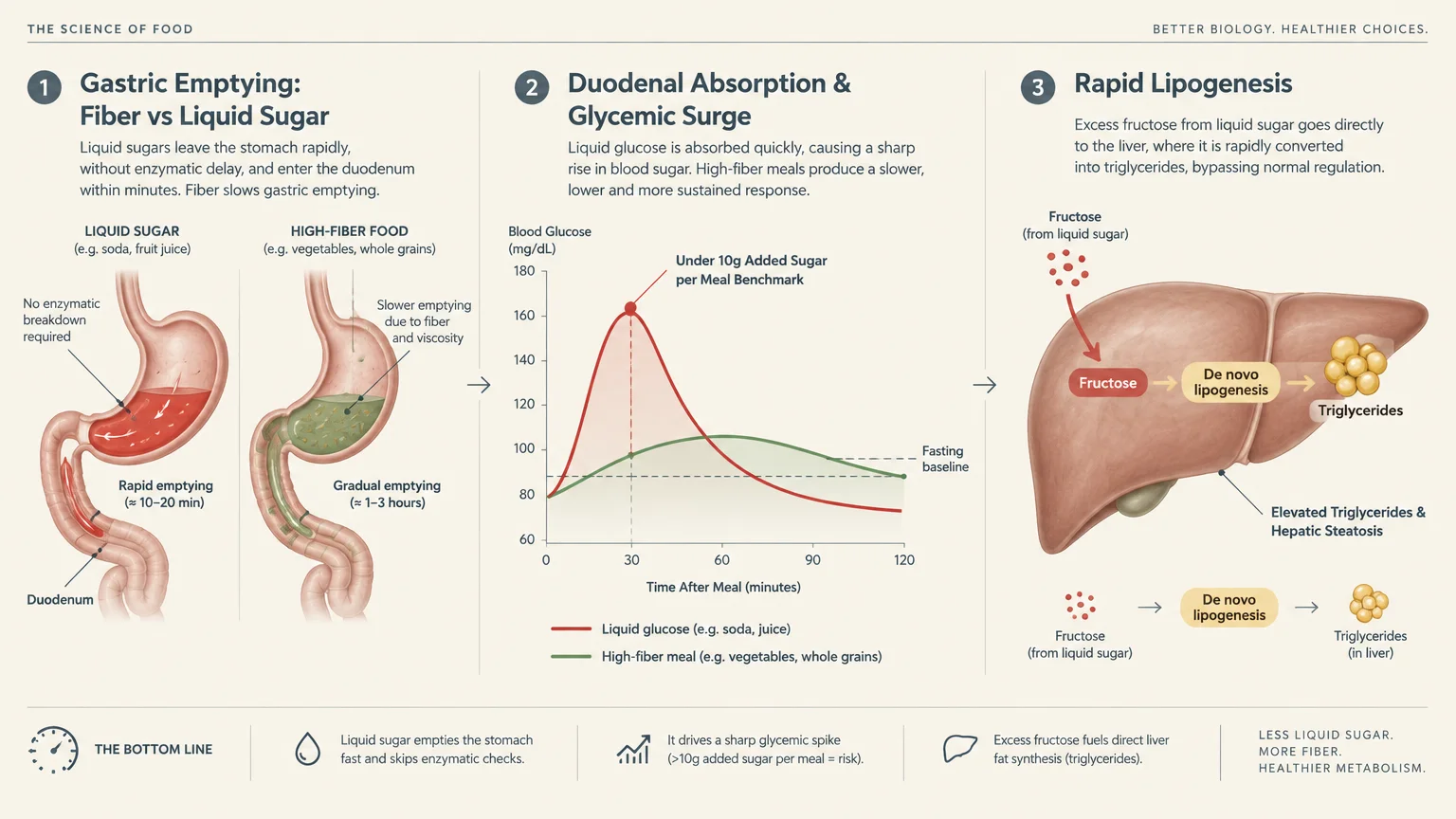
Liquid carbohydrates affect your body differently than solid food. When you consume whole foods, dietary fiber and complex food structures slow down gastric emptying and steady your digestion.
Beverages bypass these natural biological digestive brakes entirely. Liquid sugars rush into your duodenum and absorb rapidly into your bloodstream, triggering sharp spikes in blood glucose and insulin.
According to the 2025–2030 Dietary Guidelines for Americans, no amount of added sugar is recommended or considered part of a healthy diet. The federal benchmark advises keeping added sugar under 10 grams per meal.
Excessive liquid sugar intake forces your liver into rapid lipogenesis, converting surplus fructose directly into triglycerides. Over time, this metabolic process contributes directly to hepatic steatosis, elevated systemic inflammation, and marked insulin resistance.
The U.S. Food and Drug Administration sets the daily value for added sugars at 50 grams for a standard diet. Many single-serving commercial beverages exceed this entire daily allowance in one sitting.
The American Heart Association advises an even stricter threshold. They recommend capping daily added sugars at 36 grams for men and 25 grams for women.
Furthermore, liquid calories register very poorly in the hunger centers of your brain. Hormones like ghrelin remain unsuppressed, meaning you consume substantial surplus energy without feeling remotely full or satisfied.
The Soda Baseline: Setting the Benchmark
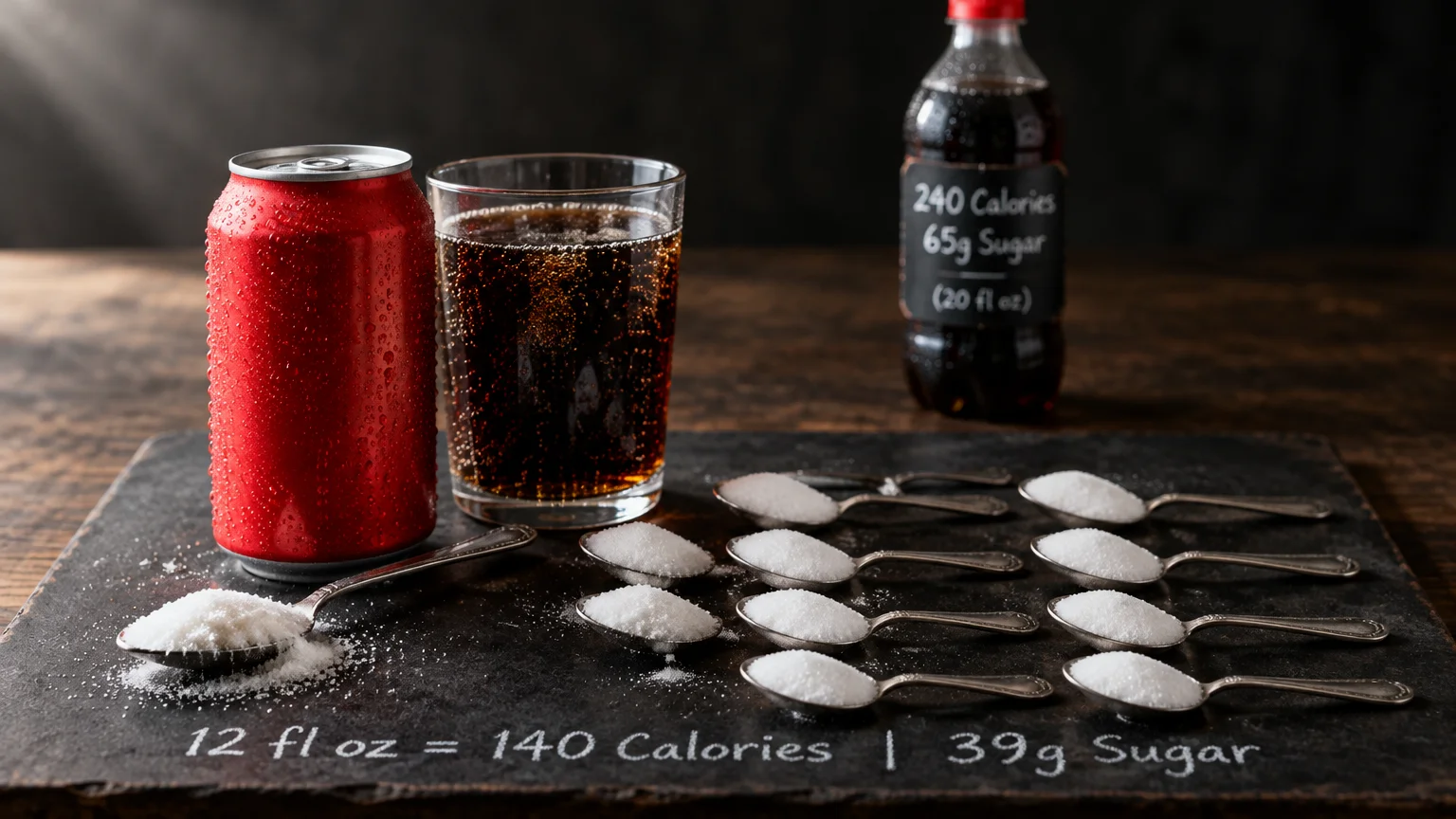
To identify drinks that are worse than soda, you must first establish the nutritional profile of standard carbonated soft drinks. A classic 12-fluid-ounce can of Coca-Cola contains 140 calories and 39 grams of sugar.
That volume equals nearly 10 teaspoons of pure added sweetener entering your system at once. A 12-fluid-ounce can of Pepsi delivers 150 calories and 41 grams of sugar.
When you purchase larger fountain cups or standard 20-fluid-ounce retail bottles, the numbers climb steeply. A 20-fluid-ounce bottle of Coca-Cola packs 240 calories and 65 grams of added sugar.
Soda undeniably offers zero nutritional value; it is essentially liquid candy. Yet, consumers recognize soda as a treat, whereas the following nine drinks masquerade as harmless or health-promoting refreshments.
01 Bottled Green Juices and Commercial Smoothies
Bottled fruit and vegetable purees occupy prime real estate in grocery store produce coolers. Marketers plaster these bottles with pictures of leafy greens, creating an instant health halo that blinds shoppers to the label.
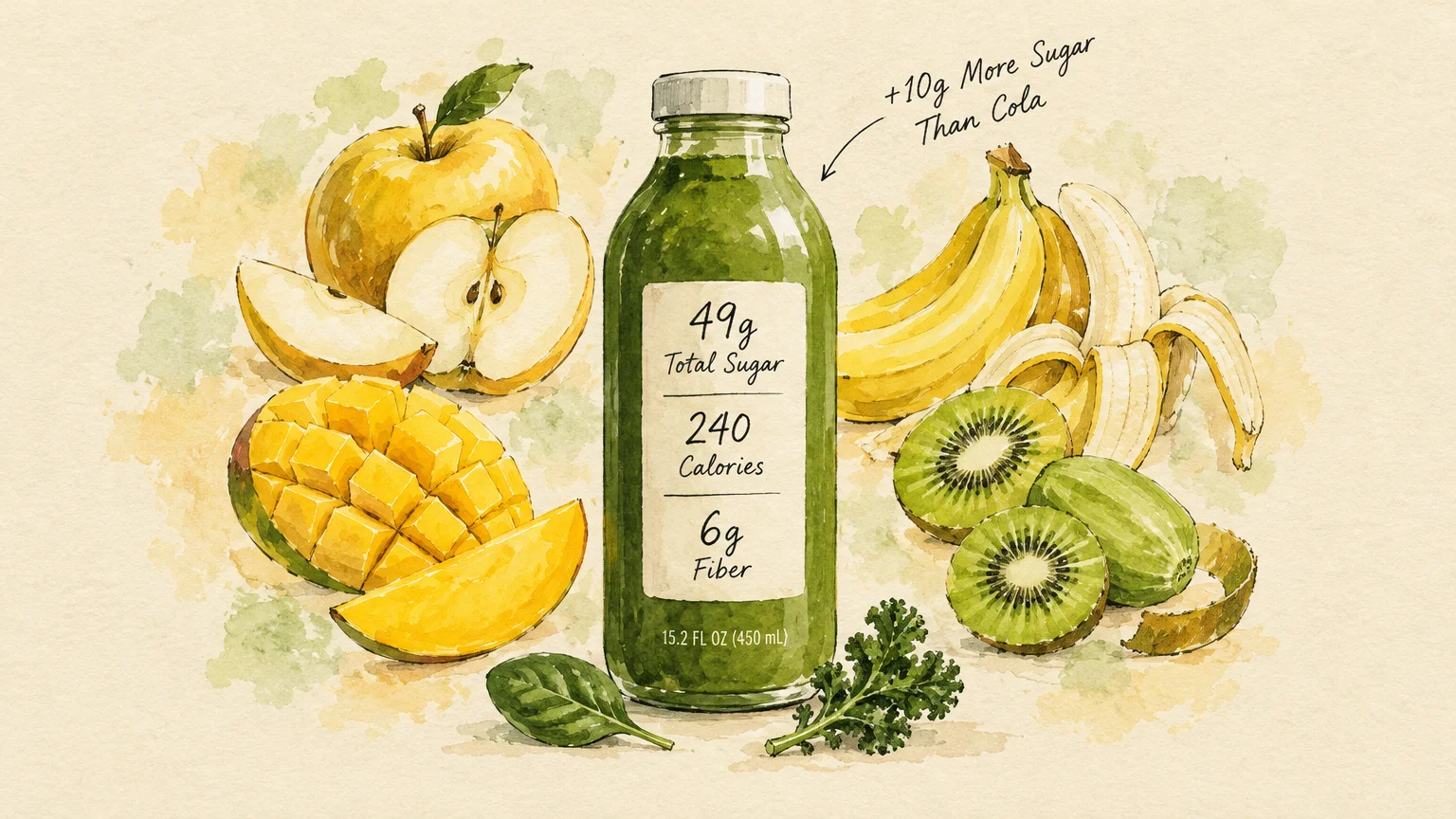
Consider the Naked Juice Green Machine in its popular 15.2-fluid-ounce bottle. This single beverage delivers 240 calories and 49 grams of total sugar alongside just 6 grams of dietary fiber.
Although the product contains no added cane sugar, its primary ingredients are concentrated apple, mango, kiwi, and banana juices. It delivers 10 more grams of sugar than an entire 12-fluid-ounce can of cola.
Stripping fruit down to concentrated juice removes the insoluble structural cellulose that regulates digestion. Your liver processes this deluge of fruit-derived fructose with the exact same metabolic strain as high-fructose corn syrup.
If you want concentrated vegetable nutrition, choose whole foods instead. Blend whole raw baby spinach, frozen berries, unsweetened almond milk, and a scoop of unflavored chia seeds at home to preserve cellular fiber.
02 Blended Frozen Coffee Confections
Coffee starts as a nearly zero-calorie beverage rich in bioactive polyphenolic antioxidants. However, retail coffee chains have transformed daily caffeine rituals into decadent liquid dessert consumption.
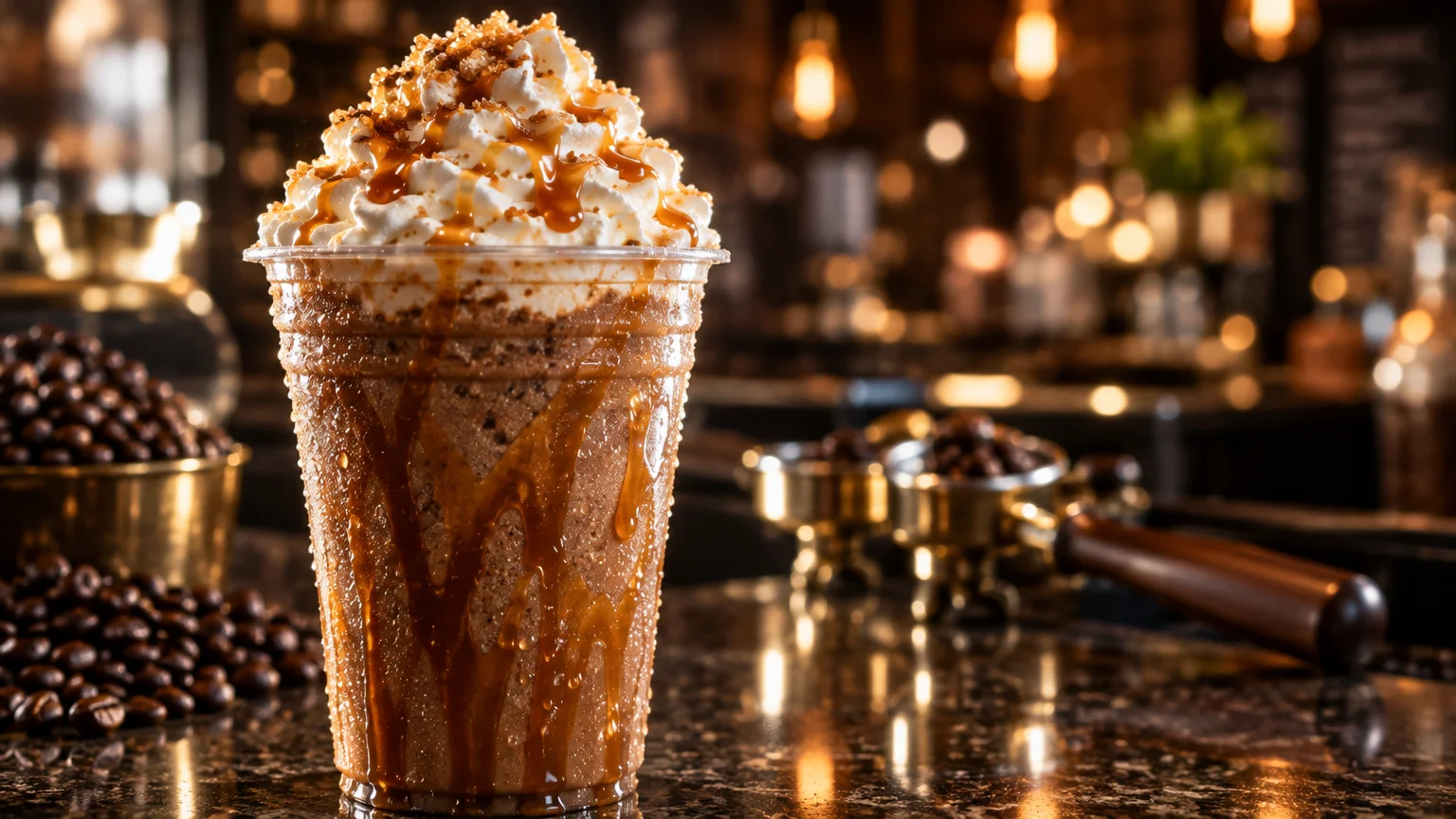
A standard 16-fluid-ounce Starbucks Grande Caramel Frappuccino made with whole milk and whipped cream contains 380 calories. It loads your body with 54 grams of sugar and 15 grams of fat.
If you size up to a 24-fluid-ounce Venti, you ingest 470 calories and 68 grams of sugar. That single morning cup exceeds the sugar content of an entire can of soda by 29 grams.
Combining heavy dairy fats with concentrated simple sugars generates an intense insulin response alongside elevated circulating triglycerides. This specific macronutrient combination promotes rapid fat storage and subsequent energy crashes.
Order a plain cold brew or iced Americano instead. Add a splash of unsweetened oat or dairy milk and a dash of ground cinnamon for aroma without sugar.
03 Commercial Bottled Sweet Teas
Tea contains beneficial catechins and polyphenols associated with cardiovascular health. Unfortunately, commercial bottled sweet tea functions as sweetened water infused with minimal tea extract.
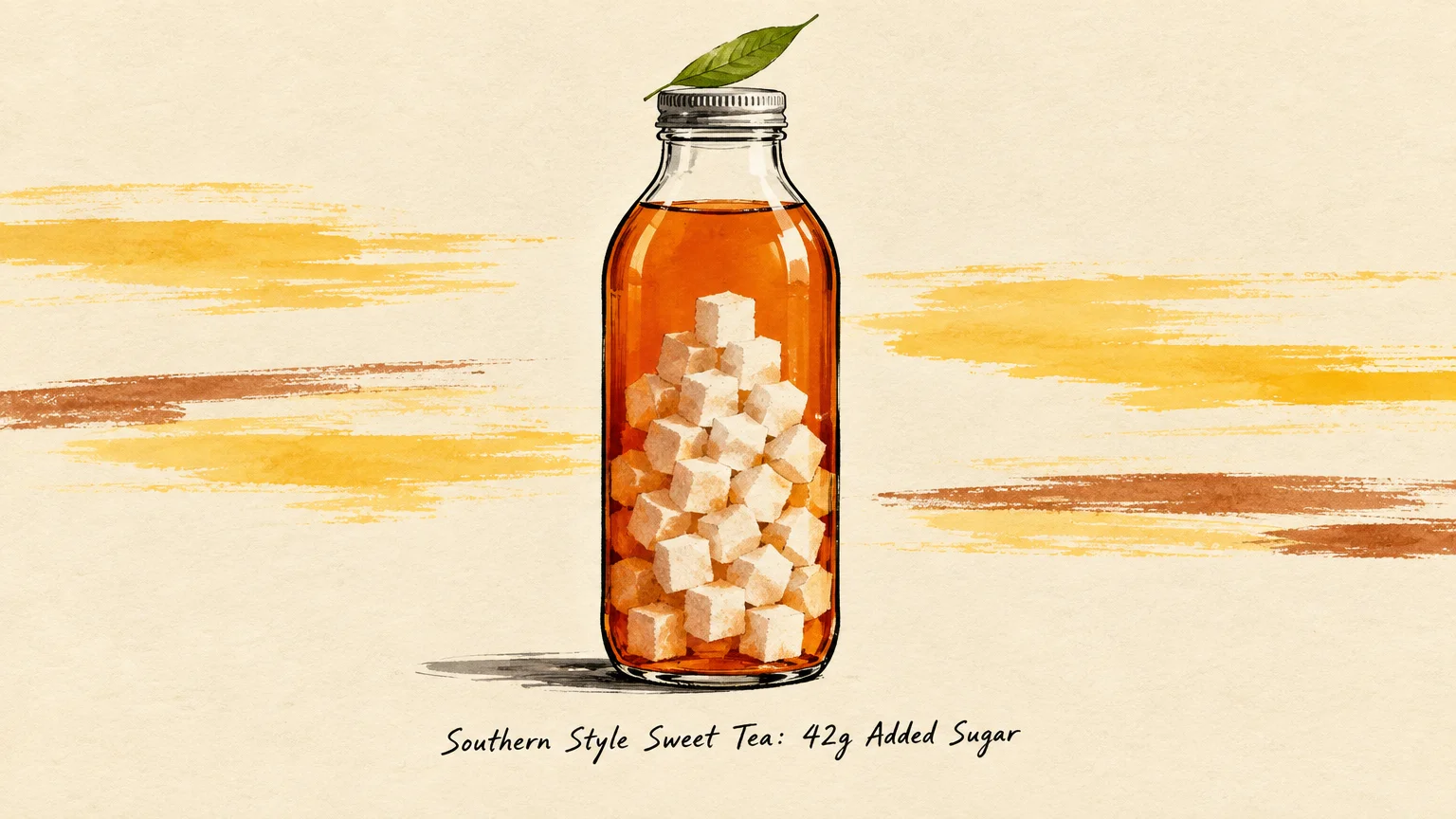
An 18.5-fluid-ounce bottle of Gold Peak Sweet Tea contains 190 calories and 48 grams of added sugar. That bottle supplies 96 percent of your entire recommended daily value for added sugar.
Another ubiquitous convenience store option is the AriZona Lemon Iced Tea 22-fluid-ounce can. Drinking this single can floods your system with 220 calories and 58 grams of added sugar.
The FDA updated labeling rules to prevent high-sugar beverages from sporting healthy nutrient claims. Bottled sweet teas fall far outside these guidelines because their sugar concentrations dwarf standard soda.
Brew your own iced tea at home using loose-leaf black or green tea leaves. Chill the brewed tea in your refrigerator and add fresh lemon wedges or crushed mint leaves for vibrant flavor.
04 High-Octane Energy Drinks
Modern professionals and students frequently turn to energy drinks to power through exhausting work schedules. These beverages combine immense amounts of industrial caffeine with staggering volumes of refined sweeteners.
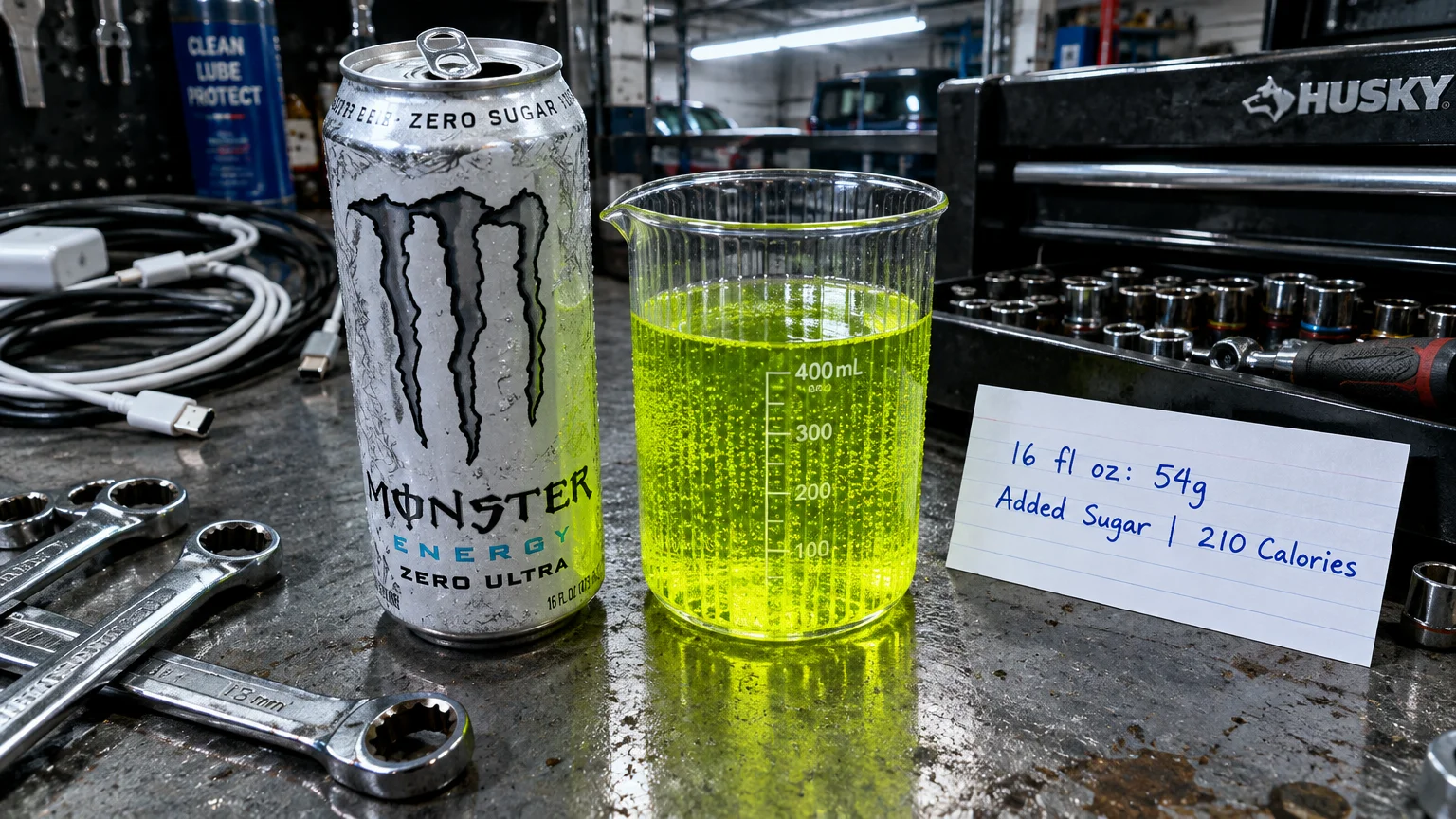
A standard 16-fluid-ounce can of Monster Energy Original Green delivers 210 to 230 calories and 54 grams of added sugar. That single serving represents 108 percent of the daily value for added sugar.
Alongside that sugar load sits 160 milligrams of synthetic caffeine plus herbal stimulants like guarana and panax ginseng. This combination places substantial acute stress on your cardiovascular system.
Data from the Centers for Disease Control and Prevention indicates that regular consumption of energy drinks correlates with elevated blood pressure and irregular cardiac rhythms. The high sugar spike followed by an abrupt caffeine drop leaves you more exhausted than before.
Swap commercial energy drinks for naturally caffeinated alternatives like unsweetened yerba mate or matcha green tea. These beverages provide steady, jitter-free energy along with cellular antioxidants.
05 Bottled and Fountain Lemonades
Lemonade carries a wholesome, nostalgic reputation as a refreshing summertime thirst quencher. People routinely view citrus drinks as lighter and cleaner than dark sodas.
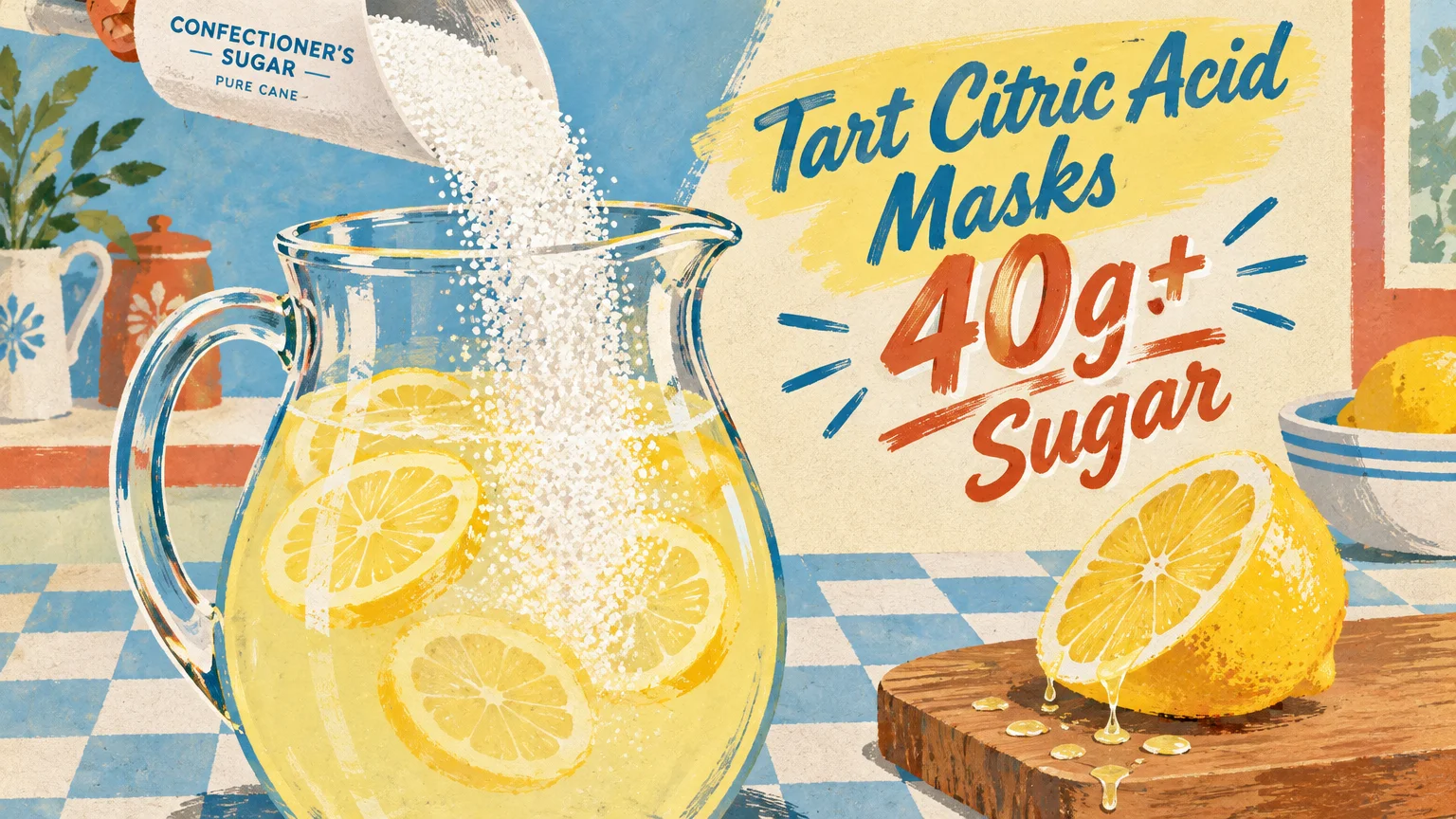
The nutritional reality is far less innocent. A 20-fluid-ounce bottle of Minute Maid Lemonade contains between 260 and 275 calories and 67 to 68 grams of sugar.
That means you drink 67 grams of pure added sugar, equaling 134 percent of your daily value. The bottle actually contains only 5 percent real lemon juice; the remainder is filtered water and high-fructose corn syrup.
The intense natural tartness of citric acid requires manufacturers to dump massive quantities of sweetener into the mix to achieve palatability. Lemonade frequently contains far higher sugar concentrations than the cola sitting beside it on the shelf.
Prepare fresh citrus water by squeezing half a fresh lemon and half a lime into crisp sparkling water. You enjoy refreshing citrus acidity and carbonation with zero grams of sugar.
06 Processed 100% Concord Grape Juice
Juice labels frequently proclaim 100 percent fruit juice with no sugar added. While technically accurate regarding added cane sugar, processed fruit juice remains an intense sugar concentration.
A 16-fluid-ounce bottle of Welch’s 100% Concord Grape Juice contains two standard servings. Drinking the full bottle delivers 280 calories and 72 grams of total sugar with zero fiber.
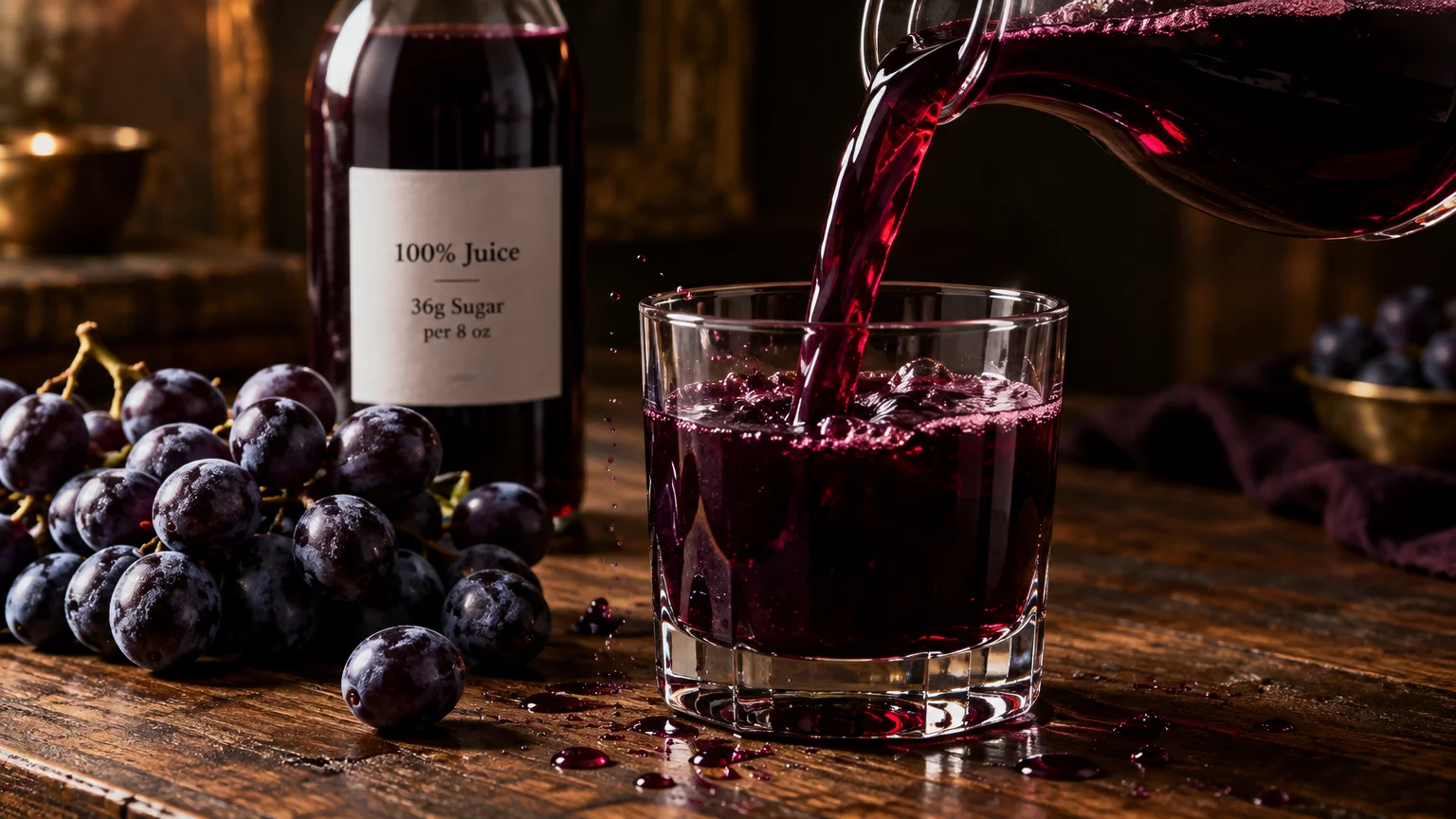
Even a single 8-fluid-ounce glass packs 140 calories and 36 grams of sugar. That small glass holds nearly the same sugar amount as an entire 12-fluid-ounce can of Coke.
The natural sugar in grape juice consists primarily of equal parts glucose and fructose. Consuming this fluid floods your bloodstream without providing the protective skin and pulp nutrients found in table grapes.
Eat a bowl of fresh, crisp whole grapes alongside a glass of cold water instead. The intact dietary fiber slows absorption and triggers appropriate biological satiety signals.
07 Retail Fitness and Meal-Replacement Smoothies
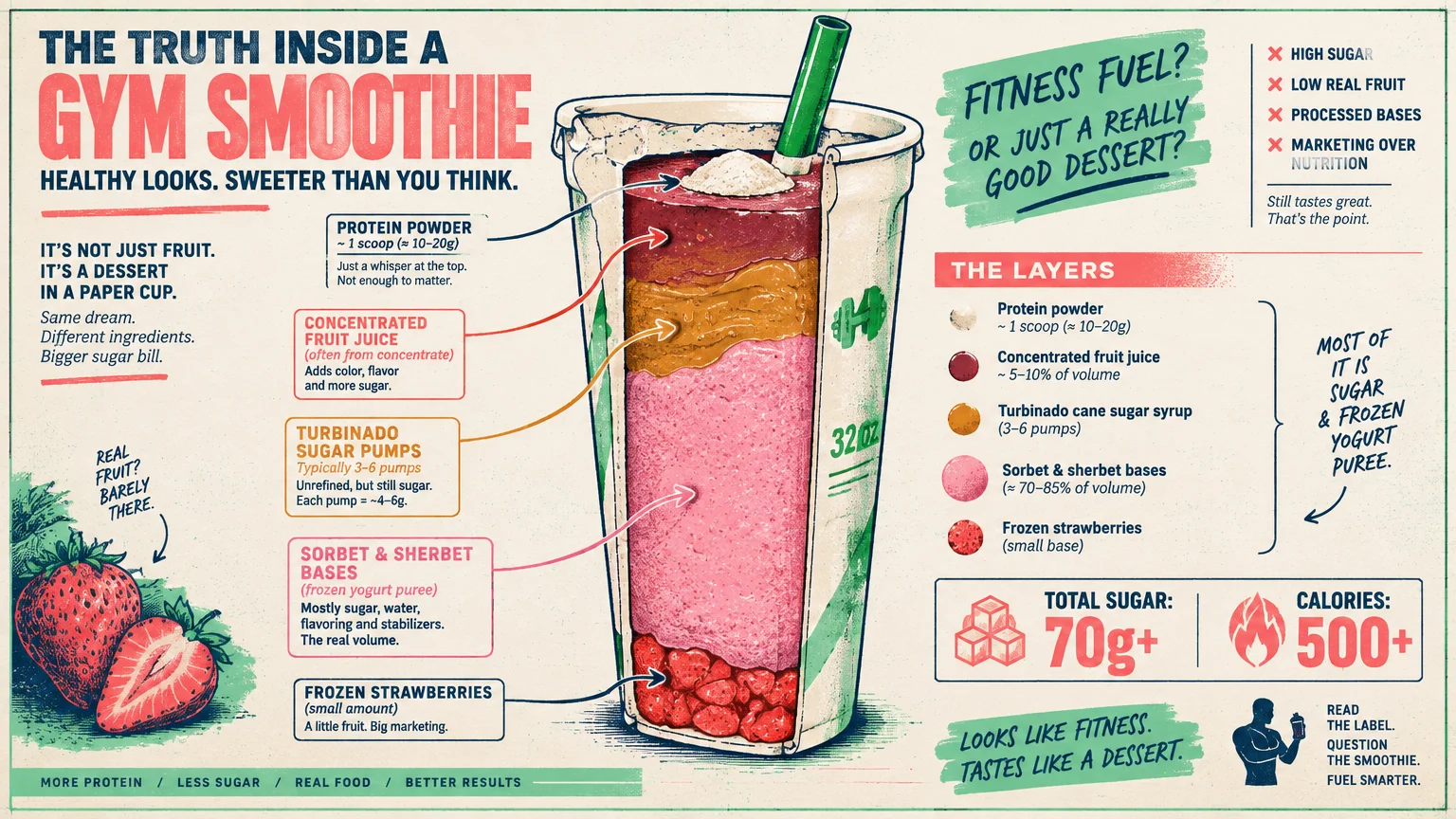
Commercial smoothie shops market their products directly to gym-goers, athletes, and fitness enthusiasts. These enormous drinks are presented as protein-rich fuel designed to aid post-workout muscular recovery.
The Smoothie King “The Hulk” in its small 20-fluid-ounce size provides between 700 and 840 calories. It packs 90 to 115 grams of total sugar and 22 to 32 grams of dietary fat.
The ingredients reveal why: recipes often include butter pecan ice cream and heavy measures of turbinado cane sugar. The large 32-fluid-ounce size climbs to 1,580 calories and 200 grams of total sugar.
Drinking one of these blends after an exercise session completely erases your caloric deficit while overwhelming your insulin sensitivity. It functions as an oversized milkshake branded as athletic nourishment.
Make your post-workout drink at home to maintain total quality control. Blend plain whey or pea protein isolate with water, unsweetened almond milk, half a banana, and organic peanut butter.
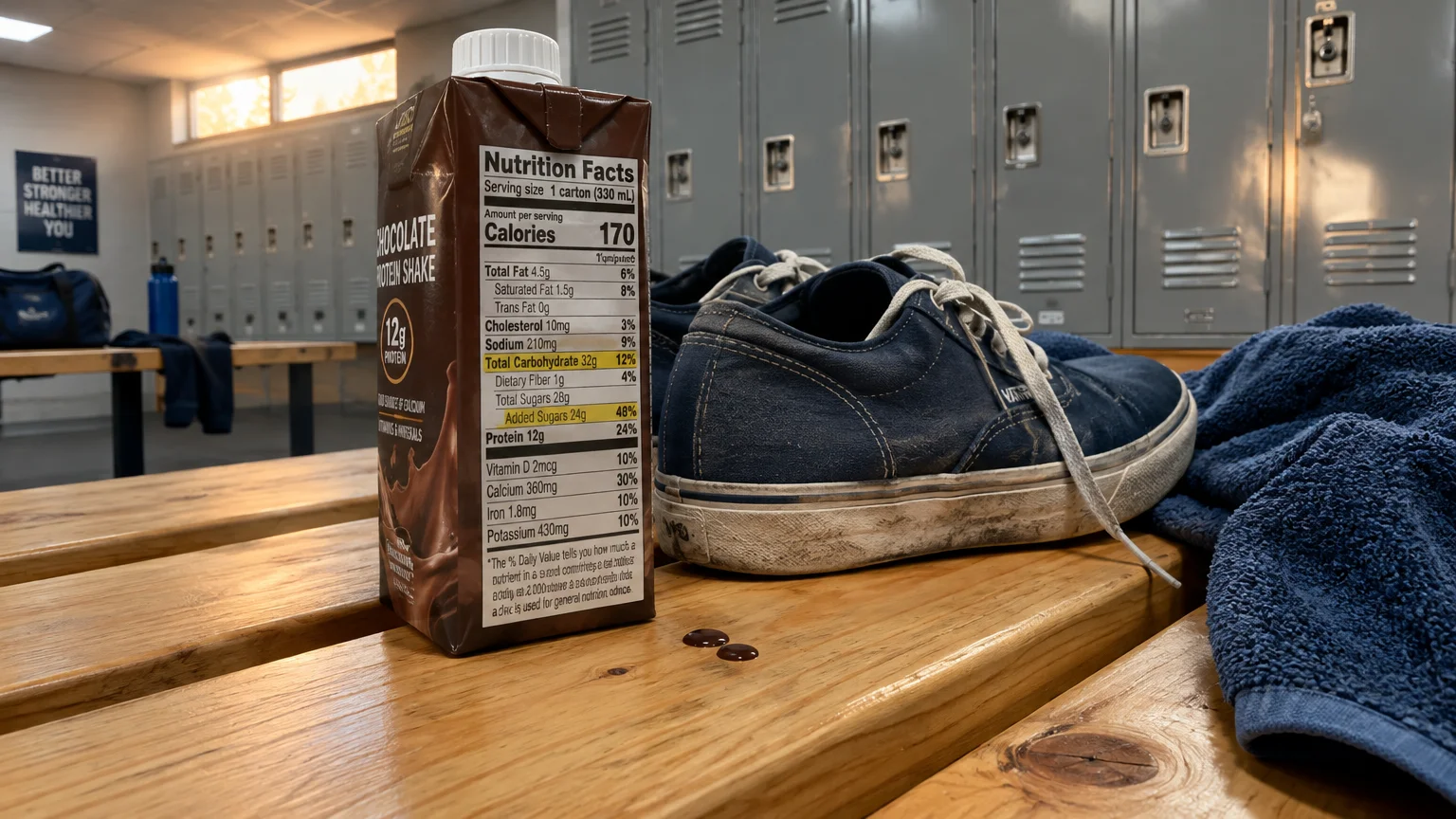
08 Pre-Packaged Sweetened Protein Shakes
Ready-to-drink protein beverages sit prominently inside convenience store refrigerated cases. Busy individuals grab them for a fast, perceived healthy breakfast or midday snack replacement.
A 15.2-fluid-ounce bottle of Bolthouse Farms Protein Plus Chocolate provides 400 calories and 30 grams of protein. However, it also delivers 50 grams of total sugar.
That volume includes 37 grams of added cane sugar, representing 74 percent of your daily value limit. You end up drinking more added sweetener than muscle-repairing protein.
Consuming high-sugar dairy beverages causes rapid glycation, where circulating sugars bind to functional proteins and elevate systemic inflammatory markers. The excess sugar blunts the metabolic benefits of your protein intake.
Select clean, third-party tested protein powders that contain zero added sugars. Mix the powder in a shaker bottle with cold water or unsweetened soy milk for clean, muscle-sparing nutrition.
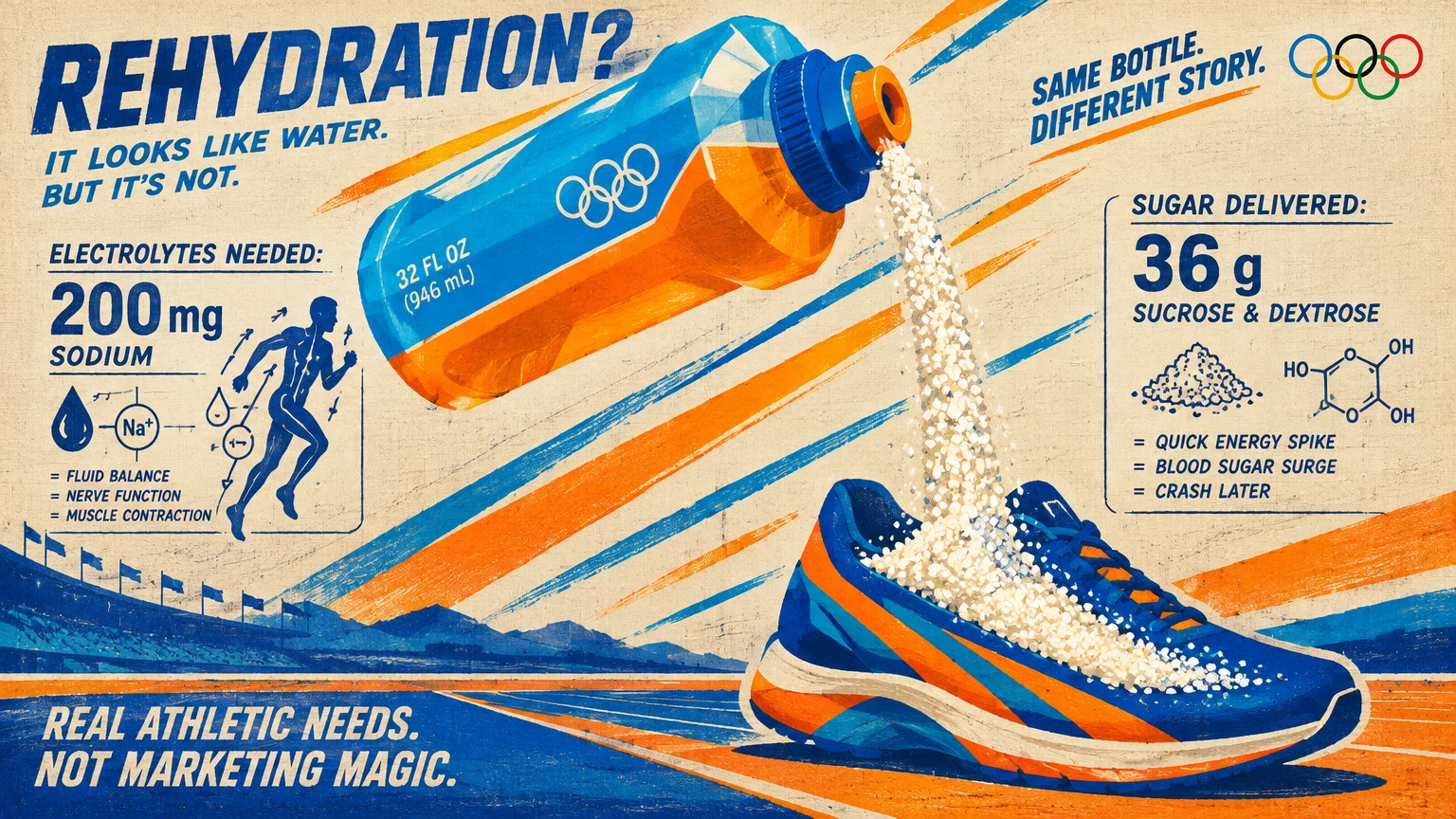
09 Commercial Sports Drinks and Enhanced Waters
Sports drinks and vitamin-enhanced waters enjoy a persistent reputation as essential daily hydration tools. Millions of sedentary individuals drink them at office desks or during casual neighborhood walks.
A standard 20-fluid-ounce bottle of Gatorade Thirst Quencher delivers 140 calories and 34 to 36 grams of added sugar. It also introduces artificial dyes like Red 40, Blue 1, or Yellow 5 into your system.
Similarly, a 20-fluid-ounce bottle of Glacéau Vitaminwater contains 100 calories and 27 grams of added sugar. That sweetener consists primarily of crystalline fructose and refined cane syrup.
These beverages are engineered for endurance athletes engaged in continuous, high-intensity exercise exceeding 90 minutes. When consumed during low-activity routines, they cause unnecessary glycemic spikes without providing meaningful muscular glycogen replenishment.
Stay hydrated during typical daily activities using clean tap or filtered mineral water. If you need electrolytes after moderate exercise, add a pinch of unrefined sea salt and fresh lemon juice to your water.
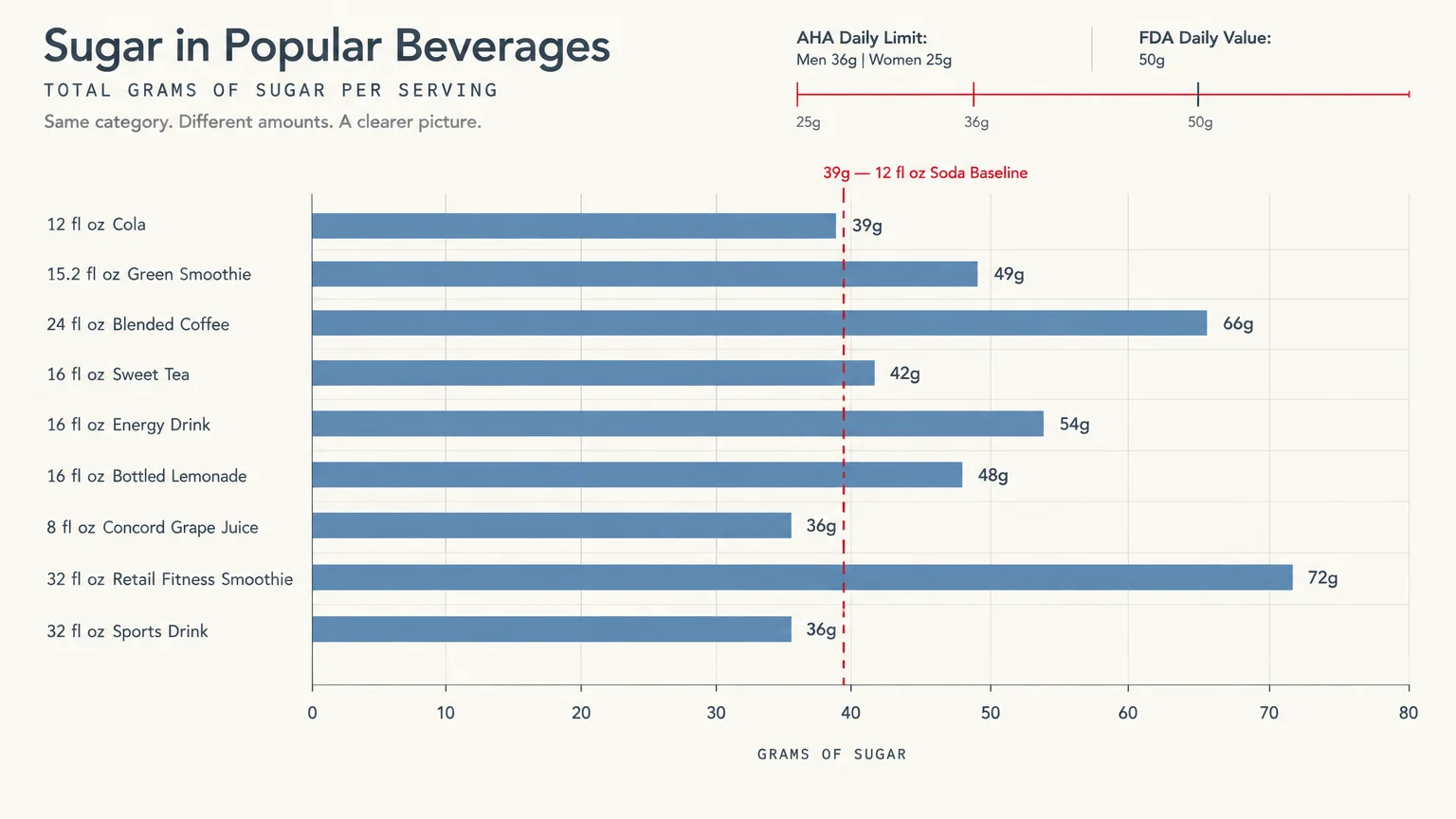
Nutritional Comparison: The Numbers at a Glance
Examining these beverages side by side illuminates how dramatically commercial drinks surpass standard soda. When you review the exact numbers, marketing claims quickly lose their persuasive power.
A 12-fluid-ounce can of Coca-Cola sits at 140 calories and 39 grams of added sugar. A 16-fluid-ounce Welch’s Concord Grape Juice supplies 280 calories and 72 grams of total sugar.
The 20-fluid-ounce Minute Maid Lemonade packs 275 calories and 67 grams of added sugar. An AriZona Iced Tea 22-fluid-ounce can delivers 220 calories and 58 grams of sweetener.
The 16-fluid-ounce Starbucks Caramel Frappuccino hits 380 calories and 54 grams of sugar. Even a 15.2-fluid-ounce Naked Juice Green Machine delivers 240 calories and 49 grams of sugar.
These comparisons demonstrate that skipping the soda fountain offers no benefit if you choose bottled teas, juices, or specialty coffees instead. You must read labels carefully to protect your health.
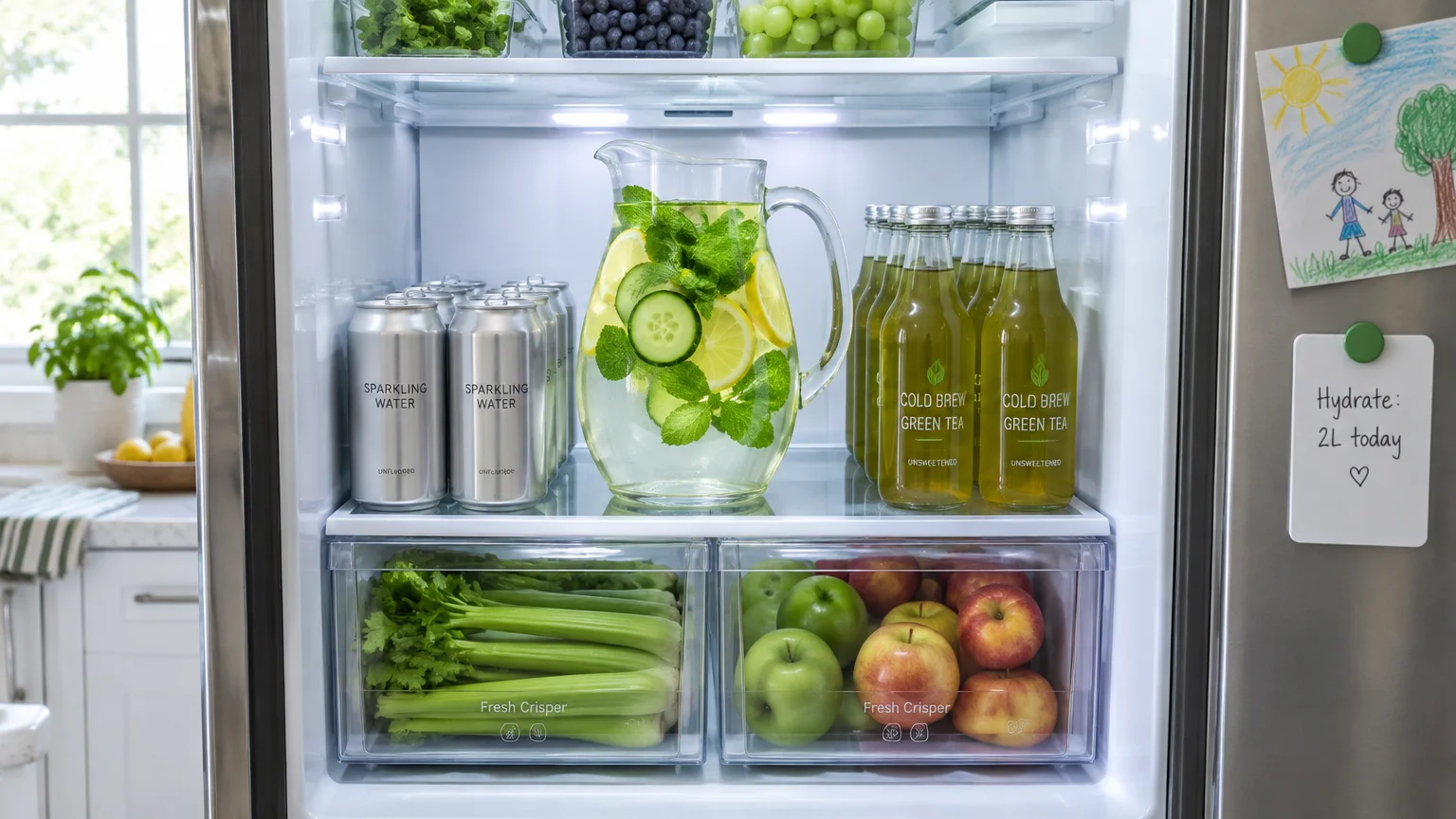
Pillar 1: Meal Planning and Beverage Environment Setup
Transforming your hydration habits begins with auditing your physical home and work environments. You cannot consume beverages that you refuse to purchase and store in your pantry or refrigerator.
Stock your kitchen with large glass carafes filled with filtered cold water. Drop sliced cucumbers, fresh crushed berries, or rosemary sprigs into the water to provide natural flavor infusions.
Keep unsweetened seltzer waters prominently displayed at eye level inside your refrigerator. The carbonation satisfies the sensory craving for fizzy soda without delivering unwanted liquid sugar.
Pack a reusable, insulated stainless steel water bottle whenever you leave your home. Having icy, pure water on hand prevents impulsive convenience store beverage purchases when thirst strikes during your commute.
Plan your daily coffee consumption before arriving at retail cafes. Decide in advance to order espresso or black coffee with a splash of milk, completely bypassing seasonal specialty syrups.
Pillar 2: Nutrient Density and Label Literacy
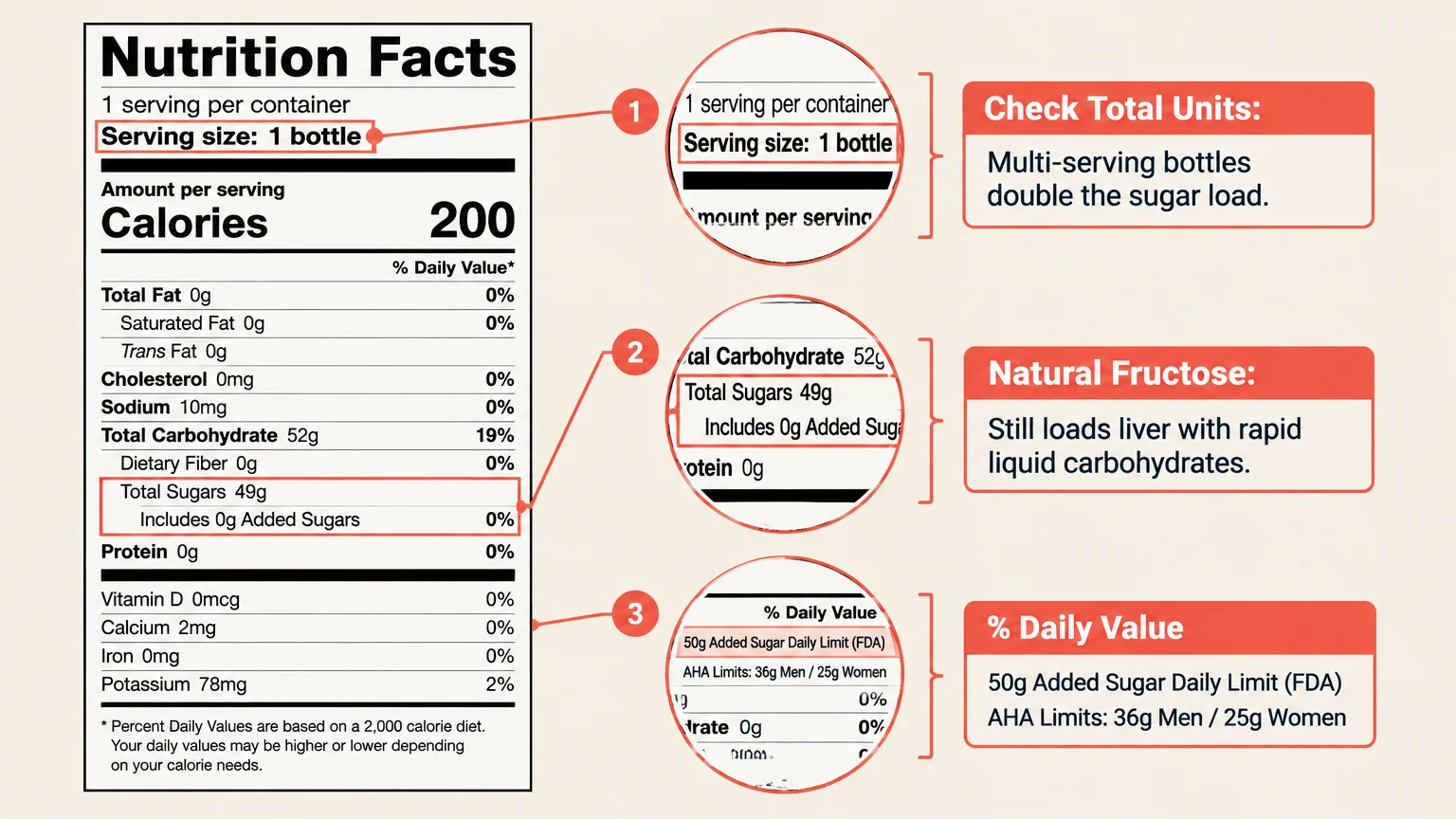
Mastering the Nutrition Facts label empowers you to spot disguised liquid sugars instantly. Never rely on front-of-package marketing slogans like “all-natural,” “antioxidant-rich,” or “made with real fruit.”
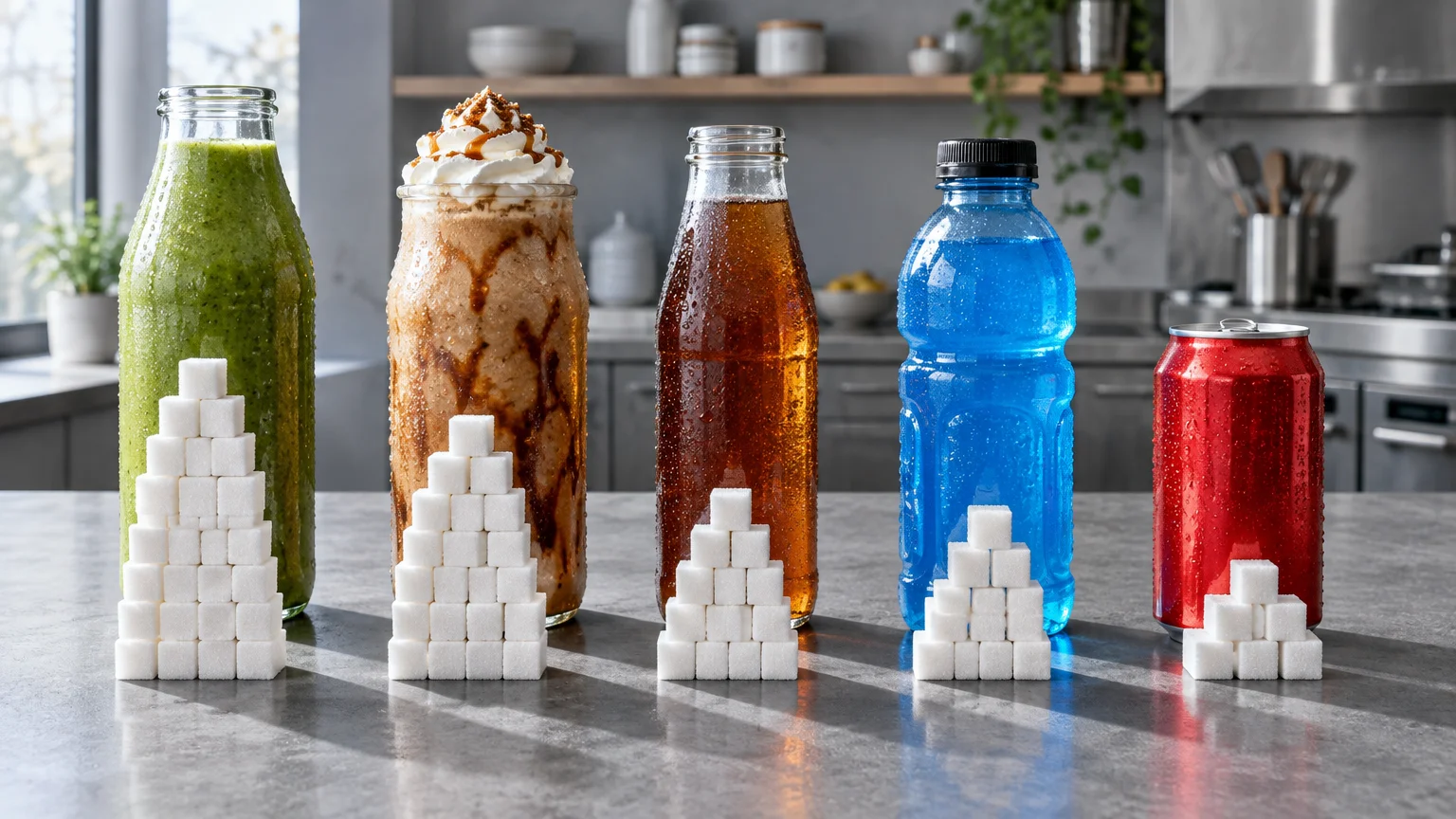
Flip the container around and examine the line marked Added Sugars immediately. Remember that 4 grams of sugar equals approximately one level teaspoon of granulated sugar.
When you see a beverage containing 48 grams of added sugar, visualize 12 full teaspoons of table sugar dumped into that glass. This mental visualization instantly recalibrates your perception of the product.
Inspect the ingredient list for hidden alternative names for industrial sugar. Ingredients like cane syrup, agave nectar, crystalline fructose, brown rice syrup, and fruit juice concentrate all function identically inside your liver.
Prioritize beverages that offer legitimate micronutrients alongside structural dietary fiber. If a beverage contains 40 grams of carbohydrates and zero grams of fiber, leave it on the grocery shelf.
Pillar 3: Sustainable Habit Formation
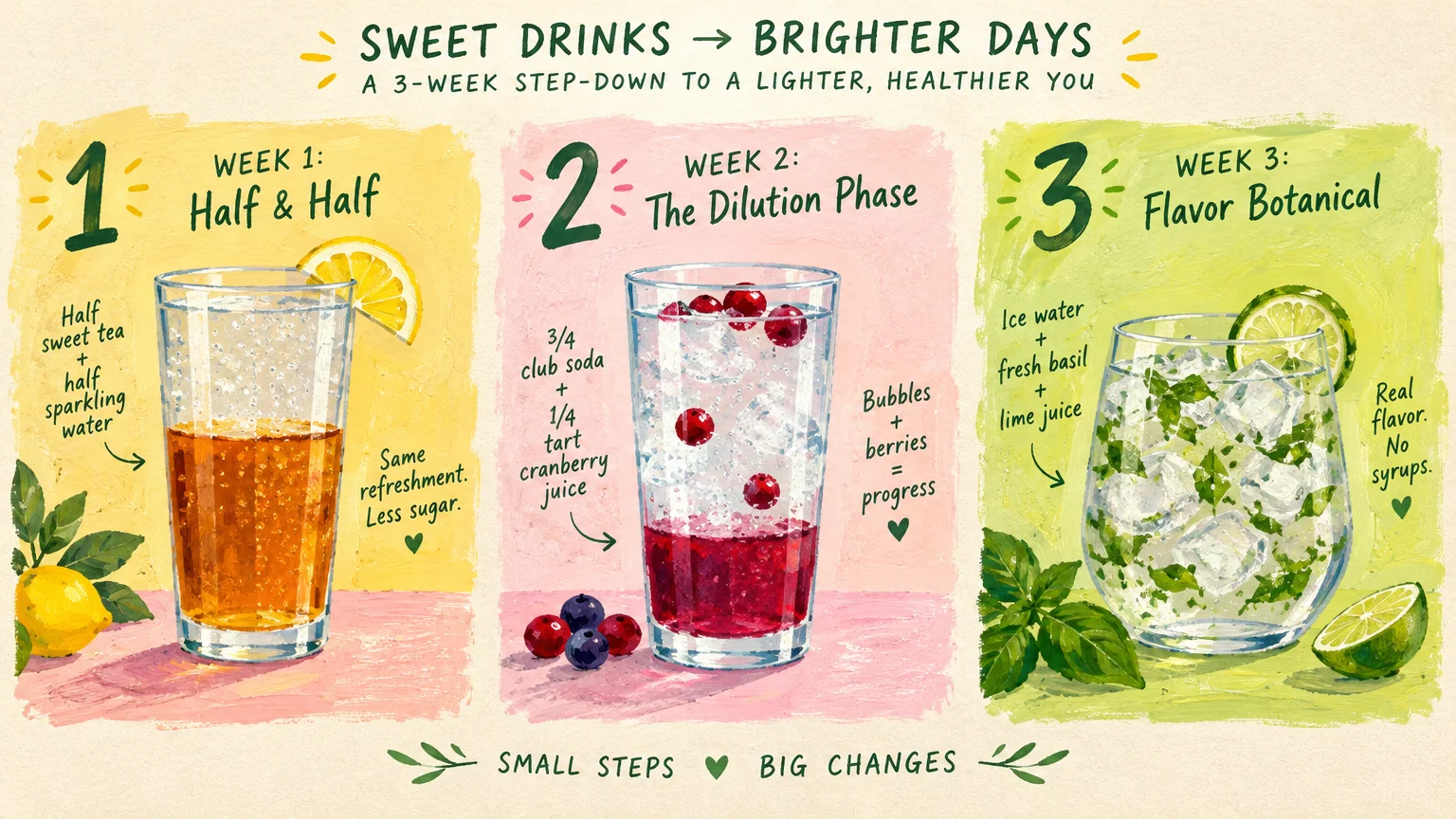
Abruptly eliminating all sweetened beverages often triggers sensory deprivation and intense psychological cravings. Sustainable dietary modification requires gradual, methodical palate desensitization over several weeks.
If you currently drink two sweet teas daily, start by cutting them half-and-half with unsweetened brewed tea. This immediate step reduces your sugar intake by 50 percent while maintaining familiar flavor.
Gradually adjust the ratio over three weeks until your taste buds adapt to fully unsweetened iced tea. Your oral sweetness receptors recalibrate surprisingly fast when given consistent opportunities to adjust.
Tie your water intake to existing daily habits through simple behavioral habit stacking. Drink one full 8-ounce glass of water immediately after brushing your teeth each morning.
Drink another tall glass of water before opening your lunch container at midday. Connecting hydration directly to pre-existing routines eliminates the cognitive burden of remembering to drink.

Clinical Perspectives and Real-World Strategies
Registered dietitians continually encounter clients who struggle with weight plateaus despite eating meticulously clean meals. In clinical practice, unmeasured liquid calories almost always explain these puzzling stalls.
A single blended coffee beverage or commercial smoothie can quietly erase an entire day’s hard-won caloric deficit. Patients rarely remember liquid consumption when recalling their daily food intake.
Physicians specializing in hepatology and preventive cardiology echo these critical clinical observations. Non-alcoholic fatty liver disease now affects substantial portions of the population, driven primarily by liquid fructose intake.
When patients replace commercial juices and energy drinks with sparkling water and herbal infusions, clinical markers shift rapidly. Fasting serum insulin, liver transaminases, and resting triglycerides consistently improve within weeks.
Community health workers emphasize that health-seeking behavior often drives these drink choices. People spend extra money buying green juices believing they are improving their wellness, unaware of the metabolic consequences.
Safety Considerations and Personalized Needs
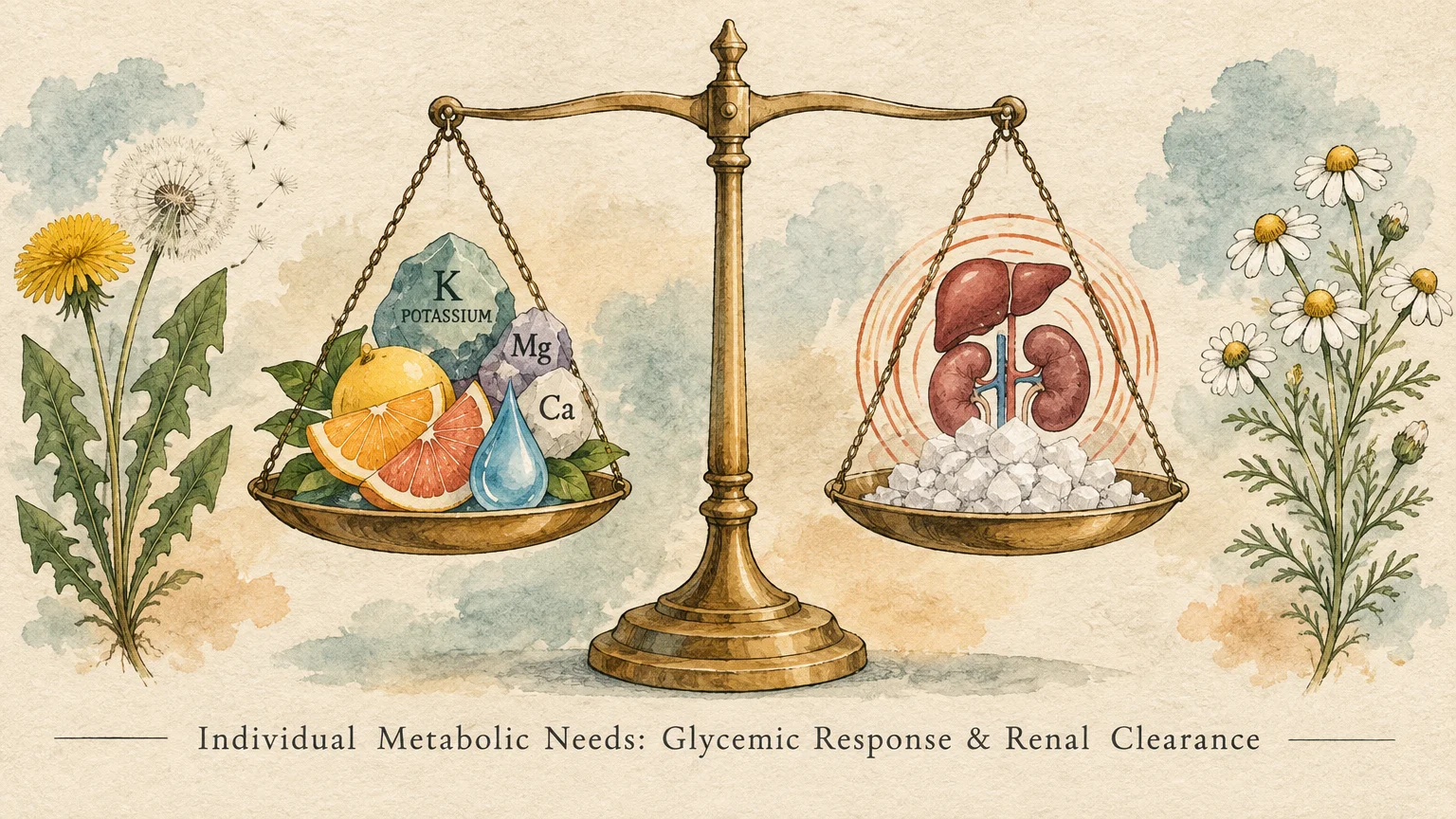
Certain demographic groups face heightened metabolic risks from consuming high-sugar beverages. Individuals diagnosed with type 1 or type 2 diabetes must monitor liquid carbohydrate intake with extreme vigilance.
Liquid sugars rapidly spike blood glucose levels, overwhelming standard insulin doses and creating dangerous glycemic variability. Rapid glucose swings damage sensitive microvascular networks in your kidneys, eyes, and extremities.
The updated dietary guidelines urge parents to prevent children from consuming any added sugars until age 10. Pediatric sugar consumption sets early biological trajectories for childhood obesity, dental cavities, and pediatric liver disease.
Endurance athletes competing in prolonged ultra-marathons represent an exception to typical liquid carbohydrate guidelines. During extreme physical exertion lasting several hours, working muscles utilize simple sugars rapidly without requiring insulin mediation.
Always consult your primary physician or a registered dietitian before making radical dietary changes if you manage chronic renal disease or congestive heart failure. These specific clinical conditions require carefully monitored fluid and electrolyte restrictions.
Frequently Asked Questions
Isn’t 100 percent fruit juice healthier than soda because it provides vitamins?
While 100 percent fruit juice provides small amounts of vitamin C and potassium, your liver processes its high sugar content identically to soda. Whole fruit contains natural fiber that moderates absorption, whereas juice delivers pure liquid fructose directly to your bloodstream.
What should I drink for hydration during standard gym workouts?
Plain filtered water provides optimal hydration for workouts lasting under 60 minutes. Commercial sports drinks are designed exclusively for prolonged, intense endurance exercise exceeding 90 minutes.
If you sweat heavily, add a pinch of salt to your water bottle.
Are zero-calorie artificially sweetened drinks a safe alternative to soda?
Diet drinks eliminate sugar and caloric load, making them a helpful short-term bridge away from sugar-sweetened beverages. However, plain water, seltzer, and unsweetened teas remain superior long-term choices because artificial sweeteners can maintain your psychological preference for intense sweetness.
How can I order coffee at a cafe without getting hidden sugar?
Order a simple drip coffee, cold brew, or Americano, and request that the barista omit all flavored syrups and sugar bases. Add your own splash of whole milk, unsweetened almond milk, or half-and-half, and dust the foam with unsweetened cocoa or cinnamon powder.
Your Next Steps: The 24-Hour Beverage Audit
Transforming your health does not require overwhelming overhauls of every meal today. Start by taking one definitive, practical action within the next 24 hours.
Log every single liquid you consume over the coming day, noting the exact grams of sugar on the label. Pay special attention to your morning coffee order, lunchtime beverage, and afternoon energy refresher.
Identify the single highest-sugar drink in your daily routine and swap it for a vibrant, unsweetened alternative. Replace that bottled tea, fruit juice, or specialty coffee with unsweetened seltzer infused with fresh citrus.
This single deliberate adjustment eliminates dozens of grams of damaging liquid sugar from your daily diet. Your energy will stabilize, your metabolic health will improve, and your body will thank you.