You do not need to pay top dollar for famous national brands to eat wholesome, nourishing meals. High-quality store brands at Kroger and Aldi routinely match or outperform national names in both ingredient purity and overall value.
Making the switch frees up crucial room in your monthly budget while protecting your heart, blood sugar, and bone strength. Thoughtful reformulations and strict manufacturing standards mean your dollar delivers genuine nutrition in every aisle.
Learning how these store lines compare to legacy brand names helps you shop with confidence and protect your hard-earned money.
Why store brands dominate today’s grocery cart
Rising grocery costs have fundamentally reshaped how Americans stock their kitchens; brand loyalty has taken a backseat to real shelf value. Choosing house lines no longer means settling for inferior textures, artificial fillers, or watered-down flavors.
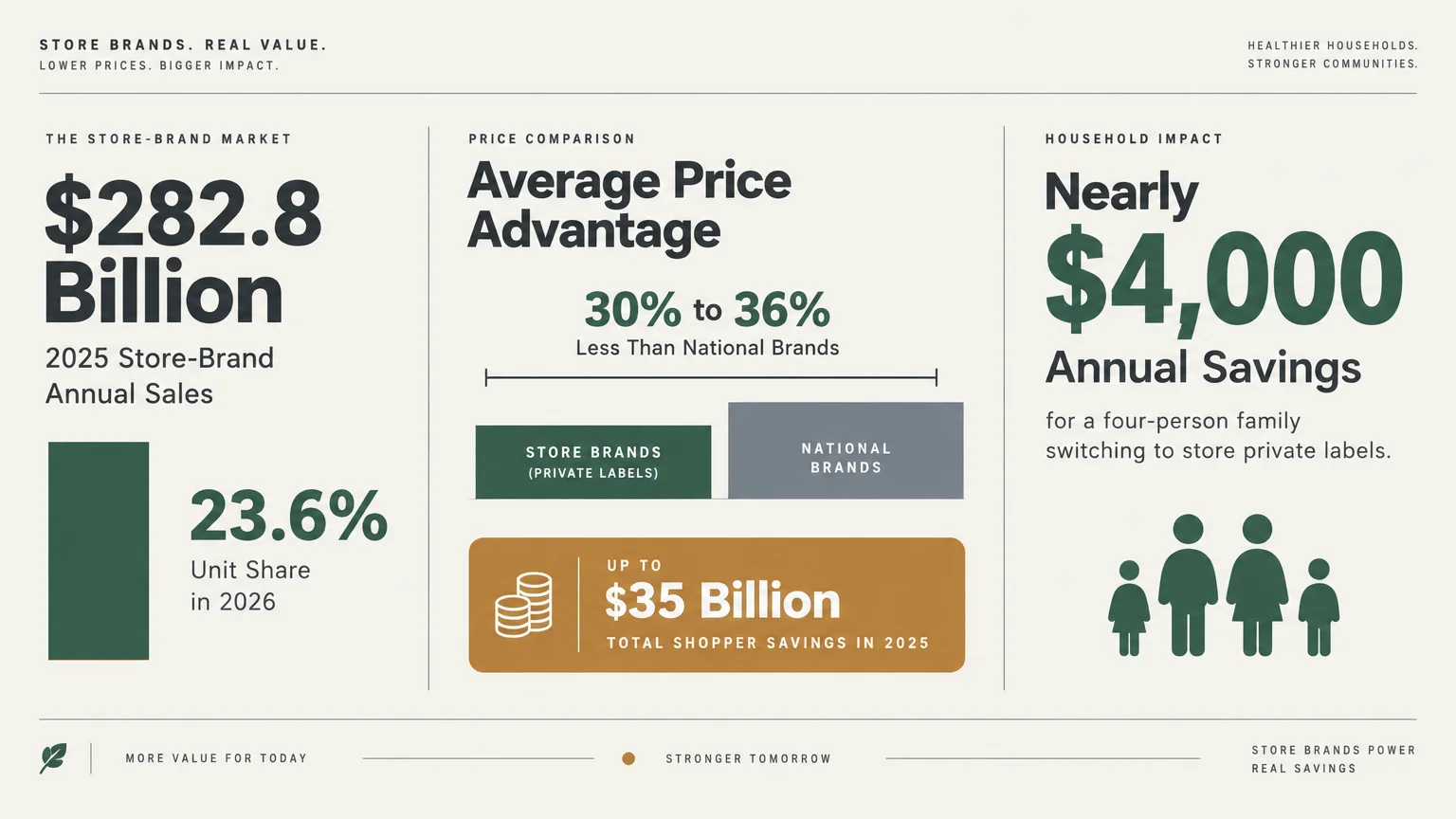
According to the Private Label Manufacturers Association 2026 Private Label Report, store-brand sales reached a record 282.8 billion dollars in 2025. That performance secured an unprecedented 21.3 percent dollar share and a 23.5 percent unit share across American supermarkets.
Momentum accelerated further through the first nine reporting periods of 2026, when store-brand unit share rose to 23.6 percent. Nearly one in every four grocery items rolling across domestic checkout belts now bears a store brand.
PLMA calculations revealed that shoppers saved approximately 35 billion dollars in 2025 alone simply by choosing store brands over national competitors. That financial margin provides vital breathing room when you live on a fixed retirement income.
Aldi documented similar pocketbook relief in its 2026 ALDI Price Leadership Report, released on August 28, 2026. The findings showed that consumers save up to 22 percent by purchasing Aldi private labels instead of competitor store brands.
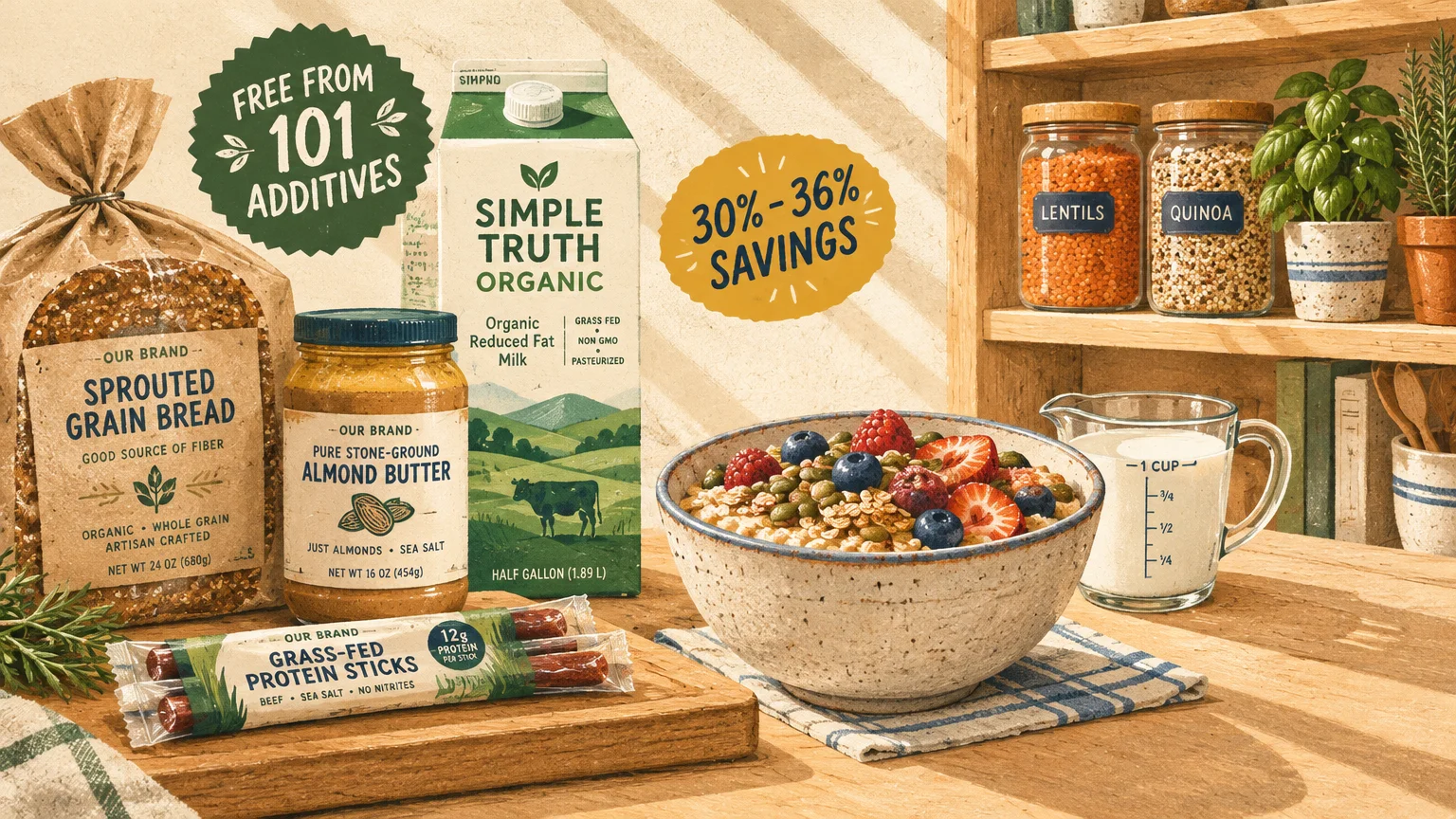
That report also calculated that Aldi store brands cost 30 percent to 36 percent less than traditional supermarket name brands. Making that shift saves a four-person household nearly 4,000 dollars annually—savings that benefit smaller households just as dramatically.
01 Kroger Simple Truth: Clean staples and high-protein nutrition
Kroger launched Simple Truth to offer accessible organic and wellness groceries without specialty store markups. The brand now spans more than 1,500 items, giving you affordable, clean-label alternatives in virtually every department.
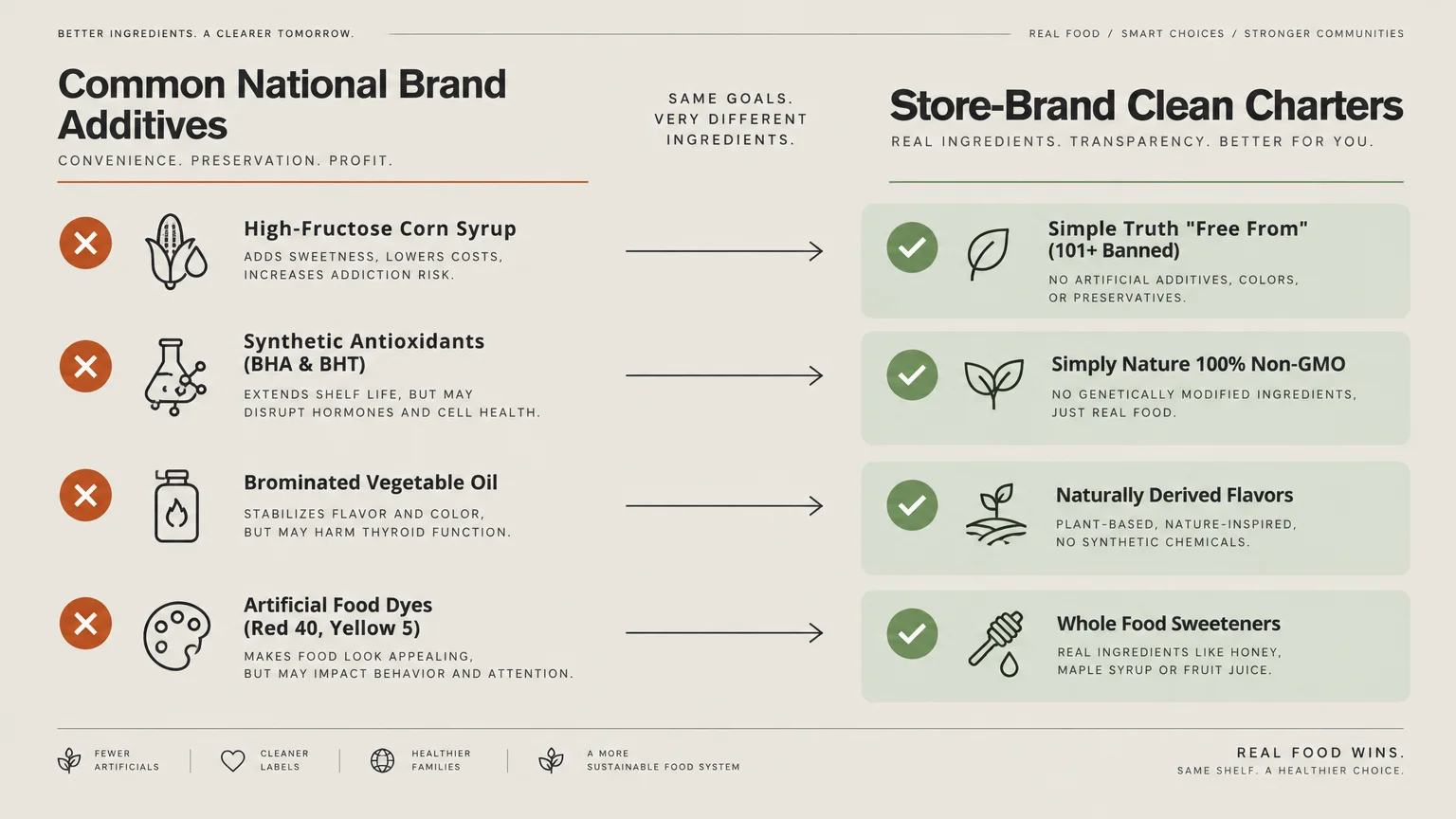
Every product carrying the Simple Truth mark complies with Kroger’s strict “Free From” charter. This internal standard guarantees the food contains none of over 101 artificial preservatives, synthetic dyes, artificial flavors, or processed additives.
Simple Truth explicitly bans high-fructose corn syrup, brominated vegetable oil, and synthetic antioxidants like BHA and BHT. National brand condiments, dressings, and cereals still routinely contain these questionable stabilizers to extend warehouse shelf life.
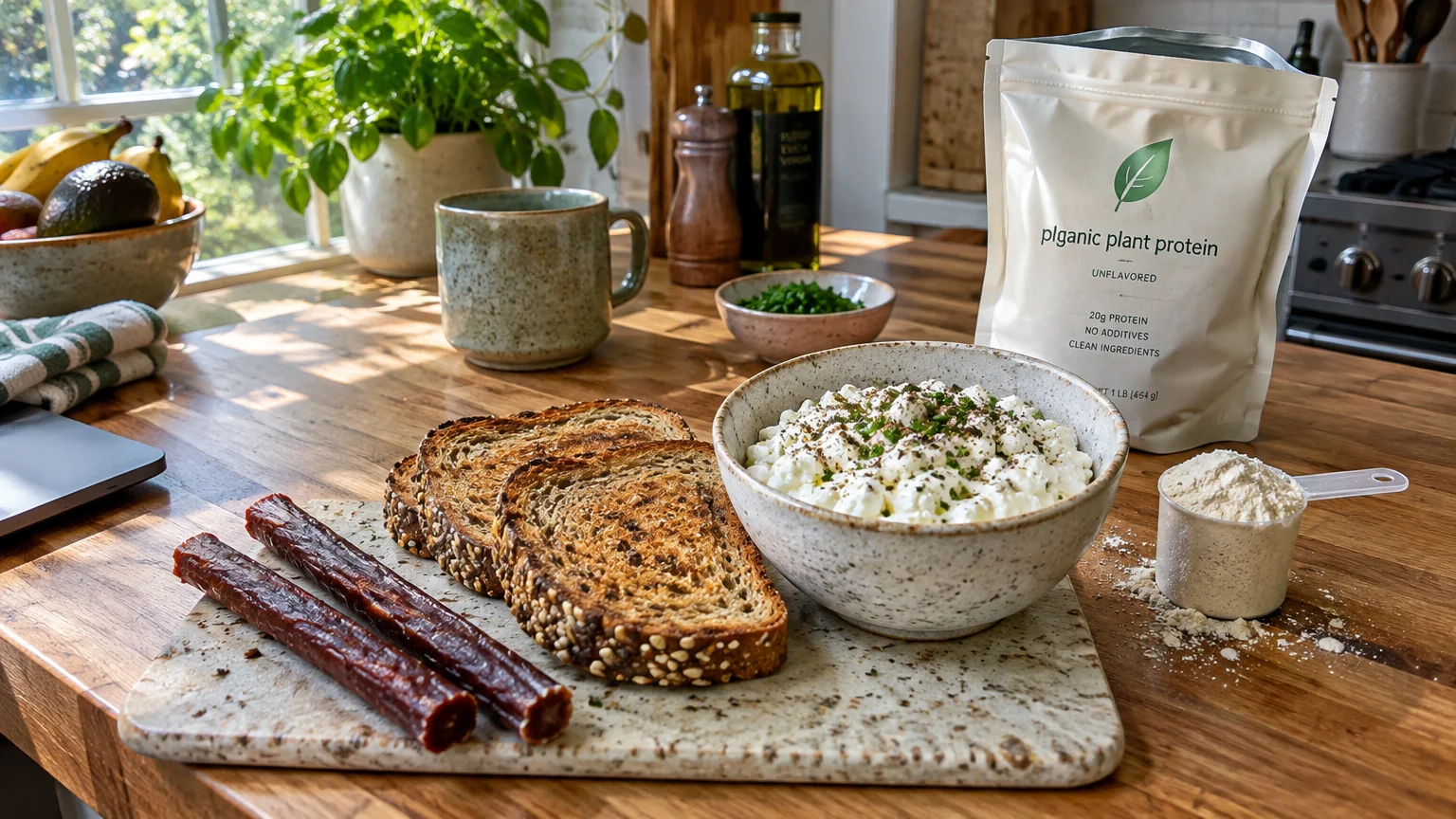
In January 2026, Kroger expanded its dedicated Simple Truth Protein line by introducing 24 new items. This launch brought the sub-brand to more than 110 clean-label, protein-dense options, including high-protein cereals and grass-fed beef sticks.
Maintaining adequate protein intake becomes essential as you age; it directly preserves muscle mass and mobility. Getting 25 to 30 grams of protein per meal prevents sarcopenia and keeps your resting metabolic rate steady.
National brand protein snacks often rely on cheap soy protein isolates packed with artificial sweeteners and excess sodium. Simple Truth Protein provides clean whole-food bases that support cellular repair without elevating your daily blood pressure readings.
Pick up Simple Truth Organic 100% grass-fed beef sticks and sprouted grain breads instead of heavily advertised brand-name versions. You will secure higher nutrient density while avoiding unnecessary chemicals and inflated marketing surcharges.
Leave Simple Truth frozen dessert bars on the shelf if you actively track glycemic spikes. While they exclude artificial ingredients, their concentrated fruit syrups can elevate your post-meal blood sugar just as rapidly as standard ice cream.
02 Aldi Simply Nature: Certified organic pantry essentials for less
Aldi’s Simply Nature line offers an impressive balance of uncompromising ingredient purity and rock-bottom grocery pricing. Every item in the collection is either USDA Certified Organic or verified through the Non-GMO Project.
Simply Nature excludes 127 artificial ingredients, ensuring that your pantry staples remain free from hydrogenated fats, chemical bleaching agents, and artificial preservatives. That standard easily rivals national organic leaders like Annie’s or Amy’s Kitchen.
The U.S. Department of Agriculture requires certified organic foods to grow without synthetic fertilizers, sewage sludge, or prohibited synthetic pesticides. Simply Nature delivers those agricultural safeguards at everyday price points.
Following a major corporate initiative in 2025, Aldi streamlined roughly 90 private labels into 26 core brands. Simply Nature retained its established name while adding a prominent “an ALDI Original” badge to verify manufacturer authenticity.
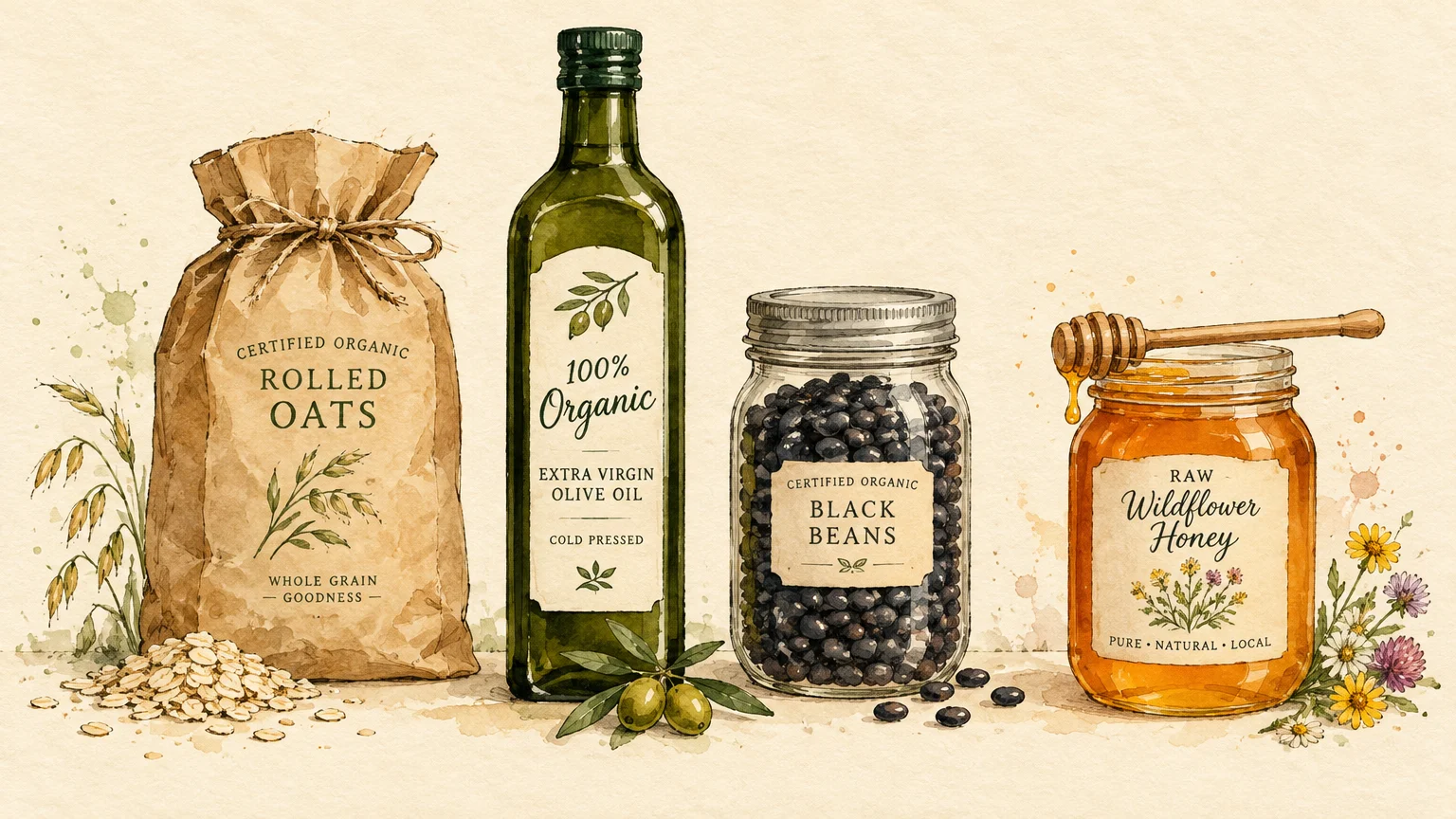
Stock your cupboards with Simply Nature organic canned black beans, garbanzo beans, and diced tomatoes. Canned organic beans supply soluble fiber, which actively binds to dietary cholesterol and assists your liver in clearing it safely.
Always drain and rinse canned beans under cold water for two minutes before heating them. That simple kitchen step removes up to 40 percent of the canning sodium without stripping away essential dietary minerals.
Choose Simply Nature 100% pure maple syrup and raw wildflower honey over artificial pancake syrups sold by legacy brands. Real maple syrup provides trace minerals like manganese and zinc, supporting immune health and bone cellular turnover.
Pass on Simply Nature organic tortilla chips and fruit snack chews when planning your everyday meals. Organic evaporated cane juice and organic corn flour affect blood sugar identically to their conventional counterparts.
03 Kroger Private Selection: Culinary flavor without restaurant markups
Kroger positions Private Selection as its premier culinary tier, designed to compete against upscale specialty store brands. The line features artisan-crafted cheeses, cold-pressed oils, slow-cured meats, and regional spices that outshine expensive gourmet names.
Many premium national brands charge steep premiums for elaborate packaging and heritage imagery. Private Selection delivers identical gastronomic quality by sourcing directly from specialized regional growers and domestic producers.
Look for Private Selection single-origin extra virgin olive oils bottled in dark glass to preserve delicate bioactive polyphenols. Polyphenols are potent antioxidants that protect vascular endothelium and reduce systemic vascular inflammation throughout your circulatory system.
Pick up Private Selection whole-spice grinders, such as tellicherry peppercorns and Mediterranean sea salt blends. Whole spices preserve their aromatic essential oils far longer than pre-ground powders, allowing you to use less sodium without sacrificing meal flavor.
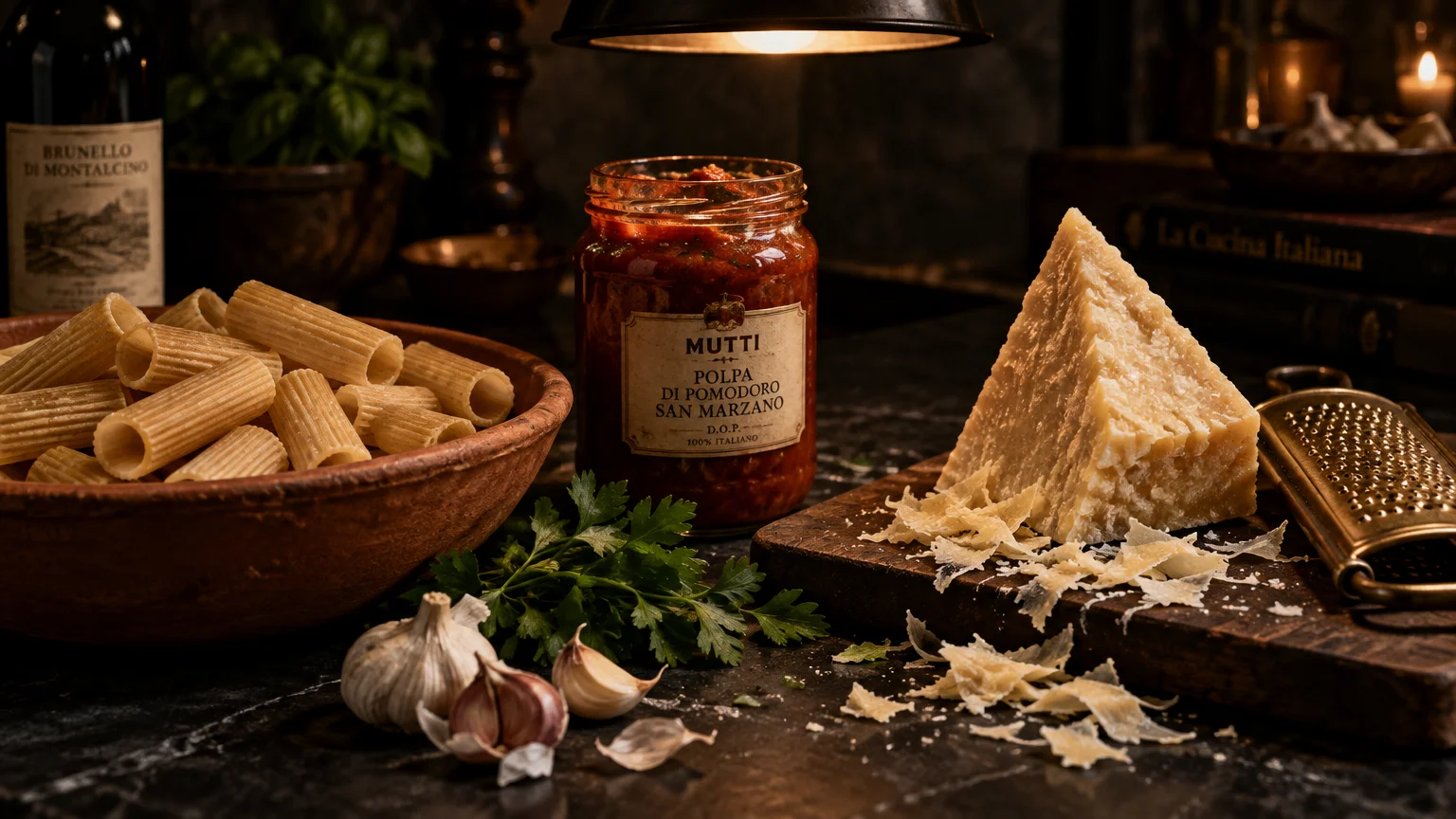
The line also provides bronze-cut pastas imported directly from Italy; the textured surface grips sauces effortlessly. Bronze-cut pasta digests more slowly than slick, mass-produced commercial noodles, resulting in a more gradual post-meal blood glucose response.
If you cook for one or two people, Private Selection aged Parmigiano-Reggiano wedges represent an exceptional pantry investment. Hard aged cheeses contain minimal lactose and pack concentrated umami flavor, meaning a small grating provides immense culinary satisfaction.
Wrap unused cheese tightly in parchment paper rather than plastic wrap to maintain moisture balance and stop surface mold. Storing it in your refrigerator vegetable drawer keeps it fresh for weeks without spoilage.
Put back Private Selection cream-based pasta sauces and specialty frozen pizzas if you take cardiovascular medications. Their sodium levels often exceed 700 milligrams per serving, which quickly disrupts fluid balance and elevates blood pressure.
04 Aldi Specially Selected: European imports that rival specialty markets
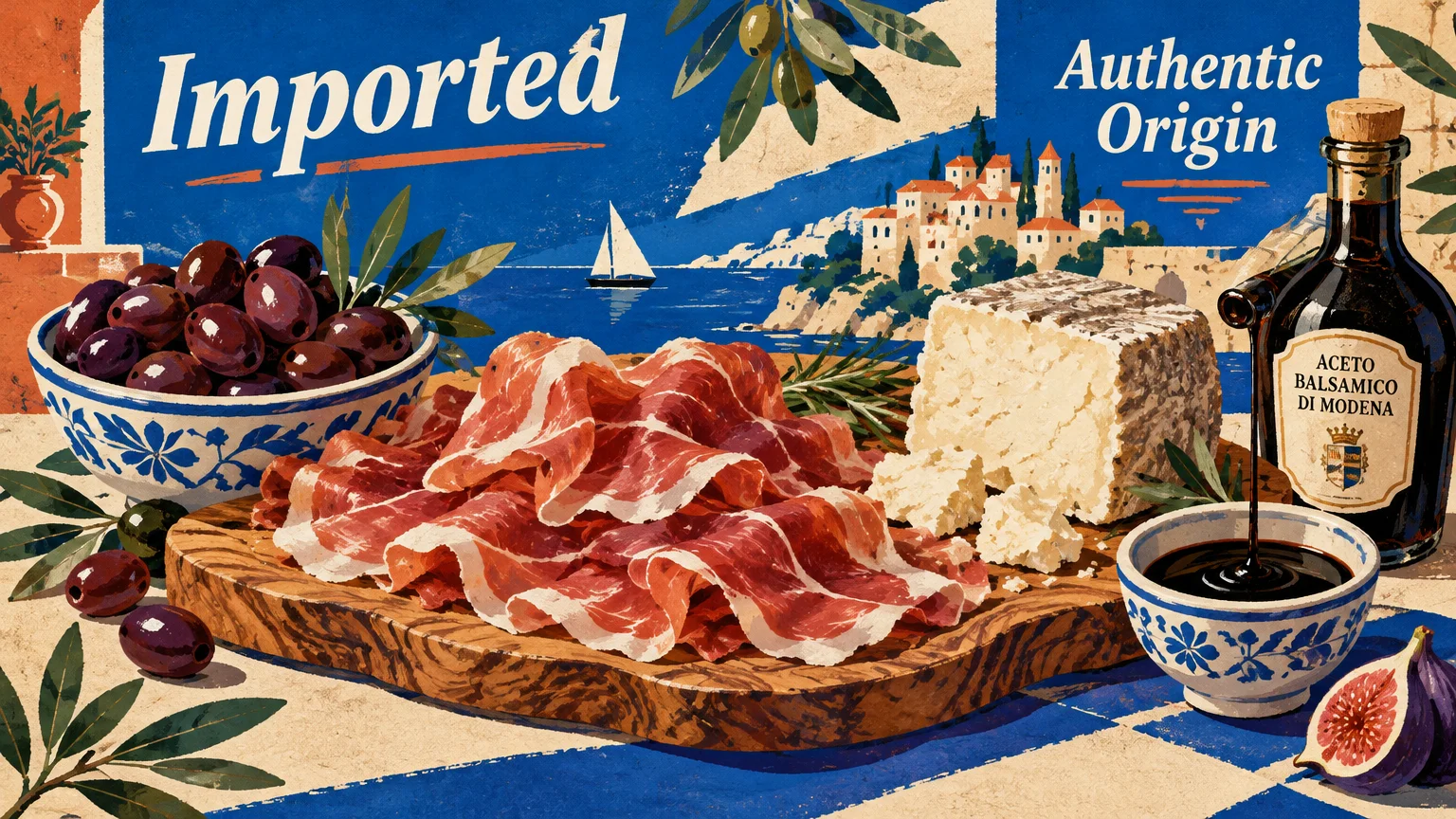
Specially Selected serves as Aldi’s upscale, gourmet private label, displaying the distinctive “an ALDI Original” stamp on its packaging. The brand focuses heavily on genuine European imports, regional specialties, and premium frozen proteins.
Aldi utilizes its deep European supply chains to source German sourdoughs, Italian pasta sauces, and Belgian chocolates at wholesale economics. These items frequently cost 40 percent less than the specialty imports found in standard supermarket gourmet aisles.
Select Specially Selected wild-caught Alaskan sockeye salmon fillets from the freezer section for an exceptional lean protein source. Wild salmon delivers substantial quantities of eicosapentaenoic acid and docosahexaenoic acid, long-chain omega-3 fatty acids that lower blood triglycerides.
The NIH Office of Dietary Supplements notes that adequate omega-3 intake supports cognitive health, reduces joint tenderness, and modulates cellular inflammation. Buying frozen fillets allows smaller households to thaw single servings without risking costly seafood waste.
Pick up Specially Selected authentic traditional sourdough bread, which uses natural sourdough cultures rather than baker’s commercial yeast. The slow sourdough fermentation pre-digests grain starches and degrades gluten proteins, making the bread exceptionally gentle on sensitive digestive tracts.
Specially Selected raw mixed nuts provide heart-healthy monounsaturated fats, dietary magnesium, and plant-based sterols. Eating an ounce of unroasted, unsalted nuts daily supports vascular compliance and assists in steady blood pressure regulation.
Freeze half of the sourdough loaf on the day you buy it, slicing it before putting it into the freezer. You can toast individual slices directly from frozen, preserving peak bakery texture while eliminating household food waste.
Skip Specially Selected cured meat samplers and specialty prosciutto if you monitor your daily vascular health. Cured meats carry dense sodium loads and preservative nitrates that stress arterial elasticity and interact unfavorably with certain medications.

05 Kroger Smart Way: Utilitarian budget staples with zero markup
Kroger introduced Smart Way to offer a bare-bones, highly economical line of foundational kitchen basics. The line strips away elaborate branding, decorative cartons, and promotional marketing to deliver the lowest possible unit cost.
Smart Way directly rivals commercial national brands across high-volume pantry items like rolled oats, dry beans, flour, and vinegar. In many instances, the product inside the Smart Way container originates from the exact same regional packaging facilities.
Choose Smart Way traditional whole rolled oats over heavily marketed name-brand instant oatmeal packets. Whole rolled oats contain dense beta-glucan soluble fiber, which forms a viscous gel in your digestive tract to sweep away bile acids.
Instant flavored oatmeals from major brands often contain four teaspoons of added sugar per packet and elevated sodium. Cooking plain Smart Way oats on your stove takes five minutes and leaves you in total control of your sweeteners.
Smart Way dry pinto beans, navy beans, and long-grain brown rice offer incredible nutritional value for pennies per serving. Stored in airtight glass jars, these dry pantry staples retain their complete nutritional value for years without deteriorating.
Pick up Smart Way distilled white vinegar and pure baking soda for both scratch cooking and chemical-free home cleaning. You can clean produce and descale kitchen appliances without paying national brand prices for basic chemical compounds.
Leave Smart Way canned soups and pre-mixed pancake syrups on store shelves when planning a nutrient-focused diet. Budget canned soups rely heavily on sodium chloride and monosodium glutamate to compensate for minimal meat and vegetable inclusions.
Examine the ingredient panel on Smart Way peanut butter before adding it to your physical grocery cart. While affordable, it contains hydrogenated vegetable oils to prevent separation, unlike natural peanut butters containing solely peanuts and salt.
Decoding the clean-label shift across Kroger and Aldi aisles
Store brands once carried a reputation for cheap ingredients, excessive fillers, and lingering artificial aftertastes. Today, major supermarket retailers actively outpace national food conglomerates in cleaning up their formulas and eliminating unnecessary synthetic chemicals.
Aldi instituted a watershed industry standard on April 22, 2026, by announcing a comprehensive clean-label expansion across its private labels. Because store brands constitute over 90 percent of Aldi’s inventory, this policy impacts virtually every shelf.
Building on its 2015 elimination of certified synthetic colors, added MSG, and partially hydrogenated oils, Aldi restricted 44 additional additives. By December 2027, all Aldi store-brand foods, vitamins, and supplements will ban 57 specific artificial ingredients.
This aggressive initiative eliminates industrial food additives like titanium dioxide, bromated flour, and artificial non-nutritive sweeteners such as neotame. Many legacy national brands still utilize these controversial compounds to stabilize dyes or speed commercial baking cycles.
Kroger’s Simple Truth standard similarly outlaws more than 101 chemical additives, setting a dependable baseline for health-conscious shoppers. Kroger reformulated hundreds of center-store products to ensure clean ingredient declarations without raising retail shelf prices.
Industrial additives like bromated flour enhance dough elasticity in commercial bakeries, yet several foreign regulatory agencies ban them outright. Choosing store brands that prohibit these additives reduces your lifetime exposure to compounds that provide zero nutritional value.
Artificial food colors, including Red 40 and Yellow 5, have faced increasing scrutiny for triggering systemic histamine responses. Both Simple Truth and Simply Nature utilize natural beet powder, turmeric, and paprika oleoresin to achieve vibrant culinary colors.
These retail-wide ingredient standards make weekly grocery shopping far simpler for adults who must manage chronic health concerns. You can reach for private-label staples knowing internal corporate quality standards have already excluded dozens of synthetic chemicals.
How to read grocery labels for blood pressure and blood sugar
Navigating grocery aisles when managing cardiovascular health requires looking past marketing claims on the front of boxes. The Nutrition Facts panel on the back reveals the exact biochemical reality of what enters your kitchen.
The American Heart Association recommends limiting daily sodium intake to 2,300 milligrams, with an ideal limit of 1,500 milligrams. Excess sodium forces your vascular system to retain fluid, raising arterial pressure and increasing cardiac workload.
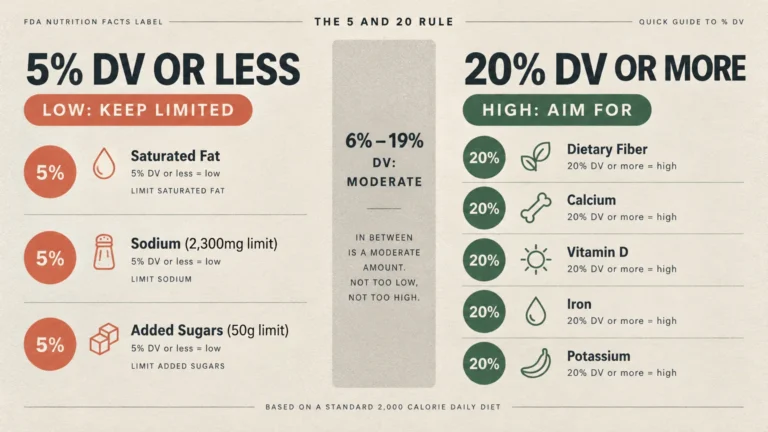
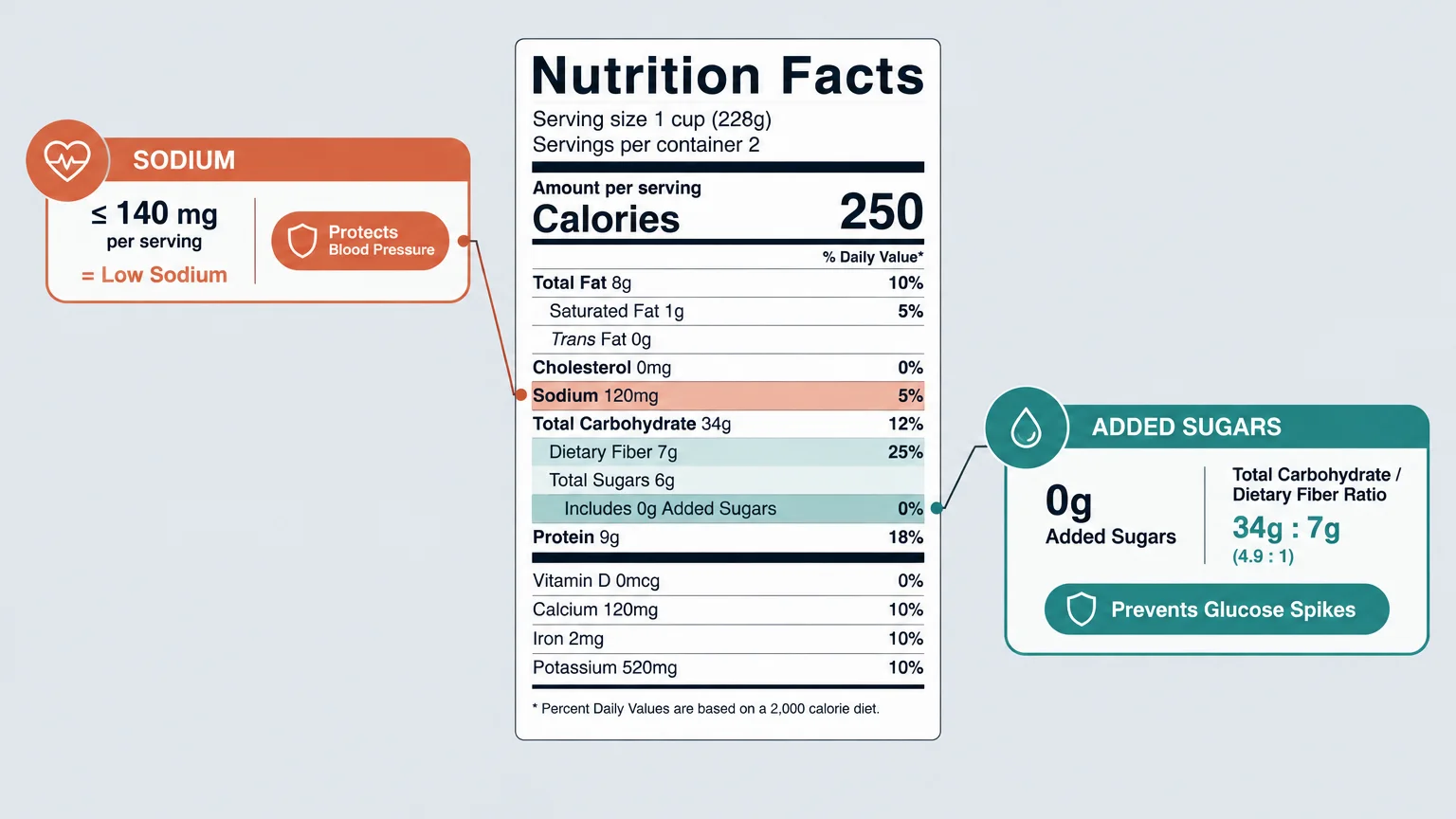
Check the percent Daily Value for sodium on every store-brand broth, soup, and canned vegetable you evaluate. As a reliable rule, 5 percent Daily Value or less represents low sodium, while 20 percent or more represents high sodium.
Look beyond the sodium line to verify dietary potassium levels on store-brand nutritional panels. Potassium works inside vascular smooth muscle cells to counterbalance sodium, relaxing blood vessel walls and encouraging healthy urinary sodium excretion.
If you take ACE inhibitors, angiotensin receptor blockers, or potassium-sparing diuretics, discuss your potassium targets with your physician. These cardiovascular medications reduce potassium excretion, meaning concentrated potassium substitutes can inadvertently elevate blood levels beyond safe clinical thresholds.
When reviewing carbohydrate content, always subtract dietary fiber from total carbohydrates to calculate net impact on your glycemic curve. High-fiber store-brand foods slow enzymatic carbohydrate breakdown, preventing sharp insulin surges that tax your pancreas.
The U.S. Food and Drug Administration mandates that all nutrition labels clearly list added sugars on a separate line. Aim to keep added sugars as close to zero grams as possible on everyday kitchen staples.
Watch for hidden sweeteners like barley malt, dextrose, and concentrated fruit juice purees in store-brand marinades and dressings. Manufacturers frequently utilize these alternative caloric sweeteners to maintain clean-label claims while still delivering heavy sugar doses.
Supporting bone density and metabolic vitality on a budget
Nutritional needs shift as your metabolic rate adjusts; your body requires fewer total calories but significantly higher micronutrient density. Securing adequate calcium, vitamin D, and bioavailable protein on a fixed budget requires intentional store-brand choices.
Bone remodeling slows with age, making continuous dietary calcium and vitamin D essential to prevent osteopenia and fractures. Store-brand fortified almond milks, soy milks, and dairy milks match national brand vitamin fortification for significantly less money.
Compare the calcium milligrams on Simple Truth unsweetened almond milk against national names like Silk or Blue Diamond. You will discover they supply identical 300 to 450 milligram calcium doses per cup alongside crucial vitamin D3.
Distribute your protein intake evenly across breakfast, lunch, and dinner rather than consuming the majority at your evening meal. Consuming 25 to 30 grams of protein three times daily maximizes muscle protein synthesis in older skeletal tissue.
Combine Smart Way dry lentils with Private Selection brown basmati rice to create a complete, budget-friendly plant protein source. Lentils supply substantial folate and iron, supporting red blood cell formation and steady daytime physical stamina.
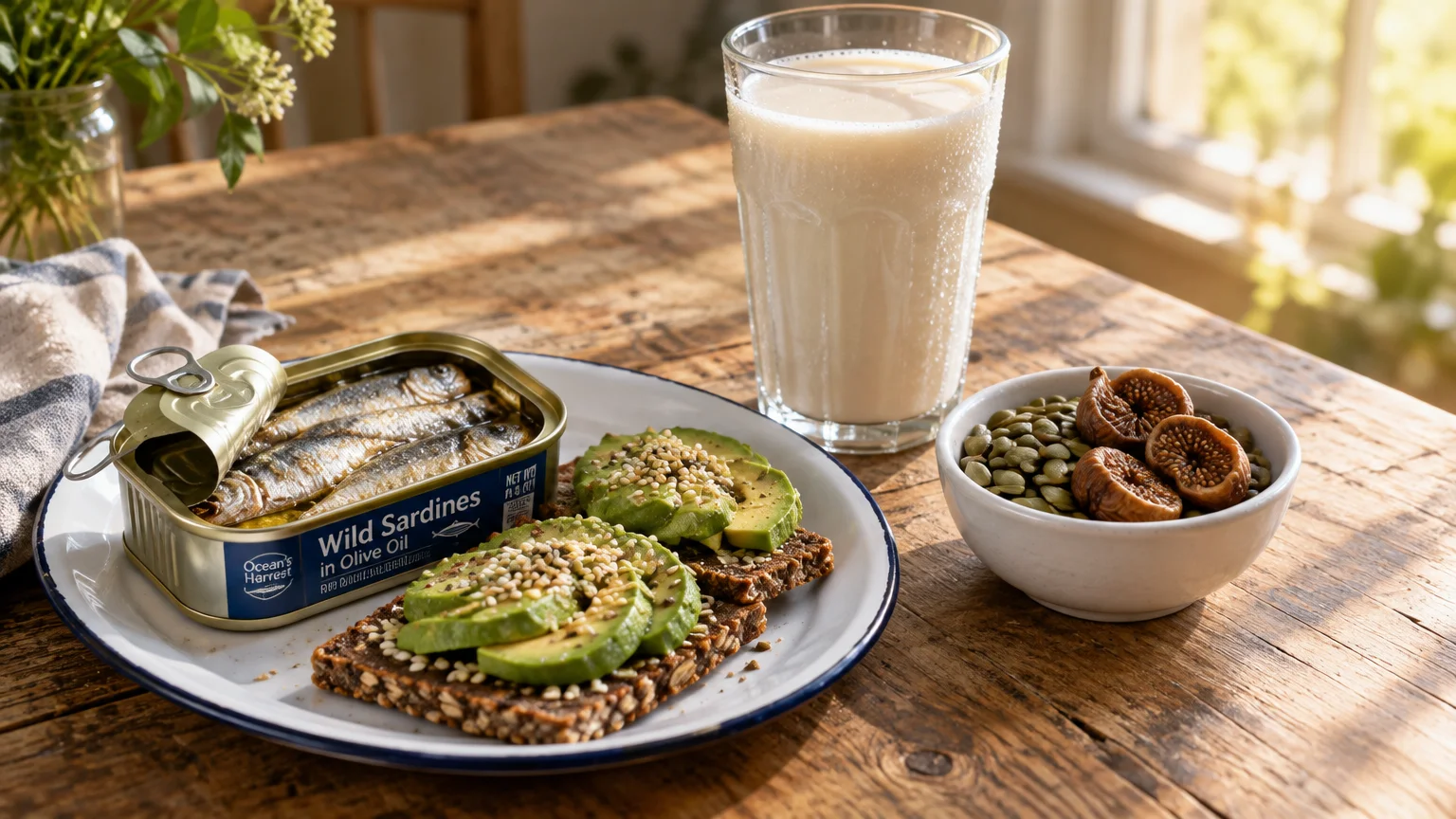
Canned sardines and wild salmon packed with bones from Aldi’s private lines provide exceptional, bioavailable skeletal nutrition. The soft, edible bones provide natural calcium and phosphorus in the exact mineral ratio your skeletal system requires.
Avoid buying expensive national brand specialty bone health supplements until you review your everyday pantry food foundation. Getting your minerals through whole food matrixes ensures optimal gastrointestinal absorption and minimizes the risk of arterial calcium deposition.
Track your fluid intake throughout the day, as your natural thirst sensation diminishes as the central nervous system ages. Proper hydration allows your kidneys to process dietary protein efficiently and prevents store-brand fiber from causing gastrointestinal discomfort.
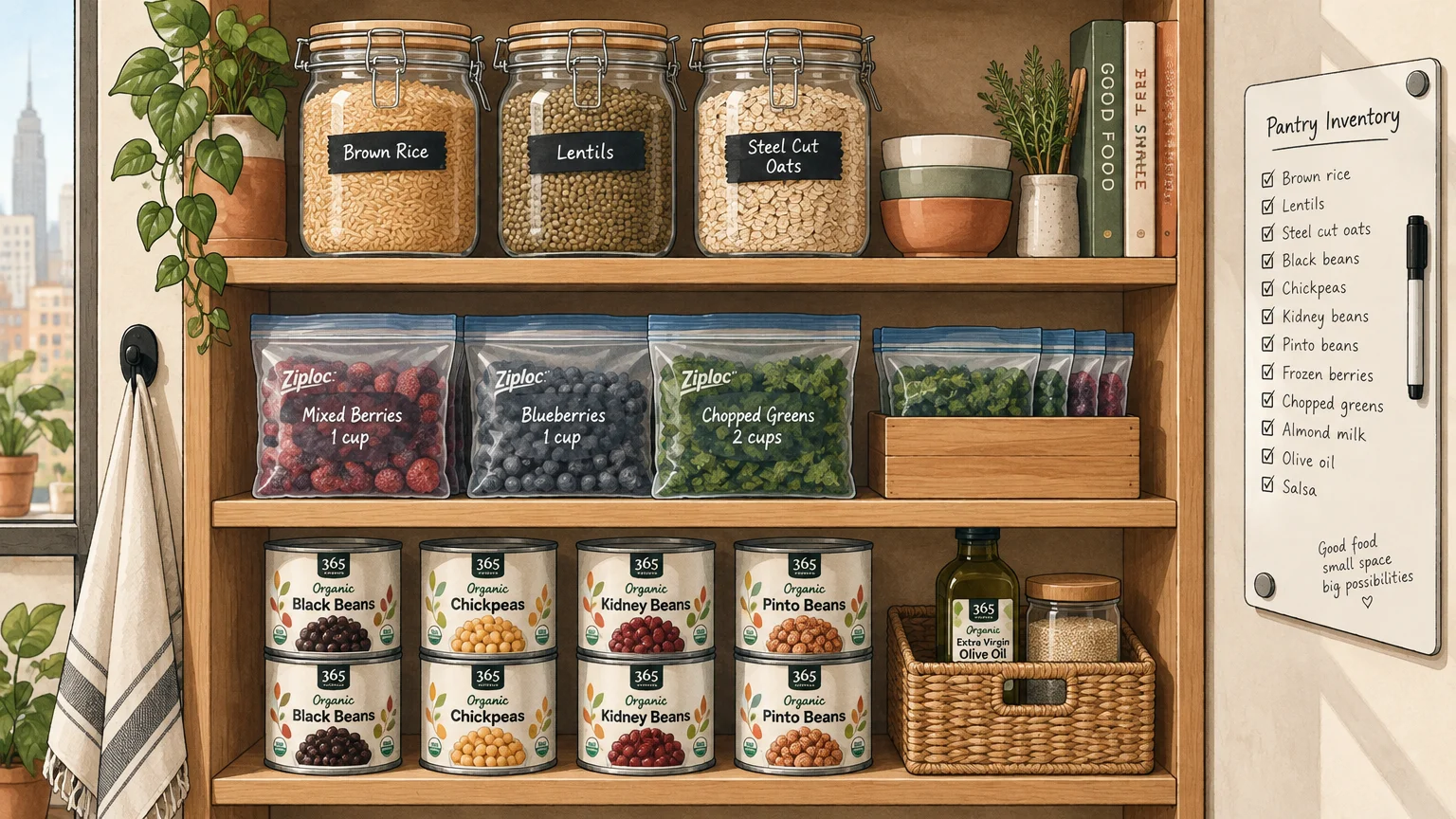
Smart portioning and pantry management for one- and two-person homes
Cooking for one or two people introduces unique hurdles; large bulk packages often spoil before you can finish them. True grocery savings occur only when you consume everything you buy, making strategic portioning just as critical as unit prices.
Always inspect the unit price displayed in small print on supermarket shelf tags rather than the overall retail price. Unit prices show the cost per ounce, pound, or count, allowing you to instantly compare different package sizes.
Aldi’s smaller store footprints and modest package dimensions make it remarkably well suited for one- and two-person households. You can purchase fresh produce and dairy in manageable quantities without being forced into warehouse-club volumes that generate food waste.
Invest in freezer-safe glass containers and heavy-duty silicone bags to portion store-brand meats and seafood the day you shop. Dividing a family pack of Simple Truth chicken breasts into single-portion freezer packs yields the lowest unit price without waste.
Embrace frozen vegetables from Simply Nature and Kroger store brands as nutritional equals to fresh produce aisle options. Commercial processors flash-freeze vegetables within hours of harvest, locking in fragile water-soluble vitamins like vitamin C and folate.
Frozen vegetables allow you to pour out exactly half a cup for an omelet or soup while leaving the remainder sealed. This practice completely prevents the common frustration of watching fresh produce spoil in refrigerator crisper drawers.
Repurpose leftover canned beans and whole grains into hearty lunchtime vegetable soups toward the end of your weekly grocery cycle. Simmering leftover ingredients with low-sodium broth creates nutrient-rich meals that freeze beautifully for busy future days.
Rotate your pantry shelves using the commercial FIFO method: first in, first out. Place newly purchased store-brand cans behind older inventory to ensure you consume staples before their manufacturer best-by dates expire.
Frequently asked questions about Kroger and Aldi store brands
Are store-brand vitamins and supplements as reliable as brand names?
Yes, store-brand supplements at Kroger and Aldi must meet the exact same federal regulatory standards enforced for national brands. The FDA requires all dietary supplements to comply with Current Good Manufacturing Practices regarding identity, purity, and manufacturing cleanliness.
Aldi’s 2026 clean-label expansion applies directly to its private-label vitamins, eliminating synthetic binders, artificial dyes, and unneeded fillers by late 2027. Look for independent verification seals like USP or NSF on store-brand bottles to guarantee accurate ingredient dissolution.
Always review your complete supplement regimen with your primary care physician or pharmacist before introducing new store-brand vitamins. Certain botanicals and high-dose minerals can significantly alter the absorption and clearance rates of common prescription medications.
Why are Aldi private-label groceries priced so much lower than traditional grocers?
Aldi achieves rock-bottom retail pricing through lean operational efficiencies rather than sourcing substandard, inferior food ingredients. The retailer stocks over 90 percent private-label goods, eliminating third-party brand marketing budgets and costly vendor stocking fees.
Aldi stores employ compact floor plans, require customers to insert a quarter deposit for shopping carts, and display products in original cartons. These streamlined logistics slash retail overhead costs, allowing the company to pass significant operational savings directly to you.
Their streamlined private-label lineup—consolidated to 26 core brands in 2025—gives Aldi immense purchasing leverage with agricultural producers. Sourcing high-volume staple orders directly from primary manufacturers drives down production costs while maintaining rigorous clean-label purity.
Who manufactures store-brand products for Kroger and Aldi?
Retailers rarely build and operate their own independent manufacturing facilities for every single grocery category they stock. Instead, they partner with leading commercial food processors that produce well-known national brands along identical production lines.
Major food manufacturing plants simply switch packaging cartons and label rolls to run store-brand orders for supermarkets like Kroger. The fundamental difference lies in retailer specifications: Kroger or Aldi dictates the exact recipe, ingredient exclusions, and sodium levels.
In many instances, store brands enforce stricter ingredient guidelines than the national brands produced in the very same processing plant. Simple Truth and Simply Nature explicitly prohibit artificial dyes and preservatives that the manufacturer’s own name-brand lines still contain.
Do store-brand dairy and meat items have shorter shelf lives than brand names?
No, store-brand dairy products and fresh meats follow the identical shelf-life trajectories and cold-chain protocols as national food brands. Regional dairy cooperatives collect, pasteurize, and bottle fluid milk for both supermarket house brands and prominent commercial labels.
Check the sell-by date stamped on milk jugs and yogurt tubs; you will see comparable expiration windows across lines. Retailers like Kroger often maintain local processing dairies, meaning their milk reaches store coolers faster than national brands transported interstate.
Maintain peak product freshness at home by storing dairy items on interior refrigerator shelves rather than inside door compartments. Refrigerator doors experience frequent temperature fluctuations from opening, which accelerates spoilage and prematurely degrades delicate dairy fats.
Your concrete action plan for your next shopping trip
Do not attempt to overhaul your entire kitchen pantry during a single stressful, high-cost grocery trip. Transforming your purchasing habits succeeds best through manageable, step-by-step swaps that protect your health and your weekly budget.
Before leaving home, review your refrigerator and pantry to identify two high-cost national brand staples you buy consistently. Commit to replacing those specific items on this run with either Kroger Simple Truth or Aldi Simply Nature.
When you stand in the aisle, check the unit price tag to calculate your exact household savings per ounce. Then flip the container around to confirm that the store brand matches or beats the national name in sodium, sugar, and protein.
Taking this targeted, label-conscious approach transforms routine grocery shopping into an empowering act of financial and physical self-care. You will keep your hard-earned money in your wallet while putting cleaner, wholesome nutrition on your family table.