You can evaluate any packaged food in five seconds by checking the right-hand column of the Nutrition Facts label. The 5 and 20 rule tells you instantly whether a food runs low or high in specific nutrients.
This quick calculation strips away misleading claims on the front of the box. It gives you immediate clarity when comparing two competing items on the grocery shelf.
Whether you monitor blood pressure, track blood sugar, or protect bone strength, this simple benchmark helps you shop with complete confidence.
How does the 5 and 20 rule work on packaged foods?
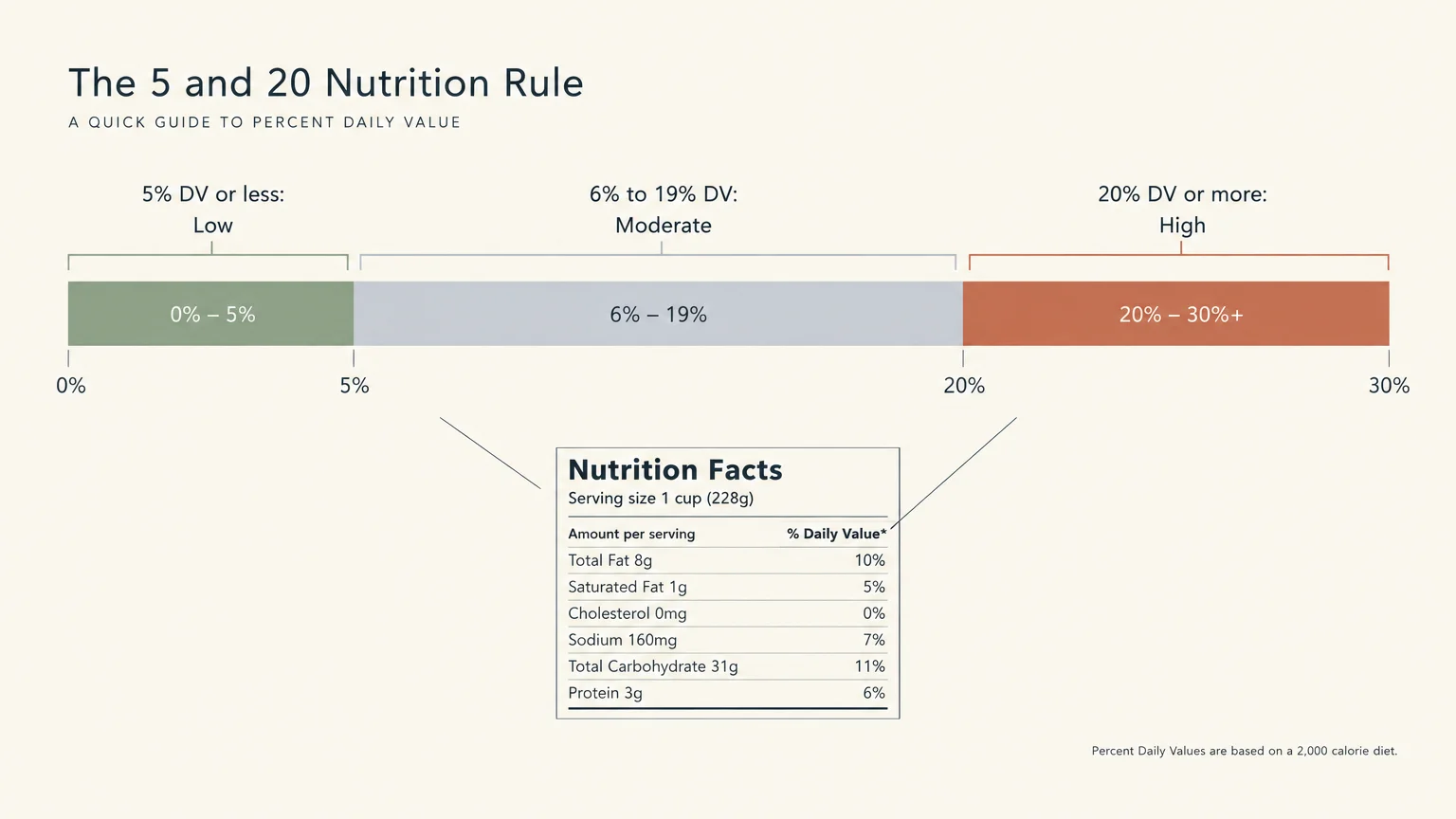
The 5 and 20 rule relies on the Percent Daily Value (%DV) column printed along the right side of every Nutrition Facts label. This column translates complex grams and milligrams into a single, practical percentage.
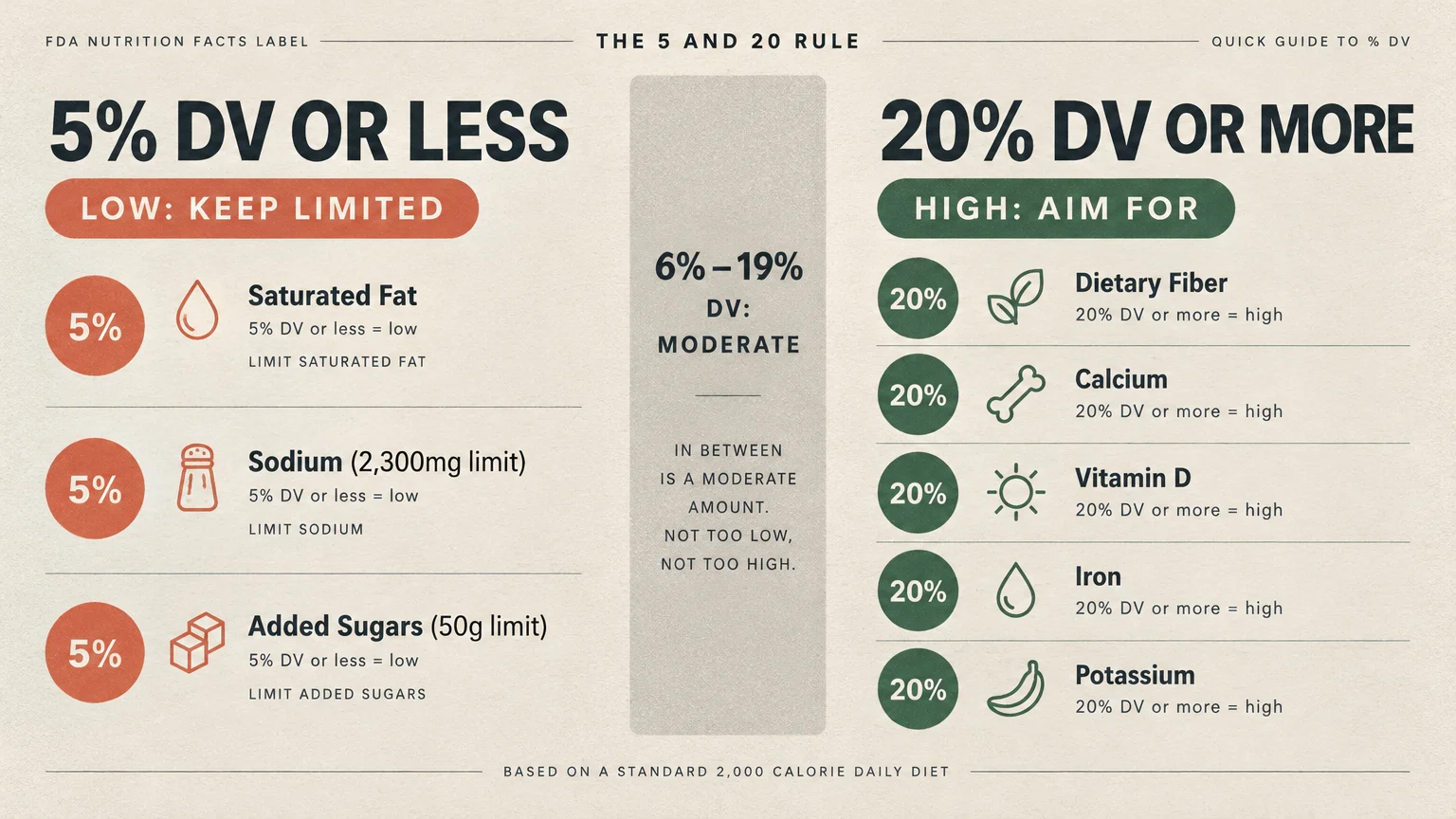
According to formal guidance from the U.S. Food and Drug Administration, a daily value of 5 percent or less means the food is low in that nutrient.
A daily value of 20 percent or more means the item is high in that nutrient. Anything sitting between 6 and 19 percent represents a moderate amount.
All Daily Value figures on standard grocery packages reflect a reference diet of 2,000 calories per day. You do not need to consume exactly 2,000 calories to make this metric work in the aisles.
The percentages serve as an objective yardstick. They let you determine whether a serving delivers a substantial dose or merely a trace amount of a given nutrient.
You simply glance at the target nutrient, look to the right-hand column, and check if the number touches 5 or exceeds 20. That single motion tells you whether the product supports your personal dietary goals.
Which nutrients should you keep at 5 percent or lower?
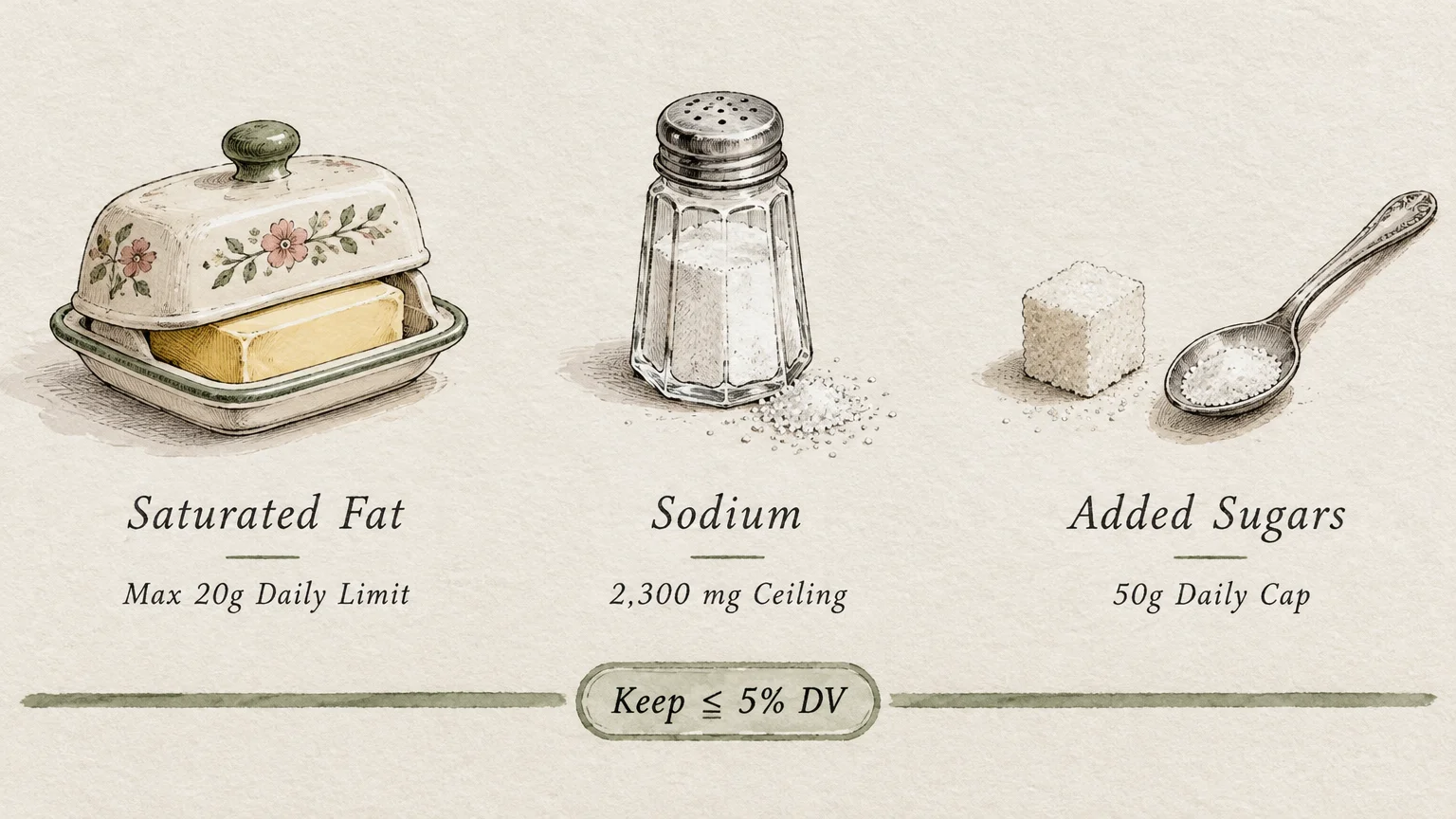
Federal health agencies recommend using the low threshold to restrict nutrients that harm your cardiovascular and metabolic health when consumed in excess. You want to see 5 percent DV or less for saturated fat, sodium, and added sugars.
Managing sodium protects your blood pressure and eases strain on your arterial walls. The current standard label calculates sodium against a daily ceiling of 2,300 milligrams.
The American Heart Association points out that excess sodium pulls water into your blood vessels, increasing cardiovascular workload. Reaching for items at or below 5 percent DV sodium keeps daily intake manageable.
Saturated fat also warrants strict scrutiny because it raises low-density lipoprotein cholesterol in your bloodstream. The daily reference maximum on current labels stands at 20 grams.
Selecting packaged foods with 5 percent DV or less of saturated fat preserves your cardiovascular health. It also shields you from dense, inflammatory fats often hiding in commercial baked goods.
Added sugars require the same vigilant restraint. The Daily Value cap for added sugar sits at 50 grams per day for a standard diet.
Items showing 20 percent DV or more for added sugars deliver at least 10 grams of non-nutritive sweetener in one serving. Keeping sweet treats near the 5 percent line prevents erratic blood glucose spikes.
Which nutrients should you push to 20 percent or higher?
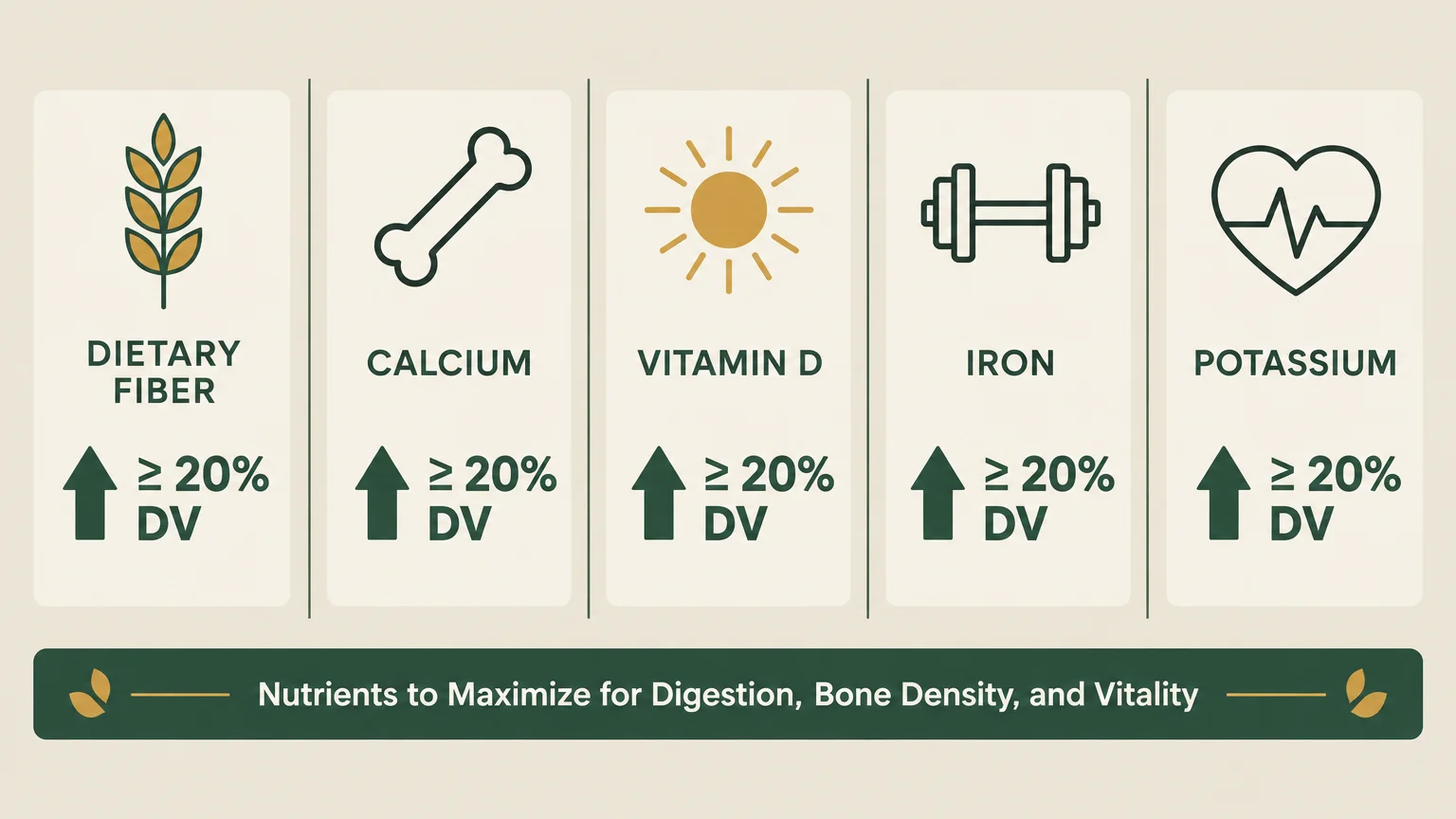
You can turn the rule around to target nutrients that strengthen your body and protect your vitality. You want to see 20 percent DV or more for dietary fiber, calcium, vitamin D, iron, and potassium.
Dietary fiber supports healthy digestion, moderates blood glucose absorption, and assists with steady weight management. Products offering 20 percent DV of fiber keep you full longer and promote healthy gut motility.
Bone density becomes increasingly critical as you age. The NIH Office of Dietary Supplements highlights calcium and vitamin D as indispensable partners for preserving skeletal integrity and preventing bone fractures.
A packaged food supplying 20 percent DV or more of calcium delivers substantial bone-building support in a single meal. Pairing that calcium with adequate vitamin D ensures your digestive tract absorbs the mineral efficiently.
Potassium works in direct opposition to sodium by relaxing blood vessel walls and helping your kidneys excrete excess fluid. When you pick up foods offering 20 percent DV of potassium, you actively protect your cardiovascular system.
Iron transports oxygen through your bloodstream to maintain your daily physical stamina. Spotting 20 percent DV for iron guarantees an energy-supporting choice, particularly if you eat less red meat.
Under FDA labeling rules finalized in 2016 and made mandatory for all manufacturers by January 1, 2021, labels must list potassium and vitamin D. Regulators replaced vitamins A and C with these two nutrients because Americans consistently underconsume them.
Why do some nutrients lack a percent daily value?
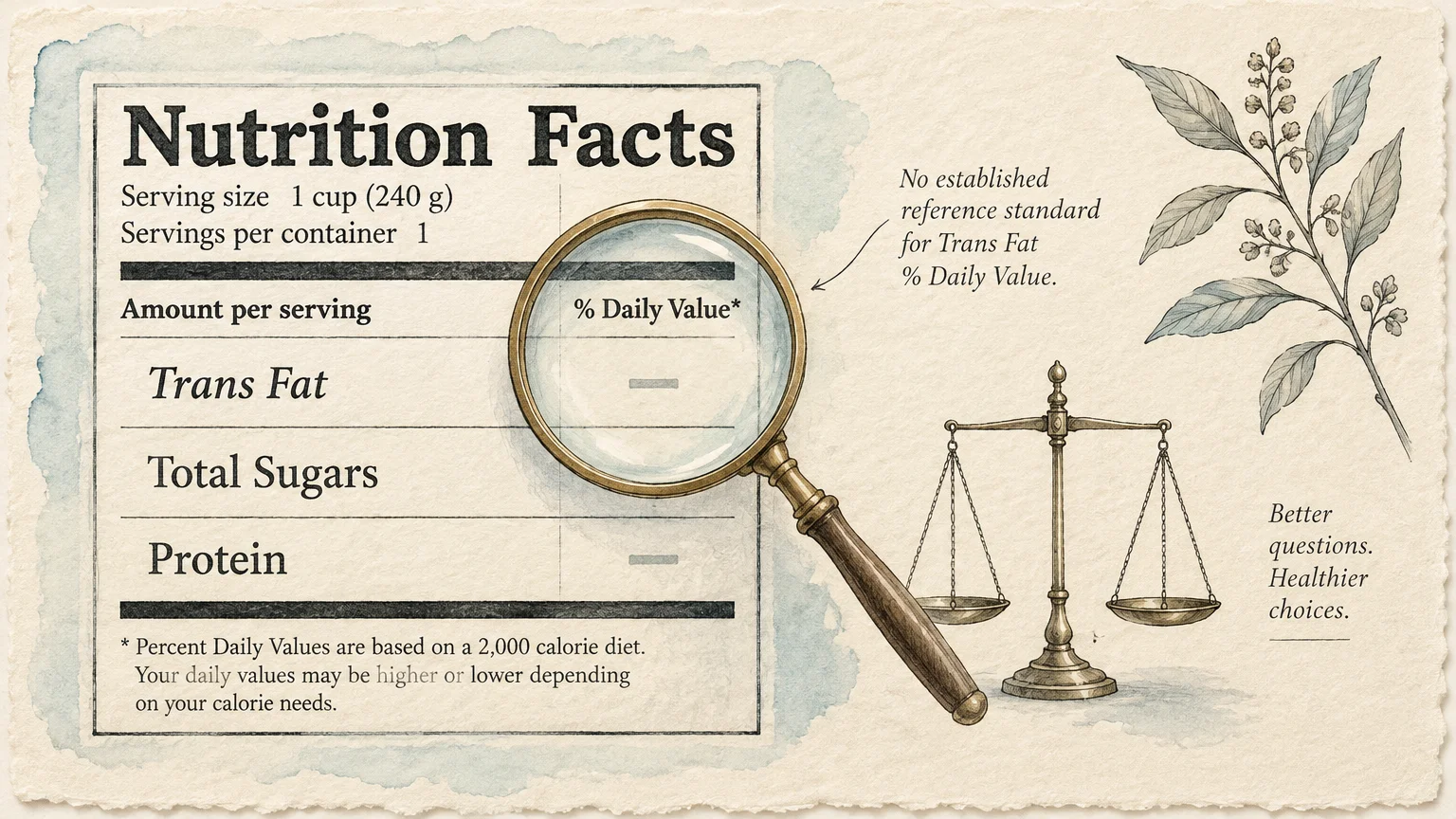
You will notice that trans fat, total sugars, and protein rarely display a percentage in the right-hand column. Regulators deliberately left percentages off these three lines for specific nutritional reasons.
Trans fat carries no Daily Value percentage because public health authorities establish no safe intake level. You should consume as close to zero grams of industrial trans fat as possible.
Total sugars include naturally occurring sugars found in fruit and dairy alongside refined sweeteners. Because natural sugars arrive packaged with water, vitamins, and minerals, public health agencies set no single limit for total intake.
The label separates Added Sugars directly below Total Sugars to solve this problem. The added sugars line features a prominent Daily Value percentage so you can measure added syrups easily.
Protein skips the percentage column on standard foods because most adults consume sufficient total protein across the day. The FDA requires a Daily Value percentage for protein only if the package displays a specific protein marketing claim.
Manufacturers must also display a protein percentage if they formulate the food specifically for infants or young children under 4 years old. For everyday adult shopping, checking the raw gram count for protein provides all the data you need.
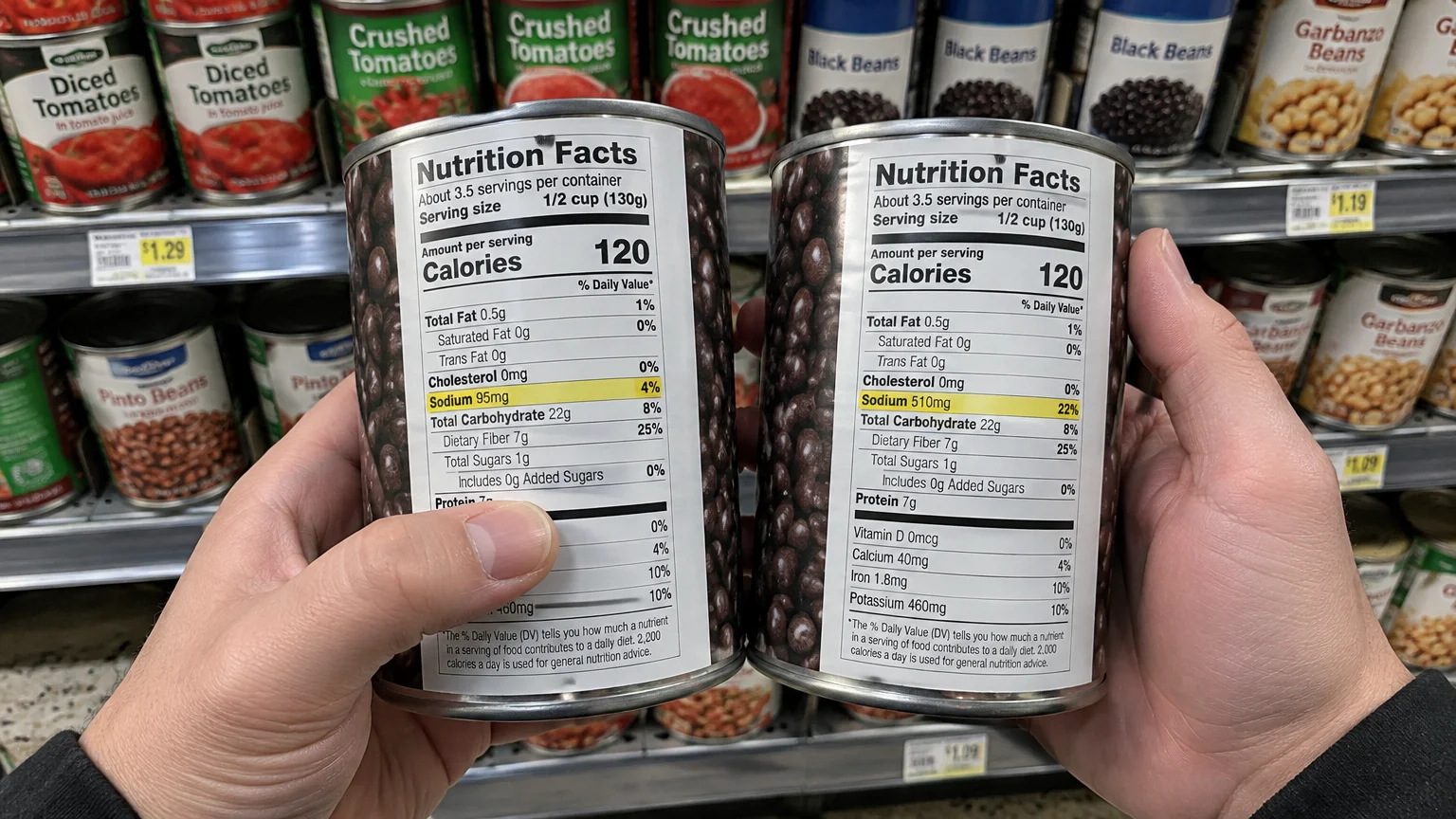
How do you apply the rule in the soup and canned goods aisle?
The canned goods aisle contains some of the highest sodium concentrations in the entire supermarket. A single can of commercial chicken noodle soup often packs over 40 percent DV of sodium in one small bowl.
When shopping for canned broth or prepared soups, scan the sodium line immediately. Look for brands showing 5 percent DV or select cartons explicitly labeled very low sodium.
If you purchase a canned soup with 18 percent DV of sodium, treat it as your primary sodium source for that meal. Balance that higher number by serving it alongside fresh vegetables or an unsalted side dish.
Canned beans provide an outstanding opportunity to capture the upper end of the rule. Black beans, pinto beans, and chickpeas frequently supply 25 to 30 percent DV of dietary fiber per cup.
Check the sodium percentage on those same canned beans before placing them into your grocery cart. You can buy reduced-sodium versions or rinse regular canned beans under cool water to remove roughly a third of the canning sodium.
Canned fish such as tuna, salmon, and sardines often hits 20 percent DV or more for calcium if you choose bone-in varieties. Canned salmon also delivers high vitamin D percentages at a fraction of the cost of fresh seafood.
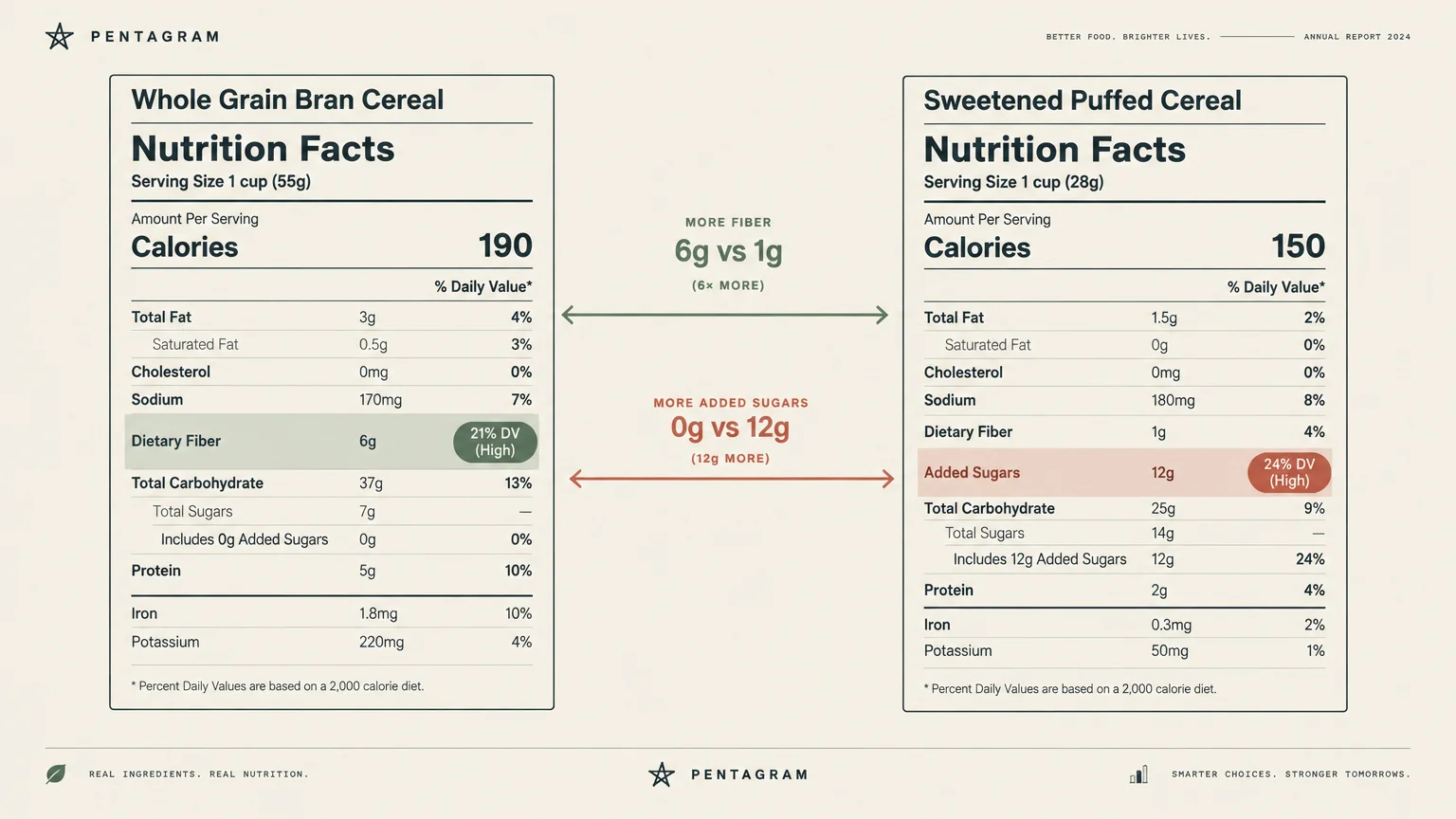
How does the rule guide your choices in the bread and cereal aisle?
Commercial sandwich breads frequently conceal surprising amounts of added sugars and sodium while offering minimal fiber. Checking the right-hand column cuts through phrases like multi-grain or wheat-milled printed on the plastic wrapper.
Turn the loaf around and inspect the dietary fiber line before looking at anything else. Quality whole-grain bread should approach or exceed 12 to 15 percent DV of fiber across two slices.
Next, examine the added sugars line to ensure the manufacturer did not mask bitter whole grains with corn syrup. Aim for 5 percent DV or less of added sugar per serving of sliced bread.
Breakfast cereals present an even sharper contrast between front-of-box claims and back-of-box facts. Many popular bran flakes and granola clusters boast about vitamins while delivering 25 percent DV of added sugar.
Apply the 5 percent rule strictly to added sugar when evaluating breakfast cereal boxes. If your favorite crunchy cereal shows 18 percent DV for added sugar, leave it on the shelf.
Look instead for plain rolled oats or shredded wheat, which deliver near zero percent added sugar. These unprocessed cereals let you capture over 20 percent DV of fiber while keeping sugar completely under your own control.

What should you check when buying frozen meals for one or two?
Single-serve frozen meals provide tremendous convenience when you cook for a small household, but they often rely on heavy sodium for flavor preservation. A typical frozen pasta or meatloaf dinner can deliver 35 to 50 percent DV of sodium.
Eating half your daily sodium allotment in a single frozen tray leaves you almost no margin for your remaining meals. Seek out frozen brands that cap sodium at 15 to 20 percent DV per entree.
Check the saturated fat percentage on frozen meals that feature cheese sauces, gravies, or processed meats. You want entrees that hover near 5 percent DV and never exceed 10 percent DV for saturated fat.
Examine the potassium line on the frozen entree label to see if the manufacturer included real vegetables. A balanced meal should contribute at least 10 to 15 percent DV of potassium to counter the meal’s sodium.
You can improve the nutritional profile of any economical frozen dinner with a fast kitchen trick. Heat a low-sodium frozen meal, then stir in a cup of plain steamed frozen broccoli or spinach.
This simple addition boosts the total fiber and potassium toward the desired 20 percent threshold. It also expands the portion size without adding unnecessary saturated fat or sodium.
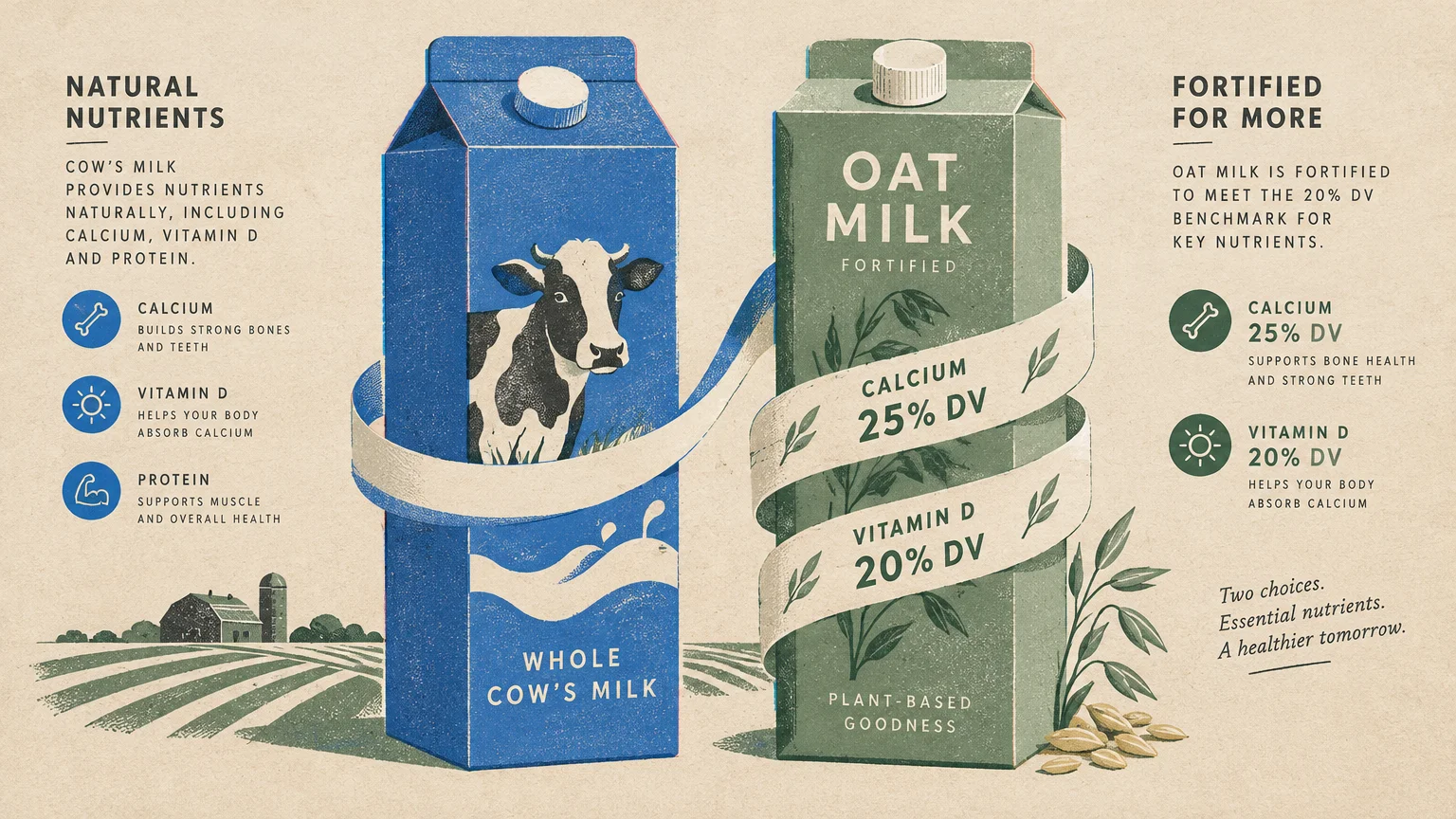
How do dairy and plant-based alternatives measure up against the rule?
The dairy case requires careful monitoring because products vary drastically between naturally occurring nutrients and added sweeteners. Plain milk and fortified plant alternatives serve as dependable sources for reaching high daily values.
A standard cup of dairy milk provides roughly 25 percent DV of calcium and 15 percent DV of vitamin D. When selecting plant-based milks made from soy, almond, or oats, check the label to confirm the bottler fortified the liquid to match those levels.
Unfortified plant milks frequently register less than 2 percent DV for calcium and zero percent for vitamin D. You must verify that the fortified brand hits at least 20 percent DV for calcium before paying a premium price.
Flavored yogurts represent a notorious trap for excess sweeteners. While yogurt delivers valuable calcium, flavored varieties often pack 25 to 30 percent DV of added sugars into a tiny six-ounce plastic cup.
Switch to plain whole or low-fat yogurt showing 0 percent DV for added sugars. You can sweeten the yogurt at home using fresh berries or a light dash of cinnamon to keep total sugar low.
Cheese delivers calcium, but it concentrates saturated fat and sodium into very small portions. A single one-ounce slice of sharp cheddar can account for 20 percent DV of saturated fat, pushing your daily budget to the limit.
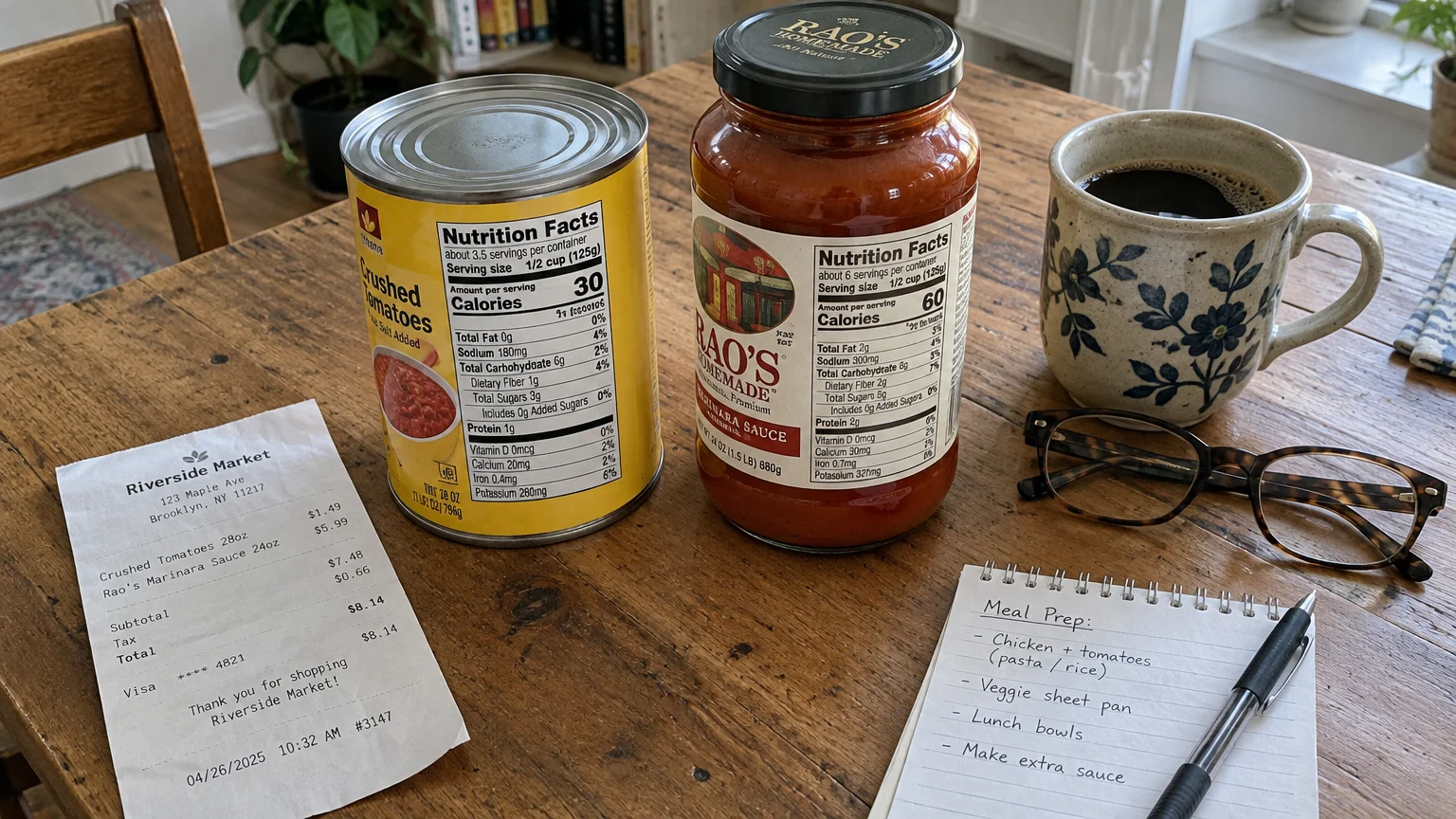
How can the 5 and 20 rule trim your grocery budget?
Brand-name food processors spend millions designing package graphics that convince you their products are healthier than generic options. Applying the 5 and 20 rule lets you ignore brand names and buy based on hard nutritional data.
Store-brand canned tomatoes, frozen vegetables, and dry cereals almost always share identical nutritional profiles with their costlier brand-name counterparts. When you compare both labels, the percentages for fiber, sodium, and sugar often match line for line.
According to research from the USDA Dietary Guidelines for Americans, consuming nutrient-dense staples forms the foundation of affordable, lifelong health. Choosing the store brand saves 20 to 30 percent at the cash register without surrendering a single percentage point of fiber or calcium.
Cooking for one or two requires careful attention to unit pricing and package sizing to avoid costly kitchen spoilage. High-fiber staples like dried lentils, brown rice, and canned beans cost pennies per serving and stay shelf-stable for months.
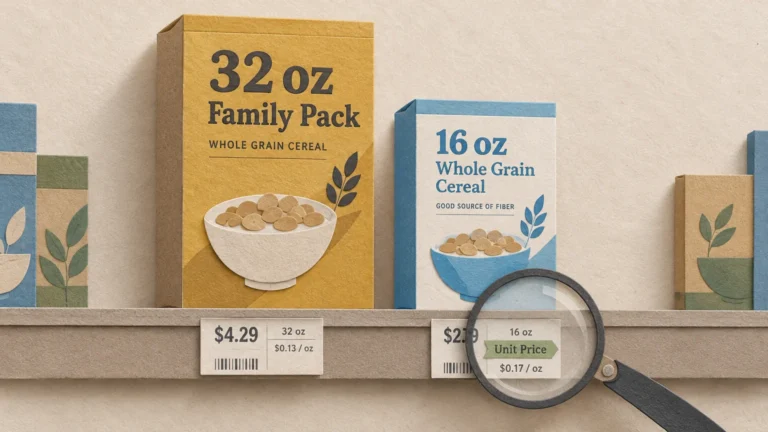
Check the unit price shelf sticker—usually calculated per ounce or per pound—alongside the nutrition panel. An economical bulk bag of rolled oats offering 20 percent DV of fiber costs far less per serving than individual flavored packets loaded with added sugar.
Buying shelf-stable items that hit your target percentages prevents food waste. You protect both your household grocery budget and your physical health by stocking your pantry with resilient, low-sugar, high-fiber staples.
What does the FDA proposed front-of-package label mean for your cart?
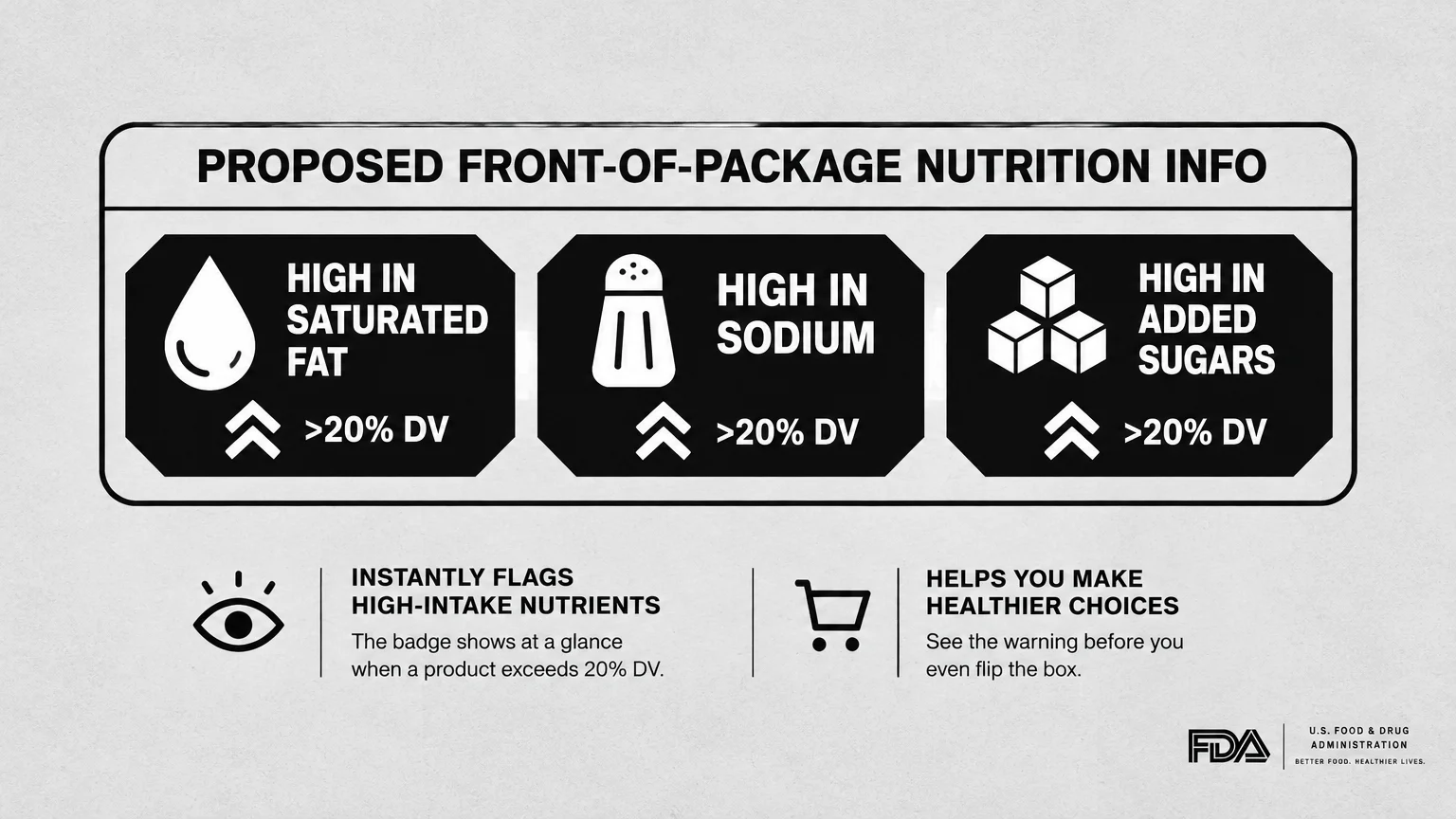
In January 2025, the FDA released a proposed rule designed to establish standardized Front-of-Package (FOP) nutrition labeling across the United States. This pending regulatory initiative aims to place a clear Nutrition Info box directly on the front display panel of packaged foods.
The proposed system directly applies the 5 and 20 rule so you do not even have to turn the box around. The proposed front box flags three key nutrients of public health concern: saturated fat, sodium, and added sugars.
Under the FDA proposal, a product carrying 5 percent DV or less of these nutrients earns a clear Low designation on the front. A product containing between 6 and 19 percent DV receives a Med badge.
Any product delivering 20 percent DV or more receives an explicit High warning right on the front corner. You can read the details of this initiative directly on the FDA Front-of-Package Nutrition Labeling page.
Because this rule remains a pending proposal undergoing public comment and administrative review, manufacturers have not yet added these badges to grocery shelves. Until the rule becomes final and mandatory, you must flip the package over to check the Nutrition Facts panel yourself.
Practicing the 5 and 20 rule right now puts you years ahead of regulatory updates. You will already know how to interpret those figures the moment the new front badges eventually appear in store aisles.
Frequently asked questions about nutrition labels
Does the 5 and 20 rule work if you eat less than 2,000 calories?
Yes, the rule remains exceptionally useful even if your daily caloric needs sit closer to 1,500 or 1,600 calories. While your absolute numerical targets are slightly lower, the percentage proportions remain an accurate indicator of nutrient density.
If you consume fewer total calories, avoiding foods that hit 20 percent DV for sodium or saturated fat becomes even more critical. High-percentage junk foods crowd out the essential micronutrients your body requires to function efficiently.
Why do some nutrients still show only grams or milligrams without a percentage?
Nutrients without a percentage line either lack a federal intake ceiling or vary too widely across individuals to standardize. Protein, trans fat, and total sugars are the three most common items displaying blank spaces in the percentage column.
When you see grams without percentages, rely on standard dietary thresholds to guide your choice. Keep trans fat at zero grams, keep added sugars below 5 percent, and consume adequate lean protein with every meal.
How does the rule apply to medications that affect mineral balance?
Certain blood pressure medications and diuretics alter how your body retains or clears critical minerals like potassium. If your physician prescribes a potassium-sparing diuretic or an ACE inhibitor, consuming foods with 20 percent DV of potassium might require medical supervision.
Never adjust prescribed dietary limits without consulting your personal healthcare provider or a registered dietitian. Bring your usual packaged food labels to your next clinical checkup to confirm your target percentages align with your prescriptions.
Can a food be healthy if it falls between 6 and 19 percent daily value?
A food falling into the moderate range remains an entirely healthy component of a balanced grocery cart. The 6 to 19 percent bracket simply means the food delivers a moderate, unremarkable portion of that specific nutrient.
For example, a vegetable soup providing 12 percent DV of potassium and 10 percent DV of fiber offers solid, dependable nutrition. You reserve the 5 percent rule to cap harmful ingredients and use the 20 percent rule to identify nutritional powerhouses.
What is your single action step for the next shopping trip?
Do not attempt to overhaul your entire pantry during a single visit to the supermarket. That approach leads to aisle fatigue and causes shoppers to abandon label reading entirely.
Pick one single nutrient to evaluate on your upcoming grocery run. If you manage blood pressure, make sodium your exclusive target across every aisle you visit.
Check the right-hand column of every can, box, and jar you place into your cart to confirm the sodium stays at or near 5 percent DV. If a regular purchase shows 20 percent DV or higher, leave it on the shelf and compare three competing brands.
Once tracking that first nutrient becomes second nature, expand your focus to fiber, saturated fat, or added sugar on subsequent trips. Taking command of one line at a time builds permanent shopping mastery and protects your long-term vitality.