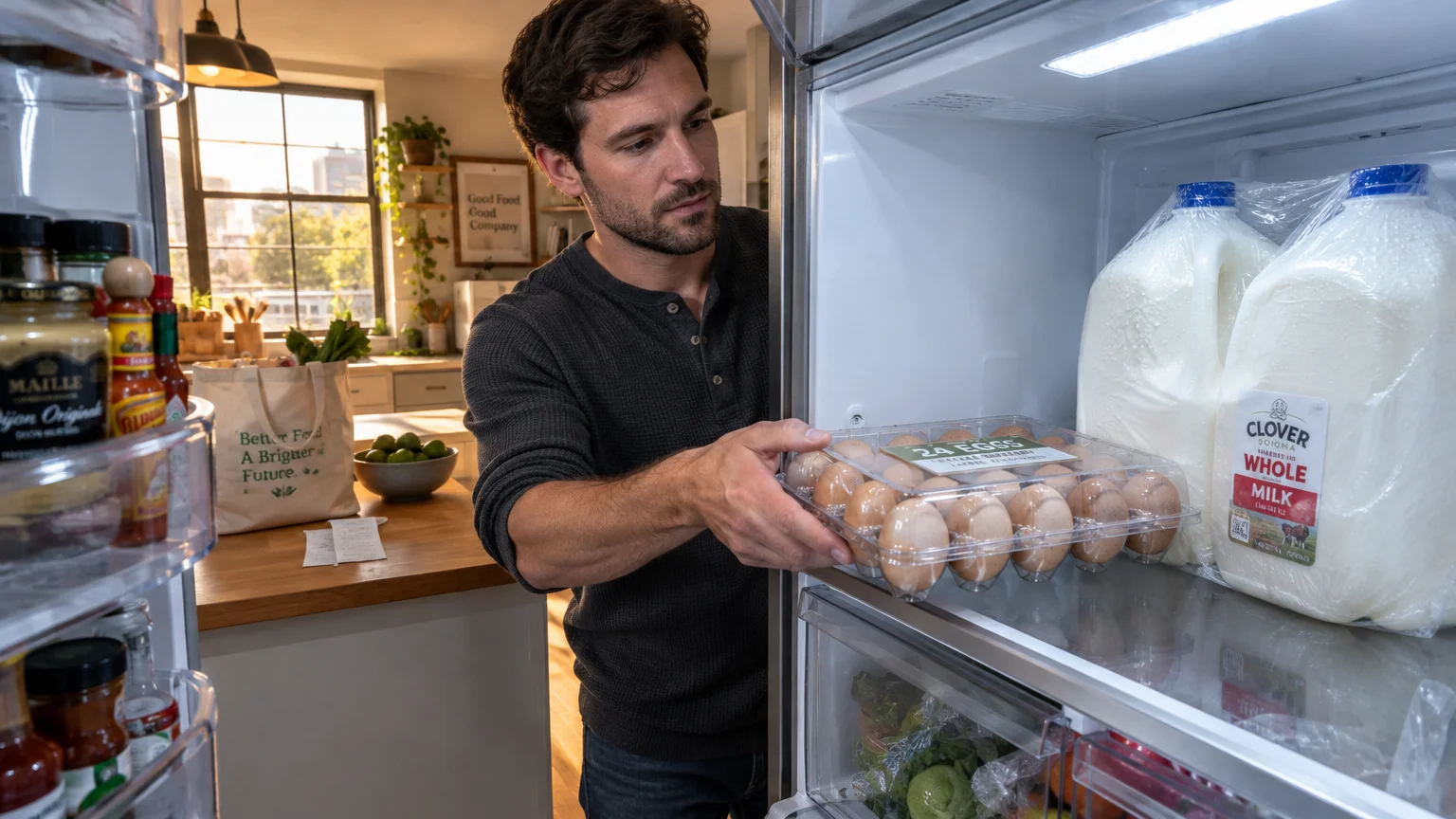
Buying bulk cartons of milk and eggs for a two-person household can trim your grocery budget or create frustrating waste. Choosing the right package sizes at Costco ensures you capture real savings without throwing spoiled food into the trash.
Kirkland Signature staples offer dependable quality at lower unit prices than most traditional supermarkets. You only need to know how product shelf life, proper storage, and household habits align with your weekly meals.
Let us break down the exact costs, refrigeration rules, and nutritional benefits so you can shop with complete confidence.
How much do Costco bulk milk and eggs actually save your household?
Supermarket price tags can fluctuate dramatically from month to month. Comparing warehouse receipts against national benchmarks reveals whether bulk purchases truly justify the cart space.
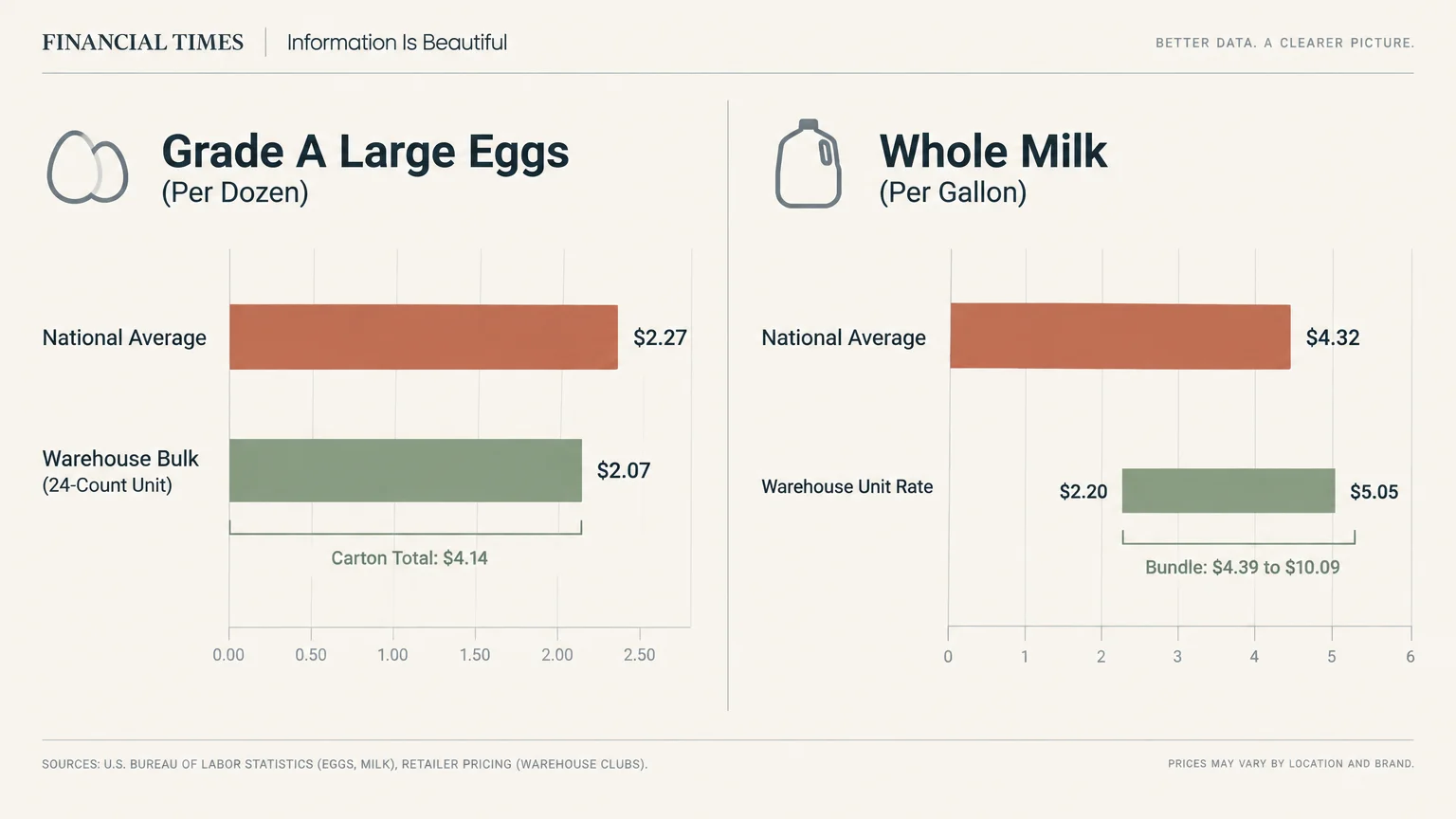
According to consumer price index data from the U.S. Bureau of Labor Statistics, the national average retail price for a dozen Grade A large eggs is $2.27. That reflects a welcome thirty-five percent drop from recent avian flu market peaks.
At Costco, a 24-count carton of Kirkland Signature USDA Grade AA Cage-Free Large White Eggs averages $4.14 nationwide. That equals roughly $2.07 per dozen, though regional prices range from $2.79 to $5.29.
If you prefer specialty options, a 24-count carton of Kirkland Signature Organic or Free-Range Eggs runs between $4.89 and $8.49 depending on local availability. These prices generally beat neighborhood supermarket specialty cartons by a noticeable margin.
Milk shows a similar pricing pattern when you examine the unit cost. Federal data records the national average price for a gallon of fortified fresh whole milk at approximately $4.32.
Costco sells conventional milk, including Kirkland Signature Whole or 2% varieties, in a two-pack of one-gallon jugs. Warehouse prices for that two-gallon bundle range between $4.39 and $10.09 across different regional markets.
In many regions, that bundle saves you between fifty cents and two dollars per gallon compared to standard grocers. Over twelve months of regular purchasing, those modest price differences accumulate into meaningful grocery savings.
However, paper savings vanish the moment spoiled food enters the compost bin. A bargain only benefits your wallet if you consume every drop and every shell you purchase.
Research published in the USDA Food Safety and Inspection Service FoodKeeper guide notes that households generate roughly forty-four percent of all domestic food waste. In fact, the average person discards an estimated twenty pounds of food each month.
For a two-person household, tossing half a gallon of milk or six cracked eggs eliminates your price advantage entirely. That reality makes shelf life your top purchasing priority.

Can two people finish a 24-count egg carton before it spoils?
Many shoppers hesitate before picking up a two-dozen egg carton because they fear spoilage. Fortunately, whole shell eggs boast a surprisingly resilient refrigerated lifespan.
The USDA confirms that raw shell eggs remain safe and fresh for three to five weeks when stored at forty degrees Fahrenheit or below. That generous window works strongly in favor of smaller households.
Two adults sharing a 24-count package need to consume just six to eight eggs each week between them. That pace clears the entire carton in roughly three weeks, well within federal safety guidelines.
A simple breakfast frittata or weekend scramble uses four to six eggs in a single meal. Baking a batch of whole-grain muffins or protein pancakes easily claims another two or three.
Hard-boiling six eggs at the start of the week provides convenient, grab-and-go snacks that keep perfectly in your refrigerator. This steady culinary routine prevents eggs from lingering past their prime.
If your household eats eggs only occasionally, you might struggle to finish twenty-four before quality degrades. In that specific scenario, standard twelve-count cartons from your local grocer remain the wiser financial move.
What nutritional benefits do eggs offer for mature adults?
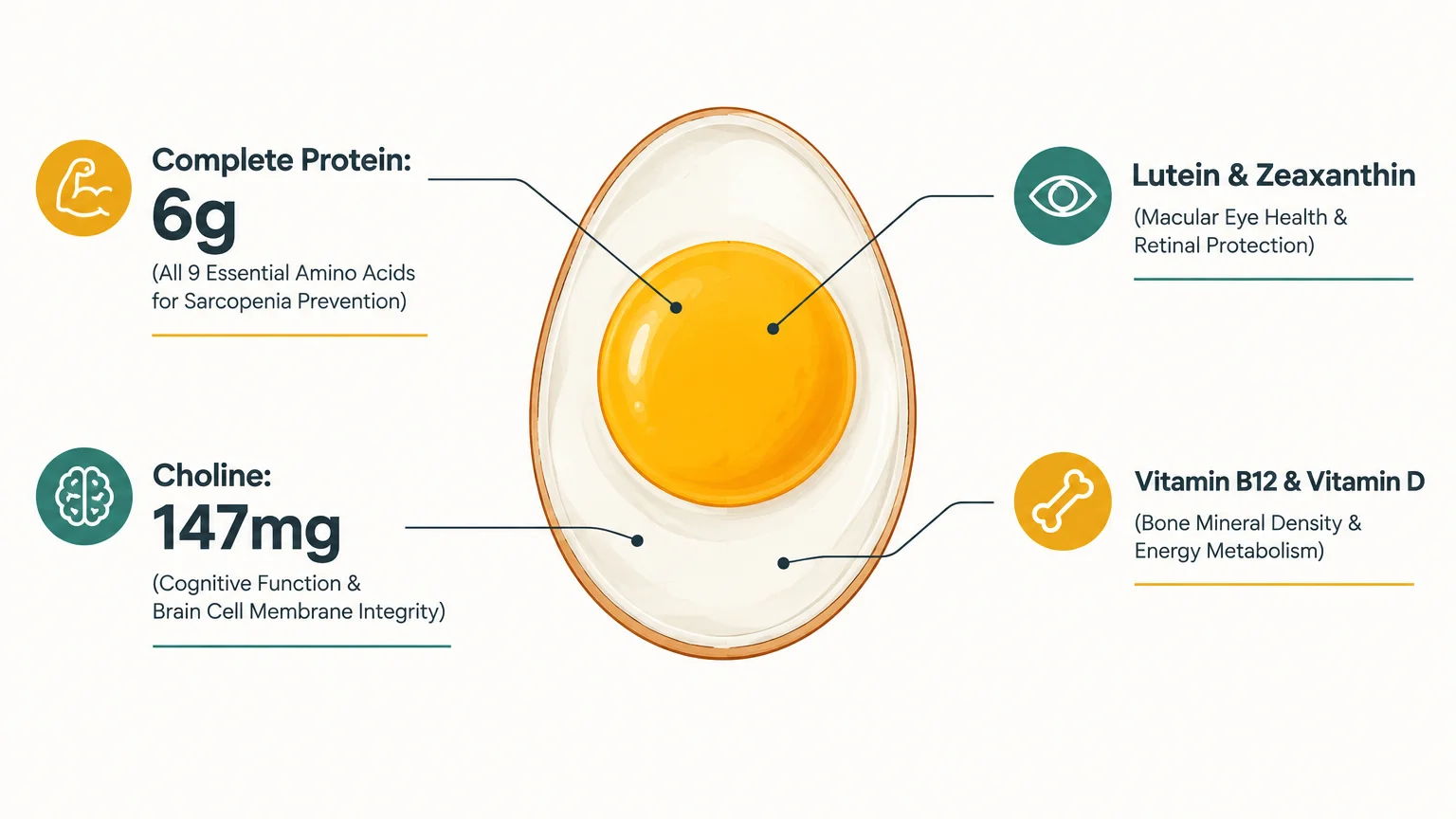
Eggs represent one of the most nutrient-dense, bioavailable protein sources available in the entire grocery store. Each large egg delivers six grams of complete protein alongside essential amino acids that preserve lean muscle mass.
Maintaining muscle tissue becomes increasingly vital as the decades advance. High-quality protein helps maintain metabolic health, functional strength, and balance during everyday activities.
Egg yolks supply generous amounts of choline, a critical nutrient that supports brain health, nerve function, and cellular signaling. Many Americans fail to reach the recommended daily choline intake through standard meals.
You also gain lutein and zeaxanthin from egg yolks. These powerful carotenoid antioxidants concentrate in your retina, helping shield your eyes from oxidative stress and supporting long-term macula health.
Concerns surrounding dietary cholesterol previously caused many health-conscious adults to strictly avoid whole eggs. Thankfully, nutritional science has evolved significantly on this topic.
The American Heart Association notes that healthy adults can safely include an egg daily within a heart-healthy dietary pattern. Healthy older adults with normal cholesterol levels can comfortably enjoy up to two eggs daily.
Unless your physician or clinical dietitian has placed you on strict cholesterol limits, eggs remain an outstanding dietary staple. They deliver affordable nutrition that fits effortlessly into a balanced eating plan.
Should you buy the 60-count egg carton or leave it on the pallet?
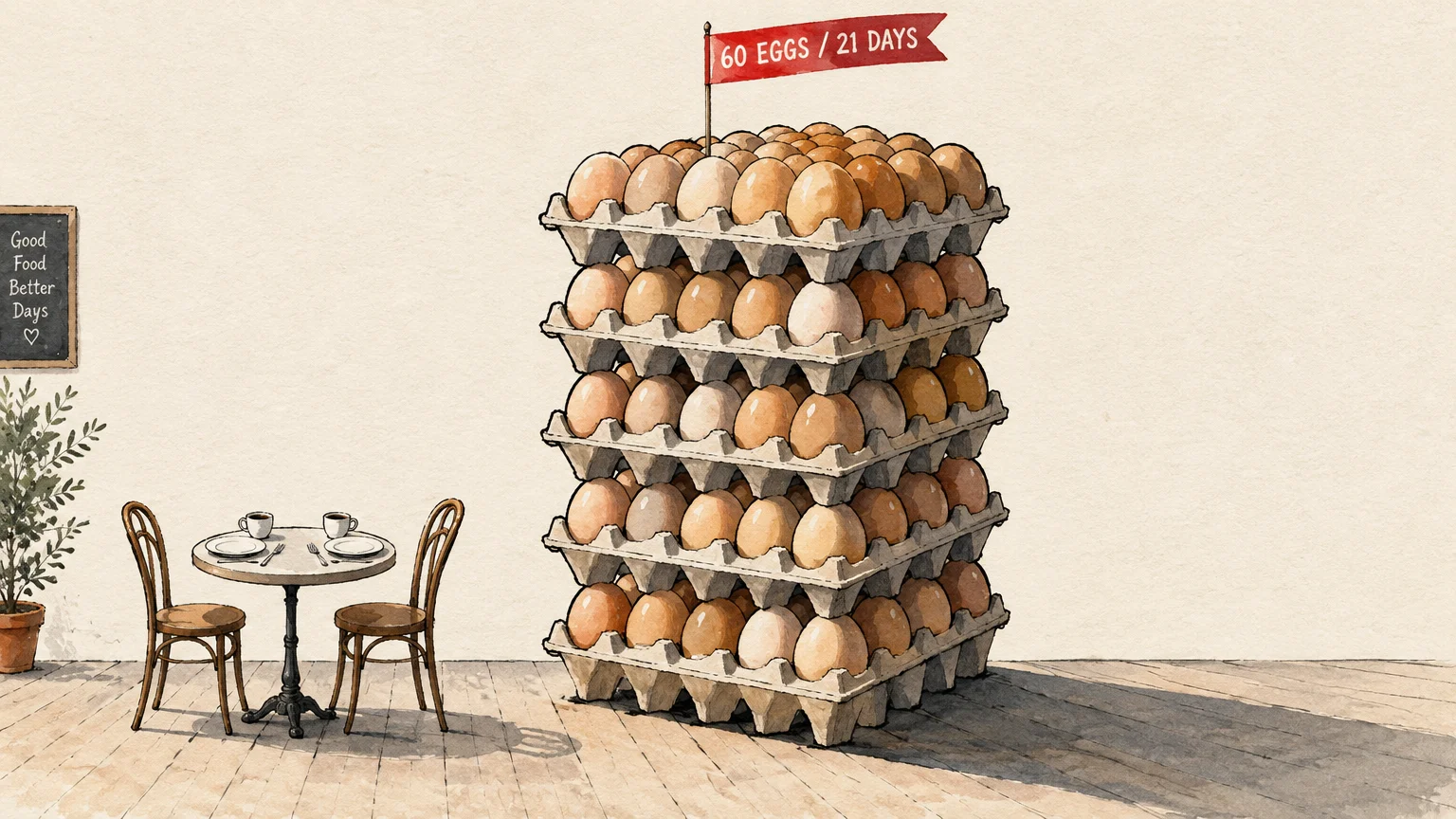
Costco displays massive five-dozen flats of eggs right alongside the 24-count packages. The bulk price tag looks incredibly tempting at first glance.
Yet for a two-person household, purchasing sixty eggs at once rarely makes practical sense. Eating sixty eggs within the USDA five-week safety window demands consuming twelve eggs every single week without interruption.
Unless you host large weekend brunches or do extensive home baking, that volume creates unnecessary mealtime stress. Rushing to use expiring food often leads to repetitive and unbalanced meals.
You cannot freeze raw eggs directly inside their shells because expanding liquid causes the shells to crack immediately. However, you can freeze beaten raw eggs if you find yourself with an unexpected surplus.
To freeze raw eggs properly, crack them into a clean bowl and whisk yolks and whites together gently. Pour the mixture into ice cube trays, freeze solid, and transfer the frozen egg cubes into an airtight freezer bag.
USDA guidelines state that frozen beaten eggs retain peak culinary quality for up to one full year. You can thaw individual portions overnight in your refrigerator for baking or omelets.
Even with that freezing workaround, the extra labor rarely justifies purchasing sixty eggs for two people. Stick with the manageable 24-pack and leave the five-dozen crate on the warehouse pallet.
What makes Costco organic milk cartons last longer than conventional gallons?
Milk presents a much tighter expiration window than eggs once you bring it home. Pasteurized milk typically maintains quality for only five to seven days after opening.
Costco’s conventional milk comes in a dual-pack of one-gallon jugs, totaling two full gallons. Two people must consume more than forty-five ounces of milk every day to finish both jugs before souring occurs.
For most couples, drinking two gallons of fluid milk in seven to ten days is simply unrealistic. That makes the conventional two-pack a common source of domestic food waste.
The smarter alternative sits just a few feet away in the refrigerated dairy vault. Kirkland Signature Organic Milk comes packaged in a convenient three-pack of 64-ounce half-gallon cartons.
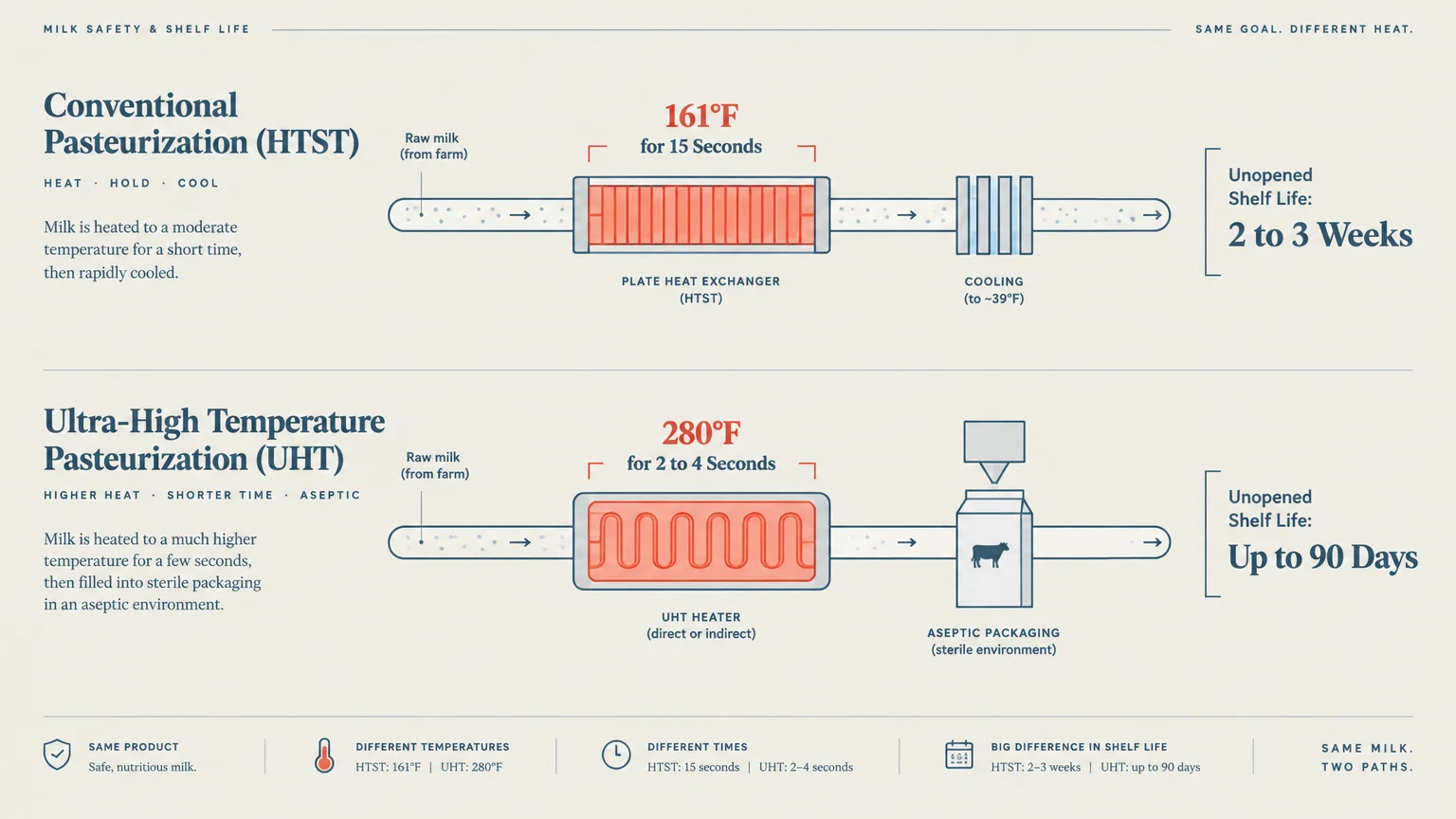
These organic half-gallon cartons undergo ultra-high temperature processing, commonly labeled as ultra-pasteurization. The U.S. Food and Drug Administration regulates pasteurization standards to ensure complete product safety and shelf stability.
Ultra-pasteurization heats milk to roughly 280 degrees Fahrenheit for two seconds, eliminating virtually all spoilage bacteria. This thermal process grants unopened organic cartons a shelf life lasting up to sixty days in your refrigerator.
Because the 1.5-gallon bundle splits into three separate cartons, you open only one half-gallon at a time. The remaining two sealed cartons stay perfectly fresh until you need them.
A half-gallon holds sixty-four fluid ounces, which translates to just eight standard eight-ounce servings. Two adults enjoying morning coffee, hot oatmeal, or an occasional smoothie can finish that carton comfortably within four days.
Which milk variety best supports blood pressure and bone density?
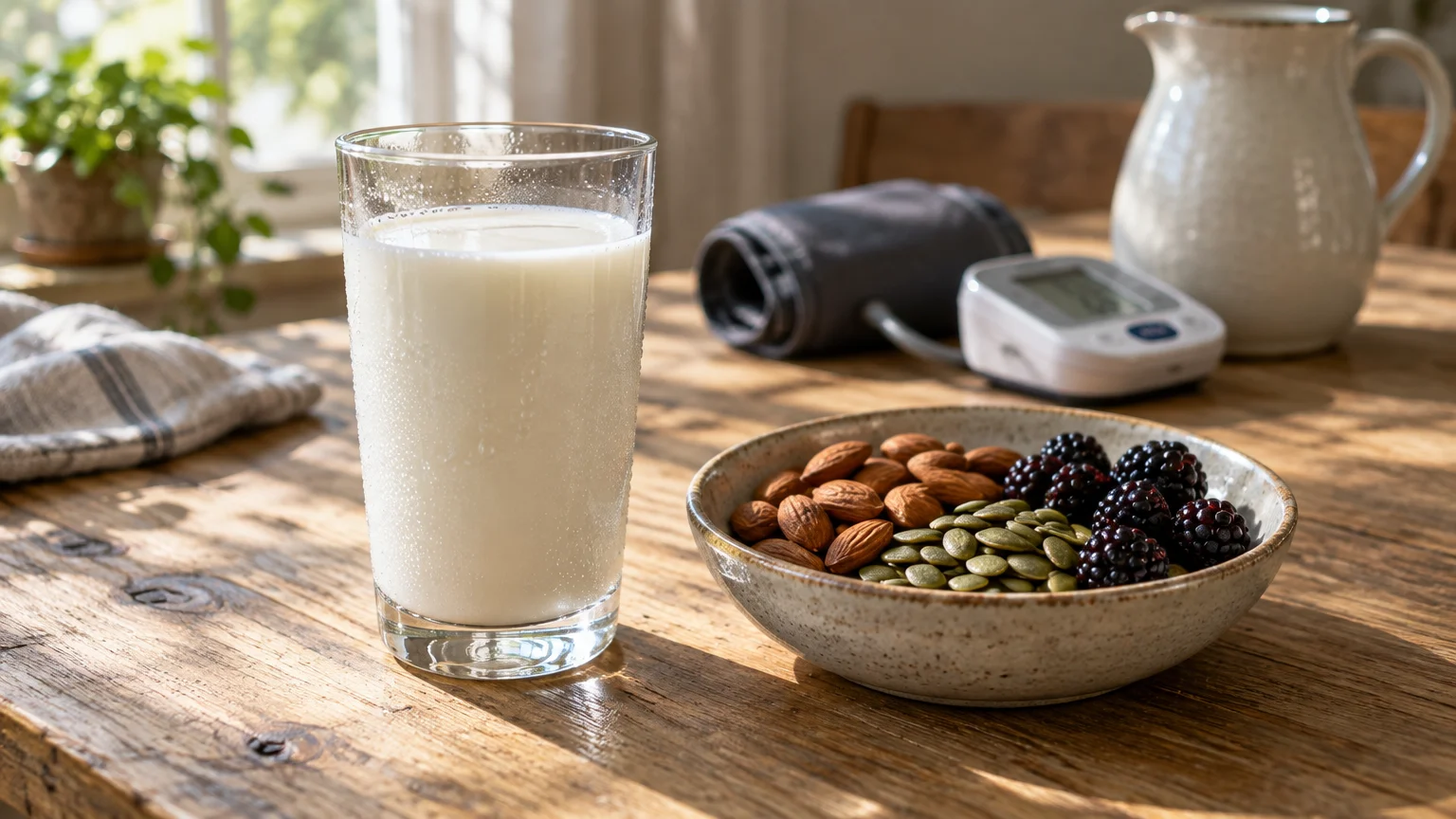
Selecting the right milk carton involves balancing essential minerals against your personal cardiovascular goals. Milk serves as a premier source of calcium, phosphorus, and fortified vitamin D for skeletal integrity.
These three nutrients work synergistically to support bone mineral density, reducing fracture risks as the skeleton ages. Calcium also assists proper vascular contraction and muscle movement throughout the day.
Fluid milk provides an impressive boost of dietary potassium, delivering more than three hundred milligrams per cup. Potassium plays an instrumental role in blunting the adverse effects of dietary sodium on blood pressure.
When selecting your milk carton, consider saturated fat levels alongside your doctor’s cardiovascular recommendations. Whole milk provides rich flavor and satiety, but it carries four and a half grams of saturated fat per serving.
If you are managing elevated LDL cholesterol, choosing Kirkland Signature 1% or Skim milk reduces saturated fat without sacrificing calcium or potassium. Kirkland Signature 2% milk offers an appealing middle ground for everyday drinking.
Costco also stocks organic A2 milk varieties in three-pack cartons in several regional markets. A2 milk contains only the A2 beta-casein protein variant, which many people find significantly easier to digest.
If standard cow milk causes mild digestive discomfort or bloating, A2 dairy provides real relief while retaining full mineral content. Take a moment to examine the carton labels to see which formulation your local warehouse carries.
How do federal date labels affect your dairy and egg shopping decisions?
Misinterpreting carton date stamps leads thousands of households to discard perfectly safe food prematurely. Understanding regulatory terminology helps you protect both your stomach and your wallet.
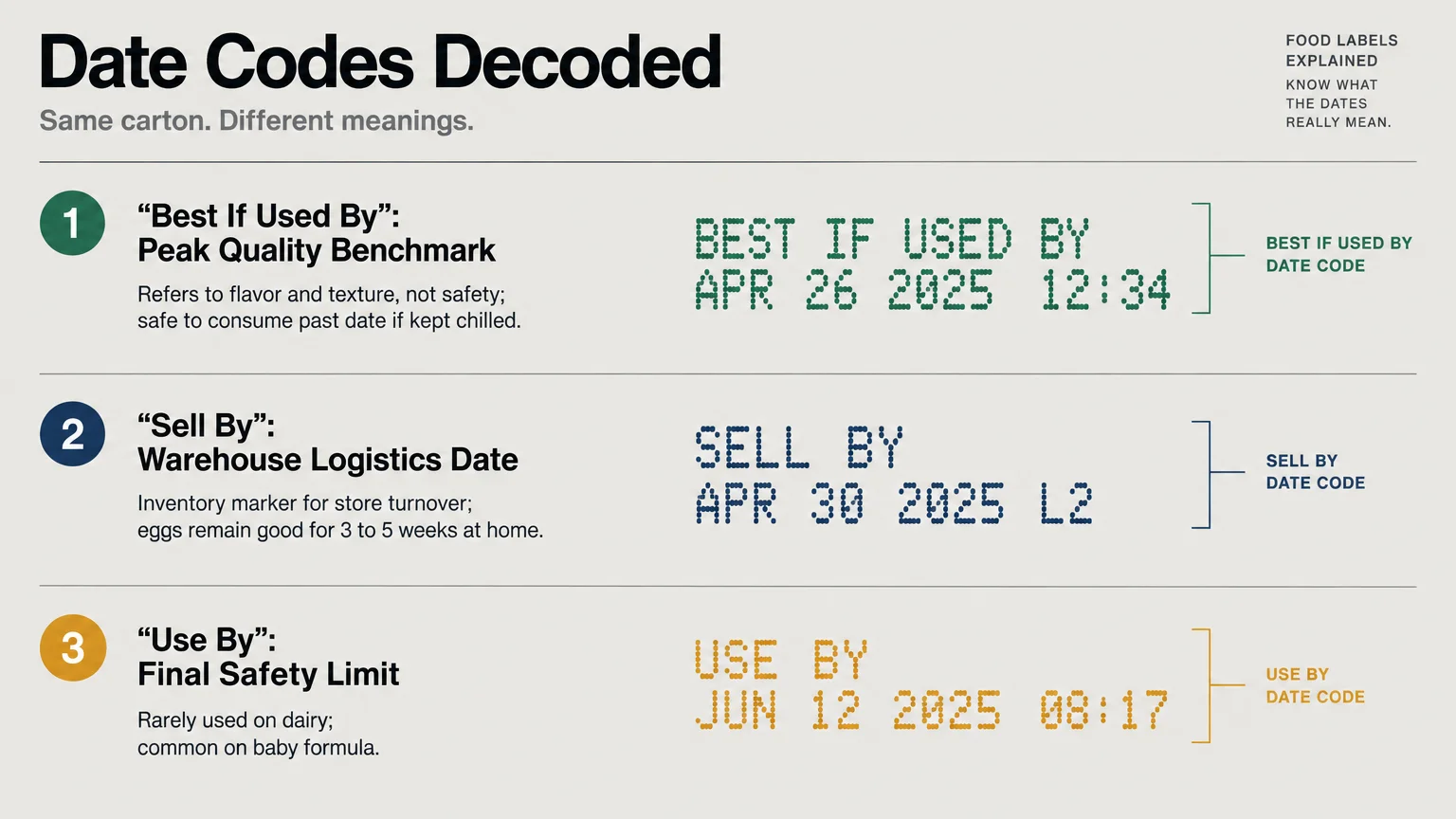
Federal law does not require date labeling on food products, with the single exception of infant formula. The stamps you see on egg and milk cartons represent voluntary manufacturer quality markers rather than safety deadlines.
A “Sell-By” date tells store inventory staff how long to display the product on retail shelves. It does not mean the food becomes harmful or unwholesome the following morning.
A “Best if Used By” stamp indicates the timeframe during which the food retains its peak flavor and texture. Consuming milk or eggs shortly after that printed date remains entirely safe if products were stored properly.
To verify egg freshness at home, you can use the classic water float test. Place a raw shell egg gently into a deep bowl of cold tap water.
Fresh eggs rest horizontally on the bottom because they contain minimal internal air space. Older eggs stand upright or tilt upward as moisture evaporates through the porous shell over time.
An egg that floats all the way to the water surface has developed a large internal air pocket. While floating indicates advanced age, crack the egg into a small saucer and inspect it for discoloration or off odors before discarding.
For milk, trust your senses rather than relying solely on the stamped carton calendar. Fresh milk smells clean and pours smoothly without any clumping, curdling, or sour aromatic notes.
Can you freeze extra milk to prevent pouring savings down the drain?
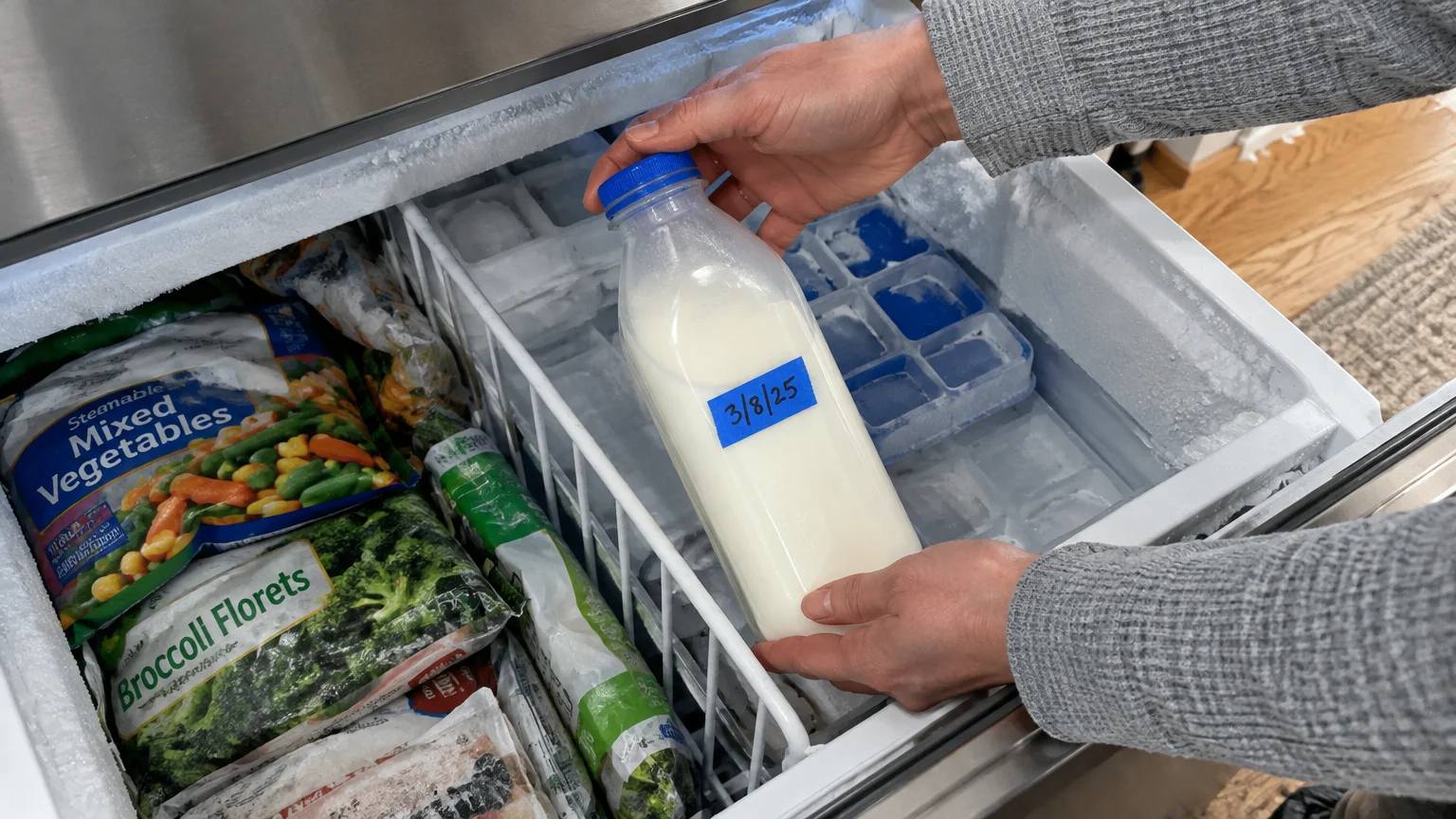
If you purchase a milk bundle and realize you cannot finish it before leaving town, freezing offers an effective backup plan. Freezing halts bacterial activity and preserves vital nutrients without degradation.
The USDA notes that unopened milk remains safe in a zero-degree freezer for up to three months. However, freezing causes fluid milk to expand, so you must prepare cartons carefully.
If you plan to freeze a plastic milk jug, pour out roughly one cup of liquid first to provide adequate expansion space. Freezing a completely full jug will rupture the plastic seam and create a mess.
Freezing causes milk fats to separate from water molecules, which can alter the liquid texture upon thawing. Thawed whole milk or 2% milk often exhibits a slightly grainy or separated appearance.
You can quickly restore uniform texture by shaking the thawed container vigorously or blending it for ten seconds. Skim and low-fat milks freeze much more cleanly than higher-fat varieties because they contain minimal milk fat.
Thawed milk performs exceptionally well in cooked recipes, daily baking, and morning oatmeal where minor textural shifts remain unnoticed. Use previously frozen milk in homemade soups, pancakes, and smoothies for best culinary results.
Always thaw frozen milk slowly inside your refrigerator rather than setting it on the kitchen counter. Refrigerator thawing preserves food safety and keeps dairy well below the danger zone of forty degrees Fahrenheit.
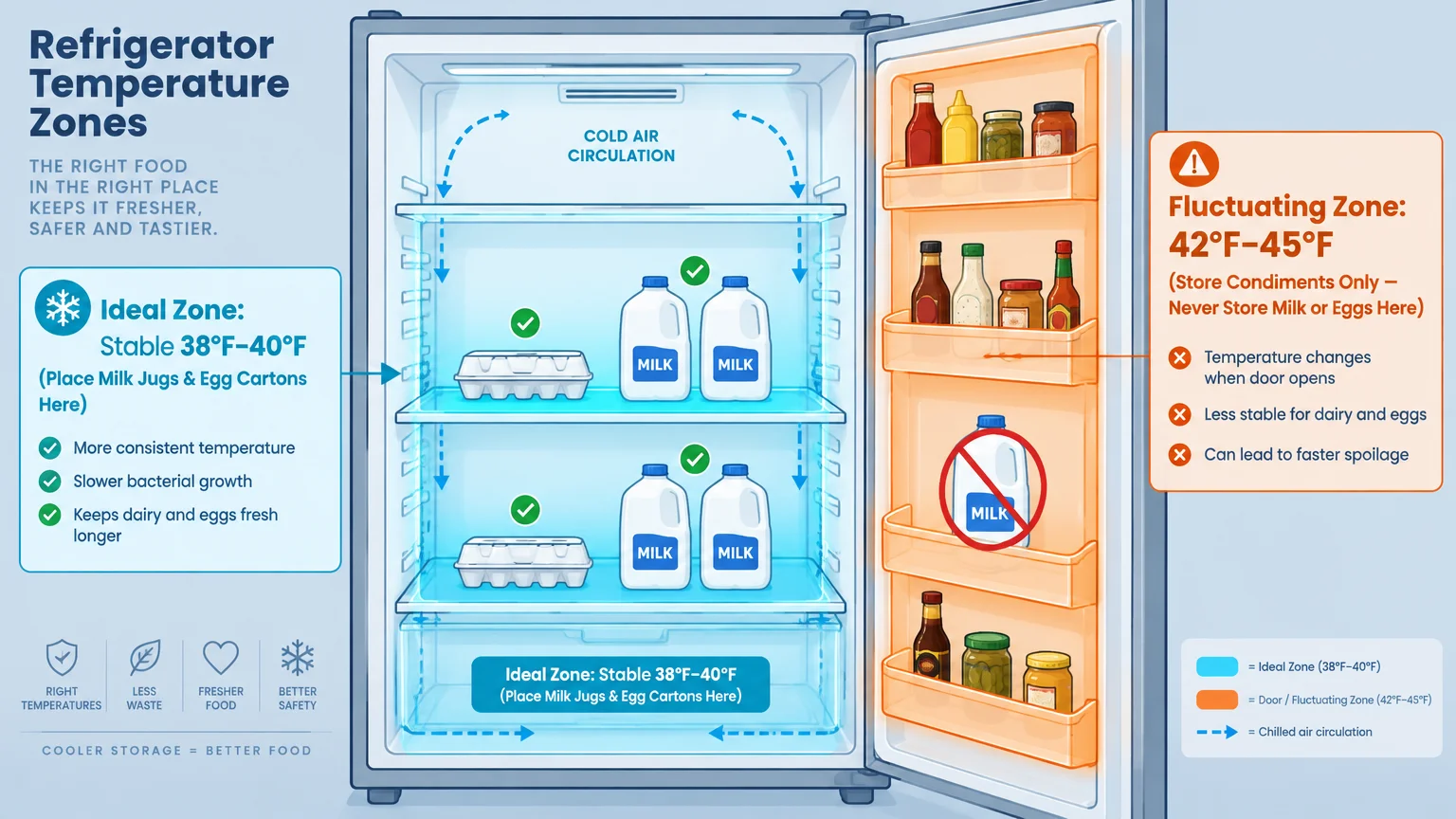
Where should you store eggs and milk in your refrigerator?
Placement inside your home refrigerator matters just as much as the product packaging you select at the warehouse. Many consumers unknowingly store perishable dairy items in the worst possible locations.
Refrigerator door bins seem custom-designed for tall milk jugs and molded egg cartons. However, the door represents the warmest, most temperature-volatile section of your entire appliance.
Every time you open the refrigerator door, warm kitchen air washes over items stored in those exterior shelves. Frequent temperature fluctuations accelerate bacterial multiplication and cause milk to sour prematurely.
Place both your milk cartons and egg crates onto the central or bottom interior shelves toward the back. The rear interior shelves consistently maintain cold, stable temperatures that preserve freshness.
Keep your eggs stored in their original cardboard or pulp packaging rather than transferring them to built-in plastic door cups. Original cartons protect fragile shells from accidental cracking and shield them from absorbing potent odors from nearby foods.
Verify that your home refrigerator runs at or below forty degrees Fahrenheit using an inexpensive appliance thermometer. Operating at thirty-seven to thirty-eight degrees Fahrenheit provides ideal safety margins for all perishable groceries.
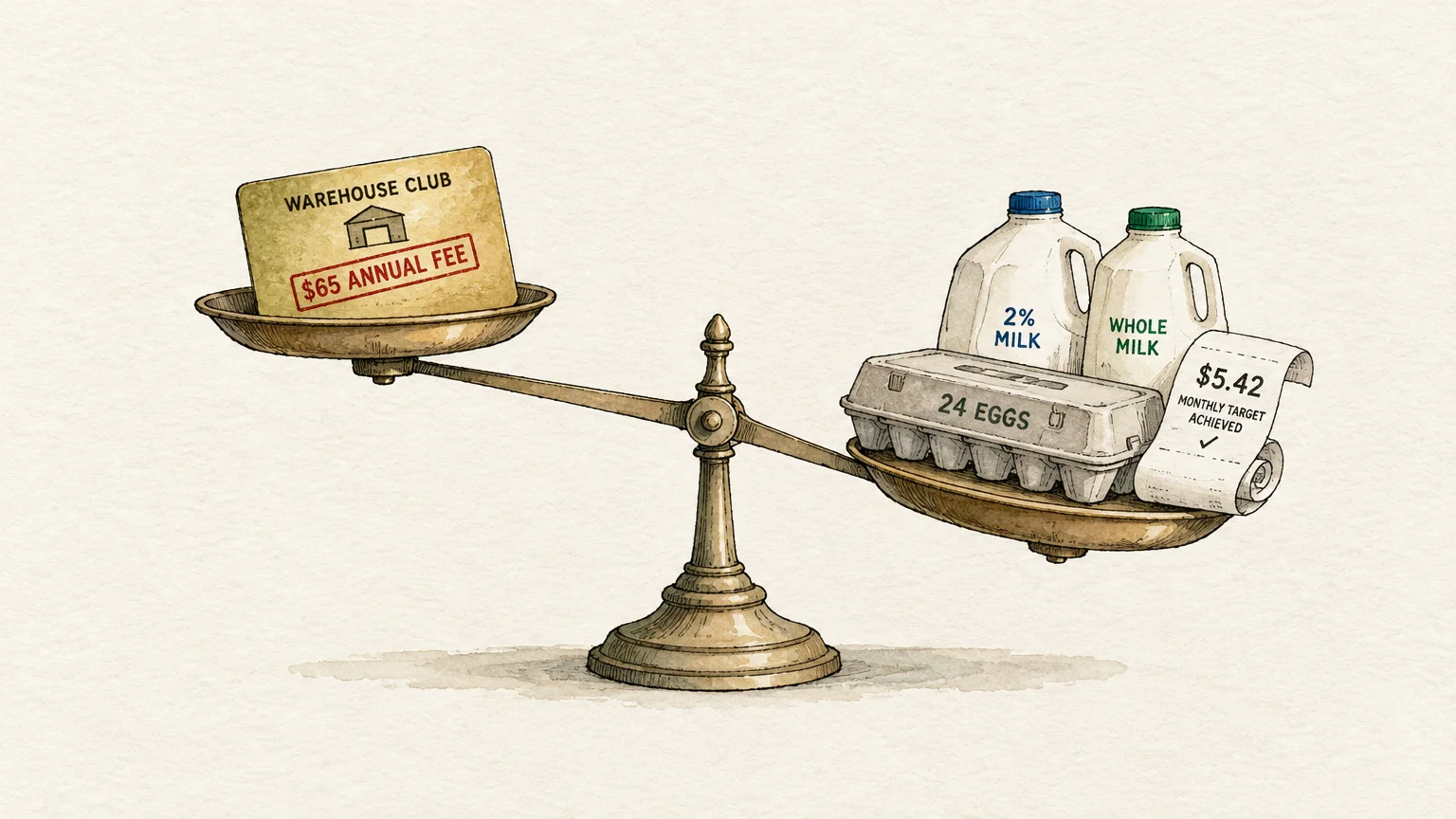
How does the $65 annual membership fee change the break-even math?
Evaluating warehouse savings requires accounting for the recurring cost of building admission. On September 1, 2024, Costco Wholesale increased its standard U.S. Gold Star membership fee to $65 annually.
To break even on a standard membership, your shopping trips must yield at least $5.42 in documented monthly savings compared to traditional stores. That threshold shapes whether buying milk and eggs alone justifies keeping your card active.
If your household saves twenty cents per dozen on eggs and buys two cartons monthly, you save eighty cents. If you save one dollar on an organic milk three-pack monthly, your total combined dairy savings reach $1.80 per month.
Those two staples alone do not reach the $5.42 monthly break-even hurdle for a two-person home. Relying solely on milk and eggs makes the annual membership fee difficult to recover on a modest grocery budget.
However, pairing bulk milk and eggs with other high-value items flips the financial equation decisively in your favor. Adding prescription refills, over-the-counter allergy medications, olive oil, nuts, and gasoline quickly covers your annual fee.
Costco also offers an Executive Membership for $130 per year, which provides a two percent annual reward on eligible warehouse purchases capped at $1,250. Executive members with linked accounts also receive a ten-dollar monthly credit on eligible delivery orders of $150 or more.
For two people spending modestly on basic groceries, the standard $65 Gold Star card represents the most sensible tier. Monitor your monthly receipts carefully to ensure your aggregate basket savings comfortably surpass that $5.42 monthly target.
Frequently asked questions about shopping Costco dairy and egg aisles
Can you freeze fresh shell eggs directly inside the egg carton?
You must never freeze fresh eggs while they remain inside their brittle calcium shells. The liquid inside expands as it turns to solid ice, cracking the shell wide open and inviting bacterial contamination.
To freeze eggs safely, crack them out of their shells and whisk yolks and whites together gently. Pour the beaten eggs into freezer-safe containers or ice cube trays and freeze them for up to twelve months.
How long does ultra-pasteurized organic milk stay fresh after you break the seal?
Ultra-pasteurized organic milk boasts an extended shelf life while sealed, but the clock starts ticking once you twist the cap open. Introducing airborne bacteria from your kitchen environment gradually degrades the opened milk.
Consume opened cartons of ultra-pasteurized milk within seven to ten days for optimal flavor and freshness. Always keep opened cartons chilled on interior refrigerator shelves rather than in the door bins.
Is buying cage-free or organic eggs at Costco nutritionally superior?
All Grade A whole shell eggs provide roughly identical macronutrient profiles, delivering six grams of complete protein per large egg. Vitamin and mineral contents remain broadly comparable across conventional, cage-free, and organic labeling categories.
Pasture-raised and organic eggs often contain modestly higher levels of omega-3 fatty acids and vitamin E due to varied hen diets. However, cage-free and organic designations primarily reflect animal welfare standards and certified organic feed practices.
What should you do if an opened bulk milk jug starts smelling slightly sour?
When milk develops an assertive sour aroma or shows signs of curdling, you should discard the remaining liquid immediately. Consuming spoiled dairy products can trigger acute gastrointestinal distress, especially for individuals managing sensitive digestive tracts.
Never attempt to boil sour fluid milk in an effort to restore its palatability or safety. Prevent this scenario altogether by choosing the three-pack of half-gallon cartons instead of two-gallon jugs.
What is your single smartest move on your next Costco trip?
Before leaving your driveway for the warehouse, open your refrigerator door and inspect your remaining supply of milk and eggs. Take twenty seconds to verify that your central refrigerator shelves have adequate clear space to accommodate bulk packaging.
When you reach the dairy cooler, deliberately bypass the conventional two-pack of one-gallon jugs. Reach instead for the Kirkland Signature Organic Milk three-pack of 64-ounce half-gallon cartons.
Next, pick up the Kirkland Signature 24-count cage-free egg carton rather than the massive 60-count flat. These two specific package sizes deliver lower unit prices while guaranteeing you consume every serving before expiration.