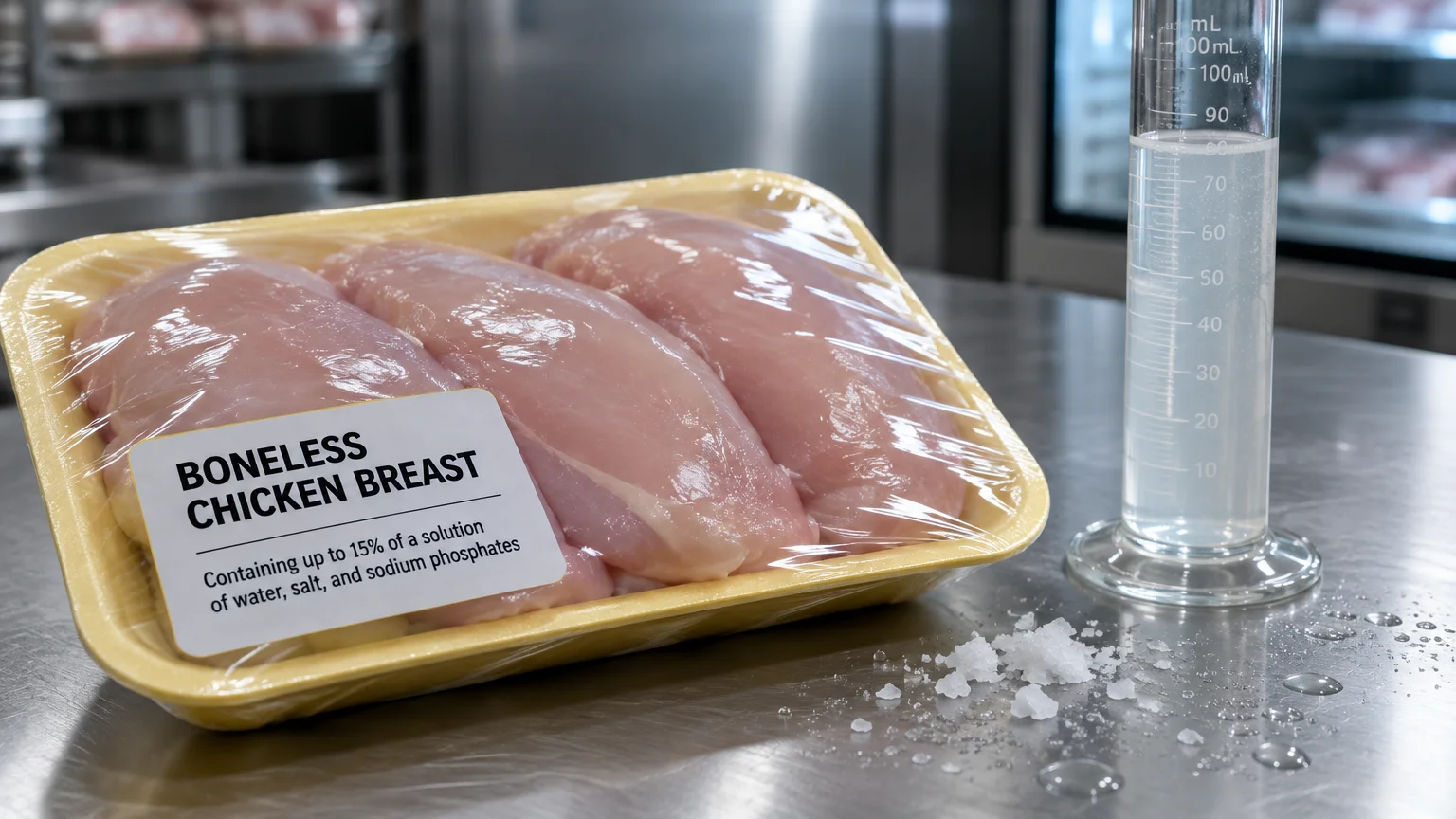
You can walk out of the supermarket with fresh raw chicken or pork that carries hundreds of milligrams of hidden sodium. Food processors regularly pump raw cuts with saltwater to boost package weight and tenderness before putting them in the display case.
That added fluid inflates the price you pay at the register while quietly working against your blood pressure goals. Learning how to spot added salt solutions ensures you bring home pure protein instead of expensive tap water.
A quick glance at specific label markings reveals exactly what processors injected into that meat. Here is how you can read the packaging with complete confidence on your very next trip down the meat aisle.
How can you identify added saltwater solutions on front packaging?
Supermarkets display packages of raw poultry and pork that look identical at first glance. One package contains pure meat, while the package sitting right next to it holds up to fifteen percent injected saltwater.
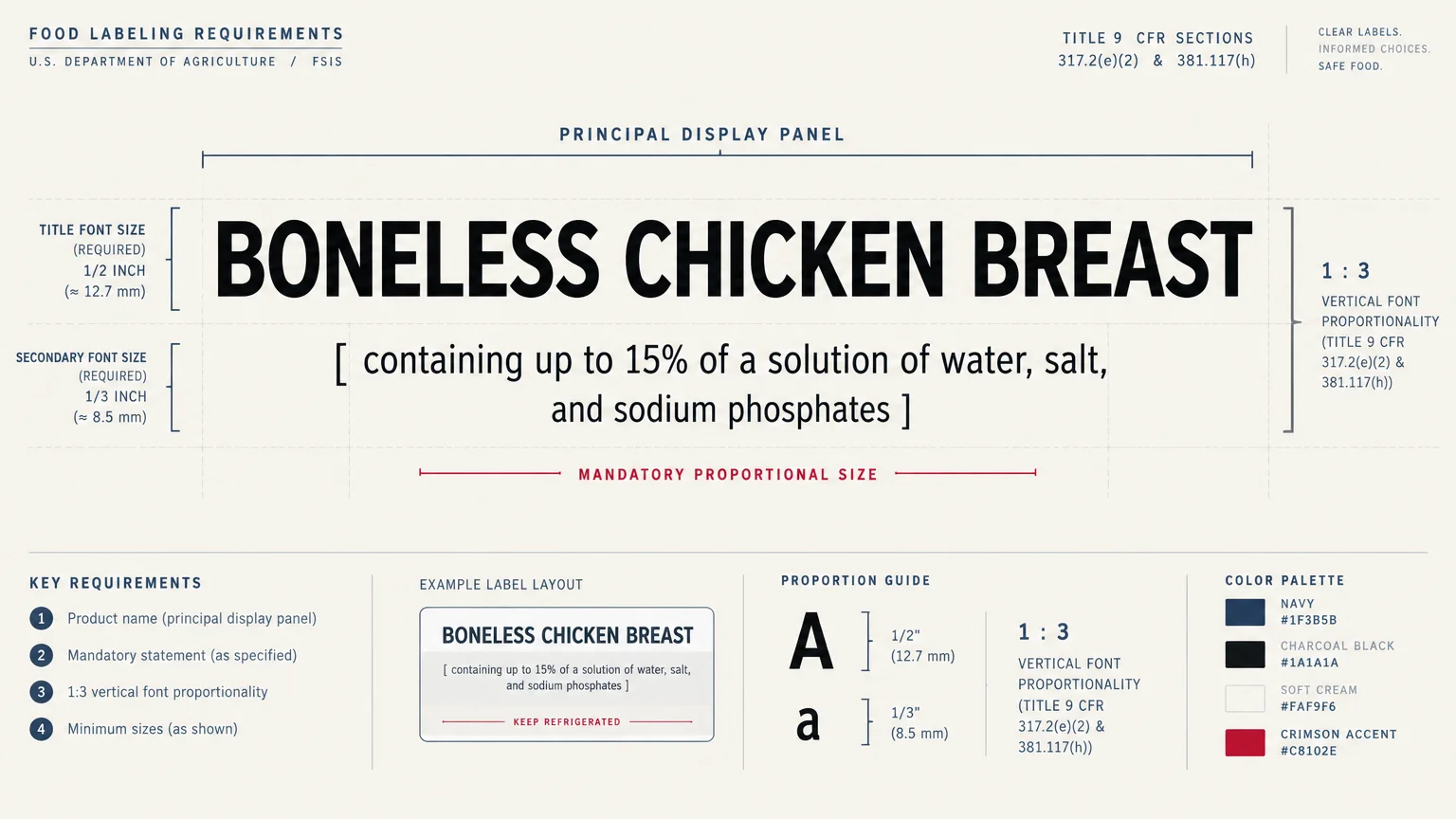
You do not need special tools to tell them apart on the shelf. Federal labeling standards force processors to state the presence of added solutions directly on the primary display panel.
Under regulations enforced by the USDA Food Safety and Inspection Service, raw meat containing an added solution must declare that addition as part of the product name. These rules fall under Title 9 of the Code of Federal Regulations, specifically sections 317.2(e)(2) and 381.117(h).
The standard took effect on January 1, 2016, giving consumers an immediate way to distinguish whole meat from injected products. When you look at the package front, the solution statement must accompany the core name of the cut.
You will see phrases like boneless chicken breast containing up to fifteen percent of a solution. If that statement appears on the front label, the meat inside has undergone mechanical injection or vacuum tumbling with seasoned liquid.
The descriptive statement must also list the solution ingredients in descending order by weight. Water almost always appears first, followed by salt, sodium phosphates, or concentrated broths.
Where does the label disclose an injected solution?
Processors must print the descriptive solution statement directly on the principal display panel. That means you should never have to search obscure corners of the packaging to find it.
The text must appear immediately adjacent to or directly beneath the product name. A package cannot legally declare chicken breast in large type and hide the solution text on the back edge.
Look directly where your eyes naturally land when checking the price tag and the cut style. If processors added any brine, broth, or chemical tenderizer, the statement belongs right alongside the cut name.
Checking this single location allows you to make an informed decision in seconds. You can instantly return the pumped meat to the cold shelf and reach for an unadulterated package instead.
Why does font size on meat packaging matter to your wallet?
For years, processors printed solution disclosures in faint, tiny lettering that shoppers routinely overlooked. Federal regulators addressed that deceptive practice by instituting strict font-sizing rules that took full effect on January 1, 2018.
The law requires every word in the product name and the descriptive solution statement to appear in a single, easy-to-read font style. The letters must stand out clearly against a contrasting, single-color background.
Most importantly, the lowercase letters in the solution statement cannot be smaller than one-third the size of the largest letter in the product name. If the word pork tenderloin appears in half-inch letters, the solution declaration must measure at least one-sixth of an inch.
This proportional requirement prevents packers from shouting fresh pork while whispering added salt solution. If the letters look tiny, muddy, or deliberately hidden against busy background art, the packaging violates federal standards.
These font rules protect both your eyesight and your grocery budget. You can easily spot injected water before spending your hard-earned dollars on discounted brines.
What is the difference between retained water and added salt solutions?
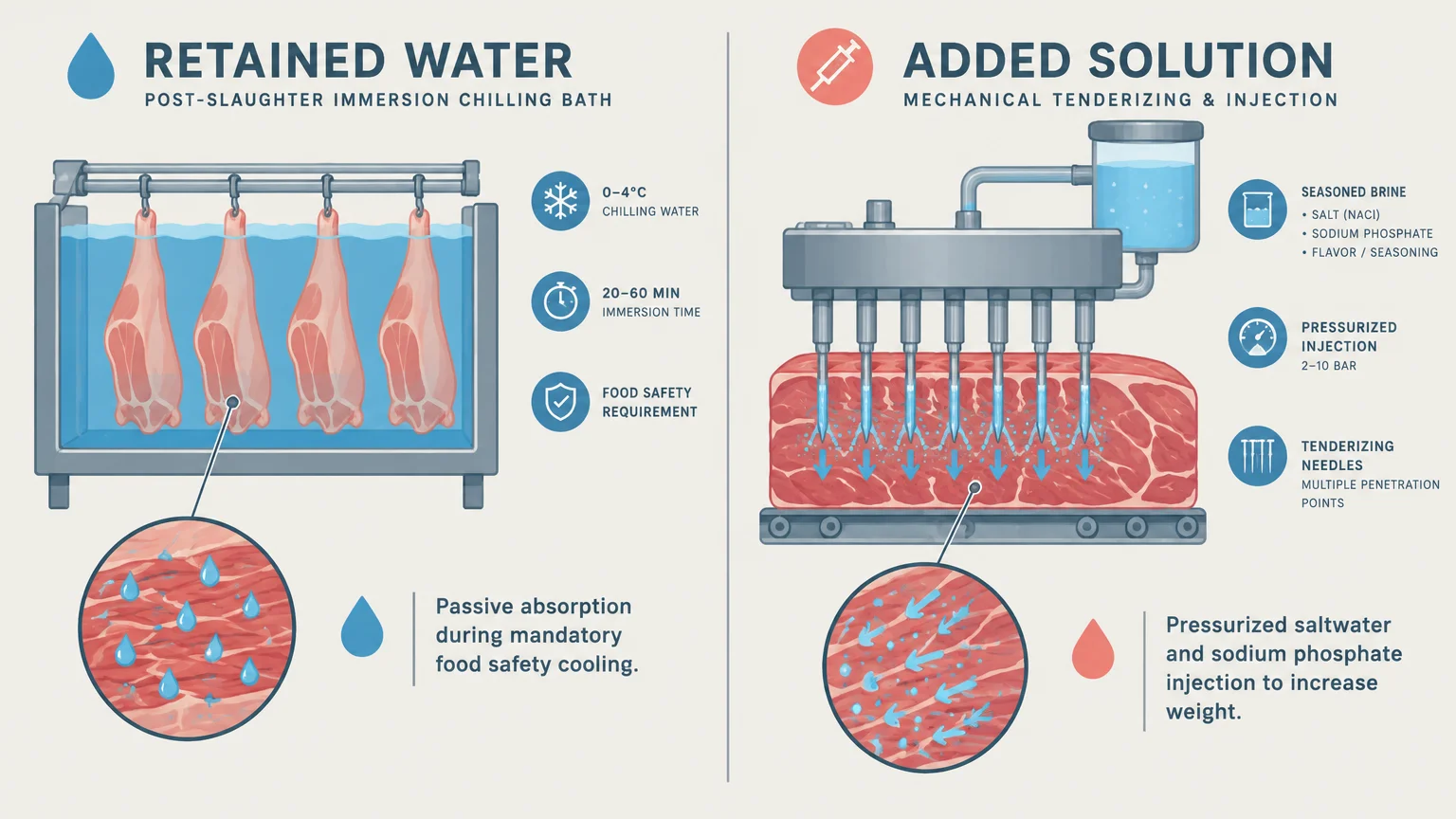
Shoppers often confuse retained water statements with added solution declarations when comparing fresh chicken packages. While both terms refer to extra moisture inside the meat, their health impacts and regulatory origins are entirely different.
Retained water refers strictly to the clean water poultry naturally absorbs during standard post-slaughter chilling. Federal food safety rules mandate rapid chilling of raw poultry carcasses to stop harmful bacterial growth like Salmonella.
Processors submerge poultry carcasses in massive tanks of ice-cold, chlorinated water to lower internal meat temperatures safely. During this vital safety step, the muscle fibers naturally absorb a small amount of chilling liquid.
Under 9 CFR 441.10, meat and poultry facilities may retain only the minimal water necessary to meet cold food safety targets. That retained liquid is plain water and contains absolutely no added sodium, phosphates, or flavor enhancers.
Added salt solutions, on the other hand, involve an intentional industrial injection step that takes place after chilling. Packers deliberately force saltwater deep into the meat fibers using automated banks of hollow needles.
How does chilling poultry affect the fluid inside the package?
The method a meat plant chooses for chilling carcasses determines how much plain water ends up in your poultry package. Traditional water immersion chilling produces packages that declare between four and twelve percent retained water.
Federal regulators monitor this moisture closely through required facility protocols. The USDA FSIS issued updated Retained Water Guidelines in January 2025, followed by Directive 6700.1 Revision 3 in March 2026.
These updated rules established a strict July 1, 2026 deadline for processors to revise their retained water testing protocols. Meat processors must prove their water retention stays within validated limits and label packages accurately.
Labels must explicitly state contains up to a specific percentage of retained water on the package exterior. If water absorption falls below one-half of one percent, the producer may omit the statement or state no retained water.
Air-chilled poultry offers an excellent alternative if you want to eliminate chilling moisture altogether. Processors cool air-chilled birds in cold chambers using circulating purified air, leaving the meat with zero added water and zero extra weight.
Why is retained water sodium-free while solutions are not?
Retained water comes exclusively from the pure, sanitized water chillers required for basic food hygiene. Because processors add no salt to chill tanks, retained water cannot raise the natural sodium content of the meat.
A cut of raw chicken with eight percent retained water contains the exact same natural sodium level as an air-chilled cut. The fluid inside the tray is simply water that slowly seeped out of the muscle cells during transit.
Added solutions introduce an entirely different chemical reality into the raw cut. Industrial brine formulations rely on heavy doses of sodium chloride and alkaline phosphates to hold moisture inside the muscle during transport and cooking.
That injected salt remains locked inside the cellular structure of the meat until you cook and consume it. Retained water affects only the cooking sear and final weight, but added solutions directly alter your daily sodium intake.

Why does the word natural mislead shoppers at the meat counter?
Many consumers assume that a plastic tray marked with a bright green natural banner contains nothing but pure, unadulterated meat. In the fresh meat aisle, relying on that marketing word can lead to an unintended spike in your sodium consumption.
The USDA allows processors to place the term natural on raw meat and poultry under surprisingly permissive standards. The official policy requires only that the product contains no artificial ingredients or added colors and undergoes minimal processing.
Because tap water, sea salt, and concentrated meat broths count as natural substances, meat injected with saline easily qualifies for the claim. A raw chicken breast injected with a fifteen percent saltwater brine can legally sit beneath an all-natural banner.
Large grocery brands take full advantage of this regulatory loophole to comfort health-conscious buyers. They place bold natural emblems right across the front film while printing the solution disclosure in required legal type below.
What does federal law require for a natural label claim?
The federal definition of natural focuses on the chemical origin of the ingredients rather than how much salt enters the meat. As long as processors avoid synthetic preservatives like artificial nitrates, the agency approves the claim.
Minimal processing means the processor handled the raw meat in a way that did not fundamentally alter the raw product. Grinding, cutting, injecting with broth, and freezing all count as minimal processing under current administrative guidelines.
A package bearing the natural claim must also feature a brief explanatory statement elsewhere on the label. That statement typically reads minimally processed, no artificial ingredients, tucked away near the company address block.
This classification explains why packages boasting natural goodness often carry an ingredient list with multiple entries. A natural label does not guarantee single-ingredient meat, nor does it guarantee low sodium levels.
Which natural ingredients quietly push sodium levels higher?
Processors use several naturally derived ingredients to formulate injection solutions that escape consumer scrutiny. Chicken broth, turkey stock, and natural flavorings appear frequently on the ingredient panels of injected cuts.
These broths undergo heavy industrial concentration and carry substantial salt loads before injection into raw muscle tissue. Packers also add sea salt, potassium chloride, and cultured celery powder under the umbrella of natural formulations.
Even though these ingredients originate from food sources, their concentrated application loads the raw meat with sodium. A shopper trying to prepare a heart-healthy meal from scratch ends up with pre-salted meat without realizing it.
Checking the ingredients list remains the only reliable defense against these stealth additives. If the ingredient deck lists anything beyond chicken, beef, or pork, you are purchasing an injected product.

How does injected meat affect your blood pressure and daily medications?
Managing cardiovascular wellness requires a clear understanding of where your daily sodium originates. Many adults prepare home-cooked meals specifically to control blood pressure, only to have invisible meat brines undermine their hard work.
A standard four-ounce serving of plain, single-ingredient raw chicken breast naturally contains roughly fifty to seventy-five milligrams of sodium. Fresh pork tenderloin exhibits a similar profile, offering approximately sixty milligrams per four-ounce portion.
When processors inject that same four-ounce cut with a ten to fifteen percent solution, the sodium surges dramatically. The sodium count routinely jumps to between two hundred and over four hundred milligrams per serving.
That represents a fivefold to eightfold increase in sodium before you even sprinkle black pepper or herbs onto the cut. Eating two servings at dinner can quietly deliver eight hundred milligrams of sodium from an ostensibly fresh protein source.
How does extra sodium alter your cardiovascular medication balance?
Hidden sodium creates serious friction if you take prescription medications to regulate blood pressure or manage fluid levels. Millions of Americans rely on daily ACE inhibitors, angiotensin receptor blockers, or diuretic medications like hydrochlorothiazide.
Diuretics work directly on your kidneys to flush excess fluid and sodium from your bloodstream, reducing arterial pressure. When you consume pumped poultry, that hidden sodium pulls fluid back into your circulation, directly blunting the therapeutic benefit of your pill.
This sodium load forces your kidneys to work harder to maintain cellular equilibrium throughout the night. Over time, recurring sodium spikes make your blood pressure readings erratic, complicating clinical decisions about your medication dosages.
Choosing unenhanced cuts keeps your dietary sodium steady and predictable. It ensures that the lifestyle choices you make in your kitchen directly support the medications prescribed by your physician.
Why does the American Heart Association recommend a stricter sodium ceiling?
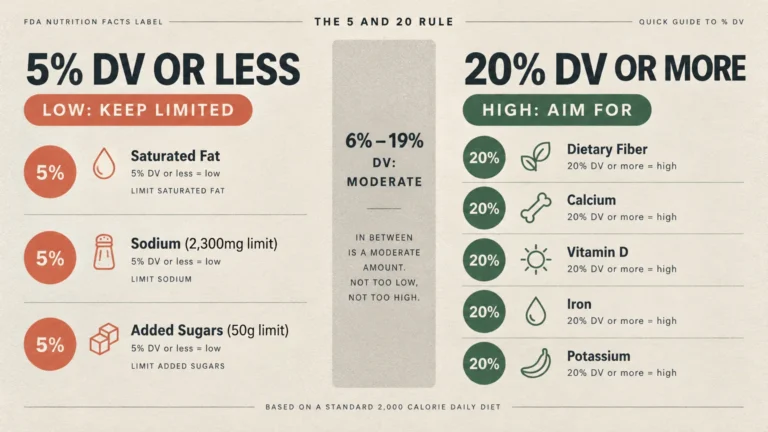
Federal guidelines provide a baseline target for the general population that may not suit individuals managing cardiovascular issues. The Dietary Guidelines for Americans advise individuals fourteen and older to limit daily sodium to less than 2,300 milligrams.
However, the American Heart Association establishes a more protective ideal limit of 1,500 milligrams per day for most adults. That tighter threshold is especially vital if you live with elevated blood pressure, kidney disease, or arterial stiffness.
On a 1,500-milligram daily allowance, every individual milligram of sodium demands careful budgeting. A single pumped chicken breast containing 400 milligrams accounts for more than twenty-six percent of your entire daily allocation.
Spending a quarter of your daily sodium budget on plain, unseasoned raw poultry leaves almost no room for wholesome sides. You must restrict items like whole-grain bread, beans, and fresh dairy simply to compensate for injected meat brine.
How much money do you lose when paying meat prices for salt water?
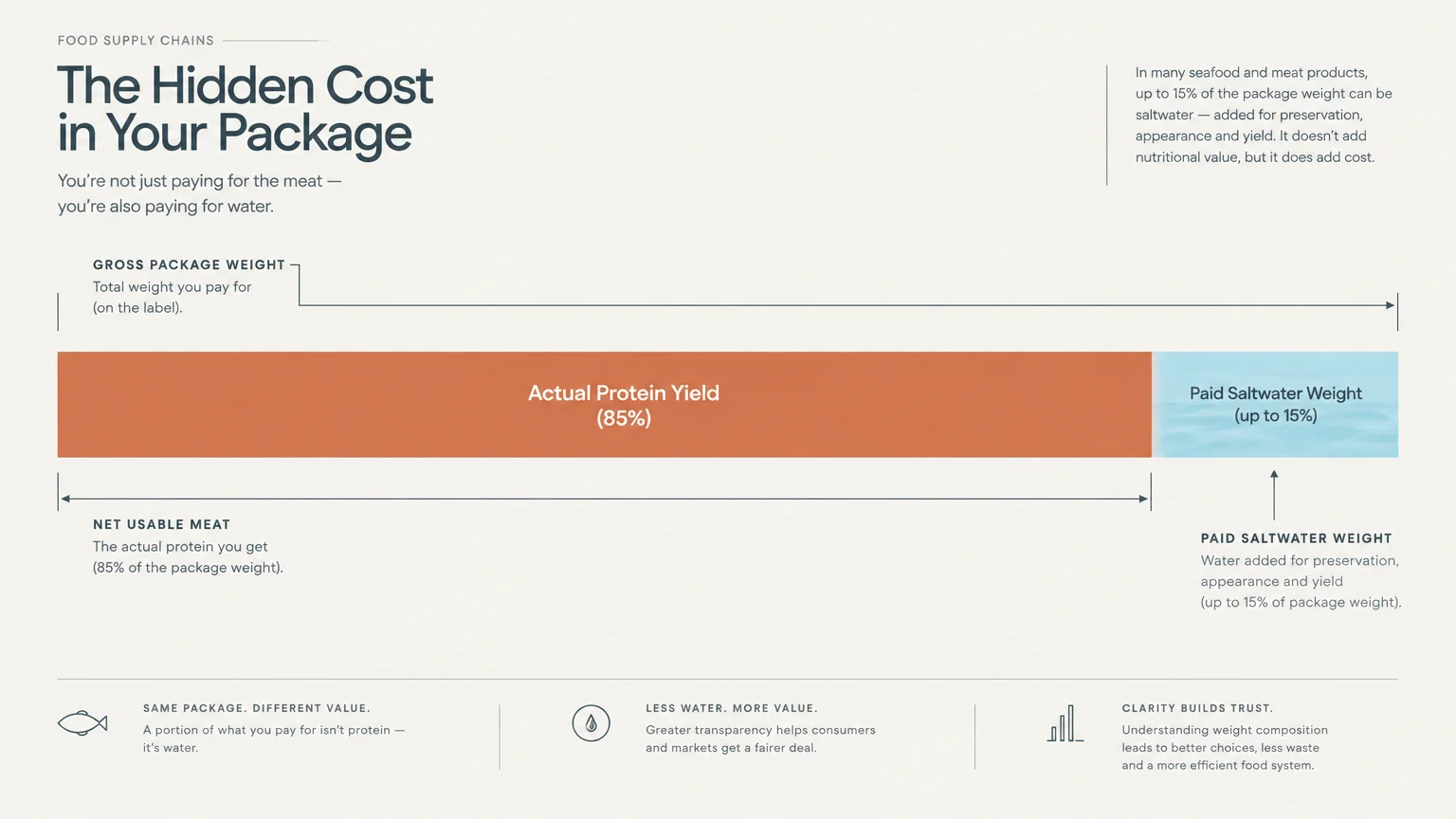
Injected meat does not just compromise your nutritional targets; it also takes a direct toll on your household finances. Paying full retail price per pound for tap water and common salt quietly drains your monthly grocery budget.
Consider a package of fresh chicken breasts priced at $3.99 per pound that carries a fifteen percent added solution declaration. In a three-pound package, nearly half a pound of that total weight consists entirely of injected saltwater.
You end up paying almost $1.80 for salty water that runs straight out of the cut during cooking. When you purchase raw meat, you deserve to pay for edible, high-quality animal protein rather than padded industrial moisture.
This financial penalty grows worse when meat prices rise due to general inflation. The higher the base price per pound of meat climbs, the more money you forfeit on every ounce of added solution.
How do you calculate the true price per pound of actual meat?
You can reveal the actual cost of injected meat using basic arithmetic right in the grocery aisle. Take the stated percentage of solution on the package and subtract it from one hundred to find your true meat yield.
If a package contains fifteen percent solution, you receive only eighty-five percent real meat by weight. Divide the shelf price per pound by 0.85 to calculate what you are genuinely paying for that protein.
A package marked at $4.00 per pound with fifteen percent added brine actually costs you $4.71 per pound of pure meat. That seemingly cheaper pumped brand frequently costs more than the untreated cut sitting directly beside it.
Store-brand meats without added solutions often carry a slightly higher initial shelf price that frightens budget-conscious shoppers. Yet after accounting for the injected fluid, the unadulterated meat delivers significantly superior economic value per ounce.
Why do small households suffer the steepest losses from injected cuts?
Cooking for one or two people requires tight portion control and strict waste prevention to keep food costs reasonable. When you live in a smaller household, throwing away fluid represents a devastating loss of grocery investment.
Injected meats release massive volumes of water the moment they contact a hot skillet or roasting pan. Instead of searing into a crisp, golden crust, the meat ends up boiling in its own salty liquid inside the pan.
This severe moisture loss leaves the cooked portion significantly smaller, tougher, and rubbery in texture. A four-ounce raw portion shrinks down to barely two and a half ounces of finished, edible meat on your dinner plate.
Small households cannot afford to lose a third of their prepared protein down the kitchen sink drain. Buying pure meat ensures your cooked portions match your meal plans, leaving you with reliable leftovers for tomorrow.
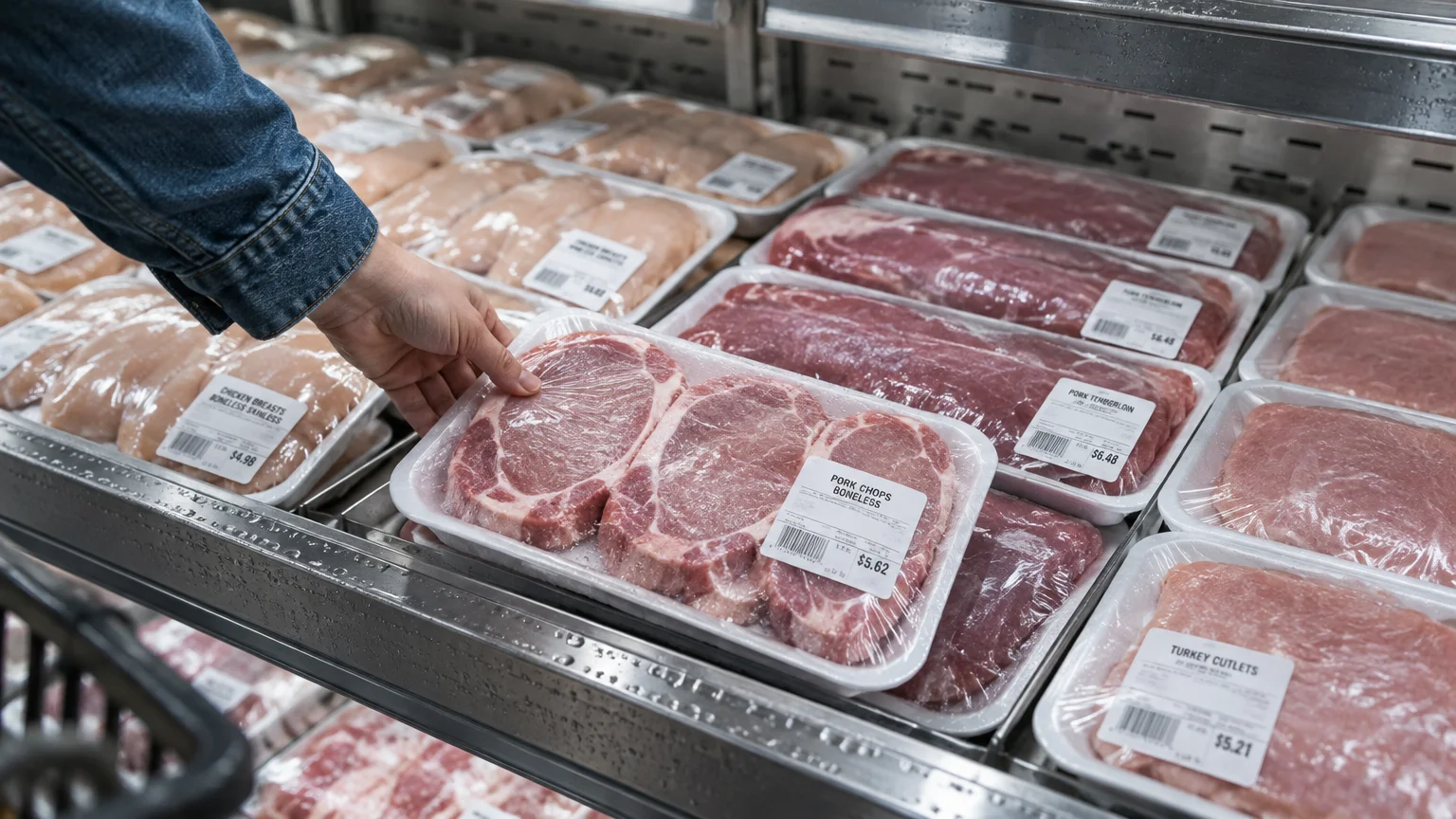
Which meat department cuts demand your closest label inspection?
While injected solutions can appear in almost any meat department case, certain cuts carry added solutions far more often than others. Understanding which proteins processors target most aggressively saves you valuable time during your weekly grocery run.
Pork tenderloins, boneless pork loins, and lean pork chops represent prime targets for industrial injection. Because modern breeding produces extremely lean pork, processors inject brines containing eight to twelve percent solution to prevent cuts from drying out.
Fresh boneless, skinless chicken breasts rank equally high on the list of commonly pumped cuts. Their dense muscle tissue easily absorbs large volumes of pressurized liquid, providing packers with an effortless way to boost package weight.
Beef cuts undergo solution injection much less frequently than pork and poultry. However, budget-friendly beef roasts and pre-marinated fajita strips occasionally contain tenderizing solutions that warrant a quick label check.
What does self-basted mean on fresh or frozen poultry packaging?
Whole turkeys, whole chickens, and bone-in poultry cuts often feature the terms basted or self-basted prominently across the front bag. This phrasing sounds like a culinary convenience designed to save you kitchen effort, but it represents another solution label.
Under USDA standards, processors may label bone-in poultry as basted when they inject it with solutions before packaging. The added solution typically contains edible fats, broth, water, salt, and flavor enhancers.
The solution level in products marked basted can reach approximately three percent of the total poultry weight before processing. While three percent sounds modest, that solution concentrates primarily in the breast meat, sharply elevating its sodium level.
The label must explicitly list the ingredients of that basting formula right below the basting claim. Look for text that reads injected with a solution of turkey broth, salt, and sodium phosphates.
If you prefer complete control over the salt levels in your holiday or Sunday roast, bypass self-basted birds completely. Choose untreated, unbasted poultry and season the skin yourself with unsalted butter, garlic, and fresh herbs.
Why do club-store multi-packs frequently contain added broth?
Warehouse club stores sell massive multi-packs of vacuum-sealed chicken breasts and pork loins at seemingly unbeatable prices. However, these bulk economy packs represent some of the most heavily solution-injected products in the entire retail market.
Packers frequently inject these large family packs with up to fifteen percent seasoned broth to extend shelf life during bulk distribution. Because shoppers focus heavily on the low unit price per pound, they often fail to inspect individual pouch markings.
The plastic wrap on these multi-packs often carries small, hard-to-read white text declaring the injected broth formula. What appears to be an economical fifteen-pound purchase may contain more than two pounds of salty liquid.
Freezing meat with added saline also causes ice crystals to damage the delicate cell walls within the meat fibers. When you thaw those bulk packs at home, substantial amounts of moisture purge out into the packaging bag, creating mess and waste.
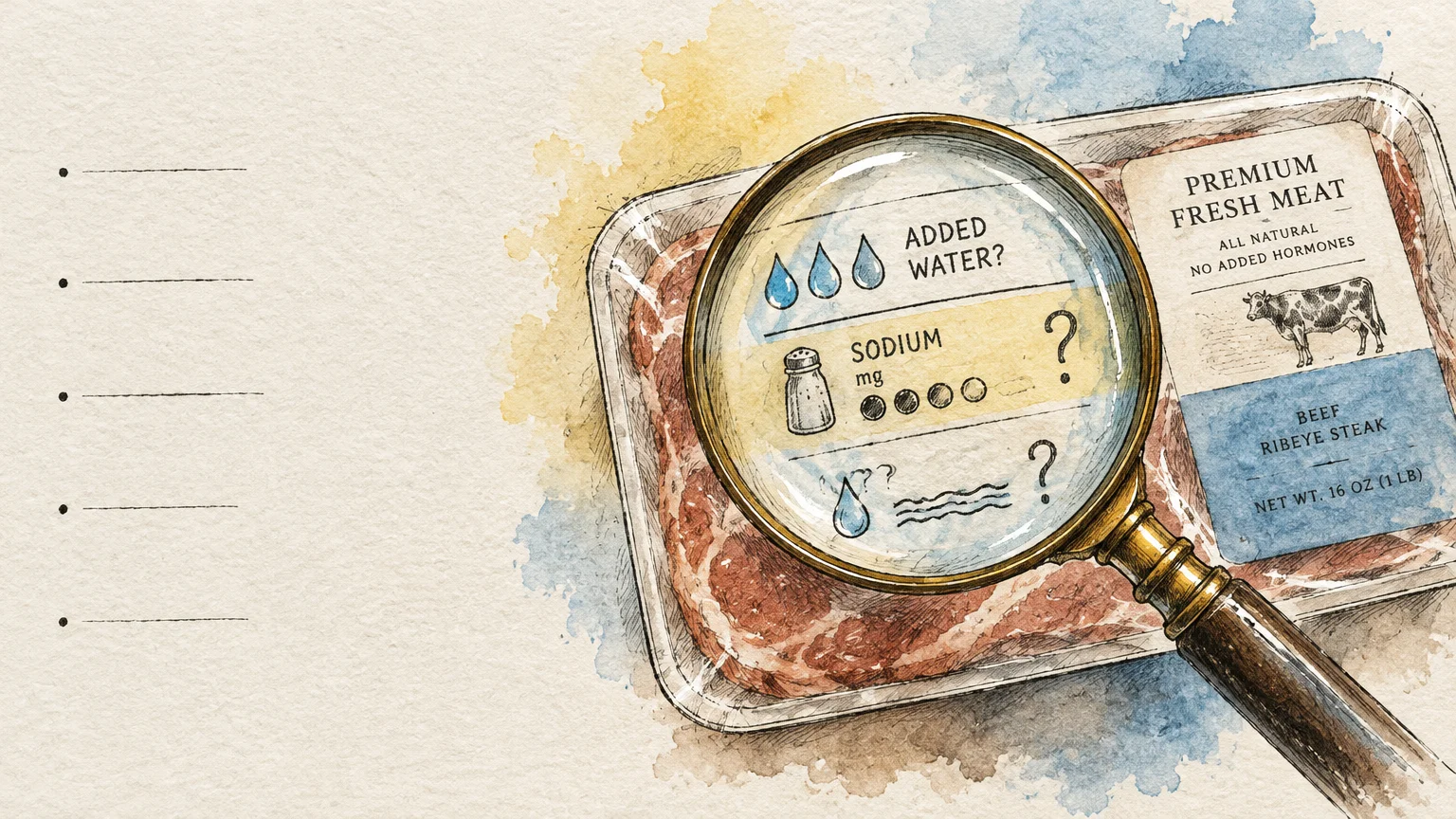
What questions do shoppers ask most about meat package labels?
Navigating meat labels raises practical questions about kitchen prep, food chemistry, and regulatory definitions. Here are straightforward answers to the common questions shoppers ask when evaluating meat packaging.
Can you rinse the added salt out of injected raw chicken?
You cannot wash away added salt solutions by running raw meat under the kitchen faucet. The high-pressure needles used during industrial processing inject the saline solution deep inside the internal muscle fibers.
Rinsing meat under running tap water touches only the outermost surface cells, leaving the internal sodium completely intact. Furthermore, washing raw meat represents a hazardous food safety mistake that contaminates your kitchen.
Running water splatters dangerous raw meat bacteria like Campylobacter and Salmonella across your sink, countertops, and nearby kitchen drying towels. The U.S. Food and Drug Administration strongly advises consumers never to wash raw meat or poultry before cooking.
The only reliable way to keep excess sodium out of your body is to avoid buying injected cuts altogether. Once salt enters the muscle structure at the processing facility, no amount of home soaking or rinsing can remove it.
Why do meat processors inject salt solutions in the first place?
Meat packers claim they inject solutions to improve the juiciness, tenderness, and eating quality of lean cuts for consumers. Overcooking lean pork or skinless chicken breasts easily turns the meat dry and stringy on the stovetop.
Added sodium and phosphates bind tightly to muscle proteins, locking water inside so the meat stays moist even when overcooked. This processing step acts as a safety cushion for consumers who lack confidence in their temperature monitoring.
However, the economic motivation behind solution injection matters just as much as cooking texture. Water and industrial salt cost mere pennies per gallon, while fresh chicken breasts retail for several dollars per pound.
Replacing ten to fifteen percent of a meat cut’s weight with saline creates immense commercial profit margins for meat processors. It allows packers to pad shipping weights while disguising cheaper cuts as premium, tender products.
Does organic chicken ever contain injected saltwater solutions?
Certified organic poultry rarely contains injected saltwater solutions, making the organic section a dependable safe haven for unadulterated meat. Certified organic standards prohibit artificial tenderizers, synthetic sodium phosphates, and chemically treated broths.
Organic poultry processors overwhelmingly rely on air-chilling methods rather than massive water chill tanks to cool their products. As a result, organic poultry packages almost always declare zero added solutions and zero percent retained water.
However, you should never make purchases on assumption alone when managing a strict dietary health condition. Processors can technically formulate an organic injection solution using certified organic broth and organic sea salt.
Always spend two seconds flipping the organic package over to confirm the ingredient statement lists only chicken. When the ingredient list contains a single entry, you know you are purchasing pure, natural meat.
Why did federal regulators ban the word enhanced from fresh meat labels?
For many years, meat companies printed phrases like flavor enhanced or tenderly enhanced across packages of brine-injected meat. Consumer testing conducted by regulatory agencies revealed that shoppers found the word enhanced distinctly positive and appealing.
Shoppers believed an enhanced pork chop represented a superior, higher-grade cut of meat prepared with special care. In reality, the cut had simply been pumped full of cheap industrial water, salt, and chemical binding agents.
The USDA FSIS recognized that the term enhanced actively deceived ordinary consumers about what they were purchasing. When the agency published its comprehensive labeling overhaul, it explicitly prohibited processors from using enhanced in product names.
Now, processors must use clear, purely descriptive language like containing up to twelve percent of a solution. This mandatory plain-language requirement ensures you receive honest factual data rather than persuasive marketing spin.
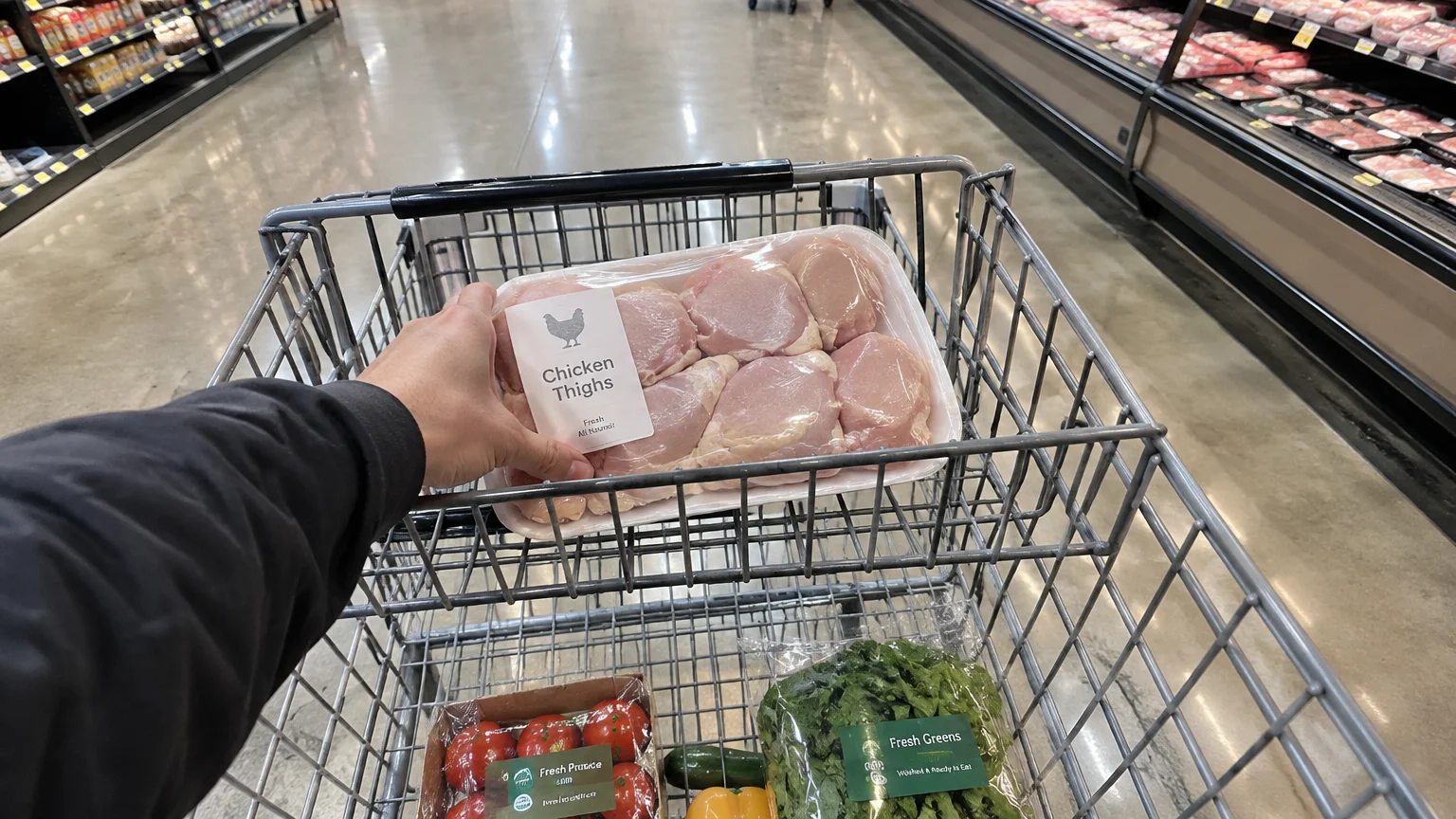
What is your single actionable step on your next grocery run?
Navigating the grocery aisles becomes effortless once you replace marketing distractions with a single, repeatable habit. On your very next shopping trip, ignore every colorful banner on the front of the meat tray.
Do not look at the words fresh, premium, natural, or juicy printed across the decorative plastic wrap. Instead, look directly beneath the primary cut name to find the mandatory descriptive statement.
If you see the word containing followed by a percentage sign and the word solution, place the tray back on the shelf. Then, flip the alternative tray over and verify that the Nutrition Facts panel shows less than eighty milligrams of sodium per serving.
Taking those five seconds protects your cardiovascular health, keeps your medications working properly, and ensures your grocery dollars buy real food. You deserve genuine, wholesome protein that supports your body and respects your household budget.