You reach for a reduced-sodium soup to support your heart, expecting a nourishing, uncomplicated lunch. Turning that can around reveals an additive that could quietly interfere with your daily blood pressure medications.
Food manufacturers routinely replace table salt with potassium chloride to cut sodium while maintaining a familiar savory taste. Spotting this substitute protects your wellness without complicating your shopping routine or inflating your grocery bill.
This practical guide shows you how to decode confusing labels, assess medication interactions, and select heart-healthy soups that fit your household budget.
Why is potassium chloride suddenly showing up in your soup aisle?
When you walk down the soup aisle today, you face a rapidly shifting landscape of reformulated recipes. Major food companies are altering their legacy formulas to meet stricter public health benchmarks for dietary sodium.
Sodium chloride provides both essential preservation and the familiar savory bite that American consumers expect from packaged soups. Removing it leaves broths tasting flat, watery, and unappealing to shoppers.
Potassium chloride offers food scientists a quick technological fix because it stimulates the tongue’s salt receptors in a similar way. As a result, processors use it to lower reported sodium numbers without losing consumer appeal.
What changed with the FDA salt substitute regulations?
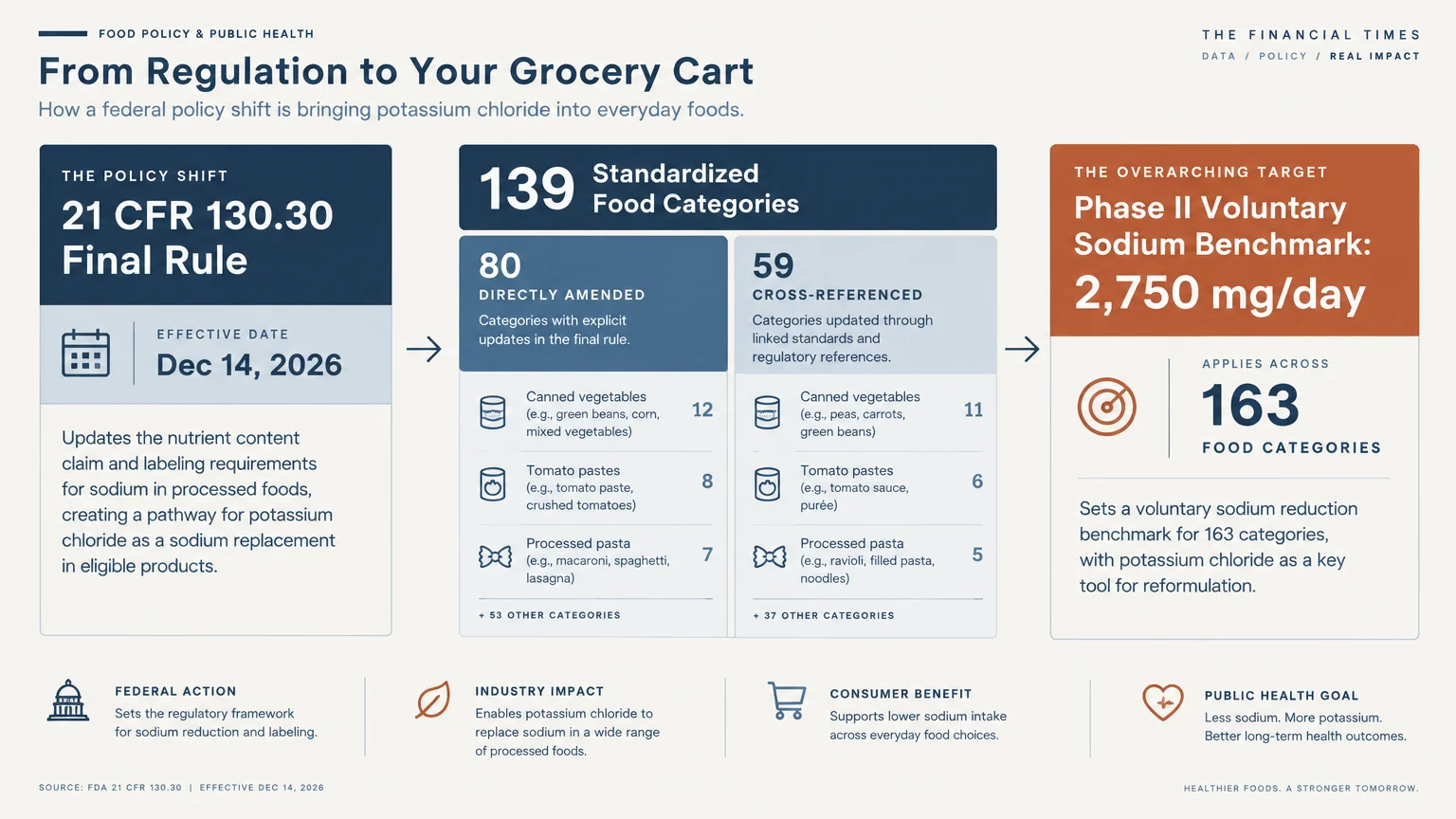
The presence of this mineral substitute is accelerating due to major federal regulatory updates. On October 13, 2026, the Food and Drug Administration published a final rule titled Use of Salt Substitutes To Reduce the Sodium Content in Standardized Foods.
Codified under 21 CFR 130.30, this landmark measure takes effect on December 14, 2026. It explicitly permits food processors to replace sodium chloride with safe and suitable salt substitutes across 139 standardized food categories.
These standardized categories include canned vegetables, tomato pastes, commercial cheeses, and processed pasta. Because these components serve as primary building blocks in packaged soups, potassium additives are entering foods where you never previously encountered them.
Eighty of these standards were amended directly, while another fifty-nine were modified through cross-references. This broad legal change gives commercial manufacturers wide discretion to swap standard salt for potassium-based alternatives.
How do voluntary federal sodium reduction targets affect packaged soups?
Federal health officials have also applied sustained pressure on commercial kitchens through voluntary sodium limits. In August 2024, the FDA issued draft Phase II voluntary sodium reduction targets spanning 163 distinct food categories.
This initiative builds upon earlier Phase I benchmarks, aiming to lower average American sodium intake to roughly 2,750 milligrams per day. Commercial soup processors face aggressive reduction goals under these guidelines.
To meet these targets without suffering steep sales declines, soup makers increasingly rely on mineral substitutes. You can no longer assume that a familiar brand uses the same recipe it featured five years ago.
Reformulation happens quietly behind the scenes, often without any prominent announcement on the front display. Only an informed inspection of the packaging reveals these recipe alterations.
How do you find potassium chloride on the ingredient statement?
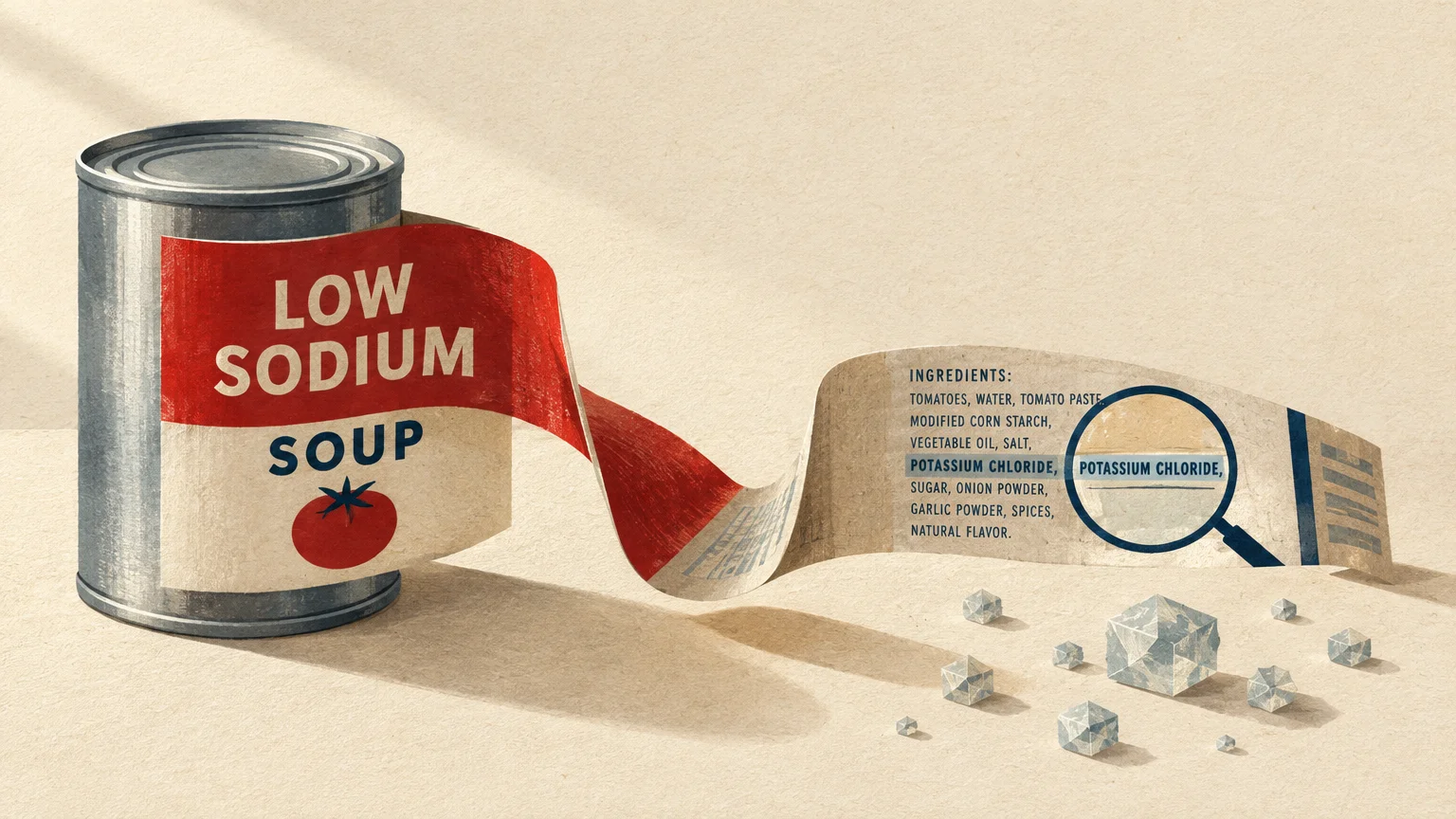
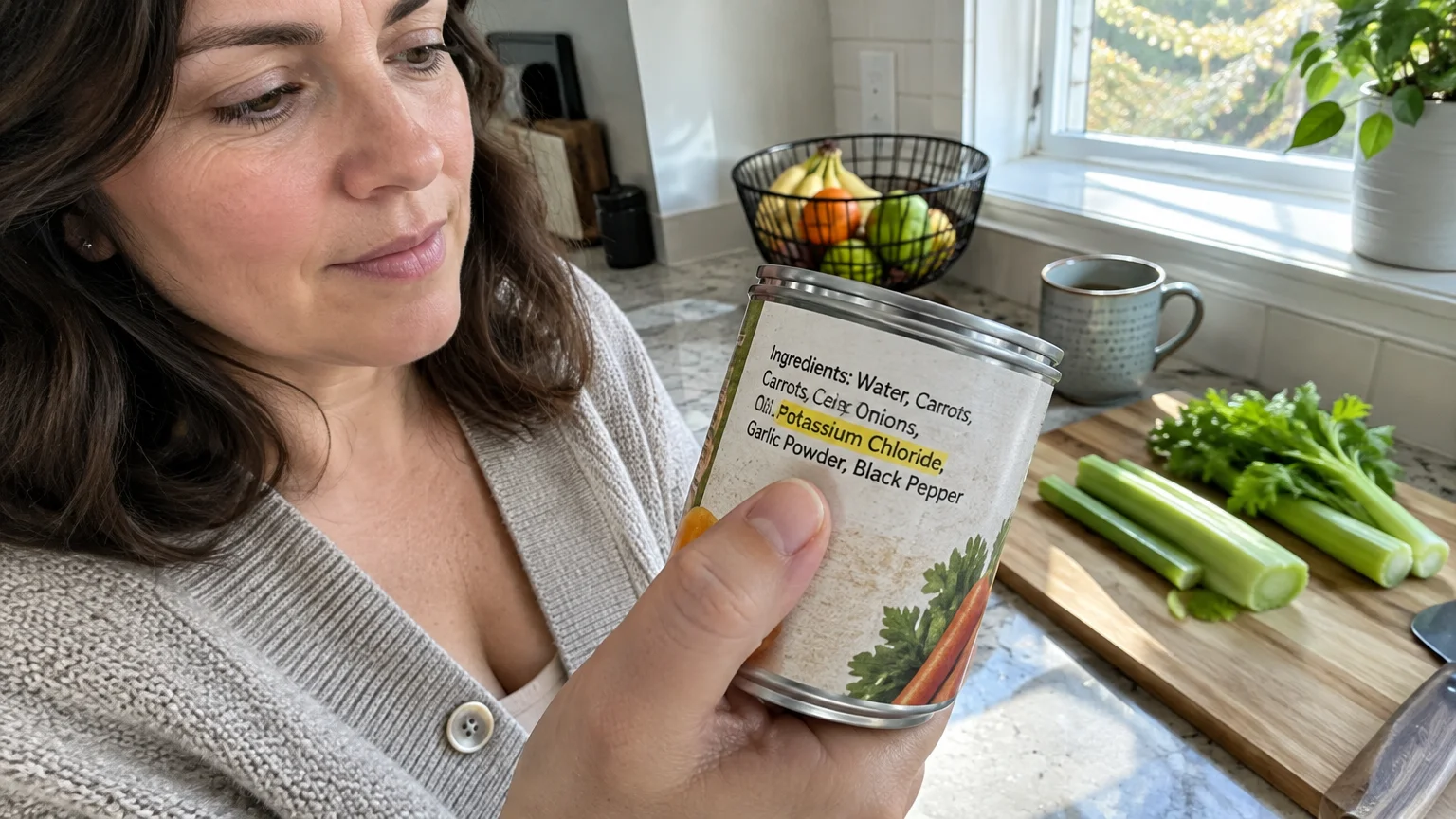
Finding this mineral substitute requires looking past marketing slogans on the front panel. You must turn the can around and inspect the fine print of the ingredient statement beneath the nutrition box.
Ingredients appear in descending order of predominance by weight, meaning items used in the greatest amounts appear first. Knowing what terms to look for ensures you spot the additive in seconds.
Why do labels say potassium salt instead of potassium chloride?
You will rarely see the phrase potassium chloride printed in plain English on modern soup cans. Under final guidance issued by the FDA on December 18, 2020, manufacturers may declare the ingredient as potassium salt.
Food companies lobbied heavily for this naming change because consumers often associated the word chloride with harsh chemicals. The term potassium salt sounds natural and agricultural, leading shoppers to overlook its physiological potency.
When you inspect the ingredient list, search for both potassium chloride and potassium salt. Both terms describe the exact same compound, and both deliver an identical biological dose of elemental potassium to your system.
Spotting either name confirms that the manufacturer added an industrial mineral compound rather than relying solely on whole-food ingredients. This distinction matters immensely if you must restrict your daily mineral intake.
Where on the ingredient list does this additive usually appear?
In commercial canned soups, potassium salt usually appears somewhere in the middle of the ingredient declaration. It typically sits right next to sea salt, yeast extract, garlic powder, or natural flavoring agents.
If you spot potassium salt listed before the spices or vegetable purees, the soup contains a substantial concentration of the substitute. A higher position on that list signals a heavier dose in your bowl.
Conversely, when a soup relies solely on aromatic herbs, cracked pepper, and garlic for its depth, potassium salt will be entirely absent. Scrutinizing this text keeps unwanted chemical substitutions out of your pantry.
How do you read the Nutrition Facts panel for hidden potassium?
While the ingredient statement reveals whether an additive exists, it does not disclose the exact quantity. To quantify your mineral intake, you must examine the standardized Nutrition Facts panel printed on the side.
Fortunately, modern federal labeling laws make this task far simpler than it was in past decades. Every packaged soup must now reveal its mineral content in clear, measurable terms.
What do the milligram amounts and Daily Value percentages tell you?
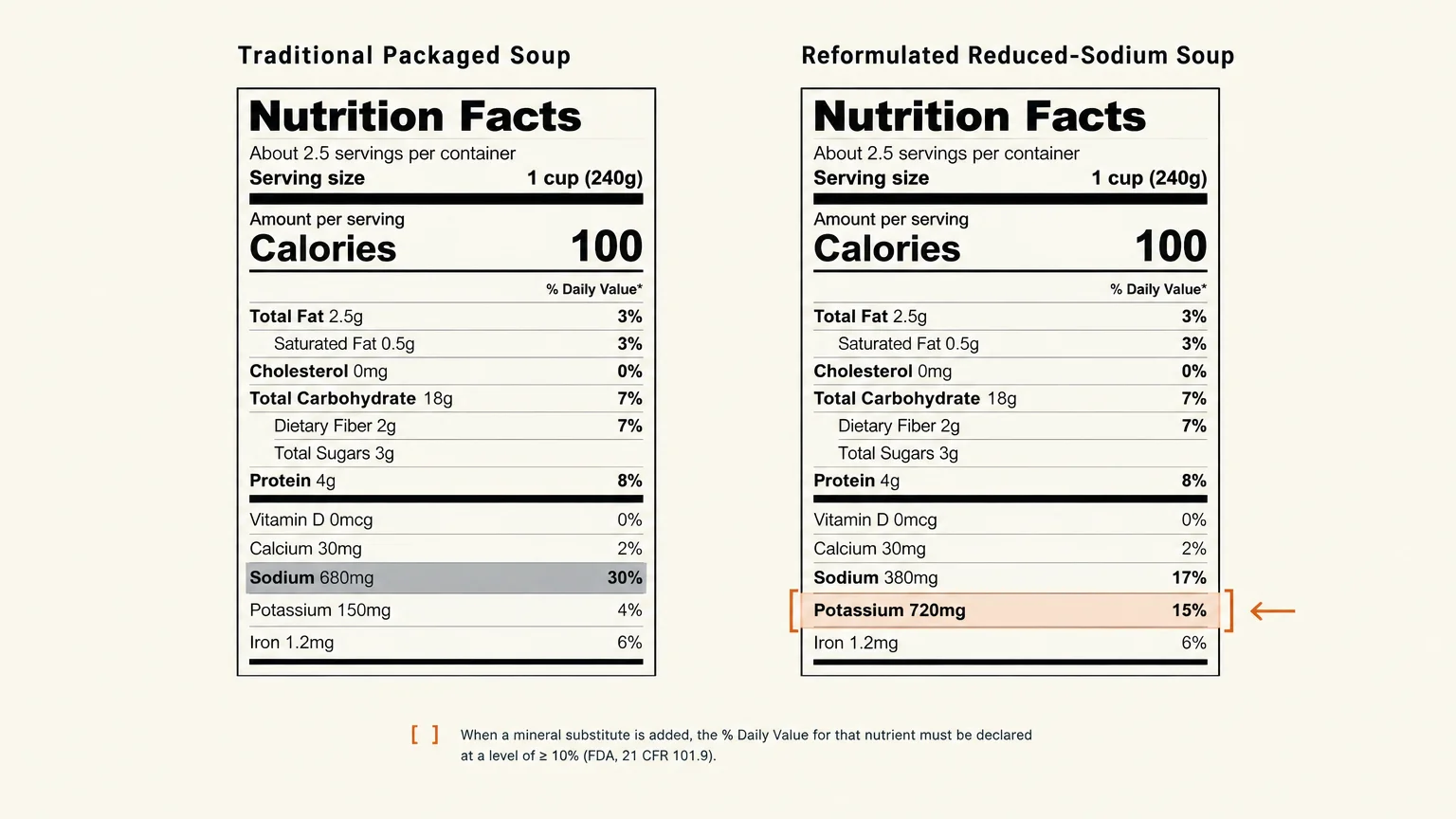
Under 21 CFR 101.9, the FDA legally requires food manufacturers to list both the milligram amount and the Percent Daily Value of potassium. This mandatory disclosure provides vital transparency for anyone monitoring their mineral balance.
The current Daily Value established by the FDA is 4,700 milligrams for healthy adults. The panel translates this number into a percentage to help you gauge how a single portion fits your total day.
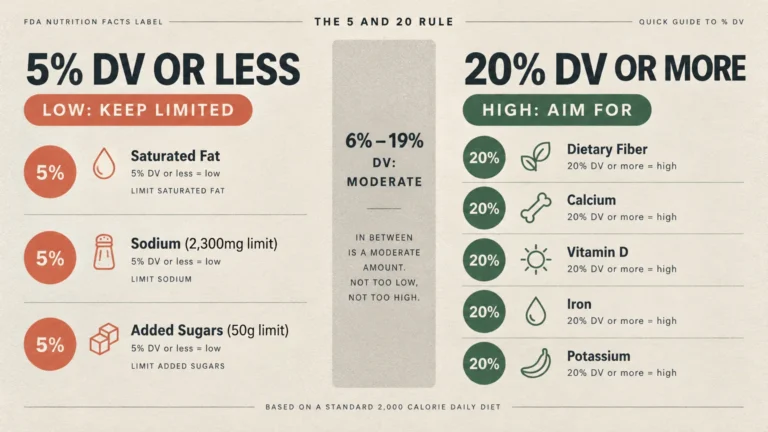
According to standard FDA nutrition guidelines, 5% Daily Value or less (235 milligrams) represents a low potassium source. In contrast, 20% Daily Value or more (940 milligrams) represents a high potassium source.
Traditional canned soups naturally contain modest potassium levels from celery, carrots, or chicken broth, typically registering under 200 milligrams per serving. A number exceeding 450 milligrams per cup strongly suggests the addition of potassium chloride.
You should use that 450-milligram threshold as a quick mental benchmark while shopping. Any soup crossing that line deserves immediate scrutiny of its ingredient statement.
How does can size distort the real potassium numbers?
Soup manufacturers calculate nutrition values based on a single standardized serving, but real-world eating habits rarely align with those small portions. Most canned soups contain far more than one serving per container.
Ready-to-serve soups packaged in large 19-ounce cans, such as popular Progresso varieties, generally contain two full servings per can. If you consume the entire can for lunch, you double every milligram figure printed on the label.
Classic condensed soups, such as standard 10.75-ounce Campbell’s cans, specify a serving size of just one-half cup of condensed broth. Reconstituted with water, a single small can delivers roughly two and a half servings.
Emptying that entire condensed can into a bowl means multiplying the printed potassium and sodium numbers by 2.5. A seemingly modest 400 milligrams of potassium instantly surges to 1,000 milligrams in a single meal.
Always check the servings per container line before celebrating a low milligram number. Doing this quick multiplication prevents accidental mineral overdoses at your kitchen table.
What do the front-of-can sodium claims actually mean for your cart?
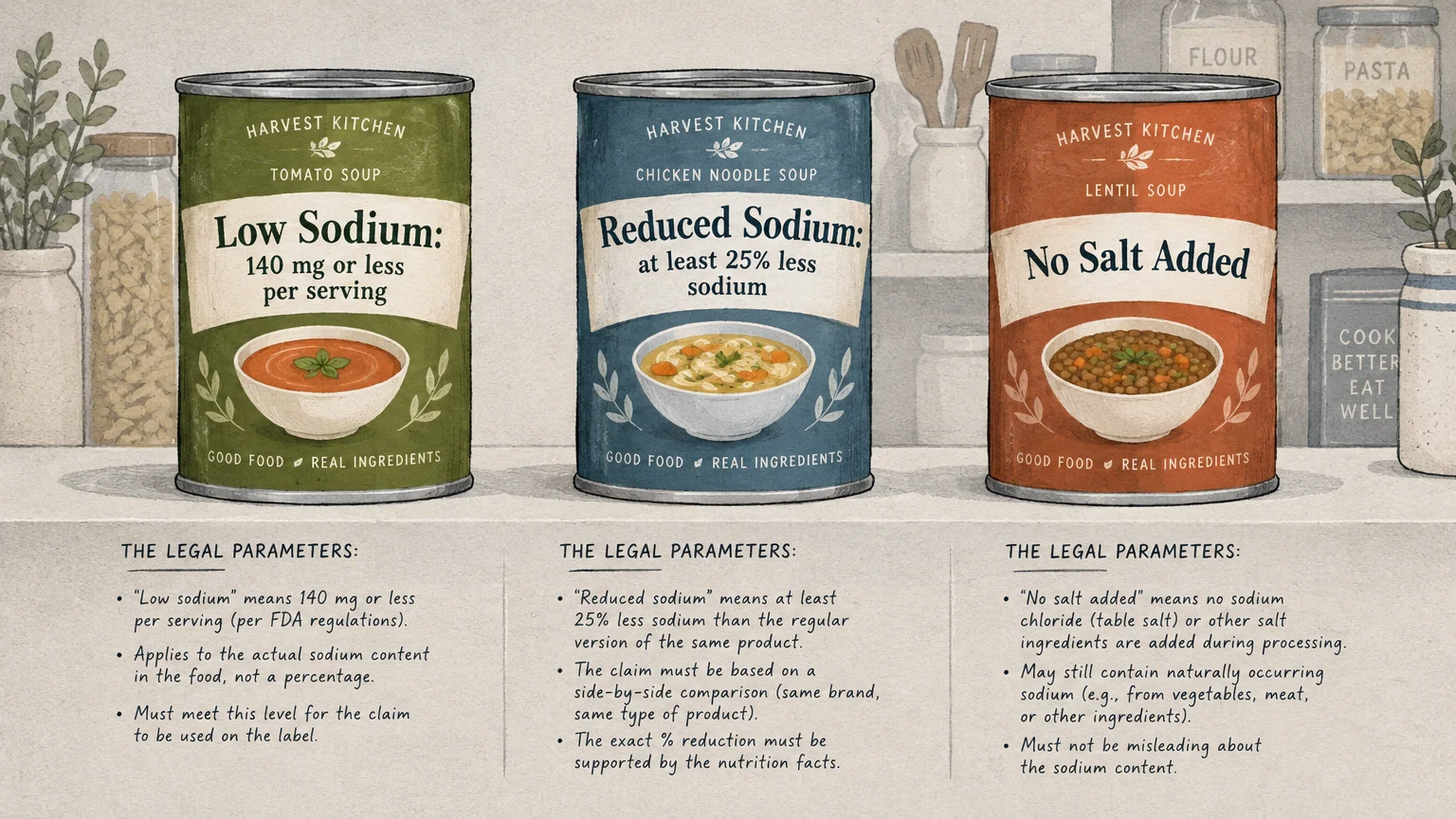
Brightly colored banners on soup cans can easily mislead hurried shoppers. Phrases like reduced sodium, low sodium, and less salt represent distinct legal standards established under federal law.
Understanding these legal definitions allows you to predict whether a manufacturer quietly added potassium salt to offset the missing sodium. Regulated phrasing tells you far more than marketing graphics ever will.
What is the difference between reduced sodium and low sodium?
Under 21 CFR 101.61, the FDA strictly defines what claims food processors can display on their packaging. A claim of low sodium means the soup contains 140 milligrams or less of sodium per reference serving.
Soups bearing a very low sodium designation must contain 35 milligrams or less per serving. These items represent truly sodium-restricted foods that generally avoid heavy salt substitutes in favor of bland simplicity.
By contrast, soups marked reduced sodium or less sodium need only contain 25% less sodium than the manufacturer’s original recipe. These products are not inherently low in sodium; they are merely lower than their excessively salty counterparts.
The original version may carry 900 milligrams of sodium, meaning the reduced version still delivers a hefty 675 milligrams. You must not conflate a percentage reduction with an objectively low-sodium food.
Why does reduced sodium often mean added potassium?
Because reduced-sodium soups retain substantial salinity, manufacturers must preserve the savory profile that customers expect. They routinely fill that 25% flavor void with potassium chloride.
Reduced-sodium varieties represent the single most common hiding place for potassium additives across the entire grocery store. They attempt to satisfy dietary guidelines without altering the consumer’s taste expectations.
If your physician instructed you to follow American Heart Association guidelines, your ideal sodium ceiling sits at 1,500 milligrams per day. Relying on reduced-sodium canned soups can quickly exhaust that daily allowance while quietly flooding your system with potassium.
Even under the broader Dietary Guidelines for Americans ceiling of 2,300 milligrams per day, these hybrid products demand caution. They combine moderate sodium levels with hidden doses of supplemental minerals.
How will the updated healthy claim change what you see on the shelf?
Grocery packaging is undergoing further transformation as brands adapt to modernized federal standards. In December 2024, the FDA finalized an updated definition for the healthy nutrient content claim, establishing a compliance deadline for 2028.
Under this rule, individual food items must contain no more than 10% of the Daily Value for sodium per serving. That restriction caps sodium at roughly 230 milligrams for any soup carrying the coveted healthy checkmark.
Because hitting a 230-milligram limit through standard seasoning alone proves challenging for large-scale manufacturers, reliance on potassium salt will inevitably expand. Checking the ingredient statement will become even more crucial as 2028 approaches.
You will see more brands adopting salt substitutes to secure that front-of-package endorsement. Keeping your eyes focused on the back panel ensures you remain unswayed by front-label claims.
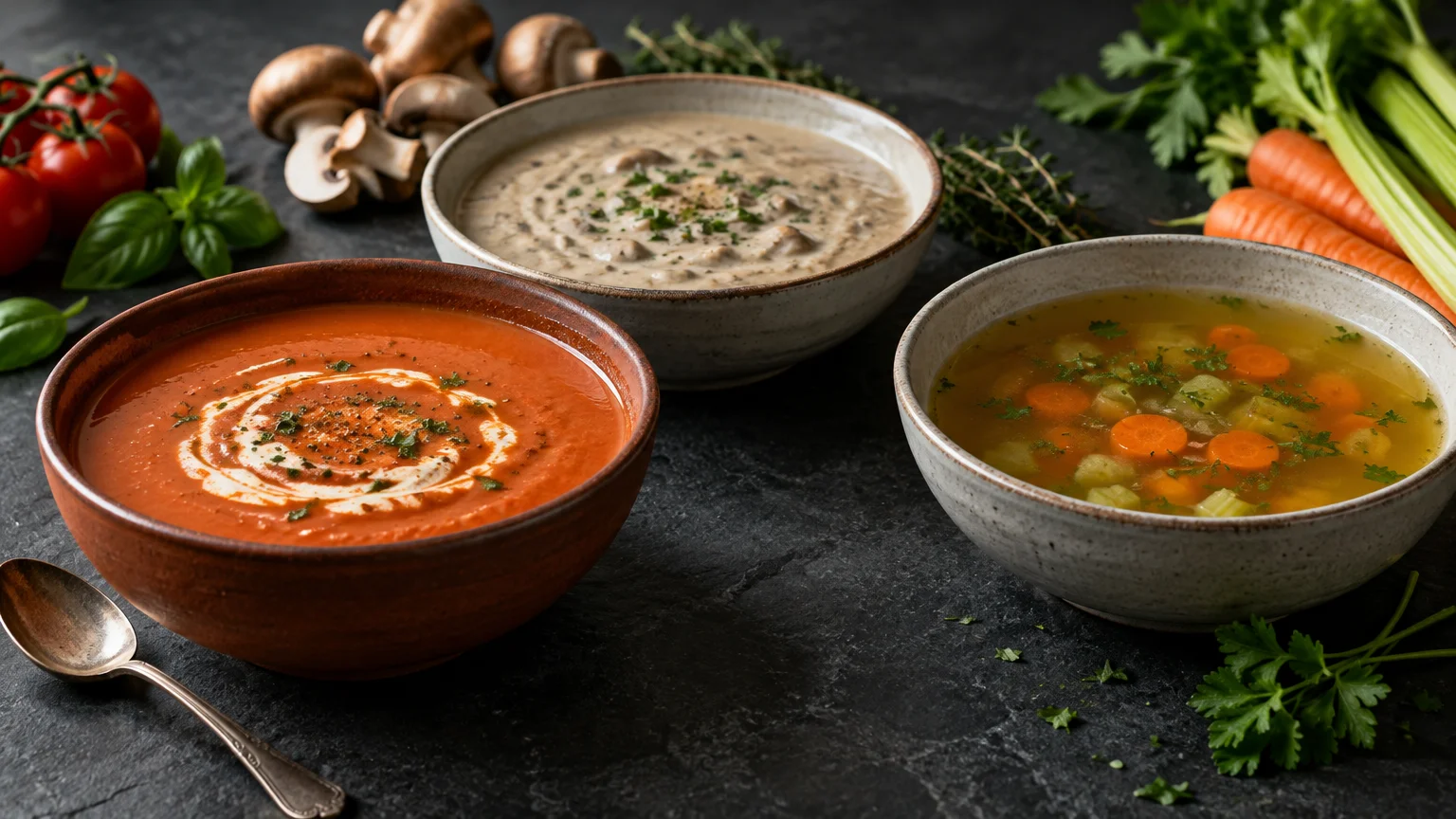
Which soup varieties rely most heavily on potassium chloride?
Salt substitutes do not appear uniformly across every style of canned soup. Certain flavor profiles require far heavier mineral intervention to satisfy consumer taste expectations.
Knowing which categories carry the highest probability of reformulation helps you navigate the aisle more efficiently. You can anticipate which cans demand immediate verification before you even pull them from the shelf.
Why do canned tomato and vegetable soups contain the highest levels?
Canned tomato soups and rich vegetable medleys present a unique culinary hurdle for food processors. Tomatoes contain high natural acidity, which requires substantial sweetness and salinity to create a balanced, palatable flavor profile.
When food scientists strip table salt out of tomato soup, the liquid tastes overwhelmingly sour and sharp. To counteract that intense acidity without piling on excess granulated sugar, manufacturers heavily dose the recipe with potassium chloride.
Commercial vegetable minestrones face an identical challenge due to their acidic tomato bases and water-logged legumes. You should exercise extreme caution whenever examining reduced-sodium tomato, marinara, or minestrone varieties.
These tomato-based options frequently hit the 20% Daily Value threshold for potassium in a single cup. Consuming a full bowl can push your mineral intake into an unintended danger zone.
Are cream-based low-sodium soups safer than clear broths?
Cream-based soups, such as low-sodium cream of mushroom or cream of chicken, rely primarily on dairy fat, cornstarch, and vegetable oils for mouthfeel. Their rich texture masks the absence of sodium more effectively than clear broths.
Because butterfat and milk solids coat the palate, food processors can often achieve acceptable flavor without dumping in heavy doses of potassium salt. Many condensed cream soups omit salt substitutes entirely.
However, cream soups introduce secondary health trade-offs by increasing saturated fat and calorie counts. You must verify whether swapping mineral risk for additional saturated fat aligns with your broader cardiovascular goals.
Clear chicken and beef broths, on the other hand, have no fats to hide flavor flaws. When companies reduce salt in clear broths, they turn almost universally to yeast extracts or potassium additives.
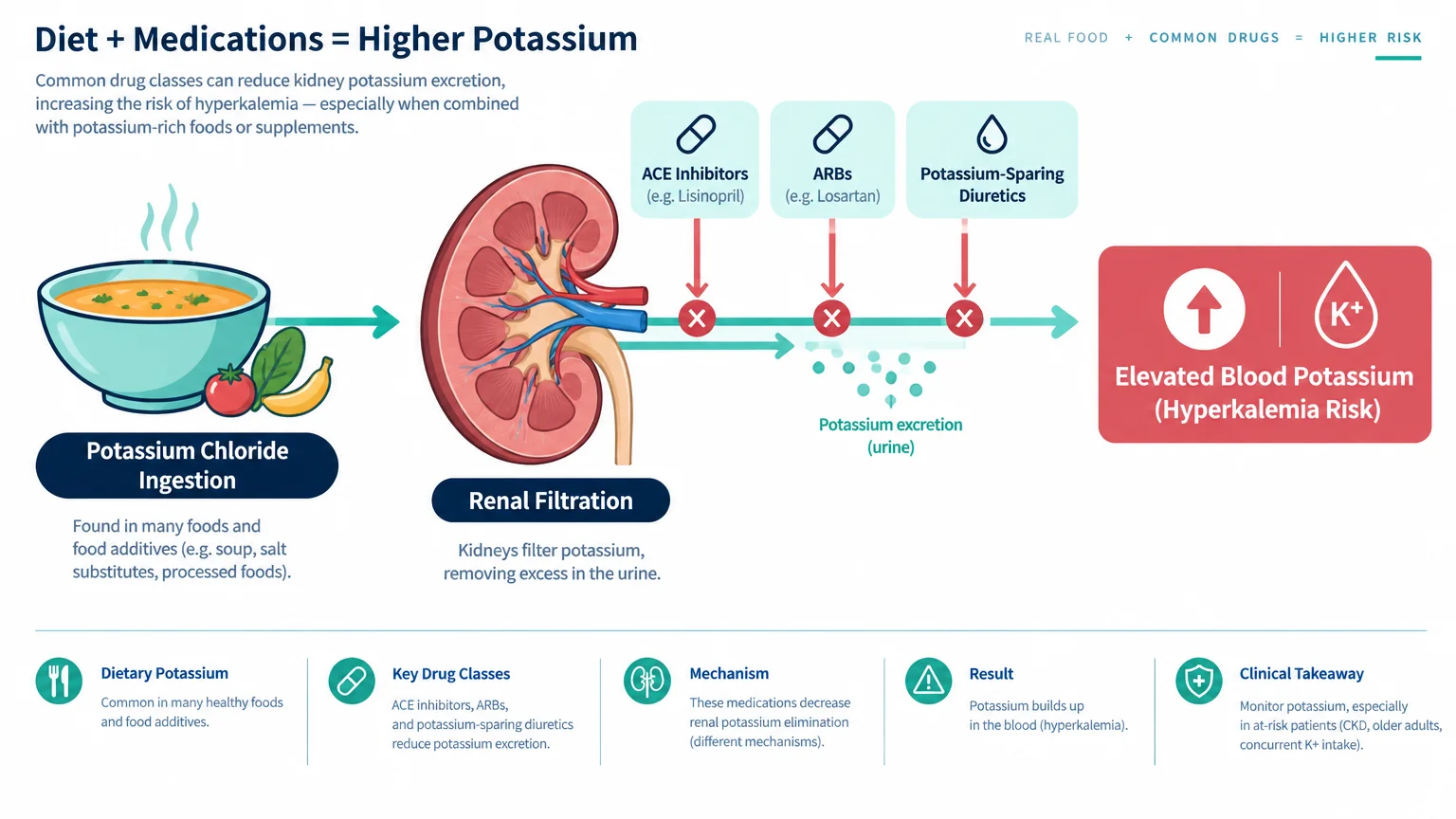
Why does added potassium matter if you take blood pressure medications?
For many healthy individuals, consuming extra potassium helps relax blood vessel walls and promotes natural sodium excretion through the urine. However, if you take cardiovascular prescriptions, this dietary dynamic changes completely.
Millions of adults manage hypertension using medications that intentionally alter how the kidneys filter fluid and electrolytes. Introducing sudden, concentrated doses of potassium chloride can overwhelm these delicate renal mechanisms.
Which specific prescriptions interact with potassium-based salt substitutes?
ACE inhibitors, such as lisinopril, enalapril, and ramipril, reduce blood pressure by widening blood vessels, but they also signal your kidneys to hold onto potassium. Combining them with potassium salt creates an internal accumulation hazard.
Angiotensin II Receptor Blockers, commonly known as ARBs, function through a closely related biological pathway. Prescriptions like losartan, valsartan, and irbesartan also cause potassium retention in your bloodstream.
Potassium-sparing diuretics present an even higher degree of interaction risk. Medications such as spironolactone, eplerenone, and triamterene explicitly prevent your kidneys from clearing potassium, making salt substitutes strictly contraindicated.
Conversely, common loop diuretics like furosemide and thiazide diuretics like hydrochlorothiazide flush potassium out of your body. Because different blood pressure drugs exert opposite effects on mineral balance, you cannot assume all cardiac medications share identical risks.
You must know the exact pharmacological category of your daily pills before modifying your dietary mineral intake. A quick call to your prescribing physician will clarify your specific restrictions.
What physical risks come with elevated potassium levels?
When potassium concentrations in your blood rise above safe physiological thresholds, clinicians classify the condition as hyperkalemia. The NIH Office of Dietary Supplements notes that severe hyperkalemia can trigger life-threatening cardiac arrhythmias.
Mild elevations in blood potassium rarely produce overt physical warning signs, allowing the imbalance to develop unnoticed. When symptoms do appear, they frequently mimic general fatigue, mild nausea, muscle weakness, or tingling sensations in the extremities.
Furthermore, kidney efficiency naturally declines as we advance in age, slowing the rate at which our bodies filter metabolic waste. A reduced filtration capacity combined with potassium-retaining medications makes store-bought salt substitutes particularly hazardous.
Your kidneys may lack the clearance speed needed to process a thousand milligrams of supplemental potassium delivered in a single lunch. Avoiding concentrated dietary sources prevents unnecessary strain on your renal system.
How do you keep your grocery bill down while buying safe low-sodium soup?
Specialty low-sodium foods frequently carry premium price tags that strain fixed monthly budgets. You do not need to spend extra money on boutique wellness brands to avoid potassium chloride.
Practical shopping tactics allow you to secure convenient, shelf-stable lunches while protecting both your cardiovascular health and your wallet. Careful label reading remains your most effective cost-saving tool.
Are store-brand broths and soups safer and cheaper than name brands?
Private-label store brands, such as Kroger, Great Value, or Good & Gather, often retail for 30% to 50% less than name-brand canned goods. Their formulation strategies also tend to be simpler.
Many national brands invest heavily in proprietary flavor-masking technologies that combine potassium chloride with bitter-blockers. Store brands, seeking to minimize production overhead, often omit these expensive mineral additives entirely.
Always check the unit price sticker on the grocery shelf, which displays the cost per ounce rather than the total package cost. A thirty-two-ounce carton of store-brand unsalted chicken stock often costs less than a single premium canned soup.
Reading the ingredient list on a store-brand no-salt-added vegetable broth usually reveals pure water, vegetable extracts, and herbs. These simple broths offer a safe, potassium-substitute-free canvas for quick home cooking.
Checking USDA nutritional data on FoodData Central confirms that basic store broths contain only natural trace minerals. Buying store brands saves money while keeping industrial additives out of your kitchen.
How can you stretch a single can across multiple meals without wasting food?
Cooking for one or two people makes food waste a persistent budget concern when buying larger cartons or family-sized cans. Opening a thirty-two-ounce broth carton often leads to spoilage before you finish it.
You can divide large cartons of verified potassium-free stock into standard silicone freezer trays or clean half-pint jars. Freezing single-cup portions gives you instant, measured soup bases for future dinners without risking spoilage.
When you buy a low-sodium canned soup that lacks potassium additives, stretch its volume by stirring in fresh produce. Adding half a cup of cooked brown rice or leftover baked potato doubles your yield without increasing sodium.
Incorporating plain frozen vegetables, such as cut green beans or peas, adds bulk and protective dietary fiber for pennies per bowl. This habit cuts your cost per serving in half while keeping mineral levels completely transparent.
Stretching canned soups with pantry staples also dilutes any trace additives across multiple meals. Your dollar goes further, and your body processes smaller mineral increments.
Frequently asked questions about potassium chloride in store soups
Can you wash or dilute canned soup to remove potassium chloride?
Rinsing canned beans or whole vegetables under cold water can wash away roughly 30% to 40% of surface sodium. However, this rinsing technique does not work for canned soups.
Potassium chloride dissolves completely throughout the liquid broth and penetrates soft vegetables, grains, and meats during the canning process. Diluting the soup with tap water spreads the mineral across more liquid, but you still consume the exact same milligram total.
If you want to reduce the concentration in your bowl, you must replace the canning liquid entirely. Discarding the broth and replacing it with homemade unsalted stock removes the additive, though purchasing the right soup initially saves far more time.
Does organic soup use potassium chloride as a salt substitute?
Many shoppers assume that buying certified organic soup guarantees freedom from synthetic or processed mineral additives. That assumption can lead to unpleasant surprises in the grocery aisle.
Under federal organic standards, certain mined minerals and non-agricultural ingredients remain permitted if they appear on the National List of Allowed and Prohibited Substances. Potassium chloride is legally permitted in organic processing.
Organic soup brands frequently formulate reduced-sodium lentil and vegetable soups using potassium chloride to satisfy mainstream palates. You must read the ingredient deck on organic labels with the exact same diligence you apply to conventional cans.
Why does soup with potassium chloride taste slightly bitter or metallic?
If you have ever sampled a reduced-sodium soup and noticed an unpleasant, sharp tang, you experienced the distinct taste profile of potassium chloride. While human tongue receptors register the compound as salty, it simultaneously triggers bitter-taste receptors.
Food processors often add masking agents, yeast extracts, or small amounts of sugar to hide this lingering metallic finish. If a soup leaves a chemical aftertaste on the back of your tongue, it almost certainly relies on potassium salt.
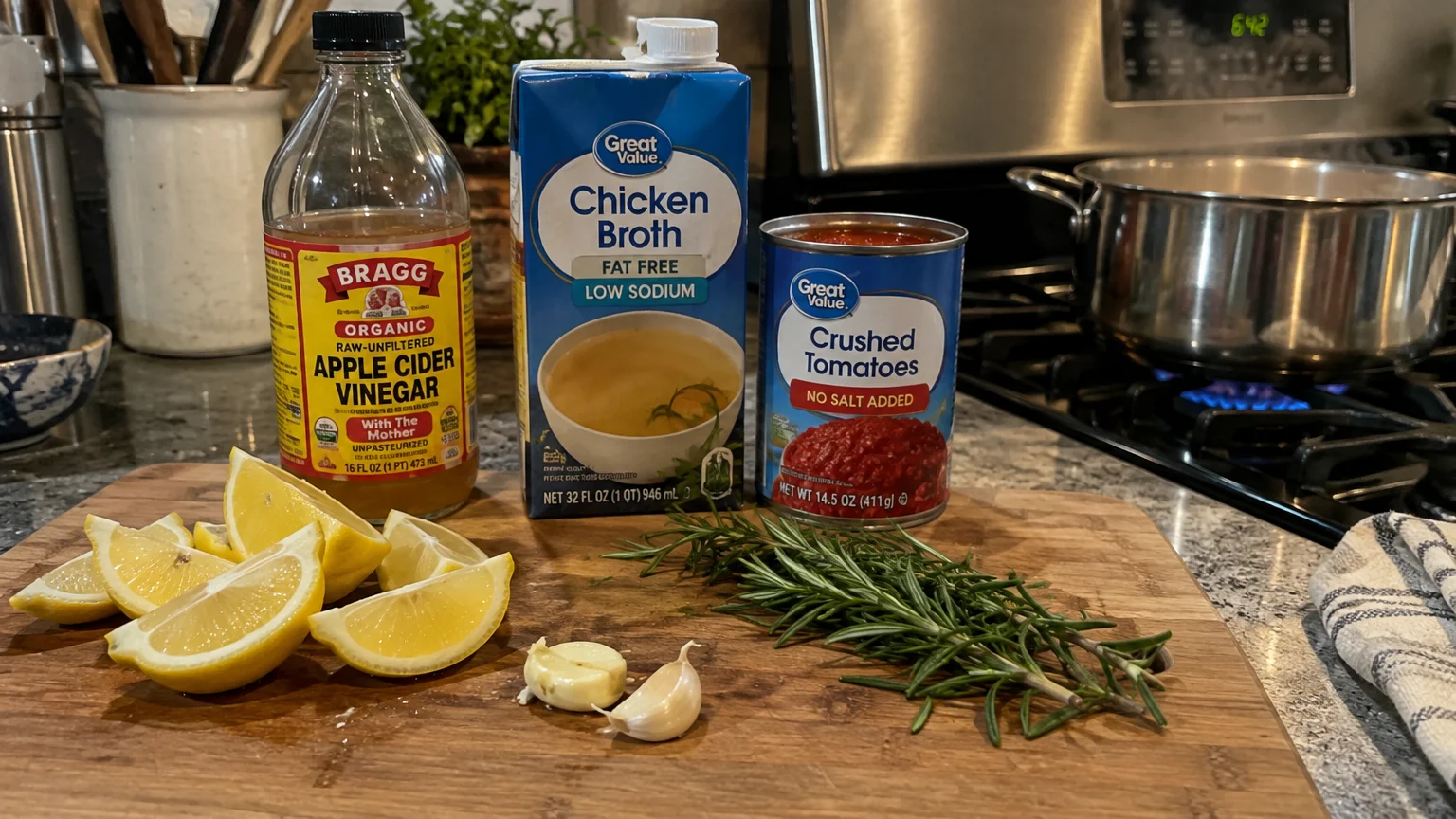
Natural seasonings like bay leaves, rosemary, cracked black pepper, and lemon juice do not produce this metallic interference. Soups flavored with whole culinary herbs deliver clean, authentic warmth without bitter synthetic residues.
How can you flavor zero-added-potassium soups at home without sodium?
When you purchase no-salt-added broths that avoid potassium additives, you might find the initial flavor uncomfortably bland. Restoring depth without adding table salt or salt substitutes requires utilizing acid and aromatic heat.
A splash of apple cider vinegar, red wine vinegar, or fresh lemon juice brightens dull broths by activating salivary glands in a manner similar to sodium. This simple acidic lift tricks your palate into perceiving richer flavor.
You can also sauté diced onions, minced garlic, and celery in a skillet with a teaspoon of olive oil before pouring in your store broth. These aromatic vegetables release natural glutamates that provide rich, savory body naturally.
Dried herbs like thyme, oregano, and smoked paprika deliver hearty warmth without altering your cardiovascular mineral balance. Keeping these staple seasonings in your spice rack makes sodium-free cooking deeply satisfying.
What is your single action step for your next trip down the soup aisle?
On your next trip to the grocery store, perform one quick two-second check on every low-sodium can before placing it into your cart. Flip the can directly to the ingredient list and scan specifically for the word potassium.
If you see the terms potassium salt or potassium chloride in the text, check the Nutrition Facts panel above it to verify the exact milligrams per serving. Compare that number against your personal health requirements and prescriptions.
If the numbers exceed your target or your physician advises against salt substitutes, place that can back on the shelf and choose an unsalted broth instead. This simple inspection protects your health and keeps you fully in control.