Spotting real whole wheat bread in the grocery aisle takes only five seconds once you know where food manufacturers hide the truth. Packaging colors and rustic brown crusts frequently trick shoppers into buying colored refined flour.
Choosing genuine whole grains stabilizes daily blood sugar, supports healthy blood pressure, and delivers the natural fiber your body requires. You can bypass marketing traps and protect your health by checking two key spots on the package.
This practical guide shows you exactly what to look for on your next grocery run, saving both your health and your grocery budget.
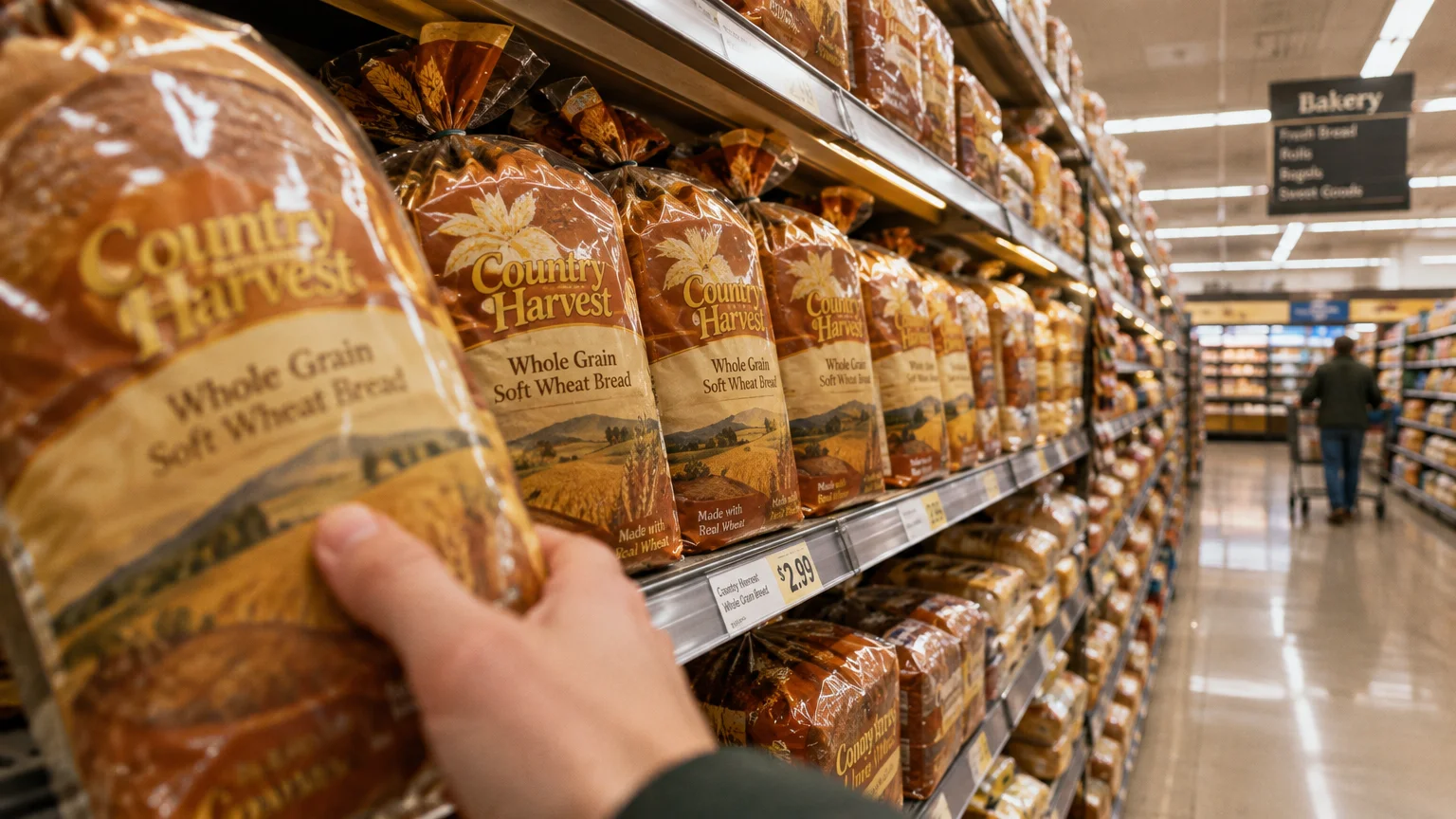
Why does the bakery shelf make real whole wheat hard to spot?
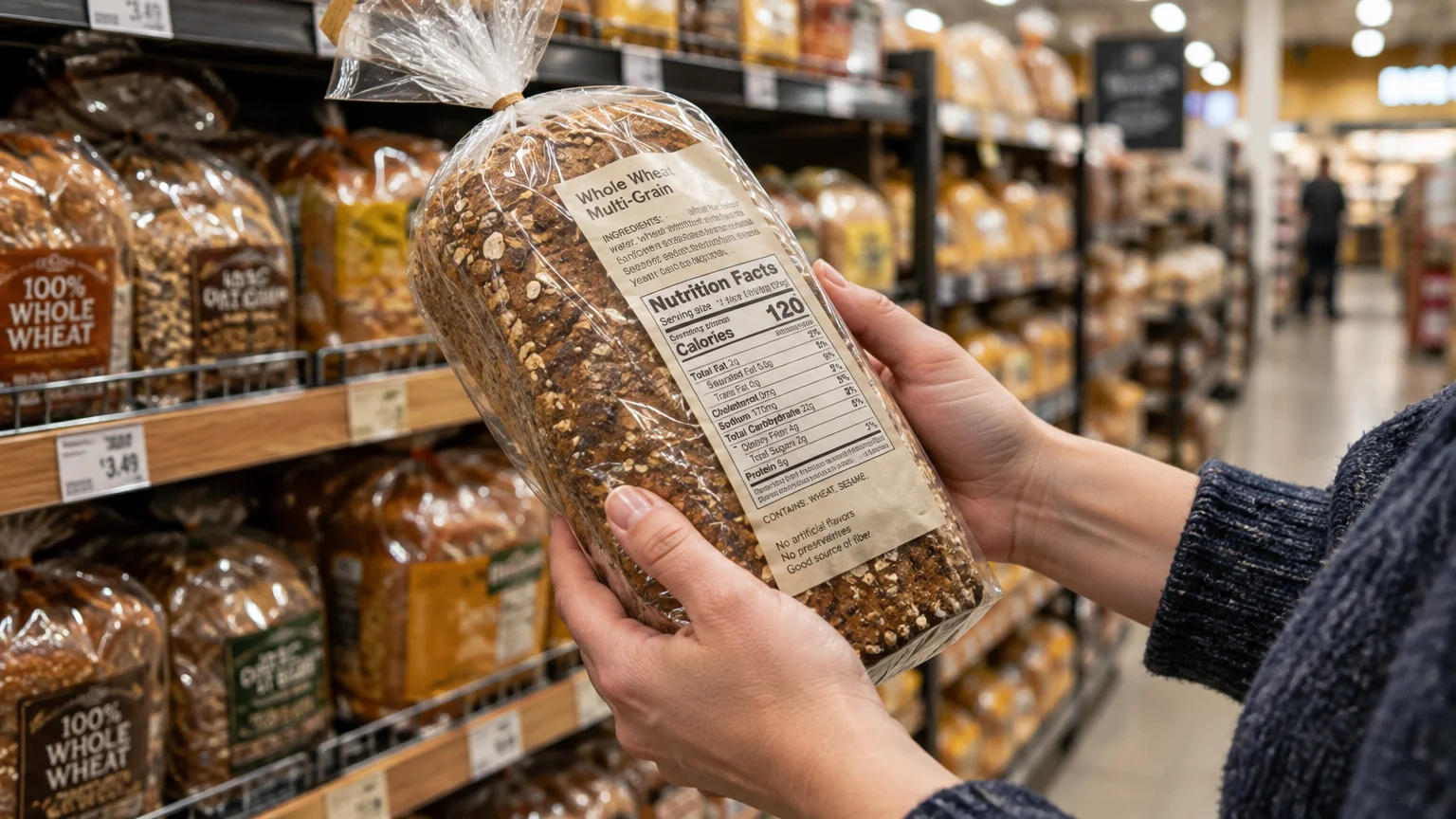
Commercial bread aisles present an overwhelming wall of warm earth tones, clear plastic wrappers, and rustic imagery. Marketers deliberately design packaging to imply wholesome, farm-fresh nutrition regardless of what sits inside the bag.
Many shoppers assume that any brown loaf contains unrefined flour; however, commercial bakeries routinely darken white dough using caramel color, molasses, or malted barley. These additions create an earthy hue without providing any intact grain benefits.
Federal labeling regulations allow food companies to place suggestive buzzwords on packaging while packing the dough with cheap refined flour. Learning to spot real whole wheat protects you from paying premium prices for disguised white bread.
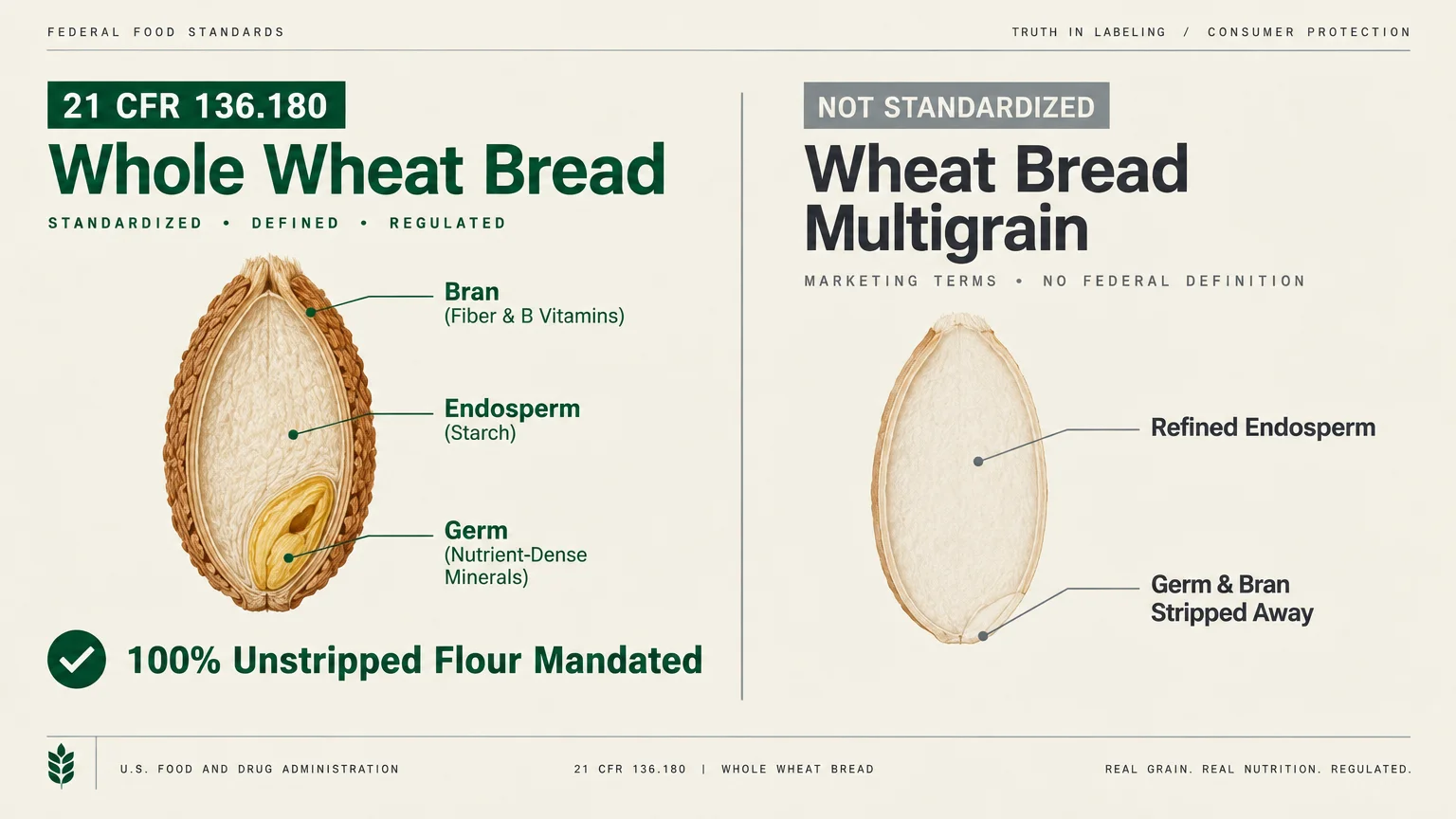
What does federal law require for a loaf called whole wheat bread?
Federal food standards give you an immediate legal shield if you know where to look. Under 21 CFR 136.180, the Food and Drug Administration enforces a strict standard of identity for whole wheat bread.
This federal rule mandates that any commercial loaf labeled explicitly as whole wheat bread, entire wheat bread, or graham bread must use dough made exclusively from whole wheat flour. Manufacturers cannot include refined white flour in these loaves.
If the front label says whole wheat bread without modifying phrases, federal law ensures the dough contains no stripped wheat flour. The standard protects your wallet by guaranteeing that the grain retains its germ, endosperm, and bran.
When manufacturers deviate from this strict formula, they must change the product name to wheat bread or multigrain. Looking for that exact federal phrase instantly narrows your options to authentic options on the shelf.
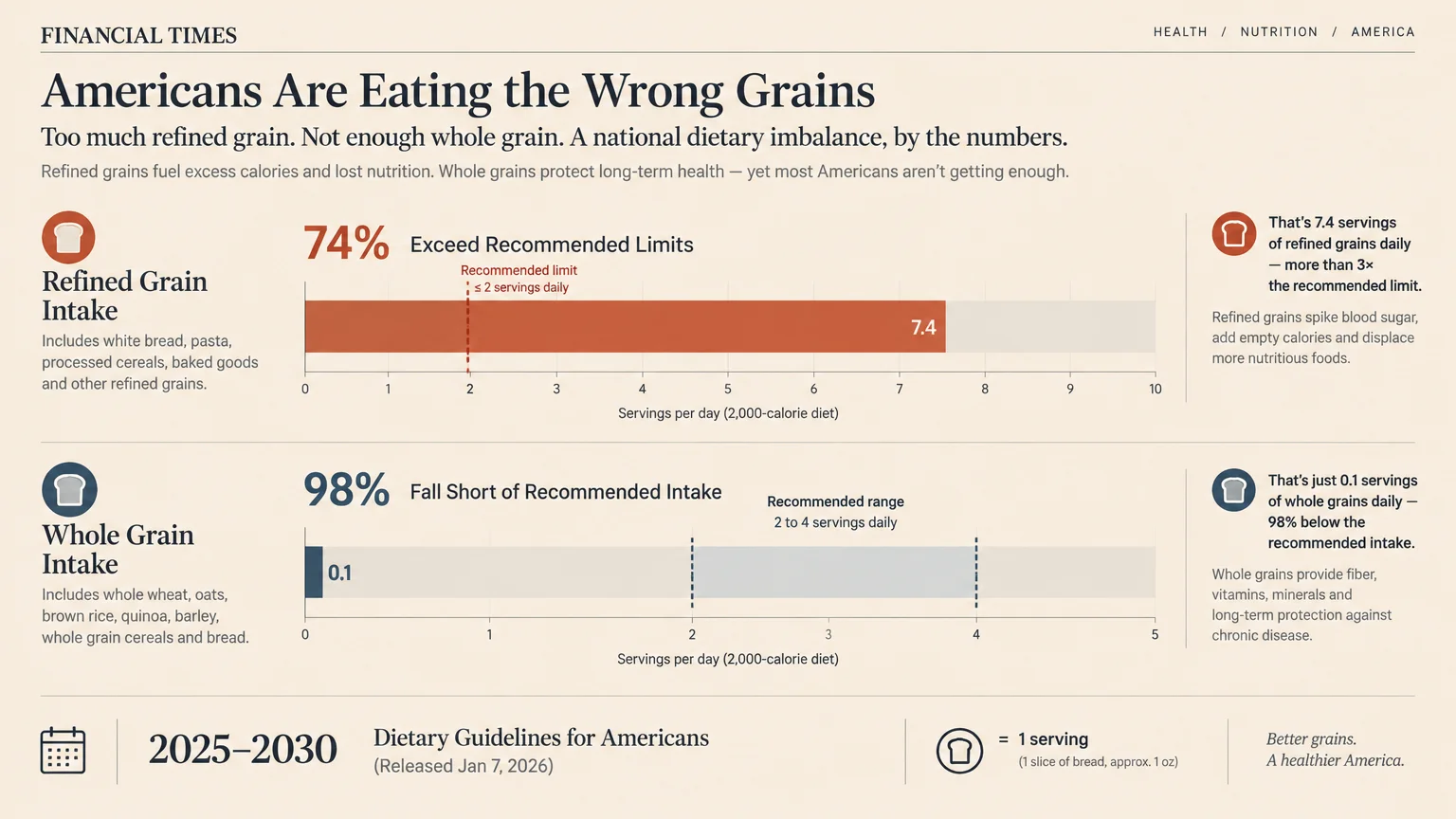
What do national dietary guidelines reveal about our grain choices?
Understanding federal grain recommendations helps you see why choosing genuine whole wheat matters for daily vitality. The federal government released the 2025–2030 Dietary Guidelines for Americans on January 7, 2026, emphasizing real food and limiting refined carbohydrates.
These updated guidelines recommend that adults consuming a typical 2,000-calorie diet eat between two and four servings of whole grains daily. One standard slice of authentic whole wheat bread counts as one full serving.
Federal Dietary Guidelines data show that 98 percent of Americans fall short of recommended whole grain intake; simultaneously, 74 percent exceed recommended limits for refined grains. Most shoppers consume ample grains but miss the essential nutrients.
Refined flour strips away the outer bran layer and the nutrient-dense germ, discarding dietary fiber, B vitamins, and trace minerals. Replacing refined bread with real whole wheat bridges this gap without requiring you to change your daily routine.
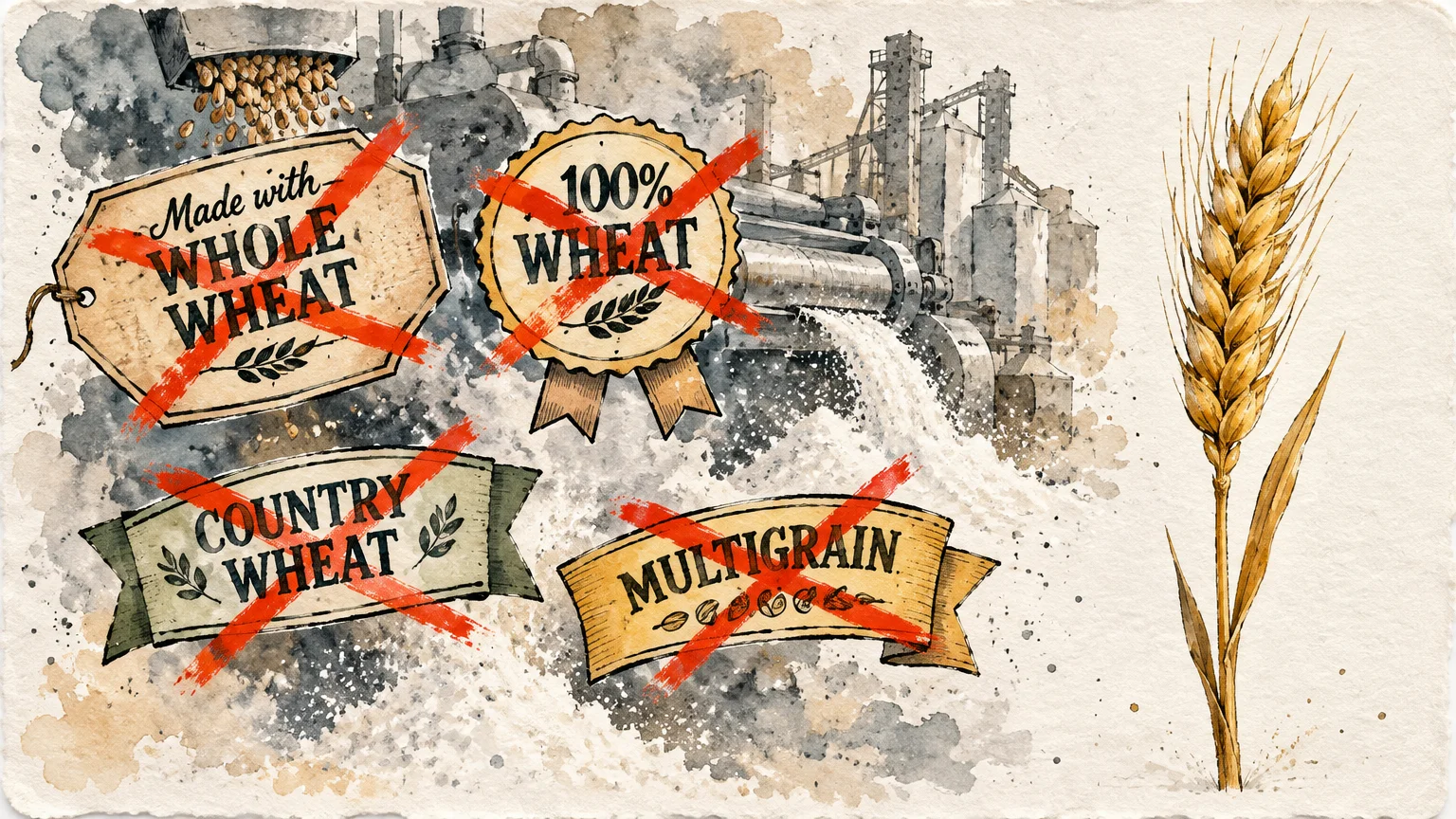
Which front-of-package marketing terms should you ignore?
Food manufacturers invent persuasive terms to distract you from the actual ingredients inside the bag. Loaves labeled simply as wheat bread almost always consist of standard white flour with a splash of whole wheat or caramel coloring.
Packages displaying honey wheat typically contain standard refined flour sweetened with high fructose corn syrup and nominal amounts of honey. These products trigger rapid blood sugar spikes while offering minimal dietary fiber.
The term multigrain sounds healthy; however, it merely indicates that the bread contains multiple types of grains. In most commercial multigrain loaves, every single grain present has been milled down to refined white starch.
You should also disregard claims such as made with whole grains or stone ground. A manufacturer can place made with whole grains on a wrapper even if whole grain represents a tiny fraction of the recipe.
Look past these front-panel phrases and verify the legal product name. If the package does not say 100 percent whole wheat or whole wheat bread, return the loaf to the shelf.
How do you inspect the ingredient list under federal rules?
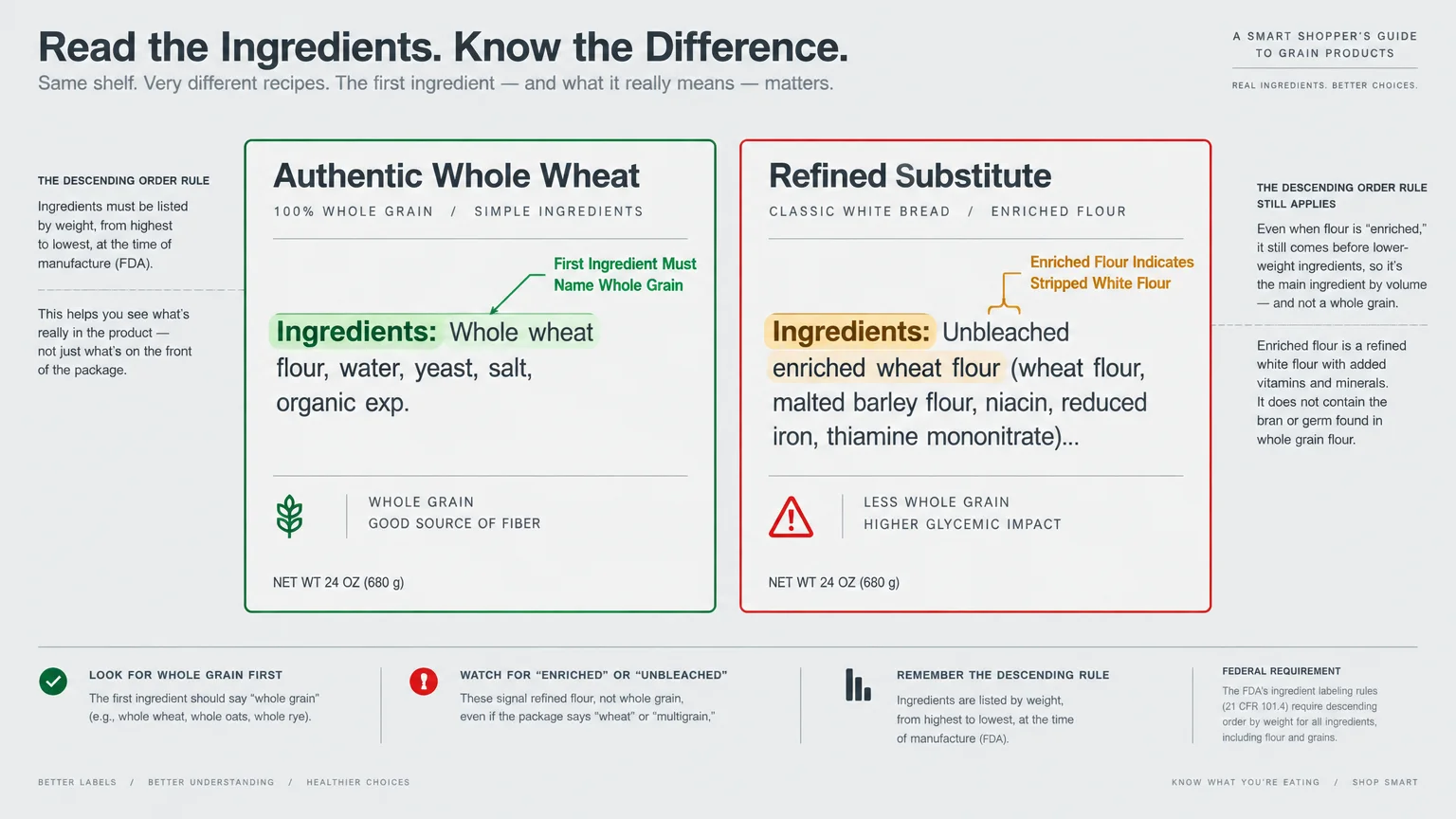
The ingredient list on the back or side of the package provides definitive proof of what you are buying. Under 21 CFR Part 101, food manufacturers must list all ingredients in descending order of predominance by weight.
The very first ingredient listed must be whole wheat flour or 100 percent whole wheat flour. If filtered water appears first, whole wheat flour must follow immediately as the second ingredient on the panel.
If the first flour listed reads unbleached enriched wheat flour, enriched wheat flour, or unbleached wheat flour, the bread is primarily white flour. The word enriched indicates that industrial processors stripped natural nutrients away and added synthetic vitamins back.
Scan past the first two items to see if secondary flours appear further down the list. Real whole wheat bread maintains grain purity by avoiding supplemental refined flours later in the formulation.
Checking the first three ingredients takes less than ten seconds in the bakery aisle; this quick habit ensures that your household consumes unadulterated whole grain flour every morning.
What do the front-of-package stamps and FDA claims actually certify?
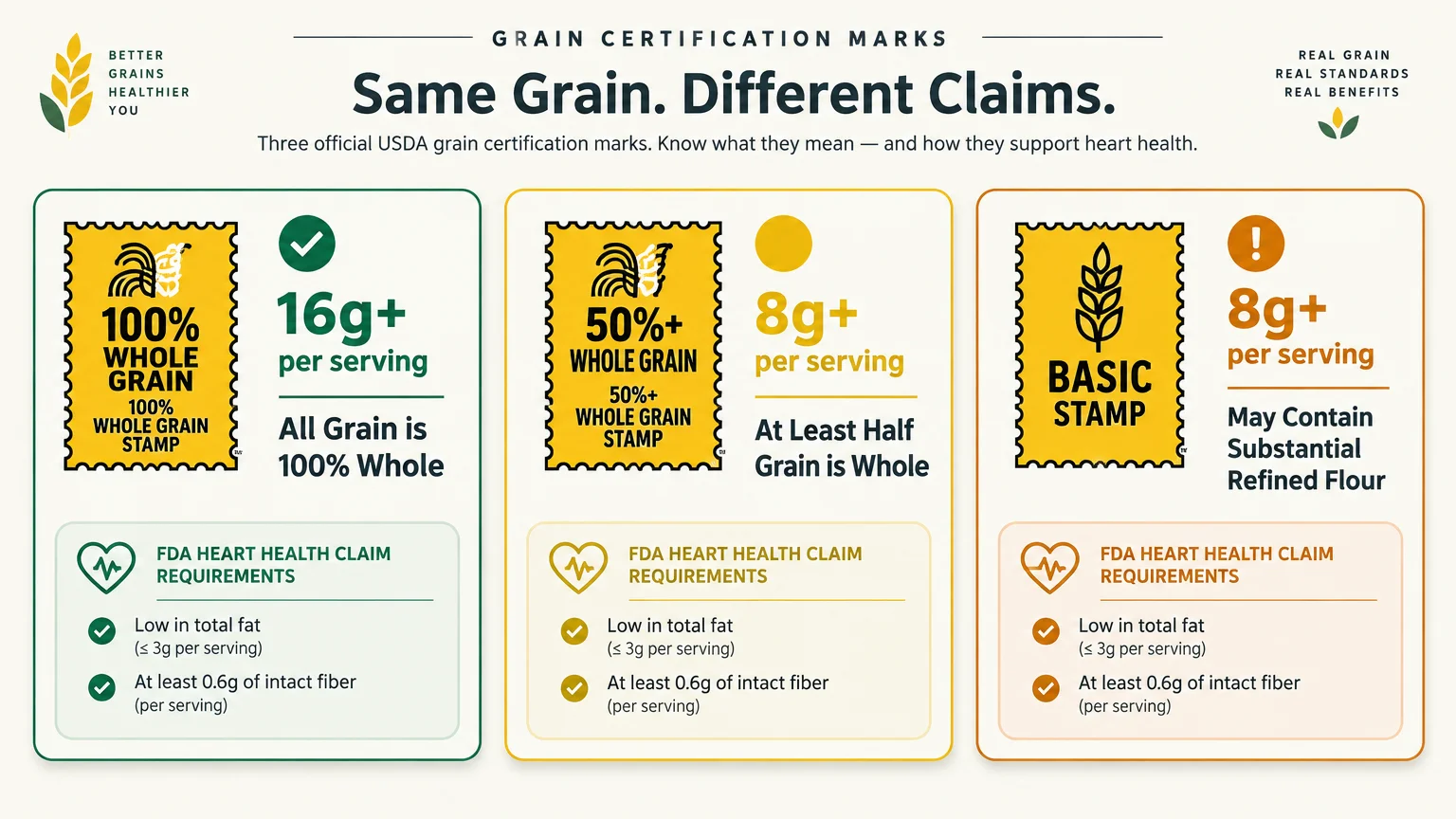
Third-party seals and authorized claims can simplify your search if you understand their exact numerical requirements. The Oldways Whole Grains Council issues widely recognized black-and-gold stamps based on verified gram weights per serving.
The 100% Stamp certifies that all grain ingredients are whole grain, delivering at least 16 grams of whole grain per labeled serving. Loaves carrying this specific stamp contain zero refined flours or stripped wheat starches.
The 50%+ Stamp indicates that at least half of the grain ingredients are whole grain, providing at least 8 grams per serving. The Basic Stamp also guarantees 8 grams of whole grain, but the bread may contain more refined flour than whole grain.
You may also spot federal health claims linking whole grains to a reduced risk of heart disease and certain cancers. Under FDA rules, a bread must contain at least 51 percent whole grain ingredients by weight per reference amount to make that claim.
When you want pure whole grain nutrition, prioritize loaves bearing the 100% Stamp over those carrying the Basic Stamp or unverified marketing phrases.
How does the updated FDA healthy rule filter out fake whole wheat?
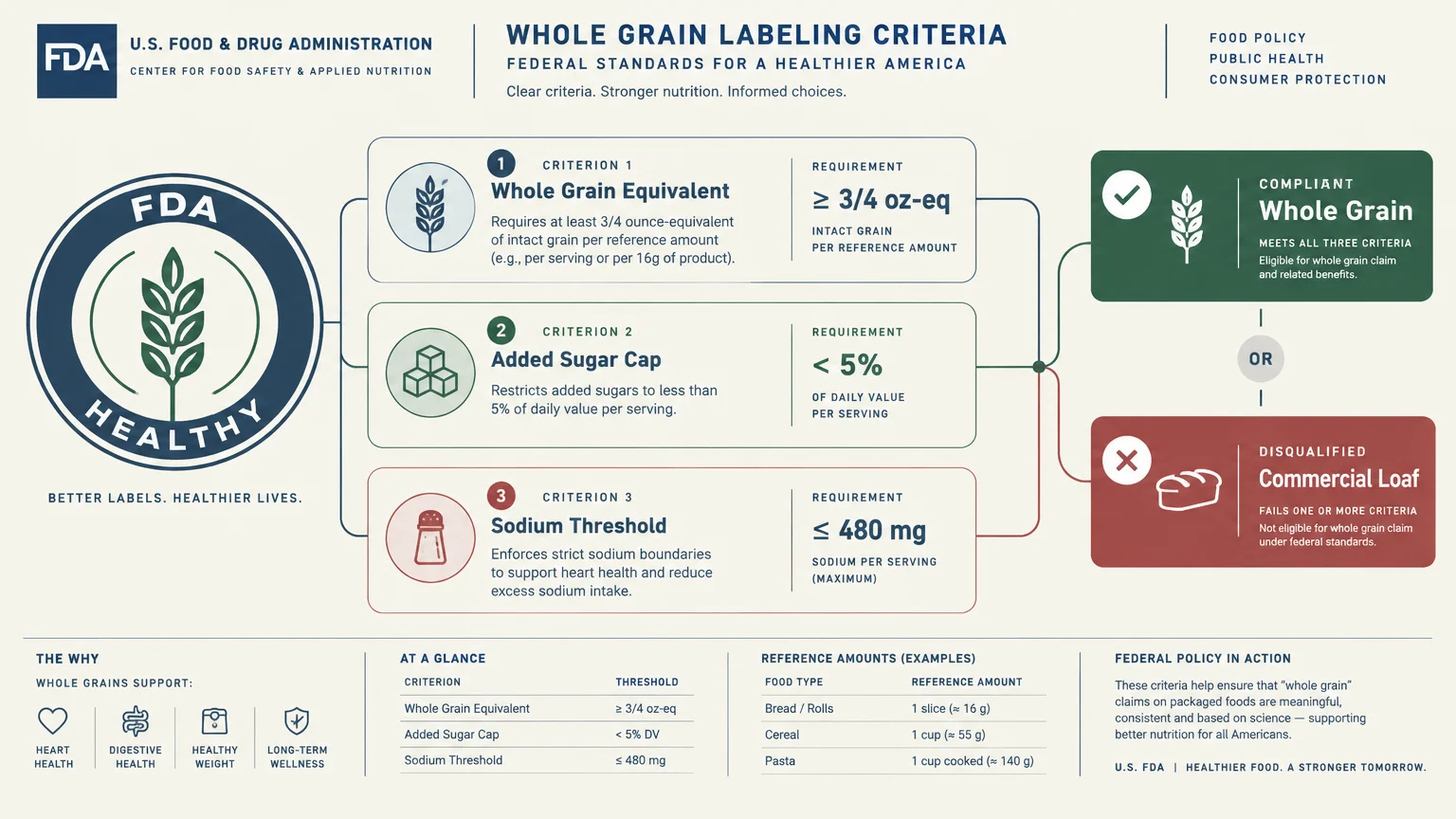
Federal labeling standards recently established tougher barriers against misleading bakery marketing. The FDA updated “healthy” label rule took effect on April 28, 2025, with mandatory manufacturer compliance required by February 25, 2028.
Under this modernized regulation, fortified white bread can no longer display the word healthy on its packaging. The FDA determined that adding synthetic vitamins to refined starch does not compensate for the absence of authentic whole grain nutrients.
To qualify for the updated healthy claim, an individual grain product must contain at least 0.75 ounce-equivalents, or 12 grams, of whole grains per reference amount. This baseline requirement prevents low-fiber impostors from deceiving shoppers.
The rule also imposes strict caps on nutrients that threaten cardiovascular and metabolic health. A qualifying bread cannot exceed 2.5 grams of added sugars, 230 milligrams of sodium, and 2 grams of saturated fat per serving.
Checking for the updated healthy claim provides a dependable shortcut when comparing different brands in the bakery aisle.

How does genuine whole wheat bread support your cardiovascular health?
Maintaining cardiovascular wellness requires careful daily attention to sodium, dietary fiber, and cholesterol balance. Real whole wheat bread delivers intact plant compounds and viscous soluble fiber that actively bind to dietary cholesterol in your digestive tract.
When fiber binds to bile acids, your body eliminates cholesterol rather than absorbing it into your bloodstream. This natural mechanism supports healthy arteries without requiring drastic changes to your breakfast sandwich.
Commercial white bread often functions as a major hidden source of dietary sodium in the American diet. A single slice of highly processed bread can contain well over 200 milligrams of sodium without tasting distinctly salty.
When selecting your loaf, choose whole wheat varieties that contain 150 milligrams of sodium or less per slice. Keeping bread sodium low helps you manage blood pressure and protects delicate vascular tissues.
Whole wheat also retains natural potassium and magnesium from the original wheat kernel. These two essential minerals work together to relax blood vessel walls and promote steady arterial pressure throughout your day.
How does whole wheat assist blood sugar and metabolic management?
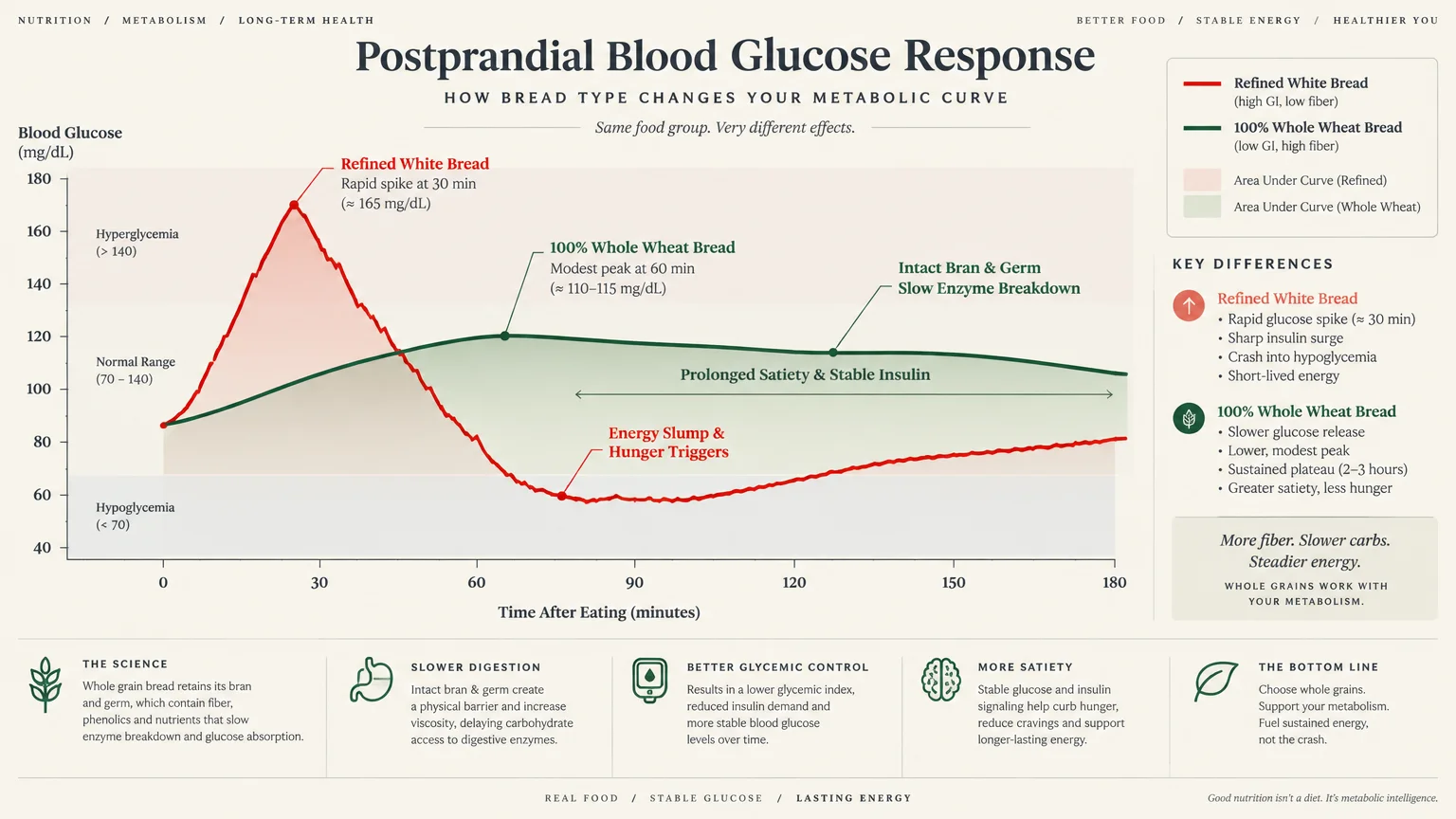
Managing blood sugar levels becomes increasingly critical as metabolic efficiency changes over time. Refined white bread digests rapidly, breaking down into glucose almost as quickly as pure table sugar and causing sharp glycemic surges.
Rapid glucose spikes force your pancreas to pump out large surges of insulin, which can strain metabolic function. Over time, recurring insulin spikes contribute to fatigue, weight accumulation around the midsection, and increased insulin resistance.
Authentic whole wheat retains the fibrous outer bran jacket, creating a natural physical barrier against digestive enzymes. This fibrous structure slows carbohydrate breakdown, releasing a steady stream of glucose into your bloodstream over several hours.
The 2025–2030 Dietary Guidelines emphasize whole grains specifically to prevent sharp blood sugar fluctuations and support long-term metabolic health. Choosing whole grain toast helps maintain stable energy levels and reduces midday cravings.
Look at the Nutrition Facts panel to ensure your whole wheat choice contains no more than 2 grams of added sugars per slice. Bread does not need high-fructose sweeteners or cane sugar to deliver delicious, nutty flavor.
How does dietary fiber affect your medications and mineral absorption?
The high fiber content of real whole wheat bread supports digestive regularity and feeds beneficial gut microbes. However, substantial amounts of dietary fiber can also interact with certain daily prescription medications.
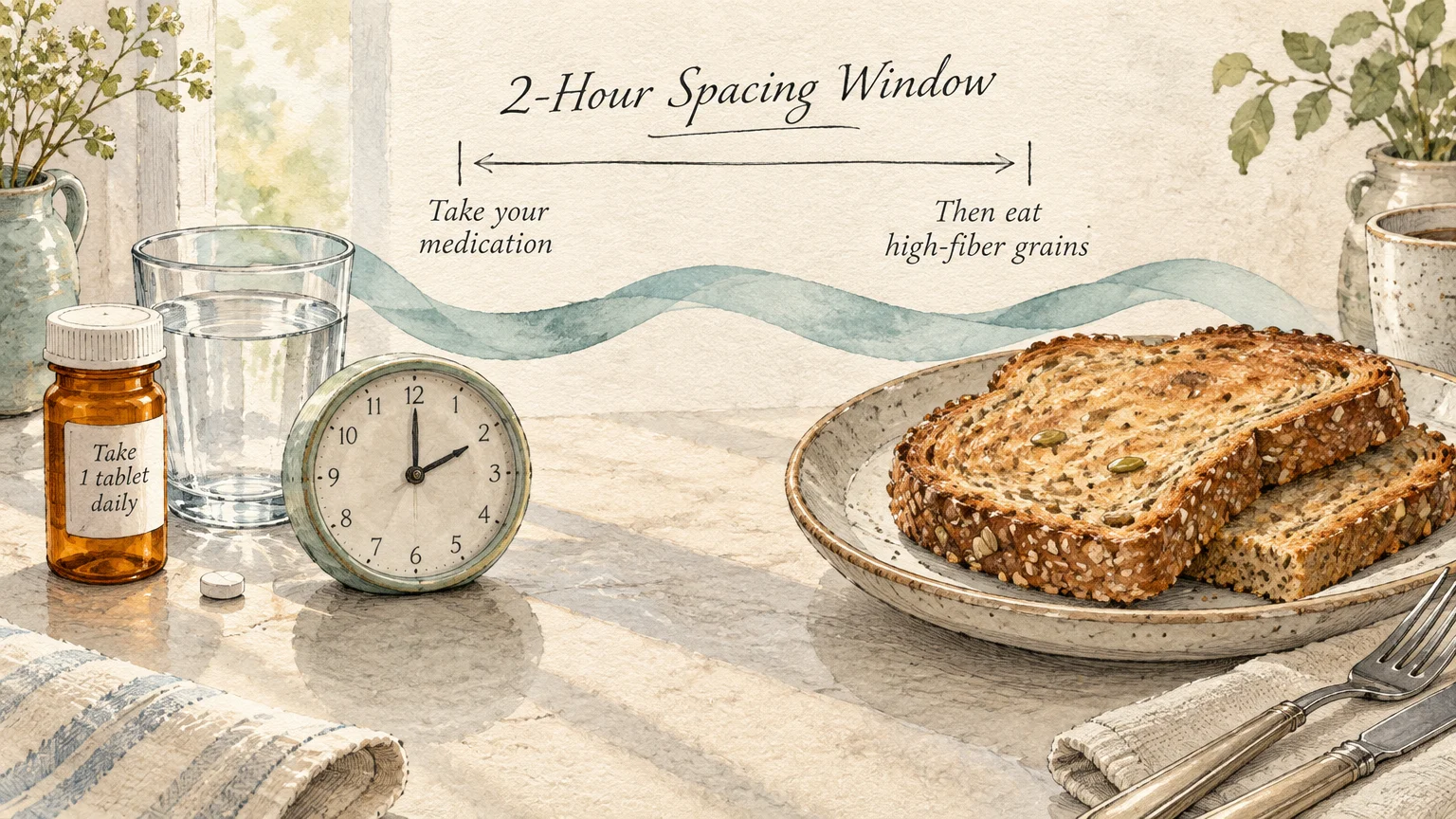
If you take thyroid hormone replacement medications, such as levothyroxine, dietary fiber can bind to the active medication in your stomach. This binding action prevents full absorption, potentially leaving your thyroid levels poorly regulated.
Endocrinologists generally advise taking levothyroxine with plain water at least 30 to 60 minutes before breakfast, or four hours after dinner. Spacing your medication away from high-fiber whole wheat toast ensures consistent drug absorption.
Whole grain bran naturally contains phytic acid, a plant compound that can bind small amounts of dietary calcium, zinc, and iron. For adults consuming balanced diets, this binding effect produces negligible nutritional impact over time.
In fact, the fermentation of whole wheat fiber in your large intestine generates short-chain fatty acids that improve overall mineral absorption. Enjoying two slices of real whole wheat daily provides significant digestive benefits without compromising bone density.
Which numbers matter most on the Nutrition Facts panel?
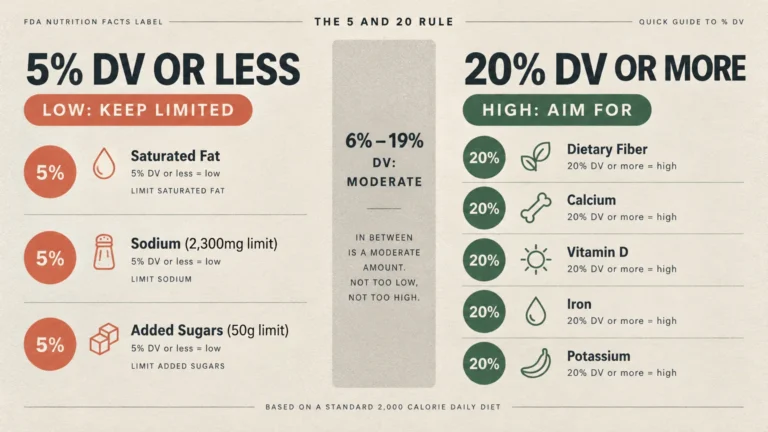
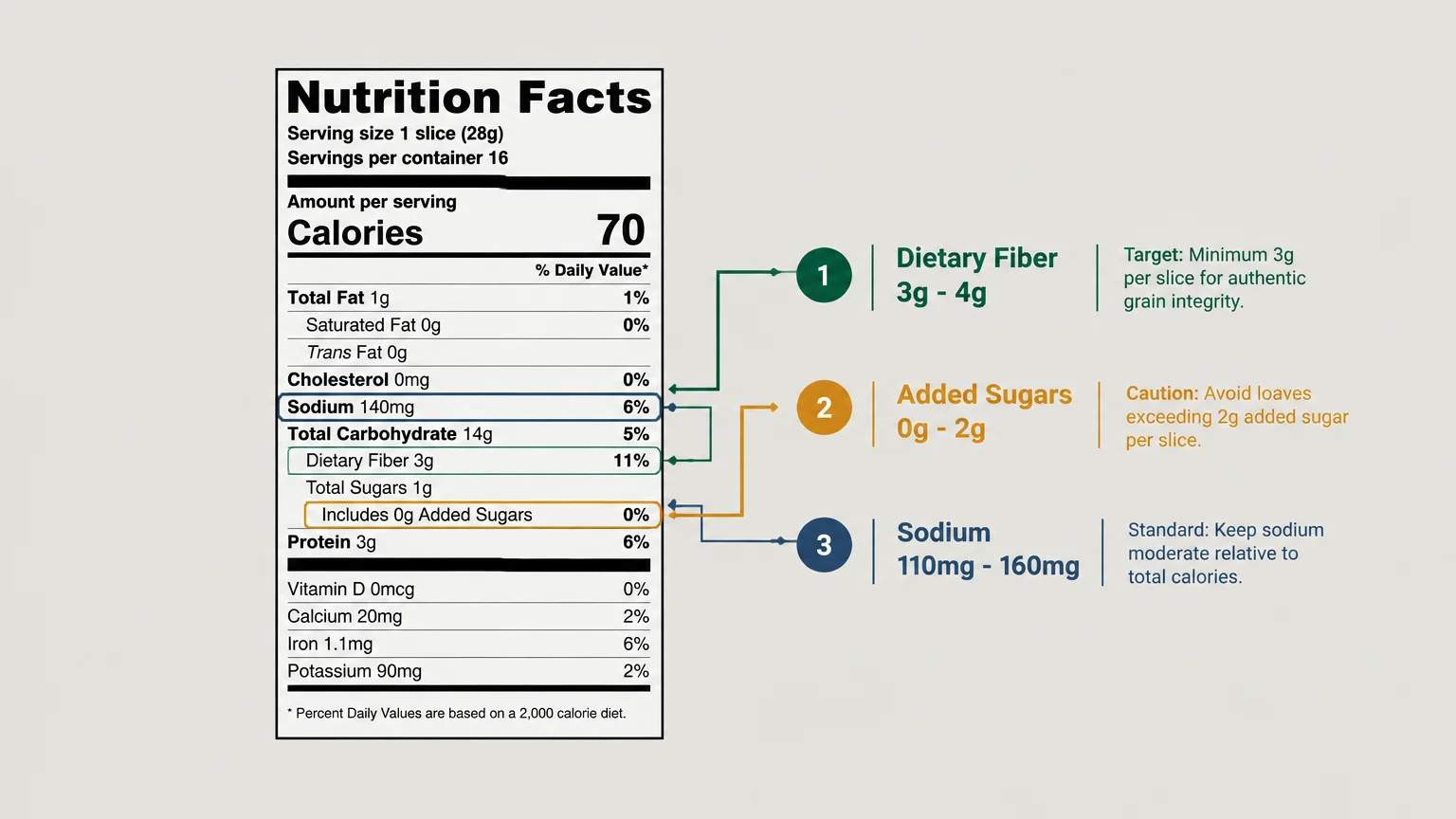
Flipping the package over allows you to confirm the bread’s nutritional quality in seconds. Focus on four specific metrics on the Nutrition Facts label: dietary fiber, sodium, added sugars, and protein.
Start with dietary fiber and confirm that each slice delivers at least 3 grams. Loaves offering 3 to 5 grams of fiber per slice indicate high whole grain density and uncompromised bran content.
Next, examine the sodium line to protect your daily blood pressure targets. Aim for 180 milligrams of sodium or less per slice, and never purchase loaves exceeding the federal benchmark of 230 milligrams.
Check the added sugars row to ensure manufacturers did not dump sugar into the recipe to mask grain bitterness. A quality loaf should list 2 grams or fewer of added sugars per serving.
Finally, check the protein content; authentic whole wheat bread naturally provides 4 to 5 grams of plant protein per slice. This natural protein enhances satiety and helps preserve lean muscle mass when cooking for small households.
How can you stretch your bread budget when cooking for one or two?
Inflation in grocery stores makes budget-conscious shopping essential, especially when living on a fixed retirement income. Brand-name whole wheat bread can easily cost between $4.50 and $6.00 per loaf at major supermarket chains.
Store-brand whole wheat loaves frequently cost between $1.80 and $2.50 while meeting identical federal standards of identity. Private-label options at stores like Aldi, Kroger, and Walmart contain genuine whole wheat flour at a fraction of the cost.
Always inspect the unit price printed on the supermarket shelf sticker, which shows the cost per ounce or pound. Name-brand specialty breads often charge twice as much per ounce simply for colorful packaging and rustic terminology.
Single shoppers and couples often avoid whole wheat because genuine loaves lack artificial chemical preservatives and spoil quickly on countertops. Throwing away half a loaf due to green mold completely wipes out your grocery savings.
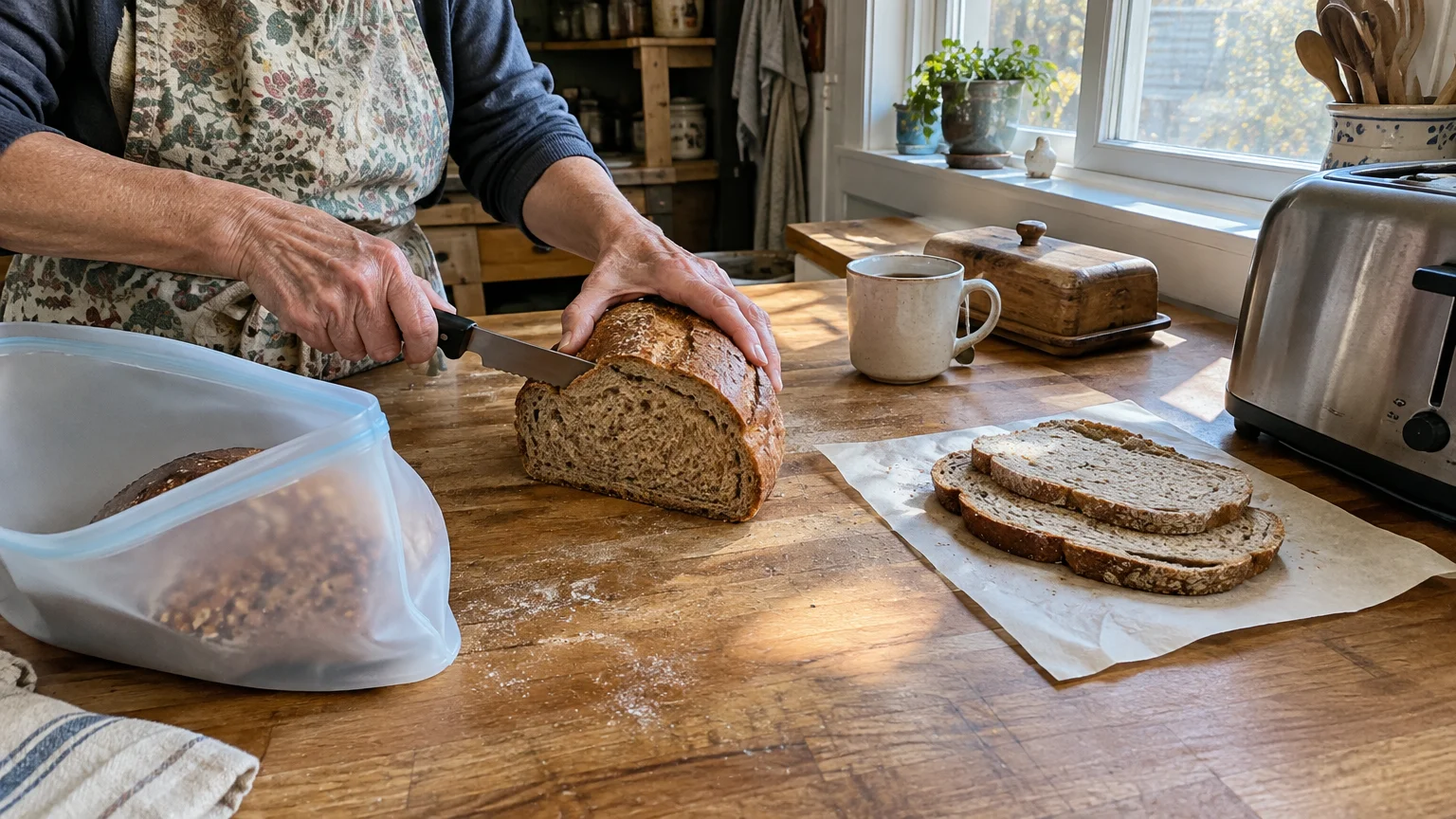
You can eliminate waste entirely by implementing smart portioning techniques the moment you arrive home from the grocery store. Dividing the loaf guarantees you never waste a single slice of nutritious bread.
How should you store real whole wheat bread to prevent waste?
Real whole wheat bread spoils faster than refined white bread because the intact wheat germ contains natural, heart-healthy oils. When exposed to heat and oxygen, these natural oils gradually oxidize, and the preservative-free loaf develops mold.
Never store your bread in the refrigerator, because cool temperatures between 35 and 45 degrees accelerate starch retrogradation. Retrogradation forces moisture out of the crumb structure, making your fresh loaf turn stale and crumbly within days.
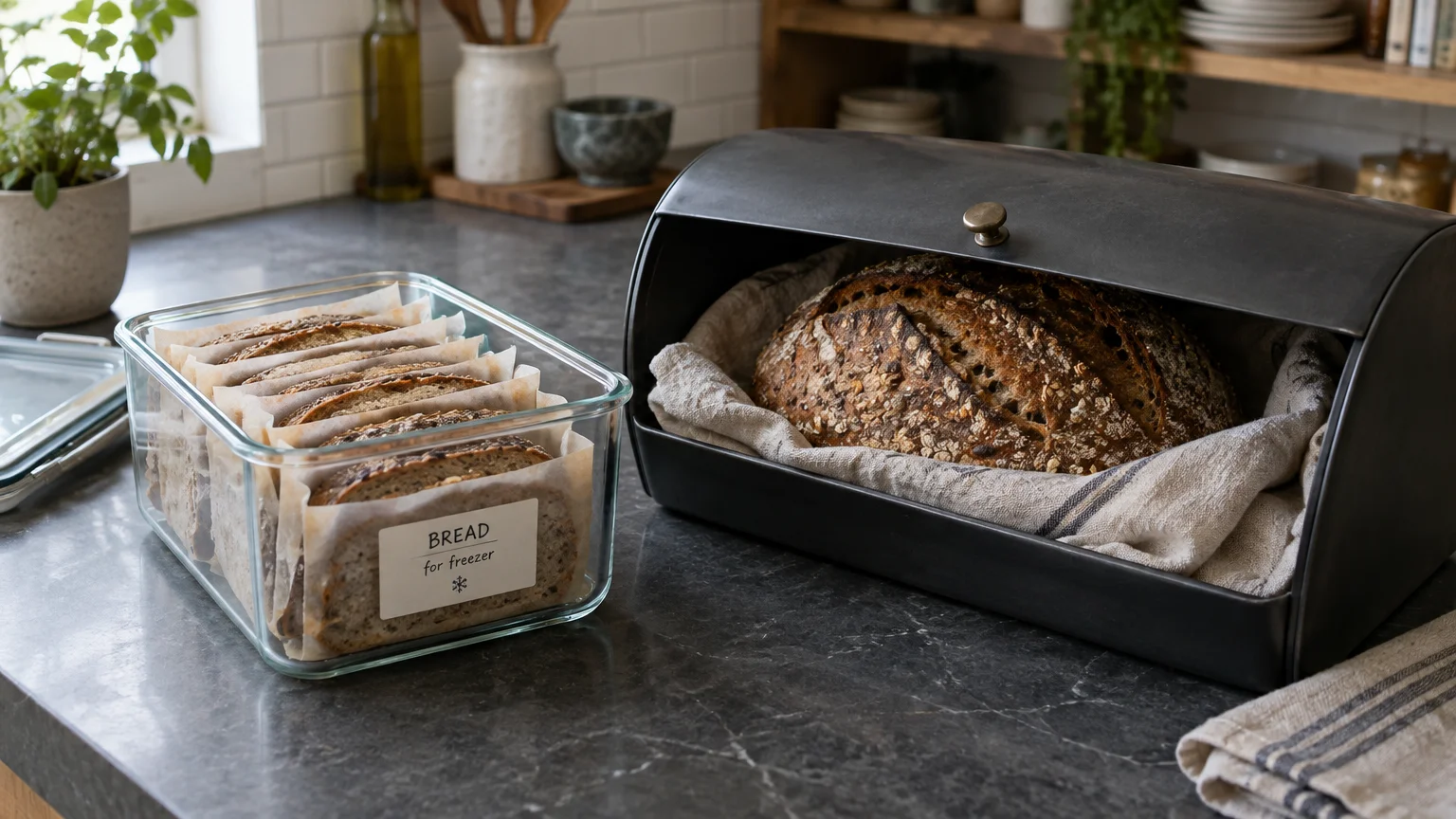
Instead, keep out only the number of slices you plan to eat over the next three days in a cool, dark bread box. Take the remaining slices and divide them into convenient two-slice bundles using wax paper or reusable freezer bags.
Place these bundles directly into your home freezer, where whole wheat bread maintains peak nutritional value and freshness for three months. You can pull individual frozen slices directly from the freezer and pop them straight into your toaster.
Toasting frozen slices restores their soft interior crumb and crisp crust without altering flavor or fiber content. This simple kitchen routine saves the average household between $50 and $100 every year in avoided food waste.
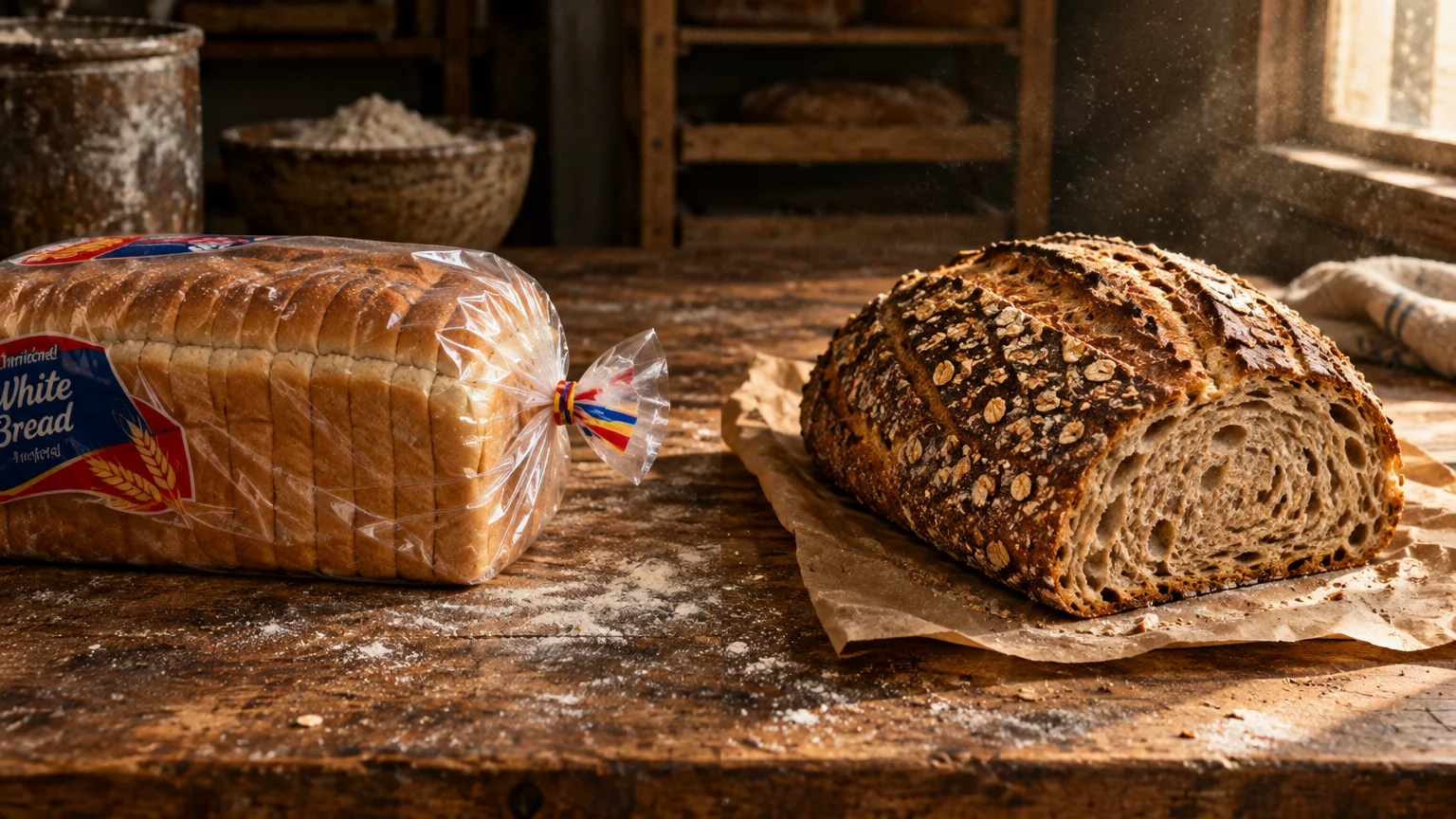
How do commercial packaged loaves compare to fresh in-store bakery bread?
Many shoppers assume that unwrapped loaves sitting in the supermarket’s fresh bakery department are inherently healthier than bagged commercial loaves. However, fresh bakery breads often conceal nutritional pitfalls that packaged products cannot hide.
Federal labeling laws do not require in-store bakery breads packaged on-site to display complete Nutrition Facts panels or detailed ingredient disclosures. Without an ingredient list, you cannot confirm whether that artisan boule contains whole wheat or colored white flour.
In-store bakery loaves frequently utilize base mixes that contain high amounts of sodium to enhance structural rise and shelf stability. A single crusty roll from the bakery department can easily deliver over 350 milligrams of unlisted sodium.
Commercial sliced loaves in the main aisle must carry comprehensive, legally binding nutrition panels and ingredient lists under federal inspection. This transparent labeling allows you to verify fiber, sodium, and whole grain percentages before spending money.
If you prefer buying from the in-store bakery counter, ask the bakery staff for their ingredient binder. If the first flour listed is not whole wheat, choose a verified packaged loaf from the main bread aisle instead.
Frequently asked questions about whole wheat bread
Is whole wheat sourdough healthier for blood sugar than standard whole wheat?
Authentic sourdough fermentation uses wild lactic acid bacteria and natural yeasts that partially digest starches before baking. This natural fermentation process lowers the bread’s glycemic index, resulting in gentler blood sugar rises after meals.
However, you must confirm that the sourdough loaf uses whole wheat flour rather than white bread flour. Many commercial sourdoughs use refined white flour, eliminating the dietary fiber benefits despite the traditional bacterial fermentation process.
Are sprouted whole wheat breads worth the higher shelf price?
Sprouted whole grain breads use wheat kernels that have begun to germinate before milling into dough. Germination breaks down some plant phytates, which can slightly improve the bioavailability of natural minerals like zinc and iron.
Sprouting also breaks down complex starches, making the bread somewhat easier to digest for individuals who experience mild stomach sensitivity. If your grocery budget allows, sprouted bread offers excellent quality; otherwise, standard 100 percent whole wheat delivers comparable benefits.
Can you eat whole wheat bread while taking prescription blood thinners?
Whole wheat bread contains negligible amounts of vitamin K, meaning it does not interfere with anticoagulant medications such as warfarin. You can safely consume whole wheat bread without worrying about fluctuating blood clotting times or altered medication efficacy.
Always maintain consistent dietary habits and consult your physician or pharmacist regarding specific drug-nutrient interactions. Spacing your daily high-fiber meals away from delicate morning thyroid medications remains the most important medication precaution.
Why does some whole wheat bread taste bitter, and how can you avoid it?
Traditional whole wheat bread uses hard red winter wheat, which contains phenolic compounds and tannins in the outer bran layer. These natural plant compounds impart a slightly bitter, robust flavor that some shoppers find unpleasant.
If you dislike bitter notes, look for loaves labeled 100 percent whole white wheat bread in your local bakery aisle. White wheat is an albino wheat variety that delivers identical fiber, germ, and bran nutrients while possessing a naturally mild, sweet taste.
What is your thirty-second action plan for your next grocery trip?
When you walk into the bakery aisle on your next grocery run, put your new label-reading skills into immediate practice. Bypass marketing terms like multigrain, honey wheat, and artisan, and look directly for 100 percent whole wheat on the front wrapper.
Turn the loaf over immediately and scan the very first ingredient on the panel. Confirm that the text reads whole wheat flour, or ensure that whole wheat flour follows water as the second ingredient.
Next, verify on the Nutrition Facts panel that each slice delivers at least 3 grams of fiber, under 180 milligrams of sodium, and no more than 2 grams of added sugars. If a loaf fails any of these benchmarks, set it back on the shelf.
Check the shelf unit price to compare store brands against expensive national labels; you will frequently find private-label loaves offering identical nutrition at half the cost. Grab an extra loaf of real whole wheat, freeze half at home, and enjoy wholesome nutrition without stress.