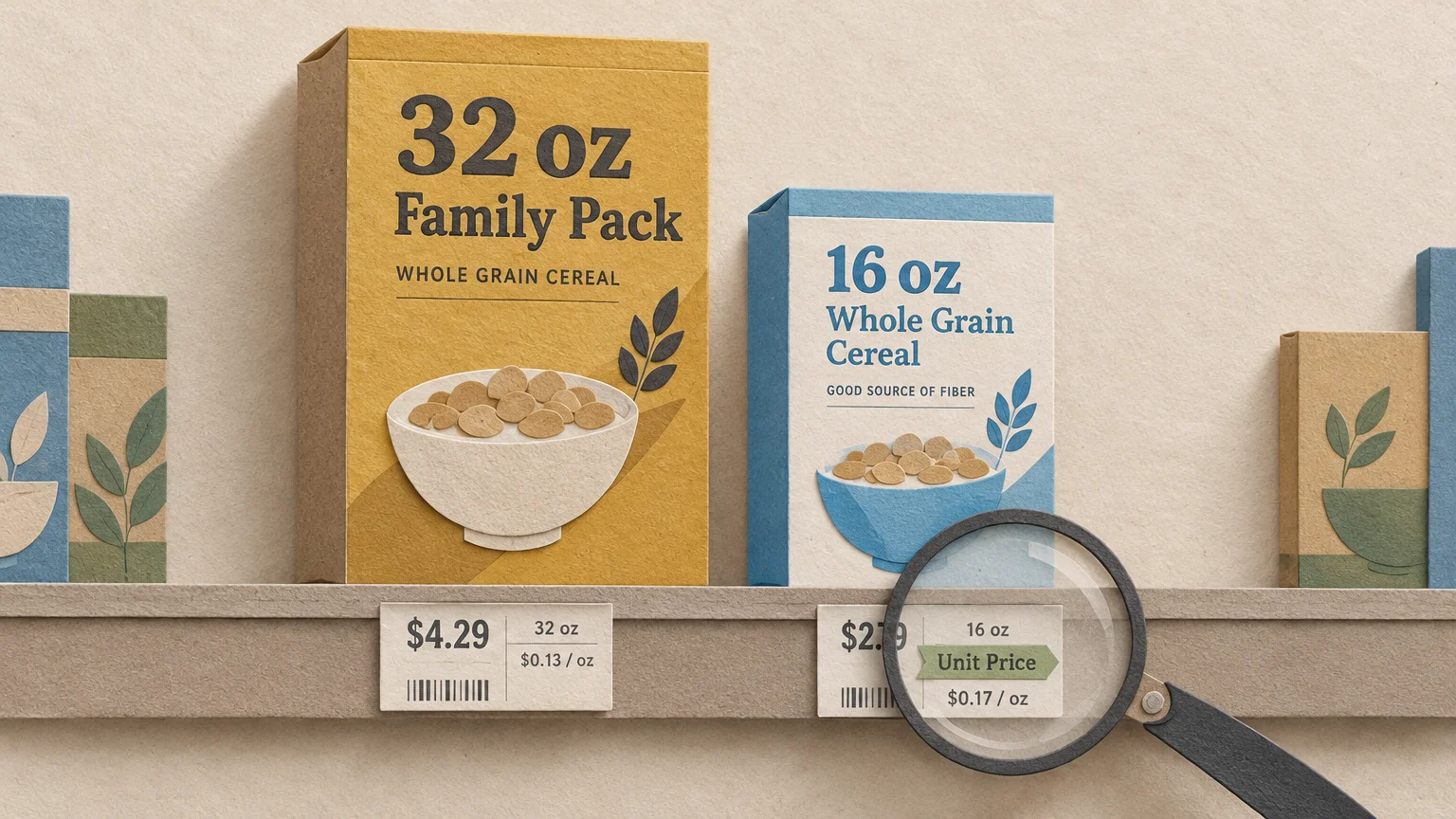
You can slash your weekly grocery bill by skipping the oversized bulk pack. While big-box stores claim larger is always cheaper, smaller packages frequently deliver a lower cost per serving once you master the shelf tag.
Supermarkets regularly run aggressive promotional discounts on standard sizes that beat warehouse pricing outright. Knowing how to read between the numbers keeps hard-earned money in your wallet each week.
When cooking for one or two, buying only what you can finish eliminates expensive spoilage. The true unit price is what you actually consume, not what you throw into the trash.
Why does the smaller package often beat the bulk size?
Retailers know shoppers assume larger packages carry a lower cost per ounce. Marketers call this phenomenon the bulk bias.
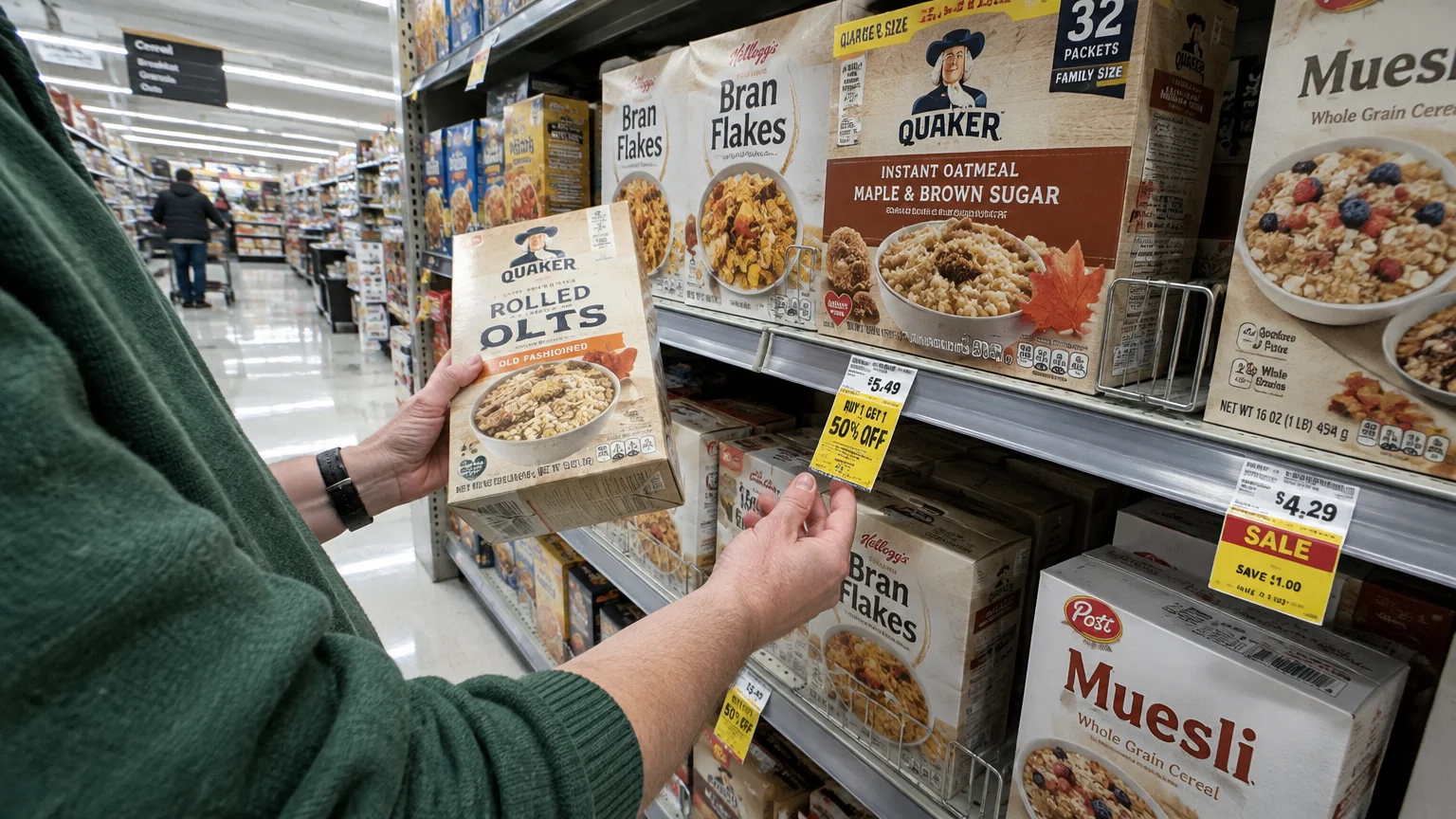
Supermarkets regularly take advantage of this assumption by pricing jumbo containers higher per ounce than standard sizes. A smaller container often carries a promotional markdown that reverses the expected math completely.
Food manufacturers frequently offer temporary discounts to move standard inventory off warehouse floors. These corporate incentives rarely apply to warehouse-sized goods sold in standard supermarkets.
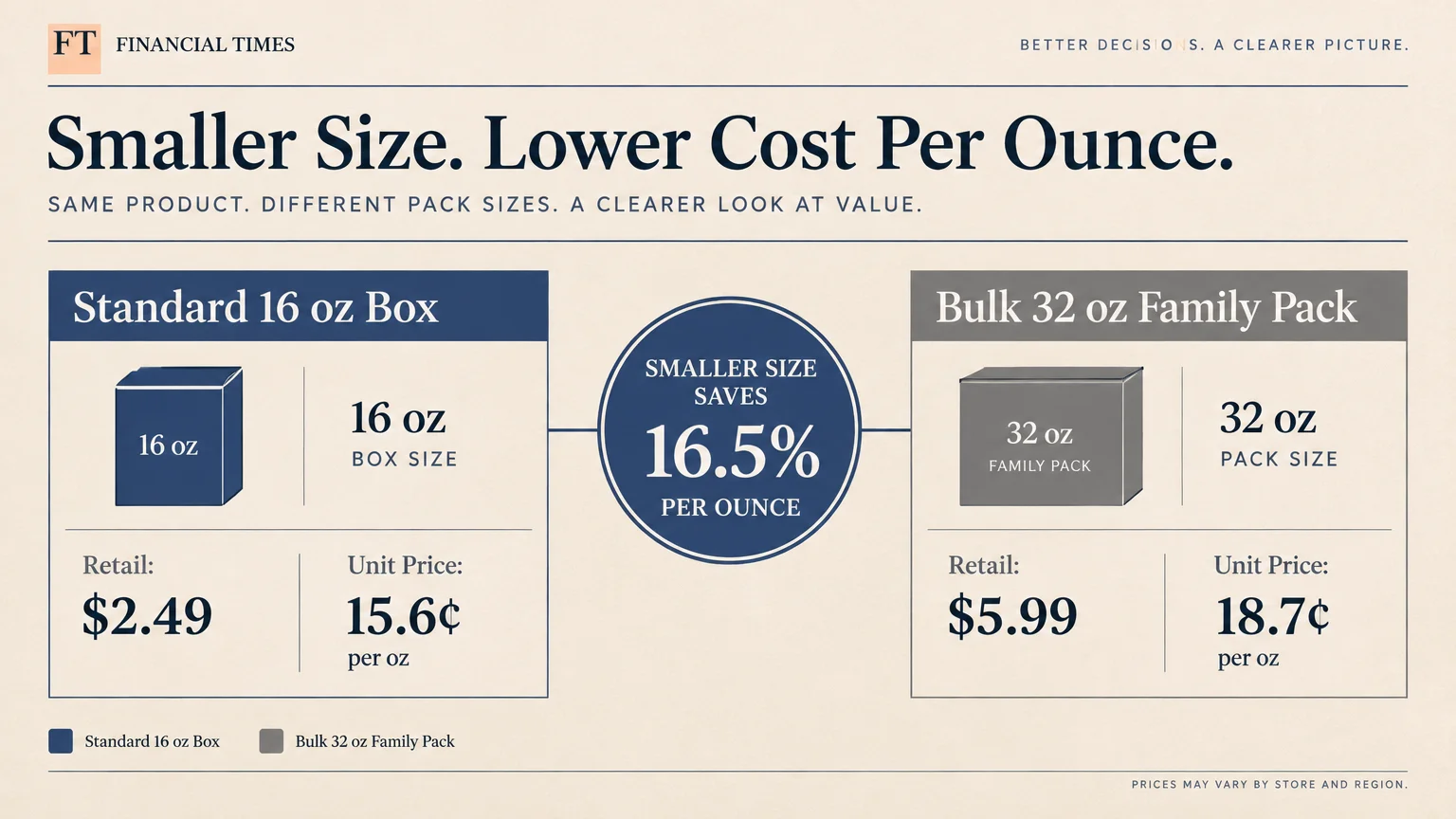
You might spot a sixteen-ounce box of whole-grain cereal priced noticeably lower per ounce than the thirty-two-ounce family pack. Checking the shelf tag prevents you from overpaying for oversized cardboard packaging.
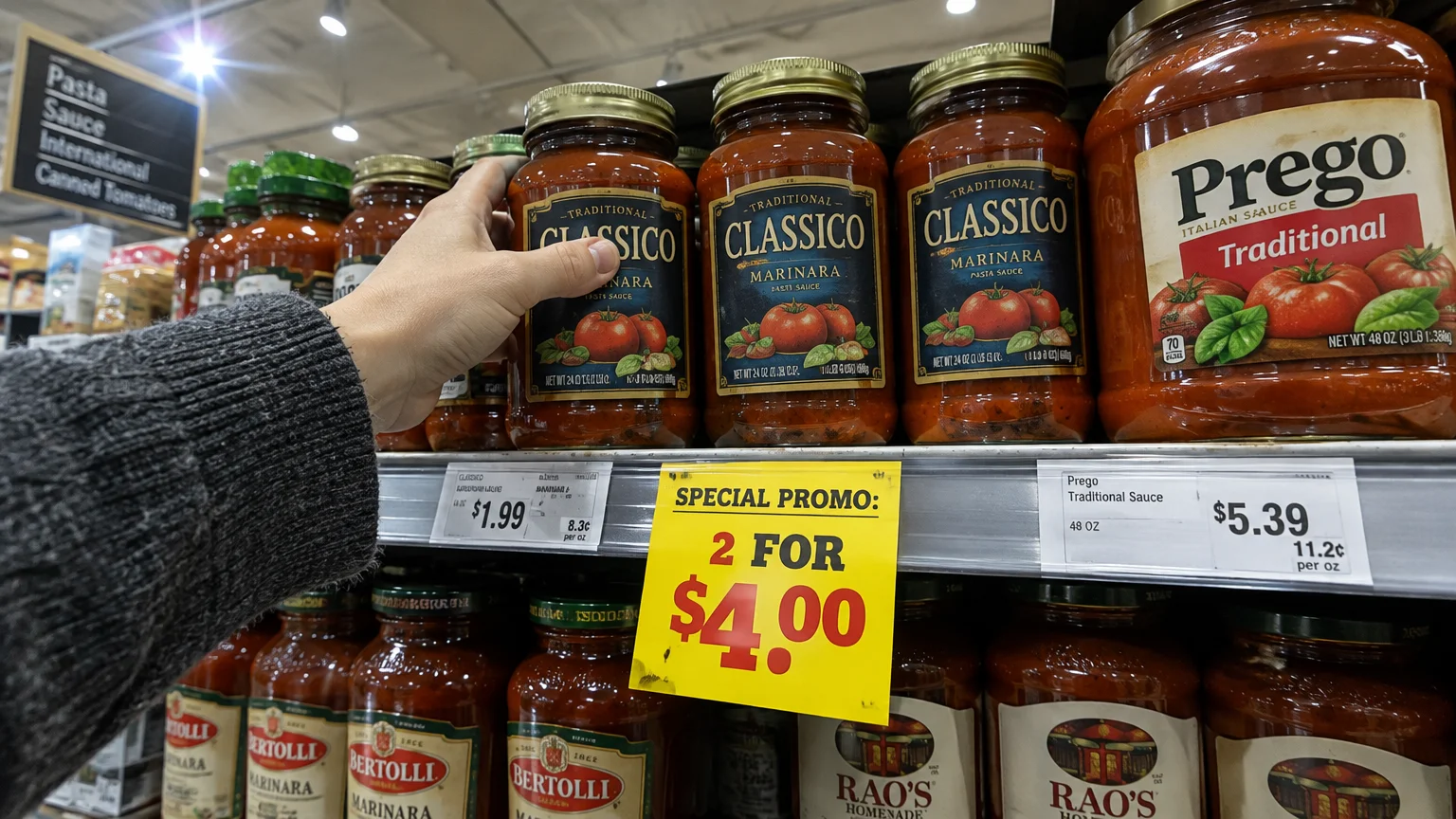
Loss leaders also distort the traditional bulk price advantage. Supermarkets discount standard pantry sizes at steep margins to draw you through the front entrance.
When you buy these promotional items, standard packages easily outperform bulk quantities. You secure the lowest price per ounce without storing cumbersome crates in your pantry.
Consumer packaged goods companies also resize their packaging during inflationary periods. This practice, known as shrinkflation, often disrupts the pricing ratios between different box sizes.
A brand might reduce a family box from twenty-four ounces to twenty ounces while keeping the retail price unchanged. That change quietly makes the standard twelve-ounce box the superior financial choice.
How do you decode the grocery store shelf tag?
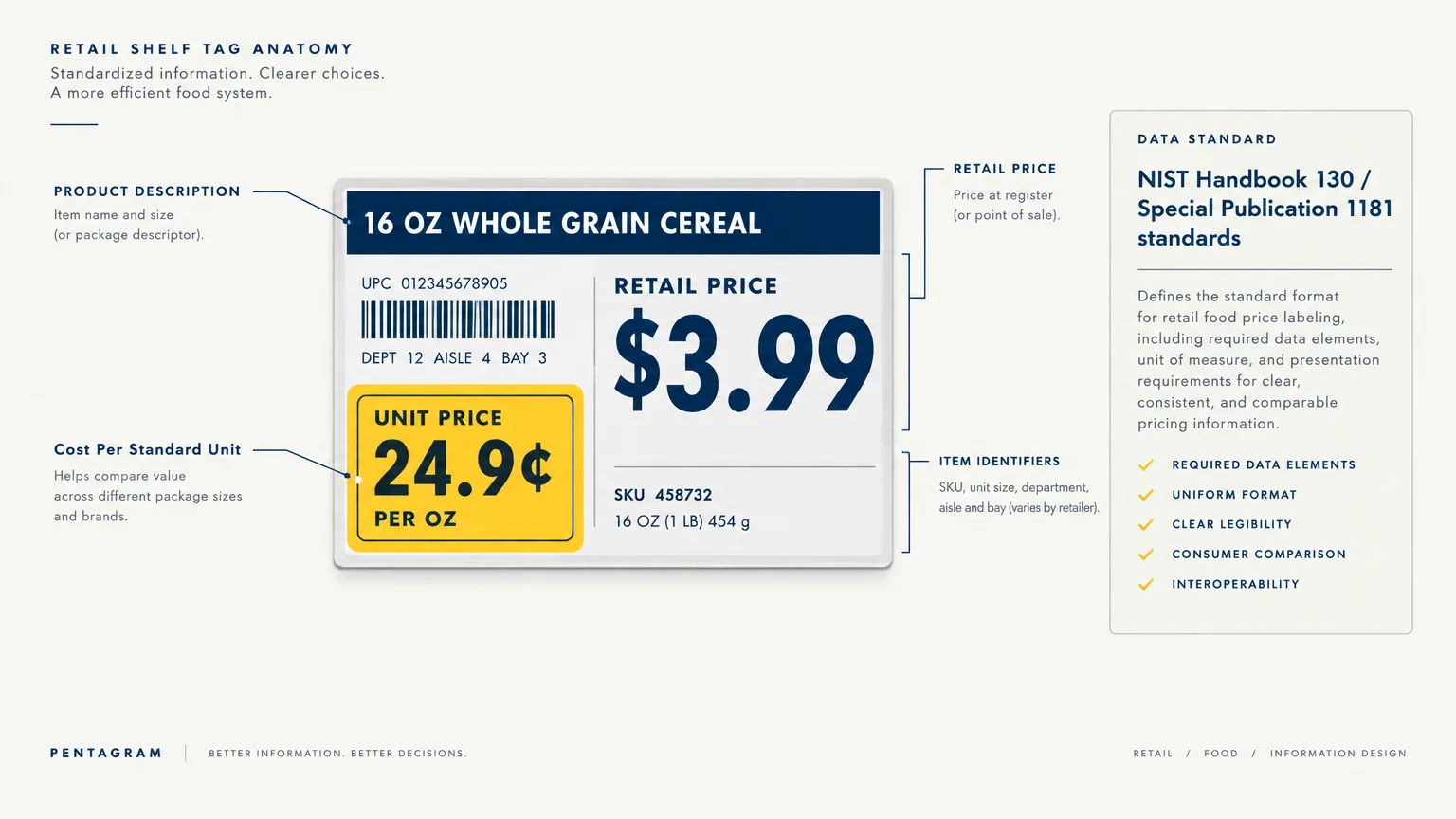
Shelf tags display two distinct numbers that reveal the true cost of your groceries. The retail price shows what you pay at the register, while the unit price reveals the cost per ounce, pound, or count.
According to a 2024 Purdue University study cited by NIST, 82% of consumers actively use unit pricing information to compare product values on grocery shelves.
The National Institute of Standards and Technology standardizes these retail displays across the country. Their regulatory updates ensure you can accurately evaluate competing package sizes at a glance.
In July 2025, NIST published Special Publication 1181, titled the Unit Pricing Guide. This publication works alongside the 2026 edition of NIST Handbook 130 to improve shelf label consistency.
These updated guidelines regulate physical shelf tags, Electronic Shelf Labels, and e-commerce grocery platforms. Under the revised Uniform Unit Pricing Regulation, commodities priced under 50 cents remain exempt from unit pricing requirements.
State laws regarding these informative tags vary significantly depending on where you shop. Currently, 19 U.S. states and 2 territories maintain active unit pricing regulations.
Out of those jurisdictions, only 11 enforce mandatory unit pricing for retail grocery stores. These mandatory areas include Connecticut, Maryland, Massachusetts, New Hampshire, New Jersey, and New York.
Oregon, Rhode Island, Vermont, Puerto Rico, and the U.S. Virgin Islands also enforce strict mandatory unit pricing. Meanwhile, 34 states leave unit pricing entirely voluntary for retail grocery chains.
If you shop in a voluntary state, store tags may omit unit prices or use conflicting units of measurement. A simple smartphone calculation restores your ability to uncover the real bargain.
Look closely at the measurement unit displayed in the corner of the shelf tag. Comparing price per ounce on one item against price per pound on another leads to costly buying errors.
How does food waste turn bulk savings into a financial loss?
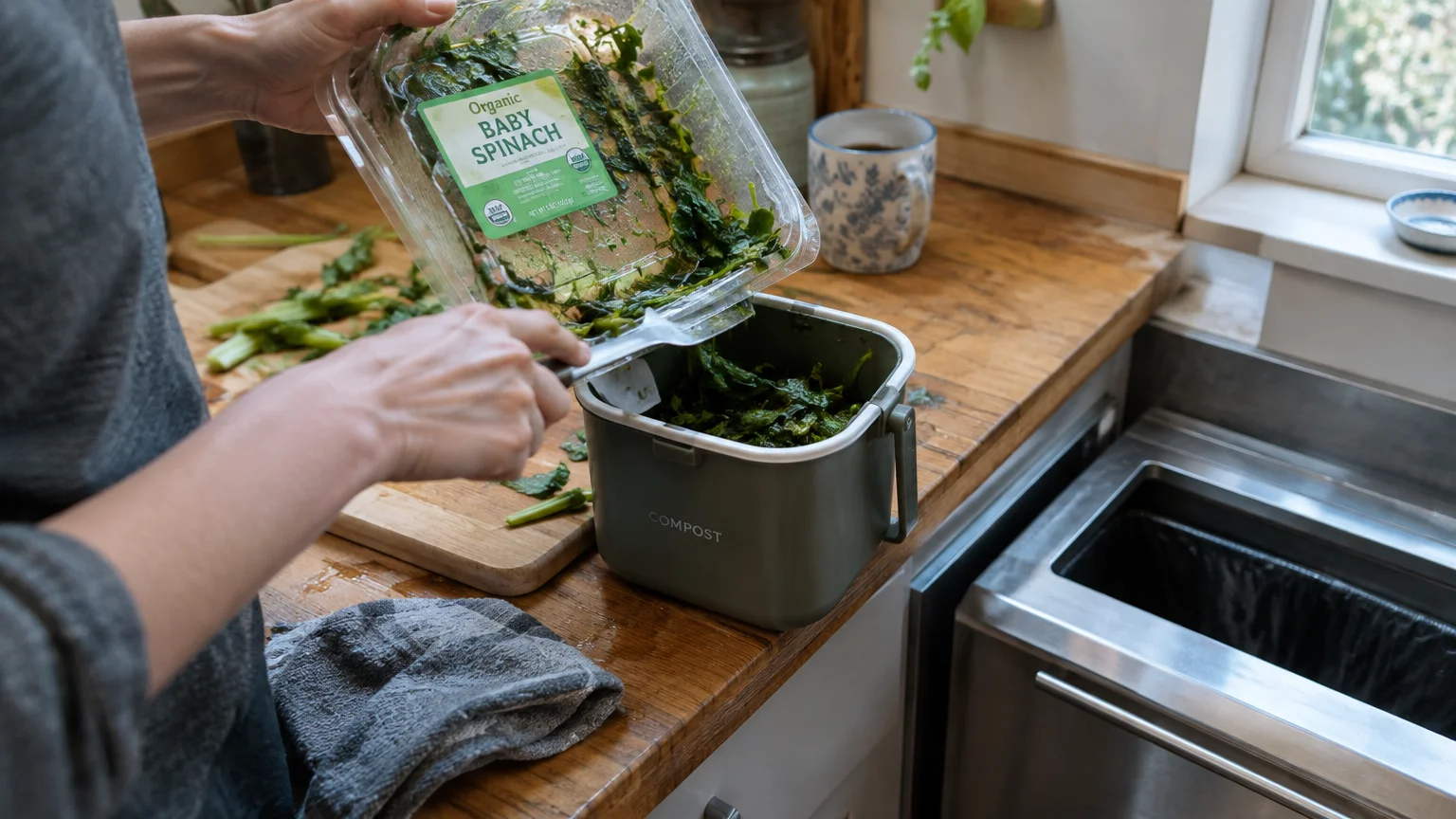
Bulk savings vanish the moment you toss spoiled groceries into your kitchen trash can. A low sticker price per ounce means nothing if food spoils before you finish it.
According to an April 2025 consumer-cost report from the Environmental Protection Agency, wasted food costs the average U.S. consumer $728 per year.
Data from the U.S. Department of Agriculture and industry groups reveals that four-person households lose roughly $1,500 to $3,000 annually to uneaten food.
When cooking for one or two adults, oversized food packaging represents an expensive financial trap. Buying smaller containers eliminates kitchen waste and protects your monthly budget.
The 2026 U.S. Food Waste Report by ReFED food waste research highlights the massive scale of this national issue using 2024 baseline data.
The report revealed that the nation generated 70 million tons of surplus food valued at $380 billion. That massive surplus represents roughly 29% of the total domestic food supply.
Residential households generate roughly a third of all food waste across the country. Choosing the smaller package protects both your personal bank account and the wider food supply.
Think of food waste as an invisible tax on your kitchen grocery spending. Factoring potential spoilage into every buying decision fundamentally changes the value calculation at the shelf.
If you buy a gallon of milk for four dollars and pour out a third, your real cost jumps significantly. Purchasing a half-gallon for two dollars and seventy cents actually saves you money.
Which dairy and refrigerated items should you buy in smaller sizes?
Dairy products spoil faster than almost any other category in your grocery cart. Purchasing large jugs of milk or tubs of yogurt often leads directly to spoiled food.
Calcium and vitamin D support bone density and maintain skeletal health as you get older. Getting these critical nutrients requires fresh dairy products that remain safe and palatable throughout the week.
A full gallon of milk displays a cheaper unit price per fluid ounce than a half-gallon carton. However, discarding the final quart doubles your real cost per consumed glass.
Cottage cheese provides rich dietary protein that helps preserve lean muscle mass. Buying smaller sixteen-ounce containers ensures you finish the cheese well before surface mold appears.
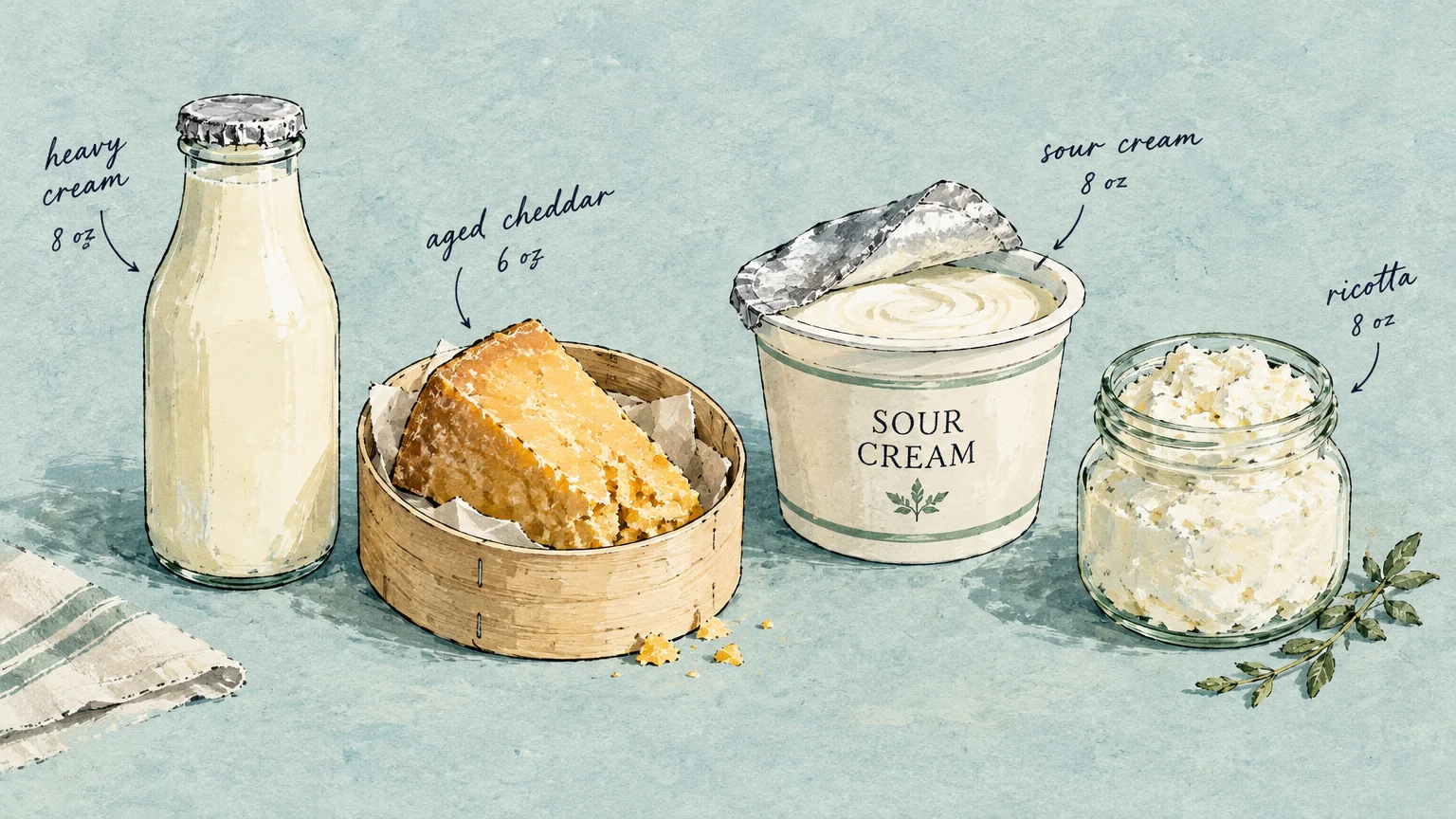
Soft cheeses like ricotta and mozzarella also turn sour rapidly once you break the protective factory seal. Opting for smaller eight-ounce tubs prevents wasted food and protects your digestive tract.
Plain Greek yogurt offers valuable protein and beneficial live cultures that support gut health. Selecting thirty-two-ounce tubs on promotional sale often beats five-pound warehouse tubs on real consumed value.
Sour cream and dips separate and develop mold quickly after several exposures to ambient air. Buying small eight-ounce cups keeps your meals appetizing and your refrigerator clean.
Real butter represents one of the few exceptions in the refrigerated grocery case. Butter freezes cleanly for up to twelve months, making multi-pound bulk packs a genuinely thrifty choice.
Hard aged cheeses like parmesan or cheddar also resist spoilage much better than soft cheeses. You can safely purchase larger blocks of hard cheese if you wrap them tightly in parchment paper.

How do smaller produce portions protect your health and your wallet?
Fresh fruits and vegetables deliver potassium and dietary fiber that support healthy blood pressure. The American Heart Association emphasizes potassium-rich produce to counter the cardiovascular strain caused by dietary sodium.
Buying large plastic tubs of fresh baby spinach or mixed greens often leads to kitchen frustration. Delicate salad greens spoil quickly, turning into unappetizing liquid within just a few days.
Purchasing smaller clamshells or loose greens allows you to eat every single leaf while it remains crisp. The slightly higher initial unit price pays off by eliminating discarded produce entirely.
Apples, pears, and oranges frequently sit in pre-bagged five-pound or ten-pound sacks at appealing prices. Yet smaller households rarely consume that much fresh fruit before soft rot develops.
Selecting individual pieces from the loose produce bins gives you total control over your weekly spending. You can choose individual pieces at different ripeness stages to enjoy across the week.
Berries are notorious for rapid mold development because surface moisture encourages fungal growth. Buying small half-pint containers guarantees peak flavor and maximizes antioxidant intake before berries soften.
Sturdy vegetables like carrots, cabbage, and winter squash remain fresh for weeks under proper refrigeration. For these hardy items, larger packages occasionally make sense if you plan your meals carefully.
Staggering your fresh produce purchases keeps your dinner plate colorful and rich in micronutrients. Fresh produce loses vital vitamins as it sits aging inside your refrigerator crisper drawer.
Buying only what you need for four or five days ensures peak nutritional value from every serving. Your body receives optimal nourishment while your trash can stays empty.
Can smaller pantry staples actually cost less per ounce?
Pantry staples like canned beans and diced tomatoes form the foundation of wholesome home cooking. Canned beans deliver soluble fiber and plant protein that help steady your daily blood sugar levels.
Rinsing canned beans under cool running water washes away up to forty percent of added sodium. Standard fifteen-ounce cans go on sale frequently, often dropping to affordable promotional prices.
At promotional sale prices, standard cans easily beat massive institutional cans on true unit cost. Standard cans also spare you the chore of transferring bulky leftovers into separate storage containers.
Whole-grain flours, nuts, and culinary oils face a hidden enemy on your kitchen shelves: oxidation. Whole-grain flour contains delicate plant oils inside the germ that turn bitter over time.
Buying twenty-pound sacks of whole-wheat flour or giant jugs of olive oil invites rancidity into your cooking. Purchasing smaller containers guarantees fresh flavor and protects delicate heart-healthy fats from breaking down.
Dried culinary spices also lose their potent essential oils and therapeutic flavor compounds after six months. Tiny spice jars provide far superior culinary value compared to oversized warehouse containers that lose their aroma.
Rolled oats supply beneficial beta-glucan fiber that actively helps reduce circulating LDL cholesterol levels. A standard eighteen-ounce cardboard canister regularly goes on sale at a lower unit price than bulk bins.
Brown rice also contains natural germ oils that spoil much faster than refined white rice. Choosing two-pound bags over twenty-pound sacks keeps your grains tasting sweet and nutty.
Ground coffee loses its aromatic profile and antioxidant properties within two weeks of opening. Buying smaller twelve-ounce bags ensures a rich, satisfying morning cup every single day.
How do store promotions flip the unit price in your favor?
Supermarket promotional cycles run on reliable schedules that repeat every four to six weeks. Retailers rotate steep discounts on common household staples to maintain steady customer traffic.
Buy-one-get-one promotions drastically alter unit pricing in favor of standard-sized containers. A BOGO promotion effectively slashes the unit price of standard packaging by fifty percent.
In many supermarket chains, BOGO items scan at half-price even if you purchase only one item. Check your grocer policy at customer service to see if you must buy both containers.
Digital manufacturer coupons offered through store smartphone apps further compress the cost of smaller packages. Food companies almost exclusively attach these digital coupons to standard retail sizes.
Applying a one-dollar digital coupon to a two-dollar standard box cuts the unit price in half. Applying that same one-dollar coupon to a ten-dollar bulk box produces negligible percentage savings.
Combining a weekly store markdown with an app coupon creates an unbeatable unit price on smaller items. Stocking up on standard sizes during these promotional events consistently outperforms warehouse club pricing.
Be mindful of volume minimums printed on colorful shelf promotional tags. Always confirm that a multibuy deal, such as three for five dollars, does not require purchasing excess food.
Most grocery registers automatically apply the discounted unit price to single items in a multibuy sale. When the register does not require the full quantity, you can buy a single container guilt-free.
What role does portion control play in managing blood sugar and sodium?
Package size directly influences how much food you place onto your dinner plate. Nutritional researchers consistently observe that adults serve larger portions when pouring from giant containers.
When managing blood sugar, steady carbohydrate intake remains central to your daily well-being. Oversized cereal boxes or bulk pasta bags encourage larger portions that can cause unexpected glucose spikes.
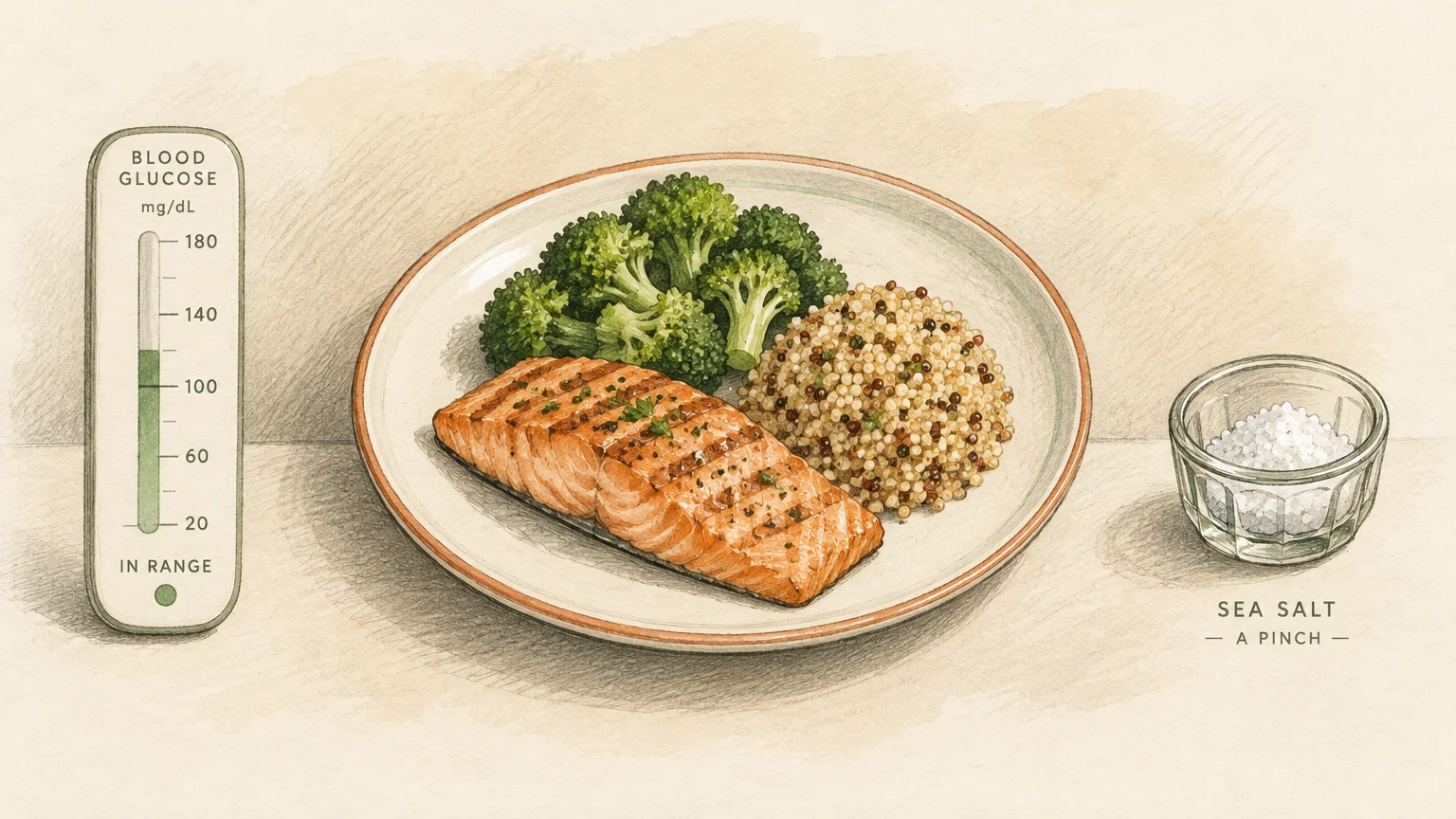
Smaller containers naturally reinforce sensible portion sizes without requiring tedious kitchen scales. This built-in visual boundary helps you maintain steady energy and balanced blood sugar throughout your afternoon.
Daily sodium intake also rises when you snack directly from jumbo bags of chips, pretzels, or roasted nuts. Moderate package sizes make it far simpler to stay within healthy dietary guidelines.
Keeping sodium consumption balanced protects kidney function and reduces unnecessary fluid retention. Controlling your food packages gives you effortless control over your daily milligram count.
For nutrient-dense snacks like walnuts or pecans, smaller packages maintain freshness and prevent overeating. You receive healthy omega-3 fatty acids without consuming hundreds of unneeded calories.
If you take blood pressure medications, avoiding sodium spikes helps your prescriptions work as intended. Managing your portion environment through smaller packaging delivers tangible long-term health rewards.
Individual single-serve packages occasionally carry higher unit prices but save money by preventing overconsumption. Weighing the health benefit against the pennies spent often favors the smaller, controlled package.
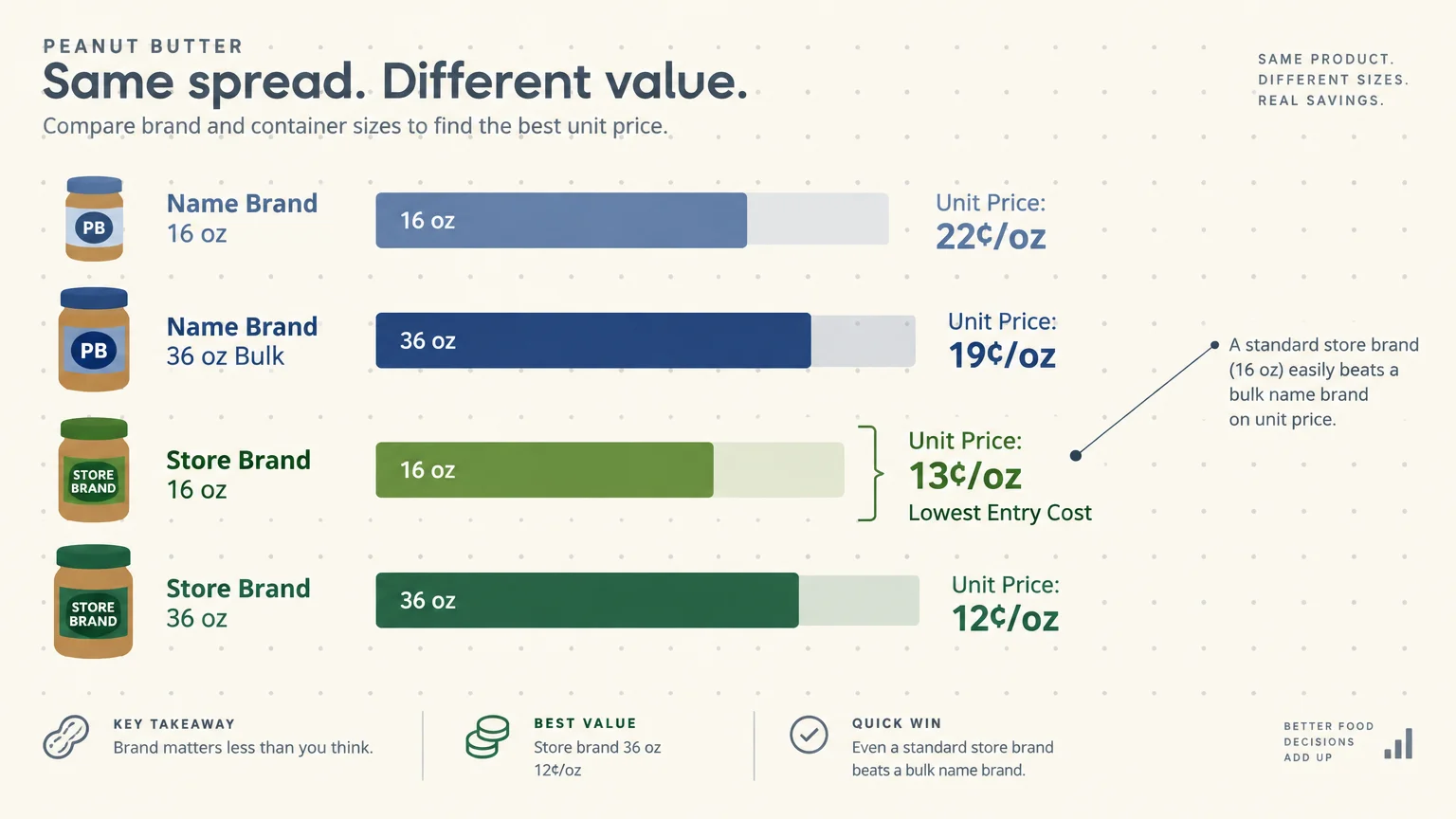
How do store brands compare to name brands across different sizes?
Store brands, often called private labels, deliver immediate savings over heavily advertised national brands. Supermarkets contract with top food manufacturers to produce these high-quality store-brand staples.
A standard-sized store-brand product almost always beats a brand-name bulk package on unit price. You get the modest volume you need at a lower cost per ounce.
Compare the nutrition facts panel on store-brand goods against their national-brand shelf neighbors. You will regularly find identical active ingredients, sodium counts, and dietary fiber levels.
For over-the-counter medications and dietary supplements, store brands must satisfy identical FDA purity requirements. Purchasing store-brand calcium or vitamin D in standard bottles saves substantial cash over name-brand bulk bottles.
Many supermarket chains back their private labels with unconditional money-back guarantees. If a store-brand item fails to satisfy your taste, the store will refund your purchase completely.
Choosing store brands in modest package sizes protects your weekly cash flow. You avoid locking up cash in giant warehouse sizes while still capturing the lowest unit cost.
Name brands spend heavily on marketing and pass those promotional expenses directly to consumers. Private labels bypass national advertising, allowing stores to offer lower prices across every package size.
Testing store brands on smaller items carries minimal financial risk. Once you find a store brand you enjoy, you can permanently reduce your grocery spending.
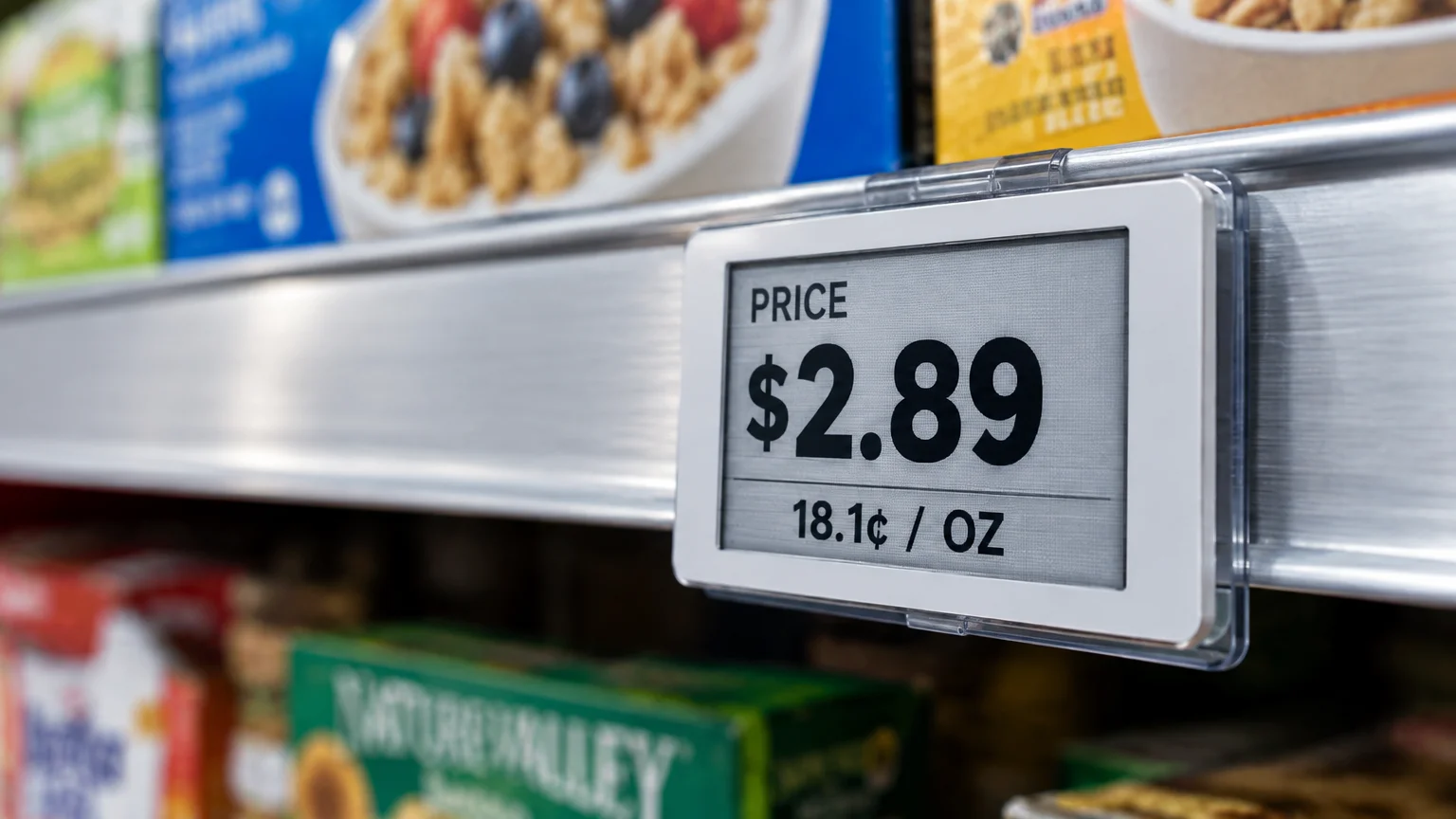
How do electronic shelf labels change the way you shop?
Modern grocery chains are replacing traditional paper shelf tags with digital Electronic Shelf Labels. These battery-powered screens allow retailers to adjust prices across the store with centralized software.
NIST Handbook 130 standards require digital shelf tags to display clear unit pricing alongside total retail prices. This rule ensures electronic labels provide the same transparency as traditional paper tags.
Digital price updates enable stores to launch flash sales or dynamic markdowns on short notice. Checking the unit price on digital screens ensures you never miss unexpected discounts on smaller packages.
Some electronic tags display unit pricing in tiny digital fonts that challenge tired eyes. Keeping a small magnifying lens in your pocket or using your phone camera solves this issue instantly.
Always confirm that competing brands display identical units of measurement on their electronic tags. One brand may calculate cost per ounce while another lists cost per pint or pound.
Converting mismatched units takes only a few taps on your smartphone calculator. Taking thirty seconds to normalize the measurements guarantees you identify the true bargain on the shelf.
Report unreadable or malfunctioning electronic shelf tags to store management right away. Grocery stores have a legal obligation in regulated states to keep pricing information fully legible.
Frequently asked questions about grocery unit prices
What should you do if a shelf tag is missing the unit price?
Missing unit prices occur frequently in the 34 states without mandatory unit pricing regulations. When a shelf tag lacks this information, you can easily calculate it yourself.
Divide the package retail price by the total number of ounces printed on the front label. The resulting figure tells you the exact cost per ounce to compare against competing sizes.
You can also use free grocery calculator apps on your smartphone to compare multiple products simultaneously. These tools make side-by-side unit price comparisons fast and effortless.
Are store brands always cheaper per unit than brand-name bulk items?
Store brands beat brand-name bulk packages on unit price in the vast majority of supermarket aisles. Retailers price their private labels aggressively to build loyalty and win repeat shoppers.
However, rare clearance markdowns or aggressive manufacturer coupons can occasionally make name brands cheaper. Glancing at both unit price tags confirms whether the store brand holds the pricing advantage.
Store brands also avoid the bulk trap because they come in sensible sizes for smaller households. You get low unit prices without purchasing more food than you can safely eat.
How do digital coupons alter the unit-price math?
Digital coupons heavily favor smaller packages because they offer flat dollar discounts instead of percentage markdowns. A one-dollar coupon creates a far bigger percentage drop on a smaller container.
Always deduct the coupon value from the retail price before dividing by the package ounces. This revised calculation reveals the true promotional unit cost of the discounted item.
Check your store app before stepping into the aisle to clip relevant digital coupons. Pairing a digital coupon with a weekly sale price creates the absolute lowest unit cost available.
Does frozen produce provide a better unit value than fresh produce?
Frozen vegetables and fruits offer outstanding unit value for one-person and two-person households. They carry stable unit prices and allow you to pour out only what you need.
Food processors freeze produce at peak nutritional ripeness, locking in essential vitamins and minerals without spoilage risk. You avoid the waste that often makes fresh produce far more expensive per serving.
Look for plain frozen vegetables without added butter, cheese, or high-sodium sauces. Seasoning plain frozen vegetables at home protects your cardiovascular health while keeping your meals affordable.
What is the single best move for your next shopping trip?
Pull out your smartphone calculator before placing any bulk item into your shopping cart. Compare the unit price of the standard package directly against the warehouse-sized alternative.
Check the unit price per ounce rather than the large retail price printed in bold lettering. You will frequently find that the standard size costs the same or less per serving.
Ask yourself honestly whether your household will consume every portion before the food begins to spoil. If there is any chance of waste, choose the smaller package without hesitation.
Taking a few moments to evaluate unit prices transforms the way you shop for groceries. Smaller packages keep your pantry fresh, support your dietary goals, and save you real money.