You can still secure reliable savings at the grocery checkout after turning 55, but the retail landscape has shifted dramatically. Knowing exactly which supermarkets offer weekly price reductions keeps your food budget intact without sacrificing nutritional quality.
With grocery bills climbing across the country, timing your shopping trips around dedicated discount days puts money back in your pocket. You simply need to know which counter to approach and which day to grab your cart.
Several regional chains continue to honour weekly markdowns for mature shoppers, while others reserve their perks for monthly events. This guide outlines every participating store, age threshold, and aisle-by-aisle strategy for your next grocery run.
Which supermarkets give weekly discounts right at age 55?
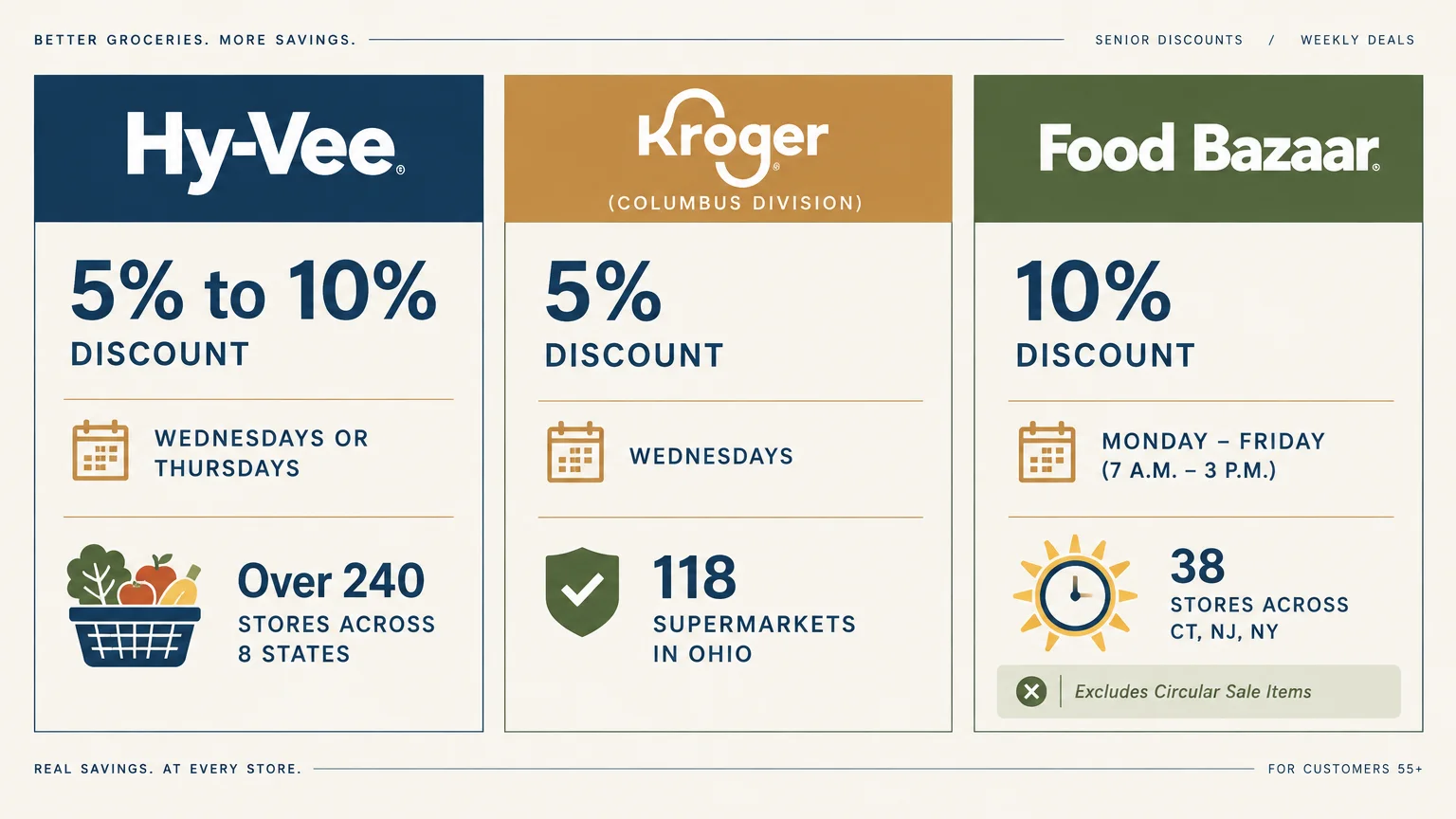
Hy-Vee stands out as one of the few employee-owned supermarket chains offering a weekly markdown specifically starting at age 55. Across its footprint of more than 240 stores in the Midwest, eligible customers can trim their grocery bills.
Most participating Hy-Vee locations provide a 5% to 10% discount every Wednesday or Thursday. Because store directors set their own local policies, you must verify the exact schedule with customer service at your neighborhood location.
Hy-Vee operates across eight states, including Iowa, Illinois, Kansas, Minnesota, Missouri, Nebraska, South Dakota, and Wisconsin. Asking your cashier before they scan your items ensures the deduction applies to all eligible fresh foods and pantry essentials.
You can maximize this mid-week savings window by focusing your Hy-Vee run on fresh produce and lean poultry. Pairing the store discount with unadvertised manager meat markdowns yields double savings on your weekly protein supply.
Corporate Kroger ended its nationwide age-based discount program years ago, leaving most of its stores without an automatic markdown. However, individual regional divisions still retain the authority to run their own weekly discount promotions.
Kroger’s Columbus division, which oversees 118 supermarkets across Ohio, has offered shoppers aged 55 and older a 5% discount one day per week. This regional program typically runs on Wednesdays for customers who present valid identification.
If you live outside the Columbus division, do not assume your local Kroger store honours this weekly deduction. Contact your local store manager directly to see if your regional district offers an equivalent promotion.
Food Bazaar Supermarket offers one of the most generous weekday saving schedules in the entire grocery industry. The regional grocer operates 38 full-service stores across Connecticut, New Jersey, and New York.
You can receive a 10% discount on your grocery total Monday through Friday between 7 a.m. and 3 p.m. This generous daily window rewards shoppers who prefer to finish their errands during quiet morning hours.
Age verification rules vary slightly by store location, so check in with customer service on your initial visit. Note that Food Bazaar excludes weekly circular sale items from this 10% register deduction.
Planning your Food Bazaar trip around standard staples like whole oats, dried beans, and fresh greens produces the highest savings. Because circular specials are excluded, buying regularly priced staples triggers the full 10% markdown.
Why did major grocers switch from weekly to monthly discounts for age 55?
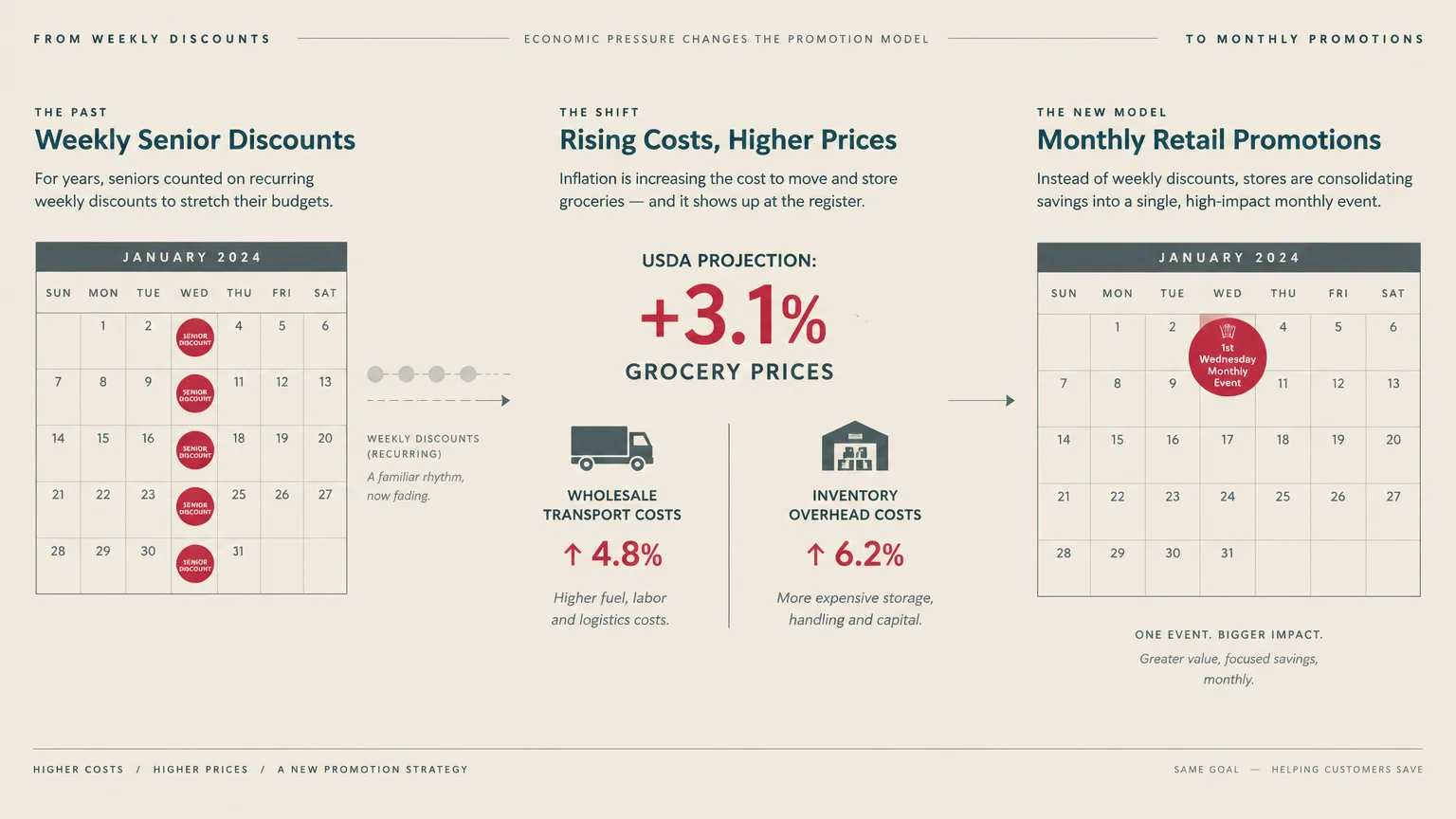
The retail grocery industry has adjusted its promotional structures rapidly in response to broader economic shifts. Higher wholesale costs and shifting consumer habits have led many supermarket executives to phase out open weekly discounts.
According to the USDA Food Price Outlook, retail grocery prices are projected to rise by 3.1% in 2026. This sustained inflationary pressure affects both household grocery budgets and retailer operating margins.
Major national chains like Walmart, Target, Whole Foods, Aldi, and Trader Joe’s offer no demographic discounts at checkout. These retailers rely instead on everyday baseline pricing across all household goods.
To manage operating costs while retaining loyal shoppers, several regional chains shifted their discounts from weekly occurrences to monthly events. This approach allows grocers to provide a steeper 10% discount without compromising their weekly margins.
Fred Meyer adopted this monthly model across its 130 or more supermarkets in Alaska, Idaho, Oregon, and Washington. Shoppers aged 55 and older receive a 10% discount on the first Tuesday of every month.
The Fred Meyer discount applies to private-label grocery goods, including Fred Meyer, Kroger, and Simple Truth branded products. You can redeem this monthly saving in-store, through curbside pickup, or via same-day home delivery orders.
In the Southwest, Fry’s Food Stores provides a similar 10% discount across its 125 or more Arizona locations. Enrolled shoppers aged 55 and older can claim the deduction on the first Wednesday of each month using their VIP card.
Bashas’ Supermarkets hosts a dedicated savings day on the first Wednesday of every month across Arizona and New Mexico. Shoppers aged 55 and older receive 10% off their groceries by presenting their Thank You rewards card.
The Bashas’ promotion excludes alcohol, tobacco, fuel, gift cards, and prescription medications. You can pair this monthly reduction with everyday sales to stock your pantry with shelf-stable beans, canned tomatoes, and whole grains.
Albertsons follows a monthly schedule at select stores among its nationwide fleet of more than 2,200 supermarkets. Participating locations designate the first Wednesday of each month as a special savings day offering a 10% discount.
Because Albertsons operates regional divisions with distinct store policies, participation varies between neighboring communities. Inquire at your neighborhood store’s customer service counter to confirm their local rules before filling your grocery cart.
Walgreens provides an additional monthly saving opportunity for shoppers aged 55 and older seeking basic pantry items. While categorized as a retail pharmacy, its aisles feature milk, canned fish, oatmeal, and household cleaning supplies.
Members of the myWalgreens loyalty program receive 20% off eligible regular-priced merchandise on the first Tuesday of each month. This monthly promotion makes Walgreens an economical stop for shelf-stable staples and paper goods.

Which regional supermarkets give weekly savings when you turn 60?
Reaching age 60 unlocks access to consistent weekly discounts at numerous regional supermarket chains. Supermarket operators frequently target this age group to boost foot traffic during slower mid-week shopping days.
Harris Teeter provides its Club 60 program across more than 250 supermarkets throughout the Mid-Atlantic and Southeast. Customers aged 60 and older receive a 5% discount every Thursday when scanning an activated VIC rewards card.
You can find Harris Teeter stores across Delaware, Florida, Georgia, Maryland, North Carolina, South Carolina, Virginia, and the District of Columbia. The 5% deduction applies cleanly after the cashier deducts all valid coupons.
The Harris Teeter policy excludes pharmacy co-pays, fuel, lottery tickets, and gift cards from the Thursday reduction. Scheduling your regular produce and dairy shopping for Thursday maximizes the monetary value of this benefit.
Weis Markets operates roughly 200 grocery stores across Pennsylvania, Maryland, New York, New Jersey, West Virginia, Virginia, and Delaware. The chain offers a 10% discount every Tuesday to registered customers aged 60 and older.
This Tuesday discount applies specifically to Weis-brand items throughout the store, from canned goods to fresh dairy. You must present your identification at customer service once to link the discount permanently to your Weis Rewards card.
Brookshire’s and Super 1 Foods operate more than 200 grocery locations across Arkansas, Louisiana, Oklahoma, and Texas. They stand apart by providing a 5% discount twice a week, every Tuesday and Thursday.
Shoppers aged 60 and older can show a Thank You card or photo ID to secure this twice-weekly benefit. The policy excludes tobacco, alcohol, and fuel, as well as fluid milk in Louisiana due to state agricultural regulations.
Compare Foods delivers a 10% discount every Wednesday for customers aged 60 and older across its supermarket network. The retailer features an extensive selection of fresh produce, lean meats, and legumes that support heart health.
Select independently operated Piggly Wiggly stores offer a 5% discount every Wednesday to shoppers aged 60 and older. Because independent franchisees run individual locations, verify the participation details with your hometown store manager.
Certain legacy Publix supermarkets in competitive Southeastern markets also provide a 5% weekly discount on Wednesdays or Tuesdays. Check directly with the customer service desk at your neighborhood store to see if your branch participates.

Which supermarket chains reserve their weekly discount for age 62 and 65?
Several specialty grocers and independent supermarket chains reserve their weekly discount programs for customers reaching age 62 or 65. These targeted promotions provide meaningful relief on high-quality foods and specialty items.
DeCicco Family Markets operates upscale supermarkets across New York, offering high-end produce, specialty cheeses, and freshly prepared meals. Participating locations offer a 5% discount every Wednesday to customers aged 60 or 62.
You must present your DeCicco Preferred Shopper Card at customer service to activate this mid-week savings perk. Using the discount on fresh vegetables and lean cuts of meat keeps your cooking well within budget.
American Discount Foods offers a substantial 10% discount every Monday to customers aged 62 and older. This grocery savings day helps you stretch your budget on surplus items, frozen foods, and dry pantry staples.
New Seasons Market operates natural grocery stores across the Pacific Northwest with a strong focus on organic and local foods. Shoppers aged 65 and older receive a 10% discount on most items every Wednesday.
The New Seasons discount covers bulk whole grains, fresh organic produce, and sustainably caught fish that support cardiovascular wellness. The cashier applies the 10% reduction at checkout upon your simple verbal request.
Gristedes operates nearly 30 grocery stores across Manhattan and Brooklyn, serving dense urban neighborhoods where grocery prices run high. The chain provides a 10% discount every Tuesday for customers aged 65 and older.
Uncle Giuseppe’s Marketplace operates Italian-style supermarkets across New York and New Jersey known for artisanal delis and butcher counters. They provide a 5% discount every Wednesday to shoppers aged 65 and older.

How should you adjust your cart to protect your heart and blood pressure?
Managing blood pressure requires vigilant attention to the hidden sodium packed into everyday commercial food products. Taking advantage of a weekly supermarket discount allows you to buy fresh, wholesome foods without straining your grocery allowance.
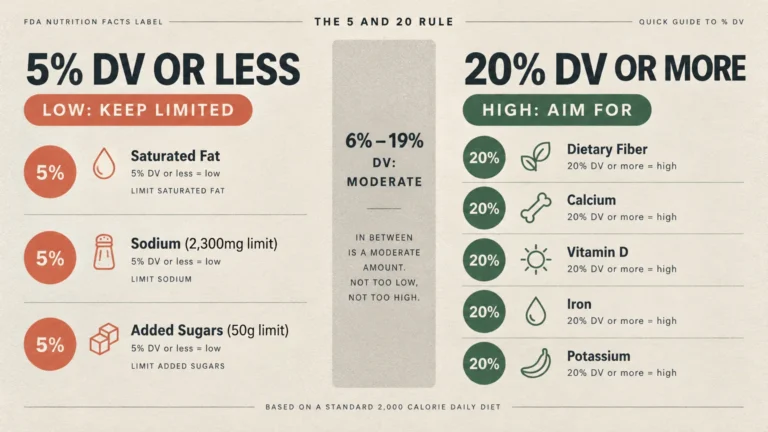
The American Heart Association recommends keeping sodium intake under 2,300 milligrams per day, with an optimal target of 1,500 milligrams for adults managing hypertension. Excessive sodium causes fluid retention, forcing your heart to work harder.
When browsing supermarket aisles, look specifically for products bearing labels that read “low sodium” or “no salt added.” To carry a verified low-sodium label, a food must contain 140 milligrams of sodium or less per serving.
If you buy regular canned black beans, chickpeas, or green beans on sale, place them in a colander. Rinsing canned legumes and vegetables under cold running water for two minutes removes approximately one-third of the canning sodium.
Pair low-sodium shopping with potassium-rich whole produce to maintain balanced blood pressure levels throughout the week. Potassium helps your kidneys excrete excess sodium through urine while easing arterial wall tension.
Potatoes, sweet potatoes, bananas, cantaloupe, and fresh spinach are dependable, cost-effective sources of dietary potassium. Purchasing these items on your supermarket’s designated discount day delivers outstanding cardiovascular and financial value.
Steer clear of commercial rotisserie chickens and deli counter cold cuts, which are routinely injected with heavy sodium solutions. Buying fresh, unseasoned chicken breasts and flavoring them at home with garlic, rosemary, and citrus preserves your vascular health.

How can you maintain muscle and bone health on a single-shopper budget?
Maintaining lean skeletal muscle and bone density becomes essential for maintaining physical mobility and balance over time. Cooking for a small household often tempts people to skip complete proteins, creating subtle nutritional deficits.
Adults benefit from consuming 25 to 30 grams of protein during each meal to effectively stimulate muscle maintenance. Distributing your protein evenly throughout the day helps prevent age-related muscle loss and stabilizes your blood sugar.
Canned light tuna, pink salmon pouches, eggs, and plain Greek yogurt provide high-quality protein without the risk of spoilage. These compact, affordable staples allow you to prepare single-portion meals quickly without wasting leftover meat.
Bone density depends heavily on an adequate daily supply of dietary calcium and supportive vitamin D. According to the NIH Office of Dietary Supplements, women over 50 and men over 70 need 1,200 milligrams of calcium daily.
Fortified almond milk, skim milk, firm tofu, and fortified orange juice deliver substantial calcium without unnecessary saturated fats. If you live alone, buy half-gallons of milk or freeze single portions to prevent containers from souring.
Plain frozen vegetables and frozen berries match the nutritional profile of fresh produce while eliminating household waste. Industrial flash-freezing locks in vital nutrients like vitamin C, potassium, and antioxidants within hours of harvest.
Keep bags of frozen broccoli florets, chopped spinach, and wild blueberries in your freezer for daily cooking. You can measure out exactly what you need for one recipe while leaving the rest safely frozen.
Purchase hearty 100% whole-wheat bread when your supermarket offers a weekly percentage discount. Split the loaf into smaller packages upon returning home, storing one portion on the counter and freezing the rest.
What store-brand grocery swaps stretch your weekly savings the furthest?
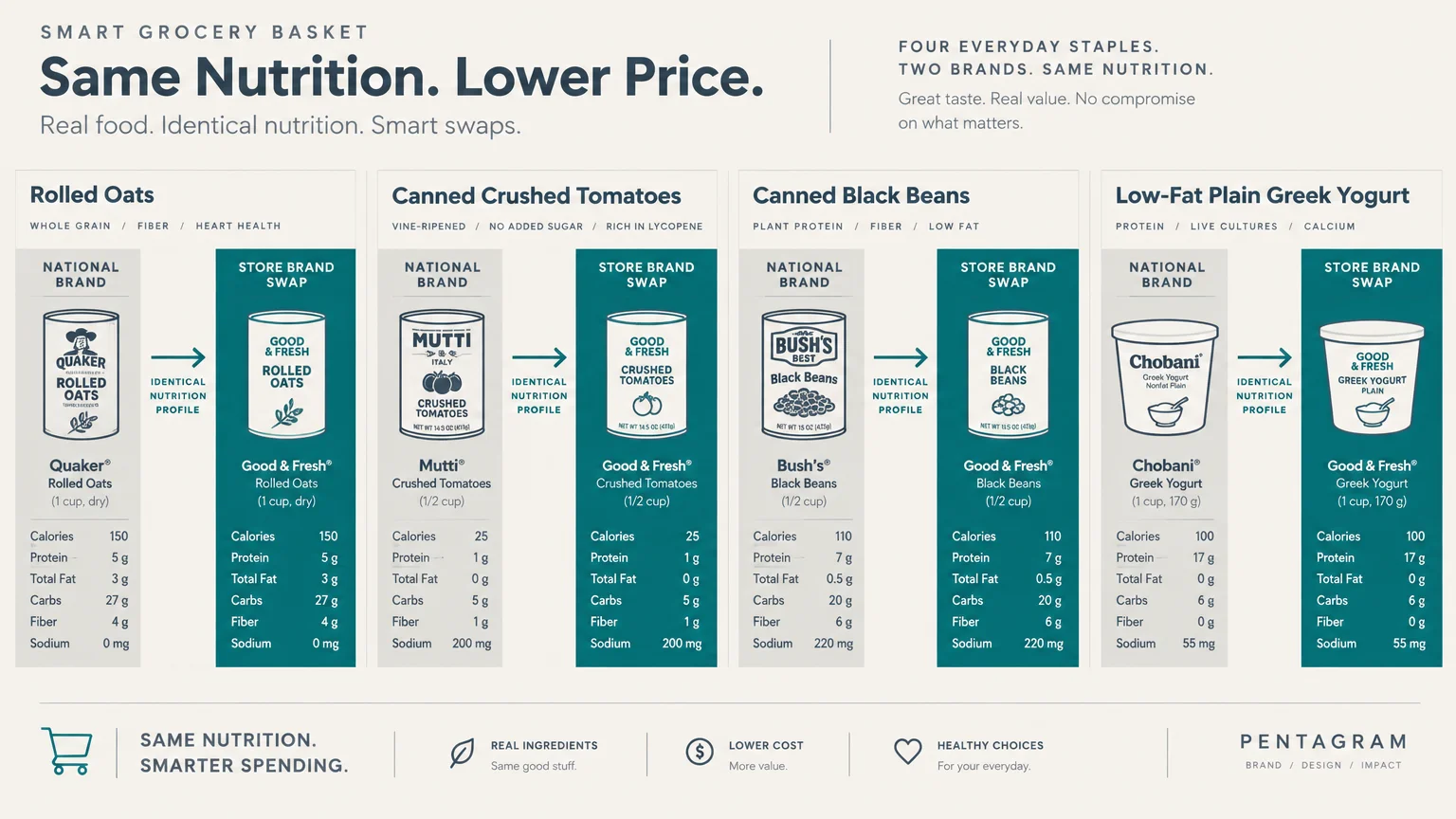
Choosing store-brand groceries over national name brands is the fastest way to lower your register receipt. Most supermarket private labels contain ingredients sourced from the very same agricultural processors as premium brands.
Retailers like Weis Markets offer extra incentives by applying their weekly 10% discount directly to store-brand items. Layering that 10% deduction on top of private-label pricing generates deep savings on whole grains and pantry essentials.
Consult the standard Nutrition Facts label monitored by the FDA before finalizing any private-label purchase. Compare the serving size, fiber grams, sodium milligrams, and added sugars between the store brand and the premium brand.
Always check the unit price printed on the supermarket shelf tag rather than the large retail price. Unit pricing reveals the exact cost per ounce, pound, or count, helping you spot genuine bargains instantly.
Retailers and food manufacturers often shrink product packaging while keeping the retail price unchanged to conceal inflation. Tracking the unit price prevents you from paying more for smaller containers of cereal, nuts, or yogurt.
Store-brand rolled oats provide superior cardiovascular support compared to pre-sweetened instant oatmeal packets. Unflavored rolled oats deliver heart-healthy beta-glucan soluble fiber at a fraction of the cost per serving.
Select store-brand extra virgin olive oil carrying a certified quality seal to ensure you purchase unadulterated oil. Cooking with extra virgin olive oil supplies monounsaturated oleic acid and polyphenols that help reduce systemic arterial inflammation.

How do specific foods interact with your daily prescriptions at checkout?
Certain nutritious foods can cause unexpected chemical reactions when consumed alongside common daily prescription medications. Reviewing your cart for potential food-drug interactions prevents medical complications while maintaining a healthy lifestyle.
Fresh grapefruit and grapefruit juice can trigger severe interactions with statin medications used to lower blood cholesterol. Natural compounds called furanocoumarins inhibit CYP3A4 enzymes in your intestines, causing medication to build up to dangerous levels.
If you take warfarin or similar anticoagulants, you must keep your dietary intake of vitamin K stable. Leafy greens like kale, collard greens, and turnip greens provide large amounts of vitamin K, which promotes natural clotting.
You do not need to eliminate leafy greens from your diet entirely, but your weekly consumption must remain consistent. Significant variations in vitamin K intake can interfere with blood-thinning medications and alter your routine lab results.
Salt substitutes made with potassium chloride can cause complications if you take ACE inhibitors or potassium-sparing diuretics. These blood pressure medications reduce potassium excretion, so adding potassium-based salt substitutes can trigger dangerous hyperkalemia.
Read the ingredient statements on no-salt seasoning blends to confirm they do not rely on potassium chloride. Seasoning your meals with natural rosemary, thyme, cracked black pepper, and garlic powder keeps your heart safe.
High-calcium foods like milk, fortified yogurt, and calcium-set tofu can bind to certain oral antibiotics in your gut. Consume calcium-rich foods at least two hours before or four hours after taking your prescribed antibiotic dose.
Frequently Asked Questions About Supermarket Discounts
Do discount supermarkets like Aldi or Trader Joe’s offer age-based savings?
Neither Aldi nor Trader Joe’s offers age-based discounts on any day of the week. Both retailers operate on an everyday low-price strategy, keeping prices low across private labels instead of offering demographic promotions.
You can still shop at Aldi and Trader Joe’s for low-cost pantry staples, nuts, and frozen produce. Their baseline retail prices often undercut the discounted prices at traditional full-service supermarkets.
Can you combine weekly supermarket discounts with manufacturer coupons?
Most participating supermarkets let you combine age-based discounts with paper or digital manufacturer coupons. Chains like Harris Teeter apply coupon savings first, then calculate the 5% discount on the remaining balance.
However, some retailers exclude weekly circular sale items or clearance items from the percentage discount. Check your local store’s coupon policy at the service desk to understand how the register processes combined savings.
What forms of identification do supermarkets require at the cash register?
Most grocery stores require a standard government-issued photo ID, such as a driver’s license, military ID, or passport. The cashier or service desk clerk checks your birth date to confirm your eligibility.
Many regional chains require you to register your birth date once at customer service to activate your loyalty card. After this initial verification, the weekly discount applies automatically whenever you scan your card at checkout.
Do weekly grocery discounts apply to prescription medications at the pharmacy?
Supermarket discount programs exclude prescription medications and insurance co-pays from promotional markdowns. State and federal laws, alongside private insurance agreements, prevent grocery stores from offering discretionary discounts on prescription drugs.
You can often use weekly discounts on over-the-counter health items, such as vitamins, pain relievers, and bandages. Ask your store pharmacist which over-the-counter wellness products qualify for the percentage markdown.
What should you check before your next trip to the grocery store?
Call the customer service desk at your local supermarket before planning your next shopping trip. Verify the exact weekday their discount runs, the qualifying age threshold, and whether you must link your loyalty account.
Build your shopping list around heart-healthy produce, lean proteins, and low-sodium pantry staples to maximize nutritional benefits. Combining designated discount days with smart ingredient choices keeps your grocery bills low and your health strong.