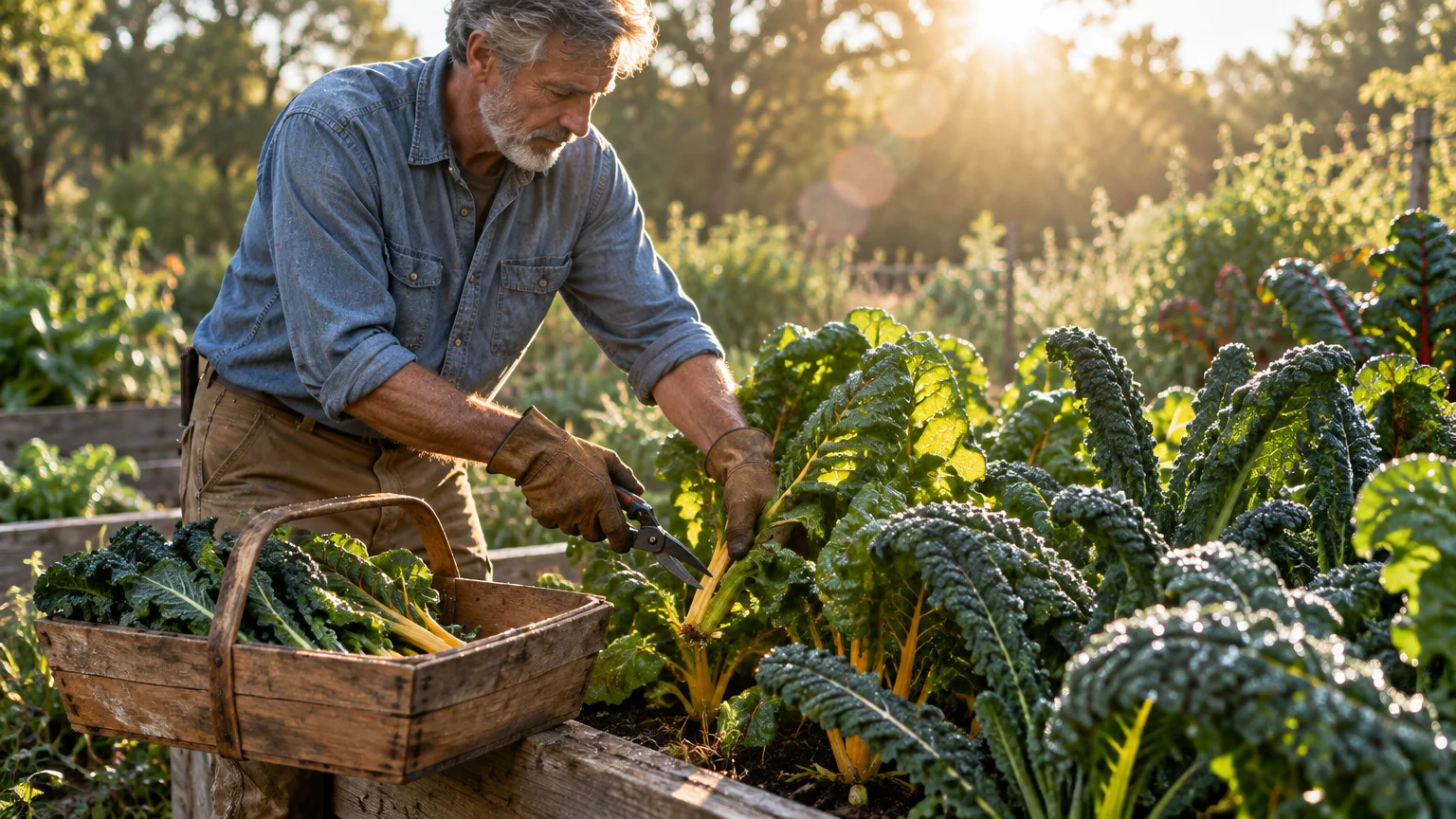
You can enjoy delicious, nutrient-dense meals without endangering your health while taking prescription blood thinners. Understanding how dietary vitamin K influences blood clotting empowers you to make confident grocery choices every single day.
Many patients mistakenly eliminate healthy green vegetables entirely out of fear. However, current clinical evidence confirms that maintaining steady daily habits provides far better protection than strict nutritional avoidance.
This comprehensive guide details twelve essential vitamin K foods and provides practical strategies to keep your meals flavorful, safe, and balanced.
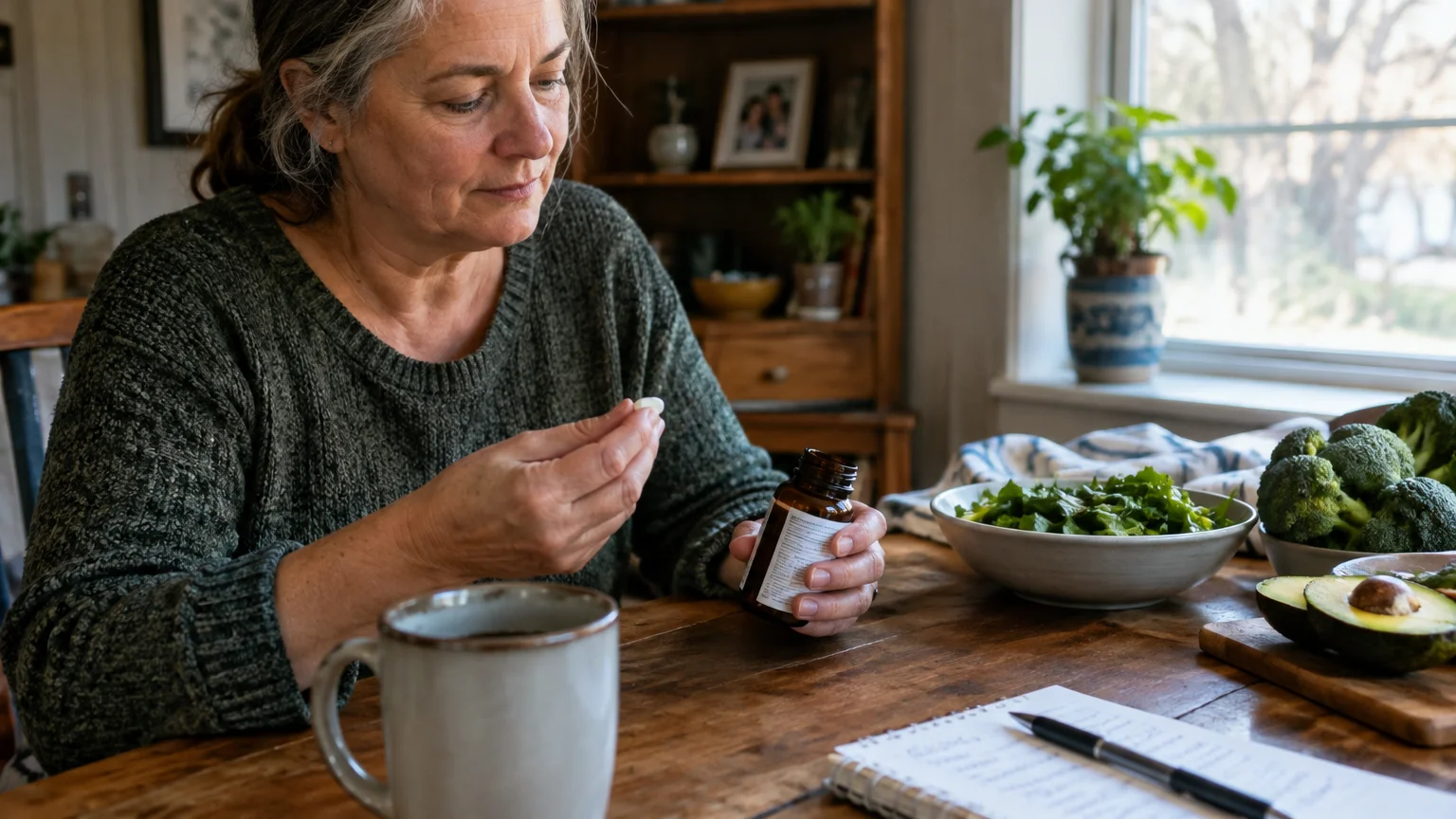
The Dual Nature of Vitamin K: Clotting Function and Health Benefits
Vitamin K is an essential, fat-soluble nutrient that your body relies on for survival. It operates primarily as a critical cofactor for enzymes that activate specialized proteins.
Your liver requires vitamin K to manufacture several core coagulation factors, including factors II, VII, IX, and X. These proteins circulate harmlessly until vascular trauma triggers a rapid cascade that forms protective blood clots.
Without adequate vitamin K, this biochemical coagulation cascade fails completely. Minor cuts or internal bruising could lead to uncontrolled and life-threatening bleeding episodes.
Dietary vitamin K exists primarily in two natural chemical structures. Phylloquinone, designated as vitamin K1, originates in photosynthetic green plants and constitutes the vast majority of Western dietary intake.
Menaquinones, collectively called vitamin K2, feature distinct isoprenoid side chains that influence their biological activity. These variants appear primarily in animal tissues, dairy products, and traditional fermented foods.
Beyond blood coagulation, vitamin K directs calcium distribution throughout your skeletal framework. It activates osteocalcin, a bone-matrix protein that binds calcium ions directly into your bone mineral matrix.
Simultaneously, vitamin K activates Matrix Gla Protein within your cardiovascular system. This vital vascular protein prevents calcium from depositing inside your arterial walls and soft tissues.
Understanding Anticoagulants: Warfarin Versus DOACs
Prescription blood thinners protect millions of individuals from debilitating strokes, pulmonary embolisms, and deep vein thrombosis. However, different anticoagulant drug classes function through fundamentally distinct biochemical mechanisms.
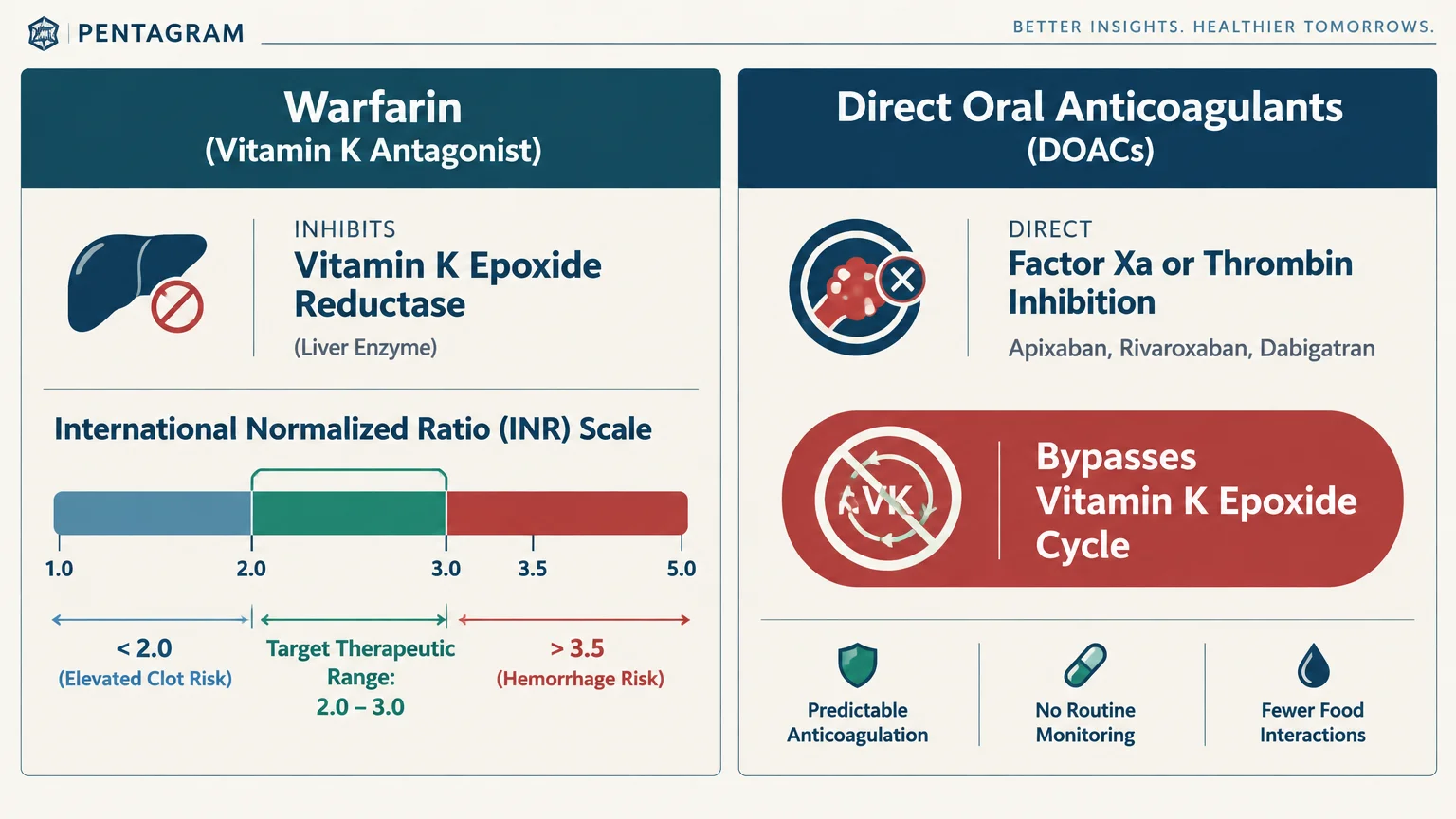
Vitamin K antagonists, most notably warfarin, represent the traditional standard of anticoagulant care. Warfarin directly inhibits the vitamin K epoxide reductase enzyme complex in your liver cells.
By blocking this recycling enzyme, warfarin depletes the functional reserves of active vitamin K. Consequently, your liver produces fewer functional clotting factors, deliberately prolonging the time required for blood to clot.
Doctors monitor warfarin therapy through a standardized laboratory blood test known as the International Normalized Ratio. For most cardiovascular conditions, clinical guidelines establish a target therapeutic range between 2.0 and 3.0.
Consuming sudden, massive portions of vitamin K foods counteracts warfarin by supplying fresh, uninhibited vitamins to your liver. This surge drives your ratio below 2.0, significantly raising your risk of dangerous blood clots.
Conversely, drastically cutting vitamin K out of your meals allows warfarin to exert an unchecked effect. Your ratio can spike dangerously above 3.5, leaving you vulnerable to severe gastrointestinal or intracranial hemorrhage.
Direct Oral Anticoagulants represent a newer, highly targeted pharmacological class. Common brand-name options include apixaban, rivaroxaban, and dabigatran.
These modern medications directly inhibit specific clotting enzymes such as Factor Xa or thrombin. Because they completely bypass vitamin K pathways, they do not interact with dietary vitamin K intake.
You can review the American Heart Association anticoagulant guide to verify your specific prescription class. If your doctor prescribed a direct oral anticoagulant, you can enjoy vitamin K foods freely.
Daily Intake Recommendations and Nutrition Labeling
Nutritional scientists establish reference benchmarks to guide daily food intake across healthy populations. Understanding these guidelines helps you assess where your daily meals fall on the nutritional spectrum.
According to the NIH Office of Dietary Supplements guidance, the daily Adequate Intake for adult men is 120 mcg. For adult women, the established standard is 90 mcg per day.
These recommendations remain constant regardless of whether you are pregnant or lactating. They provide sufficient baseline levels to maintain normal hepatic clotting factor synthesis.
Data from nationwide health surveys reveals that most American adults comfortably meet these nutritional targets. Average daily consumption reaches 182 mcg among adult men and 164 mcg among adult women.
The Daily Value utilized across packaging labels sets the general reference at 120 mcg for adults. Federal rules classify any food portion delivering 20% or more of that figure—24 mcg—as a high source.
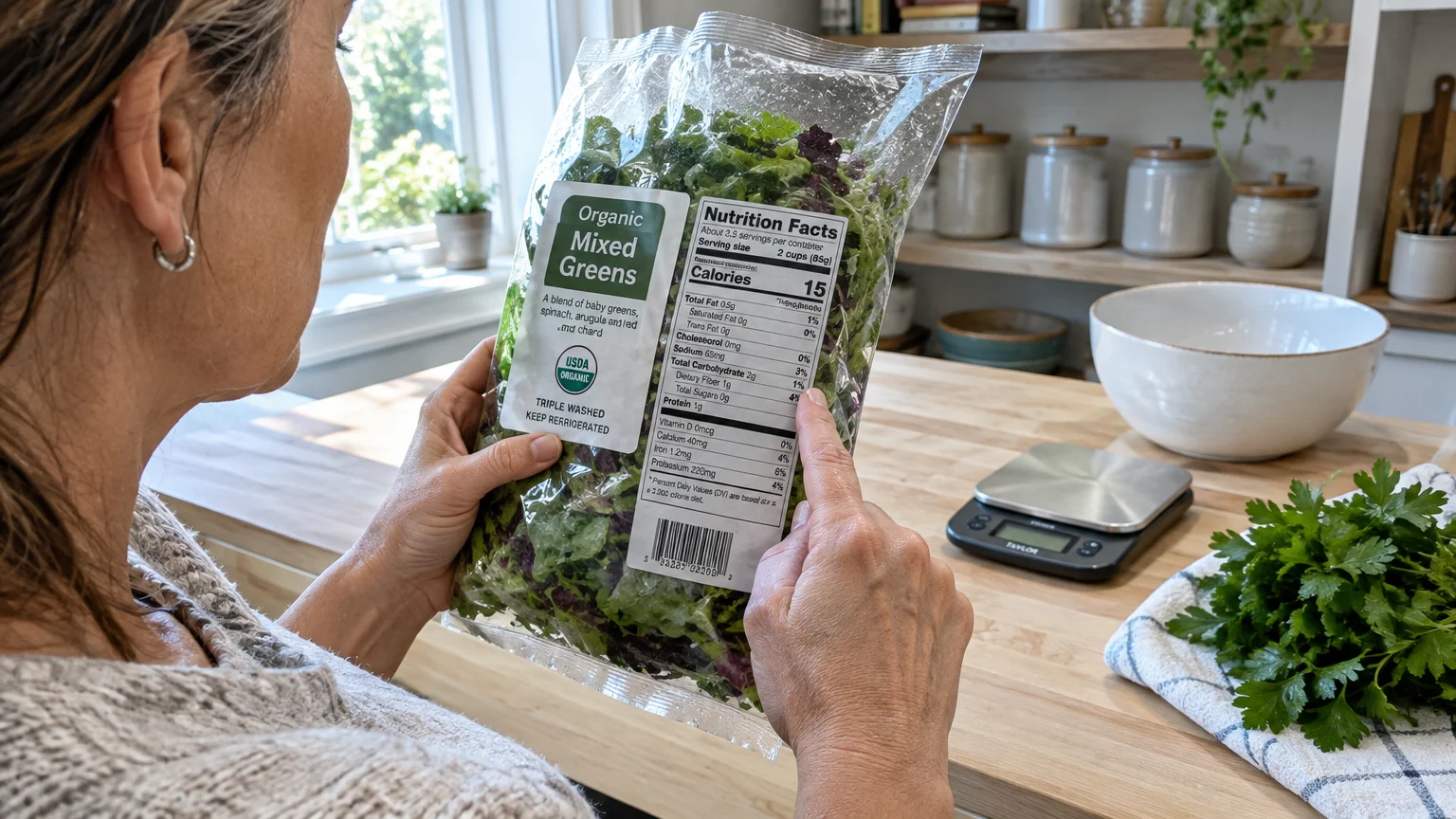
However, navigating supermarket aisles presents distinct hurdles for consumers managing anticoagulant therapy. Under current FDA Daily Value regulations, manufacturers do not have to list vitamin K on standard panels.
A company must only disclose vitamin K if they intentionally enrich or fortify the food product. Consequently, commercial foods packed with dark greens may display no vitamin K information whatsoever.
This regulatory loophole makes relying on package labels risky for warfarin users. Memorizing which whole foods naturally carry dense vitamin K concentrations remains your safest defense.
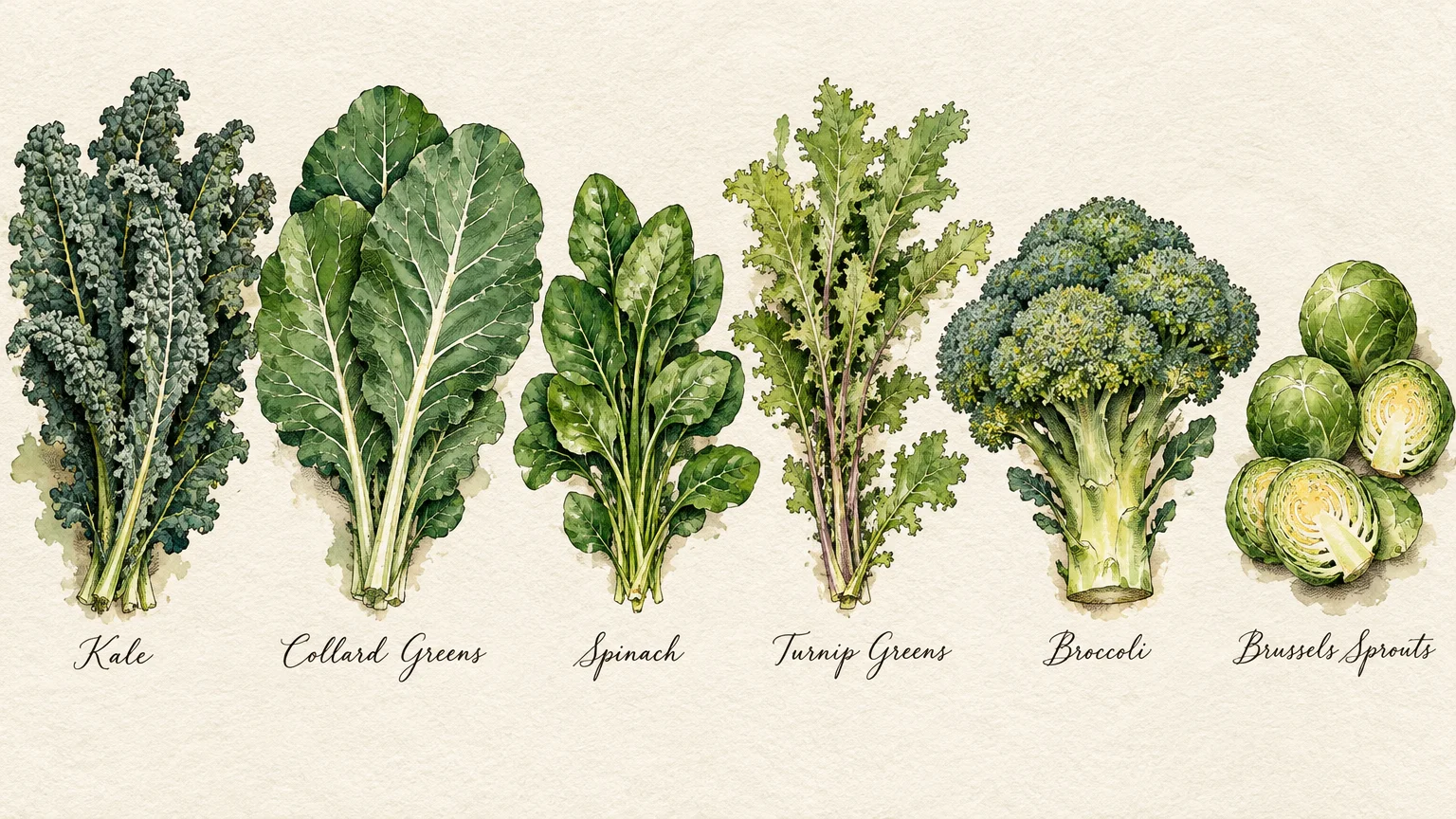
The Top 12 Vitamin K Foods to Monitor
To manage your dietary consistency effectively, you must understand the exact nutrient concentrations found in everyday groceries. The following reference data derives from validated analyses in the USDA FoodData Central database.
1. Natto (Fermented Soybeans)
Natto ranks as the single most concentrated dietary source of vitamin K documented in scientific literature. A modest 3-ounce portion delivers an astonishing 850 mcg of the nutrient.
That standard serving provides an overwhelming 708% of the federal Daily Value. Traditional Japanese food culture creates natto by fermenting whole soybeans with specific bacterial cultures.
This fermentation yields menaquinone-7, a form of vitamin K2 that circulates in your blood for several days. Because one serving can destabilize warfarin for an entire week, patients should avoid natto completely.
2. Boiled Collard Greens
Collard greens represent a traditional culinary cornerstone across the American South, celebrated for their hearty texture. Consuming a half-cup serving of frozen, boiled collard greens delivers 530 mcg of vitamin K.
This compact side dish supplies 442% of your established Daily Value. Simmering collard greens wilts their broad, fibrous structure, compressing tremendous micronutrient density into a small volume.
Measure your cooked portion with a standard kitchen measuring cup rather than guessing by eye. Keeping your serving size steady prevents unexpected fluctuations in your blood clotting measurements.
3. Boiled Turnip Greens
Turnip greens deliver a slightly peppery flavor profile alongside world-class micronutrient concentrations. Preparing a half-cup portion of frozen, boiled turnip greens provides 426 mcg of vitamin K.
That humble serving accounts for 355% of the recommended Daily Value. Turnip greens also supply robust concentrations of lutein and zeaxanthin, which support long-term retinal health.
Always evaluate your turnip green portions after cooking rather than relying on raw market weights. This habit ensures your daily vitamin intake remains uniform across changing seasonal menus.
4. Raw Spinach
Spinach is one of the most versatile leafy vegetables available in modern grocery stores. One cup of fresh, raw spinach leaves contains 145 mcg of vitamin K.
This standard serving size contributes 121% of your daily reference value. Raw spinach fits effortlessly into crisp lunch salads, cold wraps, and blended morning smoothies.
Cooking spinach concentrates these values substantially, shrinking three cups of fresh leaves into two tablespoons. Track your preparation method closely so you do not accidentally multiply your intake.
5. Raw Kale
Kale remains immensely popular in healthy culinary circles due to its rich antioxidant profile and culinary versatility. A single cup of raw, chopped kale delivers 113 mcg of vitamin K.
That single cup fulfills 94% of your recommended Daily Value. Kale also supplies generous amounts of vitamin C, potassium, and glucosinolates that support cellular defense systems.
Establish a consistent salad bowl size rather than alternating between zero greens and enormous raw portions. Predictable salad routines allow your clinician to calibrate your medication with complete confidence.
6. Boiled Broccoli
Broccoli represents an accessible, budget-friendly cruciferous staple enjoyed in households across the globe. A half-cup portion of chopped, boiled broccoli florets supplies 110 mcg of vitamin K.
This standard family dinner side dish supplies 92% of your daily reference target. Broccoli also delivers high concentrations of sulforaphane, a sulfur compound studied for its cellular health benefits.
Broccoli holds its cellular structure during cooking far better than delicate leafy greens like spinach. Consume consistent portion sizes from week to week to keep your medication levels steady.
7. Roasted Soybeans
Roasted soybeans, frequently marketed as soy nuts, provide a crunchy and shelf-stable snack alternative. A half-cup serving of these roasted legumes delivers 43 mcg of vitamin K.
That single snack portion represents 36% of your daily established target. Roasted soybeans also deliver complete plant-based protein, dietary fiber, and essential minerals like magnesium.
Pour your snack into a small ramekin rather than eating directly out of a large bulk bag. This straightforward culinary boundary prevents unintentional overconsumption while working or relaxing.
8. Carrot Juice
Many people assume vitamin K resides exclusively inside dark green leafy vegetables. However, a three-quarter-cup portion of commercial carrot juice contains 28 mcg of vitamin K.
This convenient morning drink provides 23% of your Daily Value, earning an official high-source designation. Commercial juicing extracts liquid nutrients while discarding insoluble fiber, speeding digestive absorption.
Avoid sudden juicing cleanses or drinking large carafes of vegetable juice over short periods. If you enjoy carrot juice, integrate a small, measured glass into your routine with predictable regularity.
9. Soybean Oil
Refined soybean oil represents an invisible yet pervasive source of vitamin K in modern food supplies. A single tablespoon of pure soybean oil supplies 25 mcg of vitamin K.
That single tablespoon provides 21% of your daily reference benchmark. Commercial food manufacturers and restaurant kitchens rely heavily on soybean oil for frying, sautéing, and formulating salad dressings.
Read packaged condiment ingredient panels to identify the specific cooking oils utilized. Switching suddenly between an olive oil dressing and a soybean oil product can quietly alter your weekly vitamin baseline.
10. Prepared Edamame
Immature green soybeans served in their fibrous pods make a delicious, nutrient-dense culinary appetizer. A half-cup serving of prepared, frozen edamame supplies 21 mcg of vitamin K.
This portion provides 18% of your Daily Value, making it a meaningful contributor to your daily nutrition. Edamame offers a balanced macronutrient profile packed with slow-digesting carbohydrates and folate.
Simply account for edamame alongside your other vegetable choices across the day. Maintaining awareness of your total daily intake preserves steady anticoagulation control without requiring strict avoidance.
11. Canned Pumpkin
Canned pumpkin provides a rich, velvety base for nourishing cold-weather soups, morning oatmeal, and holiday baking. A half-cup serving of canned pumpkin delivers 20 mcg of vitamin K.
That modest serving accounts for 17% of your recommended Daily Value. Canned pumpkin is also brimming with soluble fiber, potassium, and powerful carotenoid antioxidants.
Enjoy pumpkin soups and baked dishes in moderate, measured quantities throughout the autumn and winter months. Consistency remains key, so avoid consuming entire pumpkin pies in a single weekend.
12. Pomegranate Juice
Pomegranate juice delivers an exquisite blend of sweet and tart flavors alongside deep ruby coloration. Consuming a three-quarter-cup glass of pure pomegranate juice provides 19 mcg of vitamin K.
This portion delivers 16% of your daily reference requirement. Pomegranate juice contains concentrated punicalagins, which are potent polyphenol antioxidants that support endothelial vascular health.
Always consult your physician or clinical pharmacist before introducing pomegranate juice into your weekly routine. They can verify whether your specific medication regimen tolerates this concentrated fruit juice safely.
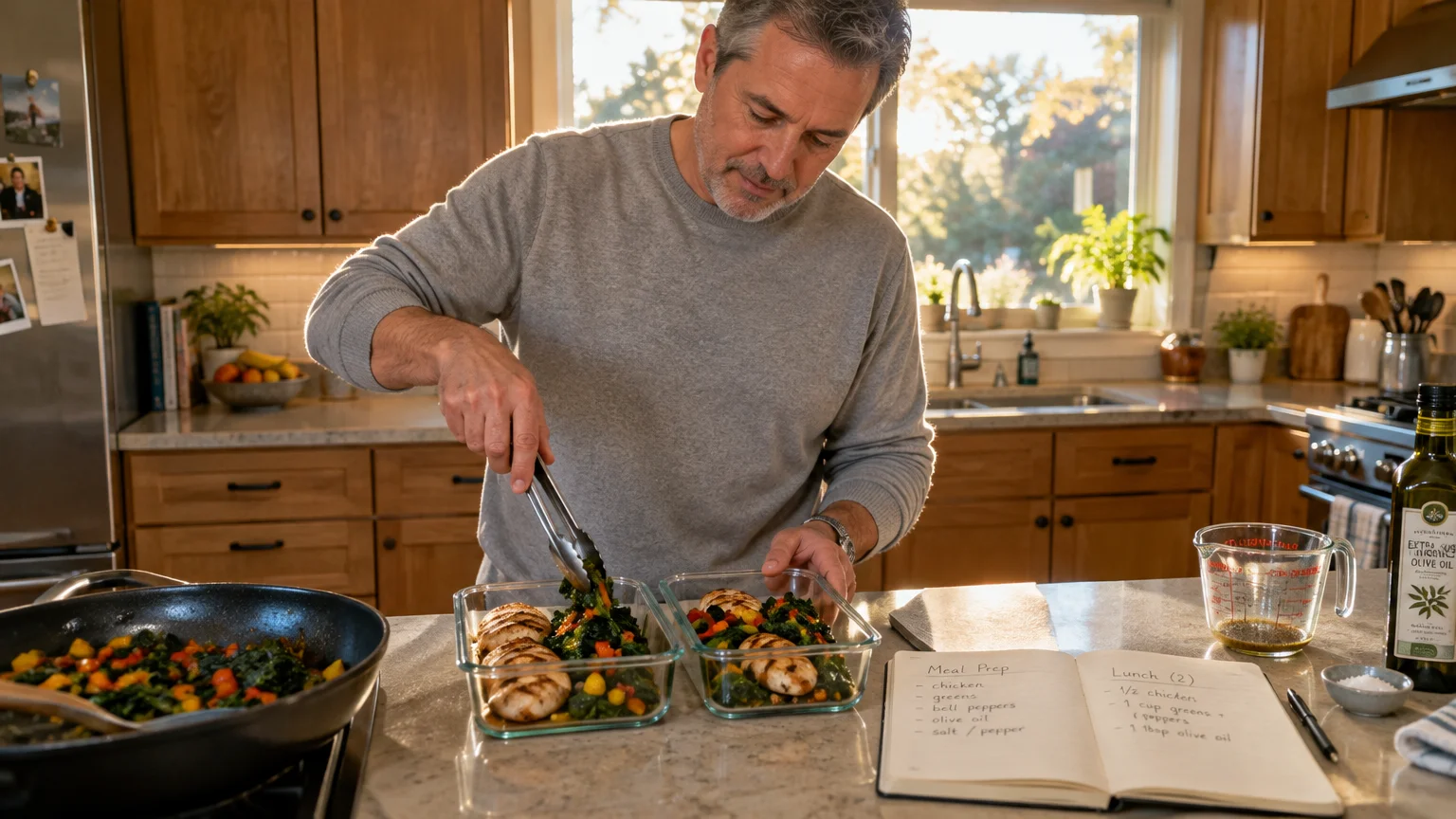
Strategic Dietary Pillars for Anticoagulant Users
Living safely with anticoagulant therapy does not mean resigning yourself to a bland, nutrient-poor diet. By implementing three strategic nutritional pillars, you can eat diverse foods while maintaining clinical safety.
Pillar 1: The Principle of Consistency
The foundational rule for warfarin users is maintaining a steady, predictable intake of vitamin K over time. Banning leafy greens outright actually deprives your body of cardioprotective phytonutrients, potassium, and dietary fiber.
Your healthcare team can easily adjust your warfarin dosage to match your preferred eating pattern. If you love a daily lunch salad, your doctor simply prescribes a dose that balances that intake.
Pillar 2: Culinary Chemistry and Absorption Dynamics
How you prepare your meals directly determines how efficiently your digestive tract absorbs fat-soluble vitamins. Vitamin K requires dietary lipids to form micelles that pass through intestinal membranes.
Tossing your steamed greens with a measured teaspoon of olive oil increases the systemic bioavailability of phylloquinone. Consuming raw vegetables without any dietary fat reduces overall nutrient uptake significantly.
Pillar 3: Habit Formation and Routine Dietary Tracking
Building lasting nutritional habits removes anxiety and establishes control over your daily health choices. Dedicate ten minutes each weekend to sketch your weekly vegetable side dishes and grocery list.
Maintain a simple food log during the first few months of anticoagulant therapy. Recording your daily vegetable servings alongside regular laboratory test results reveals your body’s personal metabolic sensitivity.
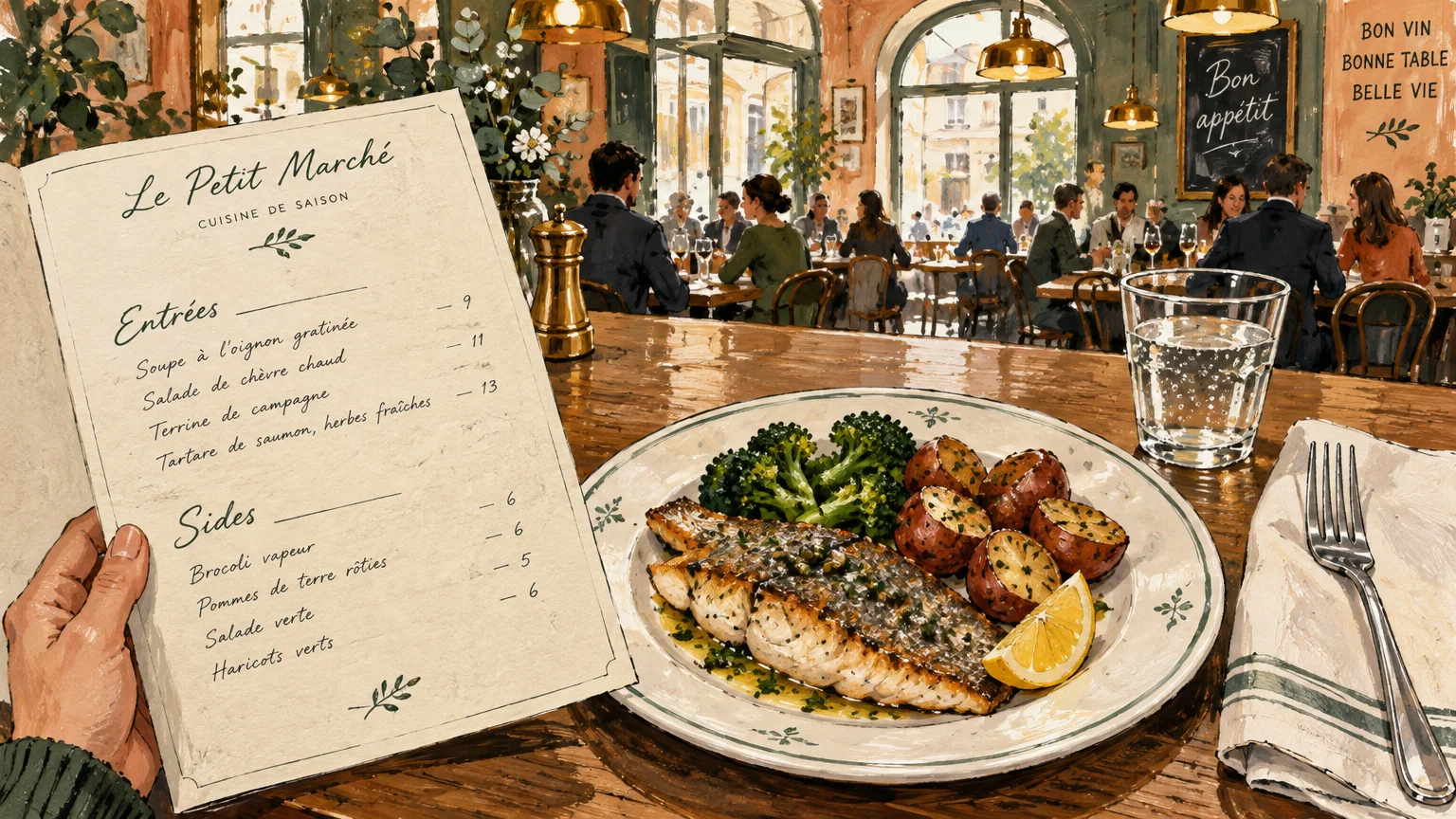
Navigating Dining Out, Cultural Cuisines, and Budgeting
Real life happens in restaurants, community gatherings, and bustling family kitchens across diverse cultural backgrounds. Navigating real-world food environments requires situational awareness rather than social withdrawal.
When dining at restaurants, remain mindful of hidden ingredients like soybean oil in house dressings and sauces. Ask your server whether the kitchen can prepare your protein with olive oil or butter instead.
Different cultural cuisines offer unique vitamin K landscapes that require tailored management. Southern cooking often centers on braised greens, while Mediterranean traditions emphasize raw vegetable salads dressed with olive oil.
East Asian culinary traditions frequently feature edamame, soybean pastes, and fermented specialties like natto. You can celebrate your cultural food heritage safely by standardizing your portion sizes and cooking techniques.
Eating healthfully on a budget is completely achievable while managing anticoagulant therapy. Frozen greens like collards, turnip greens, and broccoli offer tremendous economic value without sacrificing nutrition.
Frozen produce is flash-frozen at peak harvest, locking in essential vitamins and minerals at a fraction of fresh prices. Remember that frozen greens are pre-cooked and dense, so measure them carefully using measuring cups.

Expert Perspectives and Patient Experiences
Cardiovascular dietitians and anticoagulation nurses emphasize that education should alleviate fear, not create nutritional paralysis. Many newly diagnosed patients needlessly eliminate every green vegetable from their plates.
Clinical experts actively encourage patients to partner with their prescribing physicians. The modern medical approach focuses on dosing the drug to the patient’s diet rather than forcing an unnatural diet on the patient.
Patients who successfully manage their therapy over decades emphasize the importance of kitchen mindfulness. Developing simple routines, like eating a predictable side salad with weeknight dinners, eliminates medication volatility.
Reviewing trusted clinical guidelines such as the warfarin safety resource on MedlinePlus empowers patients to advocate for their nutritional wellbeing. Knowledge replaces fear with practical, confident action in everyday life.
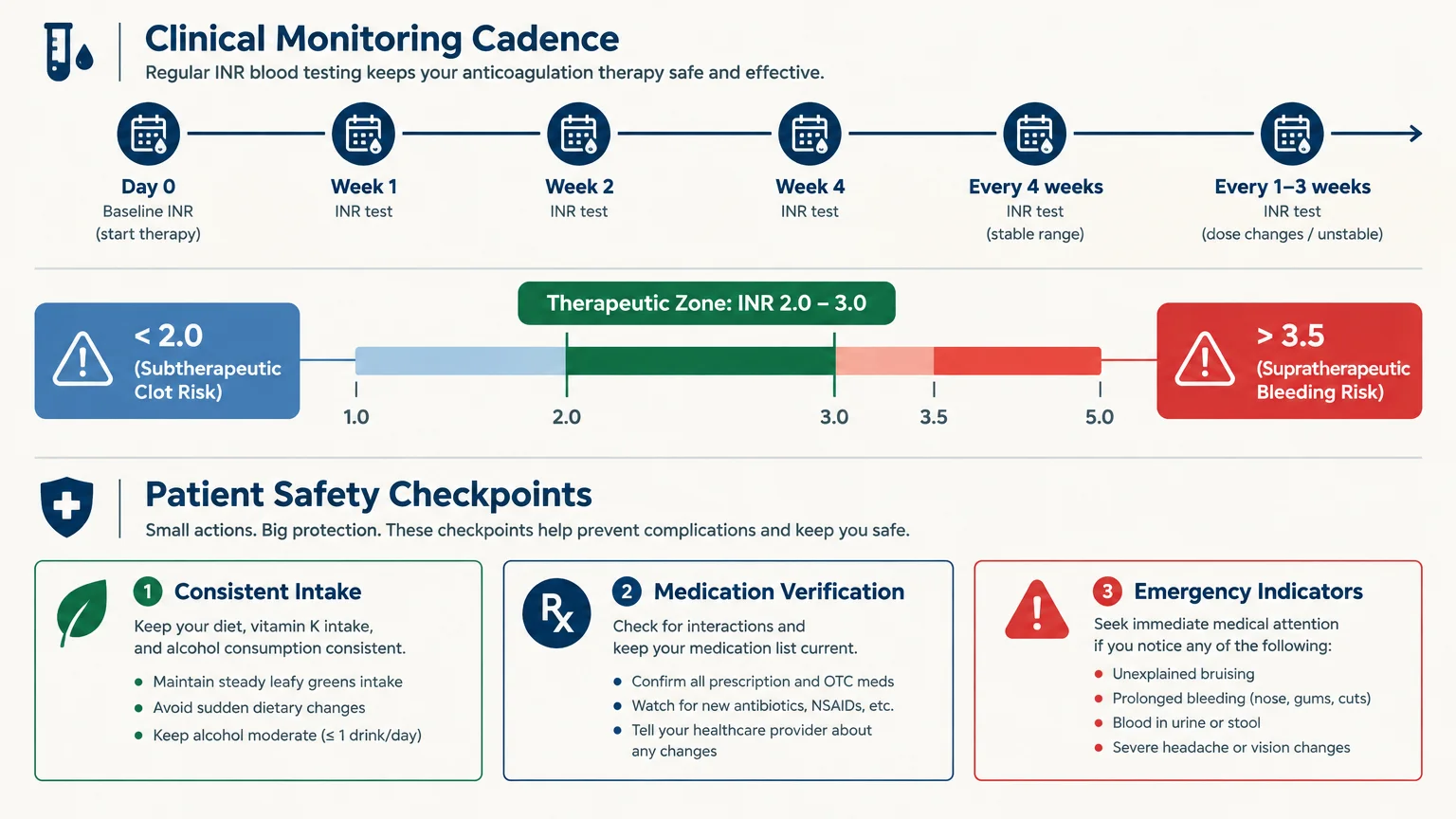
Safety Guidelines and Clinical Monitoring
Systematic clinical monitoring protects your cardiovascular health while preventing adverse bleeding events. Routine blood tests serve as your personal safety net while navigating dietary changes.
Warfarin users must maintain regular appointments for prothrombin time and International Normalized Ratio laboratory testing. These appointments confirm whether your blood coagulation rate remains within your specific target range.
If you plan a deliberate dietary shift—such as starting a plant-focused meal pattern—notify your clinician beforehand. They will schedule more frequent lab checks to calibrate your dosage during the transition.
Learn to recognize the physical warning signs that indicate abnormal clotting factor activity. Excessive bruising, bleeding gums during brushing, frequent nosebleeds, or pink-tinged urine warrant prompt medical evaluation.
Conversely, signs of insufficient anticoagulation include localized calf swelling, leg warmth, sudden shortness of breath, or sharp chest pain. These symptoms require emergency medical care to rule out deep vein thrombosis or pulmonary embolism.
Exercise extreme caution regarding dietary supplements, multivitamin formulas, and herbal remedies. Products containing St. John’s wort, ginkgo biloba, high-dose vitamin E, or green tea extracts can disrupt anticoagulant stability.
Frequently Asked Questions
Can I eat raw salads if I take warfarin?
Yes, you can safely enjoy fresh raw salads while taking warfarin. The essential requirement is keeping your portion size and consumption frequency consistent from week to week.
Do not cycle between eating huge bowls of salad every day and avoiding greens completely for weeks. Inform your prescribing clinician about your typical weekly salad intake so they can adjust your dosage accordingly.
Do I need to track vitamin K if I take Eliquis or Xarelto?
No, you do not need to track or restrict dietary vitamin K while taking direct oral anticoagulants. Medications like apixaban, rivaroxaban, and dabigatran inhibit clotting factors without utilizing vitamin K pathways.
You can freely consume dark leafy greens, fermented soybeans, and concentrated vegetable juices without altering your drug’s therapeutic effectiveness. These medications provide significant dietary freedom compared to traditional vitamin K antagonists.
Does cooking greens destroy their vitamin K content?
Cooking does not destroy vitamin K because it is a heat-stable, fat-soluble molecule. Thermal cooking from boiling, steaming, or sautéing leaves the underlying vitamin structure intact.
However, heat wilts raw leaves and collapses their cellular volume dramatically. As a result, a half-cup serving of cooked greens contains far more plant material than a cup of raw greens.
What should I do if I accidentally eat a high-vitamin K meal?
Do not panic or double your medication dose if you inadvertently consume a vitamin-heavy meal. Taking additional anticoagulant medication without clinical guidance creates dangerous bleeding hazards.
Simply return to your usual, balanced eating pattern during your very next meal. Your body will process the meal naturally over the subsequent forty-eight hours.
Your 24-Hour Action Plan for Confident Eating
Managing your health with blood thinners should give you peace of mind rather than daily stress. You possess the knowledge and tools needed to nourish your body safely and deliciously.
Take one practical action within the next 24 hours to reinforce your nutritional routine. Inspect your refrigerator and pantry to identify your primary cooking oils, salad dressings, and leafy greens.
Choose one vitamin K-rich vegetable that you genuinely love, and decide on a steady portion size to enjoy this week. Establishing this single, predictable habit protects your heart, supports your bones, and preserves your health.