
Starting every morning with crispy bacon feels like a harmless comfort ritual, yet your cardiovascular system registers every slice. Over months and years, eating bacon every day delivers concentrated sodium, saturated fat, and curing compounds that quietly strain your arteries and metabolism.
Research links daily processed meat directly to higher blood pressure, type 2 diabetes, colorectal cancer, and accelerated cognitive aging. Those risks climb steadily even when your breakfast portion looks modest on the plate.
You do not have to sacrifice warm, savory breakfasts to protect your long-term health. Understanding how bacon affects your body empowers you to build satisfying swaps, track key lab markers, and talk confidently with your care team.
The Health Reality Behind Eating Bacon Every Day
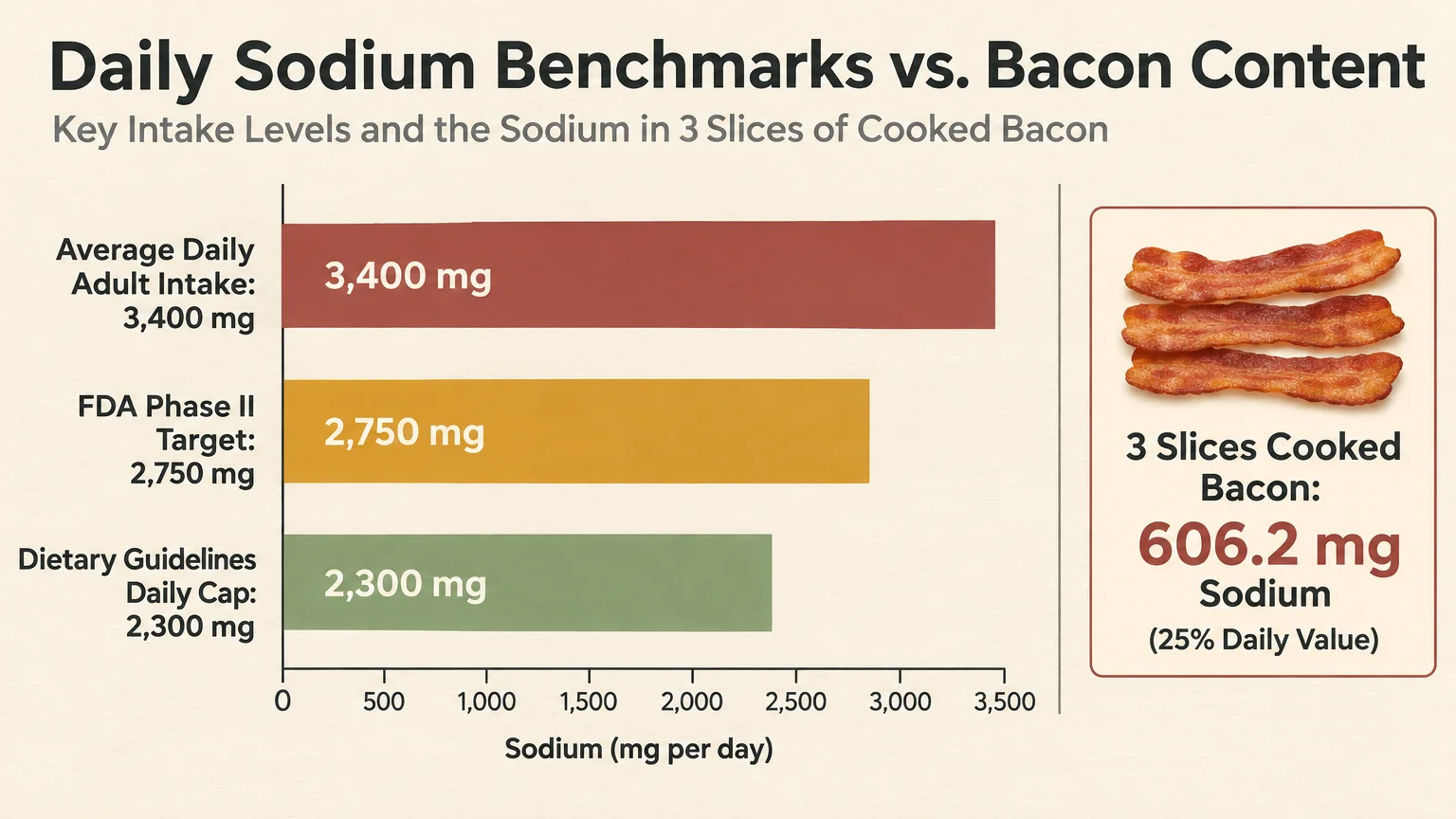
Heart disease and stroke remain the leading causes of death in the United States, and everyday sodium overload fuels both conditions. Across the country, adults consume more than 3,300 milligrams of sodium daily, with federal estimates reaching roughly 3,400 milligrams.
More than 70 percent of that dietary sodium comes from packaged, prepared, and restaurant foods rather than your kitchen salt shaker. Processed meats sit near the top of that list because curing salt is built directly into every slice.
To help curb this trend, the Centers for Disease Control and Prevention emphasizes reducing processed sodium sources across daily meals.
Meanwhile, federal food regulators issued draft Phase II voluntary sodium reduction goals in August 2024 across 163 food categories to help bring average intake closer to 2,750 milligrams daily.
Bacon Nutrition by the Numbers
Evaluating bacon nutrition starts with looking at a standard cooked portion rather than raw packaging weights. According to USDA FoodData Central, three slices of cooked, pan-fried pork bacon weigh about 36 grams.
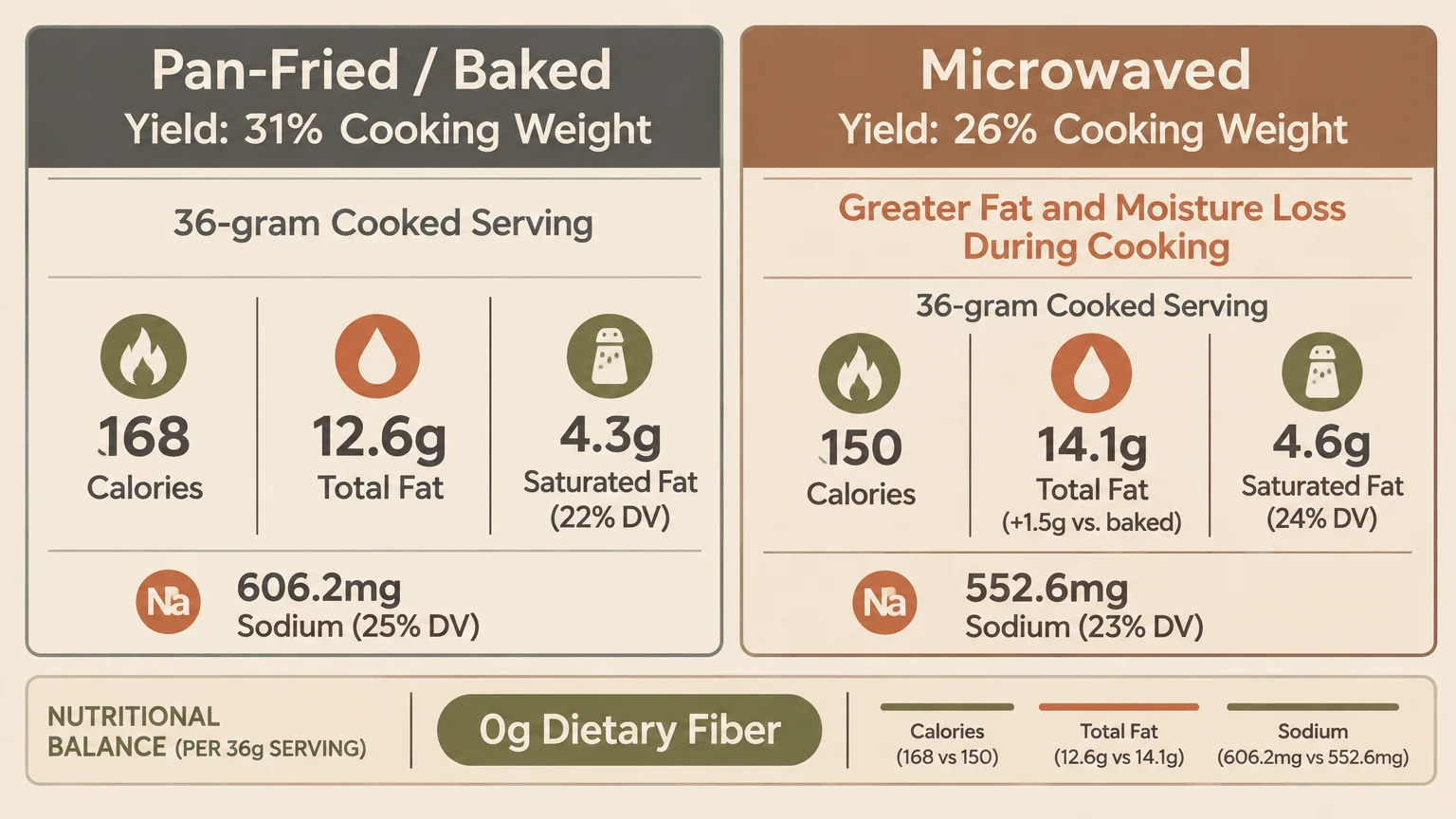
That three-slice serving supplies 168 calories, 12.6 grams of total fat, and 4.3 grams of saturated fat, representing 22 percent of your Daily Value. It also contains 35.6 milligrams of cholesterol and 12.2 grams of protein.
Sodium is where that modest side dish makes its sharpest impact. Three slices pack 606.2 milligrams of sodium, which equals 25 percent of the Daily Value before you season your eggs or butter your toast.
Federal Nutrition Facts rules define 20 percent of the Daily Value or higher as a high sodium source, while 5 percent or less qualifies as low. Bacon crosses that high-sodium threshold in a single small serving while offering zero fiber.
Cooking method also alters how much fat and water leave the strip before it reaches your fork. Pan-fried and baked bacon average a 31 percent cooking yield by weight, whereas microwaved bacon averages a 26 percent yield.
What Daily Bacon Does Inside Your Body
An occasional slice at weekend brunch rarely derails long-term health on its own. Eating bacon every day changes the equation because your organs must process repeated chemical, vascular, and inflammatory stress without recovery days.
Sodium, Blood Pressure, and Vascular Strain
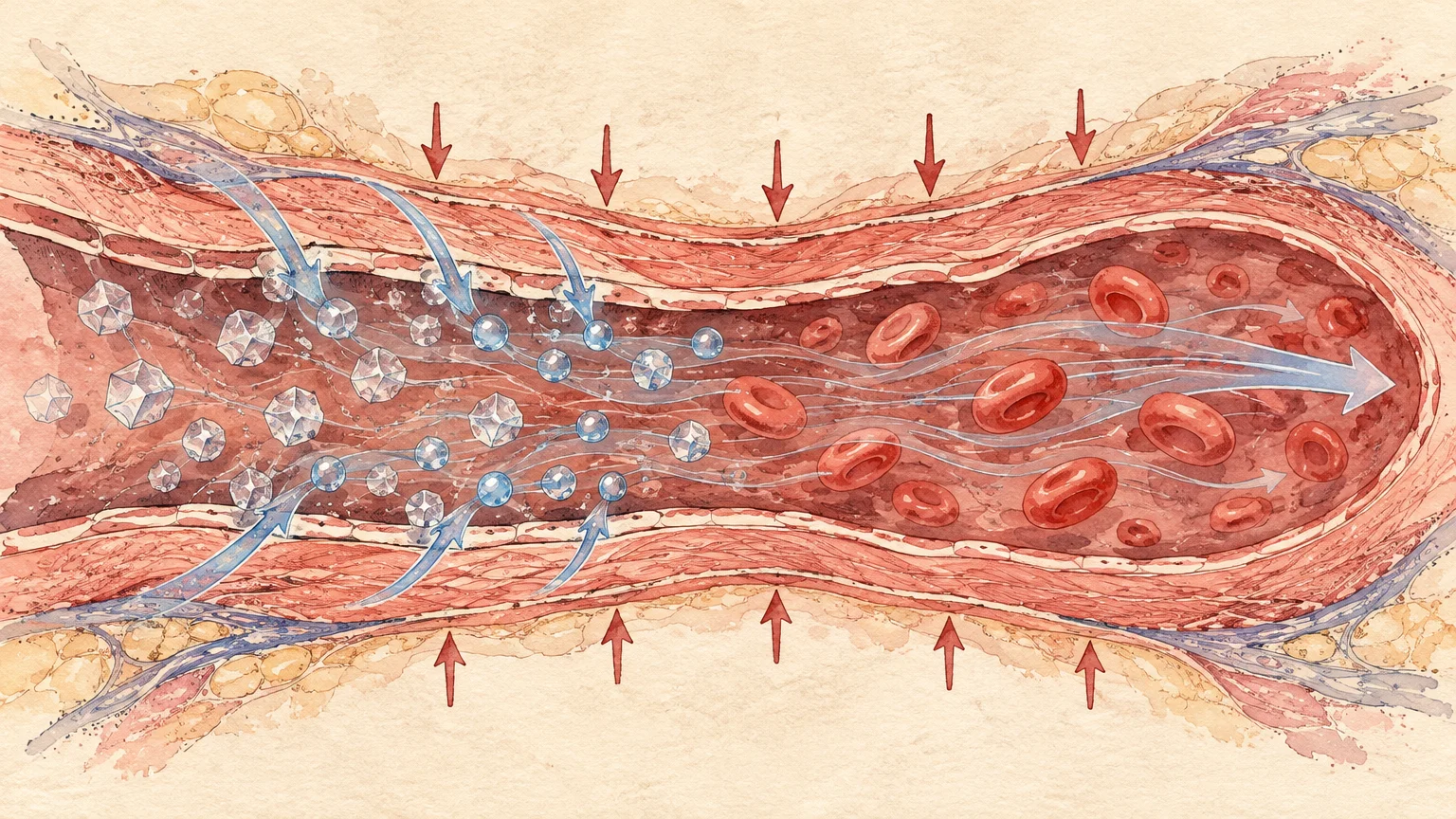
When you eat 606.2 milligrams of sodium at breakfast, your bloodstream draws in extra water to maintain fluid balance. That expanded fluid volume pushes harder against arterial walls, forcing your heart to pump against greater resistance.
The 2025–2030 Dietary Guidelines for Americans retain the federal sodium cap of less than 2,300 milligrams per day for everyone aged 14 and older. Younger children need even tighter limits, ranging from under 1,200 milligrams for toddlers to under 1,800 milligrams for preteens.
Clinical cardiology guidance sets a stricter standard for blood pressure protection. The American Heart Association recommends staying below 2,300 milligrams daily and aiming for an optimal target of no more than 1,500 milligrams for most adults.
Three morning slices of pork bacon already consume 40 percent of that optimal 1,500-milligram ceiling. Over time, persistent sodium loading stiffens blood vessels and impairs the delicate endothelial lining that helps arteries relax.
Fortunately, your vascular system responds quickly when sodium drops. Cutting total intake by 1,000 milligrams per day can measurably improve your blood pressure readings.
Saturated Fat, Lipids, and Heart Disease Risk
Bacon fat consists of a heavy share of saturated fatty acids that signal your liver to produce more low-density lipoprotein, or LDL, cholesterol. Excess LDL particles infiltrate artery walls and initiate the slow buildup of atherosclerotic plaque.
Federal dietary guidance caps saturated fat at less than 10 percent of total daily calories. For stronger cardiovascular protection, the American Heart Association advises keeping saturated fat under 6 percent of daily calories, or roughly 13 grams on a 2,000-calorie diet.
Eating three slices of pan-fried pork bacon uses up one-third of that 13-gram daily heart-health budget by 8 a.m. Pairing bacon with buttered toast, cheese, or sausage easily doubles your saturated fat load before lunch.
Large-scale population data confirms what lipid biology predicts about processed meat health risks. A 2023 meta-analysis of 43 observational studies covering 4.46 million people found that every 50-gram daily increment of processed red meat was linked to a 26 percent higher risk of cardiovascular disease.
Even if your cholesterol looks normal today, daily saturated fat and sodium work together to raise lifetime risk. Protecting your arteries means looking at total weekly patterns rather than relying on a single reassuring lab test.
Curing Compounds, High Heat, and Cancer Pathways
Beyond fat and salt, curing methods and sizzling skillets introduce distinct chemical hazards into your digestive tract.
In October 2015, the World Health Organization International Agency for Research on Cancer classified processed meat, including bacon, as Group 1 carcinogenic to humans based on sufficient evidence for colorectal cancer.
Unprocessed red meat, including fresh pork, sits in Group 2A as probably carcinogenic to humans. Researchers concluded that every 50-gram portion of processed meat eaten daily raises colorectal cancer risk by 18 percent.
Curing relies on nitrates and nitrites to prevent bacterial growth and lock in pink color and savory flavor. Inside your stomach and intestines, those nitrites react with protein breakdown products to form N-nitroso compounds that can damage cellular DNA.
Your stovetop temperature adds a second layer of exposure when bacon crisps. Cooking meat at 200 degrees Celsius, about 392 degrees Fahrenheit, or pressing it directly against a hot pan generates heterocyclic aromatic amines and polycyclic aromatic hydrocarbons.
Both groups of heat-created compounds are known or suspected carcinogens that injure colon lining cells over repeated exposures. Furthermore, in November 2025, global health authorities convened a Guideline Development Group on ultra-processed foods, noting clear links between processed meats, higher mortality, and overlapping cardiometabolic conditions.
Insulin Resistance and Brain Aging
Eating bacon every day also alters how your cells respond to insulin and maintain cognitive sharpness over decades. Chronic low-grade inflammation triggered by saturated fat, heme iron, and advanced glycation end products interferes with insulin signaling in muscle and liver tissue.
In August 2024, researchers at the University of Cambridge published a global analysis of 1.97 million adults across 20 countries. Habitually eating 50 grams of processed meat per day was associated with a 15 percent higher risk of developing type 2 diabetes over the next decade.
By comparison, unprocessed red meat carried a 10 percent higher diabetes risk per 100 grams daily, showing that processing intensifies metabolic harm. Daily bacon eaters with prediabetes or family history face an especially steep uphill climb when trying to steady fasting glucose.
Long-term neurological data points to similar vulnerability in the aging brain.
A February 2025 study following more than 133,000 U.S. adults over four decades found that eating a quarter-serving or more of processed red meat daily—roughly two slices of bacon—was linked to a 13 percent higher dementia risk.
That same modest daily intake was tied to a 14 percent higher risk of subjective cognitive decline compared with eating less than a tenth of a serving daily. Each additional daily serving corresponded to 1.6 years of accelerated cognitive aging, underscoring why daily frequency matters so deeply.
Condition-Smart Food Strategy and Bacon Comparisons
Replacing a daily habit works best when you understand what different supermarket options actually deliver. Many shoppers switch bacon styles hoping for a health halo, yet nutrition labels often tell a more nuanced story.
How Pork, Turkey, and Canadian Bacon Compare
Turkey bacon is frequently marketed as a heart-smart swap for traditional pork belly. Comparing single microwaved slices using USDA data reveals where turkey bacon helps and where it falls short.
One 9.1-gram microwaved slice of turkey bacon provides 30 calories, 2.1 grams of total fat, 0.6 grams of saturated fat, and 2.4 grams of protein. A single microwaved slice of regular pork bacon contains 43 calories, 3.1 grams of total fat, 1.1 grams of saturated fat, and 3.6 grams of protein.
Turkey bacon cuts calories and saturated fat modestly, yet sodium remains virtually identical between the two options. That single turkey slice carries 164 milligrams of sodium compared with 162 milligrams in the pork slice.
Canadian bacon offers a leaner protein profile because processors make it from pork loin rather than fatty pork belly. One cooked 23-gram slice supplies 34 calories, just 0.64 grams of total fat, 0.24 grams of saturated fat, and 6.51 grams of protein.
Even so, Canadian bacon still delivers 228 milligrams of sodium per slice and remains a cured processed meat. Treating turkey or Canadian bacon as an occasional transition food works far better than eating either one every morning.
The Truth About Uncured Bacon Labels
Walk down the refrigerated aisle and you will see packages labeled uncured alongside claims of no nitrate or nitrite added. Many consumers assume those packages avoid curing chemistry altogether, which creates false reassurance.
Under USDA Food Safety and Inspection Service rules, bacon produced without synthetic sodium nitrate or nitrite must carry uncured labeling. However, manufacturers routinely cure those strips using natural nitrate and nitrite sources such as concentrated celery powder.
Federal rules require qualifying text explaining the naturally occurring curing ingredients, and the exact same statutory nitrite concentration limits apply to natural agents as to synthetic ones.
Inside your digestive tract, nitrites from celery powder still form N-nitroso compounds when paired with meat proteins and high heat.
Recognizing consumer confusion, federal regulators placed a proposed rule on their June 2024 agenda to revise legal definitions for cured and uncured processed meats.
Meanwhile, check package storage instructions carefully, because unpreserved uncured bacon must display a warning to stay refrigerated below 40 degrees Fahrenheit at all times.
Meeting Protein Needs Without Processed Meat
Strong morning protein helps stabilize blood sugar, preserve lean muscle mass, and curb midmorning snack cravings. The 2025–2030 Dietary Guidelines raised general adult protein guidance to 1.2 to 1.6 grams per kilogram of body weight per day, or roughly 0.54 to 0.73 grams per pound.
At the same time, both the American Heart Association and the Harvard T.H. Chan School of Public Health cautioned in January 2026 that the guidelines’ inverted food pyramid visually spotlights red meat and full-fat dairy.
Relying heavily on those featured foods can quietly push you past the 10 percent saturated fat and 2,300-milligram sodium caps.
Major cancer prevention authorities echo that caution with clear boundaries.
The American Cancer Society advises avoiding processed meat and prioritizing poultry, fish, or plant proteins, while the American Institute for Cancer Research recommends eating little, if any, processed meat and capping fresh red meat at 12 to 18 cooked ounces per week.
Meeting your higher protein target without bacon is straightforward when you anchor breakfast around whole protein sources.
Two eggs, three-quarters of a cup of plain Greek yogurt, or a firm tofu scramble easily surpass the 12.2 grams of protein found in three slices of bacon without the sodium penalty.
Healthy Breakfast Choices and Daily Meal Routines
Lasting dietary change hinges on keeping the smoky, salty, crispy textures you love while removing the curing chemicals and excess sodium. Start by identifying what you miss most about bacon: the crunch, the umami depth, or the savory contrast alongside sweet or mild breakfast foods.
For smoky crunch alongside eggs, roast thinly sliced cremini or shiitake mushrooms at moderate heat with olive oil, smoked paprika, garlic powder, and a splash of low-sodium tamari. You capture rich savory crispness with potassium, fiber, and heart-healthy monounsaturated fat instead of saturated fat.
If you enjoy creamy, protein-packed mornings, layer strained Greek yogurt or cottage cheese with toasted walnuts, pumpkin seeds, and berries. In that 40-year Harvard neurological study, swapping just one daily serving of processed red meat for nuts or legumes lowered dementia risk by 19 percent.
Savory toast lovers can mash ripe avocado onto sprouted whole-grain bread and top it with poached eggs, black pepper, and hemp hearts. For plant-forward mornings, pan-sear marinated tempeh strips glazed with maple, apple cider vinegar, and smoked sea salt at gentle heat to avoid charring.
If you want structured meal plans tailored to hypertension, diabetes, or high cholesterol, consider consulting a registered dietitian through the Academy of Nutrition and Dietetics. Professional guidance helps you align cultural favorites, budget constraints, and medical targets without feeling deprived.

Supporting Habits Beyond Your Breakfast Plate
Food choices never operate in a vacuum, because movement, sleep, stress, and hydration shape how your body handles every meal. Pairing smarter breakfasts with supportive daily habits amplifies your cardiovascular and metabolic gains.
Physical Activity and Blood Pressure Regulation
Regular movement acts like natural vascular medicine by teaching blood vessels to dilate more easily and lowering resting blood pressure. Brisk walking, cycling, or swimming for 30 minutes most days improves endothelial function and counters mild dietary sodium fluctuations.
Adding two weekly sessions of resistance training builds skeletal muscle, which acts as your body’s primary glucose sponge. Stronger muscles clear blood sugar faster after meals, reducing the insulin spikes linked to metabolic disease.
Restorative Sleep and Morning Appetite
Getting fewer than seven hours of quality sleep disrupts hunger hormones, raising ghrelin and lowering leptin before your alarm rings. Sleep-deprived brains instinctively crave fast, salty, fat-dense comfort foods like bacon and pastries rather than balanced meals.
Setting a consistent bedtime and keeping your bedroom cool and dark protects hormone balance overnight. Well-rested mornings make preparing eggs, oats, or a quick yogurt bowl feel effortless rather than overwhelming.
Stress Management and Weekend Routines
Chronic work or caregiving stress elevates cortisol, which nudges blood pressure higher and reinforces convenience eating habits. When mornings feel rushed, reaching for pre-cooked bacon strips becomes an automatic coping shortcut.
Prepping overnight oats, hard-boiled eggs, or seasoned roasted vegetables on Sunday removes weekday decision fatigue. On weekends, invite family or friends to build customized breakfast bowls together so social rituals stay warm and celebratory without centering on processed meats.
Potassium Balance and Hydration
Potassium works directly opposite sodium inside your kidneys and blood vessels, helping excrete excess salt and relax arterial walls. Filling half your breakfast plate with potassium-rich foods like spinach, tomatoes, avocado, or bananas buffers your cardiovascular system.
Always check with your clinician before raising potassium intake if you live with chronic kidney disease or take certain blood pressure medications. For most adults with healthy kidneys, whole produce paired with plain water supports steady electrolyte balance all day.
Monitoring Biomarkers, Medications, and Medical Red Flags
Shifting away from daily bacon gives you measurable feedback inside your lab work and home vital signs. Partnering with your primary care clinician turns those numbers into a clear roadmap.
Key Biomarkers to Review With Your Doctor
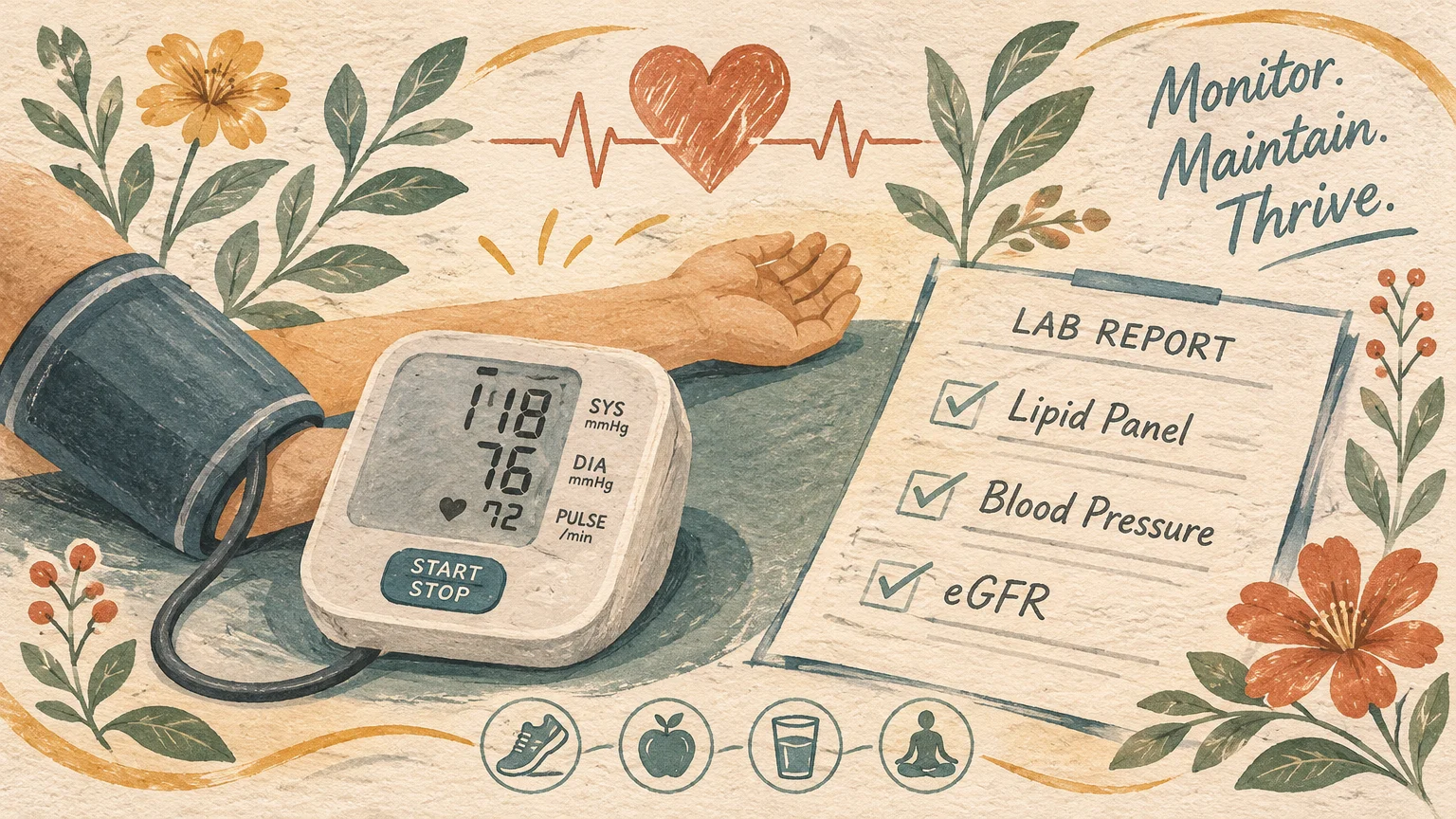
Tracking home blood pressure several mornings a week gives you an honest picture of how sodium changes affect your arteries. Share a two-week log of resting morning readings with your healthcare provider rather than relying solely on rushed clinic checks.
Ask your clinician when to repeat a fasting lipid panel to monitor LDL cholesterol, non-HDL cholesterol, and triglycerides. After replacing daily bacon with unsaturated fats and fiber, many patients see meaningful drops in atherogenic lipids.
Regularly checking fasting glucose and hemoglobin A1c tracks how well your cells handle carbohydrates over a three-month window. In addition, stay current with age-appropriate colorectal cancer screening, such as colonoscopy or stool-based testing, especially if you ate processed meats daily for years.
Medication and Chronic Condition Considerations
High daily sodium directly blunts the effectiveness of many blood pressure medications, including ACE inhibitors, angiotensin receptor blockers, and diuretics. Cutting back on cured meats often improves drug response, which means your clinician may eventually need to reassess your dosage.
Never adjust or stop prescription blood pressure, cholesterol, or diabetes medications on your own as your diet improves. Sudden medication changes can trigger rebound blood pressure spikes or unstable blood sugar.
If you manage heart failure, kidney disease, or gout, ask your care team for individualized daily limits on sodium, fluids, potassium, and purines. Even small amounts of processed pork can trigger fluid retention or joint flares when organ reserve is limited.
Red Flags That Warrant Prompt Evaluation
While dietary shifts unfold gradually, certain physical symptoms require timely medical attention rather than waiting for your next routine checkup.
Seek prompt care if you record repeated blood pressure readings at or above 180 over 120 millimeters of mercury, or notice chest pressure, shortness of breath, or sudden vision changes.
Schedule a prompt evaluation if you experience persistent ankle or leg swelling, unexplained fatigue, or sudden weight gain from fluid retention. Likewise, report any rectal bleeding, dark stools, unexplained weight loss, or lasting changes in bowel habits right away for proper colorectal screening.
Frequently Asked Questions About Eating Bacon Every Day
Transitioning away from a daily favorite brings up real-world questions about restaurants, grocery budgets, supplements, and family recipes. Here is how to handle four common hurdles calmly and practically.
How can you manage bacon cravings when dining out?
Restaurant brunches often build bacon directly into omelets, salads, and sandwiches, pushing a single meal past an entire day of sodium limits. Scan menus for smoky or savory alternatives such as grilled salmon, roasted mushrooms, sautéed spinach, or salsa-topped huevos rancheros.
When you genuinely want a taste of real bacon on a special occasion, order a single strip to share or request bacon crumbled lightly on top as a garnish rather than a main protein.
Pairing an occasional treat with high-fiber vegetables and fresh fruit slows digestion and keeps the meal balanced.
What are budget-friendly alternatives that deliver smoky flavor?
Specialty plant-based bacons can cost significantly more per ounce than whole ingredients, straining weekly grocery budgets. Fortunately, inexpensive pantry staples deliver deep umami satisfaction for pennies per serving.
Canned black beans or pinto beans simmered with cumin, garlic, and smoked paprika create hearty breakfast skillets at a fraction of the cost of cured meat.
Eggs, rolled oats with peanut butter, and pan-fried tofu seasoned with soy sauce and chili flakes offer affordable protein without processed meat health risks.
Can antioxidant or fiber supplements offset processed meat health risks?
Taking a vitamin C pill or fiber powder alongside morning bacon does not erase the cardiovascular, metabolic, and carcinogenic stress of daily cured meat.
While dietary fiber supports gut motility and vitamin C helps limit some nitrosamine formation in laboratory settings, supplements cannot neutralize high sodium, saturated fat, or heat-formed carcinogens.
Whole foods protect your body through thousands of interacting compounds working together alongside lower exposure to harmful additives. Focus first on reducing bacon frequency and building fiber-rich plant foods onto your plate before spending money on corrective supplements.
How can you adapt traditional cultural breakfasts without losing heritage flavors?
Many cherished regional and family breakfasts rely on cured pork for foundational seasoning rather than large standalone portions. Instead of abandoning heritage dishes, shift how you use flavor builders and cooking techniques.
Use modest amounts of spices like smoked paprika, liquid smoke, thyme, bay leaf, ginger, or roasted garlic to season collard greens, grits, beans, or congee.
You can also swap fatty cured pork belly for leaner roasted poultry, seasoned mushrooms, or small amounts of lower-sodium broth so family traditions stay vibrant and heart-smart.

Your Next Step Toward Heart-Smart Mornings
Changing what happens at breakfast does not require perfection or rigid rules that leave you hungry by midmorning. Small, deliberate shifts away from eating bacon every day immediately ease strain on your blood pressure, blood vessels, blood sugar, and long-term brain health.
Choose one practical habit to track over the next 14 days, such as replacing weekday bacon with eggs and avocado, seasoned mushrooms, or walnut-topped yogurt. Write down how your energy, digestion, and morning blood pressure readings respond as the days add up.
Bring that two-week food and symptom log to your next visit with your physician or registered dietitian. Sharing concrete goals helps your healthcare team tailor lab monitoring, medication checks, and realistic breakfast strategies built around your life.