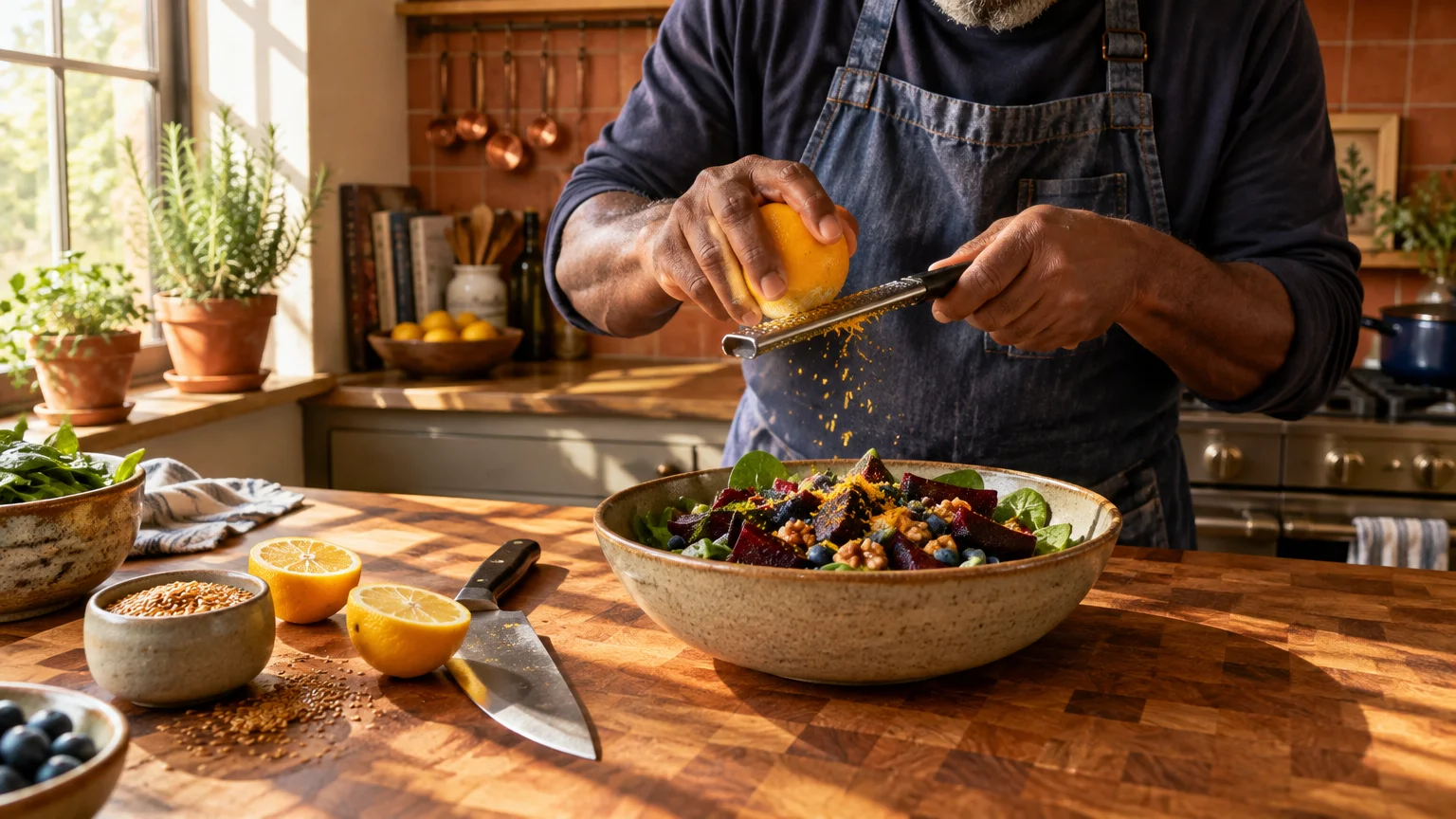
Nearly half of U.S. adults—119.9 million people—live with high blood pressure, yet only about one in four has it under control. Your daily grocery choices offer one of the strongest levers to bring those numbers down.
Current national guidelines set a universal treatment target below 130/80 mm Hg for most adults. Eating targeted whole foods relaxes stiff blood vessels, balances excess sodium, and supports healthier readings without overhauling your entire routine.
Below, you will find seven cardiologist-favored foods backed by clinical trials, practical portion goals, and essential medication safety checks. Use these strategies to build meals that protect your arteries every single day.
Why High Blood Pressure Demands a Smarter Plate
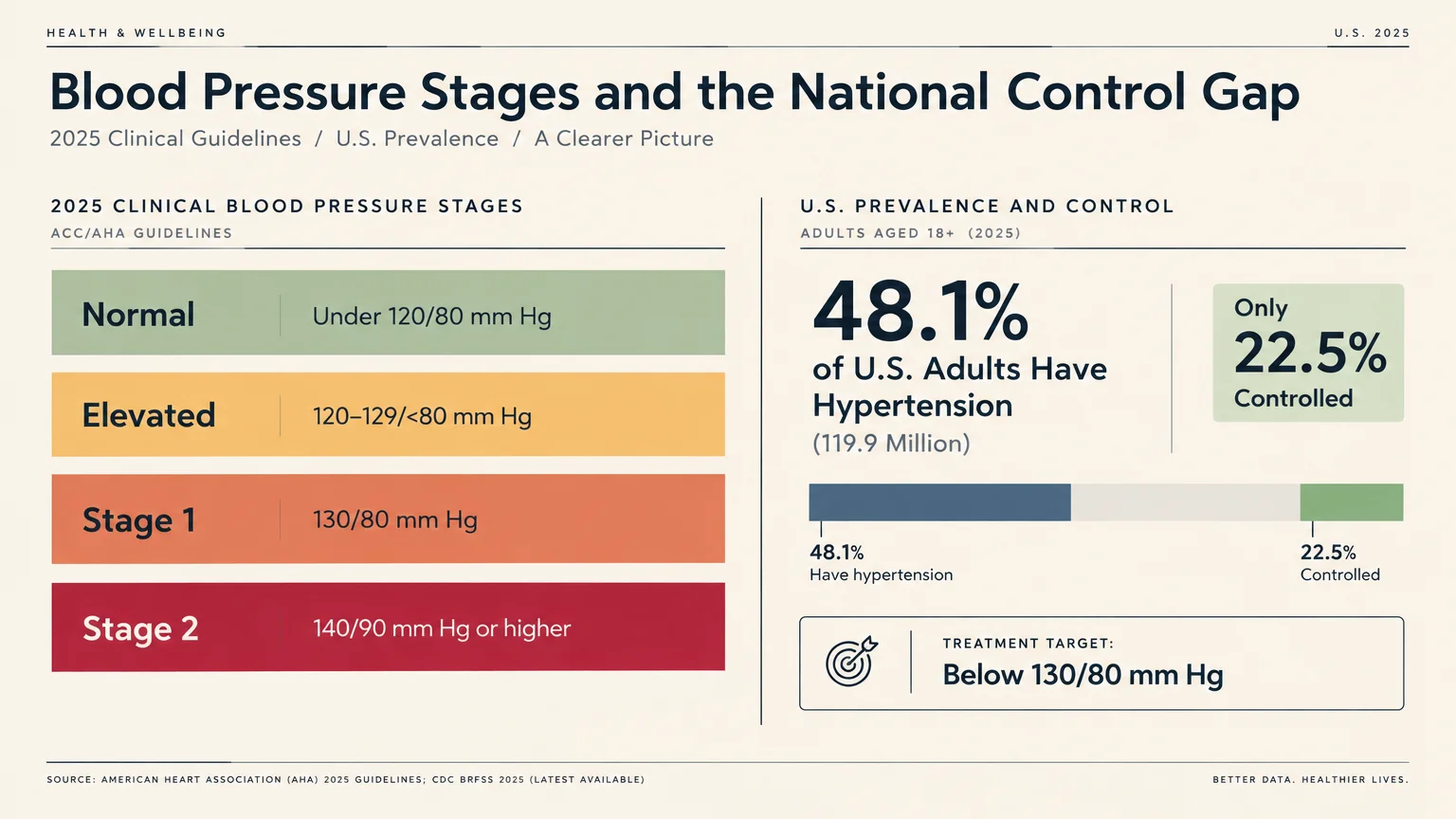
Hypertension often causes no obvious symptoms, yet its toll across the country is staggering. According to the Centers for Disease Control and Prevention, 48.1% of U.S. adults have high blood pressure, and only 22.5% keep it controlled.
Among adults with uncontrolled readings, 45%—roughly 37 million people—sit at 140/90 mm Hg or higher. Data reported in JAMA from 2021 through 2023 show that 79% of hypertensive adults exceed the 130/80 mm Hg goal, and 61% take no blood pressure medication.
National Vital Statistics System records attribute 680,179 U.S. deaths in 2024 to high blood pressure as a primary or contributing cause. Estimated annual medical and productivity costs reached 219 billion dollars in 2019.
The risk also falls unevenly across communities. Prevalence is higher in men at 50% than in women at 42.1%, and reaches 59.6% among non-Hispanic Black adults compared with roughly 43% to 45% in Hispanic, white, and Asian adults.
Under the 2025 American Heart Association and American College of Cardiology guideline, normal blood pressure stays below 120/80 mm Hg, while elevated readings fall between 120 and 129 systolic. Stage 1 starts at 130/80 mm Hg, and Stage 2 begins at 140/90 mm Hg.
That same 2025 guideline stresses that untreated hypertension strongly raises your risk of cognitive decline and dementia later in life. Choosing blood pressure-lowering foods protects your brain and kidneys right alongside your heart.
How Food Controls Your Blood Pressure Physiology
Every bite you eat sends chemical signals straight to your blood vessel walls and kidneys. Two minerals—sodium and potassium—sit at the center of that daily tug-of-war.
Too much sodium pulls extra water into your bloodstream, raising pressure inside delicate arterial walls. Over 70% of the sodium Americans consume comes from packaged, processed, and restaurant foods rather than your kitchen salt shaker.
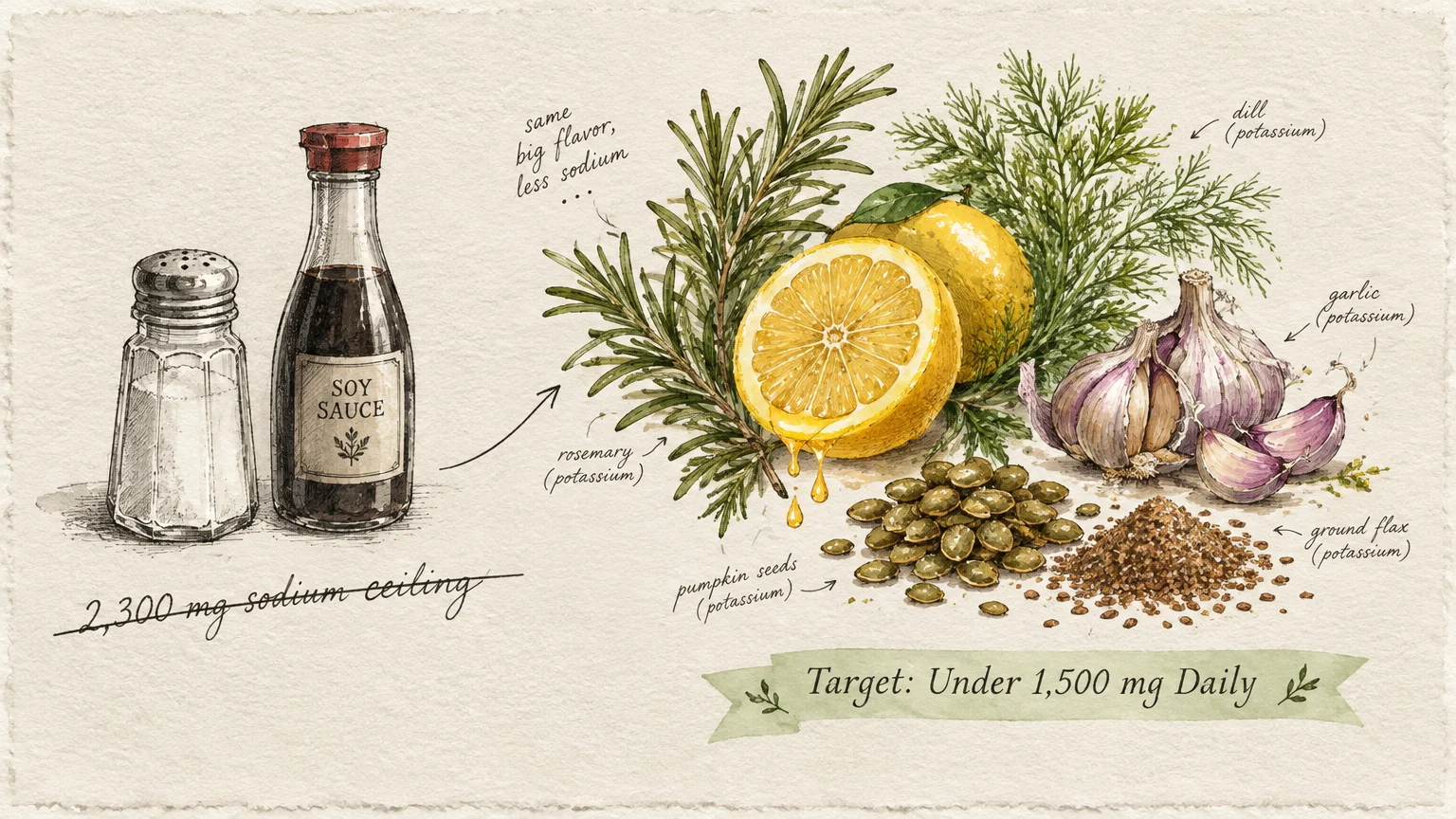
Both the 2025–2030 Dietary Guidelines for Americans and the 2025 cardiology guidelines cap general adult sodium intake below 2,300 mg daily, or about one teaspoon of table salt. For adults with elevated blood pressure or hypertension, cardiologists recommend moving toward an ideal target below 1,500 mg daily.
Potassium works in the opposite direction by helping your kidneys flush out excess sodium and easing tension in smooth muscle cells lining your arteries. Yet the 2025 Dietary Guidelines Advisory Committee flagged potassium, fiber, calcium, and vitamin D as underconsumed nutrients of public health concern.
National Academies benchmarks set adequate potassium intake at 2,600 mg daily for women and 3,400 mg for men, while 2025 hypertension guidelines advise 3,500 to 5,000 mg daily from food. Most U.S. adults fall short, averaging roughly 2,300 mg for women and 3,000 mg for men.
Beyond minerals, specific foods supply dietary nitrates and plant flavonoids that boost nitric oxide, a gas that signals arteries to widen. Soluble fiber and marine omega-3 fats further calm vascular inflammation and improve arterial flexibility.
The National Heart, Lung, and Blood Institute highlights how combining these nutrients in the Dietary Approaches to Stop Hypertension eating plan lowers mean blood pressure by 5.5/3.0 mm Hg compared with a typical American diet.
Cutting sodium from 4,500 mg or more down to 1,500 to 2,300 mg daily adds another meaningful drop—roughly 3/2 mm Hg in adults with normal readings and 7/3 mm Hg in adults with hypertension.
The 7 Blood Pressure-Friendly Foods Cardiologists Swear By
1. Potassium-Rich Leafy Greens
Dark leafy greens pack high doses of potassium, magnesium, and natural nitrates into very few calories. Adding them to meals helps counteract hidden sodium without crowding your plate.
Nutrient data from the U.S. Department of Agriculture show just how concentrated cooked greens are. Half a cup of cooked beet greens delivers 650 mg of potassium, while a full cup provides 1,309 mg.
One cup of cooked Swiss chard supplies roughly 960 mg of potassium, and half a cup of cooked frozen spinach contributes 309 mg. Even one or two generous handfuls daily can noticeably close your potassium gap.
Cooking method matters when you prepare vegetables at home. Boiling peeled produce in water leaches potassium out into the pot, whereas steaming, roasting, or quick sauteing keeps minerals locked inside your food.
Toss fresh spinach into morning scrambled eggs, wilt Swiss chard into low-sodium lentil soup, or serve roasted beet greens alongside grilled fish. Buying pre-washed bags or frozen chopped greens cuts prep time down to minutes on busy weeknights.
2. Beets and Beetroot Juice
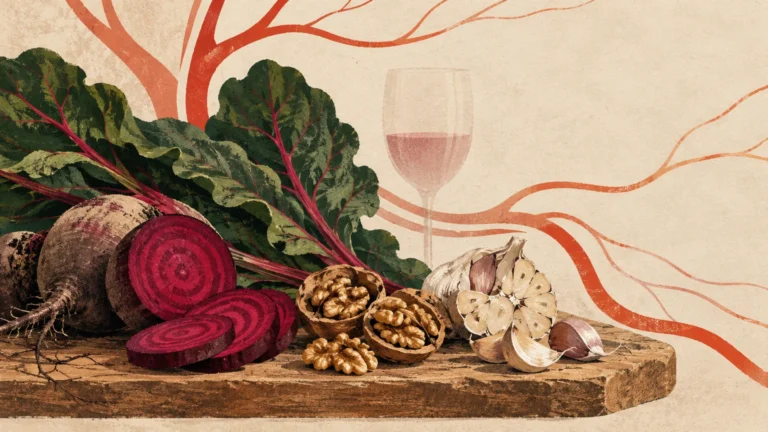
Beets stand out among root vegetables because they supply abundant inorganic dietary nitrates. Bacteria on your tongue and enzymes in your gut convert those nitrates into nitric oxide, which relaxes blood vessel walls.
A 2024 meta-analysis of 11 randomized trials involving 349 adults with hypertension examined daily beetroot juice delivering 200 to 800 mg of nitrate in 70 to 250 mL servings. Clinical systolic blood pressure dropped by a mean of 5.31 mm Hg compared with placebo.
Researchers rated overall certainty of evidence as low and saw no significant drop in diastolic or 24-hour ambulatory readings across all pooled studies. Still, an earlier four-week phase 2 trial published in Hypertension showed striking vascular benefits.
In that 68-person trial, drinking 250 mL of beetroot juice daily—providing roughly 400 mg of nitrate—lowered 24-hour systolic blood pressure by 7.7 mm Hg and improved artery dilation by 20%.
If you enjoy whole beets, roast sliced red or golden beets with olive oil and thyme, or grate raw beets over salads. When buying bottled beetroot juice, check the label to confirm 100% juice with zero added sodium or sugar.
Keep in mind that beetroot pigments can harmlessly turn your urine or stool pink. Also skip strong antiseptic mouthwash right before drinking beet juice, because harsh rinses destroy the helpful oral bacteria needed to convert nitrates.
3. Fatty Fish
Cold-water fatty fish—including salmon, mackerel, herring, sardines, and trout—deliver EPA and DHA omega-3 fatty acids that support blood vessel elasticity and calm low-grade inflammation. The American Heart Association recommends eating two 3-ounce cooked servings each week.
A 4- to 5-ounce fillet of Atlantic salmon provides roughly 3 grams of omega-3 fatty acids. That single meal puts you right in the sweet spot identified by recent clinical research.
A 2022 meta-analysis in the Journal of the American Heart Association pooled 71 clinical trials covering 4,973 participants. Researchers pinpointed 2 to 3 grams daily of combined EPA and DHA as the optimal dose for lowering blood pressure, with stronger drops in hypertensive adults.
Federal food regulators also permit a qualified health claim noting that EPA and DHA may lower hypertension risk, while emphasizing that overall evidence remains mixed. Even with that nuance, swapping fatty fish for processed meats clearly improves heart health.
Skip breaded, deep-fried fish sandwiches, which load your meal with refined flour and excess sodium. Instead, bake salmon with lemon and dill, grill trout fillets, or flake no-salt-added canned sardines over whole-grain toast with sliced tomato.
4. Berries
Blueberries, strawberries, raspberries, and blackberries owe their deep colors to anthocyanins, a group of antioxidant flavonoids. In laboratory and human studies, anthocyanins help protect endothelial cells that line your blood vessels and sustain nitric oxide production.
Small short-term trials have produced encouraging drops in blood pressure. In one eight-week study of 48 postmenopausal women, eating 22 grams of freeze-dried blueberry powder daily reduced average readings from 138/80 down to 131/75 mm Hg.
Another four-week study of 40 healthy volunteers found that 200 grams of fresh blueberries daily lowered systolic pressure by roughly 5 mm Hg. However, cardiologists look closely at larger pooled evidence before making sweeping promises.
A May 2026 systematic review and meta-analysis of nine trials including 547 adults with elevated or high blood pressure found that berry supplements did not significantly lower resting systolic or diastolic pressure overall.
Researchers noted only a modest 1.11 mm Hg dip in 24-hour ambulatory diastolic pressure, with low evidence certainty.
Even when berries do not act like a standalone medication, they still earn a permanent spot on your plate. A daily cup counts toward the four to five daily fruit servings advised by DASH while replacing salty snacks and sugary pastries.
5. Oats and Whole Grains
Cardiologists value oats and intact whole grains because they crowd out refined white breads and salty snack crackers.
On a 2,000-calorie DASH plan, you should aim for six to eight daily grain servings, such as half a cup of cooked oatmeal or one slice of whole-grain bread.
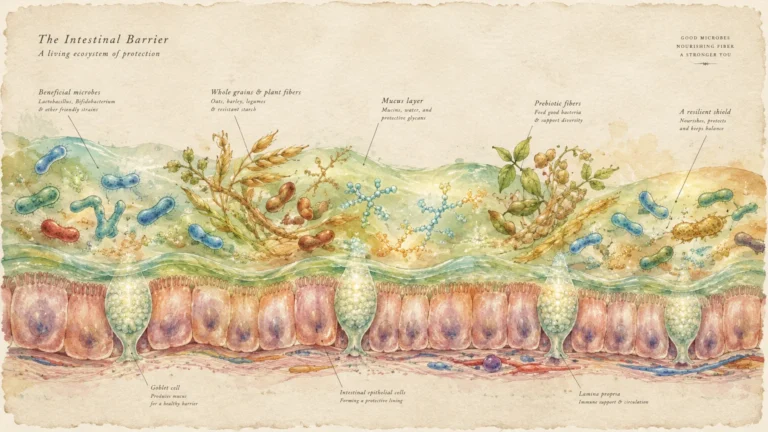
Oats supply beta-glucan, a viscous soluble fiber best known for lowering LDL cholesterol. Eating roughly 1.5 cups of cooked oatmeal provides about 3 grams of beta-glucan.
When researchers test oat beta-glucan for blood pressure by itself, results are nuanced. A 12-week randomized trial of 97 adults found no significant overall blood pressure reduction, though participants with a body mass index above 31.5 saw impressive drops of 8.3/3.9 mm Hg.
Similarly, a four-week crossover trial of 21 adults taking 4 grams of oat beta-glucan daily showed no blood pressure difference compared with a wheat control. Scientists suspect whole grains work best alongside higher potassium and lower sodium rather than in isolation.
Choose plain rolled oats, steel-cut oats, quinoa, farro, or brown rice instead of flavored instant packets loaded with added sodium and sugar. Top warm oatmeal with cinnamon, berries, and toasted walnuts for a satisfying morning bowl.
6. Beans, Lentils, and Pulses
Black beans, white beans, chickpeas, and lentils anchor a hypertension-friendly kitchen because they pack fiber, magnesium, potassium, and plant protein with virtually zero saturated fat. Replacing red or processed meats with pulses several times weekly eases strain on your arteries.
Federal nutrition records highlight how generous their mineral content is. Half a cup of cooked black beans supplies 322 mg of potassium, while one full cup of canned white beans delivers 1,189 mg.
The DASH eating plan encourages four to five weekly servings of nuts, seeds, dry beans, and peas, counting half a cup of cooked beans as one serving. Federal healthy eating patterns similarly recommend at least 1.5 cups of cooked pulses per week on a 2,000-calorie diet.
Canned beans make fast weeknight dinners easy, provided you watch the salt. Always look for no-salt-added cans, or drain and thoroughly rinse standard canned beans under cold running water to wash away excess sodium.
Puree white beans with garlic and lemon for a creamy sandwich spread, toss black beans into taco bowls with avocado, or simmer brown lentils with diced tomatoes and cumin. Your budget and blood pressure monitor will both thank you.
7. Flaxseed and Unsalted Nuts
Seeds and unsalted tree nuts deliver healthy unsaturated fats, plant protein, potassium, magnesium, and arginine, an amino acid your body uses to build nitric oxide. Within the DASH plan, one-third cup of unsalted nuts counts as a single serving.
Flaxseed deserves special attention among seeds for blood pressure management. A 2024 meta-analysis published in Clinical Nutrition Research reviewed five randomized trials in patients with hypertension.
Compared with control groups, flaxseed supplementation significantly lowered systolic blood pressure by 8.64 mm Hg and diastolic pressure by 4.87 mm Hg. Ground flaxseed absorbs much better than whole seeds, which often pass through your digestive tract intact.
Stir one to two tablespoons of ground flaxseed into morning oatmeal, smoothies, or plain yogurt, and store the open bag in your refrigerator so delicate oils stay fresh. Pair that habit with unsalted pistachios, walnuts, or almonds for afternoon crunch.
Skip honey-roasted, smoked, or heavily salted nut mixes sold near checkout aisles. Raw or dry-roasted unsalted nuts let you enjoy rich flavor without wiping out your daily sodium budget.
Rounding Out Your Daily Plate and Smart Swaps
Those seven core foods work even harder when you surround them with complementary produce and low-fat dairy.
A 2,000-calorie DASH plan calls for four to five servings of vegetables, four to five fruits, and two to three dairy servings daily, while capping lean meat, poultry, or fish at 6 ounces.
Do not overlook humble tubers and whole fruit when chasing your potassium target. One medium baked potato eaten with its skin provides 919 to 1,081 mg of potassium, a medium sweet potato tops 500 mg, and a medium banana adds 422 to 450 mg.
Plain dairy contributes calcium alongside potassium—6 ounces of plain low-fat yogurt supplies 398 mg of potassium, and 1 cup of 1% milk offers 366 mg.
Federal Dietary Guidelines for Americans for 2025–2030 emphasize minimally processed food, cap saturated fat at 10% of calories or about 22 grams daily, and allow unsweetened full-fat dairy.
At the same time, cardiology guidelines from the American Heart Association and National Heart, Lung, and Blood Institute still recommend fat-free or low-fat dairy and advise keeping saturated fat below 6% of calories if you face higher cardiovascular risk.
If you buy yogurt, check labels to stay within the federal healthy snack benchmark of 2.5 grams or less of added sugar per two-thirds cup.
Putting a day together is simpler than it looks. Start breakfast with cooked oats topped with blueberries, ground flaxseed, and a side of plain low-fat yogurt.
For lunch, build a grain bowl with farro, rinsed black beans, steamed spinach, roasted beets, and a squeeze of fresh lemon juice. Serve baked salmon with a skin-on baked sweet potato and sauteed Swiss chard at dinner, and snack on unsalted walnuts if hunger strikes.
The Lifestyle Layer That Multiplies Dietary Gains
Nutritious meals lay the foundation for healthy blood pressure, yet movement, sleep, weight, and stress habits multiply those dietary results. The 2025 cardiology guidelines highlight lifestyle habits that reinforce your eating plan.
First, aim for at least 150 minutes of moderate aerobic activity each week, such as brisk walking, cycling, or swimming, alongside at least two days of resistance training. Regular exercise trains blood vessels to widen smoothly under everyday physical demands.
Second, if you carry extra weight, losing just 5% or more of your starting body weight produces measurable blood pressure drops. Focusing on whole, fiber-rich foods from the list above naturally supports steady weight loss without crash dieting.
Third, limit or ideally abstain from alcohol, which raises blood pressure over time and disrupts restorative sleep.
If you choose to drink, keep intake at one drink or less daily for women and two drinks or less for men—defined as 12 ounces of beer, 5 ounces of wine, or 1.5 ounces of spirits.
Finally, protect seven to nine hours of quality sleep, practice daily stress-relief habits like slow breathing, and lean on family or community support. Cooking low-sodium meals alongside a partner or walking group makes healthy routines stick far longer than willpower alone.
Monitoring, Medication Interactions, and Warning Signs
Food and lifestyle habits work best as partners to smart medical care, not replacements for prescribed treatment. Most adults share a treatment goal below 130/80 mm Hg, with clinicians encouraging systolic readings below 120 mm Hg when safely achievable.
For adults with Stage 1 hypertension and a lower 10-year cardiovascular risk—below 7.5% on the race-free PREVENT risk calculator—2025 guidelines recommend trying focused lifestyle changes for three to six months. If readings stay elevated after that window, your doctor will likely discuss starting medication.
Always talk with your healthcare provider before aggressively raising potassium intake if you have chronic kidney disease. The same caution applies if you take medications that slow potassium excretion, including ACE inhibitors, ARBs, potassium-sparing diuretics, or regular NSAIDs.
Potassium-enriched salt substitutes typically contain 25% to 30% potassium chloride, so check with your clinician before shaking them onto food.
Notably, an October 2026 secondary analysis of the GoFresh trials from Beth Israel Deaconess Medical Center found that a potassium-rich DASH diet did not raise blood potassium in hypertensive adults with normal baseline labs taking common medications—yet individual blood tests remain essential.
Two additional food-drug checks deserve attention in your kitchen. Pregnant or nursing individuals, those planning pregnancy, and young children should follow federal mercury advisories when choosing fish, avoiding high-mercury species like swordfish or king mackerel.
If your treatment plan includes certain cholesterol-lowering statins or calcium channel blockers, check with your pharmacist before eating grapefruit or drinking grapefruit juice, which can alter drug levels in your bloodstream.
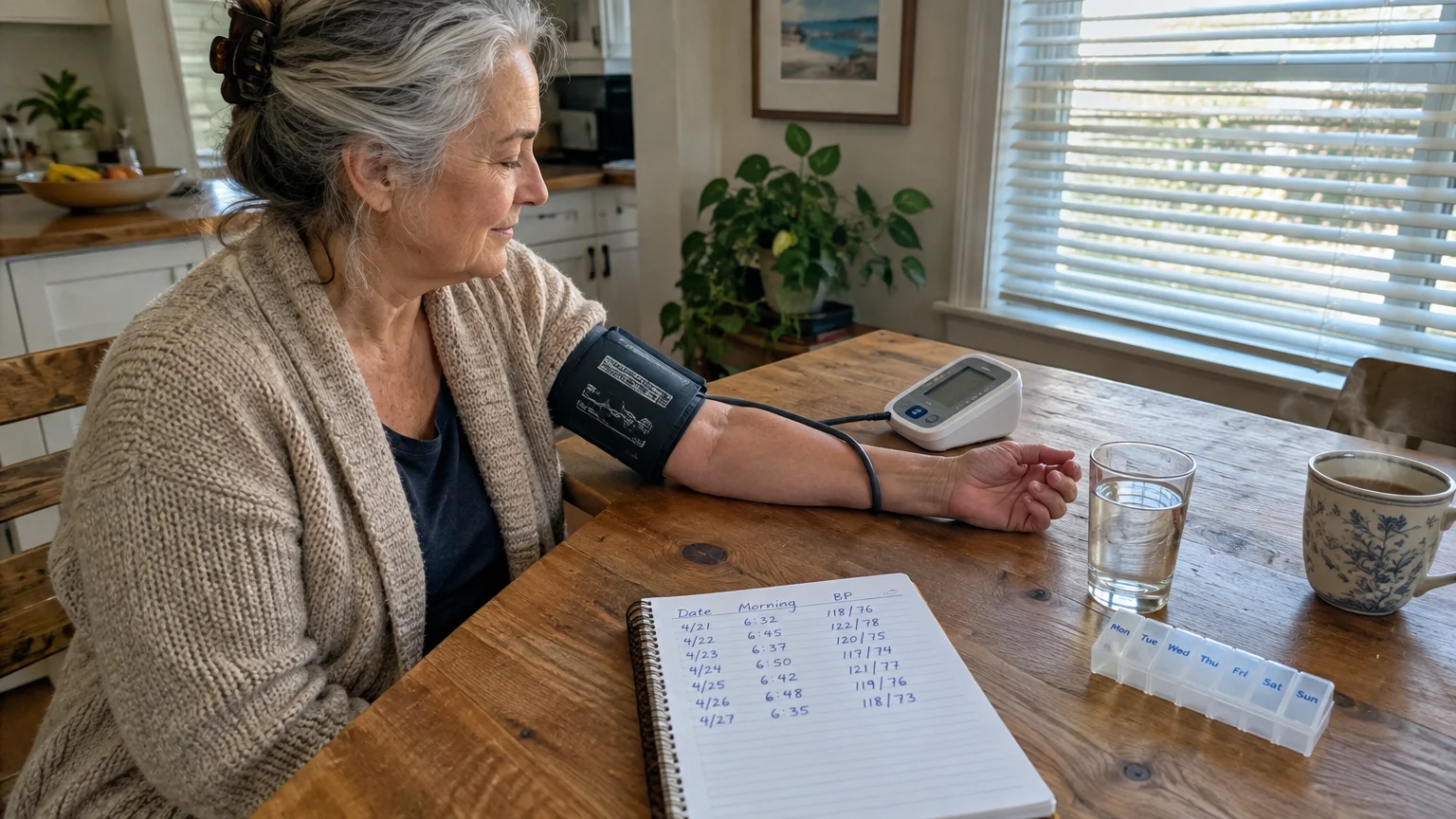
Track your home blood pressure with a validated upper-arm cuff at the same time each day, resting quietly for five minutes with feet flat on the floor.
Seek immediate emergency medical care if a sudden spike comes with chest pain, shortness of breath, severe headache, vision changes, confusion, or weakness on one side.
Frequently Asked Questions About Blood Pressure Eating
How can I protect my blood pressure when dining out?
Because more than 70% of dietary sodium hides in restaurant and packaged foods, ordering strategically protects your progress. Ask for dressings and sauces on the side, choose grilled fish or steamed greens over cured meats or creamy soups, and skip extra table salt.
What are budget-friendly swaps for expensive heart-healthy foods?
You do not need costly specialty groceries to follow a cardiologist-approved plan. Stock up on dried or rinsed canned beans, frozen berries, frozen chopped spinach, rolled oats, skin-on potatoes, and canned sardines or salmon, all of which keep costs low and shelf life long.
Should I take potassium or omega-3 supplements instead of eating these foods?
The 2025 hypertension guidelines advise reaching 3,500 to 5,000 mg of potassium preferably through whole foods rather than pills, which can spike blood potassium too quickly. Whole foods also bundle fiber, nitrates, and antioxidants together, so ask your doctor before buying potassium or fish oil capsules.
How do I adapt a hypertension diet to cultural cuisines?
Heart-healthy eating works seamlessly inside Latin, Asian, Mediterranean, African, and Southern food traditions. Keep beloved aromatics like garlic, ginger, cilantro, lime, and chili peppers while swapping out salty bouillon cubes or cured meats for fresh herbs, beans, leafy greens, and fish.
For personalized meal planning tailored to your cultural dishes and medical history, consider partnering with a registered dietitian through the Academy of Nutrition and Dietetics.
Taking Your Next Step With Your Care Team
Lowering blood pressure through food rarely happens overnight, and perfection is never required. Small daily upgrades—like rinsing canned beans, tossing spinach into dinner, or adding ground flaxseed to breakfast—build powerful momentum over weeks and months.
Pick one single food habit from this guide to track for the next 14 days alongside your home blood pressure log. Bring both logs to your next appointment so you and your doctor can fine-tune your nutrition and medication plan together.