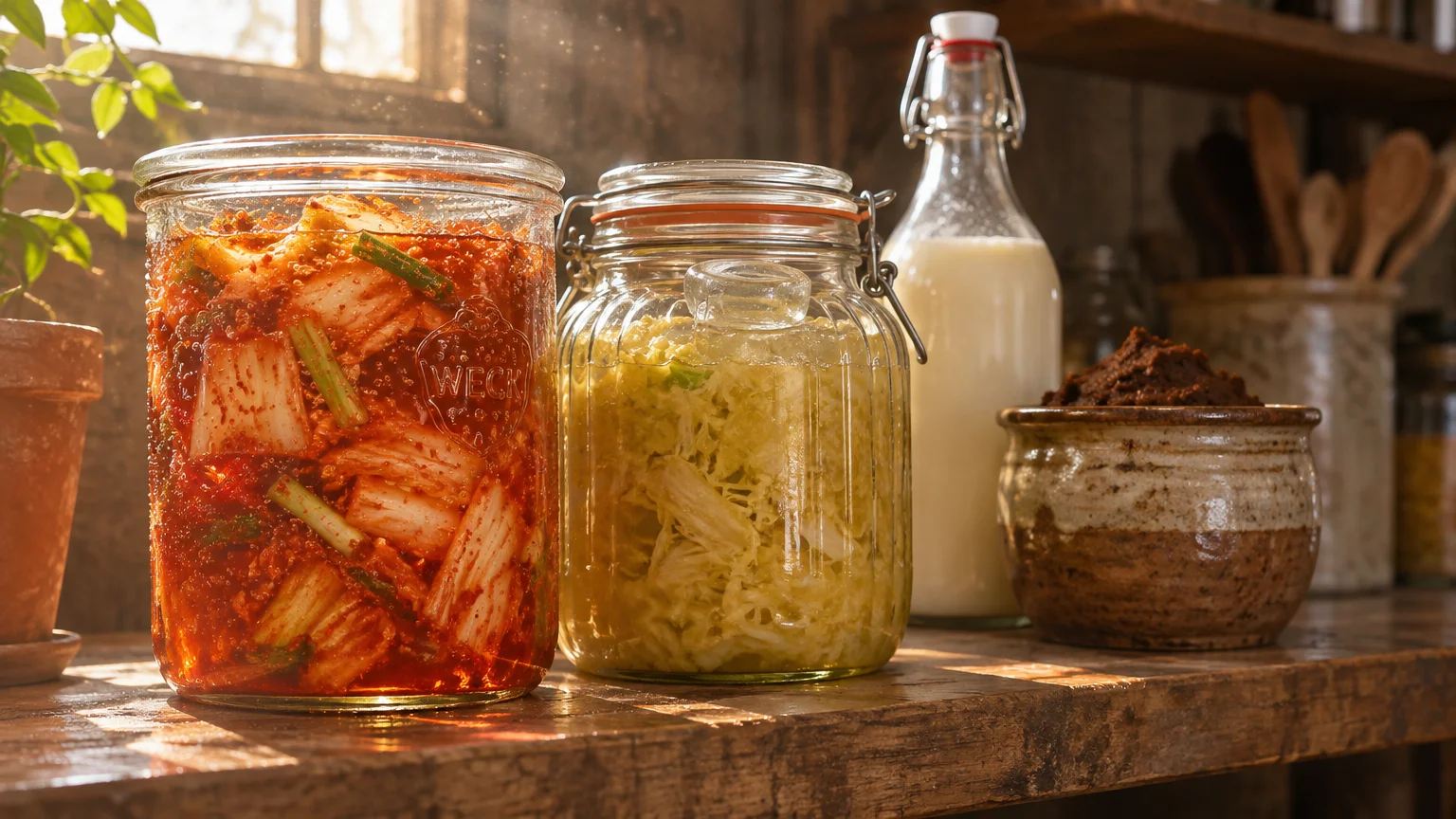
Yogurt is a helpful starting point for digestive wellness, yet limiting yourself to one dairy staple leaves valuable microbial variety off your plate. Expanding into kimchi, kefir, miso, and sauerkraut introduces diverse living cultures and bioactive compounds that support everyday gut comfort.
Millions of Americans now prioritize gut health foods when grocery shopping and planning meals. Fortunately, adding traditional fermented options does not require gourmet cooking skills or expensive specialty regimens.
You can tailor fermented foods to your digestion, budget, and medical history with a few smart label checks. This guide covers the science, daily portion targets, safe home preparation, and clinical precautions you need to start confidently.

Why Digestive Health Demand Is Shifting Beyond Yogurt
The 2025 IFIC Food and Health Survey of 3,000 U.S. adults aged 18 to 80—released in January 2026—found that 37 percent of Americans actively seek digestive health benefits from foods, beverages, or nutrients. That figure marks a 7-percentage-point jump since 2022.
An August 2026 IFIC Spotlight Survey shows that momentum continues, with 64 percent of Americans rating gut health as a high or extremely high priority. More shoppers now look past temporary remedies toward everyday probiotic foods and fermented staples.
Global market figures mirror this consumer demand. Precedence Research reports that the digestive health product market reached 60.4 billion dollars in 2025 and could climb to 124.9 billion dollars by 2034, with probiotic beverages representing 41.83 percent of the beverage segment.
Federal nutrition policy now backs this interest with explicit guidance. In January 2026, the USDA and HHS published the Dietary Guidelines for Americans, 2025–2030, referencing the gut microbiome for the first time in federal history.
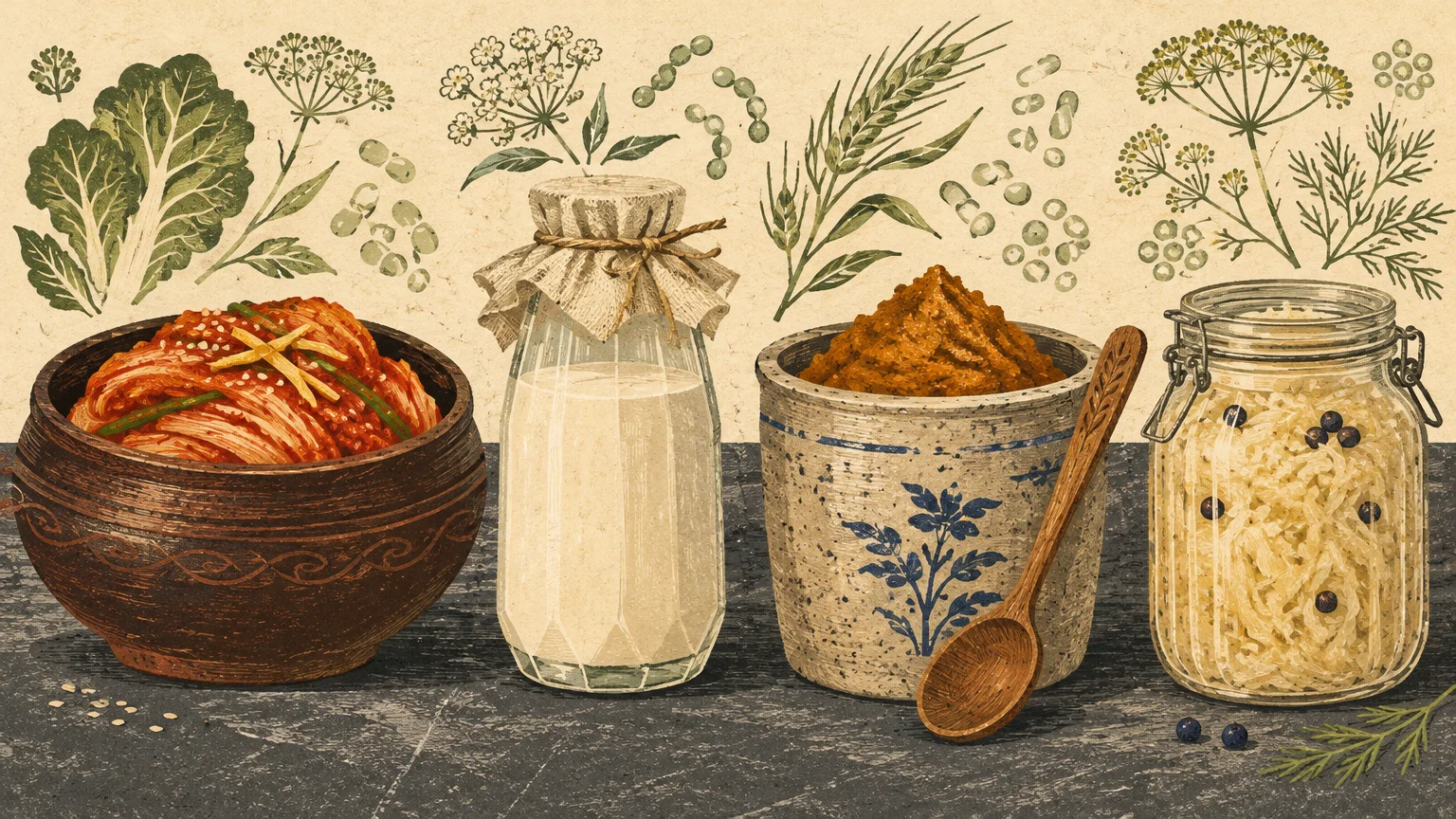
Those guidelines directly encourage you to eat fermented foods—specifically citing kimchi, kefir, miso, and sauerkraut—to support gut health. Moving beyond sweetened yogurt cups introduces your digestive tract to wider microbial variety and savory flavors.
Fermented foods still work best alongside adequate dietary fiber rather than in isolation. Federal guidelines call for 25 to 38 grams of fiber daily for adults, yet Americans continue averaging only 15 to 16 grams per day.
Closing that fiber gap supplies beneficial gut microbes with the plant carbohydrates they need to thrive. Pairing fermented foods with vegetables, legumes, and whole grains creates a stronger foundation for digestive health than relying on one item alone.
How Fermented Foods Influence Your Gut and Immune System
Nutrition scientists increasingly view digestive wellness as an interconnected body system rather than simple bowel regularity. In February 2026, an expert panel from the International Scientific Association for Probiotics and Prebiotics (ISAPP) defined gut health across six core domains.
Those six domains cover your gut microbiome, gut barrier, gastrointestinal physiology, gut-brain axis, immune function, and metabolism. Everyday food choices touch several of these pathways simultaneously.
Understanding scientific definitions prevents confusion in the grocery aisle. In 2021, ISAPP defined fermented foods as foods produced through desired microbial growth and enzymatic conversions of food components.
However, both ISAPP and Stanford Medicine emphasize that fermented foods are not automatically probiotics. Scientists reserve the term probiotic for live microorganisms identified to the exact strain level and proven in clinical studies to deliver a measurable health benefit.
Most traditional ferments carry unstandardized communities of wild or starter microbes rather than single clinically tested strains. Even when baking, canning, or pasteurization kills live cultures, heat-treated ferments may still retain fermentation metabolites and inactivated microbial parts.
ISAPP defines a preparation of inanimate microorganisms or their components that benefits host health as a postbiotic. That means cooked miso soup or baked sourdough bread can still contribute gentle metabolic value even without living bacteria.
Human clinical research illustrates how live fermented foods shape immune and microbial activity. In a 2021 randomized trial published in Cell by Wastyk and colleagues at Stanford, 36 healthy adults followed either a high-fermented-food diet or a high-fiber diet for 10 weeks.
Participants in the fermented food arm raised intake from 0.4 to 6.3 servings daily across yogurt, kefir, fermented cottage cheese, kimchi, fermented vegetables, brine drinks, and kombucha. By week 10, their gut microbiome diversity climbed steadily.
Blood tests revealed notable shifts in immune signaling as well. The fermented food group experienced reduced activation across four immune cell types and lower levels of 19 out of 93 measured inflammatory serum proteins, including interleukin-6, IL-10, and IL-12b.
In contrast, the parallel high-fiber group raised daily fiber intake from 21.5 grams to 45.1 grams. Those participants gained more fiber-degrading microbial enzymes, though their average microbiome diversity did not rise over that 10-week study window.
Keep clinical caveats in mind when applying these results to your own life. Because that Stanford study was small, short-term, unblinded, and conducted among healthy adults without a non-intervention control group, researchers cannot promise identical inflammatory drops for every medical condition.
You can explore evidence-based summaries of microbial safety and clinical trials through the National Center for Complementary and Integrative Health. Still, adding varied fermented foods remains a practical, food-first step for supporting everyday digestive balance.
Top Fermented Foods to Try Beyond Yogurt
Kefir: A Tangy Dairy Upgrade
If you enjoy yogurt, drinkable kefir offers an easy upgrade in microbial diversity. Traditional kefir fermented from kefir grains contains 30 to 60 bacterial and yeast strains, compared with roughly 2 to 5 bacterial cultures in most commercial yogurts.
Fermentation also breaks down much of milk’s lactose before you open the bottle. Because kefir’s live cultures continue digesting remaining lactose inside your digestive tract, many adults with lactose maldigestion tolerate kefir smoothly.
Read the nutrition facts panel closely before choosing a flavor. One 8-ounce cup of plain low-fat kefir supplies around 100 calories and 9 to 11 grams of protein, whereas sweetened flavors can add 10 to 15 grams of sugar per cup.
Pour plain kefir over berries or blend it with cinnamon and vanilla instead of buying sugar-heavy bottles. Keeping added sugars low protects your gut environment while giving you high-quality protein and calcium.
Kimchi and Sauerkraut: Crisp, Savory Vegetables
Lacto-fermented vegetables such as kimchi and sauerkraut bring bright acidity and crunch to savory plates. As lactic acid bacteria ferment cabbage, radishes, garlic, and ginger, they generate natural preservation acids without requiring distilled vinegar.
Shopping in the right grocery section determines whether you bring home living microbes. Stanford Medicine notes that manufacturers acidify many shelf-stable pickles and sauerkrauts with vinegar or pasteurize them for room-temperature storage, which kills live bacteria.
Check the refrigerated produce or deli cases for jars that omit vinegar from the ingredient list. Terms such as unpasteurized, raw, or live active cultures indicate that helpful microbes remain viable when you open the jar.
Kimchi also contributes garlic, scallions, and chili peppers, adding plant polyphenols alongside fermented cabbage. If spicy food bothers your stomach, choose mild white kimchi or classic green cabbage sauerkraut instead.
Miso, Tempeh, and Natto: Fermented Soy Staples
Traditional Asian soy ferments add rich savory flavor, plant protein, and specialized micronutrients to weekly meal prep. Miso is a fermented paste crafted from soybeans, salt, and koji fungus, offering deep umami taste and bioactive fermentation compounds.
Boiling water destroys miso’s live microbes, so stir the paste into soup broths or sauces after removing your pan from the stove. Choosing lighter white or yellow miso yields milder sweetness, while dark red miso delivers bolder saltiness.
Tempeh binds whole fermented soybeans into a firm, sliceable cake with a nutty aroma. Because fermentation partially breaks down soy proteins and starches, many eaters find tempeh gentler on digestion than unfermented soy products.
Natto, an alkaline soy ferment prized in Japanese breakfasts, offers distinctive nutritional benefits alongside its sticky texture. It delivers plentiful dietary fiber and high amounts of vitamin K2—notably menaquinone-7—which supports calcium metabolism and bone health.
Kombucha: Bubbly Tea With Strict Boundaries
Kombucha is an effervescent fermented tea crafted with sugar and a symbiotic culture of bacteria and yeast. Many adults reach for it as a crisp swap for soda, though federal rules strictly regulate its alcohol and acidity.
Under Alcohol and Tobacco Tax and Trade Bureau regulations, non-alcoholic commercial kombucha must remain below 0.5 percent alcohol by volume from production through shelf life. Commercial grocery bottles generally test between 0.1 and 0.49 percent alcohol by volume.
Unpasteurized homebrewed batches behave very differently, routinely reaching 1.0 to 3.0 percent alcohol by volume. Commercial hard kombucha varieties climb even higher, measuring between 4.0 and 7.2 percent alcohol by volume.
Keep serving sizes modest even when drinking non-alcoholic store bottles. Federal food safety guidance cites up to 4 ounces per day—and Centers for Disease Control and Prevention guidance notes 4 ounces one to three times daily—for healthy adults.
Portion Guidance, Daily Routines, and Safe Home Preparation
Starting Slowly and Building Your Serving Routine
Federal agencies and nutrition researchers have not established a standardized daily serving requirement or live-microbe count for fermented foods. You do not need massive daily portions to support comfortable digestion.
Stanford Medicine’s Nutrition Studies Research Group provides clear serving references you can apply immediately. One serving equals one-quarter cup of kimchi, sauerkraut, or fermented pickles, 6 ounces of kefir or kombucha, 1 tablespoon of miso or fermented vinegar, or 2 tablespoons of fermented salsa.
Begin with 1 serving daily during your first week so your digestive tract adjusts smoothly. Once bloating stays minimal, gradually build toward at least 2 servings per day across varied foods.
Balancing Sodium and Pairing With Fiber
Smart portion awareness protects your blood pressure when eating salty ferments like kimchi, sauerkraut, and miso. Federal dietary guidelines recommend keeping total sodium under 2,300 milligrams daily for everyone aged 14 and older.
Use brined vegetables and fermented pastes as bold flavor accents instead of oversized side dishes. Seasoning grain bowls with a quarter cup of kimchi lets you skip salty bottled sauces and extra table salt.
Pair every fermented food with whole plant fiber so beneficial microbes receive steady fuel. Combining fermented foods with beans, oats, berries, and leafy greens moves you toward the 25 to 38 gram adult fiber goal.
Real-Life Meal Examples From Morning to Dinner
Consistent habits form fastest when fermented ingredients fit naturally into familiar meals. At breakfast, blend 6 ounces of plain low-fat kefir with rolled oats, raspberries, and ground flaxseed for balanced protein and fiber.
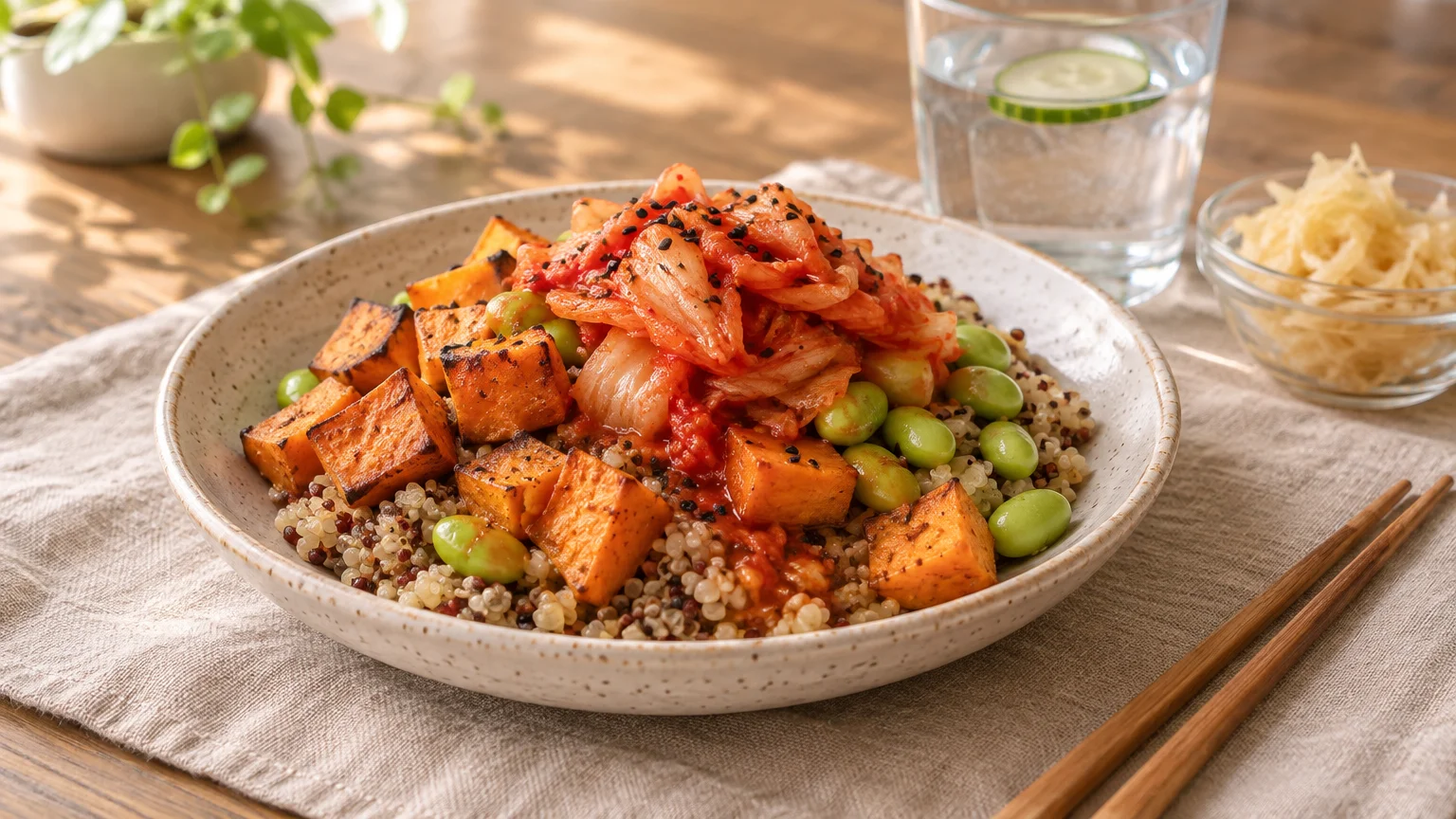
For lunch, build a warm bowl with quinoa, roasted sweet potatoes, sautéed tempeh, and a quarter cup of cold refrigerated sauerkraut. Adding raw kraut after plating preserves both crunch and live bacteria.
For an afternoon snack, pair crunchy cucumber slices or whole-grain chips with 2 tablespoons of refrigerated fermented salsa. If you enjoy kombucha, pour a 4-ounce glass over ice with a squeeze of lime rather than drinking a full bottle.
At dinner, whisk 1 tablespoon of mellow white miso with warm water, toasted sesame oil, and grated ginger. Drizzle that savory glaze over cooked salmon or steamed greens off the heat to protect delicate flavor and bioactive compounds.
Safe Home Fermentation Basics
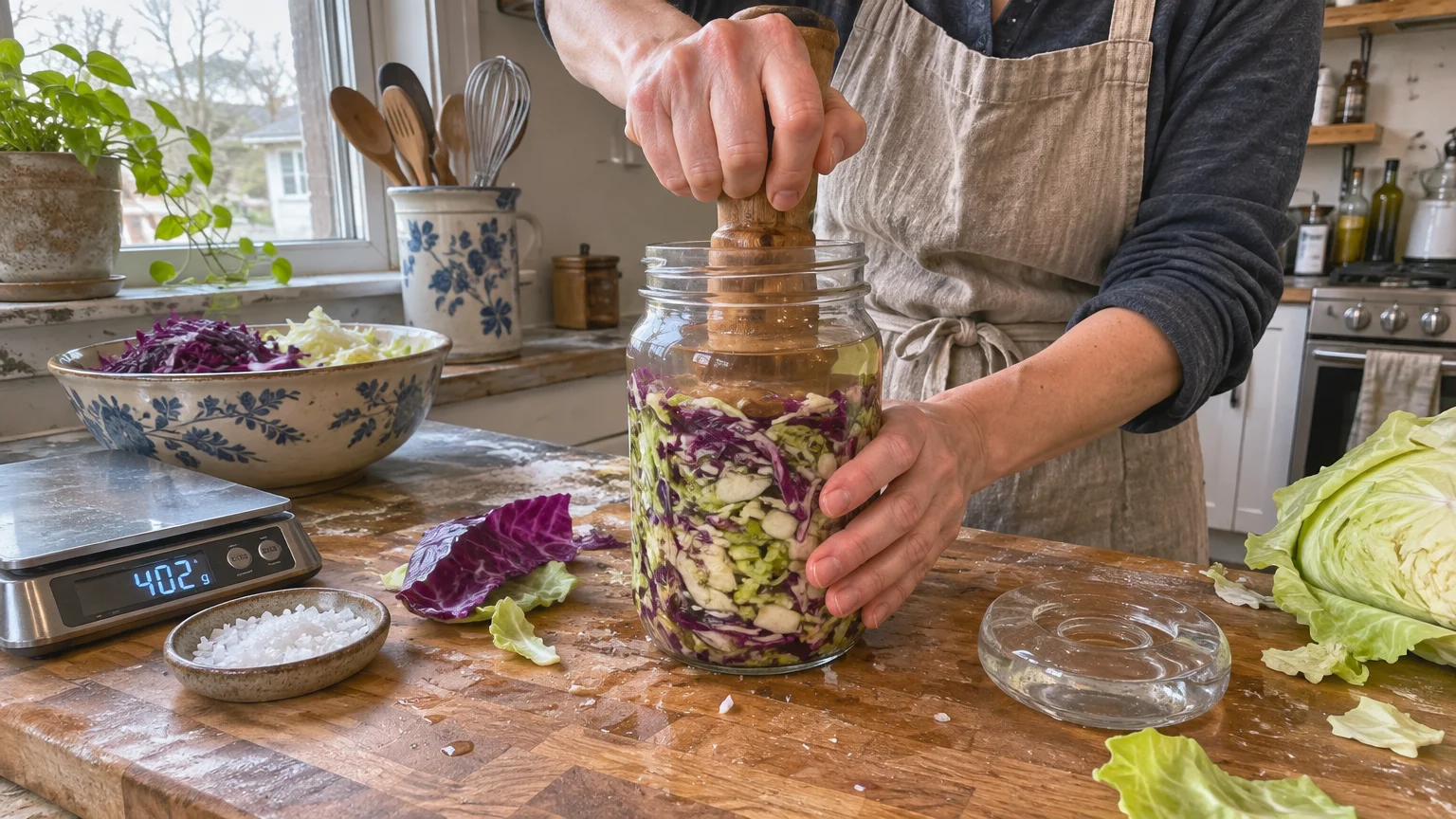
Fermenting vegetables at home saves money when you follow tested salt and temperature guidelines from the USDA and university extension programs. Always select iodine-free canning or pickling salt, because iodine and anti-caking agents in standard table salt interfere with fermentation.
Use 3 tablespoons of canning salt per 5 pounds of shredded cabbage, which equals 2 to 2.5 percent salt by weight. Pack the salted cabbage firmly so it remains completely submerged beneath its own brine in an oxygen-free environment.
Ferment sauerkraut at 70 to 75 degrees Fahrenheit for 3 to 4 weeks, or at 60 to 65 degrees Fahrenheit for 5 to 6 weeks. Below 60 degrees fermentation stalls, while temperatures above 75 to 78 degrees can soften or spoil cabbage.
Home kombucha requires strict acidity testing under FDA food safety standards to prevent harmful bacterial growth. Safe kombucha stays within a pH of 2.5 to 4.2, so discard any batch that fails to drop to 4.2 or lower within seven days.
Never brew kombucha in ceramic containers that could contain lead glaze, because acidic liquid leaches lead into the tea. Refrigerate finished kombucha near 39 degrees Fahrenheit to slow ongoing acid and alcohol buildup.
The Lifestyle Layer: Sleep, Stress, Movement, and Community
Your brain and digestive tract communicate continuously through nerves, hormones, and immune messengers. Even a careful fermented food routine struggles to settle symptoms when chronic stress keeps your body in constant high alert.
Simple stress-reduction practices support smoother gut motility and comfort after meals. Taking slow breaths before eating, chewing thoroughly, and stepping away from work screens during lunch help your digestive system absorb nutrients effectively.
Consistent sleep patterns also anchor gastrointestinal physiology and microbial balance. Going to sleep and waking on a regular schedule gives your gut barrier and digestive enzymes predictable rest and repair windows.
Regular physical activity works alongside fermented foods to support steady intestinal transit. Moderate movement—such as brisk daily walks, swimming, or light strength sessions—encourages healthy circulation to digestive organs without overstressing your gut.
Community support turns short-term nutrition experiments into lasting household habits. Cooking traditional recipes with family, trading fermentation tips with friends, or exploring cultural food markets keeps your routine enjoyable rather than restrictive.
When recurring abdominal discomfort or complex medical conditions complicate meal planning, expert guidance makes a decisive difference. You can connect with a registered dietitian through the Academy of Nutrition and Dietetics to personalize your digestive nutrition plan.

Monitoring Your Response and Navigating Medical Cautions
Tracking Symptoms and Clinical Biomarkers
Approach new fermented foods as a calm, structured self-check rather than a race. Keep a simple food and symptom journal for a few weeks, recording portion sizes alongside bloating, gas, stool consistency, and comfort levels.
Stanford Medicine notes that adding large quantities of fermented foods too fast can cause temporary bloating or gastrointestinal discomfort. If discomfort appears, cut your serving in half for several days until your gut settles.
Review your updated eating habits with your primary care clinician during scheduled visits. Tracking blood pressure alongside higher-sodium ferments, or reviewing vitamin K intake from natto if you take anticoagulants, keeps your nutrition plan aligned with medical care.
Who Should Limit or Avoid Raw Ferments
Unpasteurized and homemade fermented foods carry real microbiological risks for vulnerable groups. People who are pregnant, breastfeeding, or immunocompromised face heightened vulnerability to foodborne pathogens in raw ferments.
Extra caution applies if you receive chemotherapy or radiation, or live with HIV, liver disease, or kidney disease. According to Centers for Disease Control and Prevention Listeria guidance, patients on dialysis are 50 times more likely to contract Listeria.
Federal and clinical advisors instruct pregnant, breastfeeding, and immunocompromised individuals to avoid kombucha and consult a clinician before consuming raw, unpasteurized fermented foods. Cooked miso or commercially pasteurized items may offer safer alternatives under your doctor’s direction.
Histamine Intolerance and Medication Interactions
Some digestive and skin reactions stem from biogenic amines rather than living bacteria. Stanford Medicine and public health guidance warn that fermented items—including soy sauce, miso, aged cheeses, and fermented vegetables—can contain elevated levels of histamine.
If fermented meals trigger flushing, headaches, hives, nasal congestion, or sudden cramping, histamine intolerance could play a role. Document your symptoms accurately and ask an allergist or registered dietitian whether a structured trial is appropriate.
Kombucha presents additional safety concerns because fermentation produces trace—and occasionally substantial—alcohol. Avoid kombucha completely if you live with alcohol dependency or follow an alcohol-free medical recovery plan.
Do not drink kombucha if you take disulfiram (Antabuse) or metronidazole (Flagyl), because even small amounts of alcohol can provoke severe nausea, flushing, and rapid heart rate. Always check with your pharmacist before combining fermented beverages with prescription medications.
Unsafe homebrews have also produced rare cases of severe metabolic lactic acidosis and lead poisoning documented in CDC surveillance reports from 1995. Seek immediate emergency care for persistent vomiting, confusion, fever, severe abdominal pain, or bloody stools after eating any fermented food.
Frequently Asked Questions About Fermented Foods
How can I include fermented foods when dining out?
Restaurant menus make it simple to include gut health foods without special requests. Order miso soup before Japanese entrees, enjoy small portions of kimchi banchan with Korean dishes, or add sauerkraut to grilled sandwiches and salads.
Because restaurant broths and brined toppings frequently carry heavy sodium, balance your meal with plain steamed rice, fresh vegetables, and unseasoned proteins. Asking for dressings and soy-based sauces on the side helps keep daily sodium below federal ceilings.
What are the best budget-friendly ways to eat more fermented foods?
Building a gut-friendly kitchen does not require expensive wellness shots or single-serve probiotic drinks. Buying plain low-fat kefir in larger family bottles or tubs of refrigerated sauerkraut costs far less per serving than boutique single pouches.
Fermenting green cabbage at home with pickling salt yields weeks of crisp sauerkraut for a fraction of retail prices. A single tub of miso paste also lasts months inside your refrigerator, flavoring dozens of soups and dressings.
Should I take probiotic supplements instead of eating fermented foods?
Whole fermented foods and targeted probiotic pills play different roles in digestive care. Eating kimchi, kefir, tempeh, and sauerkraut delivers diverse microbial communities alongside vitamins, protein, organic acids, and fiber that work together naturally.
Clinicians sometimes prescribe specific, strain-verified probiotic supplements for conditions like antibiotic-associated diarrhea or irritable bowel symptoms. Consult your physician or dietitian before starting any supplement rather than trading whole foods for unverified capsules.
How do I adapt fermented foods for different cultural cuisines or flavor preferences?
Almost every global cuisine features approachable fermented traditions you can adapt to your tastes. If pungent kimchi feels overwhelming at first, start with mild fermented salsa on tacos, creamy kefir in fruit smoothies, or gentle white miso in roasted vegetable glazes.
Rinsing sauerkraut briefly under cold running water softens sharp tanginess and reduces surface salt while preserving fiber. Folding small spoonfuls into familiar family dishes lets everyone at your table adjust gradually.
Your Next Step Toward Better Digestive Health
Supporting your gut microbiome does not require drastic cleanses or forcing down flavors you dislike. Steady, modest servings of kefir, kimchi, miso, or sauerkraut—paired with daily plant fiber, movement, and consistent sleep—build lasting digestive resilience.
Pick one simple habit to track this week, such as adding a quarter cup of refrigerated sauerkraut to lunch or blending 6 ounces of plain kefir at breakfast. Share your food log and goals with your healthcare team so they can tailor guidance to you.