Acid reflux disrupts daily life for millions of Americans, affecting roughly 20% of the U.S. population with chronic gastroesophageal reflux disease. Even occasional heartburn can turn simple dinners into hours of chest burning and sour regurgitation.
Pinpointing the foods that cause heartburn helps you calm symptoms without giving up enjoyable meals. Research shows that seven common dietary categories trigger discomfort through distinct digestive pathways.
You do not need to ban every item on a standard list forever. Learning how specific acid reflux trigger foods affect your body empowers you to build a sustainable, nourishing plan.
Understanding Acid Reflux and Why Food Triggers Matter
Almost everyone experiences occasional heartburn after a heavy meal, yet frequent symptoms point to a deeper pattern. The American College of Gastroenterology overview on acid reflux defines gastroesophageal reflux disease, or GERD, as symptoms occurring two or more times per week or causing esophageal damage.
Recent U.S. data reveal how widespread these symptoms remain even among people already seeking relief. In the National Gastrointestinal Survey of 71,812 U.S. adults published in Gastroenterology in April 2020, 44.1% reported past GERD symptoms and 30.9% experienced heartburn or regurgitation in the prior week.
That same survey found that among 3,229 respondents taking daily proton pump inhibitors, 54.1% still experienced persistent symptoms at least two days per week. Medication alone rarely solves the whole puzzle when daily meals and eating habits continue irritating the digestive tract.
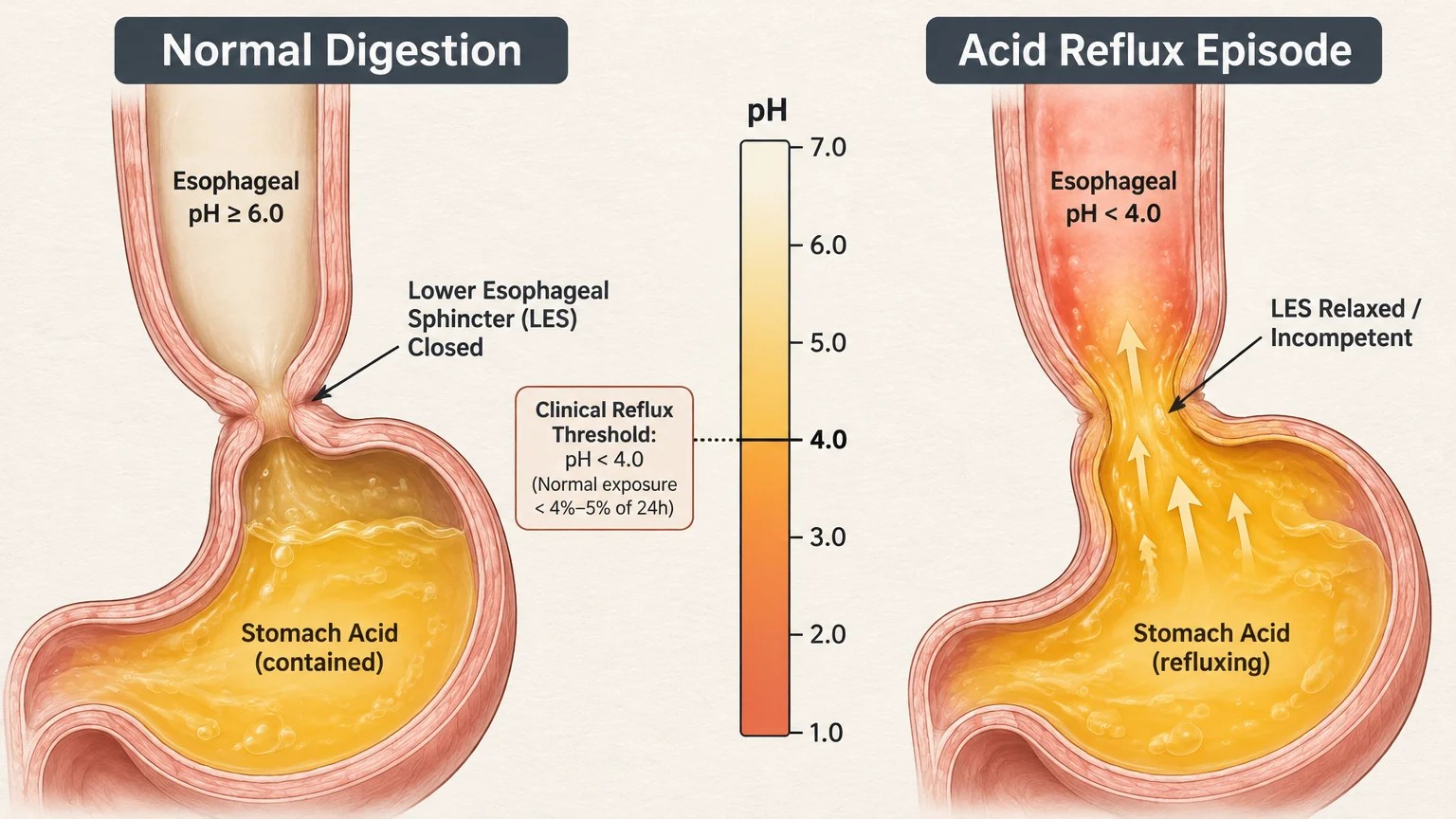
At the center of acid reflux sits a ring of muscle called the lower esophageal sphincter, or LES. Normally, this muscular valve opens to let swallowed food enter your stomach and snaps shut to keep digestive acid below.
A healthy esophagus maintains a neutral environment with a pH of 6.0 or higher. According to clinical reviews and Yamada’s Handbook of Gastroenterology, a clinical acid reflux episode occurs when esophageal pH drops below 4.0.
During normal 24-hour monitoring, esophageal pH stays below 4.0 for less than 4% to 5% of total time. Certain foods push that exposure higher by relaxing the LES, slowing stomach emptying, increasing internal stomach pressure, or directly stinging tender esophageal tissue.
Because each person responds differently, blanket dietary bans often backfire.
In its 2022 Clinical Guideline for the Diagnosis and Management of GERD in the American Journal of Gastroenterology, the American College of Gastroenterology issued a conditional recommendation to avoid trigger foods based on low-level clinical trial evidence.
Both the American College of Gastroenterology and Johns Hopkins Medicine dietary recommendations for GERD emphasize tailoring avoidance to your own symptoms. Cutting healthy staples like oranges and tomatoes without confirming they bother you can needlessly strip essential vitamins and antioxidants from your diet.
The 7 Foods That Can Trigger Acid Reflux
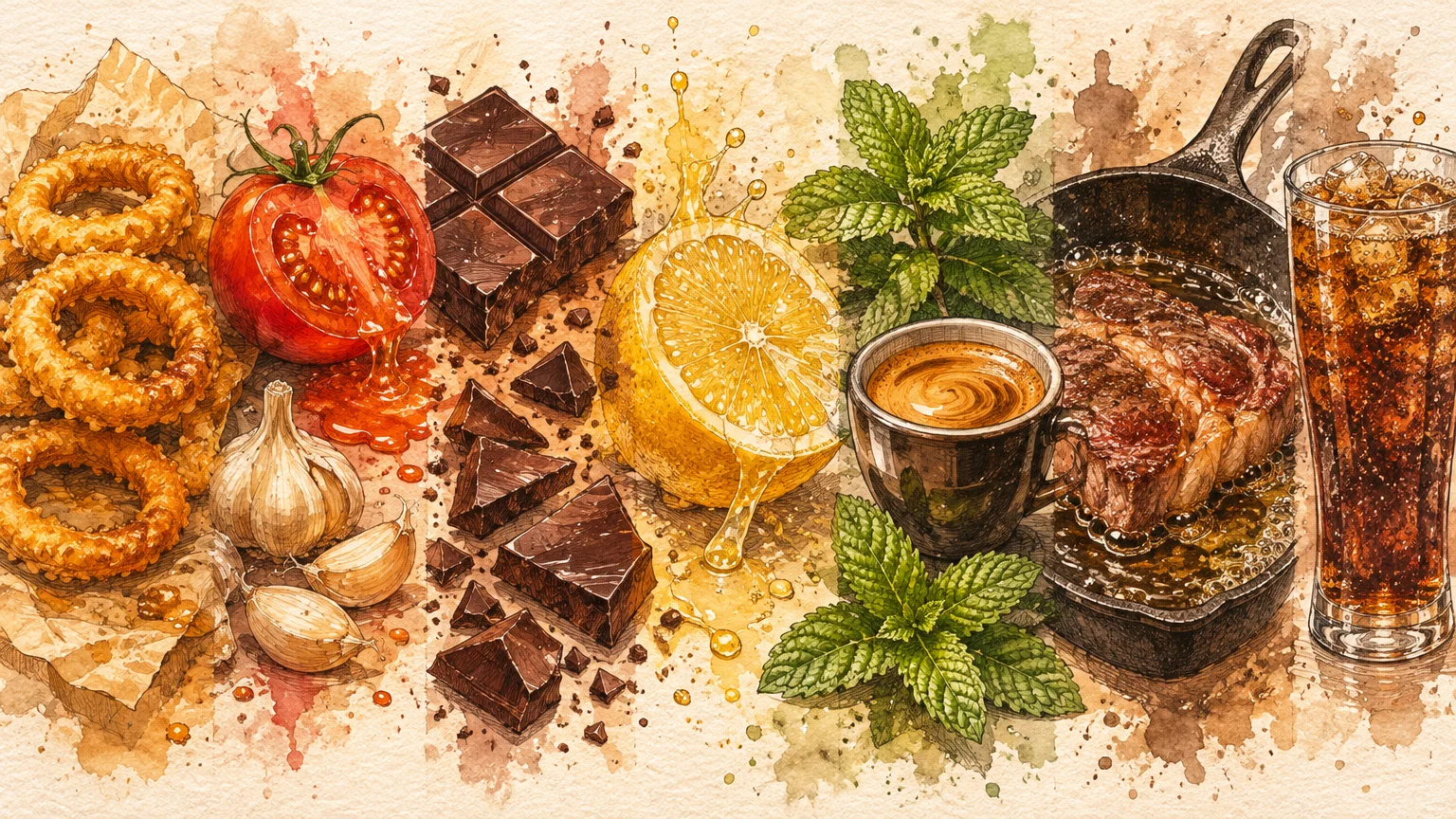
The National Institute of Diabetes and Digestive and Kidney Diseases highlights seven primary categories of foods and drinks commonly linked to reflux symptoms. Understanding how each category behaves in your stomach helps you test your tolerance wisely and choose satisfying swaps.
1. High-Fat and Fried Foods
Greasy meals stand out as one of the most reliable heartburn foods to avoid during a flare. As Harvard Health digestive guidance and Hartford HealthCare note, high-fat foods slow stomach emptying and lower LES pressure simultaneously.
When food lingers in your stomach for hours, your body keeps producing acid to break down those dense lipids. Meanwhile, a relaxed LES lets that acidic mixture surge upward when you sit back or bend over.
French fries, fried chicken, bacon, sausage, heavy cream sauces, and full-fat cheeses frequently spark discomfort. Johns Hopkins Medicine and Harvard Health also flag fatty meats and rich dairy as common culprits behind lingering evening heartburn.
You can still enjoy satisfying fats without overloading your stomach at a single sitting. Grill, bake, or air-fry skinless poultry and white fish instead of deep-frying meats in heavy batter.
Swap bacon or pork sausage at breakfast for poached eggs, oatmeal, or turkey slices. Keep healthy fats like olive oil or avocado in modest portions—such as a thin spread on toast—so your stomach empties on schedule.
2. Acidic Fruits and Tomato Products
Citrus fruits and tomatoes rarely relax the lower esophageal sphincter directly. Instead, their natural acidity irritates an esophageal lining that is already inflamed or sensitive from previous reflux episodes.
Food acidity measurements illustrate why these bright ingredients can sting so sharply. Lemon and lime juice measure between pH 2.00 and 2.60, grapefruit spans pH 3.00 to 3.75, and tomatoes fall between pH 4.30 and 4.90.
Concentrated marinara sauce, salsa, citrus juices, and vinegar-heavy dressings pack high acid loads into small servings. Pairing tomato sauce with greasy pizza cheese creates a double hit of acid irritation and delayed gastric emptying.
If citrus or tomatoes trigger burning, lean into low-acid produce that protects your vitamin C and potassium intake. Ripe bananas, cantaloupe, honeydew melon, pears, and steamed carrots nourish your body gently without stinging.
For pasta nights, blend roasted red bell peppers, cooked squash, garlic-free herbs, and a splash of olive oil into a velvety sauce. You keep rich color and savory depth while dropping overall dish acidity.
3. Chocolate
Chocolate acts as a triple-threat trigger for many people managing a GERD diet. Clinical reviews and Hartford HealthCare note that chocolate delivers fat, caffeine, and a naturally occurring compound called theobromine.
Both caffeine and theobromine relax the smooth muscle of the lower esophageal sphincter. At the same time, the cocoa butter and added dairy fat slow stomach emptying, keeping acid pooled against a weakened valve.
Eating chocolate mousse, brownies, or hot fudge late at night multiplies the risk because lying down removes gravity’s protective pull. Even a small handful of chocolate chips before bed can wake you with throat irritation.
When sweet cravings hit, experiment with warm baked apples dusted with cinnamon, vanilla yogurt parfaits, or carob treats. Carob offers a roasted, cocoa-like richness without caffeine or high theobromine content.
If you test dark chocolate back into your routine, try a single square right after lunch while you remain upright. Tracking your response tells you whether portion size and timing make all the difference.
4. Coffee, Tea, and Caffeinated or Carbonated Beverages
Morning coffee and afternoon sodas deserve close scrutiny when you track digestive health symptoms. A landmark prospective study of 48,308 U.S. women ages 42 to 62 from the Nurses’ Health Study II shed clear light on beverage habits.
Published in Clinical Gastroenterology and Hepatology in 2020 by Raaj S. Mehta, MD, and Andrew T.
Chan, MD, MPH, the study linked heavy intake to higher weekly reflux rates. Drinking more than six servings daily raised weekly symptom risk by 34% for coffee, 26% for tea, and 29% for soda.
Strikingly, those elevated risks appeared regardless of whether the coffee, tea, or soda contained caffeine. Water, milk, and juice showed no link to increased reflux symptoms in the same cohort.
Replacing just two daily servings of coffee, tea, or soda with plain water lowered symptom risk measurably. Researchers observed hazard ratios dropping to 0.96 for replacing coffee or tea and 0.92 for replacing soda.
Carbonated drinks bring an added mechanical problem inside your digestive tract. Dissolved bubbles release gas that inflates your stomach, increasing internal pressure and pushing acid upward past the LES.
A 2016 analysis of 379 U.S. beverages also found that colas reach pH levels as low as 2.32, compared with pH 5.11 for medium-roast coffee. That combination of sharp acidity and carbonation makes regular or diet cola especially rough on sensitive throats.
Start trimming beverage triggers gradually to avoid caffeine headaches. Swap your third cup of coffee or afternoon sparkling water for still water infused with cucumber slices or chamomile herbal tea.
5. Peppermint and Mint Products
Many diners reach for an after-dinner mint assuming it will settle a full stomach. Although peppermint can soothe lower intestinal cramping, clinical GI guidance warns it often worsens upper digestive reflux.
Peppermint contains compounds that relax the smooth muscle of the lower esophageal sphincter. Once that barrier loosens, stomach contents slide upward more easily—especially after a rich restaurant meal.
Spearmint, peppermint tea, breath mints, chewing gum flavored with strong mint oils, and chocolate-mint desserts all carry similar risk. Hidden mint in herbal blends or throat lozenges can puzzle people who otherwise eat bland meals.
Check tea labels carefully and favor gentle, non-mint alternatives after dinner. Fresh ginger slices steeped in hot water or mild chamomile tea offer soothing warmth without loosening your LES.
If you want fresh breath after lunch, rinse with plain water or chew sugar-free fruit-flavored gum briefly while staying upright. Reserve mint flavors for occasional tests once your baseline symptoms stay quiet.
6. Spicy Foods, Onions, and Garlic
Fiery chili peppers and pungent aromatics divide people with acid reflux more sharply than almost any other group. Spicy foods generally do not relax the LES; instead, compounds like capsaicin directly irritate inflamed esophageal tissue.
Harvard Health and Johns Hopkins Medicine also highlight onions and garlic among frequent triggers. These aromatic vegetables ferment readily in the gut and can provoke belching, which opens the LES and lifts acid upward.
Hot wings, chili oil, pickled jalapenos, raw red onion on salads, and garlic-heavy pasta sauces often ignite immediate chest warmth. Even mild black pepper or cayenne hidden in dry rubs can surprise sensitive eaters.
You never have to settle for tasteless food while resting an irritated esophagus. Build savory flavor with fresh basil, oregano, thyme, parsley, rosemary, turmeric, and modest amounts of ground cumin.
If onions and garlic bother you raw, test small quantities cooked slowly until soft and sweet, or use garlic-infused olive oil. Infused oil carries rich aroma without the fermentable carbohydrates found in whole cloves.
7. Alcoholic Beverages
Alcohol affects acid reflux through two distinct physiological routes at once. It relaxes the lower esophageal sphincter while simultaneously stimulating your stomach to secrete more acid.
A 2019 meta-analysis of 29 studies published in Alcohol and Alcoholism confirmed a clear dose-response pattern. Overall GERD risk and symptom severity climbed steadily alongside both the amount and frequency of alcohol consumption.
Mixed cocktails multiply the challenge when bartenders add citrus juice, carbonated mixers, or high-sugar syrups. Wine and beer add acidity and carbonation, making evening happy hours a frequent prelude to midnight heartburn.
If you choose to drink, coordinate with your healthcare provider about safe limits and set practical guardrails. Enjoy a modest pour alongside a balanced, lower-fat meal rather than sipping on an empty stomach.
Alternate every alcoholic drink with a tall glass of still water, and finish your last sip at least three hours before sleep. Many people discover that cutting evening alcohol completely restores uninterrupted rest within days.
Building Your Personal GERD Diet Without Unnecessary Restriction
Reading a list of seven trigger categories can feel overwhelming if you try to eliminate everything at once. Instead, approach your GERD diet like a calm, structured science experiment tailored to your own digestion.
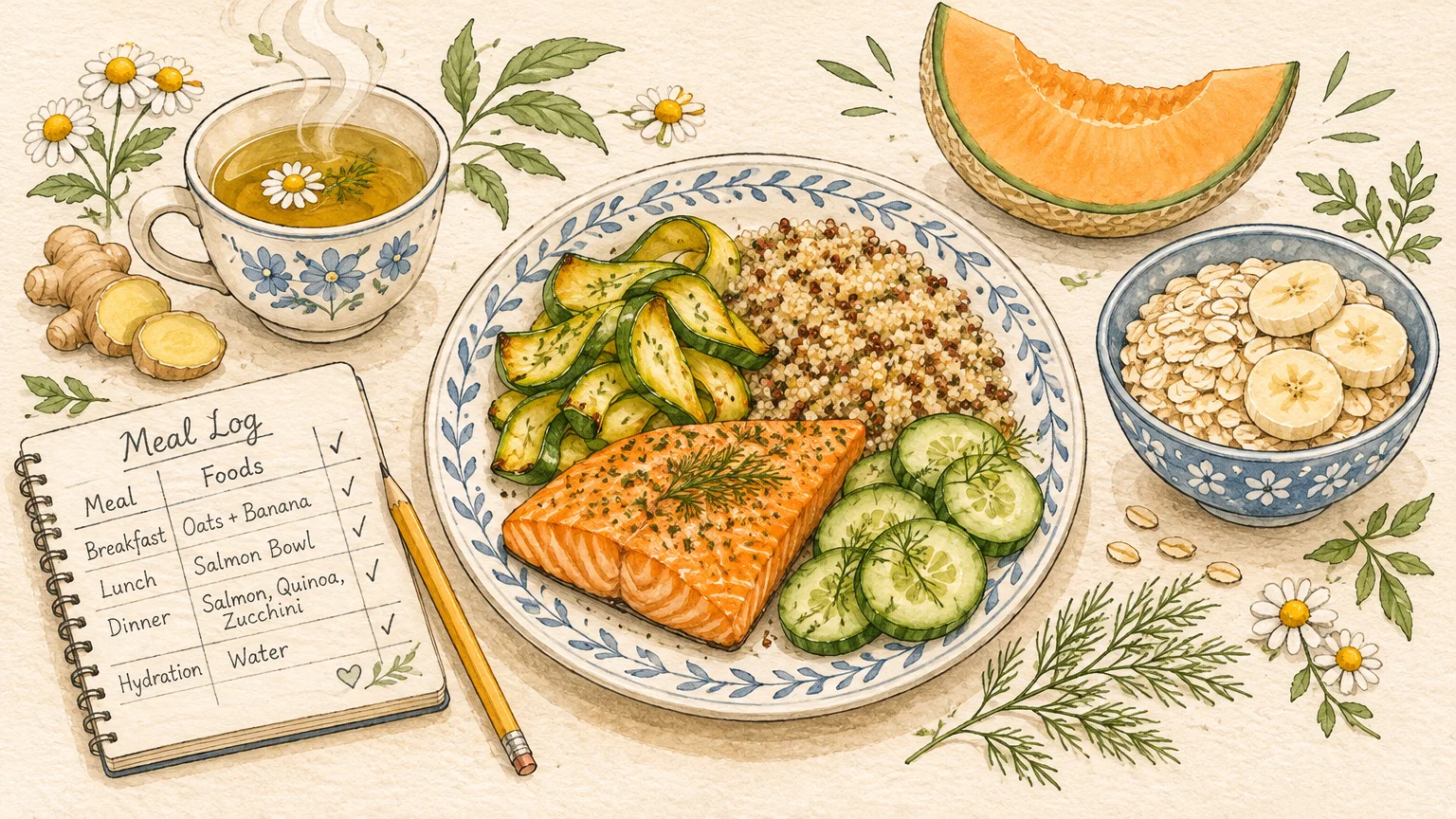
For two to three weeks, keep a simple notebook or phone log tracking what you eat, meal times, and any burning or regurgitation within three hours.
Patterns usually emerge quickly—you might notice tomato soup bothers you while morning coffee in small amounts causes zero trouble.
Once your baseline discomfort settles, reintroduce one suspected food at a time in a modest daytime portion. Wait two days before testing the next item so delayed reactions do not blur your results.
Portion volume matters nearly as much as ingredient choice because an overfilled stomach stretches the LES mechanically. Shifting from two giant meals to three moderate meals and one light afternoon snack lowers upward pressure dramatically.
Picture a practical daily routine built around gentle, nutrient-dense staples. Start breakfast with rolled oats cooked in low-fat milk, topped with sliced banana and a spoonful of chopped walnuts for steady fiber and healthy fats.
For lunch, pair grilled chicken breast or baked tofu with brown rice, steamed green beans, and olive-oil-dressed greens using a mild herb vinaigrette without heavy vinegar. Keep your afternoon snack simple—plain Greek yogurt with blueberries or whole-grain crackers with almond butter works well.
At dinner, bake wild salmon with dill and serve it alongside roasted sweet potatoes and zucchini finished early in the evening. Whenever you scale back citrus or tomatoes, intentionally add melon, bell peppers, broccoli, and leafy greens to protect vitamin C and potassium intake.

Lifestyle Habits That Support Digestive Health
What you put on your plate works hand in hand with how you time meals, move your body, and position yourself for sleep. Even the cleanest dinner can trigger reflux if you lie flat on the couch right after your last bite.
The American College of Gastroenterology’s 2022 guideline suggests avoiding meals within two to three hours of bedtime. The National Institute of Diabetes and Digestive and Kidney Diseases similarly advises eating at least three hours before lying down.
Giving gravity three full hours lets your stomach empty most of its acid and food into the small intestine before nightfall. If evening schedules run late, shift your largest meal to lunchtime and keep dinner light and low in fat.
Sleep posture offers another drug-free advantage for nighttime comfort. The NIDDK recommends elevating your head and upper back by six to eight inches using a foam wedge or sturdy extra pillows rather than propping only your neck.
Additionally, the 2022 American College of Gastroenterology guideline notes that sleeping on your left side reduces nighttime and post-meal acid exposure compared with sleeping on your right side. Left-side positioning keeps the stomach sitting comfortably below the esophageal junction.
Long-term daily habits carry remarkable protective power when combined consistently. A 2021 study in JAMA Internal Medicine followed 42,955 women in the Nurses’ Health Study II and examined five core lifestyle practices.
Those five habits included maintaining a normal body mass index between 18.5 and under 25.0, never smoking, exercising moderately to vigorously for at least 30 minutes daily, limiting coffee, tea, or soda to two cups daily, and eating a prudent diet.
Adhering to all five habits was associated with preventing nearly 40% of weekly GERD symptoms, cutting risk in half with a hazard ratio of 0.50. Remarkably, that protection held true even among participants already taking regular proton pump inhibitors or H2 blockers.
Consistent with those findings, the 2022 American College of Gastroenterology guideline issues a strong recommendation for weight loss in patients living with overweight or obesity. Extra abdominal pressure pushes upward on the stomach, so even gradual, sustainable weight reduction often eases reflux noticeably.
Time your workouts thoughtfully around meals so exercise helps rather than hinders digestion. Taking a relaxed 15-minute walk after dinner encourages stomach emptying, whereas vigorous crunches, heavy lifting, or inversions right after eating can push acid upward.
Stress management also supports digestive health because chronic tension heightens pain sensitivity along the esophagus. Brief breathing exercises before meals, regular sleep schedules, and sharing meal goals with supportive family members keep stress from turning into rushed, oversized dinners.
Monitoring Symptoms, Medications, and Medical Red Flags
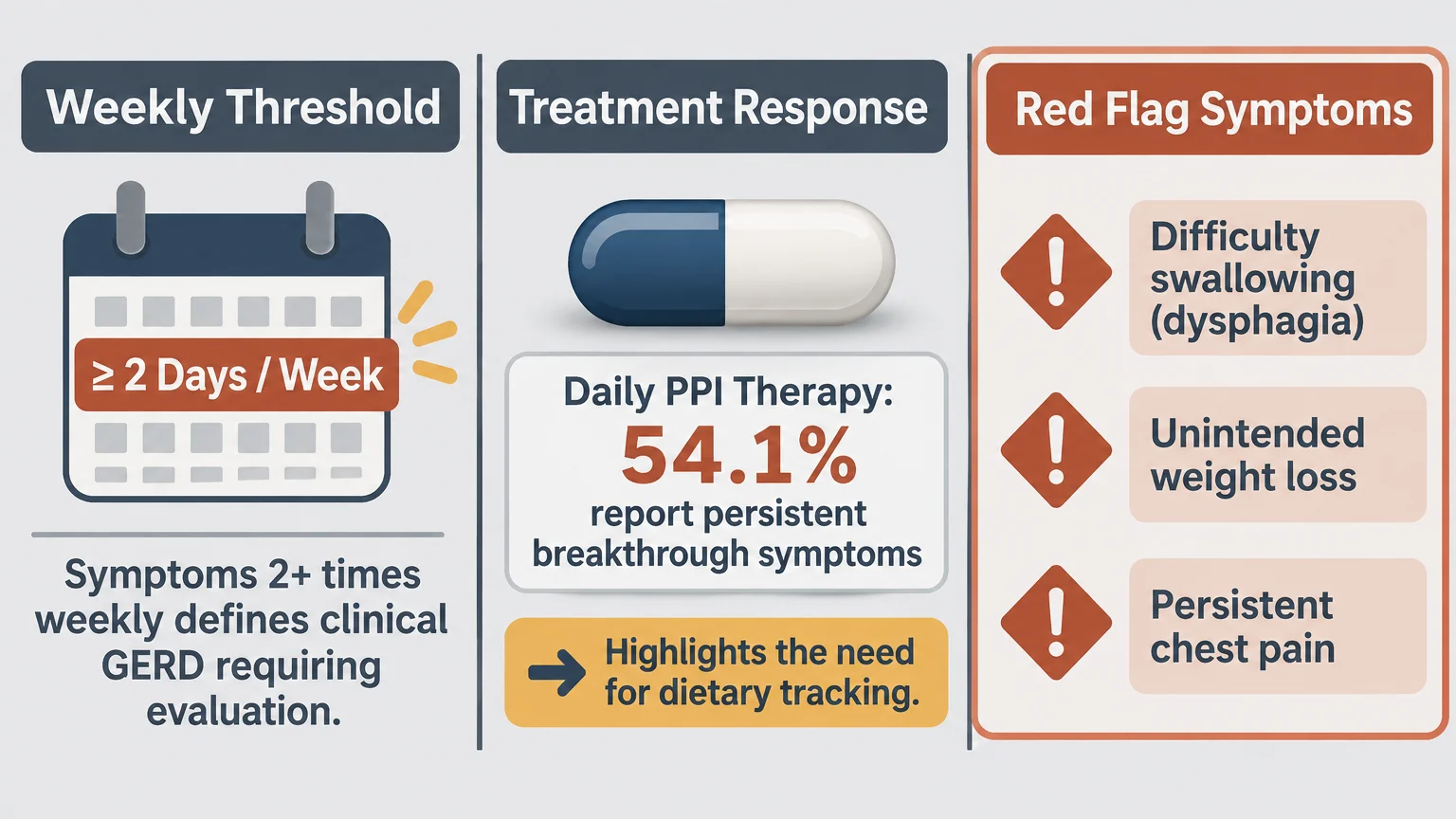
Tracking your progress over time helps you and your clinician measure whether dietary adjustments are truly working. Watch how many days per week you experience burning, sour taste, or throat clearing, remembering that symptoms two or more days weekly meet the clinical threshold for GERD.
Coordinate openly with your doctor or pharmacist before altering any prescribed acid-suppressing medication. Even if food changes bring rapid relief, stopping certain prescriptions abruptly can trigger temporary rebound acid production.
Use over-the-counter antacids cautiously and strictly for occasional, mild discomfort. The NIDDK specifically cautions against taking over-the-counter antacids every day or relying on them for severe symptoms without consulting a physician.
Some over-the-counter acid reducers and calcium- or magnesium-based antacids can also interact with thyroid medications, iron supplements, or certain antibiotics. Reviewing your full supplement and pill list with a pharmacist prevents hidden absorption issues.
Most importantly, never assume every upper-chest or swallowing symptom is simple food-triggered heartburn. The 2022 American College of Gastroenterology guideline strongly recommends prompt endoscopy for alarm symptoms including difficulty swallowing, unexplained weight loss, or gastrointestinal bleeding.
Seek urgent medical evaluation immediately if chest tightness radiates to your arm, jaw, or back, or arrives with shortness of breath or sweating. Ruling out cardiac causes or esophageal complications protects your long-term safety far better than guessing at home.
Frequently Asked Questions About Acid Reflux Trigger Foods
How can I eat out at restaurants without triggering heartburn?
Scan online menus ahead of time and choose grilled, baked, or steamed entrees instead of fried or creamy dishes. Ask your server to place dressings, salsas, and rich sauces on the side so you control the exact amount.
Order still water instead of soda or cocktails, and box half of oversized restaurant portions right when your plate arrives. Leaving room in your stomach lets you enjoy social meals comfortably without paying for it overnight.
What are budget-friendly foods for a GERD diet?
Gentle, reflux-friendly staples rank among the most affordable groceries in any supermarket. Rolled oats, brown rice, bananas, potatoes, carrots, canned beans rinsed well, eggs, and frozen plain vegetables stretch a grocery budget effortlessly.
Purchase whole-grain bread, store-brand low-fat yogurt, and bulk chicken thighs with skin removed instead of pricey specialty digestive snacks. Cooking simple batches at home also spares you from hidden fats and heavy pepper common in takeout meals.
Should I try digestive supplements for acid reflux?
Many over-the-counter herbal blends promise instant heartburn relief, yet quality and evidence vary widely across brands. Notice that peppermint oil capsules—often marketed for bloating—can actually relax your lower esophageal sphincter and worsen reflux.
Always review any fiber powder, enzyme, melatonin, or herbal supplement with your physician or registered dietitian before starting. Your care team can check for medication interactions and ensure supplements never mask symptoms needing medical evaluation.
How can I adapt traditional family or cultural dishes to limit triggers?
You rarely need to abandon cherished family recipes to calm acid reflux. Keep the core grains, legumes, herbs, and proteins you love while adjusting cooking fats, chili heat, and acid levels gently.
Swap lard or heavy ghee for smaller amounts of olive or canola oil, and roast bell peppers or squash to replace fiery chili pastes or concentrated tomato puree. Serve spicy sauces or raw onions separately at the table so everyone seasons their own bowl safely.
Taking Your Next Step Toward Lasting Relief
Managing acid reflux does not require perfection or a joyless menu devoid of flavor. By understanding how the seven main trigger categories interact with your stomach, you gain practical control over daily comfort.
Bring your two-week food and symptom log to your next appointment and share your realistic nutrition goals with your healthcare team. Together, you can refine your plan safely while checking whether any persistent symptoms deserve closer evaluation.
Choose just one concrete habit to track over the next seven days rather than overhauling everything overnight. Try finishing dinner three hours before bed or swapping two daily sodas or coffees for water, and notice how much calmer your evenings feel.