Taking your daily vitamins on an empty stomach with a quick sip of water often sends valuable nutrients straight through your digestive tract unabsorbed. Pairing specific vitamins with a balanced meal unlocks the digestive chemistry your body needs to put them to work.
Five key vitamins depend on food for peak uptake, stomach comfort, or steady blood levels. Knowing which capsules belong next to your plate helps you get measurable value from your routine while avoiding unnecessary doses.
You will learn the exact science behind meal-timed nutrients, simple food pairings that require minimal fat, and safety checks to discuss with your clinician.
Why Supplement Timing Changes What Your Body Absorbs
Supplements are a daily staple across the United States.
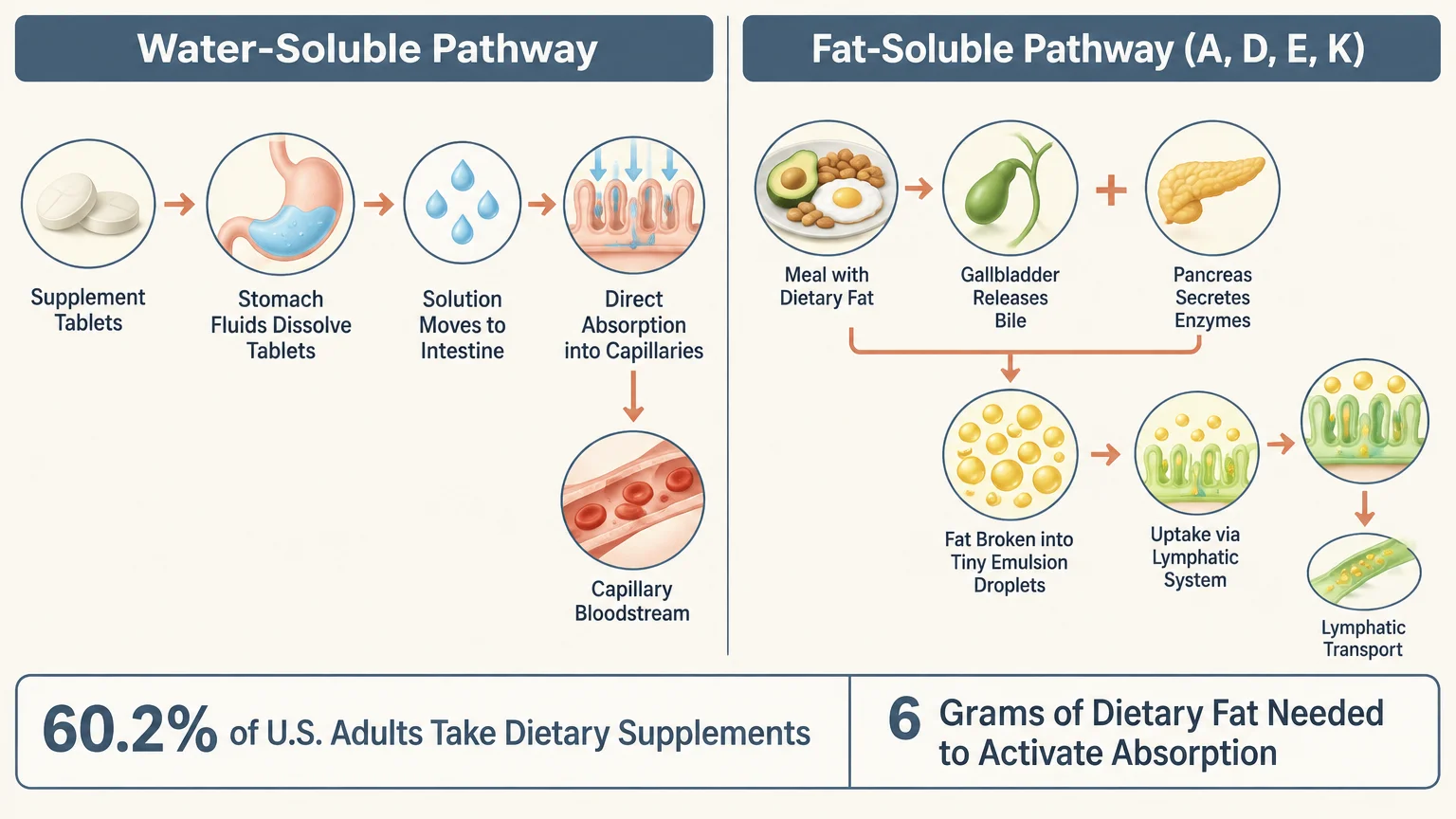
According to the Centers for Disease Control and Prevention National Center for Health Statistics Data Brief No. 561 published in May 2026, 60.2% of adults aged 20 and older used at least one dietary supplement in the past 30 days between August 2021 and August 2023.
Use rises steadily across the lifespan, climbing from 46.3% among adults aged 20 to 39, to 60.3% among those 40 to 59, and reaching 75.9% in adults 60 and older.
Long-term NHANES data covering 63,442 adults from 1999 through 2023 also show overall adult supplement use grew from 51% to 60%, with 38.7% of adults now taking two or more products.
Despite how common capsules and tablets have become, swallowing a pill does not guarantee your bloodstream will receive what is printed on the label. Your digestive system treats vitamins very differently depending on whether they dissolve in water or in dietary fat.
The Fat-Soluble Pathway: Bile, Enzymes, and Storage
Harvard Health, Mayo Clinic, and Cleveland Clinic explain that vitamins A, D, E, and K belong to the fat-soluble family. Unlike water-soluble vitamins that dissolve easily in stomach fluid, fat-soluble nutrients require dietary fat and digestive secretions to cross your intestinal wall.
When you eat a meal containing even a modest amount of fat, your gallbladder releases bile and your pancreas secretes digestive enzymes. Those compounds break fat down into microscopic droplets that carry vitamins A, D, E, and K into your lymphatic system and bloodstream.
Once absorbed, excess amounts of these four vitamins are stored in your liver and fat tissues rather than flushed out quickly in urine. That storage capacity makes consistent absorption helpful—yet it also means taking excessive doses over time can build up to harmful levels.
How Little Fat Does Your Meal Actually Need?
Many readers worry that optimizing vitamin absorption requires a heavy, high-calorie breakfast. Controlled clinical research shows the threshold is far gentler than most people expect.
A 2017 study by White and colleagues in the American Journal of Clinical Nutrition examined 12 participants eating vegetable-based meals containing beta-carotene, vitamin E, and vitamin K. When the meal contained zero fat, absorption of those fat-soluble nutrients dropped to near zero.
Adding just 6 grams of fat—roughly half a tablespoon of cooking oil—crossed the biological threshold needed for meaningful uptake.
You do not need butter-drenched plates to activate digestion; a drizzle of olive oil, a spoonful of nut butter, or a whole egg gets the job done.
Health Conditions and Medications That Block Uptake
Timing your vitamins with food helps healthy digestive tracts, yet certain medical conditions interfere with fat processing altogether.
The NIH Office of Dietary Supplements notes that fat-malabsorption disorders such as Crohn’s disease, celiac disease, and ulcerative colitis significantly reduce absorption of fat-soluble vitamins like D and K.
People who have undergone gastric bypass surgery also absorb fewer fat-soluble nutrients because food bypasses primary sections of the upper intestine. In addition, weight-loss medications like orlistat and cholesterol-lowering bile acid sequestrants bind or block dietary fats, carrying fat-soluble vitamins out of the body.
If you manage a digestive disorder or take medications that alter fat digestion, meal timing alone may not be enough. Ask your gastroenterologist or registered dietitian whether specialized supplement formulations or lab monitoring belong in your care plan.
The 5 Vitamins That Work Better When Taken With Food
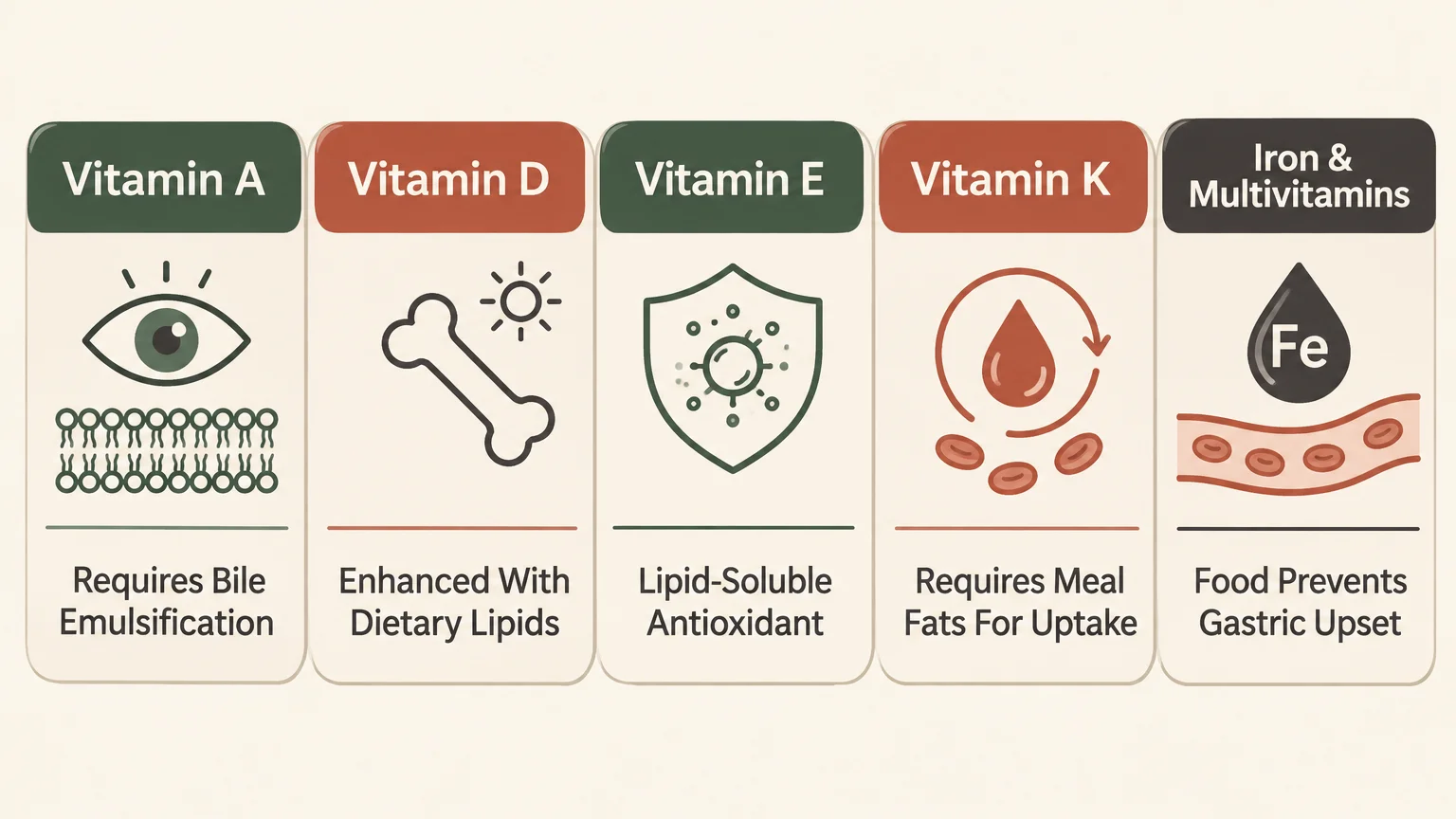
Four of the five vitamins below rely directly on dietary fat for transport across the gut lining. The fifth breaks the usual water-soluble rule because food improves its absorption at common supplement doses and supports steadier uptake.
1. Vitamin D: Pair With Healthy Fats for Stronger Peak Absorption
Vitamin D supports calcium balance, bone mineralization, immune signaling, and muscle function. Because so few foods naturally contain substantial vitamin D, millions of Americans rely on daily supplements to maintain healthy blood levels.
Research from Tufts University published by Dawson-Hughes and colleagues in the Journal of the Academy of Nutrition and Dietetics in February 2015 tested 50 adults taking 50,000 IU of vitamin D3.
Those who took the supplement with a meal supplying 30% of its calories from fat achieved a 32% higher mean peak plasma vitamin D3 level at 12 hours compared with a fat-free meal.
Interestingly, the researchers found no significant difference based on whether the meal emphasized monounsaturated or polyunsaturated fats. What mattered most was the presence of fat in the meal, not chasing a specific exotic oil.
An earlier 2013 Tufts trial led by Dawson-Hughes in the Journal of Bone and Mineral Research compared 62 adults taking vitamin D with a low-fat meal, a high-fat meal, or no meal.
Twelve-hour absorption reached 241.1 nmol/L with the low-fat meal compared with 207.4 nmol/L with the high-fat meal and 200.9 nmol/L with no meal, though 30- and 90-day blood 25(OH)D levels evened out.
Form matters alongside meal timing. According to the NIH Office of Dietary Supplements, vitamin D3 (cholecalciferol) may raise blood 25(OH)D levels higher and sustain them longer than vitamin D2 (ergocalciferol), and neither aging nor obesity directly blocks gut absorption of vitamin D.
For healthy adults aged 19 to 70, the Recommended Dietary Allowance is 15 mcg (600 IU) per day, rising to 20 mcg (800 IU) per day after age 70, while infants up to 12 months have a benchmark of 400 IU.
The FDA Daily Value printed on Supplement Facts labels for ages 4 and older is 20 mcg (800 IU), and the Tolerable Upper Intake Level is 100 mcg (4,000 IU) daily.
To apply this at your kitchen table, take your vitamin D softgel alongside breakfast eggs, salmon, or oatmeal topped with walnuts. Avoid chasing it down with plain black coffee before heading out the door.
2. Vitamin A: Protect Vision and Immunity Without Overloading
Vitamin A plays an essential role in night vision, immune defense, cellular growth, and maintaining healthy skin and mucous membranes. It circulates in two main forms: preformed vitamin A (retinol) from animal foods and supplements, and provitamin A carotenoids such as beta-carotene from colorful produce.
Both preformed retinol and plant-based beta-carotene require bile salts and dietary fat for efficient intestinal absorption. Eating raw carrots or spinach on an empty stomach leaves most of their beta-carotene behind unless you pair them with salad dressing, avocado, or seeds.
Adult men need 900 mcg RAE of vitamin A daily, while adult women need 700 mcg RAE daily. Under U.S. Food and Drug Administration labeling rules implemented in July 2018, labels must express vitamin A in micrograms of retinol activity equivalents (mcg RAE) instead of International Units.
The NIH Office of Dietary Supplements specifies that 1 mcg RAE equals 1 mcg of retinol, 2 mcg of supplemental beta-carotene, or 12 mcg of beta-carotene from whole foods.
That conversion difference reflects how much harder your digestive tract works to extract and convert plant pigments compared with isolated supplements.
Because preformed vitamin A accumulates in the liver, safety limits deserve careful respect. The Tolerable Upper Intake Level is 3,000 mcg per day of preformed vitamin A from food and supplements combined.
If your multivitamin includes vitamin A, take it with a balanced lunch or dinner rather than alone on an empty stomach.
Even better, prioritize roasted sweet potatoes tossed in olive oil or sautéed greens paired with olive oil and garlic to supply beta-carotene without risking preformed toxicity.
3. Vitamin E: Balance Dose Timing With Cardiovascular Safety
Vitamin E functions primarily as a fat-soluble antioxidant that shields cell membranes from oxidative damage. Healthy adults need 15 mg per day of alpha-tocopherol from foods or supplements.
Like its fat-soluble partners, vitamin E capsules absorb poorly without dietary lipids to trigger bile release. Taking vitamin E alongside whole-food meals containing nuts, seeds, or fish dramatically improves intestinal uptake compared with taking it with water alone.
At the same time, vitamin E requires extra caution regarding dose size.
While no upper limit exists for vitamin E occurring naturally in foods, the Tolerable Upper Intake Level for supplemental vitamin E is 1,000 mg per day—and clinical evidence warns against high-dose pills well below that ceiling.
The NIH Office of Dietary Supplements highlights meta-analyses linking supplemental vitamin E at 400 IU per day—with risk beginning to climb at 150 IU per day—to small, statistically significant increases in all-cause mortality.
Furthermore, the SELECT trial analyzed through Cleveland Clinic involving 36,000 men linked 400 IU per day of vitamin E to a 17% higher risk of prostate cancer.
High doses also affect blood clotting. According to the NIH Office of Dietary Supplements, taking more than 400 IU daily can antagonize vitamin K-dependent clotting factors and raise bleeding risk if you take anticoagulants such as warfarin.
For most people, meeting the 15 mg daily target through food—such as sunflower seeds, almonds, spinach drizzled with olive oil, or wheat germ—offers safer antioxidant support than standalone high-dose capsules.
If a clinician prescribes a targeted dose for a documented deficiency, pair that capsule with your largest fat-containing meal.
4. Vitamin K: Support Blood Clotting and Bone Health Consistently
Vitamin K directs proteins involved in blood coagulation and helps bind calcium into bone tissue. Because the body stores relatively small amounts compared with vitamin D, steady daily intake and reliable mealtime absorption matter every single day.
Rather than a formal Recommended Dietary Allowance, the Food and Nutrition Board sets an Adequate Intake of 120 mcg per day for adult men and 90 mcg per day for adult women.
No Tolerable Upper Intake Level has been established because toxicity from food or standard supplements is exceedingly rare.
Whether you get vitamin K from leafy greens like kale and collards or from a multivitamin, dietary fat is essential for moving it across the intestinal barrier.
Drizzling sesame oil over steamed broccoli or sautéing Swiss chard with olive oil ensures those fat-soluble phylloquinones reach your circulation.
One strict safety rule applies to anyone taking prescription blood thinners.
The NIH Office of Dietary Supplements emphasizes that patients using warfarin (Coumadin) or similar anticoagulants must keep their daily vitamin K intake consistent and consult their clinician before starting, stopping, or changing any vitamin K supplement.
Sudden spikes in vitamin K can weaken warfarin’s protective effect, while sudden drops can push blood thinning too far. Keeping both your leafy-green portions and your supplement schedule predictable protects stable clotting control.
5. Vitamin B2 (Riboflavin): A Water-Soluble Exception
Most people assume every B vitamin belongs on an empty stomach, yet vitamin B2—also known as riboflavin—performs noticeably better alongside food. Riboflavin helps convert carbohydrates, fats, and proteins into usable cellular energy while supporting red blood cell production and skin health.
Clinical monographs on Drugs.com advise taking riboflavin preferably with food, and research summaries compiled by Examine.com explain why. Orally administered riboflavin in the FMN form demonstrates higher bioavailability when swallowed with a meal compared with fasting at 10 mg to 30 mg supplement doses.
At a smaller 5 mg dose, riboflavin achieves roughly 58% bioavailability with or without food, while whole-food sources such as milk and spinach yield 60% to 67% bioavailability. Moreover, the NIH Office of Dietary Supplements notes that the human gut absorbs very little riboflavin from single doses exceeding 27 mg.
Adult men need 1.3 mg per day and adult women need 1.1 mg per day, with no upper limit set because excess amounts leave quickly in bright yellow urine, as noted by Harvard Health and the NIH Office of Dietary Supplements.
That harmless color change surprises many first-time users, yet it simply shows unabsorbed or excess riboflavin exiting the body.
Storage matters for riboflavin just as much as meal timing.
Both Harvard Health and the NIH Office of Dietary Supplements point out that ultraviolet and visible light rapidly degrade riboflavin, which is why dairy processors package milk in opaque cartons or plastic jugs instead of clear glass bottles.
Keep your B-complex or riboflavin bottle inside a cool, dark cabinet rather than on a sunny windowsill, and swallow your capsule with breakfast or lunch.
Other water-soluble vitamins behave differently: vitamin C (90 mg RDA for men, 75 mg for women, 2,000 mg upper limit) does not need food for absorption, though taking acidic vitamin C on an empty stomach can cause nausea, and pairing it with iron-rich meals boosts iron uptake.
By contrast, folic acid (vitamin B9) is actually absorbed slightly better on an empty stomach. According to the Institute of Medicine, 0.5 mcg of folic acid taken fasting provides the same biological value as 0.6 mcg taken with food, both equaling 1 Dietary Folate Equivalent.
Practical Meal Strategies and Daily Routines
Knowing the physiology behind vitamin absorption only pays off when it fits naturally into your busy mornings and evenings. Building a repeatable meal routine prevents skipped capsules and guesswork.
Designing a 6-Gram Fat Meal Anchor
Since clinical research shows roughly 6 grams of added fat—about half a tablespoon of oil—unlocks fat-soluble absorption, you can anchor your supplements to simple everyday foods.
Whole-food fats also slow gastric emptying slightly, giving your digestive tract more time to process riboflavin and other micronutrients.
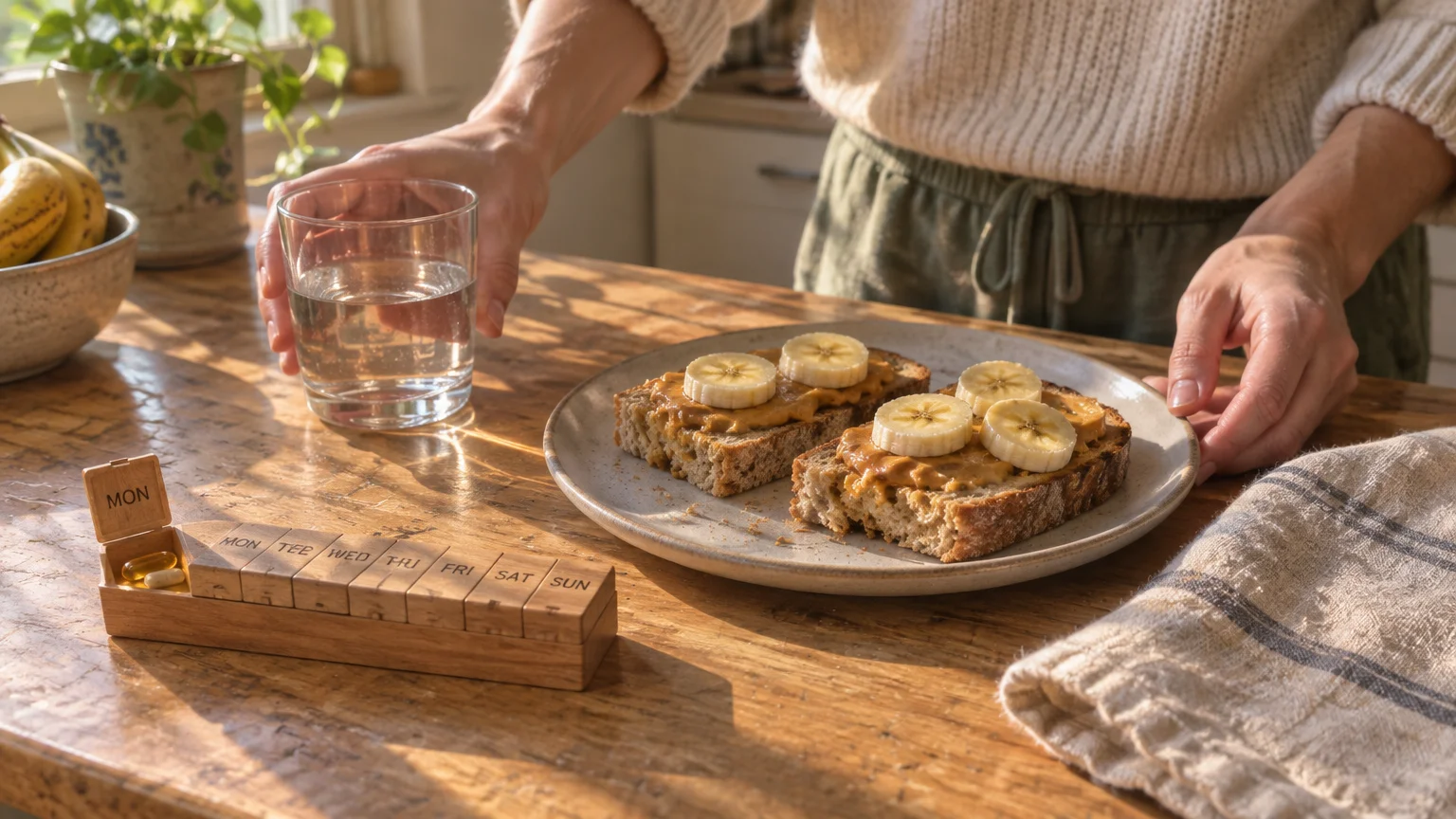
At breakfast, pair your vitamins with two scrambled eggs, a bowl of Greek yogurt topped with sliced almonds, or whole-grain toast spread with peanut butter.
Even stirring a spoonful of chia seeds or walnut halves into warm oatmeal supplies enough healthy fat to trigger bile flow.
If you prefer savory lunches, build a grain bowl featuring brown rice, black beans, leafy greens, and sliced avocado dressed with olive oil and lemon juice.
At dinner, grilled salmon, roasted chicken thighs, or tofu sautéed in sesame oil naturally provide all the dietary fat your fat-soluble capsules require.
Timing Around Coffee, Medications, and Split Doses
Many adults swallow their multivitamin with morning coffee and skip breakfast until midday. Because black coffee contains zero fat and can irritate an empty stomach, shifting your supplement bottle next to your lunchbox or dinner plates solves both problems instantly.
If your healthcare provider recommends a higher-dose riboflavin supplement—for instance, above the 27 mg gut absorption ceiling—ask whether splitting doses across two meals makes sense. Pairing smaller doses with breakfast and dinner prevents wasting unabsorbed nutrients while minimizing mild stomach discomfort.
People who take thyroid hormone replacement, certain antibiotics, or bone-strengthening bisphosphonates often have strict empty-stomach medication rules early in the morning. Keep those medications separated by whatever window your pharmacist specifies, then take your food-dependent vitamins with lunch or dinner so nothing competes for uptake.

Lifestyle Habits That Support Nutrient Status
Food and capsule timing set the foundation, yet your daily movement, sleep, stress levels, and social routines shape how effectively your body uses every nutrient you absorb.
Movement and Digestive Motility
Regular physical activity supports healthy intestinal motility, helping bile, digestive enzymes, and food mix smoothly along your digestive tract.
Weight-bearing exercises such as brisk walking, dancing, or resistance training also stimulate bone remodeling, giving absorbed vitamin D and vitamin K clear work to do inside skeletal tissue.
You do not need grueling gym sessions to see digestive benefits. A gentle walk after dinner supports blood sugar regulation and comfortable digestion without triggering reflux.
Sleep, Stress, and Gut Comfort
Chronic sleep loss and high daily stress shift blood flow away from your digestive organs and can alter stomach acid and motility. When you rush through meals at your desk under pressure, you are more likely to experience bloating or nausea after swallowing supplements.
Creating a predictable sleep schedule stabilizes appetite cues, making it far easier to sit down for a real breakfast or lunch where your vitamins belong. Taking a few slow breaths before eating helps shift your nervous system into a calm rest-and-digest state.
Community Support and Shared Meals
Sustaining healthy nutrition habits feels much simpler when friends, partners, or family members share the routine. Eating dinner together naturally encourages varied meals with vegetables, proteins, and healthy cooking oils rather than rushed snack bars.
Consider teaming up with a partner or coworker to check in on meal-timed hydration and whole-food lunches. Guidance from a registered dietitian—accessible through the Academy of Nutrition and Dietetics—can also tailor your meal rhythm to shift work, caregiving schedules, or athletic training.
Monitoring, Safety, and Supplement Quality
Because vitamins sold in stores look similar to over-the-counter medicines, many shoppers assume the government tests every bottle before it reaches shelves. Understanding regulatory limits protects both your wallet and your health.
How Supplements Are Regulated and Verified
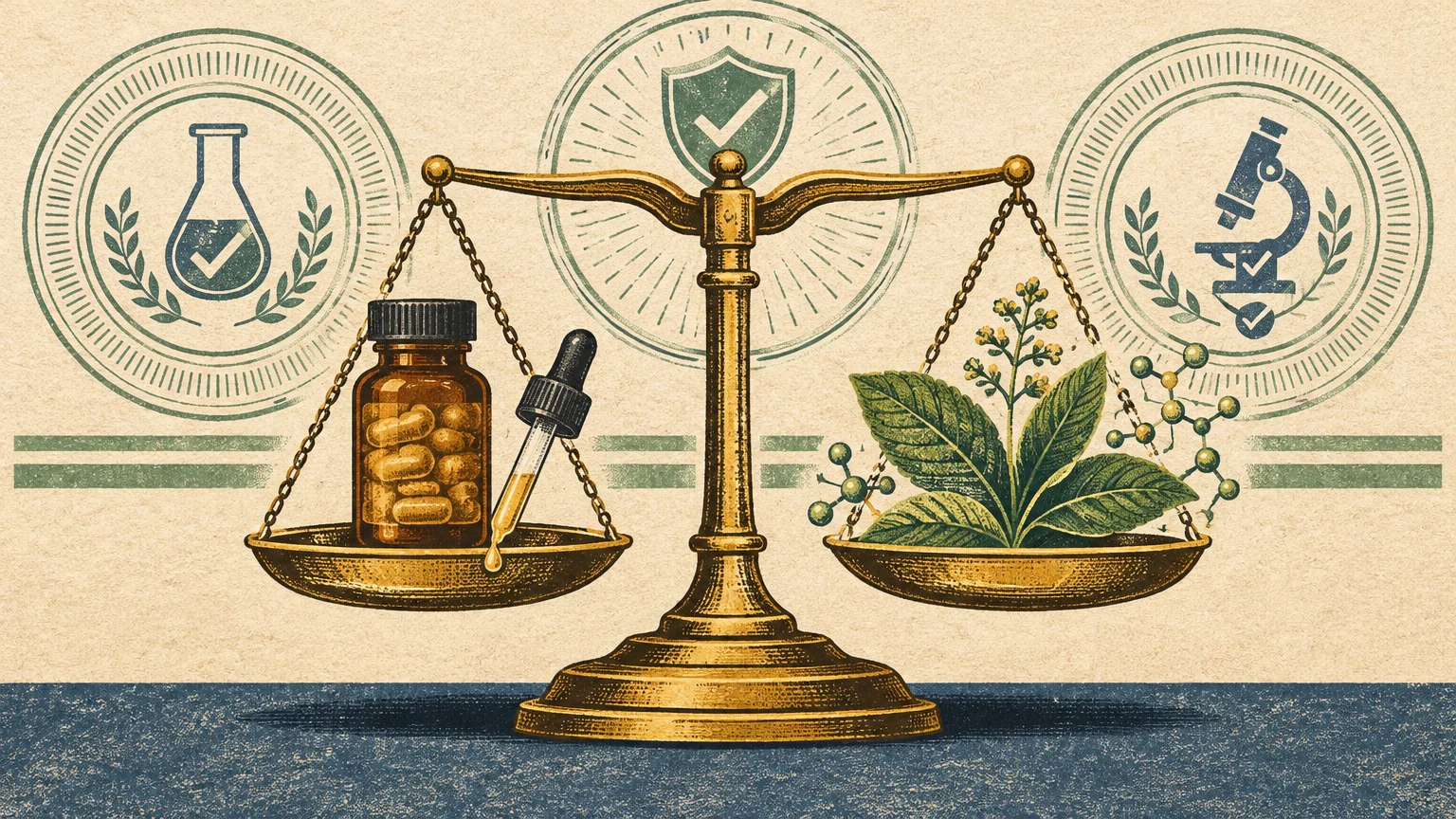
Under the Dietary Supplement Health and Education Act of 1994, vitamins sold as dietary supplements are not FDA-approved drugs and are not reviewed by the FDA for safety or effectiveness before going to market.
Manufacturers are still required to follow FDA current Good Manufacturing Practices under 21 CFR Part 111, and structure or function claims must carry a standard FDA disclaimer.
Because independent testing varies across brands, Mayo Clinic Health System advises shoppers to look for USP Verified on product labels. That third-party seal from U.S. Pharmacopeia confirms that the bottle contains the declared ingredients in the stated strength without harmful contaminants.
Biomarkers, Drug Interactions, and Red Flags
More is never better when it comes to fat-soluble vitamins stored in liver and adipose tissue. Before adding standalone vitamin D, A, or E pills on top of a daily multivitamin, tally your combined daily intake against official upper limits.
Ask your primary care clinician which lab tests fit your health history. A 25-hydroxyvitamin D blood test guides safe vitamin D dosing, while regular International Normalized Ratio (INR) blood tests monitor clotting stability for anyone taking warfarin alongside dietary or supplemental vitamin K.
Review every prescription and over-the-counter drug with your pharmacist, paying special attention to warfarin, orlistat, and bile acid sequestrants.
Seek prompt medical attention if you notice red-flag symptoms such as unusual bruising, nosebleeds, dark tarry stools, persistent nausea, severe abdominal pain, or yellowing of the skin and eyes.
Frequently Asked Questions About Taking Vitamins With Food
How can I pair supplements with food when dining out?
Restaurant meals almost always contain plenty of cooking oils, dressings, or natural fats from meats, fish, cheeses, or nuts to support fat-soluble absorption.
Carry a small pill organizer in your bag and take your vitamins midway through the meal rather than waiting until you get home hours later.
Choose dishes that balance vegetables with a clear fat source—such as grilled fish with sautéed greens, a grain salad with avocado and olive oil dressing, or stir-fried tofu and vegetables.
Avoid pairing vitamins solely with sugary cocktails or plain bread appetizers before the main course arrives.
What are budget-friendly foods that boost vitamin absorption?
You do not need expensive superfoods to reach the modest 6-gram fat threshold for vitamin absorption.
Everyday pantry staples like peanut butter, eggs, canned sardines or tuna packed in oil, sunflower seeds, whole milk, and store-brand olive or canola oil deliver reliable lipids at low cost.
Frozen spinach sautéed in a teaspoon or two of vegetable oil pairs affordable vitamin K and beta-carotene with all the fat needed for uptake.
Pairing a basic store-brand USP Verified multivitamin with oatmeal and a spoonful of peanut butter gives you optimal absorption on a tight grocery budget.
Do multivitamins and gummies still need to be taken with a meal?
Yes—most daily multivitamins bundle fat-soluble vitamins A, D, E, and K alongside riboflavin and minerals like zinc or iron. Swallowing a multivitamin with breakfast, lunch, or dinner protects your stomach from nausea while ensuring the fat-soluble ingredients actually absorb.
Check gummy labels carefully, because some gummies omit fat-soluble vitamins or contain added sugars without minerals.
Even when a gummy tastes like candy, eating it right after a meal with a small amount of fat helps any vitamin D, A, or E inside reach your bloodstream.
How can I adapt supplement timing to traditional or cultural cuisines?
Traditional cuisines across the globe already pair vegetables with cooking fats in ways that naturally optimize fat-soluble vitamins. Dishes built with sesame oil, olive oil, ghee, coconut milk, avocado, or fatty fish effortlessly cross the absorption threshold without altering cultural flavors.
For example, pairing your vitamins with lentil stew tempered in oil, black beans topped with avocado, miso soup enriched with tofu and salmon, or Mediterranean greens dressed in olive oil fits nutrition science seamlessly.
If you observe religious fasting windows, shift your supplement schedule to your primary evening or pre-dawn meal when food and fluids are consumed together.

Partner With Your Healthcare Team
Smart supplement timing turns everyday meals into powerful allies for your long-term health. By matching vitamins D, A, E, K, and B2 with balanced, fat-containing meals, you protect your stomach, improve bioavailability, and avoid wasting money on poorly absorbed pills.
Before your next medical visit, gather every vitamin, mineral, and herbal bottle you take and place them in a bag so your clinician or pharmacist can review total doses and interactions.
Choose one simple habit to track this week—such as moving your vitamin D bottle next to your dinner plates or pairing your morning multivitamin with a spoonful of nut butter—and notice how steady your routine feels.
For evidence-based guidance on food-first nutrition and supplement safety, explore resources from Mayo Clinic alongside your healthcare team’s personalized advice.