Taking daily vitamins feels like simple health insurance, yet high doses can quietly harm your organs, nerves, and bones. Knowing which nutrients build up in your tissues helps you protect your body while meeting daily needs.
About 60% of U.S. adults take dietary supplements, though fewer than half disclose that use to a clinician. Because federal law does not require premarket safety testing for supplements, extra pills can quickly push you past safe limits.
This guide explains how six common vitamins trigger vitamin toxicity and shows how food-first habits keep your nutrition balanced.

How Supplement Habits Lead to Harmful Vitamin Doses
Adult supplement use in the United States climbed from 51% in 1999 to 60% in 2023, according to an American College of Physicians report. However, only 25% of users take products recommended by a healthcare professional.
Many people land in emergency departments because of unmonitored pills and powders. Data from the Centers for Disease Control and Prevention and the FDA link dietary supplements to an estimated 23,005 emergency department visits and 2,154 hospitalizations each year.
Nearly one-third of single-supplement adult emergencies involve vitamins and minerals. Strong supplement safety starts with knowing that the U.S. Food and Drug Administration regulates supplements as food under a 1994 law, meaning products reach shelves without premarket approval.
Your body handles excess nutrients differently depending on how they dissolve. Fat-soluble vitamins stay stored inside your liver and fat tissue for months, while excess water-soluble vitamins can still overwhelm kidneys, nerves, and blood vessels in concentrated doses.
The Six Vitamins Linked to Toxicity
Vitamin A (Preformed Retinol)
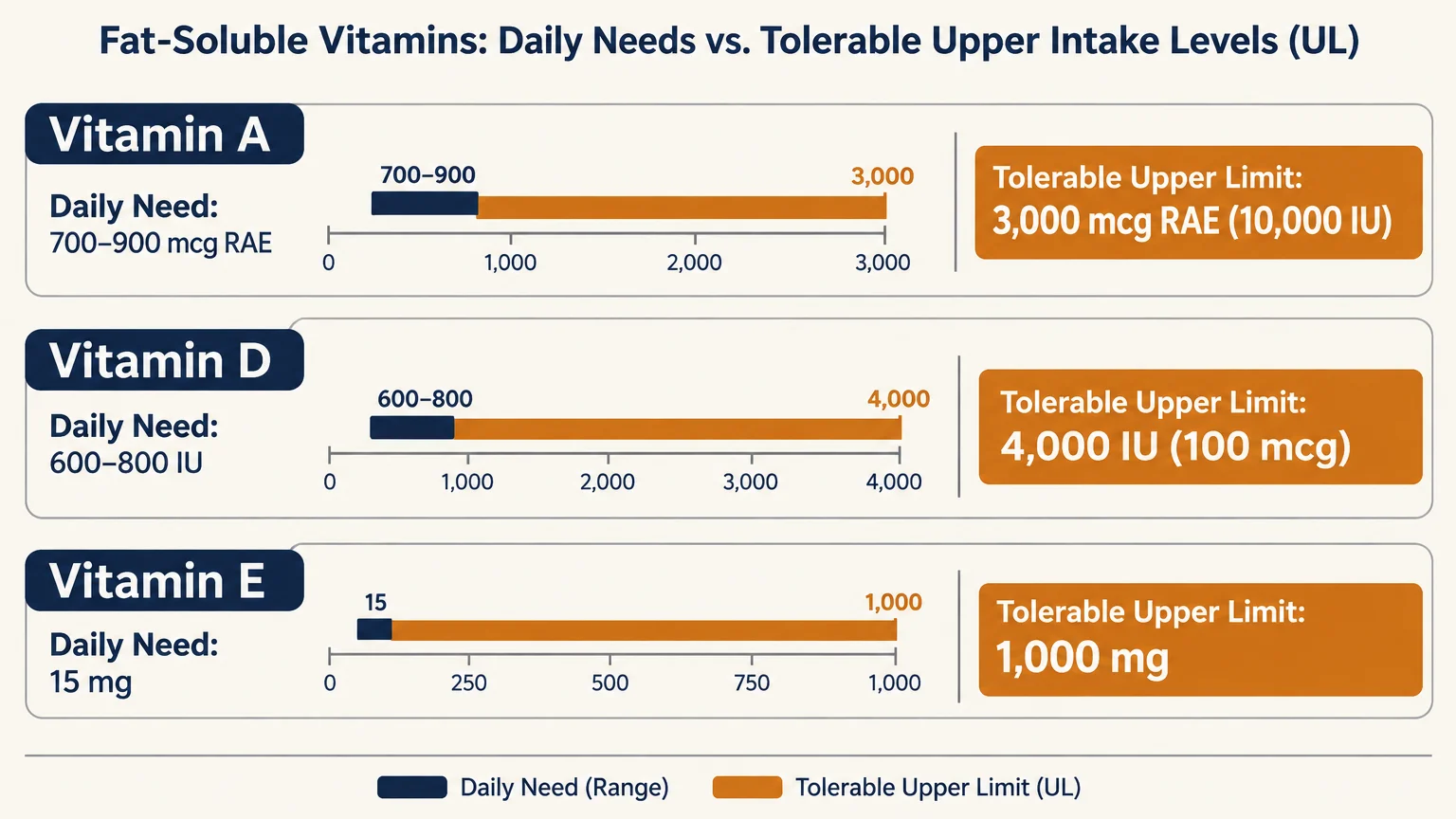
Adults need 900 mcg Retinol Activity Equivalents (RAE) daily for men and 700 mcg RAE for women. The National Academies sets the adult Tolerable Upper Intake Level (UL) at 3,000 mcg RAE/day (10,000 IU) for preformed vitamin A.
Your liver stores 80% to 90% of your vitamin A, so chronic vitamin A overdose builds up slowly. Prolonged intakes at or above 10,000 IU daily can trigger liver enlargement, severe headaches, peeling skin, hair loss, and joint pain.
Intakes above 1,500 mcg RAE daily are also linked to weaker bones and fractures. Above the UL, preformed vitamin A can cause severe birth defects, whereas plant beta-carotene from vegetables avoids toxicity—though beta-carotene pills raise lung cancer risk in smokers.
Vitamin D
Adults need 600 IU of vitamin D daily through age 70 and 800 IU after age 70. The Institute of Medicine sets the adult UL at 4,000 IU (100 mcg)/day, yet many store-bought bottles sell far stronger pills.
In 2024, the Endocrine Society advised against routine blood screening and excess dosing for healthy adults under 75. Daily low doses are safer than massive intermittent boluses above 100,000 IU, which raise fall and fracture risks.
Taking too much vitamin D—typically 10,000 IU or more daily from supplements—causes calcium to build up in your blood. This hypercalcemia leads to nausea, frequent urination, kidney stones, heart rhythm problems, and kidney damage, while also competing with certain statins.
Vitamin E
Adults require just 15 mg of vitamin E daily from foods like nuts and vegetable oils. The NIH Office of Dietary Supplements lists an adult supplemental UL of 1,000 mg/day, and food sources show no harmful effects.
High-dose vitamin E slows blood clotting and raises your risk of hemorrhagic stroke. It can also trigger dangerous bleeding if you take blood thinners like warfarin or daily aspirin.
Harm can happen well below the official ceiling. A large trial of over 35,000 men found that 400 IU of synthetic vitamin E daily raised prostate cancer risk by 17%, and high antioxidants may blunt chemotherapy or cholesterol treatments.
Vitamin B6 (Pyridoxine)
Adults need only 1.3 mg to 1.7 mg of vitamin B6 per day. Although the U.S. UL remains 100 mg daily, European regulators cut their adult limit to 12 mg/day after tracking nerve injuries at much lower doses.
Excess supplemental B6 accumulates in your bloodstream and damages sensory nerves, causing numbness, burning, or tingling in your hands and feet. Clinical reports document nerve toxicity at daily intakes as low as 6 mg to 25 mg.
You can hit those harmful vitamin doses without realizing it. A 2026 label review showed that nearly two in five U.S. B6 supplements exceed 12 mg per day, often hiding inside energy drinks, magnesium blends, and B-complexes.
Vitamin B3 (Niacin)
Your daily niacin need is 14 mg to 16 mg, and the U.S. supplemental UL is 35 mg daily. Unfortified foods never cause harm, but supplemental nicotinic acid at 30 mg to 50 mg frequently causes painful skin flushing.
High-dose niacin near 3,000 mg daily—or heavy energy drink habits—can injure your liver, blur vision, and trigger gout. A 2024 Cleveland Clinic study also linked a breakdown product of excess niacin to vascular inflammation and doubled cardiovascular risks.
Vitamin C
Vitamin C has low toxicity, yet the NIH sets the adult UL at 2,000 mg daily. Once your daily pill intake passes 1,000 mg, your gut absorbs less than half and flushes the rest out.
Megadoses past 2,000 mg commonly cause diarrhea, stomach cramps, and nausea. High supplemental doses can also promote kidney stones, boost iron absorption to risky levels in hemochromatosis, and raise heart risks in postmenopausal women with diabetes.
Food-First Strategies to Replace High-Dose Pills
Whole foods protect you from vitamin toxicity because your body regulates how it absorbs and converts food-based nutrients. Your skin stops making vitamin D after sufficient sun, and your gut converts plant beta-carotene into vitamin A only as needed.
Start your morning with oatmeal topped with two tablespoons of sunflower seeds for vitamin E and half a cup of strawberries for vitamin C. For lunch, pair three ounces of salmon with a baked sweet potato for safe vitamin D, B6, and beta-carotene.
At dinner, serve three ounces of chicken breast or a cup of chickpeas with sautéed red bell peppers and brown rice to cover niacin, B6, and vitamin C. Checking labels on cereals and energy drinks keeps fortified extras from stacking up.
A registered dietitian from the Academy of Nutrition and Dietetics can help you tailor daily meals and drop unnecessary pills.

Lifestyle Habits That Support Nutrient Balance
Regular movement strengthens bones and muscles far more reliably than high-dose vitamin D pills. Brisk walking or light resistance training three to five days a week helps your body put dietary calcium and vitamin D to work safely.
Poor sleep and chronic stress often tempt people to grab high-dose B-complex capsules or energy shots. Keeping a steady sleep schedule and taking brief walks restores steady energy without overloading your nerves with excess B6 or niacin.
Store every vitamin bottle in a high, locked cabinet away from curious kids. Unsupervised child ingestions account for more than one in five emergency visits tied to dietary supplements.

Monitoring Labs, Medications, and Warning Signs
Share a complete list of your vitamins, powders, and energy drinks with your doctor and pharmacist. Supplements can clash with prescription blood thinners, statins, and cancer treatments even when bottles look harmless.
Ask your clinician before ordering routine vitamin D blood tests if you are generally healthy and under age 75. Targeted testing makes more sense if you are pregnant, managing prediabetes, or living with conditions that affect absorption.
Seek prompt medical care if you notice tingling in your fingers or toes, severe headaches, vision changes, or unexplained bruising. Persistent nausea, frequent urination, yellowing skin, or intense fatigue after starting a supplement also warrant an immediate check.
When a clinician recommends a supplement, choose a product verified by U.S. Pharmacopeia (USP) or another independent quality program. Independent seals confirm that the bottle contains what the label promises without hidden megadoses.
Frequently Asked Questions
How can I avoid excess vitamins when dining out?
Skip vitamin-spiked mocktails, energy drinks, and heavily fortified shakes on restaurant menus. Order grilled fish, poultry, legumes, and colorful vegetables, and keep animal liver—which packs dense preformed vitamin A—as an occasional small portion.
What are budget-friendly food swaps for expensive supplements?
Canned salmon, carrots, sweet potatoes, sunflower seeds, dried chickpeas, and frozen bell peppers deliver dense nutrition for pennies per serving. Buying staple whole foods replaces costly multi-ingredient capsules while keeping your vitamin intake inside safe ranges.
When do I actually need a vitamin supplement?
Clinicians often advise targeted, low-dose supplementation during pregnancy, for adults aged 75 and older, or when lab tests confirm a true deficiency. Follow your provider’s exact dose rather than grabbing high-potency store blends.
How do I adapt safe vitamin habits to different cultural cuisines?
Use beta-carotene-rich foods like winter squash, mangoes, or bok choy instead of vitamin A pills across any cooking tradition. Pair staples like lentils, tofu, or tortillas with citrus, tomatoes, and herbs to meet B-vitamin and vitamin C goals naturally.

Your Next Step for Safer Nutrition
Gather every vitamin bottle, protein powder, and energy drink you use regularly and bring that list to your next healthcare appointment. Reviewing exact doses together ensures your routine supports your health without hidden risks.
Choose one small habit to track this week, such as trading an afternoon energy drink for water and a handful of nuts. Small, food-first steps protect your body far better than megadoses ever could.