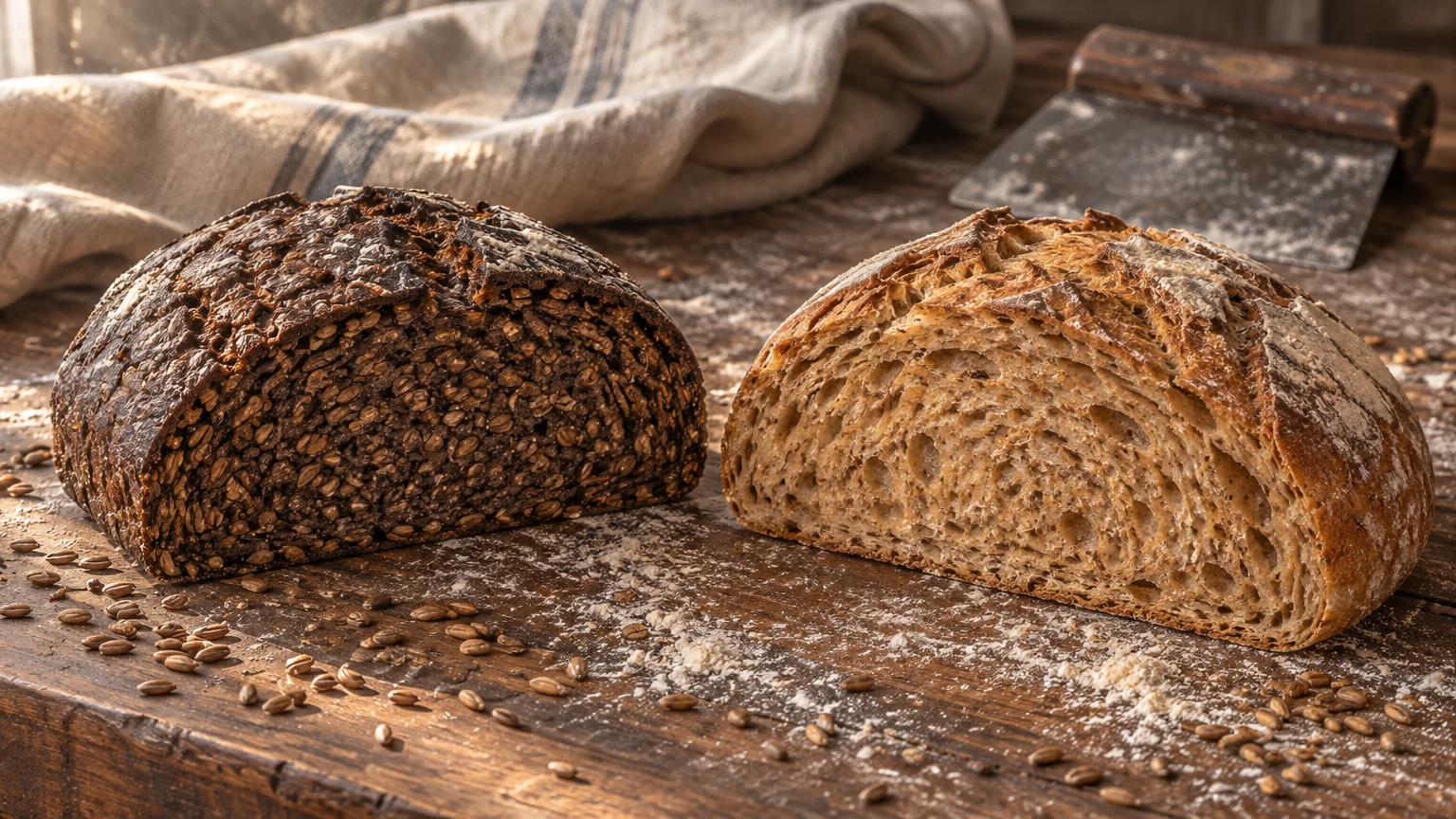
Picking the right loaf in the bread aisle can steady your afternoon energy and protect your long-term metabolic health. Comparing rye vs. whole wheat bread helps you spot hidden refined flours that spike glucose fast.
Standard sandwich loaves often behave like white bread once they hit your stomach, even when the package looks wholesome. True intact grains and sourdough fermentation change that digestive timeline in measurable ways.
You will learn how milling, fiber types, and smart meal pairings shape your glucose curve. Use this guide to pick a genuinely low-glycemic loaf and coordinate lasting habits with your healthcare team.
Why Your Bread Choice Matters for Blood Sugar
Millions of Americans manage daily glucose swings without realizing how heavily breakfast toast or lunchtime sandwiches drive those numbers. Choosing the best bread for diabetics starts with looking past brown coloring and front-of-package marketing.
According to the CDC National Diabetes Statistics Report, an estimated 40.1 million people in the United States, or 12.0% of the population, live with diabetes. Roughly 29.1 million have a formal diagnosis, while 11.0 million adults remain undiagnosed.
Those undiagnosed cases account for 27.6% of all U.S. adults living with diabetes, and 1.5 million new adult cases appear each year. Another 115.2 million U.S. adults have prediabetes, including 31.3 million—or 52.1%—of adults aged 65 and older.
Because bread appears at so many meals, upgrading your daily loaf offers a realistic, repeatable health win. Swapping a fast-digesting slice for a denser, intact-grain option reduces glycemic pressure without forcing you to give up sandwiches.
Still, neither grain automatically wins every aisle matchup. Your metabolic response depends on how finely the flour was milled, whether sourdough fermentation was used, and what else shares your plate.
The Science Behind Rye, Whole Wheat, and Blood Glucose
Glycemic Index, Glycemic Load, and Milling Particle Size
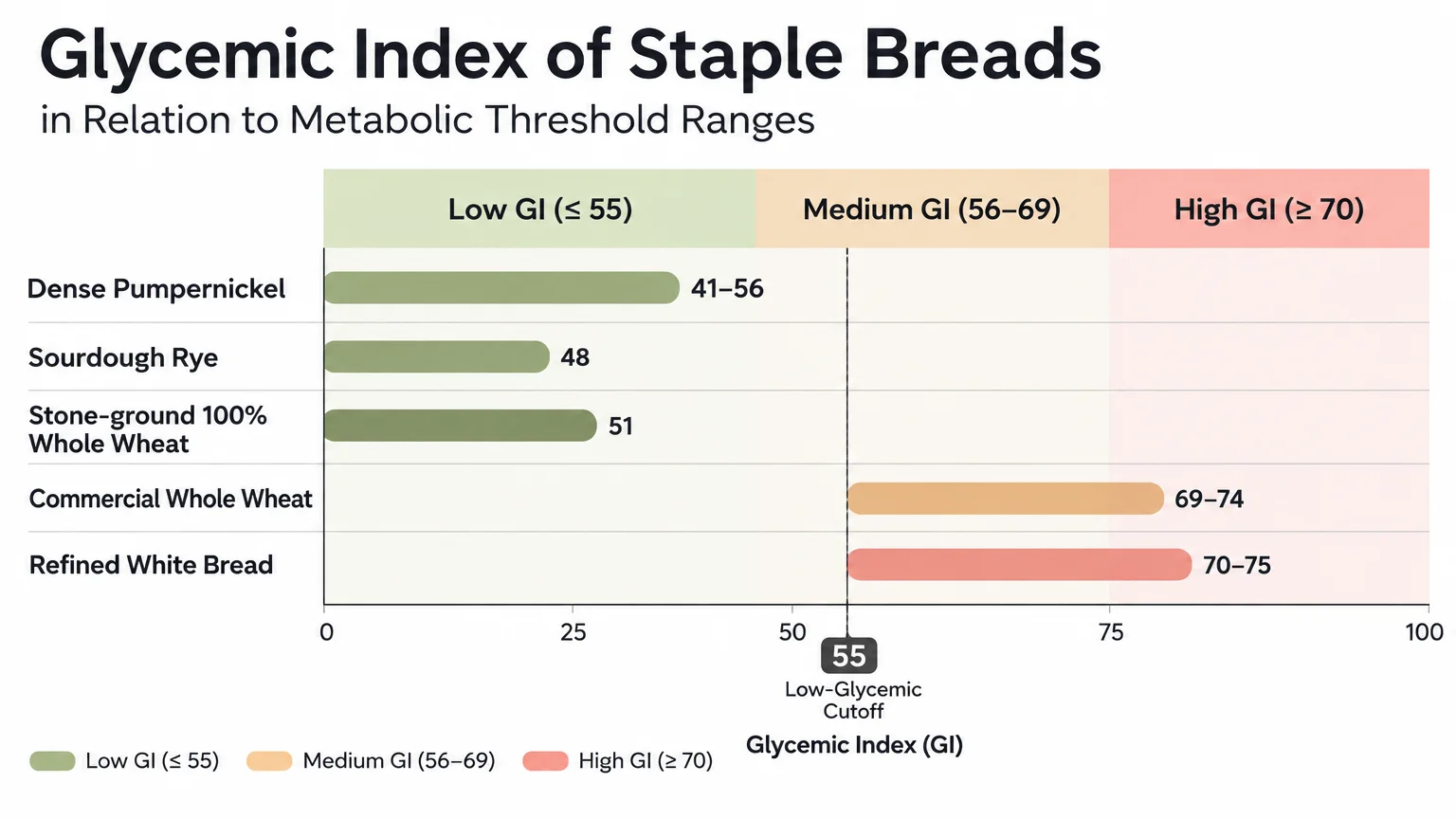
Researchers measure how rapidly a carbohydrate food raises blood sugar using the glycemic index, where pure glucose equals 100. Benchmarks from the University of Sydney GI Research Group define low GI as 55 or lower.
Under those same international standards, medium-GI foods score between 56 and 69, while high-GI foods score 70 or above. Knowing where your loaf lands helps you anticipate how sharply your glucose will climb after eating.
Many people feel surprised to learn that standard commercial whole-wheat sandwich bread scores 64 to 75, often landing around 69 to 74. That sits barely below refined white bread, which typically tests between 70 and 75.
Fine industrial milling breaks wheat kernels into tiny powder particles that digestive enzymes dismantle in minutes. Even when bran and germ remain present, rapid starch breakdown pushes glucose straight into your bloodstream.
Coarser textures and natural fermentation dramatically slow that rush. Stone-ground 100% whole wheat bread tests around a GI of 51, while whole-wheat sourdough drops into the 48 to 54 range.
Authentic rye loaves show a clear advantage when intact kernels or sourdough starters lead the recipe. Traditional pumpernickel made with whole rye kernels scores a low GI of 41 to 56.
That dense pumpernickel yields a glycemic load of just 5 to 7 per 30-gram slice containing 11 to 13 grams of available carbohydrates. Sourdough rye bread tests even lower in some trials, scoring a GI of 48 on a 60-gram slice.
Wholemeal rye made from 75% rye flour and 25% cracked rye grains scores a GI of 54 and a glycemic load of 7 per 30-gram slice. General whole-grain rye bread averages a GI of 58 and a glycemic load of 7.
Watch out for American light rye bread made mostly with refined wheat flour. Light rye has not consistently tested low GI, so you should never assume a pale rye deli slice will protect your blood sugar.
The Rye Factor and Your Insulin Response
Rye influences metabolism differently than wheat, even when total carbohydrate counts match on paper. Nutrition scientists describe this distinct digestive pattern as the rye factor.
A March 2025 systematic review and meta-analysis of 31 randomized controlled trials in Nutrition & Metabolism examined how rye consumption affects glucose and insulin markers. Eating rye significantly lowered postprandial insulin area under the curve by 0.48 mU/L.
Across all 31 trials, pooled fasting glucose, postprandial glucose, and glucose area under the curve did not change with statistical significance. However, diets supplying at least 12 grams of rye fiber showed a near-significant trend toward lower post-meal glucose curves.
Lower insulin demand matters deeply when you manage insulin resistance, prediabetes, or type 2 diabetes. Requiring less insulin to clear the same carbohydrate load reduces metabolic strain on your body over time.
Grain-structure research from Aarhus University and recent work in Frontiers in Nutrition explain why rye digests differently. Rye breads form a denser structural matrix with intact kernels that resist rapid stomach disintegration.
Rye is also rich in soluble and fermentable fibers, specifically arabinoxylans, beta-glucans, and prebiotic fructans. Arabinoxylans absorb water to create a viscous gel in your digestive tract, delaying enzyme contact and slowing sugar absorption.
Meanwhile, fermentable fructans travel to your colon, where gut microbes convert them into beneficial short-chain fatty acids. Those microbial byproducts help support healthier insulin responsiveness well beyond a single meal.
Why Two People React Differently to the Same Slice
Laboratory GI charts give you a useful starting map, not a rigid prediction for your own body. Clinical studies in the American Journal of Clinical Nutrition and Cell Metabolism show individual glucose responses to the same bread vary by 20% to 30%.
Your unique gut microbiome, sleep quality, stress hormones, baseline insulin resistance, and chewing pace all shift how quickly starch becomes blood sugar. One person handles stone-ground whole wheat smoothly while another sees a gentler curve from pumpernickel.
Clinical reviews from the American Diabetes Association also reinforce taking a balanced view of GI numbers alone. Studies focusing solely on low-GI or low-GL swaps show mixed A1C outcomes, ranging from minimal change to reductions of 0.15% to 0.5%.
Pairing smart glycemic index bread choices with portion awareness and balanced meals delivers far stronger results than chasing a single number. Listening to your own meter or sensor helps you personalize the science.
Nutritional Breakdown and FDA Label Traps
Comparing Nutrients Per 100 Grams and Per Slice
Looking closely at nutrient panels reveals important tradeoffs between commercial rye and commercial whole-wheat loaves. Both options offer meaningful fiber, yet their protein, carbohydrate, and sodium profiles differ.
Data from USDA FoodData Central shows that 100 grams of commercial rye bread supplies 259 calories, 8.5 grams of protein, and 48.3 grams of carbohydrates. It also provides 5.8 grams of dietary fiber, rising to 6.4 grams when toasted.
That same 100-gram portion of rye bread contains 3.9 grams of sugar, 3.3 grams of fat, and 603 milligrams of sodium. By comparison, 100 grams of commercial whole-wheat bread delivers 254 calories, 12.3 grams of protein, and 43.1 grams of carbohydrates.
A 100-gram portion of commercial whole-wheat bread provides 6.0 grams of dietary fiber, 4.3 grams of sugar, 3.5 grams of fat, and 450 milligrams of sodium. Notice right away that whole wheat supplies noticeably more protein and less sodium.
Lower sodium becomes a meaningful bonus if you manage high blood pressure alongside blood sugar. Protein also helps curb appetite between meals, making whole-wheat loaves attractive when rye sodium runs high.
Slice weights vary across brands, so checking serving sizes keeps portions honest. One standard 28-gram slice of commercial rye bread contains 74 calories, 13.7 grams of carbohydrates, 1.6 grams of dietary fiber, 2.4 grams of protein, 0.94 grams of fat, and 1.1 grams of sugar.
A commercially prepared 32-gram slice of 100% whole-wheat bread provides 81 calories and 13.67 grams of carbohydrates. Because carbohydrate counts per single slice look nearly identical, ingredient quality and fiber density break the tie.
Reading Between the Lines of U.S. Bread Labels
Supermarket packaging frequently creates confusion because federal law protects some bread names tightly while leaving others unregulated. Knowing these FDA food labeling standards protects you from buying disguised white bread.
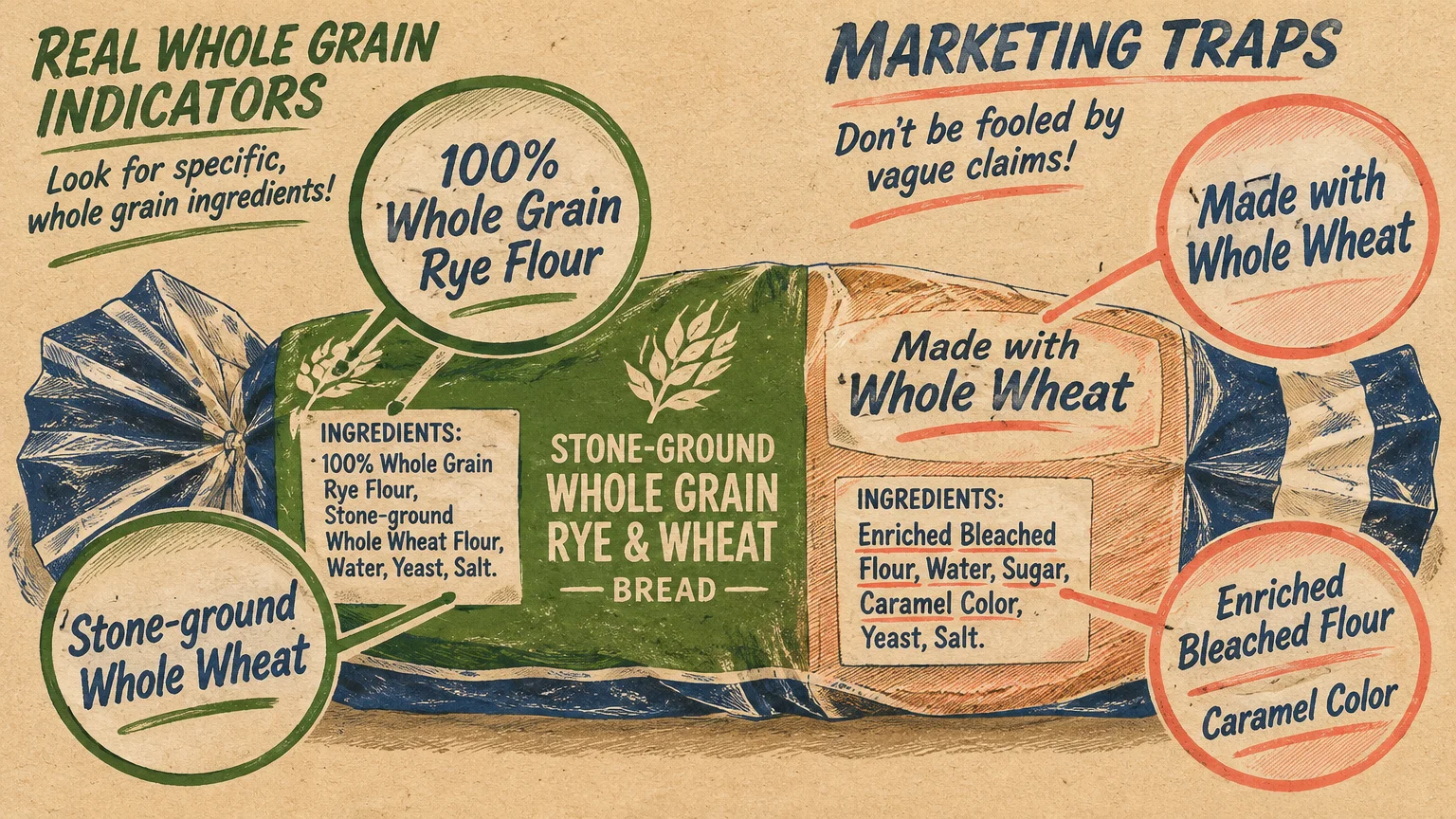
Under 21 CFR 136.180, the terms whole wheat bread, graham bread, and entire wheat bread carry a strict legal Standard of Identity. Manufacturers using those exact phrases must bake exclusively with whole-wheat flour and cannot add refined white flour.
By contrast, there is no legal FDA Standard of Identity defining rye bread, whole grain bread, or multigrain bread. Generic wheat bread in the United States typically contains only 20% to 40% whole-wheat flour, with refined flour filling the rest.
Many American deli-style rye loaves rely heavily on refined wheat flour mixed with a small share of rye flour and dark coloring. That formulation strips away the intact kernels and viscous arabinoxylans responsible for slower digestion.
Always flip the bag over and scan the ingredient list, which under 21 CFR Part 101 must list components in descending order by weight. Look for whole rye, cracked rye berries, or 100% whole-wheat flour as the very first ingredient.
Remember also that wheat ranks among the nine major U.S. food allergens that labels must clearly declare. Many commercial rye loaves still contain wheat flour or wheat gluten, so anyone with a wheat allergy or celiac disease must check allergen statements carefully.
Another subtle difference involves micronutrient fortification across grain flours. The U.S. mandates folic acid fortification for enriched wheat flour, whereas unenriched whole-grain flours and pure rye flours do not require folic acid unless listed separately.
If you rely on bread for folate—especially during pregnancy planning—check the nutrition label or discuss leafy greens, legumes, and supplements with your clinician. Reading labels turns a confusing bread aisle into a predictable routine.

Practical Food Strategies and Daily Bread Routines
Setting Clear Nutrition Targets at the Grocery Store
You do not need a calculator in the grocery aisle to spot healthy bread choices. Three straightforward clinical benchmarks help you evaluate any rye or whole-wheat loaf in seconds.
First, the Dietary Guidelines for Americans, 2025–2030 encourage prioritizing fiber-rich whole grains and significantly cutting back on refined carbohydrates like white bread. On a 2,000-calorie plan, those guidelines recommend two to four servings of whole grains daily.
One slice of whole-grain bread counts as one full serving under that federal framework. Half a cup of cooked oats, brown rice, or quinoa, or one tortilla, also counts as a single serving.
Second, the American Diabetes Association Standards of Care in Diabetes—2026 advises eating at least 14 grams of dietary fiber per 1,000 calories, or roughly 28 grams daily on a 2,000-calorie plan. At least half of your grain intake should come from intact whole grains.
The association uses at least 3 grams of fiber per serving as a practical benchmark for higher-fiber choices and specifically cites 100% whole-wheat bread among smart swaps. Checking that fiber line helps you skip fluffy loaves disguised with dark caramel coloring.
Third, bread researchers frequently apply the American Heart Association carbohydrate-to-fiber benchmark of 10-to-1 or lower. Divide total grams of carbohydrates per slice by grams of dietary fiber to verify that your loaf clears that hurdle.
Check added sugars right after you verify fiber. Skip loaves loaded with high-fructose corn syrup, honey, or molasses near the top of the ingredient list, and opt for sturdy, dense textures that feel heavy in your hand.
Storing dense pumpernickel or 100% whole-wheat sourdough in the freezer preserves freshness without sacrificing convenience. Pulling out one or two slices at a time also prevents you from eating extra bread simply to finish an aging loaf.
Smart Pairing and Portion Control at Every Meal
Even the lowest-GI rye loaf works better when you surround it with slow-digesting nutrients. Researchers at the University of Sydney and clinical diabetes educators emphasize pairing bread with protein, healthy fats, legumes, nuts, or acidic foods.
Protein and unsaturated fats slow stomach emptying so carbohydrates enter your small intestine gradually. Acidic ingredients—such as vinaigrette dressings, plain yogurt, lemon juice, or pickled vegetables—further blunt post-meal glucose spikes by moderating starch breakdown.
Start breakfast with one toasted slice of wholemeal rye or stone-ground whole-wheat sourdough topped with mashed avocado, a poached egg, and sliced tomato. Adding plain Greek yogurt with berries rounds out fiber and protein without overwhelming your morning carbohydrate budget.
If you enjoy sweet morning toast, swap sugary jam for unsweetened almond butter or peanut butter dusted with cinnamon. Nut fats and plant protein cushion the starch load so your energy stays even until lunch.
At lunch, trade a double-decker deli sandwich for an open-faced Danish-style tartine on dense pumpernickel. Layer lean turkey or smashed chickpeas, crisp greens, cucumber slices, and a drizzle of olive oil and red wine vinegar.
That single open-faced swap cuts bread carbohydrates in half while adding healthy fats, plant fiber, and acidity. You leave the table satisfied instead of feeling sluggish an hour later.
For dinner, pair a modest slice of toasted rye alongside lentil soup or grilled salmon with roasted broccoli. Toasting rye bread even concentrates fiber slightly per 100 grams, shifting from 5.8 grams to 6.4 grams as moisture evaporates.
When cravings hit for warm bread before dinner, eat your non-starchy salad and protein first. Saving your slice of bread for the second half of the meal noticeably softens the glucose peak compared with eating bread on an empty stomach.
Lifestyle Factors That Shape Your Glycemic Response
Food sits at the center of blood sugar care, yet your daily habits act like a volume knob on every meal. Sleep, movement, stress, and social support determine how efficiently your muscles absorb glucose from your favorite loaf.
Gentle physical activity shortly after eating turns working muscles into glucose sponges. Taking a brisk walk around your neighborhood, climbing stairs, or doing light household chores helps clear circulating blood sugar without demanding extra insulin.
Strength-building movement across the week also expands the muscle tissue available to store glucose safely. Even simple bodyweight exercises or resistance bands at home improve how your body handles carbohydrates at dinner.
Consistent, restorative sleep protects insulin sensitivity before you even choose breakfast. Poor or fragmented sleep raises morning stress hormones, making the same slice of whole-wheat toast trigger a steeper spike than it would after a restful night.
Chronic emotional stress keeps cortisol and adrenaline elevated, prompting your liver to release stored glucose into your bloodstream. Short breathing breaks, stretching, or stepping outside for daylight help calm that hormonal signal before meals.
Community support makes healthy eating sustainable over months and years rather than days. Sharing open-faced rye lunches with coworkers or involving family members in taste-testing dense whole-grain loaves removes the isolation of eating differently at the table.
Registered dietitians and diabetes educators also offer invaluable troubleshooting when progress stalls. Ask your primary care clinician for a referral to medical nutrition therapy so your bread portions fit your broader health goals.

Monitoring, Safety, and When to Call Your Care Team
Testing how your body responds to rye versus whole wheat turns guesswork into clear data. Checking blood glucose before a bread-based meal and again after eating—or reviewing continuous glucose monitor curves—shows which loaf keeps your pattern steadier.
Track A1C trends over time with your healthcare provider rather than reacting harshly to a single higher reading. Remember that stress, illness, hydration, and meal timing all influence individual numbers alongside carbohydrate choices.
If you take insulin or sulfonylurea medications, coordinate closely with your prescriber or pharmacist before sharply reducing daily carbohydrates or switching to much lower-glycemic meals. Better meal balance can lower glucose demand enough that medication doses need adjustment to prevent hypoglycemia.
Pay attention to digestive tolerance as well, especially when adding dense whole rye to your routine. Rye contains gluten and prebiotic fructans, which are fermentable carbohydrates that can trigger bloating or cramping if you live with irritable bowel syndrome.
Anyone diagnosed with celiac disease or a confirmed wheat allergy must avoid traditional rye and whole-wheat breads entirely, because rye contains gluten and commercial rye often includes wheat. Look for certified gluten-free seed breads or ask a dietitian for safe grain alternatives.
Seek prompt medical care if you notice severe symptoms such as persistent high blood sugar, unexplained weight loss, extreme thirst, frequent urination, dizziness, or confusion. Watch also for allergy signs like hives or trouble breathing, and never change prescription diabetes doses without medical guidance.
Frequently Asked Questions About Rye and Whole Wheat Bread
How can I choose better bread when dining out at restaurants or delis?
Ask your server whether the kitchen offers dark pumpernickel, sprouted whole grain, or genuine 100% whole-wheat bread rather than generic wheat or light rye. Ordering your sandwich open-faced immediately trims refined starch load while keeping flavor intact.
You can also ask for extra leafy greens, pickles, or olive oil vinaigrette on the side to slow digestion. When only white rolls appear in the bread basket, skip the basket and focus on protein-rich entrées paired with fibrous vegetables.
What are the best budget-friendly alternatives to pricey artisanal loaves?
Artisanal bakery sourdoughs often stretch grocery budgets, yet smart supermarket strategies keep costs manageable. Store-brand 100% whole-wheat loaves must still follow the strict FDA Standard of Identity, meaning you get pure whole-wheat flour at a fraction of specialty prices.
Watch warehouse clubs and discount grocers for dense European-style dark rye packages, which often cost less per ounce and stay fresh in the freezer. You can also stretch grain budgets by swapping some bread meals for rolled oats, brown rice, or corn tortillas.
Can I take fiber or blood sugar supplements instead of switching breads?
Isolated fiber powders cannot fully replicate the intact kernel structure, micronutrients, and natural satiety of genuine whole-grain rye or stone-ground wheat. Whole foods deliver arabinoxylans, beta-glucans, minerals, and chewing resistance together in one matrix.
Some people use soluble fiber supplements under medical supervision, yet piling supplements onto refined white bread leaves nutritional gaps behind. Always review over-the-counter supplements with your doctor or pharmacist first, since certain fibers and botanicals can alter medication absorption or blood sugar.
How can I adapt these bread tips for different cultural cuisines?
You do not have to eat sliced sandwich loaves to apply these glycemic principles across family recipes. Federal guidelines count half a cup of cooked brown rice, oats, or quinoa, or one whole-grain tortilla, alongside a slice of whole-grain bread.
Look for stone-ground whole-wheat chapati or roti flour, 100% whole-wheat pita, or corn tortillas paired with black beans, lentils, and avocado. Combining intact grains with traditional spices, plain yogurt, and pickled vegetables naturally mirrors the slow-digesting strategy of rye meals.
Your Next Step Toward Smarter Carbohydrate Choices
Between rye vs. whole wheat bread, authentic pumpernickel, wholemeal rye, and sourdough rye hold a measurable edge for lower insulin demand and gentler glycemic index scores. Stone-ground 100% whole wheat and whole-wheat sourdough remain strong contenders when you want extra protein and lower sodium.
Start this week by checking one bread label in your kitchen against the 10-to-1 carb-to-fiber ratio and aiming for at least 3 grams of fiber per slice. Track how your energy and glucose readings respond when you pair that slice with protein, fat, and acid.
Bring your observations to your next appointment with your doctor or registered dietitian so you can fine-tune portions together. Small, informed swaps at the grocery store build steady metabolic health one meal at a time.