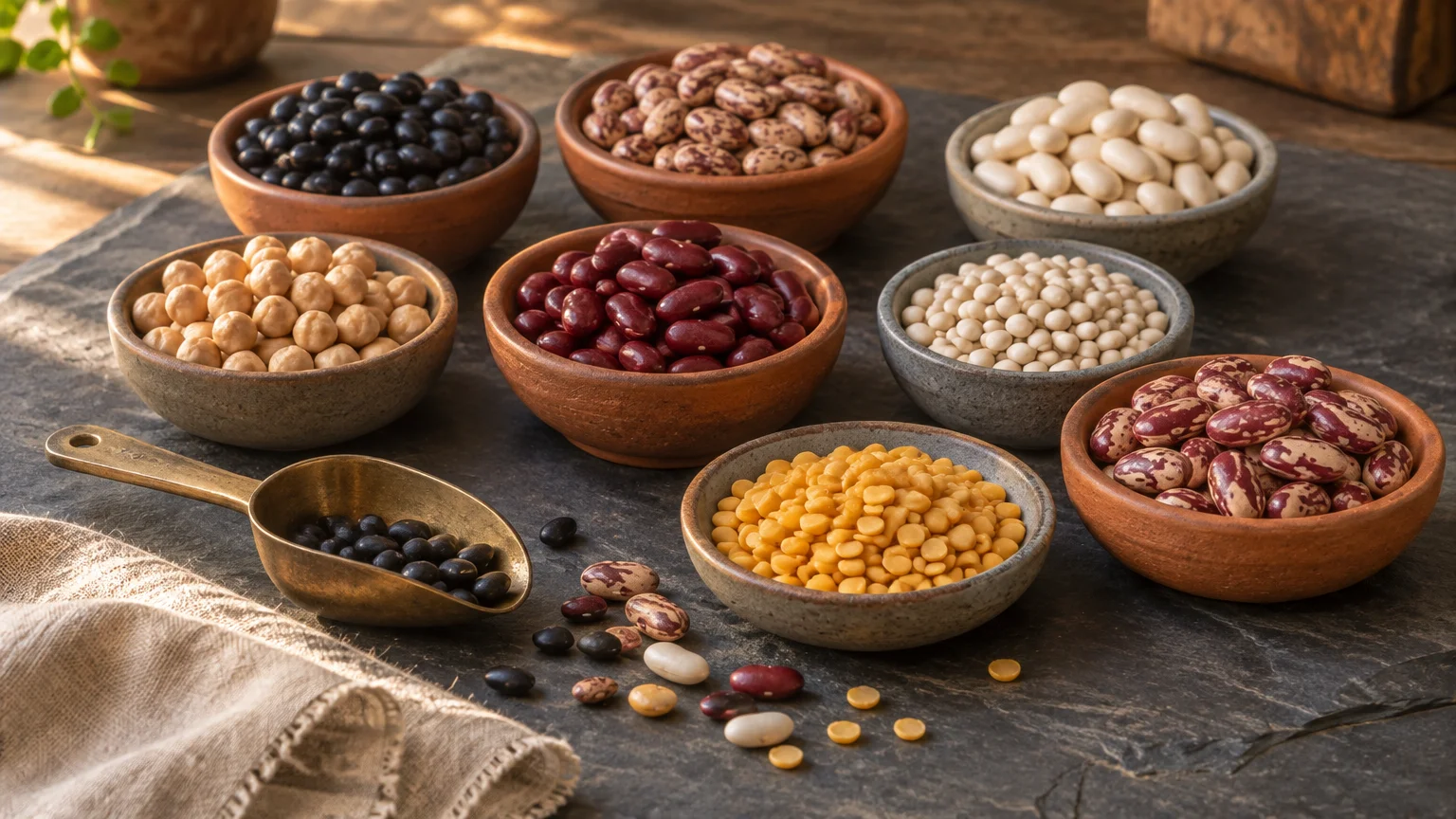
Adding just half a cup of cooked beans to your daily plate delivers concentrated fiber, plant-based protein, and essential micronutrients for pennies per serving. Choosing the right varieties helps close common nutrient gaps without complicating your routine.
Roughly 95% of American adults fall short on daily dietary fiber, while many also miss targets for potassium, calcium, and iron. Eight widely available beans supply these exact nutrients alongside folate, magnesium, copper, and zinc.
Use this clinical nutrition guide to compare top bean profiles, prepare dried and canned options safely, and tailor portions to your health goals.
Why Your Body Needs Nutrient-Dense Beans Right Now
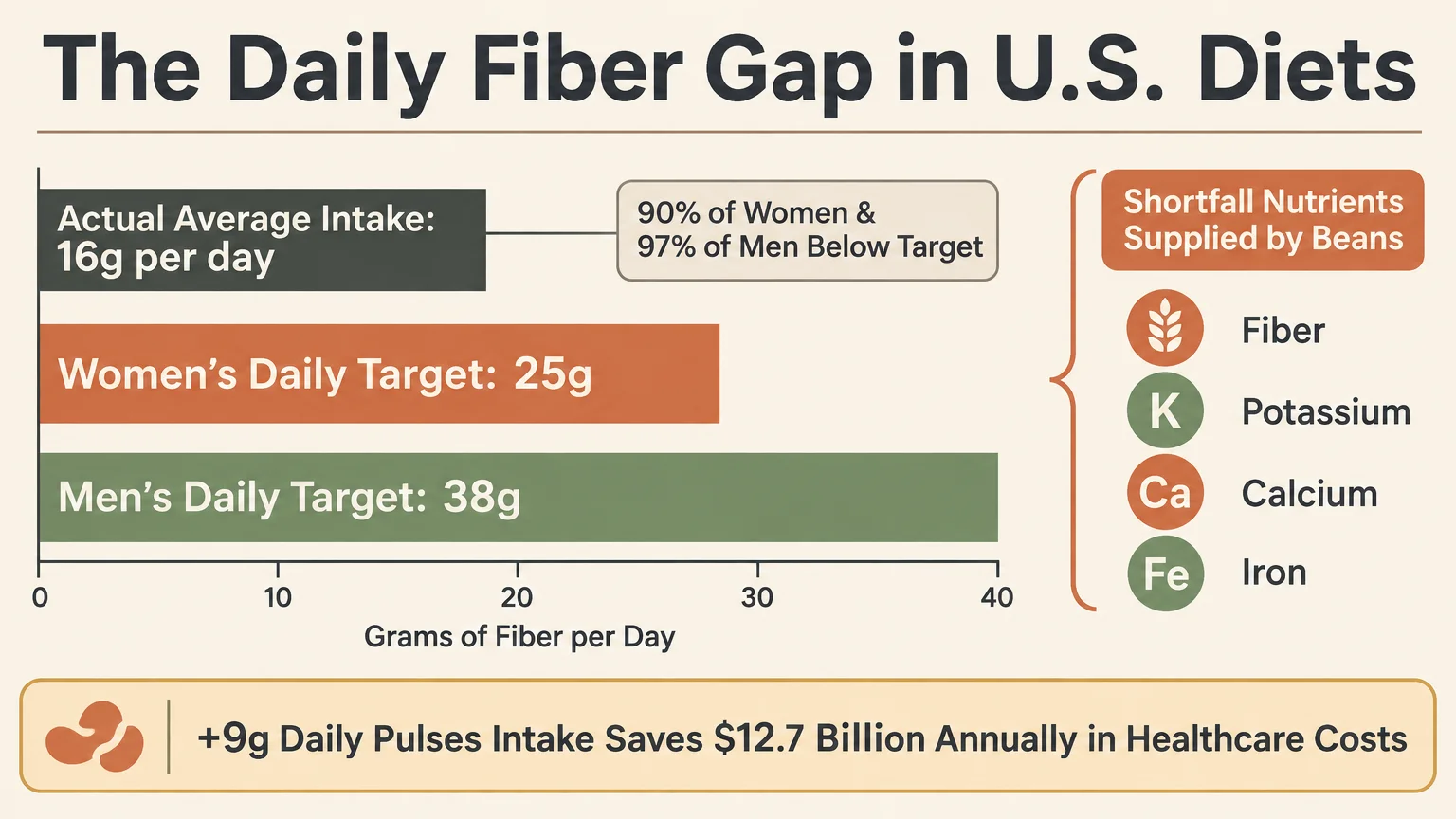
Modern eating patterns often leave wide micronutrient and fiber deficits even when total calories look adequate. More than 90% of women and 97% of men ages 19 to 59 fail to meet federal daily fiber recommendations.
On average, adults consume only about 16 grams of fiber per day. That falls well below daily targets of 25 grams for women and 38 grams for men under age 51, or 21 grams and 30 grams at age 51 and older.
Federal dietary guidance flags fiber, potassium, calcium, vitamin D, and iron—especially for adolescent and premenopausal females—as nutrients of public health concern. Beans deliver substantial amounts of four out of those five shortfall nutrients in a single food group.
The Dietary Guidelines for Americans for 2025 through 2030 emphasize nutrient-dense protein from both animal and plant sources. The updated federal framework explicitly recommends beans, peas, lentils, legumes, nuts, seeds, and soy toward a daily protein target of 1.2 to 1.6 grams per kilogram of body weight.
Raising daily fiber intake delivers meaningful relief beyond your individual kitchen. Increasing U.S. fiber intake by just 9 grams per day—slightly over half a cup of pulses—is estimated to save 12.7 billion dollars annually in constipation-related healthcare costs.
Because beans store well in your pantry and cook easily, they remove common barriers like high grocery bills and food waste. You gain steady nourishment across seasons without relying on expensive specialty products.
How Beans Support Cardiovascular, Metabolic, and Gut Health
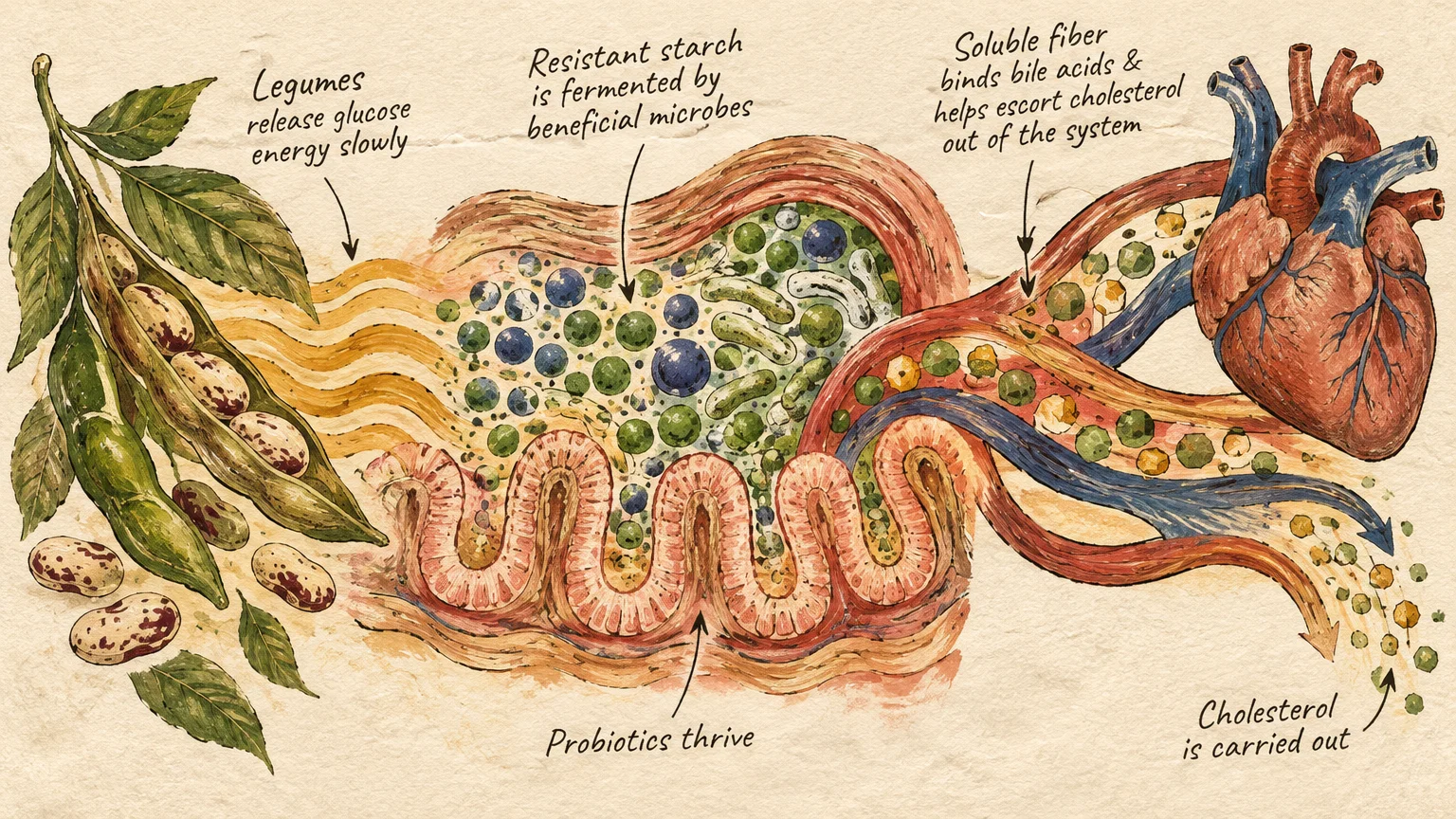
Beans work across several body systems at once because their carbohydrates, proteins, and minerals interact during digestion. Unlike refined grains, intact legumes release glucose gradually, creating a low-glycemic response that helps steady post-meal energy.
Part of that metabolic benefit comes from resistant starch and viscous soluble fiber. Drained and rinsed canned navy and dark red kidney beans contain roughly 2 grams of resistant starch per 100 grams, which bypasses upper digestion to feed beneficial gut bacteria.
As gut microbes ferment that resistant starch, they produce compounds that support intestinal lining integrity and healthy bowel motility. At the same time, soluble fiber binds bile acids in your digestive tract, encouraging your liver to pull cholesterol from your bloodstream.
Clinical research confirms these lipid-lowering effects in everyday diets. In an eight-week trial, eating half a cup of pinto beans daily reduced both total cholesterol and LDL cholesterol by more than 8%.
Broader observational data points in the same heart-protective direction. Researchers have linked consuming 1 cup of cooked beans daily to a 38% lower risk of nonfatal heart attack.
Potassium and magnesium inside legumes also support healthy blood vessel tone and fluid balance. When you choose low-sodium or thoroughly rinsed beans, you counter excess dietary sodium while supplying minerals your heart muscle uses continuously.
Protein quality in beans deserves clarity as well. Although legumes run higher in lysine and lower in methionine, guidance from the Harvard T.H.
Chan School of Public Health confirms you do not need to combine complementary proteins at the exact same meal.
Eating a varied mix of plant foods across your day gives your body every essential amino acid it requires. Meanwhile, you should pay special attention to how your body absorbs iron from plant-based foods.
Legumes supply non-heme iron, which absorbs less efficiently than the heme iron found in meat and seafood. Because of lower bioavailability, vegetarians and vegans may need up to 1.8 times the standard iron recommendation.
You can boost non-heme iron absorption immediately through smart kitchen pairings. Adding vitamin C from diced tomatoes, bell peppers, or fresh lemon juice to a bean dish helps convert plant iron into a more absorbable form.
8 Beans Packed With Essential Vitamins and Minerals
Every bean brings a slightly different micronutrient signature to your bowl. Reviewing standard benchmarks from the USDA FoodData Central database alongside U.S. Food and Drug Administration Daily Values makes comparing varieties straightforward.
For adults and children age 4 and older, the FDA sets Daily Values at 28 grams for fiber, 50 grams for protein, 400 micrograms DFE for folate, 18 milligrams for iron, and 4,700 milligrams for potassium.
Daily Values also stand at 420 milligrams for magnesium, 1,300 milligrams for calcium, 11 milligrams for zinc, 0.9 milligrams for copper, and 1.2 milligrams for thiamin.
Under label rules, 5% Daily Value or less counts as low, while 20% Daily Value or more counts as high. The eight beans below stand out for hitting high-nutrient thresholds across multiple categories.
1. Navy Beans
Navy beans lead the pack for total dietary fiber. One cup of cooked, unsalted navy beans (182 grams) supplies 255 calories, 15 grams of protein, 19.1 grams of fiber (68% DV), and zero milligrams of sodium.
That same single-cup serving delivers 255 micrograms DFE of folate (60% DV), 0.38 milligrams of copper (40% DV), and 0.43 milligrams of thiamin (35% DV). You also gain 95 milligrams of magnesium (25% DV) and 4.3 milligrams of iron (24% to 25% DV).
Navy beans round out their mineral profile with 262.1 milligrams of phosphorus (21% DV), 708 milligrams of potassium (15% DV), 1.9 milligrams of zinc (15% DV), 0.25 milligrams of vitamin B6 (15% DV), and 125.6 milligrams of calcium (10% DV).
Canned white beans offer a convenient alternative, providing up to 1,189 milligrams of potassium per 1-cup serving.
Mash cooked navy beans with garlic, olive oil, and lemon juice as a creamy spread over whole-grain toast. You can also simmer them into vegetable minestrone for effortless thickness without heavy cream.
2. Mung Beans
Mung beans stand out as a folate powerhouse with gentle cooking versatility. One cup of cooked mung beans (202 grams) provides 212 calories, 14.2 grams of protein, and 15.4 grams of fiber (55% DV).
That portion packs an impressive 320 micrograms DFE of folate (80% DV), 0.32 milligrams of copper (35% DV), and 0.33 milligrams of thiamin (30% DV). It also supplies 95 milligrams of magnesium (25% DV) and 0.6 milligrams of manganese (25% DV).
You will also get 2.83 milligrams of iron (15% DV), 537 milligrams of potassium (10% DV), 200 milligrams of phosphorus (15% DV), 1.7 milligrams of zinc (15% DV), and 54.5 milligrams of calcium (4% DV). Cooking dried mung beans without added salt keeps sodium naturally negligible.
Sprouting mung beans amplifies their nutritional return even further. A 2020 study in Antioxidants showed that sprouting mung beans increased polyphenol antioxidant content by roughly 1.5 times, making sprouted beans a crisp addition to stir-fries and salads.
3. Black Beans
Black beans pair substantial iron and folate with deep anthocyanin pigments in their dark skins. One cup of cooked black beans (172 grams) delivers 227 calories, 15.2 grams of protein, and 15 grams of fiber (53% DV).
Each cup supplies 3.6 milligrams of iron (20% DV), 610.6 milligrams of potassium (13% DV), 46.4 milligrams of calcium (4% DV), 256 micrograms of folate, and 1.9 milligrams of zinc. That balanced spread supports red blood cell formation, oxygen transport, and immune enzyme activity.
Preparation method strongly influences sodium levels in black beans. Half a cup of regular canned black beans holds about 460 milligrams of sodium (20% DV), whereas half a cup of dry black beans cooked without salt contains roughly 1 milligram.
Toss drained black beans with diced mango, red onion, cilantro, and lime juice for a bright taco filling. The citrus vitamin C enhances non-heme iron uptake while keeping the dish refreshing.
4. Pinto Beans
Pinto beans shine for potassium and cholesterol-management support. One cup of cooked pinto beans (171 grams) contains 245 calories, 15.4 grams of protein, and 15.4 grams of fiber (55% DV).
Within that serving, you receive 3.6 milligrams of iron (20% DV), 745.6 milligrams of potassium (16% DV), and 78.7 milligrams of calcium (6% DV). That strong potassium-to-calorie ratio helps support healthy blood pressure management.
Pinto beans are also the exact variety tested in the eight-week clinical trial that lowered total and LDL cholesterol by over 8% using just half a cup daily. Their creamy texture mashes easily without needing butter or lard.
Warm low-sodium pinto beans with cumin, smoked paprika, and tomato salsa for quick grain bowls. You can also fold them into egg scrambles alongside spinach for sustained morning satiety.
5. Chickpeas (Garbanzo Beans)
Chickpeas deliver standout iron and zinc content for plant-forward eaters. One cup of cooked chickpeas (164 grams) provides 269 calories, 14.5 grams of protein, and 12.5 grams of fiber (45% DV).
That cup supplies 4.7 milligrams of iron (26% DV)—the highest iron level among these eight varieties—alongside 2.5 milligrams of zinc, 282 micrograms of folate, and 78.7 milligrams of magnesium. You also get 477.2 milligrams of potassium (10% DV) and 80.4 milligrams of calcium (6% DV).
Because zinc supports immune function and tissue repair, chickpeas are especially valuable if you limit red meat and poultry. Their firm texture holds up well under high-heat roasting or slow simmering.
Blend chickpeas with tahini, lemon juice, and garlic for classic hummus, or roast drained chickpeas with turmeric and black pepper until crisp. Pair roasted chickpeas with chopped tomato cucumber salad to maximize iron absorption.
6. Kidney Beans
Kidney beans combine resistant starch, iron, and trace minerals in a hearty bite. One cup of cooked kidney beans (177 grams) supplies 225 calories, 15.3 grams of protein, and 11.3 grams of fiber (40% DV).
Every cup contributes 3.9 milligrams of iron (22% DV), 716.9 milligrams of potassium (15% DV), 74.3 milligrams of magnesium (18% DV), and 62 milligrams of calcium (5% DV).
Per 100 grams, drained and rinsed canned dark red kidney beans deliver 2 grams of resistant starch, 227 milligrams of potassium, 104 milligrams of phosphorus, 0.273 milligrams of copper, and 0.328 milligrams of manganese.
Kidney beans hold their shape during long simmers, making them ideal for chili and bean salads. Just remember that dried red kidney beans require strict high-heat boiling to stay safe, a critical rule detailed below.
Keep commercially canned dark red kidney beans on hand for rapid weeknight meals. Rinsing them well trims sodium while delivering ready-to-eat resistant starch and iron.
7. Lima Beans
Lima beans offer a potassium-dense, lower-calorie side dish with a naturally buttery bite. Half a cup of cooked lima beans provides 108 calories, 478 milligrams of potassium, and 5 to 7 grams of protein.
Stepping up to a full 1-cup cooked portion supplies 9 grams of dietary fiber. That gentle fiber load works well if your digestive tract is still adjusting to eating more legumes.
Because lima beans feel rich on the palate, they blend easily into vegetable soups or corn succotash without heavy sauces. Fresh, frozen, and dried baby lima beans all cook relatively quickly compared with larger dense beans.
Sauté thawed frozen lima beans with olive oil, thyme, and roasted red bell peppers for a ten-minute weeknight side. You gain steady potassium and plant protein alongside colorful antioxidants.
8. Soybeans and Edamame
Soybeans and young green edamame provide concentrated protein alongside iron, potassium, and calcium. Half a cup of cooked mature soybeans delivers 149 calories and 443 milligrams of potassium, while a full cup supplies 4.5 milligrams of iron.
Young green soybeans—commonly sold as edamame—offer 9 grams of protein per half-cup cooked serving, with some varieties reaching up to 15 grams. Edamame also contributes folate, iron, calcium, and vitamin C in one bright green pod.
Unlike dried beans that need hours of soaking, frozen shelled edamame steams or boils in about five minutes. That speed makes edamame one of the simplest ways to boost midday protein and minerals.
Toss steamed shelled edamame into brown rice bowls, pasta salads, or vegetable soups just before serving. Keep roasted dry soybeans in your bag for a shelf-stable snack when you travel.
Daily Portions, Meal Routines, and Smart Prep
Building beans into your week works best when you align portion sizes with federal benchmarks and your personal tolerance. Under the 2025–2030 guidelines, half a cup (113 grams) of cooked beans counts as one protein serving.
Beans and legumes also count as one of five vegetable subgroups within a recommended three daily vegetable servings on a 2,000-calorie eating pattern. Overall, federal guidance recommends eating four to five half-cup servings of legumes per week.
If your current fiber intake sits near the national average of 16 grams daily, jump slowly rather than eating two cups overnight. Start with a quarter-cup or half-cup portion every other day, and drink extra water as your gut adapts.
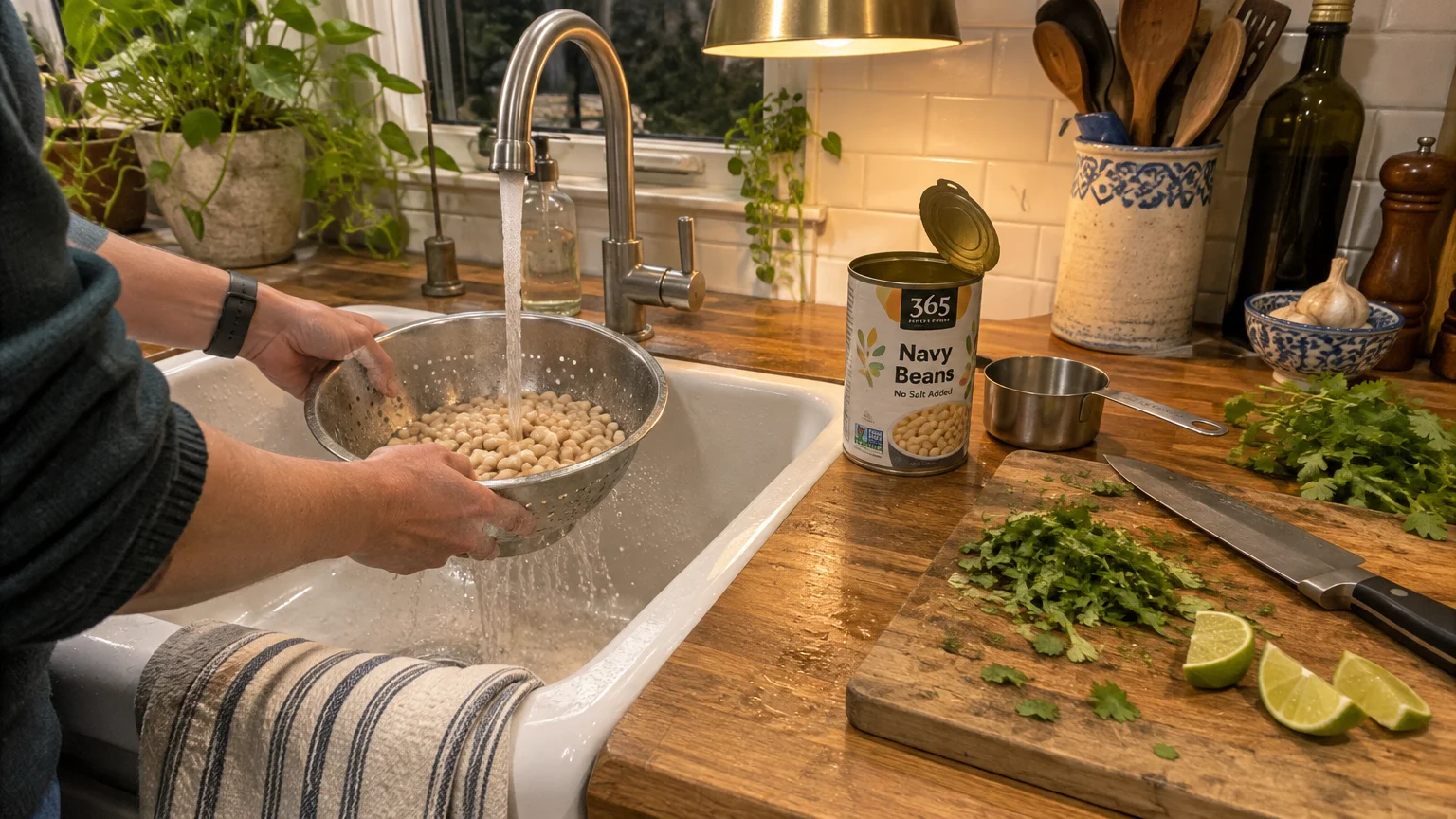
Managing sodium is equally practical when you buy canned beans for convenience. Checking label terms under 21 CFR 101.61 helps you avoid surprises: no-salt-added means no salt went in during processing, while reduced-sodium means at least 25% less sodium than the regular version.
When regular canned beans are your only option, a colander makes a measurable difference. A 2011 study in the Journal of Culinary Science and Technology found that draining canned beans cut sodium by 36%, while draining and rinsing under cold water cut sodium by 41%.
The American Heart Association notes that draining and rinsing can cut canned bean sodium by up to 40%.
Generic federal food composition entries show slightly smaller drops—19% for red kidney beans, 21% for pinto beans, and 24% for chickpeas—while low-sodium canned varieties start much lower from the factory.
How you handle cooking water affects water-soluble vitamins too. Discarding soaking and cooking water leaches out folate and thiamin, so simmering low-toxin beans like navy, black, or mung beans in measured broth lets you keep those dissolved B vitamins in your soup.
An easy daily routine removes guesswork. Stir half a cup of edamame into lunch salads, add half a cup of pinto beans to dinner bowls, and blend chickpeas into afternoon snacks to meet weekly targets smoothly.
Food Safety Rules Every Home Cook Must Know
Proper cooking protects you from natural plant compounds that irritate the digestive tract. Raw red kidney beans contain 20,000 to 70,000 hemagglutinating units of phytohaemagglutinin, a toxic lectin that binds cells lining your gut.
Other beans carry far lower levels—white kidney or cannellini beans contain about one-third as much, and fava or broad beans contain 5% to 10%.
Even so, eating as few as four or five raw or undercooked red kidney beans can trigger severe nausea and vomiting within one to three hours, followed by diarrhea.
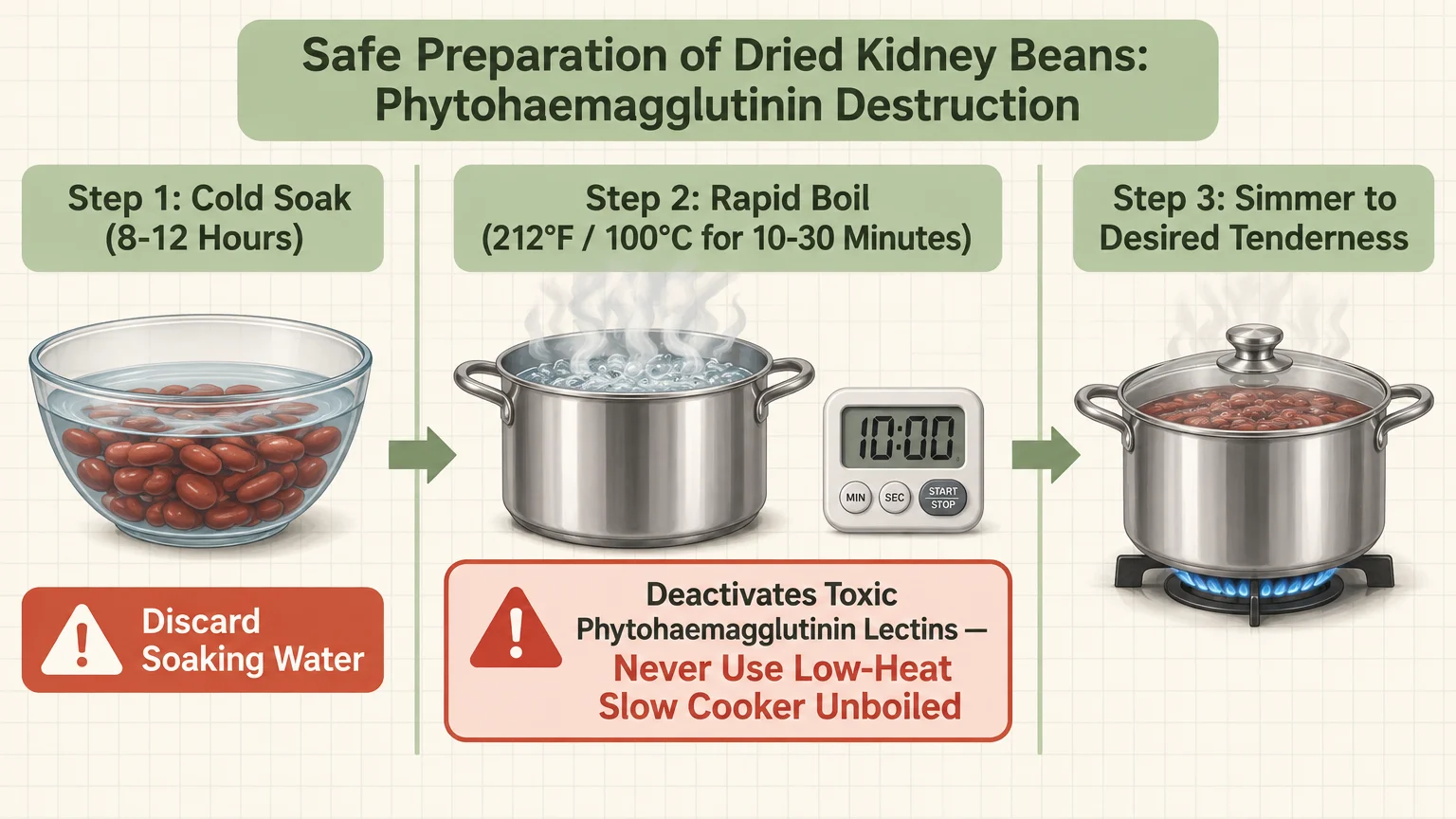
Avoid cooking dried red kidney beans straight from dry in a slow cooker. Cooking at low temperatures around 176 degrees Fahrenheit (80 degrees Celsius) actually increases phytohaemagglutinin toxicity five-fold.
Follow the safe boiling protocol outlined in the U.S. Food and Drug Administration food safety manual whenever you cook dried red kidney beans.
Soak dried beans for at least five hours, discard all soaking water, and boil them briskly in fresh water at 212 degrees Fahrenheit (100 degrees Celsius) for at least 30 minutes.
While 10 minutes at a full boil destroys the toxin, a 30-minute boil ensures heat penetrates the center of every bean, dropping lectin levels to a safe 200 to 400 units. Once boiled properly, you can transfer red kidney beans into a slow cooker chili safely.
If you want to skip soaking and boiling altogether, choose commercially canned kidney beans. Manufacturers heat-process canned beans at high temperatures during canning, so they are already safe straight from the can.
Integrating Movement, Sleep, Stress, and Community
Nutrient-dense food works best alongside daily habits that support digestion, circulation, and consistency. A 10- to 15-minute walk after a bean-rich meal encourages gentle intestinal movement, which helps clear trapped gas and supports steady post-meal blood sugar.
Sleep quality and stress management shape your gut comfort more than many people realize. High stress alters gut-brain signaling and slows or disrupts motility, making high-fiber meals feel heavier than usual.
Prioritizing consistent sleep and short breathing breaks helps your digestive system process fiber comfortably. Meanwhile, the magnesium and B vitamins in beans support normal nervous system function throughout your waking hours.
Community support makes healthy habits stick far longer than solo willpower. Batch-cooking a pot of navy or black beans with a partner, neighbor, or family member cuts prep time in half and turns weekly meal planning into a shared routine.
Exchanging favorite spice blends or soup recipes with friends also prevents menu boredom. When beans feel familiar and enjoyable at your table, reaching four to five servings a week happens naturally.
Monitoring Biomarkers, Medication Timing, and Red Flags
Tracking a few objective lab markers with your clinician shows how dietary changes affect your health over time.
Helpful benchmarks include a fasting lipid panel for LDL cholesterol, hemoglobin A1c for blood sugar trends, and serum ferritin alongside a complete blood count if you monitor iron stores.
If you live with chronic kidney disease, ask your healthcare provider or renal dietitian to review your serum potassium and estimated glomerular filtration rate before sharply increasing bean portions.
High-potassium varieties like white beans, pinto beans, and lima beans may require tailored serving sizes depending on your lab values.
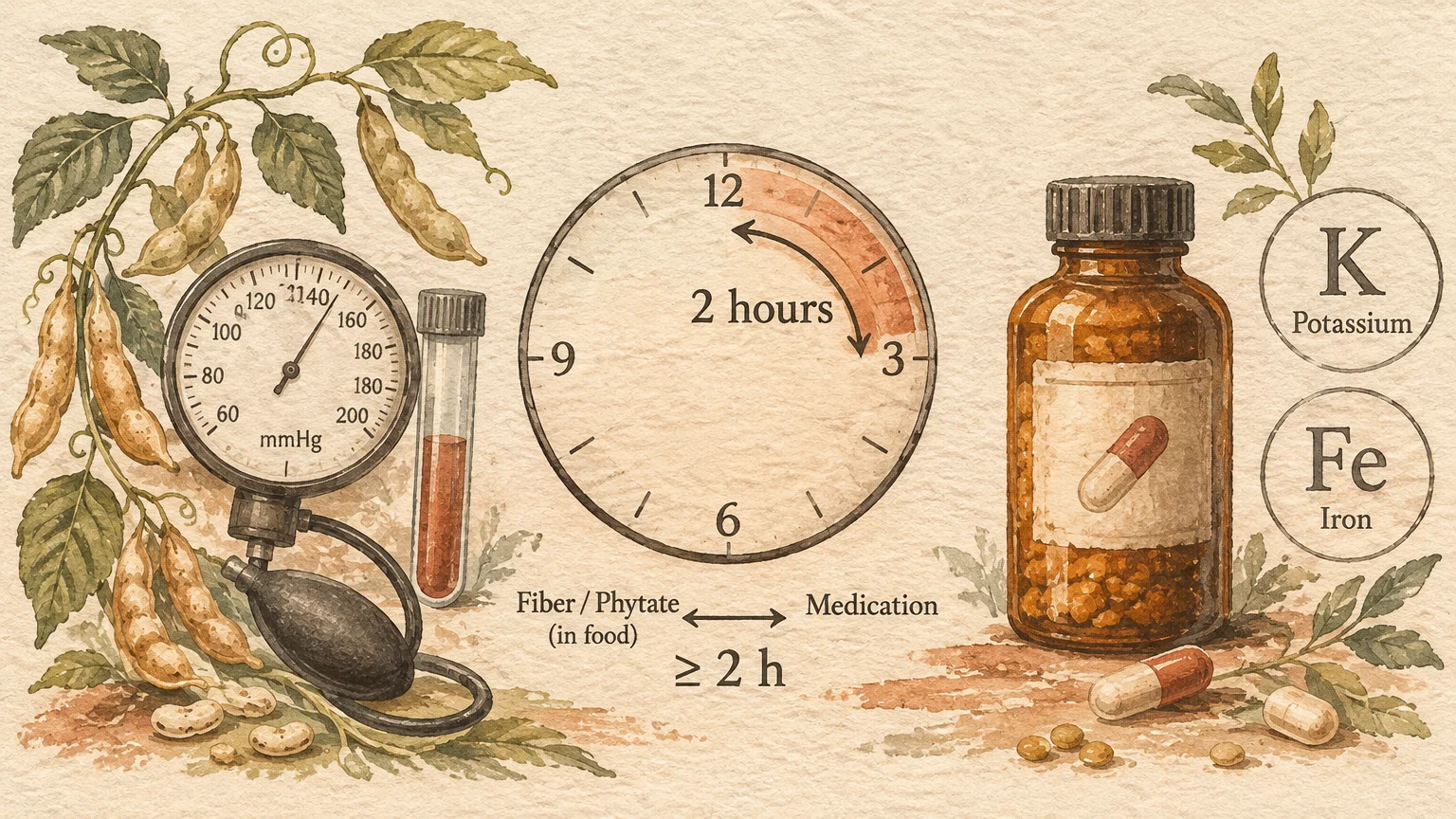
Coordinate medication timing with your doctor or pharmacist when expanding your intake of fiber- and mineral-rich foods. Certain blood pressure medications, including potassium-sparing diuretics and ACE inhibitors, can raise potassium levels, so monitoring total dietary potassium matters.
Additionally, taking thyroid hormone replacement or iron supplements at the exact same moment as a high-fiber, mineral-rich meal can alter drug absorption. Spacing certain morning medications from high-fiber breakfasts by the interval your pharmacist recommends keeps treatment predictable.
If you take vitamin K–sensitive anticoagulants, keep your intake of vitamin K–containing foods like soybeans and edamame steady week to week rather than swinging from zero to large portions.
You can also review mineral recommendations anytime through the NIH Office of Dietary Supplements before starting new nutrition routines.
Know which symptoms call for prompt medical evaluation rather than home adjustments. Seek immediate medical care if you develop severe nausea, persistent vomiting, or intense diarrhea one to three hours after eating undercooked dried beans.
You should also contact your clinician promptly if increased fiber triggers severe abdominal pain, persistent bloating with unintentional weight loss, blood in your stool, or marked dizziness and fatigue that could signal worsening anemia.
Frequently Asked Questions About Beans and Nutrition
How can I choose healthier bean dishes when dining out?
Restaurant bean dishes often hide excess sodium and saturated fat from salted broths or lard, so ask how beans are seasoned before ordering.
Request whole black, pinto, or garbanzo beans instead of refried beans cooked with animal fat, and order sauces or dressings on the side.
Pair bean-based bowls or tacos with fresh salsa, tomatoes, or lime wedges to add vitamin C without extra sodium. If a soup tastes noticeably salty, balance the rest of your day with fresh produce and plain water.
Are dried or canned beans better on a tight budget?
Both formats rank among the best grocery bargains, though dried beans offer the lowest cost per serving. Dry edible beans cover more U.S. farmland than any other single vegetable or melon crop, helping keep retail prices steady year-round.
Federal retail scanner analyses updated in May 2024 show consumers can meet every daily fruit and vegetable recommendation—including pulses—for just 2.50 to 3.00 dollars per day. Keep dried beans for weekend batch cooking and low-sodium canned beans for busy weeknights.
Should I take fiber or iron supplements instead of eating beans?
Isolated supplements cannot replicate the combined package of protein, resistant starch, potassium, magnesium, folate, and polyphenols packed inside whole beans. Fiber powders may help bowel regularity, yet they miss the mineral density that supports cardiovascular and metabolic health.
Similarly, high-dose iron pills can trigger constipation or stomach upset and should only be used when lab testing confirms deficiency under medical supervision. Prioritize whole beans first, and use supplements only when your clinician identifies a specific gap.
How do I adapt beans for traditional and cultural cuisines?
Legumes anchor traditional kitchens worldwide, making it easy to honor cultural flavors while optimizing nutrition. Swap salted pork seasonings in southern-style black-eyed peas or pinto beans for smoked paprika, caramelized onions, garlic, and bay leaves.
Simmer mung beans with ginger, turmeric, and tomatoes for South Asian dal, fold chickpeas into Mediterranean stews with lemon and parsley, or toss edamame with sesame oil and rice vinegar. Using herbs, spices, and citrus keeps every dish vibrant while protecting your sodium budget.
Your Next Step Toward Better Bean Nutrition
Small, repeatable choices deliver better results than dramatic weekend overhauls. Before changing your routine—especially if you manage kidney disease, diabetes, or prescription medications—share your nutrition goals with your physician or registered dietitian.
Pick one simple habit to track over the next seven days, such as draining and rinsing canned beans before dinner or adding half a cup of pinto, navy, or black beans to three meals this week.
Consistent steps turn everyday pantry staples into lasting health protection.