Low zinc can quietly drain your energy, slow down healing, and leave you catching colds more often. Spotting the early signs helps you take action with simple food changes and medical care.
Your body cannot store a spare supply of this key mineral, so you need steady amounts from meals every day. Yet data from the National Institutes of Health show that 15% of U.S. adults do not get enough zinc from food alone.
Learning the eight warning signs helps you adjust your meals and talk with your doctor before a mild gap worsens.

The 8 Key Symptoms of Low Zinc
Zinc deficiency affects your skin, gut, nerves, and immune system in distinct ways. Because these signs overlap with other conditions, tracking patterns helps your doctor find the real cause.
1. Frequent Colds and Slow Recovery
Your immune cells rely on zinc to fight off viruses and bacteria, especially in older children and older adults. Without enough zinc, you may catch colds more often or take longer to recover.
2. Loss or Changes in Taste and Smell
According to the NIH Office of Dietary Supplements consumer guide, impaired taste and smell can happen at any age. Food may taste bland or metallic, and everyday scents can seem much fainter.
3. Slow Wound Healing
Small cuts and scrapes need zinc to repair tissue and grow new skin, most often in older adults. When levels run low, minor wounds may linger for weeks instead of closing cleanly.
4. Skin Rashes and Cracked Mouth Corners
Low zinc can trigger stubborn rashes around your mouth, eyes, or groin, along with painful cracks at your lip corners. Because these look like eczema, ask a doctor before trying harsh creams.
5. Hair Thinning or Hair Loss
Hair follicles divide quickly and depend on zinc to build strong strands. Older children and adults with low levels often notice extra shedding in the shower or a widening part.
6. Ongoing Diarrhea
Loose stools are a common early sign of low zinc in infants and young children. Worse yet, diarrhea flushes more zinc out of the gut, turning a small shortfall into a cycle.
7. Low Appetite and Slowed Growth in Kids
Children and teens need daily zinc to grow taller, build muscle, and keep a steady appetite. A shortage can leave kids picking at meals and falling behind on their growth curves.
8. Mood Shifts, Brain Fog, and Reproductive Changes
Older adults with low zinc may notice memory slips, trouble reasoning, or mood changes. Low levels can also impair reproductive health and raise risks of premature birth and low birthweight during pregnancy.
How Zinc Works and Who Faces Higher Risk
Your body holds about 1.5 grams of zinc in women and 2.5 grams in men, mostly in muscle and bone. That small pool runs hundreds of enzymes for cell growth, digestion, and immunity.
On average, U.S. men get 13 mg per day from food alone, and women get 9.2 mg. Still, 11% of U.S. adults fall short even when counting supplements, and about 17% of people worldwide face low intake.
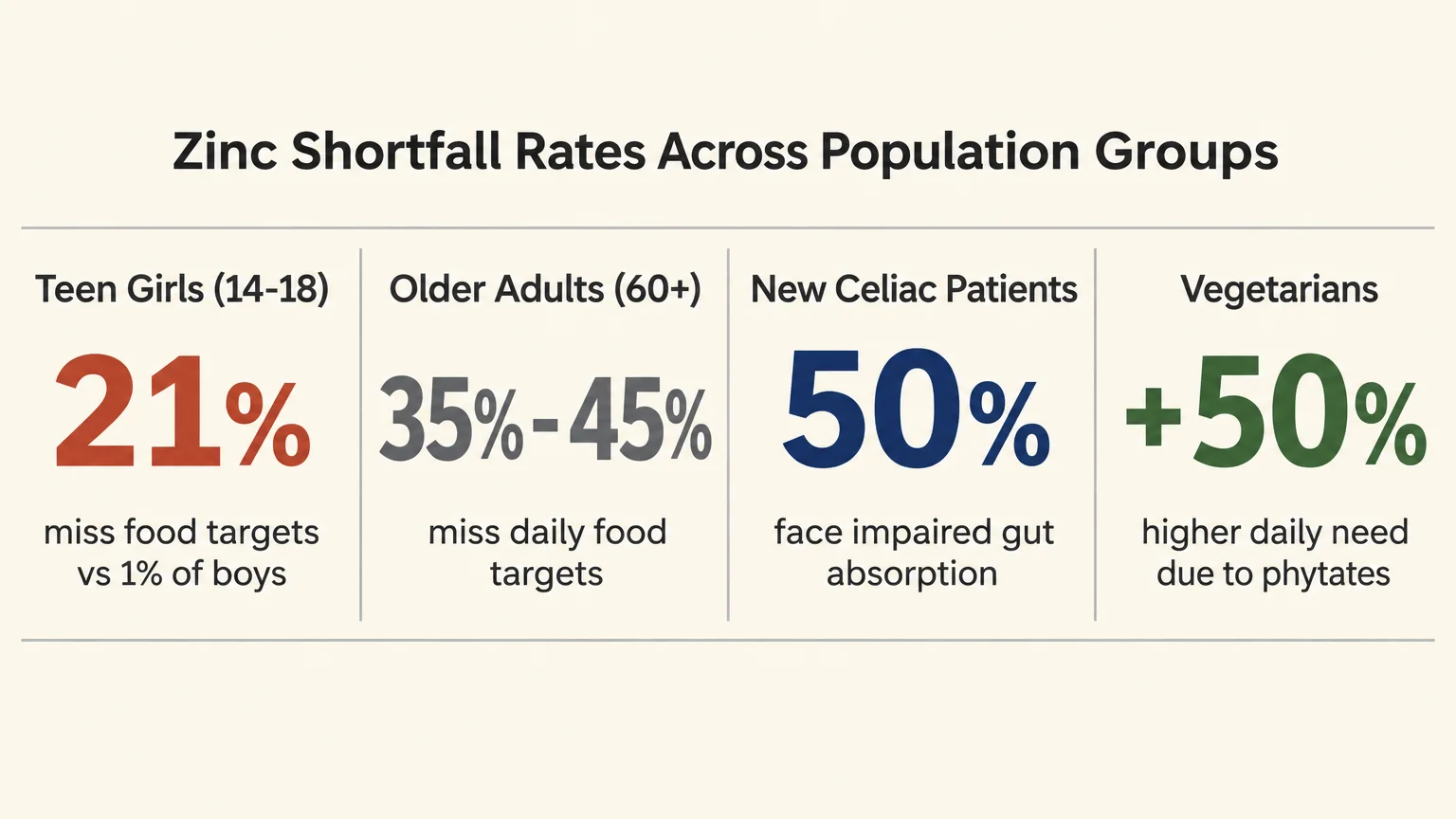
Nearly 21% of teen girls ages 14 to 18 get too little zinc from food, compared with 1% of teen boys. About 35% to 45% of adults age 60 and older also miss daily food targets.
Gut disorders raise risk too, affecting about 50% of newly diagnosed celiac patients and 15% to 40% of people with Crohn’s disease or colitis. Alcohol use disorder also lowers uptake and increases urine loss.
Plant compounds called phytates bind zinc in your gut, so vegetarians may need up to 50% more zinc than standard targets. Pregnancy, breastfeeding, babies exclusively breastfed past six months, and sickle cell disease also raise your daily needs.
Best Zinc-Rich Foods and Daily Meal Strategies
The U.S. Daily Value is 11 mg, and most adult men need 11 mg per day from meals or pills. Check USDA FoodData Central to look up exact counts in your favorite foods.
Most adult women need 8 mg per day, rising to 11 mg in pregnancy and 12 mg while breastfeeding. Your body absorbs 5% to over 50% of food zinc, depending on how many plant phytates are present.
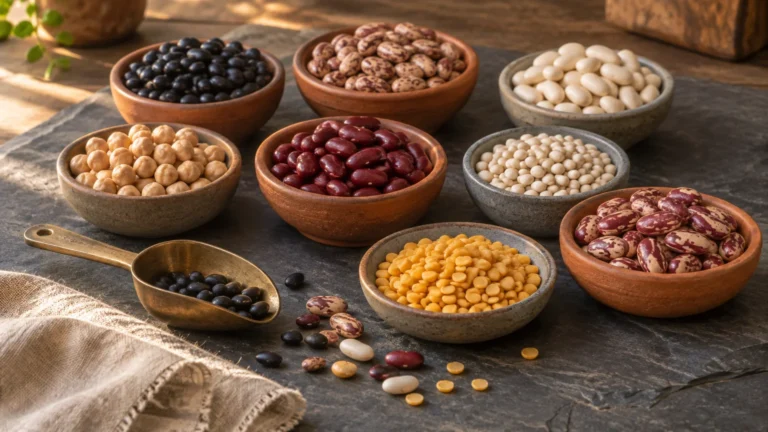
Animal foods deliver zinc your gut absorbs easily. Simple kitchen steps like soaking beans, sprouting seeds, and baking sourdough bread help unlock more zinc from plant staples.
Top Seafood, Meat, and Plant Sources
Raw farmed Eastern oysters lead all foods at 32 mg per three ounces, while cooked blue crab provides 3.2 mg. Remember to cook shellfish well if you are pregnant, older, or have a weak immune system.
Three ounces of roasted beef sirloin supply 3.8 mg, and braised chuck roast packs 7.0 mg. Pork loin chops give 1.9 mg, dark chicken meat adds 2.4 mg, and chicken breast offers 0.9 mg.
For plant-based meals, fortified cereal provides about 2.8 mg per serving, and one cup of cooked oats adds 2.3 mg. An ounce of pumpkin seeds gives 2.2 mg, cashews add 1.6 mg, and half a cup of lentils supplies 1.3 mg.
Many healthy staples carry much smaller amounts of zinc. Half a cup of brown rice or canned kidney beans gives 0.6 to 0.7 mg, while three ounces of cooked salmon add 0.5 mg.
Food makers only have to list zinc on Nutrition Facts labels when they add it or make a claim. Look for 20% Daily Value or higher, meaning at least 2.2 mg, for a high-zinc food.
Building a Zinc-Smart Daily Routine
Start breakfast with fortified oats topped with pumpkin seeds and milk or yogurt. At lunch, add lentils or leftover roast beef to a grain bowl with whole-wheat sourdough bread.
For dinner, pair crab, pork, or dark-meat chicken with cooked broccoli and brown rice. Snacking on roasted cashews helps close daily gaps without relying on high-dose pills.

Lifestyle Habits That Support Healthy Zinc Levels
Food sits at the center of zinc health, yet daily habits shape how well your body uses it. High stress and poor sleep strain your immune system and raise your need for tissue repair.
Regular movement supports digestion and preserves muscle, where most of your zinc stays. Sharing cooked meals with family helps older adults avoid skipped dinners, while limiting alcohol protects gut absorption.

Testing, Safe Limits, and Medication Safety
If you suspect low zinc, talk with your doctor before buying strong pills. Healthy blood zinc ranges from 80 to 120 mcg/dL, while low cutoffs sit under 70 for women and 74 for men.
As the NIH Office of Dietary Supplements professional guide explains, afternoon blood draws and illness can lower results. Your doctor will review your diet, inflammation markers, and symptoms together.
Too much zinc can backfire fast. Adults age 19 and older should stay below the safe upper limit of 40 mg per day from all food, pills, and lozenges combined.
Taking 50 mg or more daily for weeks can block copper uptake, lower HDL cholesterol, and weaken immunity. Cold lozenges with 75 mg or more daily may shorten colds by one-third when started within 24 hours, so use them briefly.
Watch FDA consumer safety alerts before buying non-food zinc products. The FDA warned against zinc nasal cold sprays after more than 130 reports of lost sense of smell.
Heavy use of zinc denture creams has also caused copper loss and nerve damage, so choose zinc-free adhesives. Seek medical care right away for severe diarrhea, numbness, or sores that do not heal.
Check timing with other pills too. Taking 25 mg or more of iron alongside zinc blocks absorption, and zinc can weaken certain antibiotics, penicillamine, and thiazide water pills.
Frequently Asked Questions About Low Zinc
How can I get enough zinc when dining out?
Order meals built around shellfish, lean beef, dark-meat chicken, or hearty bean soups. Adding pumpkin seeds to salads or choosing sourdough bread brings in extra milligrams without much effort.
What are the best budget-friendly zinc foods?
You do not need expensive crab or oysters to hit daily goals. Store-brand oats, fortified cereal, beef chuck roast, lentils, and bulk pumpkin seeds deliver steady zinc for pennies per serving.
Should I start taking a zinc supplement right away?
Food is usually the safest first step unless lab work or your doctor confirms a gap. Check Supplement Facts labels for elemental zinc, and stay below 40 mg daily to protect copper.
How do plant-forward or cultural diets meet zinc needs?
Traditional cooking methods naturally boost mineral uptake from plant staples. Soaking black beans for Latin dishes, fermenting lentil batter in Indian cooking, and pairing tofu with sprouted grains all cut phytates.

Your Next Steps With Your Care Team
If several of these signs sound familiar, bring a three-day food log to your doctor or a registered dietitian nutritionist. Sharing your symptoms, supplements, and medicines helps your care team build a safe plan.
Start with one simple habit this week, like tossing pumpkin seeds onto breakfast oats or swapping in fortified cereal. Small, steady food upgrades support your immune health and energy all year long.