The ripeness of your banana changes how your body handles its fuel. Choosing between green, yellow, or spotted fruit lets you control your blood sugar rise and support your gut health.
Bananas are an affordable staple at about $0.66 per pound. Yet most people grab whatever bunch looks bright without knowing that the starch turns to sugar as the peel changes color.
By matching banana ripeness to your daily health goals, you can get steady energy or improve your digestion. Here is how that simple choice works inside your body.
The Science of Banana Ripening
An unripe green banana holds firm because it is packed with complex carbohydrates. In fact, starch makes up 70 to 80 percent of its dry weight before the fruit ripens.
As the peel turns yellow, natural plant enzymes break down that starch into simple sugars. These sugars include glucose, fructose, and sucrose, which taste much sweeter on your tongue.
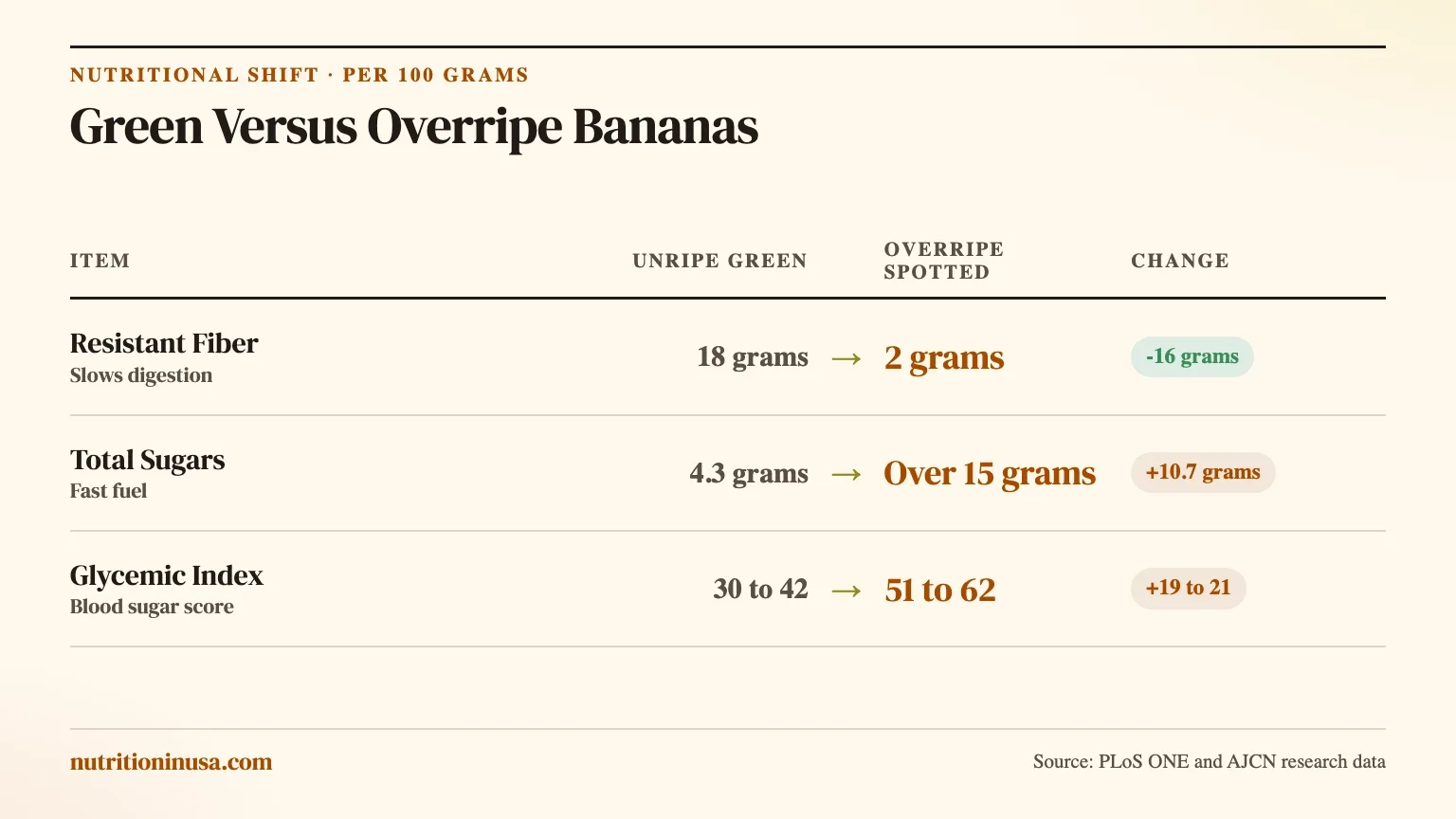
Research published in PLoS ONE tracks this exact shift. Dietary fiber capturing resistant starch dropped from about 18 grams per 100 grams in unripe fruit to just 2 grams in overripe bananas.
At the same time, total sugars rose from 4.3 grams to over 15 grams per 100 grams. This quick chemical shift completely changes how the fruit acts in your stomach.
Blood Sugar Response and Glycemic Index
The glycemic index measures how quickly a carbohydrate food raises blood glucose. According to data in the American Journal of Clinical Nutrition, raw bananas have a median score of 48.
Slightly green bananas score around 30 to 42, which places them firmly in the low glycemic range. Their high starch content slows down digestion and prevents sharp sugar spikes.
Ripe yellow and brown-spotted bananas score higher, between 51 and 62. Because their starches have turned to free sugars, your body absorbs that fuel much faster.
Even with that rise, a medium banana carries a moderate glycemic load of roughly 11 to 13. You still get steady fuel when you eat them in balanced portions.
Strategy 1: Green Bananas for Gut Health and Steady Blood Sugar
Green bananas contain high levels of type-two resistant starch. This special carbohydrate resists digestion in your small intestine and travels directly to your colon.
Once it reaches your lower gut, beneficial bacteria ferment that starch into short-chain fatty acids like butyrate. These compounds nourish your intestinal lining and reduce inflammation.
The Dietary Guidelines for Americans advise eating high-fiber foods to support gut bacteria. Choosing greener bananas helps close the common fiber gap.
According to federal survey data, American adults average only 16.2 grams of dietary fiber each day. That falls well below the recommended target of 21 to 38 grams.
Green fruit also releases glucose slowly into your bloodstream. This slow release helps people who want to manage insulin levels or avoid midday energy crashes.
Because raw green bananas taste tart and chalky, you can slice them into cold smoothies. You can also cook them in savory stews, just like plantains or potatoes.

Strategy 2: Yellow and Spotted Bananas for Workouts and Easy Digestion
As bananas turn solid yellow, their resistant starch drops to around four grams. Your stomach breaks them down with minimal effort, making them gentle on sensitive digestive tracts.
When brown spots appear, almost all remaining starch has converted into simple sugars. These spotted bananas provide fast fuel that enters your bloodstream within minutes.
Eat a spotted banana thirty minutes before intense exercise to top off muscle glycogen. The low resistant starch content means you will not suffer stomach cramps while running.
Brown-spotted fruit also works best if you are recovering from an upset stomach. Your body can absorb the calories and minerals without forcing your colon to work hard.
Strategy 3: Nutrient Focus and Habit Formation
Every banana provides vital micronutrients no matter what shade the peel displays. Data from USDA FoodData Central shows one medium fruit delivers 422 milligrams of potassium and about a quarter of your daily vitamin B6.
Recent federal data shows that only 15.3 percent of American adults get enough potassium. Bananas offer an easy way to build this essential mineral into your weekly routine.
To protect your blood sugar when eating ripe fruit, pair your banana with healthy fat or protein. Smearing peanut butter across yellow slices slows gastric emptying and curbs insulin surges.
You can also stir diced banana into plain Greek yogurt. This simple pairing adds protein while giving your microbiome both prebiotics and live probiotic cultures.

Expert Perspectives and Daily Experiences
Registered dietitians emphasize that no single ripeness stage works best for everyone. Nutrition relies on what your body needs at a given moment during the day.
Dr. Elena Ramos, an outpatient dietitian, notes that athletes and patients with diabetes need different fruits. She suggests matching the color of the peel to your planned physical activity.
For marathon runner Marcus Chen, spotted bananas are an essential training tool. He eats two ripe bananas before morning long runs to prevent mid-workout fatigue.
Meanwhile, office worker Sarah Jenkins uses greenish bananas in her breakfast shakes. She found that the extra resistant starch keeps her full until lunch without sugar dips.
Safety, Digestive Limits, and Medical Considerations
While bananas offer clear health perks, certain medical conditions require caution. People with advanced kidney disease often need to restrict high-potassium foods to keep their blood levels safe.
If you take blood pressure drugs that retain potassium, check with your doctor first. The National Institute of Diabetes and Digestive and Kidney Diseases provides detailed guidance on daily mineral targets.
Digestive comfort also requires an honest look at your personal tolerance. The heavy resistant starch in green bananas can trigger painful gas and bloating for some people.
If you have irritable bowel syndrome, introduce green bananas slowly. Drinking plenty of water helps your digestive tract process the extra prebiotic fiber without cramping.
Frequently Asked Questions
Do green bananas cause constipation?
Green bananas contain high amounts of resistant starch and tannins, which can slow digestion. If your gut is not used to dense fiber, they may temporarily cause firm stools.
Drink extra water and start with half a green banana each day. Your digestive tract will adjust as beneficial bacteria multiply.
Can people with diabetes eat brown-spotted bananas?
People with diabetes can eat ripe bananas, but portion control is vital. A spotted banana raises blood glucose faster than an unripe one because its starch has become sugar.
Eat half a fruit and pair it with a handful of almonds or walnuts. Adding protein and fat blunts the speed of the glucose rise.
Does cooking green bananas destroy their resistant starch?
High heat gelatinizes starch and makes it easier to digest, which reduces resistant starch levels. Boiling green bananas will lower the prebiotic content compared to eating them raw.
However, cooling cooked bananas allows some of that starch to reform through retrogradation. Cold cooked green bananas retain a solid portion of their gut-friendly benefits.
Are bananas the best dietary source of potassium?
Bananas are convenient, but other whole foods actually contain more potassium per serving. A medium baked potato with skin delivers nearly 900 milligrams of this mineral.
Cooked spinach and white beans also surpass bananas in potassium density. Eating a varied diet helps you hit your daily goals without relying on a single fruit.
Take Action Today
You do not need to overhaul your entire grocery list to see real health benefits. A single tweak to how you pick your fruit can upgrade your energy today.
Within the next 24 hours, choose one banana that matches your immediate goal. Blend a greenish fruit for lasting fullness, or enjoy a spotted one before your evening walk.