If you cooked your Thanksgiving feast on Thursday, your refrigerator clock runs out on Monday night. You must eat, freeze, or discard refrigerated turkey and stuffing within three to four days to stay safe.
Waiting until Tuesday exposes your household to dangerous foodborne bacteria that reheating cannot reliably eliminate. Simple temperature control helps you enjoy every holiday bite without getting sick.
The science behind this Monday cutoff protects your digestive system and prevents unnecessary kitchen waste. Here is how you can manage your holiday spread safely before time expires.
The Science Behind the Monday Cutoff
The USDA Food Safety and Inspection Service sets a clear refrigerator storage limit of three to four days for cooked poultry and stuffing. When you store food at 40°F or below, you slow bacterial multiplication, but you do not stop it entirely.
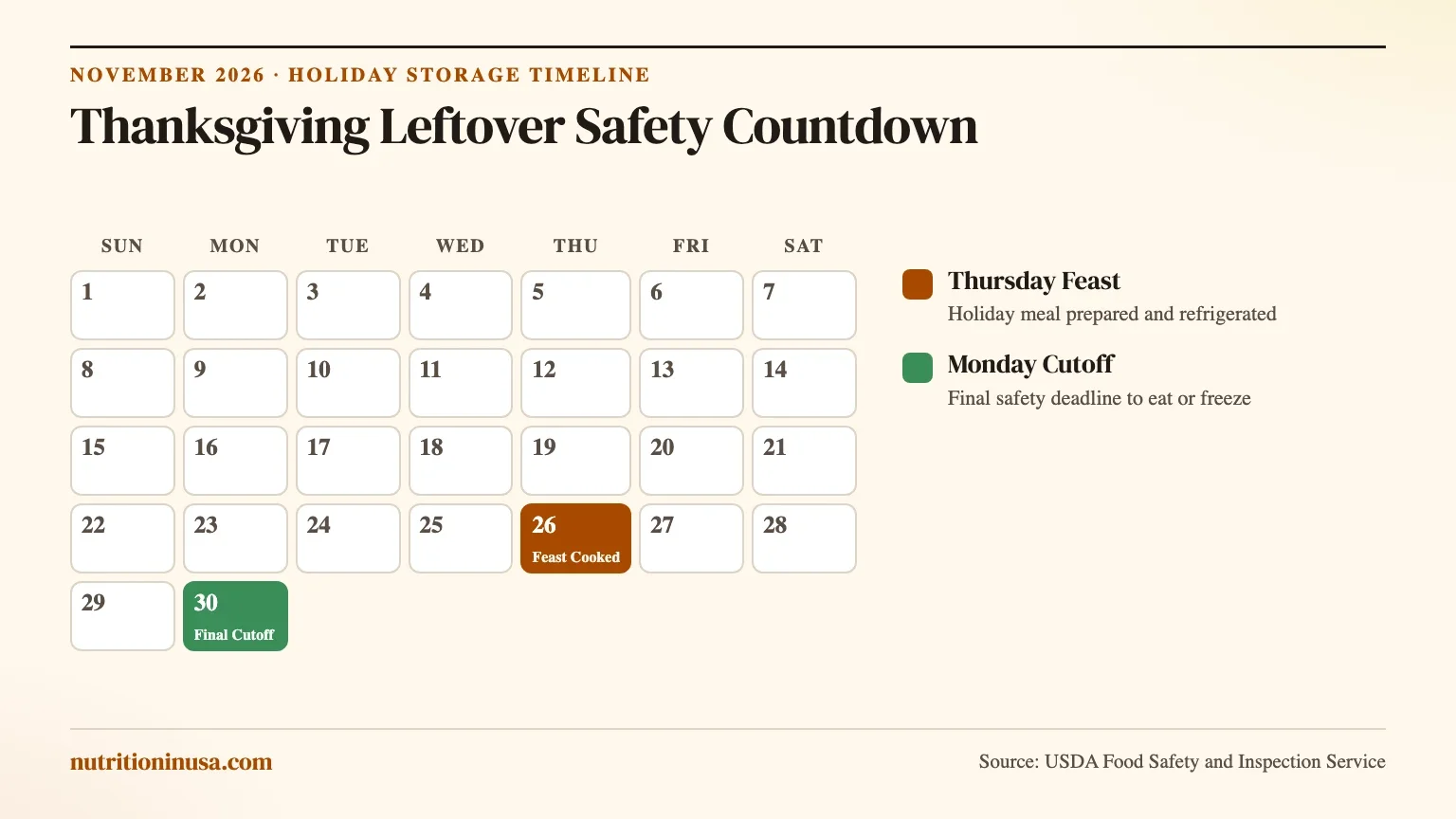
For a meal cooked on Thursday, November 26, 2026, Monday, November 30, 2026, marks the ultimate safety cutoff. Discard any remaining refrigerated portions on day five, even if the food looks and smells completely fresh.
Pathogenic bacteria do not produce the sour odor or discoloration associated with common spoilage organisms. Microbes multiply invisibly on moist, protein-dense foods like roasted poultry without altering its texture or taste.
According to the Centers for Disease Control and Prevention, foodborne diseases sicken roughly 48 million Americans annually, leading to 128,000 hospitalizations and 3,000 deaths. A major holiday offender is Clostridium perfringens, which causes nearly 900,000 illnesses each year.
Outbreaks of Clostridium perfringens peak in November and December because people often cook large roasts and cool them too slowly. Bacteria produce heat-resistant spores that germinate into active cells as your food sits in the refrigerator.
These bacterial toxins cause intense abdominal cramps and diarrhea within 6 to 24 hours after consumption. Because reheating cannot destroy every bacterial toxin, strictly respecting the Monday deadline remains your best defense.
The Danger Zone and Proper Cooling Protocol
Bacterial cells double rapidly in the temperature danger zone between 40°F and 140°F. Federal safety guidelines require you to refrigerate perishable foods within two hours of cooking, or within one hour if ambient temperatures exceed 90°F.
Research cited by FoodSafety.gov reveals that 76% of consumers mistakenly let hot leftovers cool to room temperature before refrigerating them. Leaving food on the counter allows pathogens to proliferate at an alarming rate.
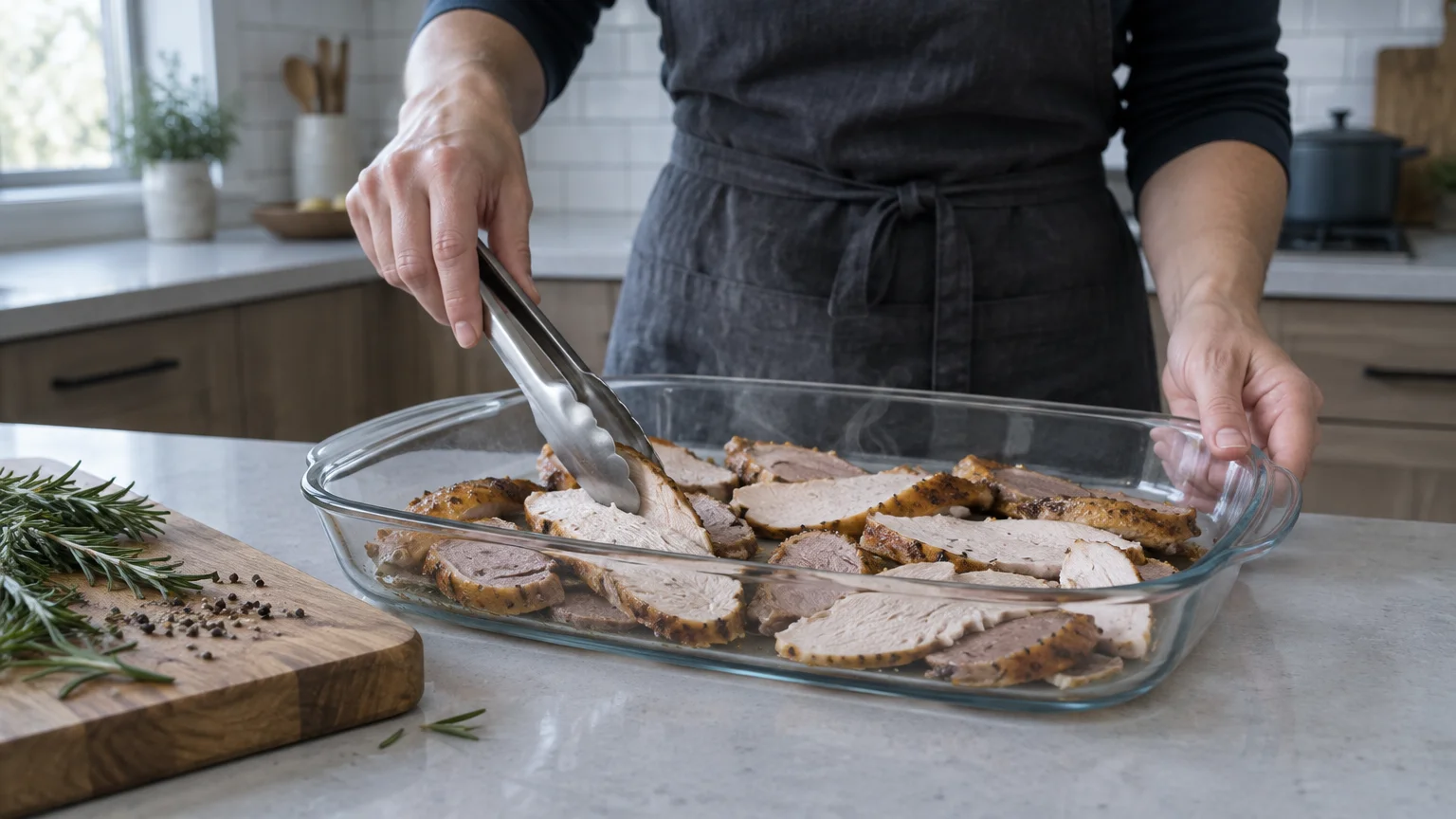
You should never place an entire cooked turkey into the refrigerator with the stuffing still inside the cavity. Dense poultry carcasses trap residual heat, preventing the center of the bird from cooling below 40°F quickly enough.
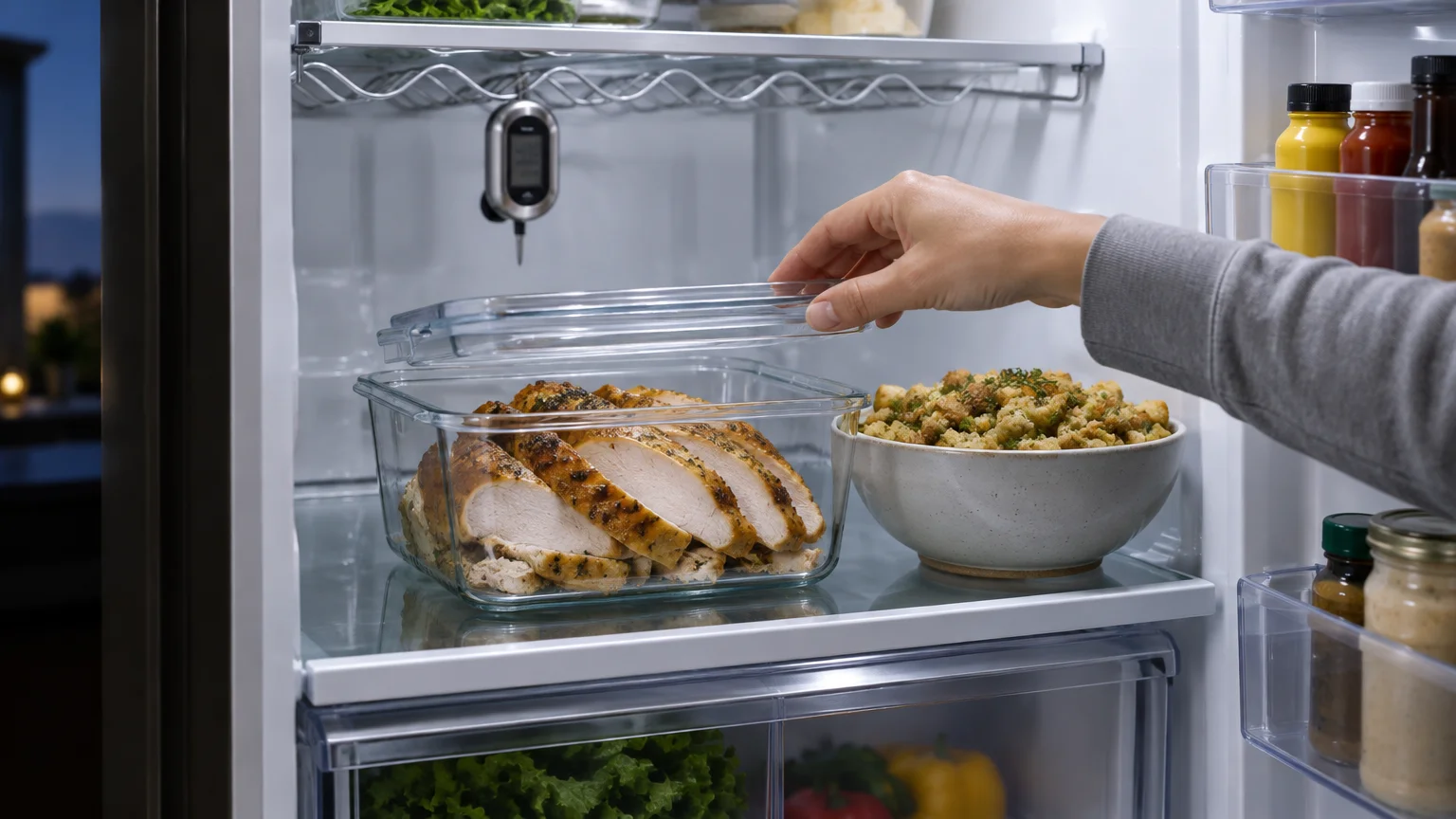
Always carve meat off the bone immediately after your meal and store the stuffing in separate containers. Use shallow containers measuring two inches deep or less so the cold refrigerator air chills the food uniformly.
Three Pillars for Safe Leftover Management
Pillar 1: Meal Planning and Freezing
A survey by ReFED and NielsenIQ found that 89% of holiday hosts intentionally prepare excess food. However, 31% of hosts and guests discard fresh leftovers within a week, while only 23% freeze extra portions.
Freezing offers an ideal preservation strategy that halts bacterial reproduction entirely. Food kept continuously at 0°F or below remains safe indefinitely, though eating it within two to six months delivers the best flavor and texture.
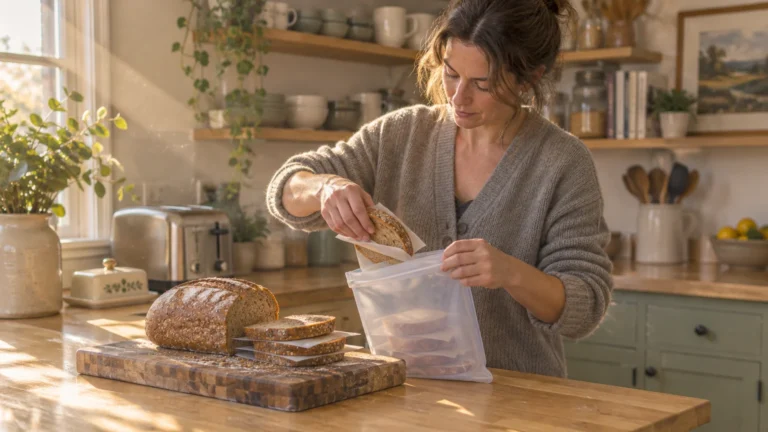
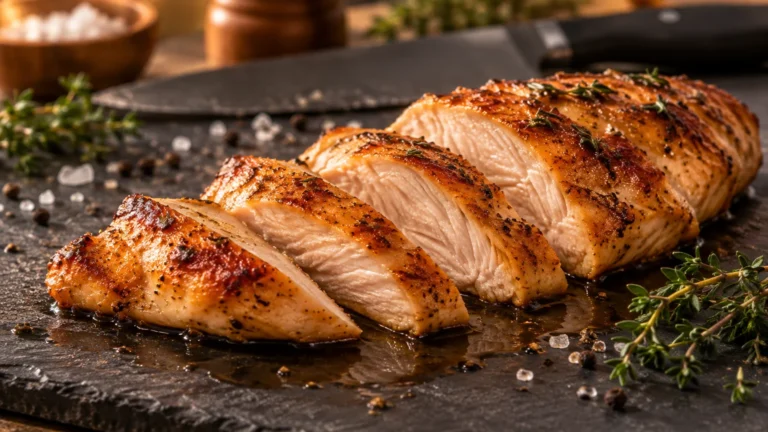
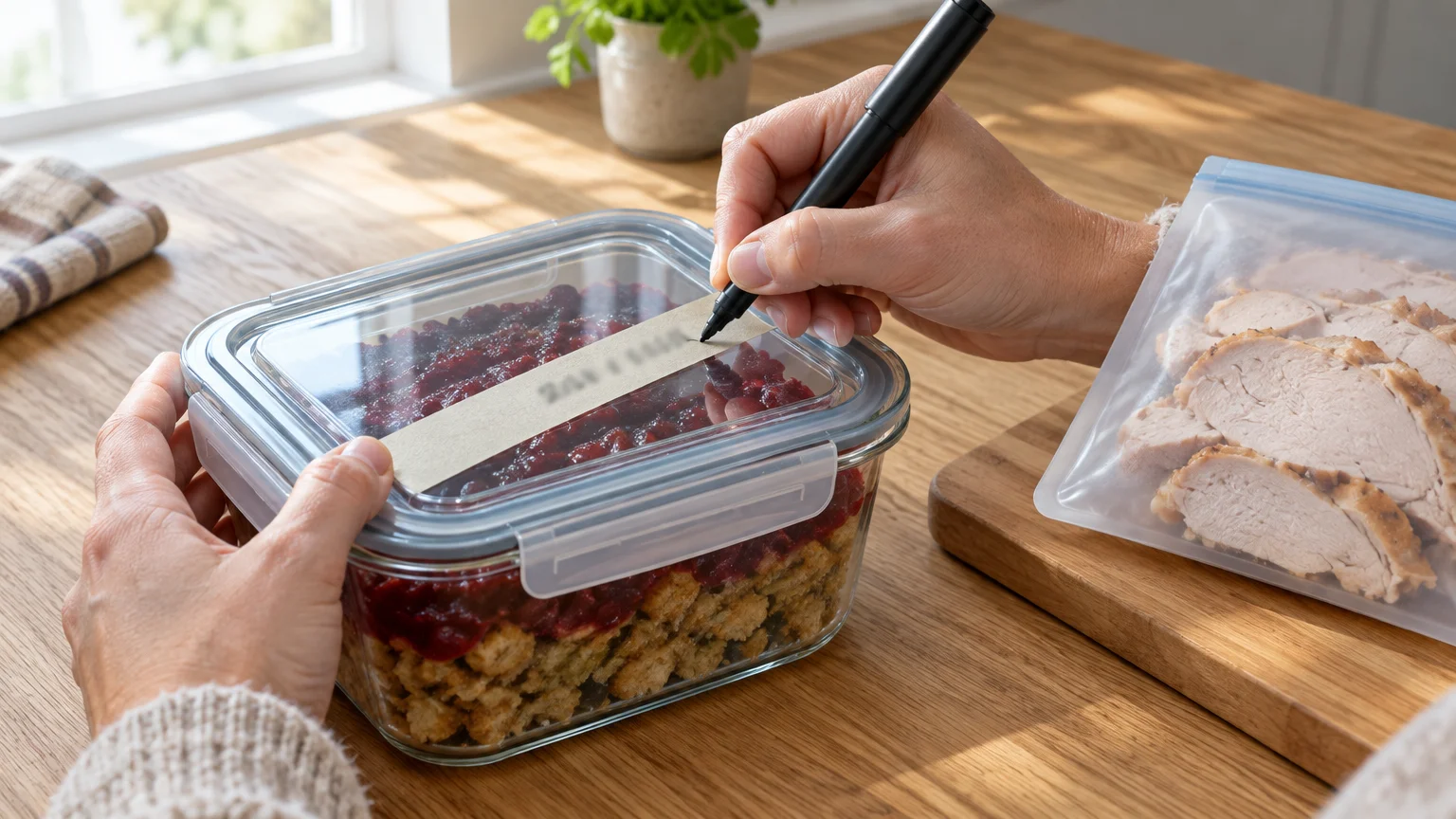
Package your sliced turkey breast and herbed stuffing into single-serving airtight freezer bags by Sunday evening. This proactive habit protects your budget while rescuing delicious meals from the Monday trash bin.
Pillar 2: Nutrient Retention and Safe Repurposing
Transforming leftover turkey into a noodle soup or pot pie on Saturday does not reset your safety timer. Any dish containing Thursday leftovers still carries Monday as its firm expiration date.
Reheating requires precision because lukewarm temperatures encourage bacterial survival rather than elimination. Always use a calibrated digital food thermometer to verify that your reheated casseroles reach an internal temperature of at least 165°F.
When reheating stuffing in an oven, set the temperature to 325°F or higher until the center reaches 165°F. For gravies, stocks, and savory sauces, bring the liquid to a rolling boil before serving.
Pillar 3: Habit Formation and Kitchen Audits
Label every storage container with masking tape showing the preparation date and the Monday cutoff date. Visual cues eliminate guesswork when family members search through crowded refrigerator shelves for a quick snack.
Place an appliance thermometer directly inside your refrigerator to confirm the internal temperature stays at or below 40°F. Frequent holiday door openings can warm the interior compartment, accelerating bacterial growth on perishable dishes.
Clinical Vulnerabilities and Food Safety Precautions
Foodborne illnesses present severe risks for older adults, pregnant women, young children, and individuals with compromised immune systems. For these vulnerable groups, consuming five-day-old turkey can result in systemic infection rather than mild indigestion.
Survey data shows that 31% of consumers knowingly consume refrigerated leftovers past the four-day limit. Clinical experts advise high-risk individuals to avoid eating leftovers that have been refrigerated for more than three days.
Contact a healthcare provider immediately if you experience persistent vomiting, a high fever, or severe diarrhea lasting beyond 24 hours. Early clinical intervention prevents severe dehydration and complications associated with bacterial toxins.
Frequently Asked Questions
Does making a new dish from leftovers reset the storage clock?
No, cooking Thursday leftovers into a soup or casserole on Saturday does not reset the safety clock. The entire dish still carries the original Monday deadline because existing bacterial load and heat-stable toxins persist.
Can I tell if my turkey is safe by smelling it?
You cannot rely on your senses of smell, taste, or sight to determine safety. Pathogenic bacteria like Clostridium perfringens do not produce bad odors or visible changes in food.
What internal temperature must reheated leftovers reach?
You must reheat all leftover meat, casseroles, and stuffing to an internal temperature of 165°F. Measure the thickest part of the food with a digital thermometer, and bring gravies to a rolling boil.
How long can I safely keep leftovers in the freezer?
Leftovers stored at 0°F remain microbiologically safe indefinitely. For optimal culinary quality, flavor, and texture, consume your frozen turkey and stuffing within two to six months.
Protect Your Health Before Monday Night
Open your refrigerator right now and audit the holiday containers sitting on your shelves. Separate what you will consume by Monday night, and transfer the remaining portions into airtight freezer bags immediately.
Taking this simple five-minute step preserves your hard-earned groceries and shields your family from preventable foodborne illness. Make the call today so you can enjoy your holiday meals with complete peace of mind.