Americans eat roughly 50 billion burgers a year—about three per person every week—yet standard drive-thru meals often leave you sluggish. You do not need strict food bans to feel better after lunch.
Shifting your focus toward fast food beef quality helps you enjoy classic comfort food while supporting your everyday health goals. Small upgrades in sourcing and side pairings make a noticeable difference right away.
Below, you will find nine standout chains serving quality beef burgers alongside practical daily routines for shopping, cooking, and ordering with confidence. Every strategy fits busy schedules and real-world budgets.
Rethinking Fast-Food Burgers Without Guilt
Many busy eaters fall into an all-or-nothing nutrition trap. You either swear off burgers completely or grab whatever sits closest to the highway exit when hunger hits.
Extreme food rules rarely last because they ignore real life and joyful eating. Sustainable nutrition works far better when you upgrade what you already love instead of chasing perfection.
Diner preferences are shifting in your favor, too. The National Restaurant Association’s 2026 What’s Hot Culinary Forecast ranked local sourcing, comfort foods including burgers, smash burgers, and clear menu labeling among the top foodservice trends for 2026.
That shift makes it easier to spot the best fast food burgers without decoding vague marketing buzzwords. Before exploring the best burger chains, it helps to know what beef labels actually guarantee.
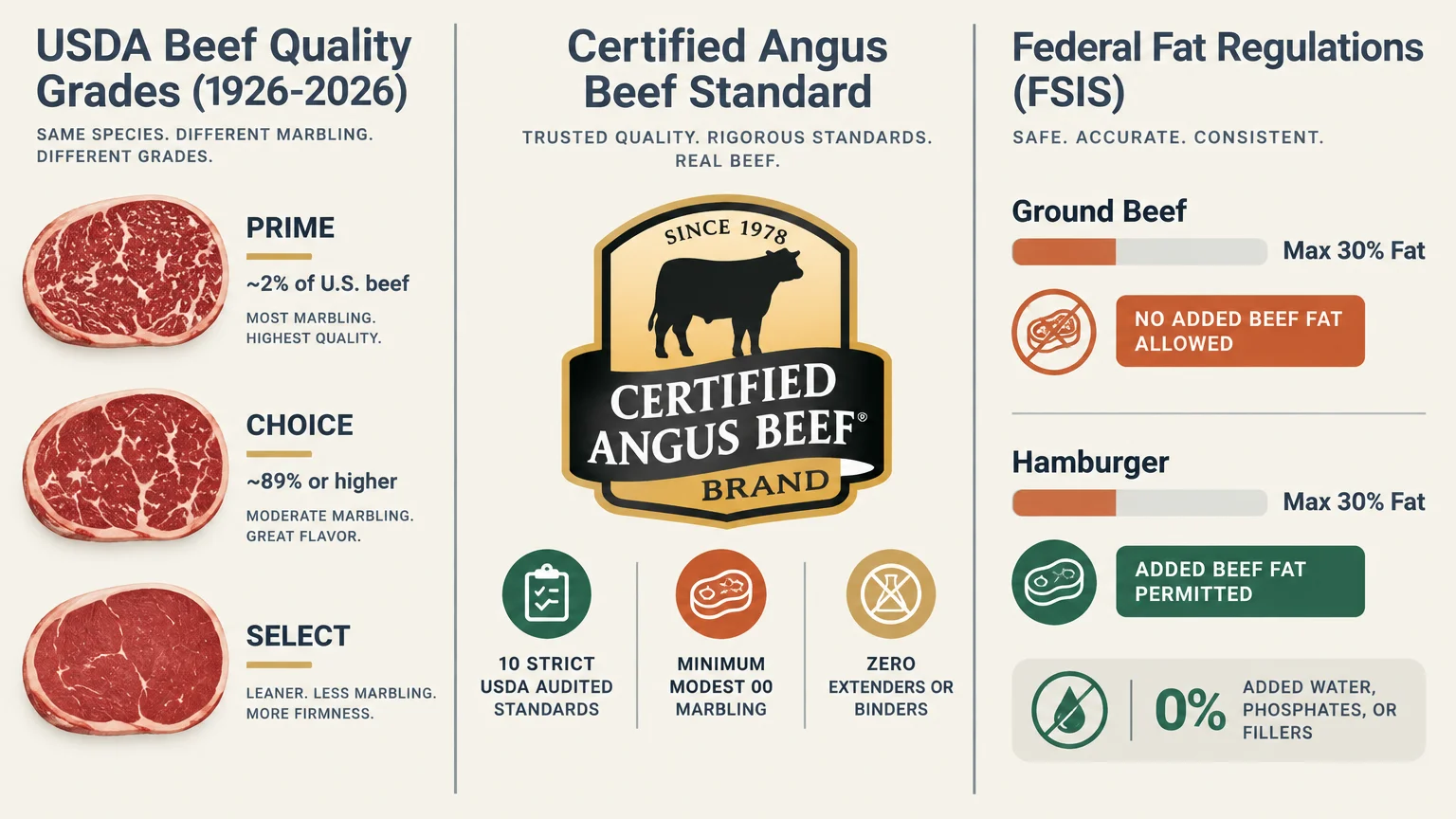
The USDA Agricultural Marketing Service administers national beef quality grades—standards established over a century ago that mark their 100th anniversary in 2026. Graders evaluate cattle maturity and marbling to assign Prime, Choice, or Select ratings.
Over 90% of U.S. cattle are graded each year, totaling 21 billion pounds in the prior year according to USDA figures. Roughly 89% grade Choice or higher, while USDA Prime makes up only about the top 2%.
You will also spot Certified Angus Beef on top fast food rankings. Founded in 1978 by the American Angus Association as the first USDA-certified beef program, it requires meeting 10 strict USDA-audited specifications and a minimum Modest 00 marbling score.
Label wording matters just as much at the grocery counter as it does at a restaurant. Under the Federal Meat Inspection Act enforced by the USDA Food Safety and Inspection Service, both ground beef and hamburger are capped at 30% maximum fat.
Added beef fat is allowed in hamburger, yet it is strictly prohibited in ground beef. Neither product may contain added water, phosphates, extenders, or binders.
Animal-raising claims require prior USDA label approval and supporting documentation. According to USDA guidance cited by Virginia Tech Extension, 100% grass-fed cattle were never confined in a feedlot and never ate grains.
By contrast, grass-finished cattle may have eaten grain earlier in life before finishing on forage. Meanwhile, no added hormones carries unique weight for beef because federal rules already prohibit artificial hormones and steroids in U.S. poultry and pork, per A Greener World.
The 9 Burger Chains Using Top-Quality Beef
Not every drive-thru handles sourcing the same way. These nine burger chains stand out for fresh handling, verifiable beef cuts, or stronger animal-raising standards that elevate your meal.
1. Shake Shack
Shake Shack builds its patties from 100% all-natural Angus beef. According to its U.S. Animal Welfare Policy, its cattle are raised with no added hormones, ever, no antibiotics, and no animal by-products or sub-therapeutic antibiotics in feed.
That commitment earned Shake Shack an A grade in the Chain Reaction IV antibiotics scorecard published by Consumer Reports, NRDC, and U.S. PIRG. Few national chains match that level of supply-chain transparency.
To keep lunch balanced, order a single ShackBurger and swap fries for extra lettuce and tomato on the bun. You get rich Angus flavor without an afternoon energy crash.
2. Dog Haus
Dog Haus sources 100% genetically verified Black Angus beef from Kansas-based Creekstone Farms, according to reports in The Takeout. Cattle eat a 100% vegetarian diet and never receive added hormones or antibiotics.
The beef is also Certified Humane raised and handled, offering clear welfare verification behind your meal. That makes Dog Haus a strong pick when you want verifiable sourcing alongside classic burger comfort.
Because Dog Haus serves rich burgers, consider sharing sides at the table. Pairing one single patty with sparkling water keeps sodium and added sugars in check.
3. Elevation Burger
Elevation Burger serves Certified Organic, 100% grass-fed beef across its menu, according to the company’s official website. That dual standard ensures cattle grazed freely without synthetic feedlot grains or routine chemical inputs.
Choosing organic, grass-fed patties gives you a leaner taste profile while supporting stricter pasture standards. You can build a satisfying meal around quality protein rather than heavy sauces.
Ask for lettuce-wrapped burgers or pile on fresh onions, pickles, and tomatoes for crunch. Adding crisp vegetables stretches the volume of your meal without piling on extra saturated fat.
4. Bareburger
Bareburger crafts its signature grass-fed beef blend from brisket, chuck, and short rib sourced from Vermont cattle raised without antibiotics or hormones, according to Tasting Table. Blending three distinct cuts creates deep flavor without artificial fillers.
Because the menu highlights clean sourcing alongside produce-forward toppings, Bareburger simplifies mindful ordering during a busy week. You can customize your plate to match your hunger level.
Try pairing a grass-fed single burger with a crisp green salad instead of onion rings. You walk away satisfied, fueled, and ready for the rest of your workday.
5. Culver’s
Culver’s cooks ButterBurgers with fresh, never-frozen beef blended from three cuts—sirloin, chuck, and plate—sourced from family-owned farms in the Midwest, per company disclosures cited by Mashed and Tasting Table. Skipping the freezer preserves natural moisture and texture.
Searing fresh beef on a flat grill creates caramelized edges that deliver big flavor in a single patty. You do not need a triple-stack burger to feel genuinely satisfied.
Order a single ButterBurger with steamed broccoli on the side instead of cheese curds when you want a lighter dinner. You still enjoy Midwest hospitality while hitting a daily vegetable serving.
6. Smashburger
Smashburger relies on fresh, never-frozen 100% Certified Angus Beef, according to company statements cited by Mashed and recent investigative reporting. That places its patties squarely inside the upper USDA Choice or Prime tiers.
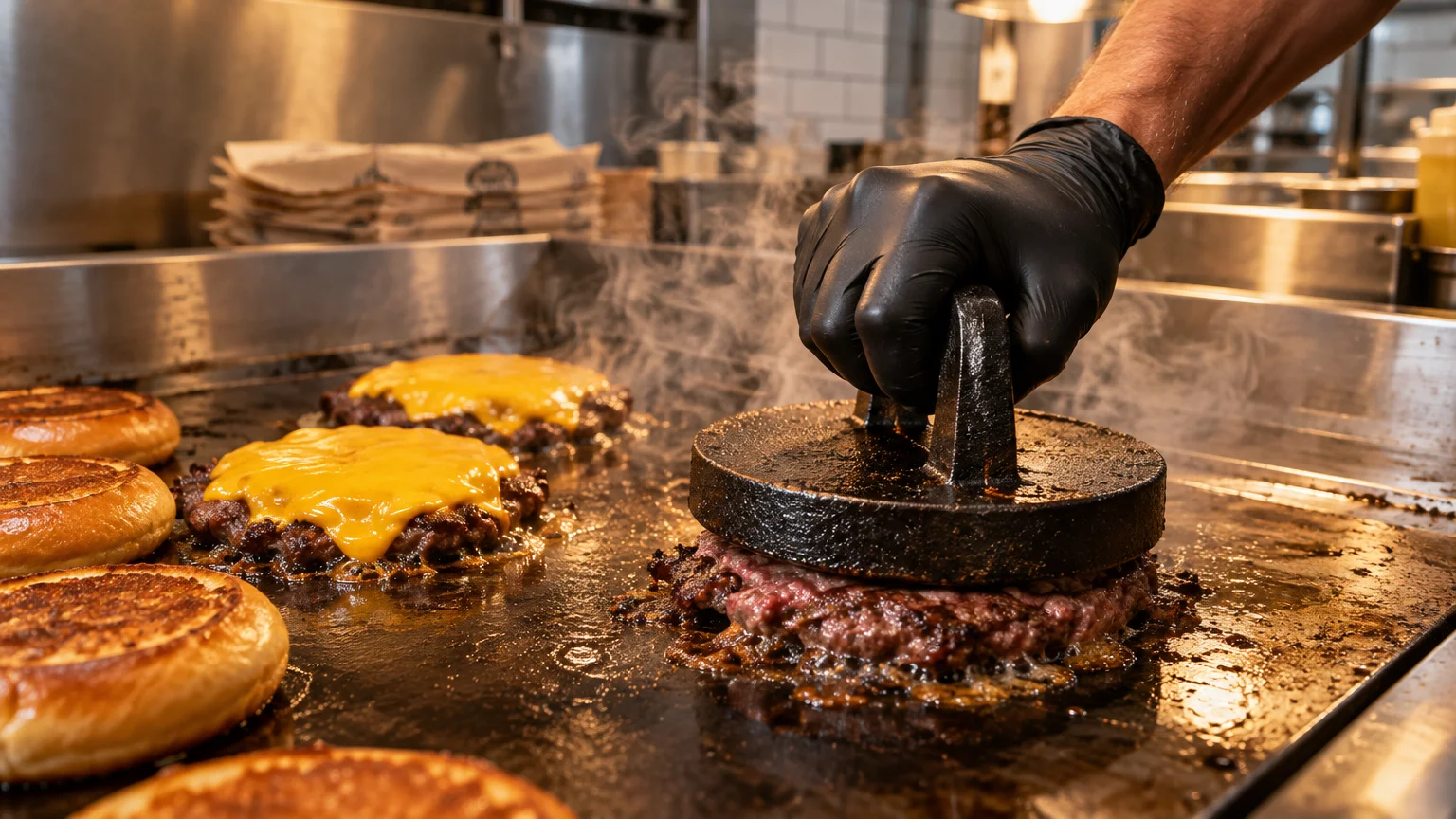
Smashing fresh beef onto a hot seasoned grill locks in savory juices while keeping cooking times quick for busy schedules. Smash burgers also ranked among the top culinary trends for 2026.
Stick with a classic single patty topped with mustard, pickles, and grilled onions to keep calories reasonable. Skipping mayo-heavy specialty sauces lets the Certified Angus flavor shine through.
7. In-N-Out Burger
In-N-Out Burger produces patties at company-owned facilities in California and Texas using fresh, never-frozen 100% USDA ground chuck with zero additives, fillers, or preservatives. Its restaurants operate completely without freezers or microwaves.
Controlling its own butcher facilities gives In-N-Out tight oversight over freshness and grind consistency. Still, transparency requires noting that the chain received an F in the 2018 Chain Reaction antibiotics report.
When visiting In-N-Out, ordering a burger Protein Style—wrapped in crisp iceberg lettuce—cuts refined carbohydrates while keeping pure ground chuck center stage. Pair it with water and sliced chilies for bright heat.
8. Five Guys
Five Guys hand-forms patties from 100% fresh, never-frozen ground beef free of fillers or preservatives, operating every restaurant without freezers per company statements cited by NewsBreak. Freshness remains its core kitchen rule.
Like In-N-Out, Five Guys prioritizes fresh handling over antibiotic-free sourcing and earned an F in the 2018 Chain Reaction antibiotics scorecard. Knowing that distinction helps you match each stop to your personal priorities.
A smart Five Guys order starts with the Little Hamburger, which includes one generous patty rather than two. Load it with complimentary grilled mushrooms, jalapenos, tomatoes, and green peppers for extra fiber.
9. Wendy’s
Wendy’s serves fresh, never-frozen 100% beef from Beef Quality Assurance-certified suppliers and participates in the Progressive Beef third-party verification program. That brings structured animal welfare and sustainability audits to a nationwide drive-thru.
Under its CSR Antibiotic Use Policy, Wendy’s expanded supply-chain visibility in 2024 through its Animal Care Standards Program. The company aims to source 100% of its U.S. and Canadian beef from suppliers prohibiting routine medically important antibiotics by late 2030.
Although Wendy’s scored a D- on the 2018 Chain Reaction scorecard, its ongoing 2030 pledge signals meaningful movement. For a balanced drive-thru win, order a Jr. Hamburger alongside an apple bites side or chili.
Honorable Mentions and Recent Changes
If your neighborhood lacks the nine chains above, MOOYAH uses fresh, never-frozen Certified Angus Beef per Foodie, and Wahlburgers serves a Certified Angus Beef blend of chuck, brisket, and short rib per Mashed. Both deliver dependable marbling and freshness.
Burger lovers should also note major shifts at BurgerFi, which advertises 100% natural American Angus beef without steroids, antibiotics, hormones, chemicals, or additives and earned A grades in Chain Reaction scorecards from 2018 through 2021. BurgerFi International filed for Chapter 11 bankruptcy on September 11, 2024.
After selling operating assets to TREW Capital Management and entering a liquidation trust effective March 17, 2025, surviving locations operate under new ownership and franchises. Its U.S. footprint shrank from 93 restaurants in September 2024 to 65 locations in 2026.
Balancing Beef Quality With 2026 Nutrition Guidance
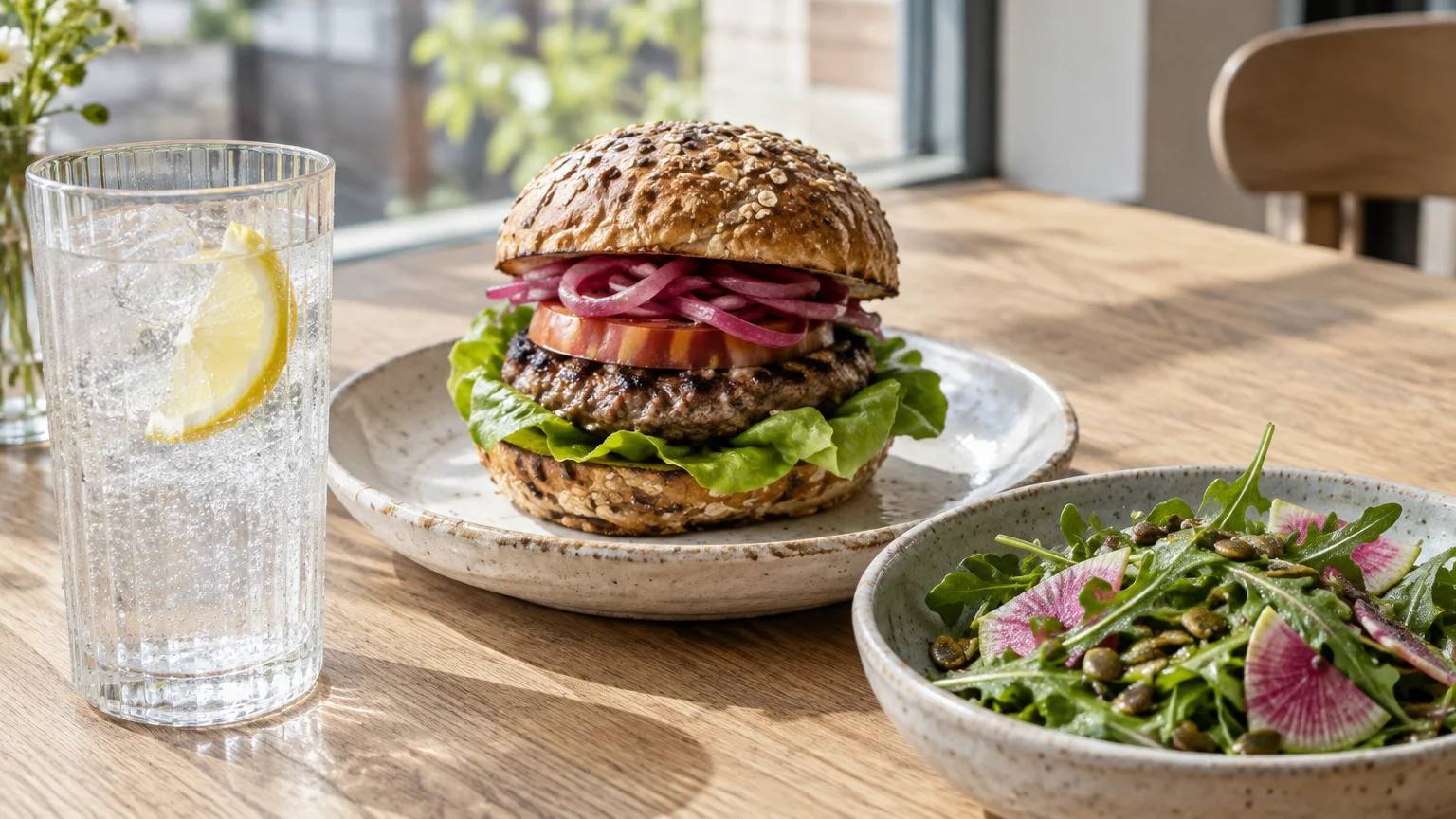
Even the highest-quality beef fits best inside an intentional weekly rhythm. Knowing current federal nutrition targets helps you enjoy quality beef burgers without crowding out heart-protective foods.
The 2025–2030 Dietary Guidelines for Americans, released January 7, 2026 by USDA and HHS, maintain daily limits of less than 10% of calories from saturated fat—roughly 22 grams on a 2,000-calorie diet—and under 2,300 mg of sodium for most healthy adults.
While the updated guidelines highlighted protein, red meat, full-fat dairy, butter, and beef tallow, nutrition researchers urged caution.
Both American Heart Association leaders and Harvard T.H. Chan School of Public Health faculty warned in January 2026 that heavy red meat and animal fat intake makes staying within saturated fat and sodium caps difficult.
For stronger cardiovascular protection, the American Heart Association advises capping saturated fat under 6% of daily calories—less than 13 grams on a 2,000-calorie diet. Adults managing high blood pressure should aim for 1,500 mg or less of daily sodium while prioritizing lean meats, seafood, and plant proteins.
Upgrading Your Pantry and Home Burger Night
Cooking burgers at home gives you complete control over fat ratios, bun choices, and salt levels. Registered dietitians cited by Everyday Health recommend choosing ground beef with no more than 15% fat—85% lean—or 90% lean or higher.
That simple grocery swap trims saturated fat while keeping patties juicy on the skillet or grill. Pair leaner beef with whole-grain buns, avocado slices, and crisp greens to boost fiber and potassium.
Smart shopping also protects your wallet when buying specialty labels. Research cited by USDA shows ground beef carrying organic, grass-fed, pasture-raised, or no-antibiotic and no-hormone claims commands retail premiums of $0.66 to $0.83 per pound.
To stretch higher-quality beef across more family dinners, mix finely chopped mushrooms or cooked black beans directly into your lean ground beef. You cut per-serving cost, add gut-friendly fiber, and keep patties tender.
Safe handling matters just as much as lean ratios when prepping patties in your kitchen. USDA food safety rules advise cooking all raw ground beef to an internal temperature of 160°F (71.1°C) verified with a food thermometer.
By comparison, whole steaks safely cook to 145°F with a three-minute rest because surface bacteria do not get mixed inside. Never judge burger doneness by patty color alone, as brown meat can still harbor harmful pathogens such as E. coli O157:H7.
Keep your refrigerator at 40°F or below and your freezer at 0°F or below, remembering that freezing pauses bacteria without killing them. Cook or freeze fresh ground beef within two days of purchase, using frozen raw patties within three to four months for top quality.
After dinner, refrigerate leftover burgers within two hours—or within one hour if room or outdoor temperatures exceed 90°F. Leaving cooked beef in the 40°F to 140°F bacterial Danger Zone lets pathogens double every 20 minutes.
Daily Habits and Support Systems That Stick
Great nutrition rarely hinges on willpower at the drive-thru speaker. It grows out of calm daily routines that shape your appetite, hydration, and food environment before cravings strike.
Grocery Shopping, Meal Timing, and Hydration
Start your week by stocking versatile staples—lean ground beef, frozen vegetables, whole-wheat buns, and pre-washed greens—so fast meals stay effortless. Shopping after a balanced breakfast or snack prevents impulse purchases.
Regular meal timing keeps blood sugar steady and stops extreme hunger from hijacking your lunch order. When you eat a protein-and-fiber-rich breakfast, ordering a sensible single burger later feels easy rather than restrictive.
Hydration also plays a quiet role in smarter burger meals. Drinking a tall glass of water before eating helps you distinguish true hunger from mild dehydration and tempers salty fast-food pairings.
Skip sugary sodas at the counter in favor of sparkling water with lemon or unsweetened iced tea. You save room for the burger itself while avoiding hidden liquid calories.
Mindful Eating and Support Systems
Eating fast food in your car while answering messages blurs fullness cues until you feel overstuffed. Sit down at a table when possible, put your burger down between bites, and notice the texture of fresh beef.
Slowing down turns a rushed convenience meal into a genuinely satisfying break. You often realize one quality burger satisfies you completely without needing oversized fries.
Sustainable habit change also thrives on gentle accountability. Share your favorite better-beef spots with a coworker or partner so weekday lunch runs naturally steer toward higher-quality chains.
Use simple tracking tools—like a quick photo log or a check-in app—to notice patterns in your energy rather than obsessing over every gram. Community resources such as local farmers markets or hospital nutrition classes can also spark fresh meal ideas.
Troubleshooting Cravings, Social Events, and Travel
Even strong routines meet real-world curveballs when schedules get chaotic. Having a few adaptable backup tactics keeps one busy week from derailing your momentum.
Handling Afternoon Cravings
When a sudden burger craving hits mid-afternoon, pause for a glass of water and check whether stress or genuine hunger is driving it. If you are truly hungry, lean into the craving deliberately instead of fighting it.
Pick one of the nine chains above, order a single patty loaded with fresh toppings, and pair it with fruit or greens. Satisfying a craving with quality ingredients prevents a late-night binge later.
Navigating Cookouts, Social Events, and Road Trips
Backyard cookouts and family barbecues do not require bringing separate diet food. Eat a light produce-rich snack before arriving, build half your plate from grilled vegetables or salad, and enjoy a freshly grilled burger alongside everyone else.
If you are hosting, bring 85% or 90% lean grass-fed patties and clip a reliable digital food thermometer to your apron. Friends get juicy, safe burgers while you stay comfortably aligned with your heart-health goals.
On road trips, scan highway exits ahead of time for Culver’s, Wendy’s, Shake Shack, or In-N-Out rather than pulling into the first random stop. Keeping nuts, apples, and bottled water in the car lets you skip fries completely.
Frequently Asked Questions
Do I need supplements if I eat burgers regularly?
Most healthy adults do not need extra supplements simply because burgers appear in their weekly rotation. Beef naturally provides protein, iron, zinc, and B vitamins.
Instead of buying pills, focus on rounding out your week with fiber-rich plants, colorful vegetables, and fatty fish so you cover nutrients beef lacks. Speak with your doctor before starting any targeted supplement.
How can I feed picky eaters while upgrading beef quality?
Blend upgrades gradually rather than overhauling family favorites overnight. Switching from 70% lean patties to 85% lean ground beef or ordering a single patty at a familiar chain tastes nearly identical to kids.
Let picky eaters customize a DIY burger bar at home with familiar pickles, cheese, and whole-grain buns alongside sliced peppers or berries. Low-pressure choice builds curiosity without mealtime battles.
How do I afford higher-quality beef on a tight grocery budget?
Specialty grass-fed or organic labels add $0.66 to $0.83 per pound at retail, so use strategic stretching. Buy family packs on sale, portion them into raw patties, and freeze them immediately for up to four months.
Mixing mushrooms, oats, or beans into lean ground beef extends four servings into six while boosting fiber. You can also save specialty fast-food burgers for planned weekly treats rather than daily stops.
What is the best way to track progress without calorie obsession?
Track simple repeatable behaviors instead of micromanaging every bite. You might check off days you hit two vegetable servings, drank water with lunch, or cooked home patties to 160°F safely.
Weekly check-ins on your energy, digestion, and afternoon focus tell you far more than daily scale fluctuations. Consistency beats rigid math every single time.
Your Next Step at the Counter
Great nutrition never asks you to give up the foods that bring you joy. Knowing which chains prioritize fresh, verifiable beef lets you turn an everyday burger run into a smarter, more satisfying habit.
Pick one practical step today—order a single patty from one of these nine chains, grab 85% or 90% lean beef on your next grocery trip, or test your thermometer at dinner. Jot down in a quick note how your energy and satisfaction feel two hours afterward.