
Grabbing a flavored yogurt cup on your way out the door feels like an effortless nutrition win. Yet many pre-sweetened varieties pack up to 29 grams of sugar—roughly seven teaspoons—turning a protein powerhouse into a mid-morning energy crash.
Switching to plain Greek yogurt solves the sugar problem, though staring down a tart white bowl every morning gets boring fast. Smart greek yogurt pairings transform that blank canvas into a satisfying meal that fuels your gut, muscles, and focus.
With a few deliberate pantry swaps, you can unlock major greek yogurt health benefits without rigid diet rules. Knowing what to add—and what to skip—makes healthy eating simple on your busiest days.
Rethinking Your Yogurt Routine Without Strict Food Rules
Most people abandon healthy habits because they treat nutrition like an all-or-nothing test. You buy a giant tub of plain nonfat yogurt with big intentions, eat two sour spoonfuls, and let the rest expire behind the milk.
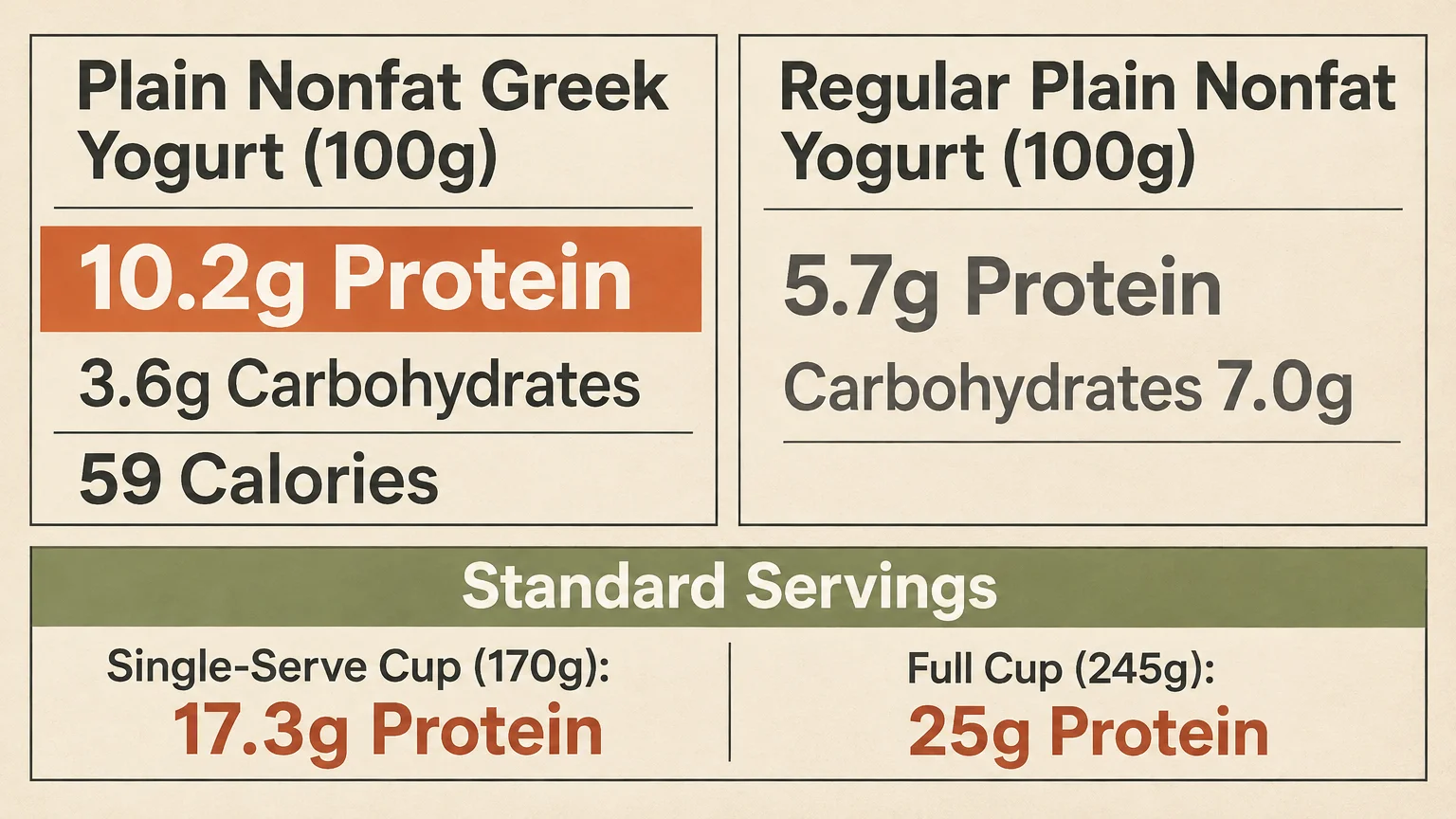
Instead of forcing yourself to choke down plain dairy, treat Greek yogurt as a flexible base. Straining removes liquid whey, which nearly doubles the protein compared with regular yogurt while cutting natural lactose roughly in half.
According to USDA FoodData Central, 100 grams of plain nonfat Greek yogurt delivers 10.2 grams of protein and 3.6 grams of carbohydrates for just 59 calories. Regular plain nonfat yogurt offers only 5.7 grams of protein in that same portion.
That dense protein content keeps hunger quiet for hours, especially when your morning feels chaotic. A standard 170-gram single-serve cup supplies about 17.3 grams of protein; a full 245-gram cup pushes that total to 25 grams.
Setting Realistic, Joyful Benchmarks
You do not need to eat yogurt at every meal to see meaningful payoffs. Under a qualified health claim reviewed by the FDA, eating at least 2 cups—about 3 servings—of yogurt per week may reduce type 2 diabetes risk.
If you enjoy dairy daily, the 2025–2030 Dietary Guidelines for Americans from the USDA and HHS recommend 3 servings of dairy per day on a 2,000-calorie pattern. Building just one satisfying bowl a day puts you well ahead of the curve.
Focus on pairing flavors and textures you genuinely look forward to eating. When your breakfast tastes creamy, crisp, and naturally bright, consistency happens automatically without willpower.

What to Pair With Greek Yogurt for Maximum Health Benefits
Plain Greek yogurt brings high-quality protein, calcium, vitamin B12, riboflavin, phosphorus, and potassium to the table. Still, it has two glaring nutritional blind spots—zero dietary fiber and zero natural vitamin D.
Choosing the right healthy yogurt toppings fills both gaps in seconds. Each pairing below targets a specific mechanism in your body, from smoothing blood sugar curves to helping live bacteria survive digestion.
Fiber-Rich Plants for Gut Health and Steady Blood Sugar
Because plain whole-milk and nonfat Greek yogurt both contain 0 grams of dietary fiber, eating yogurt alone leaves your digestive tract missing half of the equation. Pairing live probiotic foods with plant fibers creates a powerful team inside your gut.
Blackberries, raspberries, sliced pears, and chia seeds supply soluble fiber, which forms a gentle gel during digestion. As noted by the FDA, soluble fiber slows carbohydrate absorption to blunt post-meal blood glucose spikes and helps lower LDL cholesterol.
Insoluble fiber from oats, ground flaxseed, pumpkin seeds, and almond slivers adds bulk and keeps bowel movements regular. Together, these gut health foods feed beneficial microbes while keeping your energy steady until lunch.
Try stirring half a cup of cooked or soaked rolled oats into a cup of yogurt for an easy whole-grain boost. That half-cup counts as one full serving toward the 2 to 4 daily whole-grain servings advised in the 2025–2030 Dietary Guidelines.
Fresh or frozen fruit also moves you toward the federal target of 2 fruit servings a day. Even savory pairings—such as diced cucumber, cherry tomatoes, and roasted chickpeas—help you chip away at the daily goal of 3 vegetable servings.
Vitamin D Sources to Unlock Calcium Absorption
A 100-gram serving of plain Greek yogurt supplies 100 to 110 milligrams of calcium, yet unfortified tubs contain 0 micrograms of vitamin D. Without enough vitamin D, your body struggles to absorb that bone-building mineral efficiently.
Guidance from the NIH Office of Dietary Supplements confirms that vitamin D is essential for active intestinal calcium absorption. Most adults need 600 IU—about 15 micrograms—each day from fortified foods, fatty fish, egg yolks, or safe sunlight exposure.
Clinical research highlights why that pairing matters for long-term skeletal strength. In an 84-day randomized controlled trial led by Bonjour and colleagues, adults eating two daily 125-gram servings of yogurt fortified with vitamin D3 and calcium significantly raised serum vitamin D.
Those participants also showed lower markers of bone breakdown compared with people eating unfortified yogurt. Checking the nutrition label for vitamin D-fortified Greek yogurt gives you an effortless head start right out of the fridge.
You can also build vitamin D straight into your meal pairings. Top a savory herbed Greek yogurt bowl with a sliced soft-boiled egg yolk, or serve seasoned yogurt alongside grilled salmon for dinner.
Healthy Fats and Savory Staples for Long-Lasting Fullness
Nonfat Greek yogurt contains only 0.4 grams of fat per 100 grams, which can leave some people hungry an hour later. Adding a modest portion of unsaturated fat slows stomach emptying and gives every bite a richer mouthfeel.
A small handful of walnuts, crushed pistachios, or toasted pecans brings crunch alongside heart-friendly fats. You can also swirl in a teaspoon of natural almond butter or tahini for a velvety texture that needs zero added sugar.
Do not overlook savory bowls when mealtime boredom strikes. Mixing plain Greek yogurt with extra-virgin olive oil, minced garlic, lemon juice, and chopped dill creates a bright dip for raw bell peppers or whole-grain pita.
Whole-milk Greek yogurt offers another built-in option, supplying 5.0 grams of fat and 9.0 grams of protein per 100 grams. The 2025–2030 Dietary Guidelines—as highlighted by the Harvard T.H. Chan School of Public Health—now welcome unsweetened full-fat dairy.
Simply keep your total saturated fat below 10 percent of daily calories across the day. Since 100 grams of whole-milk Greek yogurt carries 2.4 to 3.2 grams of saturated fat, pairing it with unsaturated plant toppings keeps the balance squarely in your favor.
A Measured Touch of Clover Honey for Probiotic Survival
If plain Greek yogurt tastes too sharp on its own, a small drizzle of honey might do more than soften the tang. Recent human nutrition research uncovered a surprising synergy between specific honey varieties and yogurt bacteria.
Two 2024 studies from the University of Illinois Urbana-Champaign published in The Journal of Nutrition tested different sweeteners alongside yogurt containing Bifidobacterium animalis subsp. lactis. Adding 1 tablespoon of clover honey per 170 grams of yogurt improved intestinal probiotic survival.
In a randomized crossover trial of 66 healthy adults, the clover honey pairing enriched gut levels of that probiotic strain more effectively than plain yogurt or table sugar. However, researchers noted no changes in transit time, bowel frequency, mood, or cognition.
Treat this finding as a smart flavor upgrade rather than a license to pour freely. Both the American Heart Association and the 2025–2030 Dietary Guidelines still classify honey as an added sugar.
The American Heart Association advises keeping total added sugars below 6 percent of daily calories—no more than 25 grams for most women and 36 grams for most men. Measuring a single teaspoon of clover honey lets you enjoy subtle sweetness without blowing your daily budget.
What to Skip (or Limit) in Your Yogurt Bowl
Knowing what to leave on the grocery shelf is just as valuable as stocking great toppings. Several common yogurt habits quietly undermine blood sugar stability, digestive comfort, or meal-prep texture.
Pre-Sweetened Cups, Sugary Granola, and Heavy Syrups
Flavored fruit-on-the-bottom yogurts look wholesome on the front label, yet they routinely dump 8 to 15 grams of added sugar into a single cup. Some commercial single-serve cups climb as high as 29 grams of total sugar.
Average U.S. adults already consume around 17 teaspoons—roughly 71 to 77 grams—of added sugar per day. That intake nearly triples recommended limits and crowds out nutrient-dense whole foods.
Under the 2025–2030 Dietary Guidelines, no amount of added sugars is considered part of a nutritious diet, and meals should stay at or under 10 grams of added sugar. Pre-sweetened yogurt eats up that entire allowance before you even add toppings.
Crunchy granola clusters, chocolate chips, flavored maple syrups, and cookie crumbles compound the problem fast. Swap store-bought sugary granola for toasted rolled oats, raw pumpkin seeds, and warm spices like cinnamon, nutmeg, or pure vanilla extract.
Artificial and Non-Sugar Sweeteners
Reaching for zero-sugar flavored yogurts or packet sweeteners might seem like a clever loophole. Yet global and federal health guidance increasingly steers busy eaters away from relying on non-sugar sweeteners.
The World Health Organization advises against using non-sugar sweeteners for weight control, noting they provide no long-term benefit for reducing body fat. Likewise, the 2025–2030 Dietary Guidelines advise limiting aspartame, sucralose, saccharin, xylitol, and acesulfame K.
Heavy artificial sweetness also keeps your palate trained to expect intense sugar hits, making fresh berries taste dull by comparison. Resetting your taste buds with mashed ripe berries or ripe banana slices delivers natural sweetness plus vitamins and fiber.
Raw Pineapple and Kiwi in Make-Ahead Bowls
Prepping three days of yogurt parfaits on Sunday saves frantic weekday minutes, unless you pack the wrong fruit. Tossing raw pineapple or fresh kiwi into yogurt ahead of time leads to a surprisingly unpleasant texture.
Fresh pineapple contains an enzyme called bromelain, and fresh kiwi carries actinidin. Both enzymes actively slice apart dairy proteins when left sitting together in the refrigerator.
Within hours, your thick, velvety parfait turns watery, curdled, and noticeably bitter. If you love tropical flavor in your bowl, simply slice fresh kiwi or pineapple right before sitting down to eat.
Need a make-ahead option? Choose canned pineapple in 100 percent juice or lightly cooked pineapple instead, because bromelain denatures rapidly above 60 degrees Celsius—about 140 degrees Fahrenheit.
Extra Fluid Milk if You Are Sensitive to Lactose
Many people who struggle with regular milk discover they handle Greek yogurt surprisingly well. Straining removes much of the whey, dropping lactose and carbs from 7.7 grams in regular nonfat yogurt down to 3.6 grams per 100 grams.
Even better, live yogurt cultures produce microbial lactase enzymes inside your digestive tract. The European Food Safety Authority recognizes that live yogurt cultures—at least 100 million CFU per portion of 100 milliliters or more—improve lactose digestion in people who maldigest lactose.
Clinical data shows most people with lactose maldigestion tolerate up to 12 grams of lactose—around an 8-ounce serving of yogurt—with few or no symptoms, particularly alongside a meal. Still, a classic pairing mistake can trigger sudden bloating.
A 1991 clinical study by Martini and colleagues in The American Journal of Clinical Nutrition found that yogurt’s microbial enzymes do not help digest extra lactose added beside it. Pouring regular cow’s milk over a Greek yogurt and oat bowl can overwhelm your system.
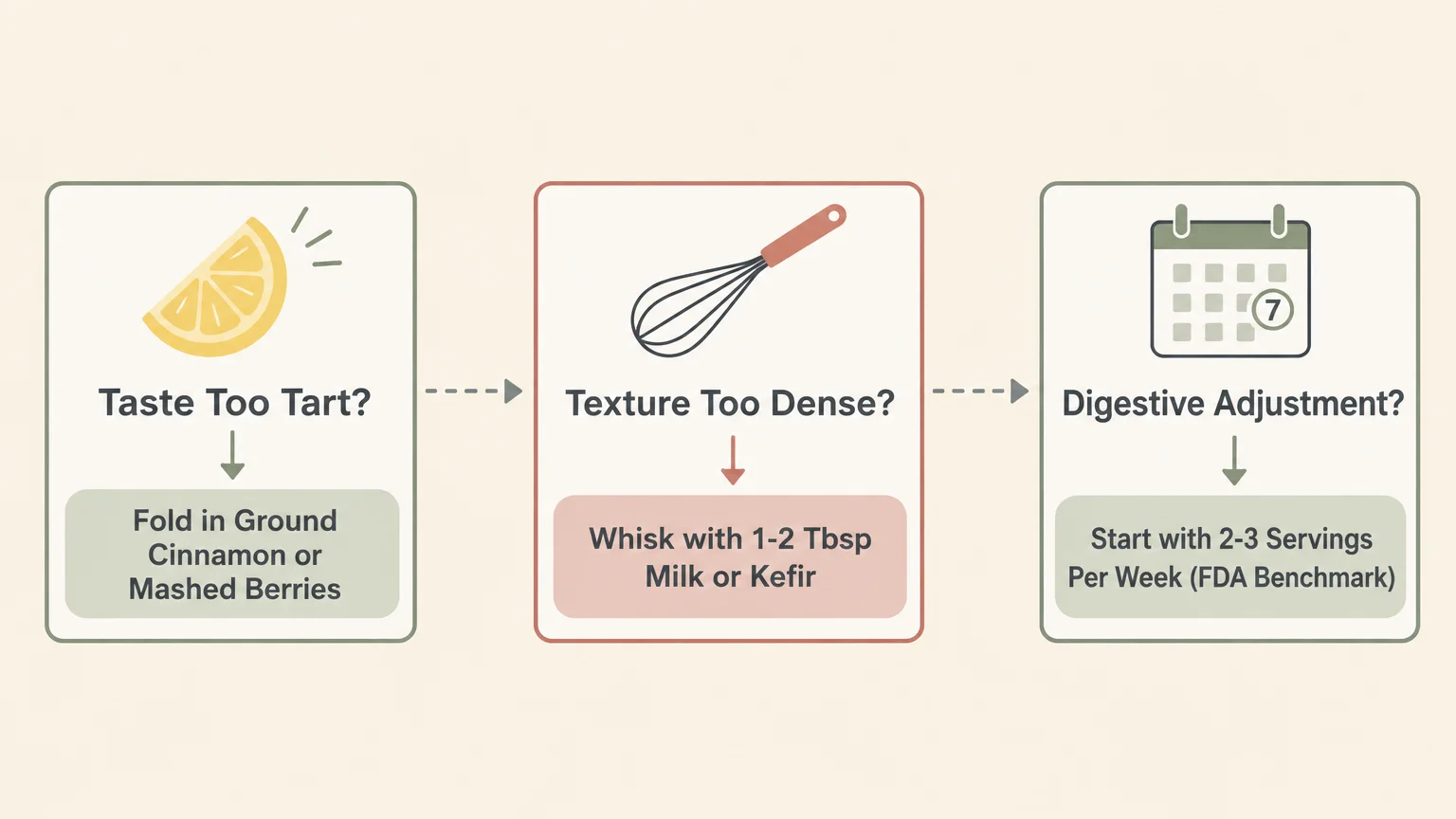
If you thin out thick yogurt or overnight oats for smoothness, splash in water, cooled herbal tea, or an unsweetened lactose-free or fortified plant beverage instead.

Pantry Makeovers and Daily Habits That Stick
Lasting nutrition changes rarely come from willpower alone; they come from designing your kitchen and daily schedule so the healthiest option is also the easiest. A ten-minute pantry reset turns great intentions into effortless routines.
Smart Grocery Shopping and Label Decoding
Start in the dairy aisle by flipping every tub over before dropping it into your cart. Under updated FDA standards finalized in 2021, yogurt must be fermented with Lactobacillus bulgaricus and Streptococcus thermophilus, with optional strains like Lactobacillus acidophilus or Bifidobacterium species.
Look for the phrase confirming the product contains live and active cultures. By federal rule, that label requires at least 10 million CFU per gram at manufacture and a reasonable expectation of 1 million CFU per gram through shelf life.
Skip shelf-stable or heat-treated cups marked as not containing live and active cultures if your goal is gut support. Also watch out for the phrase Greek-style, which is not a federally regulated term in the United States and sometimes signals added thickeners rather than straining.
Check the nutrition panel using the December 2024 FDA nutrient criteria for healthy dairy as a helpful benchmark. Aim for options providing a two-thirds-cup dairy equivalent with under 2.5 grams of added sugar, under 230 milligrams of sodium, and under 2 grams of saturated fat per serving.
Plain nonfat Greek yogurt clears those thresholds effortlessly, with just 36 milligrams of sodium and 0.1 grams of saturated fat per 100 grams. Stock your freezer with bags of frozen blueberries, raspberries, and pitted cherries so your fruit toppings never spoil.
Keep clear glass jars on an eye-level pantry shelf filled with rolled oats, chia seeds, raw almonds, and unsweetened shredded coconut. When nutritious crunch sits right in front of you, assembling a bowl takes under sixty seconds.
Meal Timing, Hydration, and Mindful Eating
Spreading protein steadily across breakfast, lunch, and snacks supports muscle maintenance and satiety far better than saving all your protein for dinner. The 2025–2030 Dietary Guidelines suggest 1.2 to 1.6 grams of protein per kilogram of body weight daily.
Using a 170-gram cup of nonfat Greek yogurt for breakfast or a mid-afternoon bridge instantly locks in over 17 grams of that goal. Pair that protein with hydrating fluid, especially when loading up on chia seeds, oats, and berries.
Soluble and insoluble fibers absorb water inside your digestive tract to keep things moving comfortably. Drinking a full glass of water or unsweetened tea alongside your yogurt bowl prevents sluggish digestion and supports steady focus.
Whenever possible, sit down with a real bowl and spoon instead of slurping yogurt at stoplights or scrolling through email. Noticing the cool creaminess against crisp walnuts helps your brain register fullness before you finish.
Support Systems and Troubleshooting Real-Life Hurdles
Even the cleanest pantry setup hits speed bumps during hectic workweeks, travel days, or late-night cravings. Planning simple workarounds ahead of time keeps small detours from turning into abandoned habits.
Tracking Tools and Accountability
You do not need tedious calorie spreadsheets to build momentum with healthy yogurt routines. Keep a tiny sticky note on your fridge and draw a checkmark every time you eat a fiber-and-protein yogurt bowl, aiming for three checks a week.
If visual motivation works better for you, text a morning bowl photo to a friend or coworker who shares your wellness goals. Trading savory spice combos or budget topping finds makes healthy eating feel social rather than solitary.
Local farmers markets, community garden co-ops, and public health nutrition extensions also offer affordable seasonal produce inspiration. Picking up fresh herbs or local berries on weekends keeps your routine connected to the seasons.
Cravings, Social Events, and Travel
When evening ice cream cravings strike, whip plain whole-milk Greek yogurt with unsweetened cocoa powder, a pinch of cinnamon, and sliced strawberries. For extra crunch, freeze spoonfuls of Greek yogurt topped with raspberries and chopped walnuts on parchment paper as yogurt bark.
Hotel breakfast buffets and weekend brunches often feature giant bowls of yogurt surrounded by sugar traps. Walk past the syrup bottles and sweetened granola, scoop plain yogurt into a small bowl, and load up on fresh melon, berries, and toasted almonds.
On road trips or flights, airport convenience coolers almost always stock plain single-serve Greek yogurt cups next to fruit salads. Tuck single-serve packets of almond butter, pumpkin seeds, or dry oats into your carry-on so you never get stuck hungry.
Frequently Asked Questions
Should I take probiotic or vitamin D supplements instead of eating fortified yogurt?
Food-first habits deliver synergistic nutrition that capsules cannot replicate—combining high-quality protein, calcium, B12, phosphorus, and potassium in every spoonful. Still, if you struggle to reach 600 IU of vitamin D daily through fortified dairy, sunlight, and fish, discuss a supplement with your healthcare provider.
How can I get picky eaters or kids to enjoy plain Greek yogurt?
Because the 2025–2030 Dietary Guidelines advise zero added sugar for children age 4 and under, lean on naturally sweet whole fruit. Blend plain yogurt with ripe banana and frozen berries for vibrant purple smoothies, or stir in thawed wild blueberries that swirl into fun streaks.
For texture-sensitive kids who dislike tartness, use plain Greek yogurt as a creamy savory dip alongside crisp cucumber rounds, bell pepper strips, or whole-grain crackers. Letting kids choose two colorful toppings from small bowls builds autonomy without sugar.
What are the most budget-friendly healthy yogurt toppings?
Buying a large 32-ounce tub of plain Greek yogurt costs significantly less per ounce than grabbing individual single-serve cups. Pair it with frozen berries, which lock in nutrients without spoiling in your crisper drawer.
Rolled oats, sunflower seeds, ground flaxseed, and ripe bananas deliver generous fiber and crunch for pennies per serving. Buying store-brand plain tubs with live and active cultures gives you the same basic benefits at a fraction of specialty brand prices.
How should I track progress without obsessing over numbers?
Skip daily scale checks and instead track simple behavioral wins, like hitting at least 2 cups—or 3 servings—of yogurt across the week. Jot down quick notes on how long breakfast keeps you full, afternoon snack cravings, and digestive comfort.
Notice patterns after two weeks, such as steadier focus during morning meetings or fewer mid-afternoon sugar crashes. Real-life energy cues tell you far more than micro-managing every gram on a screen.

Start With One Bowl Today
Better nutrition does not require overhauling your entire kitchen before dinner tonight. Pick just one pairing from this guide—perhaps swapping sugary granola for rolled oats and frozen berries, or trying a savory cucumber-and-olive-oil bowl.
Build that single Greek yogurt bowl today, savor the contrast of cool creaminess and crunch, and write down one honest sentence two hours later about how your energy and stomach feel. Small, repeatable wins are how lifelong habits take root.