Canned soups promise easy comfort, yet a single cup often packs half a day’s sodium while still tasting flat. Chefs transform humble homemade soup into something unforgettable without relying on heavy cream or extra salt.
By layering savory, fermented, and whole-food flavor boosters, you can slash sodium and dramatically boost satisfaction. These eight pantry staples turn simple broth and vegetables into a meal you look forward to eating.
You do not need culinary school training or an expensive grocery haul to pull this off. Small, repeatable kitchen habits will change how your homemade soup tastes tonight.
Why Your Soup Mindset Matters More Than Recipes
Most home cooks fall into a frustrating nutrition rut when making soup from scratch. They boil vegetables in water, add a pinch of salt, and wonder why the bowl tastes watery.
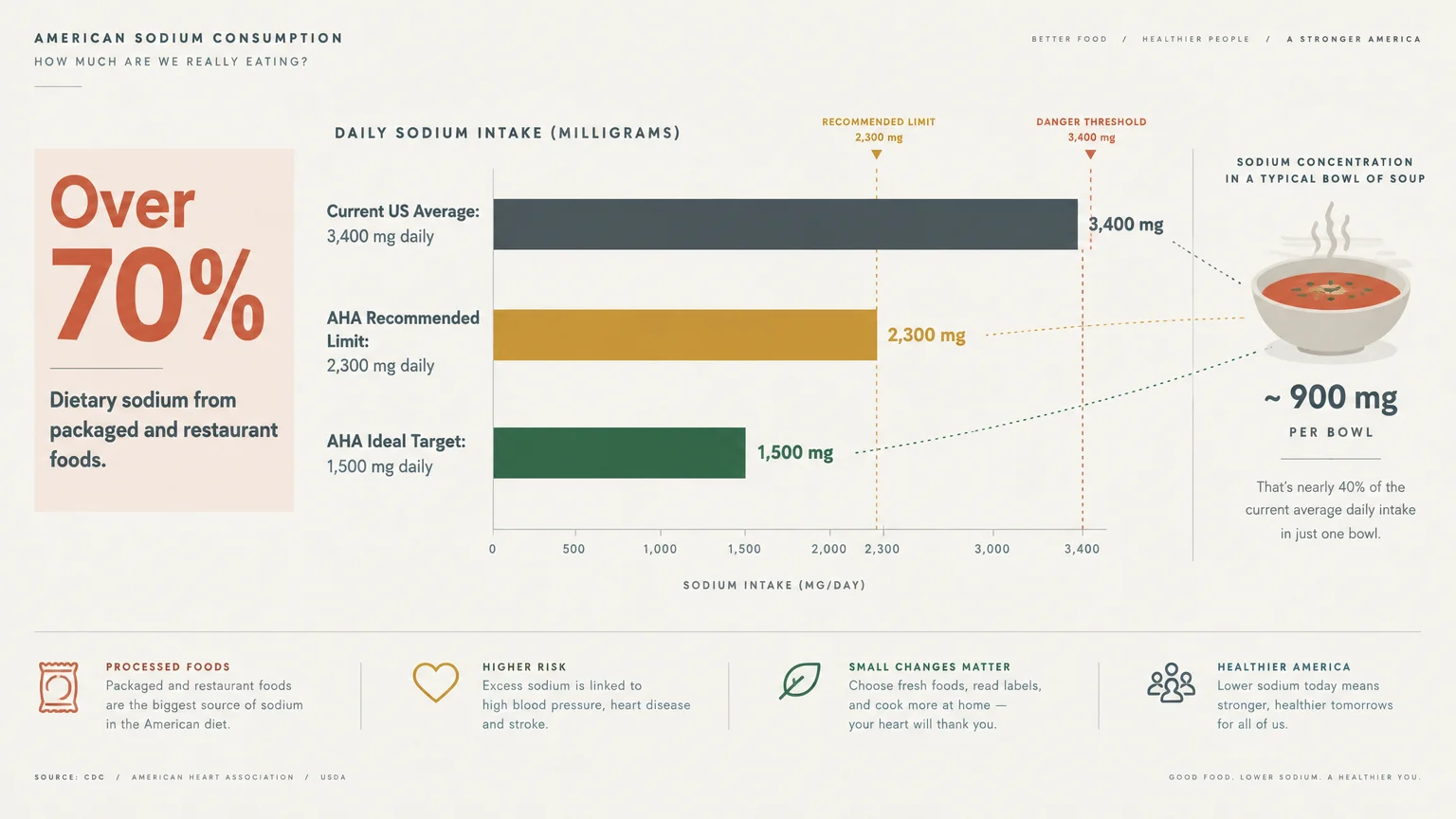
Because bland soup feels unsatisfying, many busy people swing back to ultra-processed cans and restaurant bowls. Unfortunately, more than 70% of dietary sodium comes from packaged and restaurant foods, and soups rank among the top sources.
About 90% of Americans exceed recommended sodium limits, averaging roughly 3,400 mg per day. Even recent voluntary reduction efforts have fallen short, as research from Johns Hopkins Bloomberg School of Public Health found no significant sodium drops in new wet or dry soups between 2015 and 2025.
The American Heart Association sodium guidelines recommend staying under 2,300 mg daily, with an ideal target of 1,500 mg for most adults. That gap between restaurant habits and heart-healthy goals feels overwhelming until you shift your focus.
Instead of chasing perfection or banning salt overnight, reframe your goal around adding flavor rather than subtracting joy. Behavior change science shows that small, rewarding swaps stick far better than rigid food rules.
When you swap extra table salt for savory chef ingredients, your taste buds adapt quickly without feeling deprived. One flavorful pot gives you multiple easy lunches that align with the Dietary Guidelines for Americans, which prioritize whole foods and reduced ultra-processed items.
The 8 Secret Ingredients Chefs Keep on Standby
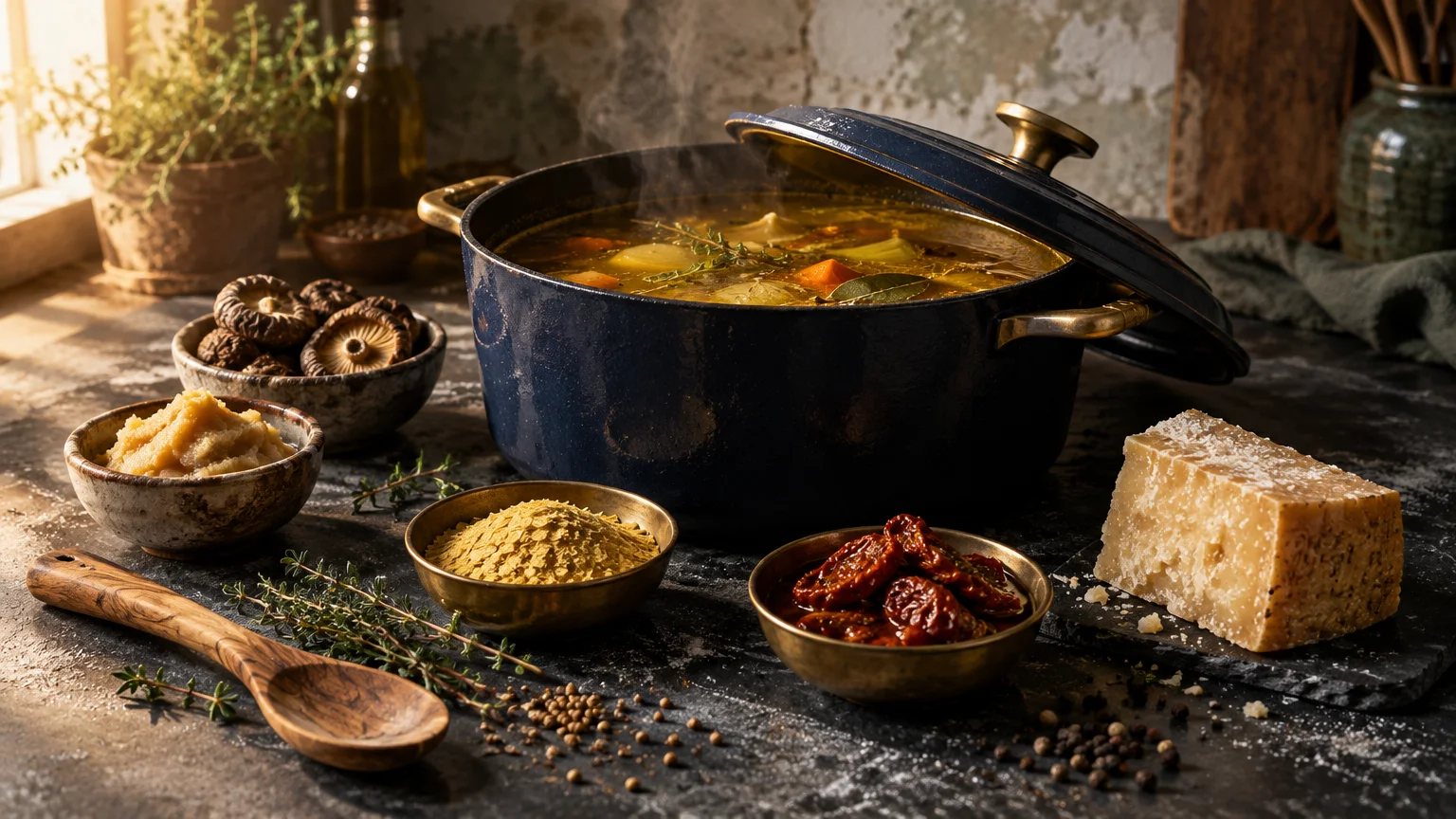
Great restaurant soups rely on umami—the deep, mouthwatering savoriness found naturally in fermented foods, aged cheeses, mushrooms, and ripe tomatoes. When you layer these secret soup ingredients, your brain registers richness even in a light vegetable broth.
These additions also help you build meals around real food rather than refined thickeners. Here are eight chef-approved staples that show you how to make soup taste better on any budget.
1. Miso Paste for Fermented Depth
Miso paste is fermented soybean paste that instantly gives clear broths the round, cozy richness of an all-day simmer. White or yellow miso tastes mild and slightly sweet, while red miso delivers a bold, earthy punch.
Interest in gut-friendly fermented foods has surged, with the U.S. fermented food and beverages market growing from $5.5 billion in 2025 to an estimated $5.7 billion in 2026. Adding a spoonful of miso to your dinner routine is one of the simplest ways to join that trend.
Keep portion control in mind, because one tablespoon of miso paste contains roughly 630 mg of sodium. Treat miso as your primary seasoning rather than pouring it on top of salted stock.
Timing matters if you buy unpasteurized miso for its live probiotic cultures. Stir dissolved miso into your soup off the heat—ideally below 140°F—because beneficial cultures degrade above 100°F and boiling kills live bacteria.
2. Nutritional Yeast for Cheesy Body
Nutritional yeast looks like golden flakes and tastes remarkably like toasted nutty cheddar without any dairy. Chefs stir it into pureed broccoli, potato, or squash soups to create velvety body without heavy cream.
Unlike processed cheese sauces, nutritional yeast is naturally very low in sodium, offering only about 5 to 15 mg per two tablespoons. That same two-tablespoon serving provides roughly 4 grams of complete protein containing all nine essential amino acids.
Scaling up to a quarter cup adds 8 grams of protein and 3 grams of fiber for just 25 mg of sodium. Those numbers make it an effortless way to support the federal protein target of 1.2 to 1.6 grams per kilogram of body weight for healthy adults under 75.
Check the label before buying if you rely on plant-based meals for vitamin B12. Only fortified nutritional yeast supplies vitamin B12—often well above the 2.4 mcg adult daily requirement—while unfortified brands contain zero B12.
3. Parmesan Cheese Rinds for Slow-Simmered Richness
Never throw away the hard, waxy heel left at the end of a wedge of Parmesan cheese. Dropping a saved rind into simmering minestrone, lentil, or white bean soup releases deep, savory flavor throughout the pot.
Grated Parmesan cheese contains higher natural free glutamate concentrations than an equal weight of beef or pork. Simmering the rind extracts that savory amino acid profile slowly while thickening the broth slightly.
This simple kitchen trick also stretches your grocery budget during high food prices. A national survey reported by Penn State Extension in March 2026 found that 82% of U.S. consumers changed their shopping habits because of inflation.
Because grated Parmesan packs 1,804 mg of sodium per cup, skip extra salt while the rind simmers. Fish out the softened rind right before serving, taste the broth, and adjust only if needed.
4. Monosodium Glutamate (MSG) for Smart Sodium Reduction
Pure monosodium glutamate is one of the most misunderstood soup flavor tips in home kitchens. Chefs quietly keep a shaker of MSG near the stove because it amplifies meaty and savory notes with far less sodium than salt.
Table salt is roughly 39% to 40% sodium, packing about 2,300 to 2,325 mg into a single teaspoon. By comparison, MSG is only about 12% sodium—roughly 500 mg per teaspoon—giving you two-thirds less sodium for big flavor impact.
The U.S. Food and Drug Administration sodium guidance notes that Americans average 3,440 mg of sodium daily, well above the 2,300 mg federal limit. The agency classifies MSG as Generally Recognized as Safe, noting controlled studies have not consistently triggered reactions at typical intakes.
Average adults already consume about 13 grams of glutamate daily from natural food proteins versus only 0.55 grams of added MSG. Swapping half your usual soup salt for a quarter-teaspoon pinch of MSG cuts sodium cleanly without sacrificing taste.
5. Tomato Paste for Caramelized Sweetness
Tomato paste is concentrated culinary magic hiding in a tiny metal tube or can. Like Parmesan, tomatoes carry higher natural free glutamate concentrations than an equal weight of beef or pork.
Most home cooks make the mistake of dumping tomato paste straight into boiling broth, where it tastes sharp and metallic. Instead, squeeze two tablespoons into warm olive oil alongside diced onions and carrots.
Cook the paste for three to four minutes until it darkens to a rusty brick color and smells sweet. That quick browning step unlocks deep roasted notes that make vegetarian chili and bean soups taste slow-cooked in minutes.
Choose tubes with resealable caps if you cook for one or two people. You can squeeze out exact spoonfuls for weeknight soups without leaving half-used cans forgotten in the fridge.
6. Soy Sauce and Fish Sauce as Finishing Bombs
A tiny splash of soy sauce or fish sauce wakes up sluggish soups that taste strangely hollow. Rather than making your chicken noodle or beef barley soup taste distinctly Asian, a few drops simply deepen existing flavors.
One tablespoon of soy sauce contains roughly 902 to 1,000 mg of sodium, which means teaspoon-for-teaspoon it actually carries about 87% less sodium than table salt. That concentration lets you season precisely with a measuring spoon.
Always add soy sauce or fish sauce near the end of simmering rather than at the very start. Gentle heat preserves their aromatic complexity while letting you taste the broth accurately before serving.
If you monitor blood pressure closely, reach for reduced-sodium soy sauce, which offers at least 25% less sodium than regular versions. One teaspoon stirred into a whole pot often provides all the savory lift you need.
7. Dried Mushrooms for Meaty Savory Notes
Fresh button mushrooms add texture, but dried shiitake, porcini, or oyster mushrooms deliver concentrated woodland depth. Dehydration intensifies their natural free glutamates, which already surpass equal weights of beef or pork.
Soak a handful of dried mushrooms in hot water for fifteen minutes until pliable. Chop the softened caps for your soup, then pour the dark soaking liquid through a coffee filter straight into your pot to catch any grit.
That mahogany broth turns plain barley, wild rice, or lentil soup into a hearty centerpiece without adding saturated fat. Staying mindful of saturated fat aligns with federal nutrition guidance and heart-healthy cooking principles.
Store dried mushrooms in an airtight glass jar in your pantry for months of emergency meal prep. Buying them in bulk bags at international grocery stores keeps the cost per pot remarkably low.
8. Kombu (Dried Kelp) with Essential Safety Guardrails
Kombu is thick dried kelp that forms the backbone of Japanese dashi, giving clear soups a clean, ocean-fresh richness. Dropping a postage-stamp-sized strip into cold water as your soup heats releases natural glutamates smoothly.
Remove the kombu strip just before the liquid reaches a rolling boil so the broth stays delicate and clear. You do not need to eat the kelp itself to capture its savory payoff.
Respect portion limits strictly with sea vegetables because dried kombu averages about 2,276 to 2,524 mcg of iodine per gram. According to the National Institutes of Health iodine fact sheet, adults need only 150 mcg daily, with a tolerable upper limit of 1,100 mcg per day.
Eating large amounts of kombu regularly can push iodine intake past safe limits and trigger hypothyroidism or hyperthyroidism. Keep your piece small, discard it after steeping, and enjoy kombu occasionally rather than daily.

Daily Kitchen Habits That Lock in Flavor and Nutrition
Stocking these secret soup ingredients only pays off when your weekly habits make cooking feel effortless. Building simple routines around shopping, tasting, and food safety turns weekend soup prep into a stress-free lifestyle upgrade.
Smarter Grocery Shopping and Label Reading
Walking down the soup aisle reveals why homemade soup changes your health metrics so quickly. One cup of canned condensed black bean soup can hold 2,493 mg of sodium, exceeding an entire day’s federal limit in a single bowl.
Even convenient grab-and-go options pack steep numbers, with one cup of canned chicken noodle soup averaging 1,106 mg of sodium and a single-serving microwavable vegetable beef soup hitting 1,098 mg. Making soup at home puts you back in complete control.
When you buy canned broths, beans, or tomatoes as soup bases, read federal nutrition claims carefully. Under current food labeling standards, low sodium means 140 mg or less per serving, while very low sodium means 35 mg or less.
Updated federal healthy-claim rules finalized in December 2024 also require foods carrying that label to include meaningful food groups alongside tighter caps on sodium, saturated fat, and added sugars. Pairing no-salt-added broths with protein-rich legumes or bone broth creates balanced bowls effortlessly.
Global demand for functional bone broth continues climbing, reaching a projected $280.1 million in 2026 as North American shoppers seek convenient collagen and protein. Choose unsalted bone broth cartons so you can build flavor with miso, mushrooms, and herbs instead of factory salt.
Meal Timing, Hydration, and Mindful Tasting
Great chefs never season a soup once and walk away; they taste at the finish line when evaporation has concentrated the liquid. Waiting until the final five minutes prevents over-salting and helps you spot what is missing.
If your homemade soup tastes flat even after adding umami ingredients, it usually needs brightness rather than salt. Stir in a squeeze of fresh lemon juice, a splash of apple cider vinegar, or chopped fresh herbs right before ladling.
Serving warm broth-based soup before dinner or as a mindful lunch slows down your eating pace naturally. Warm liquid encourages you to set your spoon down between bites, giving your fullness signals time to catch up.
Drinking water alongside savory meals stays important too, especially if you enjoy fermented pastes or aged cheeses. Balancing flavorful bowls with steady hydration keeps your afternoon energy stable and prevents late-day salt cravings.
Safe Batch Cooling and Reheating Routines
Cooking a big Sunday pot saves hours during busy workweeks, provided you store leftovers safely. Harmful bacteria multiply rapidly between 40°F and 140°F, doubling roughly every twenty minutes when food sits out too long.
Perishable soups belong in the refrigerator within two hours of cooking, or within one hour if your kitchen climbs above 90°F. Never leave a giant stockpot sitting on the counter to cool down to room temperature.
Following USDA Food Safety and Inspection Service leftover guidelines, divide hot soup into shallow containers no more than two inches deep before refrigerating. Shallow containers drop below 40°F quickly so your batch stays safe.
Use a digital thermometer when cooking raw proteins in soup, hitting 165°F for poultry, 160°F for ground beef or pork, and 145°F for whole meat cuts or seafood. Refrigerated soups stay safe for three to four days at 40°F or below.
Freeze extra portions in labeled containers, where they keep peak quality for three to four months at 0°F. When reheating leftovers, bring soup to a rolling boil reaching 165°F on the stove rather than warming it slowly in a slow cooker.
Building Support Systems That Keep You Cooking
Healthy cooking routines thrive when you stop relying on sheer willpower after a long workday. Set up your kitchen environment so the right ingredients sit right at eye level when hunger strikes.
Keep a small soup-starter basket in your pantry holding dried mushrooms, tomato paste tubes, nutritional yeast, and low-sodium broth cartons. Seeing those items grouped together removes decision fatigue on exhausting Tuesday nights.
Track your flavor experiments in a simple notebook or phone note rather than complex calorie spreadsheets. Jotting down which combinations your household loved builds a personalized playbook of fast, reliable meals.
Invite a friend, neighbor, or coworker to start a monthly soup swap where each person cooks one double batch. Trading half your pot gives everyone four diverse, nutrient-dense lunches with only one evening of cleanup.
Tap into local community resources like seasonal farmers markets, cooperative produce boxes, or neighborhood spice shares to keep ingredients affordable. Cooking alongside someone you trust turns healthy eating into a social anchor rather than a chore.

Troubleshooting Cravings, Social Events, and Travel
Afternoon cravings for salty chips or drive-thru comfort food often stem from exhaustion and under-eating protein earlier in the day. Keep a jar of homemade vegetable-bean soup spiced with nutritional yeast and tomato paste ready for quick three-minute reheating.
That warm, savory bowl satisfies the exact salt-and-comfort urge while delivering fiber and protein instead of an energy crash. You honor your craving with real nourishment rather than white-knuckling through hunger.
Social potlucks and restaurant dinners do not have to derail your heart-healthy goals either. When dining out, scan menus for broth-based vegetable or bean soups rather than cream-heavy chowders, and balance a saltier restaurant meal with lighter home-cooked bowls the next day.
If you bring soup to a family gathering, finish a pot of smoky lentil soup with caramelized tomato paste and fresh herbs. Guests rarely notice the lower sodium when the savory depth tastes like it simmered all weekend.
Travel disrupts routines fast, especially when hotel rooms lack full kitchens. Pack single-serve miso packets or a small shaker of fortified nutritional yeast to stir into hot water or plain takeout vegetable broth on the road.
Skip reheating leftover restaurant soups in tepid hotel coffee pots or lukewarm appliances that linger in the temperature danger zone. Only reheat leftovers when you have access to a microwave or stovetop that brings the soup cleanly to 165°F.
Frequently Asked Questions About Soup Flavor and Nutrition
Do I need special nutrition supplements if I eat fortified soup ingredients?
Most healthy adults can meet everyday nutrient goals through balanced whole foods without megadose pills. Fortified nutritional yeast offers an easy food-first way to cover vitamin B12, especially for plant-forward eaters.
Because unfortified yeast contains zero B12 and kombu carries extreme iodine levels, reading ingredient labels beats guessing with supplements. Check with a registered dietitian or healthcare provider before adding targeted vitamins if you follow a strict vegan diet or manage thyroid conditions.
How can I get picky eaters to enjoy nutrient-dense homemade soup?
Children and hesitant eaters often reject floating chunks of unfamiliar vegetables before tasting the broth. Start by blending caramelized tomato paste, white beans, and nutritional yeast into a smooth, creamy-looking tomato soup with zero visible greens.
Set out fun topping bowls—such as whole-grain crackers, shredded cheese, or toasted pumpkin seeds—so picky eaters control their final bowl. Autonomy at the dinner table lowers mealtime battles while gently expanding their comfort zone.
How do I make chef-quality soup on a tight grocery budget?
Homemade soup remains one of the most inflation-proof meals in your kitchen, especially when you repurpose food scraps. Save Parmesan rinds, carrot tops, and onion ends in a freezer bag to simmer into free homemade stock.
Pair inexpensive dried beans, lentils, and frozen vegetables with long-lasting umami staples like tomato paste, soy sauce, and dried mushrooms. A single affordable jar of miso or bag of nutritional yeast seasons dozens of inexpensive bowls.
What is the easiest way to track progress without obsessing over numbers?
Skip weighing every gram of spinach and instead count weekly wins, such as swapping two canned lunches for homemade bowls. Noticing how satisfied you feel two hours after lunch tells you far more than rigid tracking apps.
You can also snap quick photos of favorite spice blends or mark your calendar each week you batch-cook soup safely. Watching a chain of small, consistent habits grow builds real momentum without food guilt.
Your One-Pot Challenge for Tonight
You do not need to overhaul your entire pantry or master eight new techniques before dinner. Pick just one secret ingredient from this list—whether it is browning tomato paste, dropping in a saved Parmesan rind, or whisking miso off the heat.
Simmer a simple pot of vegetables, beans, or poultry tonight using that single flavor booster in place of extra salt. Before bed, jot down one sentence in a journal about how your soup tasted and how your body felt afterward.
Small, delicious experiments build lifelong confidence in the kitchen faster than any strict diet plan. Your next favorite weeknight habit starts with one warm, flavorful bowl.