You spend good money on fresh produce and take time to cook dinner. Yet your pot of boiling water might be washing away the best vitamins before dinner hits the table.
Learning about foods that lose nutrients when cooked gives you a fast, easy nutrition win. You do not need to eat only raw salads or follow strict food rules.
A few tiny swaps in how you prep and heat your meals protect your vitamins. Here is how to keep more goodness on your plate every single day.
Shift Your Mindset on Raw vs. Cooked Vegetables
Many busy people fall into an all-or-nothing trap with meals. You might think produce only counts when eaten raw or cooked from scratch.
That strict mindset causes burnout fast. Nearly 93.3% of U.S. adults eat some vegetables on a given day, yet only 10% reach daily targets per the Centers for Disease Control and Prevention.
The 2025–2030 Dietary Guidelines for Americans suggest 3 servings of vegetables and 2 servings of fruit daily. Both fresh and lightly cooked foods help you reach that goal.
Think about cooking and nutrients as a balance, not a test. Heat breaks down water-soluble vitamins like vitamin C and folate, which is a key B vitamin.
Still, gentle heat softens tough fibers and helps your digestion. Aim to put one raw or lightly steamed plant food on your plate at each meal.
8 Foods That Lose Nutrients When Cooked
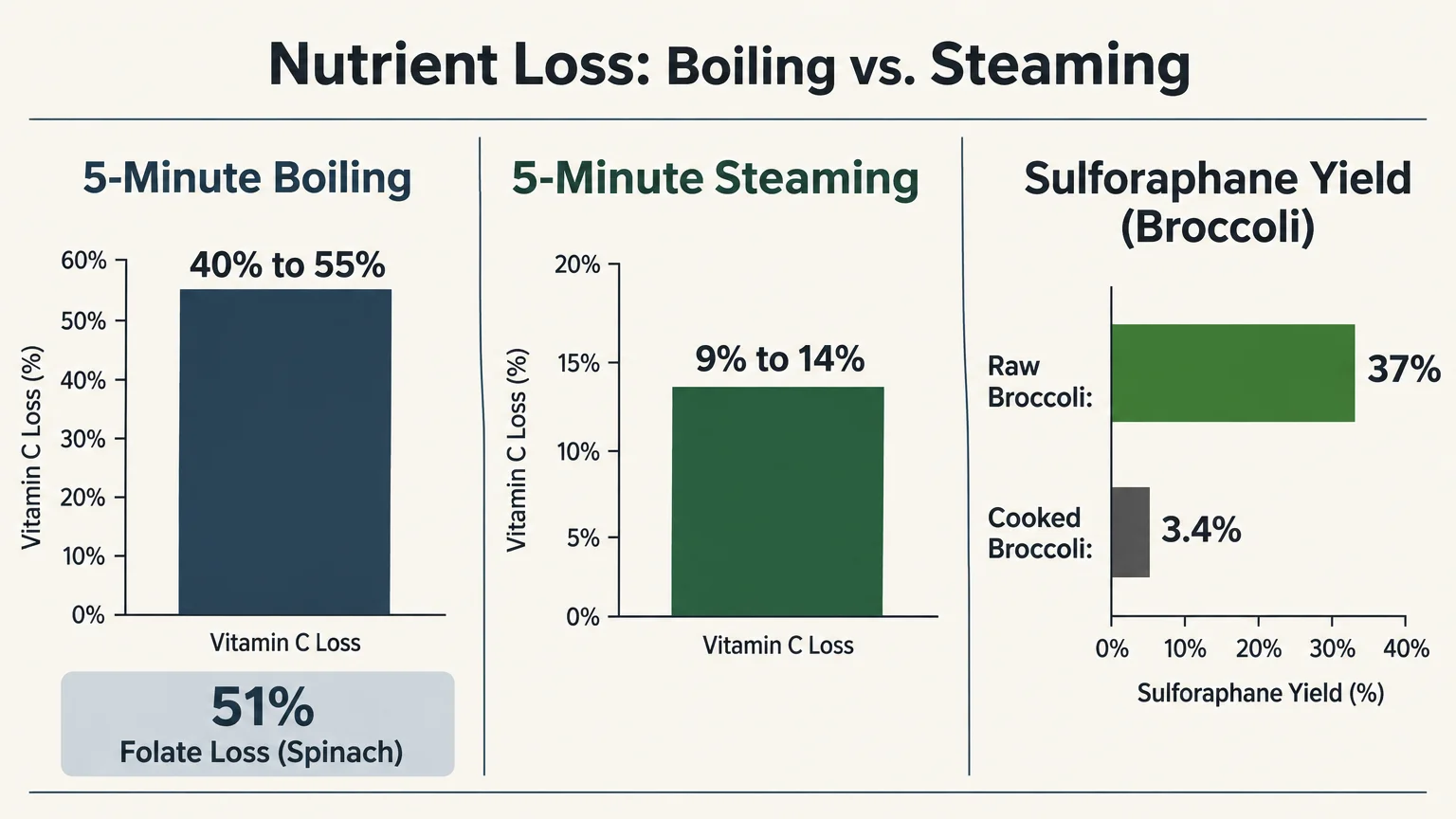
Boiling drains more vitamins than almost any other kitchen method. Five minutes of boiling cuts vitamin C by about 40% to 55% in greens, while steaming keeps losses near 9% to 14%.
Knowing which foods need gentle heat protects your daily nutrition. Here are eight everyday picks that lose key nutrients fast.
1. Broccoli
Raw broccoli yields 37% of a helpful compound called sulforaphane, while cooked broccoli gives just 3.4%. High heat destroys myrosinase, the natural enzyme that builds it.
Boiling broccoli also washes out 56% of its folate. Steam your florets for 1 to 3 minutes until they turn bright green.
If you roast or microwave broccoli longer, sprinkle brown mustard powder on top. That pantry trick brings back the lost enzyme and boosts uptake over four times.
2. Spinach
Spinach packs folate, and adults need about 400 micrograms daily. Because your body absorbs roughly half the natural folate in food, every bit matters.
Boiling spinach cuts folate by 51% and cuts vitamin C in half in five minutes. Boiling for ten minutes destroys up to 78% of its folate.
Toss raw baby spinach into smoothies, wraps, and salads. For warm greens, steam them under four minutes or stir them into hot pasta off the stove.
3. Bell Peppers
Red bell peppers pack about 81 milligrams of vitamin C per 100 grams. Per the NIH Office of Dietary Supplements, men need 90 mg a day and women need 75 milligrams.
Cooking peppers in water or high heat causes 15% to 87% vitamin C loss. Long roasting strips away their crisp sweetness and vitamins together.
Slice raw peppers on Sunday for easy snacking with hummus. For fajitas or stir-fries, toss them into the pan during the last two minutes.
4. Garlic
Crushed garlic creates a protective compound called allicin. An enzyme named alliinase builds allicin, yet temperatures above 176 degrees destroy that enzyme fast.
Microwaving crushed garlic for 60 seconds or roasting bulbs for 45 minutes wipes out alliinase. Thankfully, you do not need to eat raw garlic.
Chop your garlic first and let it sit for 10 minutes before heating. That short pause lets allicin form so it survives quick cooking.
5. Kale
Boiling kale for 12 to 15 minutes destroys 80% of its vitamin C. High-heat stir-frying also breaks down over 81% of its protective plant compounds called flavonols.
Steaming kale is gentle and cuts vitamin C by under 3%. You can also rub chopped raw kale with lemon juice and olive oil.
Bake kale chips at low heat and watch your timer closely. For soups, stir torn kale leaves into the pot right before serving.
6. Beets
Beets get their deep red color from plant pigments called betalains. Raw beets hold about 49.5 milligrams of betalains in every 100 grams.
Pressure-cooking cuts those pigments by nearly 60%, and baking cuts them by 40%. Boiling beets also strips up to 70% of their healthy flavonoids.
Grate raw peeled beets onto grain bowls or green salads. You can also buy vacuum-packed steamed beets or shave raw slices thin with a peeler.
7. Onions
Onions hold quercetin, a protective compound linked to heart health. Boiling onions in soup washes about 30% of their quercetin into the broth.
Pouring out cooking water wastes those lost nutrients. Quick pan-sauteing or microwaving without water keeps more quercetin inside the onion.
Keep raw red onions ready for tacos, tuna, and grain bowls. Soak raw slices in cold water for ten minutes for a milder bite.
8. Cabbage
Cabbage is cheap, lasts for weeks, and stretches your grocery budget. Sadly, boiling cabbage causes an 85% drop in vitamin C.
Long boiling also turns cabbage mushy with a strong smell. Shredding cabbage raw keeps its crisp crunch and full vitamin C.
Toss bagged slaw mix with vinegar and oil for a fast side. You can also steam wedges lightly or drop thin ribbons into soup late.
Simple Daily Habits and Healthy Cooking Tips
You do not need fancy tools to save nutrients every day. Move a steamer basket and mustard powder right beside your stove.
Buy two crisp raw snacks like peppers or cabbage beside your frozen veggies. Bagged slaw and pre-washed greens save time on tired weeknights.
When you make soup, keep the broth instead of draining it away. Eating the liquid lets you catch vitamins that leak out of onions or greens.
Prep a clear raw veggie box on Sunday so produce never spoils. Match your meal timing to busy lunches when hunger hits fast.
Pair raw veggies with olive oil, avocado, or nuts to absorb more vitamins. Drinking water with crisp produce also helps your digestion and keeps you full.
Slow down and chew raw vegetables well at meals. Mindful eating helps your stomach handle firm fibers without feeling bloated.
Follow basic safety rules from the U.S. Food and Drug Administration before eating raw produce. Wash your hands with soap for at least 20 seconds first.
Rinse produce under plain running water, scrub firm skins with a clean brush, and never use soap. Keep cut produce at 40°F or below, and toss items left out two hours.
Adults over 65, kids under 5, pregnant women, and people with weak immune systems should skip raw sprouts. Cook sprouts steaming hot to avoid germs.
Support Systems and Troubleshooting Busy Days
Habits stick faster when you track small wins. Keep a quick tally on your fridge for every raw or lightly steamed serving you eat.
Invite a friend or partner to join a five-day veggie challenge. Sharing quick salad photos and healthy cooking tips keeps both of you motivated.
Check out local community gardens, farmers markets, or neighborhood food co-ops for fresh seasonal picks. Frozen vegetables also serve as a great backup when fresh bins look bare.
Cravings for warm comfort food hit hard after long days. Microwave frozen broccoli for three minutes and top it with melted cheddar and mustard powder.
Potlucks and parties do not have to break your routine. Bring cabbage slaw or a bell pepper tray so one fresh dish is always waiting.
On trips, stop at a grocery store instead of fast-food drive-thrus. Grab pre-cut veggies, small guacamole cups, and nuts for a quick hotel meal.
For more ideas on building balanced meals, explore free guides from the American Heart Association.
Common Questions About Raw and Cooked Produce
Should I take vitamin pills instead of changing how I cook?
Whole foods give you fiber, water, and helpful plant compounds that pills lack. Supplements fill true medical gaps, yet eating raw and steamed produce works far better.
How do I get picky eaters to like raw or steamed veggies?
Serve crisp raw veggies with fun dips like hummus, yogurt ranch, or peanut butter. Sweet red peppers and crunchy snap peas win kids over faster than bitter greens.
Is eating fresh produce too costly on a tight budget?
Fresh nutrition does not take pricey specialty items. Green cabbage, carrots, onions, and store-brand spinach cost pennies per serving and stay crisp in your fridge for days.
How can I track progress without getting stressed over numbers?
Skip calorie counting and count colors on your dinner plate instead. Aiming for two colorful plants per meal builds steady habits you can keep all year.

Start With One Small Swap Today
You do not need a kitchen overhaul to save vitamins in your meals. Even one gentle cooking swap adds real nutrition back to your week.
Pick one tip today, like resting chopped garlic for ten minutes or packing raw peppers. Write down tonight how easy it felt and how your energy stayed steady.